Red Beet Betanin vs Synthetic Red Colorants
Yangge Biotech supplies high-quality Red Beet Betanin, a natural red colorant derived from red beet (Beta vulgaris). Betanin is the primary betalain pigment responsible for the vibrant red to reddish-purple color of beetroot and is widely used as a natural coloring ingredient in food, beverages, confectionery, dairy products, nutritional supplements, and other formulations. Our Red Beet Betanin is carefully processed to provide consistent color performance, good dispersibility, and reliable quality for various product development needs. Yangge Biotech is committed to strict quality control and can provide product specifications, COA, and supporting documentation according to customer requirements. For bulk orders, samples, specifications, pricing, or OEM requirements, contact yangge Biotech today or email us at info@yanggebiotech.com for more information and professional support.
When food and beverage manufacturers face the choice between natural beetroot colorants and synthetic alternatives, the decision involves more than just achieving the right shade of red. Red beet betanin, derived from Beta vulgaris root, represents a clean-label solution that addresses consumer demands for transparency while meeting regulatory standards across global markets.
Unlike synthetic options such as Allura Red AC, this betalain pigment offers antioxidant properties alongside its coloring function, making it particularly valuable for brands positioning themselves in the natural products space. The selection ultimately impacts formulation stability, compliance documentation, and brand perception in increasingly health-conscious consumer segments.
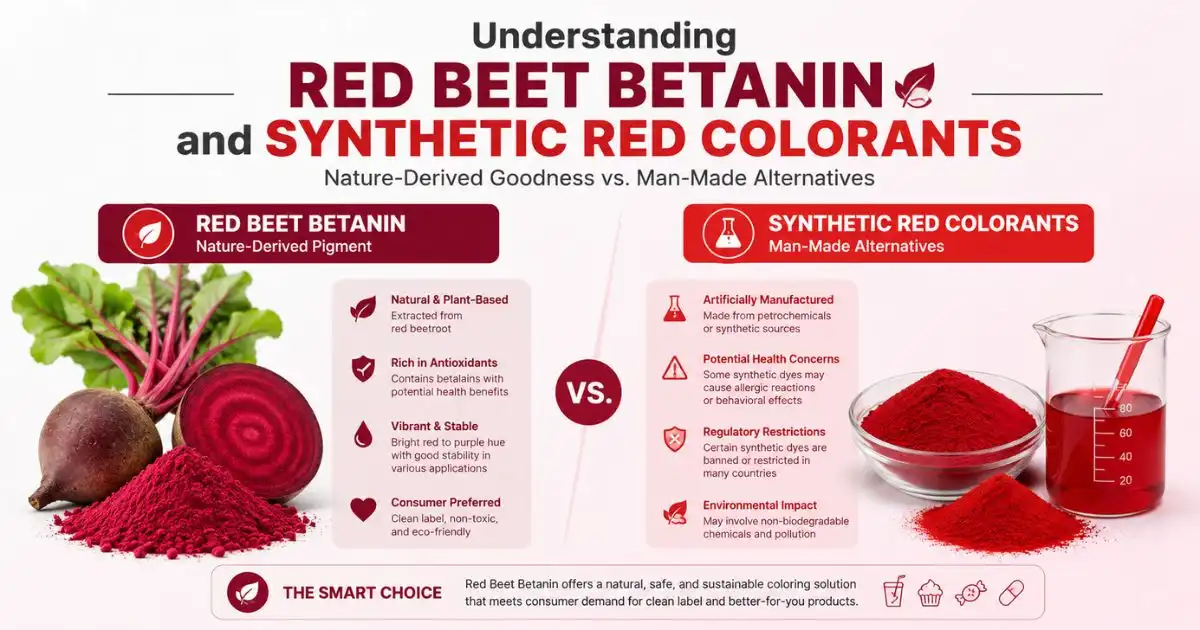
Understanding Red Beet Betanin and Synthetic Red Colorants
What Makes Red Beet Betanin Unique
Beetroot red E162 is a pigment that is in the betalain family, more especially in the betacyanin subgroup. The extraction process creates a water-soluble pigment that absorbs light best between 534 and 538 nm, giving shades ranging from bright red to purple depending on the pH level. While many natural colorants need to be processed in complicated ways, betanin extraction is done in simple ways that keep the pigment's natural protective properties. The structure of the molecules has a glycosidic bond that can be broken by heat but stays steady in controlled processing environments below 80°C.
Betacyanins make up about 0.4% to 1.0% of the pigments in good beetroot juice. Betanin makes up about 75% to 95% of all red pigments. This concentration has a direct effect on the tinting strength and dosage needed in the final application. Modern methods of extraction can raise the amount of betacyanin by fermenting it with certain types of yeast. However, this adds steps to the process that buying teams should think about when making choices about where to get the product.
Synthetic Red Colorants in Industrial Use
Because they are so stable, synthetic options like Allura Red AC (Red 40 in North America, E129 in Europe) are used more often than natural food colorings. These azo dyes don't break down much when exposed to light for a long time, high temperatures (above 150°C), or extreme pH levels. Their chemical synthesis makes sure that each batch is the same, which is hard for natural extracts to do without strict quality control rules.
Regulatory support changes a lot from one area to the next. In the US, most synthetic reds are approved by the Food and Drug Administration (FDA). In Europe, on the other hand, laws are looking more closely at fake colorants. In the EU, many synthetic choices have to have signs with warnings about how they might affect kids' ability to focus and play. This variety of rules makes it harder for companies that work in more than one country to follow the rules, so their sourcing strategy depends on how they want to reach their target markets.
Extraction and Processing Considerations
The first step in making beetroot colorant is to get the juice out of chopped, washed beet roots. To get the same color values every time, the juice is filtered, concentrated, and standardized. Some suppliers use spray-drying to make powdered forms that last longer, but this process uses a lot of heat and needs to be carefully controlled to keep the betanin from breaking down. During supplier qualification, purchasing managers should check the extraction methods because processing methods have a direct effect on the stability of the final product.
Chromatographic analysis is used by good sellers to measure the amount of betacyanin in an ingredient, making sure that the specs meet the needs of the application. This level of analytical rigor sets premium suppliers apart from those whose products aren't always consistent. There are still sugars, minerals, and other parts of the beet that can change the taste. This is especially true in drinks, where the earthy notes of the beetroot may become noticeable at higher doses.
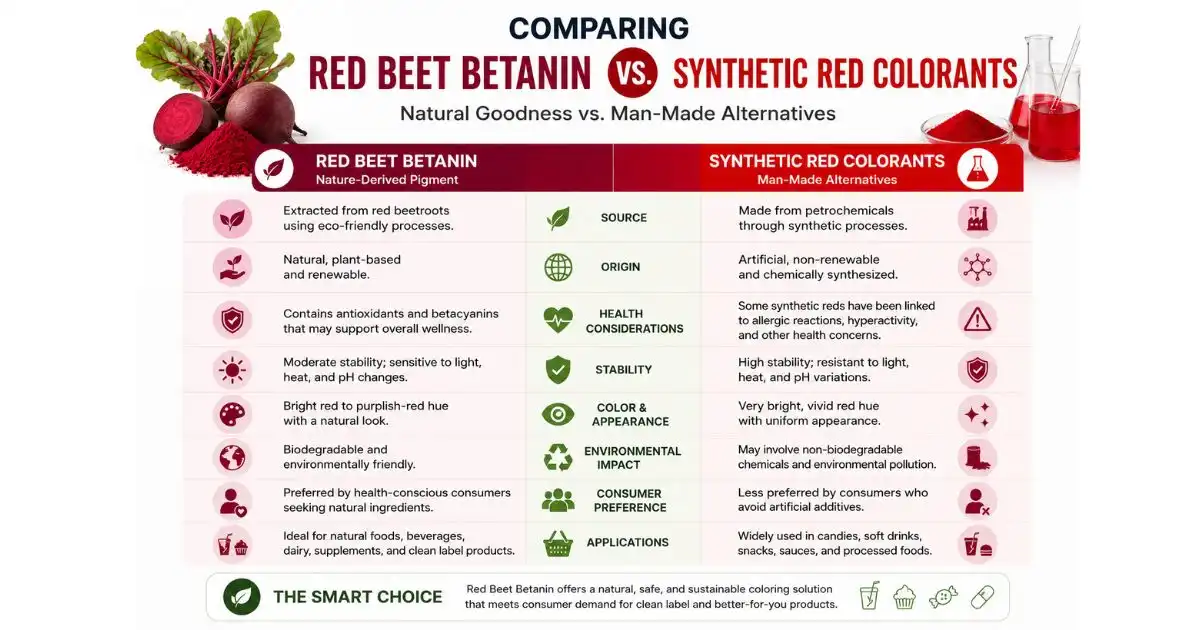
Comparing Red Beet Betanin with Synthetic Red Colorants
Color Performance and Stability Analysis
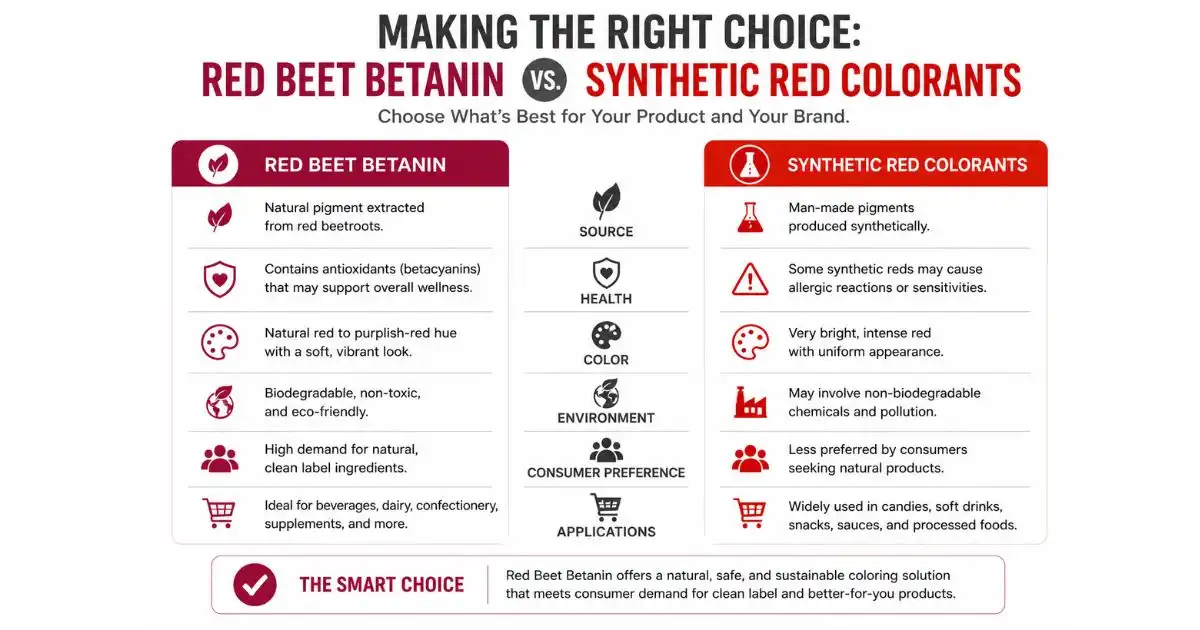
The differences in stability between natural and man-made red colorants have a big effect on how formulations are made. Betanin keeps its color best between pH 4.0 and 6.0, which makes it a good choice for sour drinks, fruit recipes, and dairy products. Outside of this range, the color changes to violet below pH 3.5 and blue-purple above pH 7.0 which finally causes the substance to break down through hydrolysis. Synthetic alternatives keep their color even at higher pH levels (from 3.0 to 8.0), which gives formulators more choices than natural alternatives.
When it comes to beetroot colorants, thermal processing is the biggest problem. Long-term contact to temperatures above 70°C speeds up the breakdown of glycosidic bonds, which causes the color to fade and turn yellow. Because of this, betanin can't be used in fermented foods, baked things that need high heat temperatures, or situations where the product needs to be pasteurized for a long time. Because they don't break down at cleaning temperatures, synthetic dyes are still the most popular choice for shelf-stable goods that need to be heated very quickly.
Light sensitivity is another way to tell these colorant groups apart. When betanin is subjected to UV and visible light, it breaks down. This is why opaque packing or light-protective products are needed. Items that need to be kept cold for a short time, frozen foods, and dry mixes kept in containers that block light are all great examples of situations where this weakness doesn't pose much of a risk. Light stability is better with synthetic colorants, so colors stay bright in clear packaging that is displayed in stores.
Regulatory and Consumer Acceptance Trends
Clean-label momentum keeps changing the rules for choosing colorants. According to consumer research, 63% of people in Europe and North America actively look for goods with clear ingredient lists. They like seeing words like "vegetable juice color" or "beetroot extract" more than numbered additions like E129. This difference in how people think about natural alternatives opens up premium positioning opportunities for companies that are willing to invest in them even though they may not work as well.
Regulatory landscapes reflect this change in how people buy things. European officials keep a close eye on synthetic colorants and make sure that some azo dyes have allergen-style labels. In 2008, the UK's Food Standards Agency suggested that six manufactured colors be taken out of food voluntarily. However, monitoring is still patchy. Betanin, on the other hand, is not limited in any way; it is simply listed as E162 and is legal in the EU, the US, and the Middle East. Plant-based colorants are easier to get certified as Halal and Kosher, which removes sourcing hurdles for religiously observant customer groups.
Natural colorants are growing at a yearly rate of 8.2%, while synthetic options are only growing at a rate of 2.1%. This is because big food companies are trying to change the way they make their products. Based on this growth pattern, it looks like more money will be put into developing red beet betanin stabilization technologies and new applications. This could help natural options get closer to synthetic ones in the years to come.
| Stability Factor | Red Beet Betanin (E162) | Synthetic Red (Allura Red AC) |
|---|---|---|
| Optimal pH Range | 4.0 - 6.0 | 3.0 - 8.0 |
| Heat Stability | Stable below 80°C | Stable above 150°C |
| Light Resistance | Moderate (requires protection) | High (minimal degradation) |
| Regulatory Status (EU) | No warnings required | May require activity warnings |
| Clean Label Appeal | High (recognized as natural) | Low (perceived as artificial) |
Procurement Considerations for Red Beet Betanin vs Synthetic Colorants
Quality Certifications and Supply Chain Verification
Setting up supplier credentials is the first step in buying colorants reliably. Quality management systems are shown by ISO 9001 certification, and food safety rules are shown by ISO 22000 or FSSC 22000 certification. Organic approval (USDA Organic, EU Organic) adds value to beetroot colorants when aiming for high-end natural product markets, but it raises the cost of raw materials by 20–35% compared to regular sources.
Kosher and Halal approvals take away worries about religious compliance in a wide range of places. Reliable sellers keep up-to-date certifications from reputable organizations, such as OU, OK, or Star-K for Kosher and JAKIM, HFA, or IFANCA for Halal. When a supplier is being qualified, procurement teams should ask for copies of the certifications and check the expiration dates, since expired certificates can stop the supply chain and cause compliance gaps.
Analytical skills separate sellers who are dependable from those who aren't. Third-party lab agreements for checking for contaminants like heavy metals, PAHs, and pesticide residues show a dedication to safety standards. European PAH4 limits say that levels of benzopyrene must be less than 10 ppb. Beetroot extracts must meet these standards by carefully controlling where they come from and how they are processed. Traceability is improved by suppliers who send analysis papers with every batch, which include HPLC measurements of betacyanin levels. This helps quality assurance systems.
Cost Structure and Minimum Order Quantities
The way prices change for natural and synthetic colorants is very different. Because synthesis methods are uniform, synthetic reds usually cost between $15 and $25 per kilogram when bought in bulk. Prices don't vary much from one supplier to the next. Beetroot colorants cost between $45 and $120 per kilogram, based on how much betacyanin they contain, whether they are certified organic, and how they are processed. Because it costs more per kilogram, betanin needs to be carefully used to get the best results. However, its strong tinting power helps to balance out the price difference.
Working capital and inventory management are affected by minimum order amounts. As a chemical producer, you can save money by making more of something, so synthetic colorant suppliers usually need MOQs of 100 to 500 kg. Natural colorant suppliers, especially those that work with medium-sized businesses, may have minimum orders of 1 to 25 kg, which lowers the financial commitment needed during the product development stages. Yangge Biotech keeps 50–100 kg of ready stock on hand to support both trial formulations and production-scale needs without having too much stock build up.
Payment terms and wait times depend on the size and location of the provider. When buying from a domestic supplier, the lead time is usually 1-2 weeks and the terms are net-30 to net-60. When buying from a foreign supplier, the lead time is 4–8 weeks and LC or prepayment is needed. Planning for the resilience of the supply chain should take these differences in timing into account, especially when changing from synthetic to natural colorants and needing validation batches and stability tests.
Storage and Handling Requirements
When colorants are received and used, they keep their quality as long as they are stored correctly. Beetroot colorant powders need to be kept in sealed containers that are out of the light and at temperatures below 25°C with a relative humidity below 60%. These conditions stop wetness from absorbing, which speeds up breakdown and clumping. Separate storage areas keep colorants away from strong-smelling ingredients that could get absorbed by porous packaging. This keeps the flavors neutral, which is important for delicate applications.
Synthetic colorants don't need to be kept in exact conditions; they stay stable at room temperature in normal packing. This makes handling easier and lowers the cost of storage and logistics, which procurement teams have to weigh against the benefits of clean labels. Different shelf lives add to these things to think about. Synthetic colorants stay in good shape for 36 to 60 months, while beetroot extracts usually last 18 to 24 months in ideal circumstances.
Packaging formats influence dosing accuracy and waste minimization. One-kilogram metal foil bags are good for small to medium production runs because they protect the contents and can be used for everything without being too divided up. Larger businesses can save money on packaging by using 10–25 kg containers, but they need to be used quickly after being opened to keep the quality from going down, especially for sensitive ingredients like red beet betanin. Flexible suppliers offer custom packaging choices that fit specific operating processes. This cuts down on the number of steps needed to handle the goods and the risk of contamination.
Practical Applications and Case Studies
Beverage Formulations
The best places for beetroot colorant to be used are in drinks where the pH level is naturally stable for it. Fruit juice blends, flavored waters, and sports drinks with a pH of 3.5 to 4.5 can get bright pink to red colors by adding between 0.05 and 0.15%, depending on how strong of a color you want. Cold-fill processing keeps the integrity of the betanin, and flash pasteurization at 72°C for 15 seconds kills microbes without losing too much color.
A European company that makes organic juice changed the recipe for their berry blend line so that it now uses beetroot extract instead of synthetic Red 40. Initial tests showed some color loss after six months of storage. This was fixed by increasing the amount by 30% and adding ascorbic acid as a buffer. With the "organic vegetable juice color" claim, the reformulated product had the same visual appeal, which supported the 12% price premium positioning. Customers said that the clean name was a big reason why they bought something, which proved that the money spent on natural options was worth it.
Betanin works well in neutral pH conditions, which are common in cultured foods. This makes it useful in dairy products like strawberry milk, fruit yogurts, and ice cream. The ability to dissolve in water makes sure that the substance is evenly distributed in milk-based matrices, and storing it in the fridge reduces concerns about light and heat stability. When deodorized beetroot extracts are used, dosage rates of 0.02% to 0.08% give mild to medium-intensity colors that are popular in the dairy industry with little effect on taste.
Confectionery and Bakery Products
There are a lot of different processing conditions that can go wrong with candy applications. When hard candies are cooked at high temperatures (145–155°C), betanin breaks down a lot. This means that synthetic replacements are better for boiled sweets. Soft sweets, jellies, and gummies made with lower-temperature heating (70–85°C) can safely use beetroot colorants when added after cooking and while the products are cooling. This late-stage addition keeps the color and meets the clean-label goals.
A candy company in the Middle East made a line of natural gummies by mixing beetroot extract with anthocyanins to make the colors last longer. The two-colorant method gave extra safety while betanin lost some of its color over time, anthocyanins kept the color just right. It was easier for this product to get Halal certification than similar products with fake colors. This made it possible for it to be sold in strict Muslim markets where certification rules kept many regular products from getting sold.
Beetroot colorants can't be used much in bakeries because oven temperatures are too high for betanin to stay stable. For natural coloring, surface treatments like icings, glazes, and fills don't need to be exposed to heat for long periods of time. Red velvet cake makers who use beetroot powder say the results are good when they mix the colorant with acidic ingredients like buttermilk and use pH adjustment to get the most stable results.
| Application Category | Recommended Dosage | Processing Considerations | Expected Shelf Stability |
|---|---|---|---|
| Acidic Beverages (pH 3.5-4.5) | 0.05% - 0.15% | Cold-fill or flash pasteurization | 6-12 months (refrigerated) |
| Dairy Products (pH 6.0-6.8) | 0.02% - 0.08% | Add during cooling phase | 3-6 months (refrigerated) |
| Soft Confections | 0.10% - 0.20% | Post-cooking addition below 80°C | 9-12 months (ambient) |
| Meat Products | 0.03% - 0.10% | Direct mixing in raw formulation | 2-4 months (refrigerated) |
Meat and Processed Food Applications
Coloring meat products is a specialized area where beetroot extract can do two things: improve the color and protect it from oxidation. Betanin is added to sausages, deli meats, and reformed goods at a level of 0.03-0.10% to make them look better and possibly make the lipids last longer through their antioxidant action. Labeling is easier when the substance is approved by the government as a colorant instead of a preservative, but the practical benefits help the design economics.
Because people are worried about nitrites and synthetic additives, more and more European meat processors are using beetroot colorants. A German company that makes sausage replaced sodium nitrite with a mix of natural ingredients, such as ascorbic acid, beetroot powder (which is a natural source of nitrate), and red beet betanin as the primary colorant. Even though the color development was different from traditional formulations, 78% of the target demographics that cared most about "no artificial ingredients" claims approved of the product.
Beetroot extract is sometimes added to processed foods like tomato sauces, ketchup, and savory snacks to make the red colors stronger without adding more tomato solids. This method keeps costs low while keeping visual standards, but careful dose keeps earthy notes from being noticeable. Spray-dried beetroot powder goes better into dry spice mixes for chips, crackers, and instant soups. It also keeps its natural color longer in dry storage, where it doesn't break down as much when exposed to water.
Making the Right Choice: Red Beet Betanin or Synthetic Red Colorants
Decision Framework for Procurement Teams
More than just technical specs, the way a product is positioned affects the choice of colorant. Even though it doesn't do much, beetroot extract fits with marketing messages for brands that stress green, organic, or clean label qualities. At the point of sale, the chemical list"beetroot juice" or "vegetable extract" vs. "Red 40" or "E129"affects how people feel, especially health-conscious people who are willing to pay more for products that they think are more natural.
Target market regulations create non-negotiable selection criteria. Products destined for European Union distribution face stricter synthetic colorant regulations than North American markets, tilting decisions toward natural alternatives that avoid warning label requirements. Middle Eastern markets that are very strict about Halal compliance also like plant-based colorants that make the approval process easier. Global brands that work in different regulatory environments may keep two formulations: synthetic for markets that care about price and natural for premium positioning. However, this makes things more complicated and makes it harder to keep track of inventory.
Processing capabilities within manufacturing facilities determine feasibility. Businesses that don't have temperature-controlled storage, light-protective packing, or precise low-temperature processing have a hard time keeping the quality of beetroot colorant. Synthetic alternatives tolerate existing infrastructure designed around stable, heat-resistant ingredients. If you want to switch to natural colorants, you might need to spend money on cold-fill lines, opaque packing materials, or climate-controlled storage, which needs to be included in your purchase cost analysis.
Future-Proofing Colorant Strategy
The way regulations are moving suggests that synthetic additives will continue to be under a lot of pressure in developed markets. Ongoing reevaluations by the European Food Safety Authority sometimes lower the allowed daily intake levels or raise the requirements for warnings. This causes products to need to be reformulated, which throws off long-term plans. Natural colorants like beetroot extract avoid this regulatory risk, providing formulation stability against shifting compliance landscapes.
Innovation in betanin stabilization technologies promises improved performance. Encapsulation methods that use maltodextrin, modified starches, or protein structures protect the pigment from environmental factors, making it useful in areas where it wasn't before. As natural colorants get closer to synthetic performance standards, suppliers who put money into research partnerships and their own stabilization methods are likely to gain market share.
Sustainability factors are becoming more and more important in sourcing decisions that go beyond immediate functionality. Growing beets needs fewer intensive farming inputs than growing synthetic colorant precursor chemicals. This helps achieve environmental, social, and governance goals that are watched by institutional buyers and customer interest groups. It is easier for agricultural raw materials to be traced from the farm to the formulation, which is something that is being asked for more and more in corporate responsibility reports.
Conclusion
When choosing between synthetic red colorants and red beet betanin from beetroot, you have to weigh technical performance against market positioning and regulatory compliance. Natural alternatives have a clean label, are liked by consumers, and are regulated reliably in markets that are looking closely at artificial additives. Because of technical issues, like being sensitive to heat and light, they can't be used in as many situations as manufactured alternatives are more stable, and red beet betanin specifically faces additional challenges with pH-dependent color fidelity, though its natural origin remains a key selling point.
For execution to go well, applications must be carefully matched, suppliers must be carefully screened, and processes must be optimized. As people's tastes continue to shift toward natural ingredients and rules change, companies that invest in getting beetroot colorant can stay ahead of market trends and meet instant formulation needs in product categories that are compatible.
FAQ
Is red beet betanin as safe as synthetic red colorants?
Beetroot extract E162 shows great safety profiles with no known allergenicity or toxicity issues at typical usage levels. Regulatory groups including EFSA and FDA describe it as safe without ADI restrictions, unlike some synthetic colorants having consumption limits. Beetroot comes from nature and has been eaten for a long time as a food, which supports its safety in business settings.
How does shelf life compare between natural and synthetic red colorants?
Synthetic colorants usually keep their full color strength for 36 to 60 months with normal storage. Beetroot extracts, on the other hand, can last 18 to 24 months when kept properly in cool, dark, sealed areas. The shelf life of an application depends more on the product matrix. For example, acidic drinks that are kept in the fridge keep their betanin color well through normal distribution cycles, but high-pH products that are left out in the open fade faster.
What certifications should procurement managers verify when sourcing beetroot colorants?
Priority certifications include ISO 9001 for quality processes, FSSC 22000 or ISO 22000 for food safety, and Kosher/Halal recognition for religious compliance. Organic certification makes it easier to market natural products. Documentation of contaminant tests, especially for heavy metals, pesticides, and PAH4, supports safety standards that are important for EU and North American markets.
Partner with Yangge for Premium Beetroot Red E162 Solutions
Yangge Biotech provides factory-direct beetroot red E162 that meets the strict needs of food and drink producers around the world. Our betanin extract is 100% natural and meets all European PAH4 standards (benzopyrene ≤10 ppb). It also has ISO, HACCP, Kosher, and Halal certifications to back it up. As a well-known provider of red beet betanin, we offer flexible 1 kg minimum orders and a ready quantity of 50–100 kg, so we can meet the needs of both product development trials and large-scale production needs without making too many commitments.
Our deep red powder extract has a lot of coloring power and is great for use in drinks, dairy products, sweets, and meat that needs to list ingredients on the label without any problems. Free samples let you try the recipe before you buy it, and OEM package customization meets the needs of specific brands. Our product meets the standards of being non-GMO, non-irradiated, and allergen-free, and it has a two-year shelf life if stored properly.
This gives buying managers the quality and stability they need. Contact us or email our technical team at info@yanggebiotech.com to talk about your specific application needs and get sourcing solutions that are made just for you.
References
1. Delgado-Vargas, F., Jiménez, A.R., Paredes-López, O. (2000). Natural Pigments: Carotenoids, Anthocyanins, and Betalains - Characteristics, Biosynthesis, Processing, and Stability. Critical Reviews in Food Science and Nutrition, 40(3), 173-289.
2. Stintzing, F.C., Carle, R. (2004). Functional properties of anthocyanins and betalains in plants, food, and in human nutrition. Trends in Food Science & Technology, 15(1), 19-38.
3. Azeredo, H.M.C. (2009). Betalains: properties, sources, applications, and stability - a review. International Journal of Food Science & Technology, 44(12), 2365-2376.
4. Downham, A., Collins, P. (2000). Colouring our foods in the last and next millennium. International Journal of Food Science & Technology, 35(1), 5-22.
5. European Food Safety Authority (2015). Scientific Opinion on the re-evaluation of Beetroot Red (E 162) as a food additive. EFSA Journal, 13(12), 4318.
6. Sigurdson, G.T., Tang, P., Giusti, M.M. (2017). Natural Colorants: Food Colorants from Natural Sources. Annual Review of Food Science and Technology, 8, 261-280.

Based on your location and order quantity, you will have the opportunity to receive a limited time free shipping promotion!
Who we are
Popular Blogs