What Makes Blue Spirulina a Popular Natural Color?
Yangge Biotech supplies high-quality Blue Spirulina Powder, a natural blue food ingredient rich in phycocyanin and produced from carefully selected spirulina. With its vibrant blue color, good dispersibility, and versatility, Blue Spirulina Powder is widely used in functional beverages, smoothies, nutritional supplements, confectionery, bakery products, dairy alternatives, and beauty formulations. Yangge Biotech focuses on consistent quality, reliable batch control, and flexible bulk and OEM packaging solutions to meet different formulation and manufacturing requirements. For product specifications, COA, samples, pricing, or bulk orders, contact Yangge Biotech today or email us at info@yanggebiotech.com for more information and professional support.
Blue Spirulina is becoming the preferred natural colourant in food, beverage, and supplement sectors worldwide. This beautiful aqua-blue powder from Arthrospira platensis answers an urgent problem: replacing synthetic colours with a vivid, clean-label substance that doesn't sacrifice visual appeal or stability. Unlike whole green spirulina, which tastes earthy and is dull green, this concentrated form contains pure phycocyanin, the protein-pigment complex that gives azure its colour. Consumer desire for transparency, wellness-focused formulations, and regulatory movements away from artificial chemicals like FD&C Blue No. 1 explain its ascent.
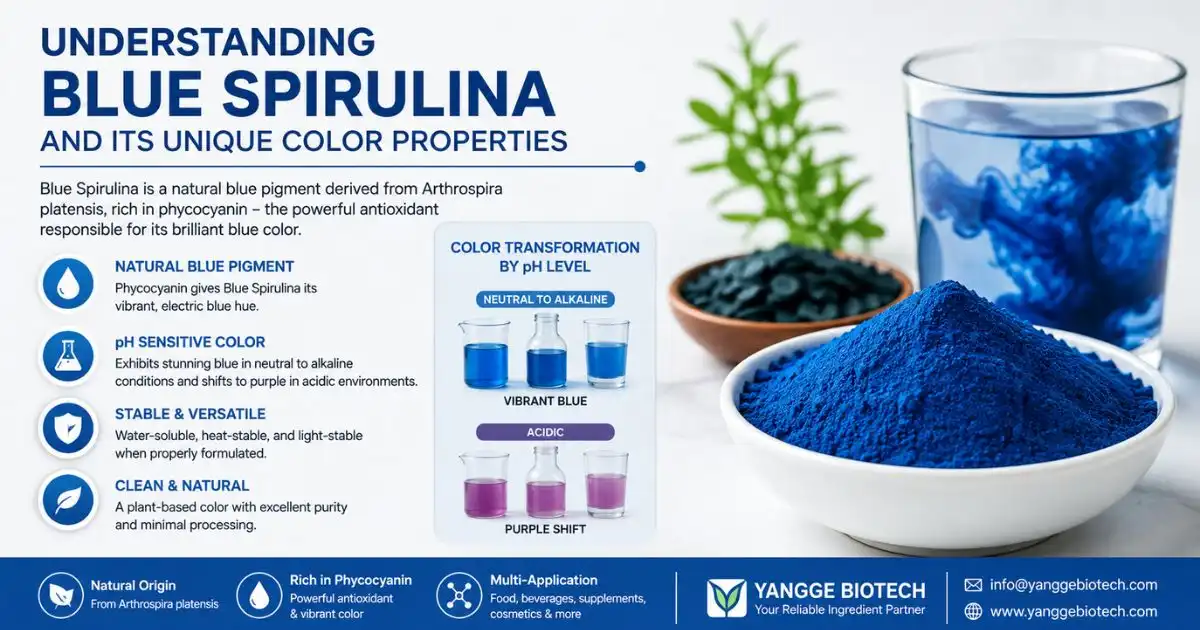
Understanding Blue Spirulina and Its Unique Color Properties
What Is Phycocyanin and Why Does It Matter?
The protein phycocyanin in cyanobacteria breaks degraded in water. Plants utilise photosynthesis to absorb light and humans use as an antioxidant. Remove this colour from spirulina biomass to get just blue and no chlorophyll. This eliminates grass flavour and greenish tinge. This extraction uses enzymes or water. This protects the protein's structure and ensures it dissolves fully in water, which is crucial for beverages and cheese.
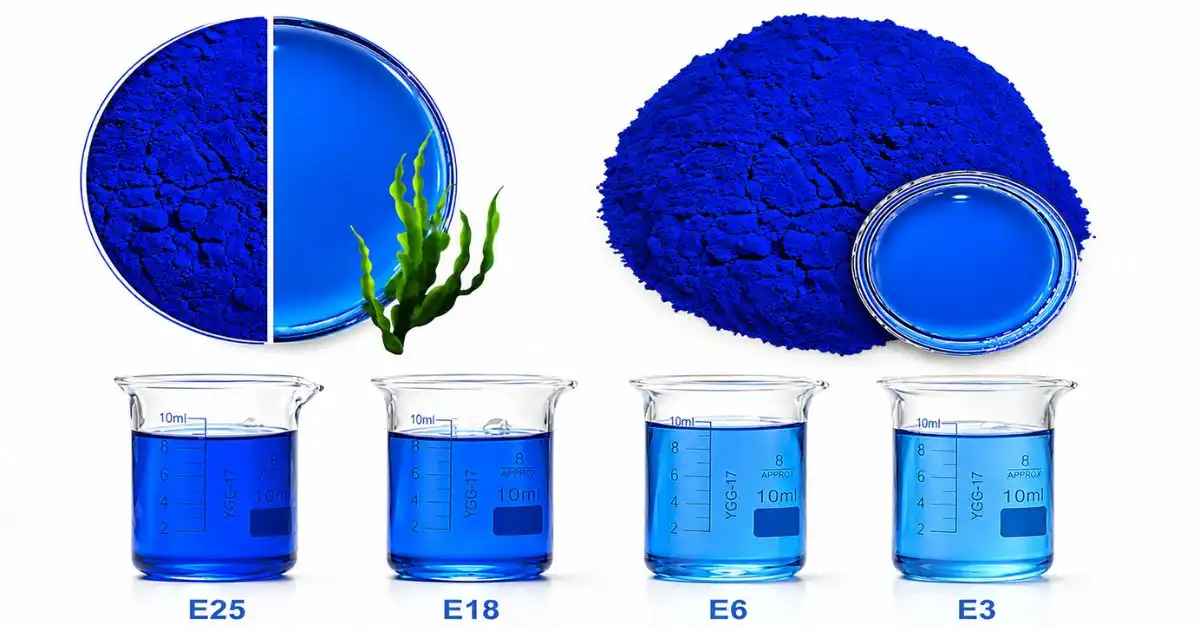
Yangge Biotech produces E10, E18, and E25 phycocyanin via HPLC extraction. The "E value" indicates colour brightness in particular bands. E18 is the norm for food-safe purposes since it's affordable and brilliant. What about E25? In cosmetics and pharmaceuticals, superior quality is worth the additional expense. Cheap or soft-toned projects benefit with E10.
Stability Advantages Over Synthetic Dyes
Folks don't like "artificial" labels and synthetic blues like Brilliant Blue FCF may cause allergies. This is why they are getting more attention. Phycocyanin is a natural choice that naturally protects, but it needs to be treated with care. When the pH level is between 4.5 and 8.0 and the temperature is below 60°C, standard phycocyanin stays stable. For uses that can't stand high temperatures, like baking, you need special ingredients or ways to use them after they've been heated. If a drink's pH is less than 4.0, the company that makes it needs to find acid-stable types or add stabilizing agents to the matrix to make it work better.
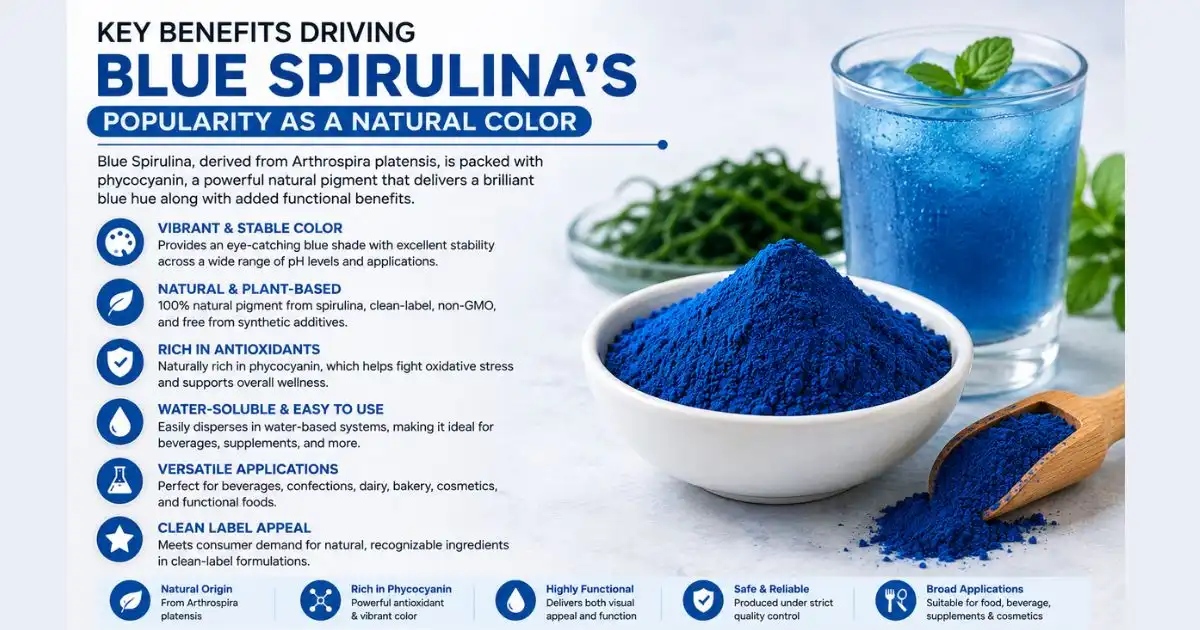
Key Benefits Driving Blue Spirulina's Popularity as a Natural Color
Clean-Label Appeal and Consumer Trust
In current buying tactics, the most important things are the ones that people want. When people read labels, they look for names they know. Words like "spirulina extract" or "phycocyanin" mean that the food is mostly whole plants that haven't been changed much. People are more loyal to a brand when they are open about it. Millennials and Gen Z are driving the $8.5 billion global market for natural food colorants, which will grow to $13.2 billion by 2030, according to new market research for Blue Spirulina.
Dual Functionality: Color Plus Nutrition
In contrast to man-made colors, which are only used for looks, phycocyanin is useful. It gets rid of free radicals, boosts the immune system, and gives you basic protein (equal to about 60% to 70% of Yangge Biotech's E18 standard). These two identities let marketing sell things as being both nice to look at and good for you, which lets them charge more. Think of smoothie bowls with extra protein, sports drinks with extra antioxidants, or vitamins in "superfood" candy.
Versatility Across Industries
Our phycocyanin performs in diverse applications:
- Beverages: It can be used to make fast drink mixes, protein shakes, functional waters, and cocktail syrups because it breaks down quickly and doesn't affect the pH level.
- Confectionery: The bright blue color of gummies, hard sweets, and dragées isn't made with any fake ingredients. These standards are met, making them Kosher and Halal, which are important for markets in the Middle East and Europe.
- Dairy and Frozen Desserts: Phycocyanin is easy to add to ice cream, yogurt, and kefir, but food makers need to be aware of temperature limits while they make the foods.
- Nutraceuticals: The colorant is used as both a colorant and a nutritional ingredient in capsules, pills, and powder mixes. This makes the list of ingredients simpler.
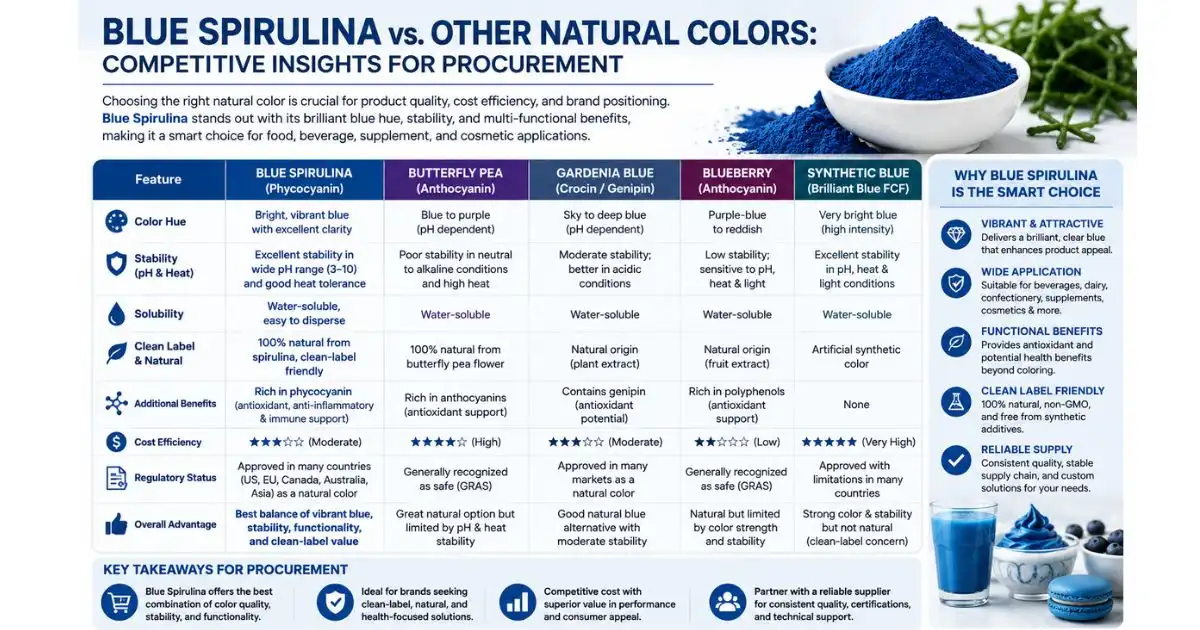
Blue Spirulina vs. Other Natural Colors: Competitive Insights for Procurement
Comparative Pigment Performance
When evaluating natural blues, procurement teams weigh color intensity, formulation compatibility, and cost-per-application. The table below summarizes key differentiators for Blue Spirulina:
| Colorant Source | Primary Pigment | Color Range | Water Solubility | Heat Stability | Relative Cost |
|---|---|---|---|---|---|
| Blue Spirulina (Phycocyanin) | Phycocyanin | From light blue to dark blue | Good | Level 2 (60°C) | Middle to High |
| Butterfly Pea Flower | Anthocyanins | Purple-blue (it depends on the pH) | Good | Moderate | Low-Medium |
| Red Cabbage Extract | Anthocyanins | From pink to blue (important for pH) | Good | Not very bad | Low |
| Synthetic Brilliant Blue FCF | Triphenylmethane dye | Bright blue | Good | High (above 100°C) | Low |
When the pH level is normal, phycocyanin stays blue and doesn't change much. Other chemicals based on anthocyanin, on the other hand, turn pink when they get acidic. There are cheaper synthetic dyes that can handle heat better, but customer responses and pressure from the government are pushing more people to choose natural colors.
Organic vs. Non-Organic Considerations
Organic certification boosts raw material costs 20–40% but opens high-end markets. The approval relies on spirulina growth and extraction. This is vital since organic farms use no synthetic pesticides or fertilisers. Water extraction satisfies organic standards without solvents. Neither ethanol nor hexane meet these. Yangge Biotech offers regular and organic production lines so suppliers may meet consumer needs. Organic certificates from USDA, EU Organic, etc. are needed for bulk buyers.
How to Source Quality Blue Spirulina Powder for Your Business
Evaluating Supplier Credentials
Procurement directors juggle competing priorities: color value consistency, pricing, lead times, and documentation completeness. When vetting suppliers, request:
- COA (Certificate of Analysis): It examines for arsenic, lead, mercury, coliforms, E. coli, and Salmonella as well as the E value.
- MSDS: Safety Data Sheets (MSDS) explain how to store, handle, and manage situations. They are crucial for warehouse and mobile crews.
- For Middle Eastern businesses and religious organisations, you need Kosher or Halal certifications. Yangge Biotech's USP-grade phycocyanin has both.
- Organic Certification: Check with the National Organic Program (NOP) or its EU counterparts before selling organic items in high-end or European markets.
Yangge Biotech always maintains one ton of E18 phycocyanin in stock at any given time, mitigating supply disruptions that plague smaller producers. Our MOQ of 25 kg accommodates trial orders, while flexible packaging—1 kg aluminum foil bags to 25 kg fiber drums—streamlines inventory management for distributors serving varied client sizes.
Pricing Benchmarks and Negotiation Strategies
Market pricing for phycocyanin (E18) typically ranges from $180 to $280 per kilogram FOB China, fluctuating with raw spirulina biomass costs and extraction yields. E25 commands $350–$500 per kilogram due to additional purification steps. If you buy a lot of Blue Spirulina, you can get deals; annual contracts exceeding 500 kg often secure 10–15% reductions.
When negotiating, emphasize payment terms: Net-30 or Net-60 terms improve cash flow versus wire transfer upfront. Clarify Incoterms: CIF (Cost, Insurance, Freight) vs. FOB impacts landed costs significantly; clarify responsibilities to avoid customs delays. Negotiate replacement clauses for batches failing COA specifications to protect your brand reputation.
Verifying Product Integrity
In illegal markets, false phycocyanin is sometimes blended with artificial colours or diluted with maltodextrin. Tests by SGS, Intertek, or Eurofins give independent verification. Request lab data proving pure phycocyanin spectrum absorbance ratios (A620/A280)—ratios below 0.7 indicate protein contamination or incorrect extraction.
Maximizing Business Value: Applications and Procurement Strategies
Tailoring Use to Sector Needs
Different businesses demand specialised methods. For quick dissolving and pH stability, beverage producers require micro-encapsulated or acid-stable versions. Bioavailability and label claims drive supplement companies to organic powders. Cosmetic makers need preservative compatibility, and skin-safe concentrations beneath them 0.5% by weight. Yangge Biotech simplifies your supply chain with protein powder, gummy, and effervescent pill OEM agreements. We test recipes at 10–50 kg when it comes to pilot plant before full production to avoid market entry risks.
Inventory Management and Risk Mitigation
Prudent strategies include:
- Safety Stock: Keep 2–3 months' buffer inventory to handle supply disruptions without stopping production.
- To avoid regional disruptions, qualify secondary suppliers in different regions, such as U.S. and Asian spirulina farms.
- Framework Deals: Lock in price and volume for 12–24 months to safeguard profitability amid raw material increases.
Storage conditions critically impact shelf life for Blue Spirulina. Phycocyanin powder requires cool (below 25°C), dark, and dry environments. Humidity above 60% accelerates protein degradation, shifting blue toward grey-brown. Aluminum foil bags with silica gel desiccants extend stability to 24 months when sealed; once opened, consume within six months.
Emerging Trends and Supply Chain Evolution
Phycocyanin becomes more than decoration as adaptogens and "functional colours" become popular. Though regulatory organisations scrutinise health claims, brands experiment with antioxidant-based mood-boosting claims. For compliance, procurement teams should follow FDA and EFSA guideline revisions. Biotechnology growth produces fermentation-based phycocyanin, which works even when algae cultivation fails. Due to economies of scale, lab-grown variations may become cheaper in five years.
Conclusion
The rise of Blue Spirulina reflects a shift toward natural goods that may be utilised for several purposes and fulfil regulatory and consumer criteria. Companies who wish to stand out with clean labelling must utilise it because of its antioxidant and natural blue shine from phycocyanin. E-value consistency, certification completeness, and inventory dependability should be prioritised when checking suppliers, and smart partnerships reduce supply chain risks. Those that enter a market early and locate reputable, low-cost supplies will benefit as it expands.
FAQ
Is phycocyanin safe for all age groups and product types?
Most Americans think spirulina phycocyanin is safe (GRAS) if it comes from a reputable supplier that follows GMPs. Baby formula, vitamins, and senior meals include it worldwide. Algae-derived protein allergies are uncommon but conceivable. Manufacturers should evaluate stability and incorporate allergy warnings in their matrices.
How does phycocyanin compare to synthetic blue dyes in functional performance?
FD&C Blue No. 1 synthetic dyes can handle greater temperatures and pH ranges for demanding compositions. Formulators must restrict heat exposure and stabilise acidic systems to use phytocyanin, which has antioxidant and clean-label properties. In consumer-facing companies where label transparency drives purchases, natural colourants win.
What certifications should B2B buyers prioritize when sourcing phycocyanin?
Organic certification attracts luxury European and North American consumers, whereas kosher and Halal certifications attract Middle Eastern and faith-conscious consumers. Manufacturing quality is guaranteed by GMP, and SGS and Eurofins testing validates purity claims. Pharmaceutical and cosmetic buyers should require USP-grade contamination control documentation.
Partner with a Trusted Blue Spirulina Manufacturer
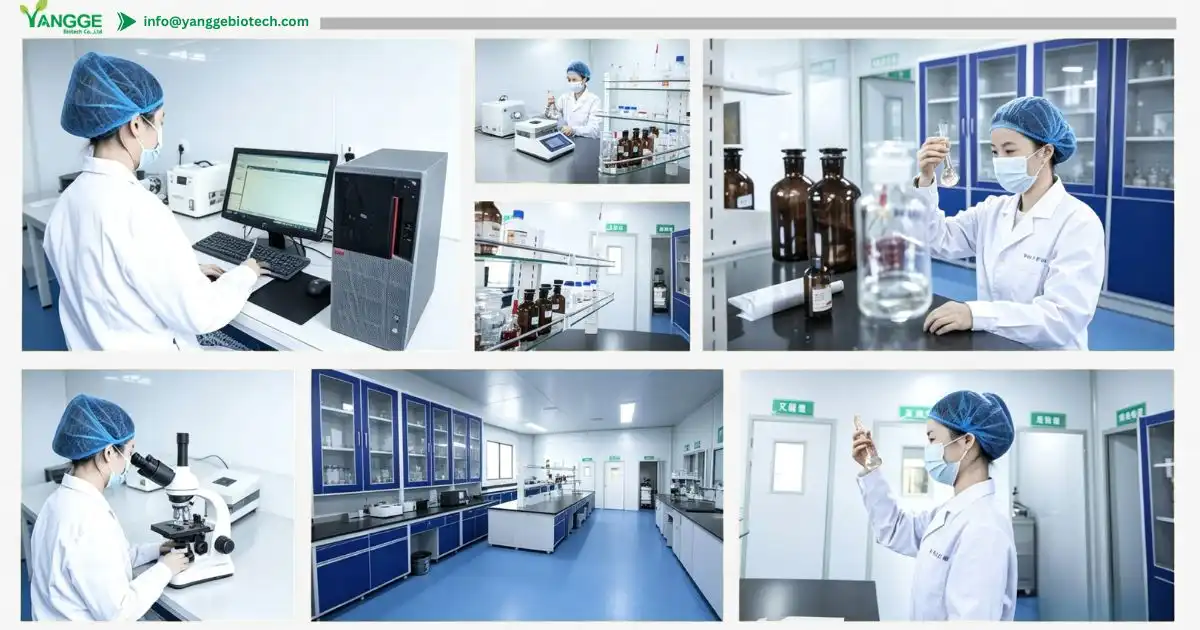
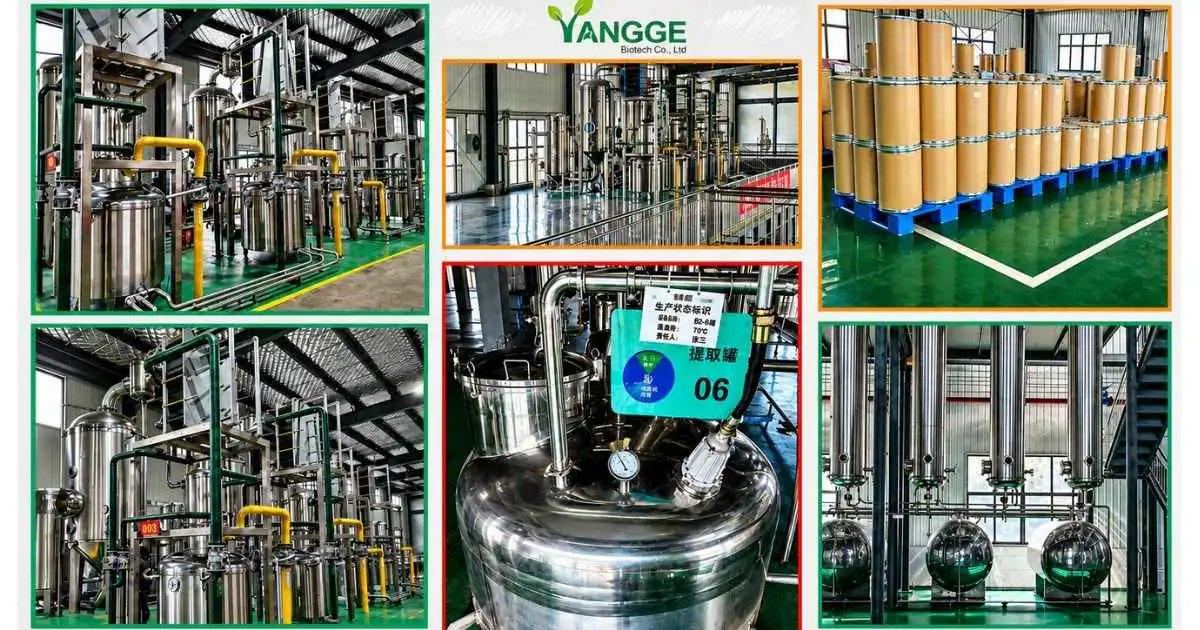
Your trusted phycocyanin supplier, Yangge Biotech offers E10, E18, and E25 specs for your formulation requirements. We avoid supply chain disruptions that threaten production schedules with 1 tonne of Kosher and USP-grade inventory ready for shipment. Our GMP-certified facilities provide comprehensive raw material to finished product solutions for bulk wholesale, OEM superfood mixes, and private-label capsule or gummy manufacture.
Whether you're a distributor serving food manufacturers across Europe or a beverage brand launching in North America, our competitive pricing, flexible 25 kg MOQ, and complete documentation (COA, MSDS, certifications) streamline your procurement process. Contact us or reach out to our team at info@yanggebiotech.com to request samples, discuss custom E-value specifications, or explore partnership opportunities that strengthen your product portfolio. Let us help you harness the power of natural blue for market differentiation.
References
1. Eriksen, N. T. (2008). "Production of phycocyanin—a pigment with applications in biology, biotechnology, foods and medicine." Applied Microbiology and Biotechnology, 80(1), 1-14.
2. Sekar, S., & Chandramohan, M. (2008). "Phycobiliproteins as a commodity: trends in applied research, patents and commercialization." Journal of Applied Phycology, 20(2), 113-136.
3. Martelli, G., Folli, C., Visai, L., Daglia, M., & Ferrari, D. (2014). "Thermal stability improvement of blue colorant C-Phycocyanin from Spirulina platensis for food industry applications." Process Biochemistry, 49(1), 154-159.
4. Spolaore, P., Joannis-Cassan, C., Duran, E., & Isambert, A. (2006). "Commercial applications of microalgae." Journal of Bioscience and Bioengineering, 101(2), 87-96.
5. Sigurdson, G. T., Tang, P., & Giusti, M. M. (2017). "Natural colorants: Food colorants from natural sources." Annual Review of Food Science and Technology, 8, 261-280.
6. Lupatini, A. L., Colla, L. M., Canan, C., & Colla, E. (2017). "Potential application of microalga Spirulina platensis as a protein source." Journal of the Science of Food and Agriculture, 97(3), 724-732.

Based on your location and order quantity, you will have the opportunity to receive a limited time free shipping promotion!
Who we are
Popular Blogs