OEM Astaxanthin Powder Buying Guide
To find good astaxanthin powder for OEM uses, you need to know about the requirements for the ingredients, the skills of the suppliers, and the quality control procedures. This protective carotenoid, which is mostly taken from Haematococcus pluvialis microalgae, has become an important raw material for companies that make nutraceuticals, useful foods, cosmetics, and drinks. The dark red powder is a much better antioxidant than vitamin E or beta-carotene, which makes it useful for setting your product apart in a crowded market. B2B buyers have special problems with making sure that batches are consistent, following the rules, and being able to track products, all of which have an effect on the end product's effectiveness and the brand's image. Procurement managers, R&D teams, and production directors can find reliable supply lines and meet strict quality standards if they understand these sourcing issues. This detailed guide covers all the important things you need to think about when choosing OEM partners, checking ingredient specs, and putting best practices for buying into action that are in line with your formulation goals and legal requirements.
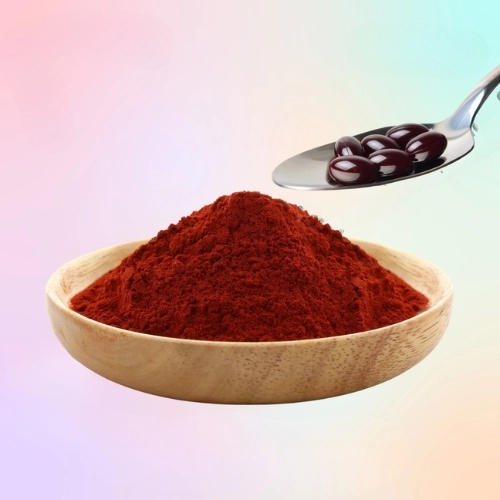
Understanding Astaxanthin Powder: Key Insights for Buyers
There are 13 conjugated double bonds in the molecular structure of this keto-carotenoid, with polar hydroxyl and keto groups at both ends. This lets it cross cell membranes and eliminate free radicals in both lipid and water environments. It is different from other protective carotenoids, like lutein and zeaxanthin, because of its unique chemical structure.
Using supercritical CO2 to get Haematococcus pluvialis naturally keeps the 3S,3'S stereoisomer configuration, which clinical study shows is better for bioactivity than synthetic forms. When microalgae are grown under controlled stress conditions, astaxanthin builds up most in the cells of the algae, usually hitting levels of 2 to 5 percent before they are harvested and extracted.
Applications Across B2B Industries
Manufacturers of nutraceuticals put this ingredient in hard pills, tablets, and softgels that are meant to improve heart health, joint movement, and sports recovery. When compared to oil-based options, the astaxanthin powder format makes production easier and lowers the risk of oxidation during compression and sealing.
Cosmetic makers use its ability to protect against UV rays to make anti-aging serums, sunblock, and "beauty from within" vitamins. Studies show that it can stop collagen breakdown and lessen skin damage from UV light, which makes it appealing for high-end skincare lines. Functional drinks, sports nutrition drinks, and ready-to-drink health shots are all made with cold-water-dispersible forms. The powder stays stable at temperatures up to 107°F (230°C) and a neutral pH range of 3.0 to 7.0, so the color stays true without settling like some natural pigments do.
Dosage Considerations and Safety Profiles
For human health purposes, clinical studies usually use doses between 4 and 12 mg per day, which means that different formulations are needed for different serving amounts. For animal feed, the concentration amounts need to be different based on the species and the color affects that are wanted. In the US, astaxanthin can only be used in certain situations because it is "Generally Recognized as Safe" (GRAS) for some uses and "Generally Recognized as Safe" for other uses. Buyers need to make sure that the way they plan to use the product is in line with FDA guidelines and any state laws that apply to that type of product.
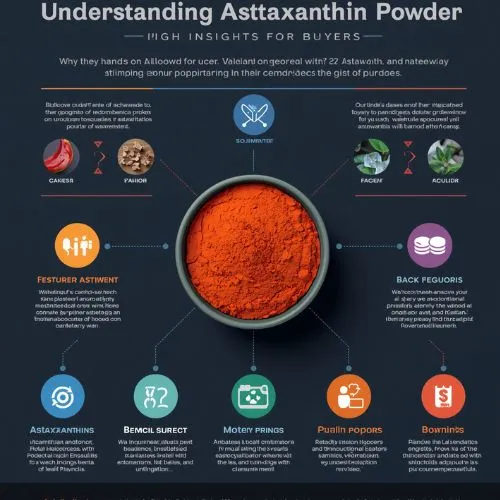
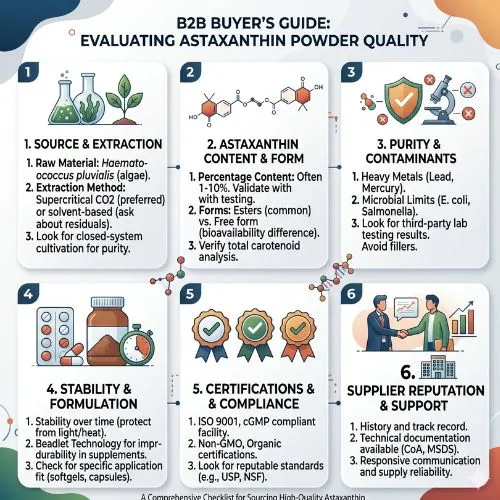
Evaluating Astaxanthin Powder Quality: What B2B Buyers Should Look For?
To tell the difference between quality levels, you must first understand the differences between natural and manmade production methods and how they affect the performance of ingredients. astaxanthin powder that comes from Haematococcus pluvialis is mostly the 3S,3'S stereoisomer. Synthetic versions, on the other hand, are usually racemic mixes with different visual structures. Research shows that these types have different bioavailability rates, which can affect how well a product works and how well it can sell.
Critical Specification Parameters
The main way to tell if something is good is by looking at its purity levels, which can be done with HPLC analysis. In market powders, the concentration levels must be between 2% and 10%. The 10% standard is a high-potency choice that can be used in capsules that don't need many other ingredients. It should look like dark red powder that stays the same color from batch to batch, since changes in color often mean that there are problems with rust or degradation.
The way the extraction is done has a big effect on the quality of the end result. Supercritical CO2 extraction keeps heat-sensitive chemicals safe without leaving behind any liquid residues. This meets the high purity standards needed for pharmaceutical and cosmetic uses. During storage and production, microencapsulation technologies keep the unstable carotenoid molecule safe from oxidation, light, and changes in temperature.
Certification Standards That Matter
GMP-compliant production centers make sure that quality is controlled in a planned way at all steps of production, from checking the raw materials to releasing the finished product. Getting ISO 22000 approval shows that you have complete methods for managing food safety that cover the whole supply chain. Kosher and Halal approvals make it easier for goods that are aimed at religiously specific groups of people to reach more customers.
Independent confirmation of standards is provided by testing in a third-party lab by well-known foreign organizations such as Eurofins or SGS. Buyers should ask for Certificates of Analysis that show the number of microbes, heavy metals, chemical residues, and the product's effectiveness. Verification of non-GMOs and allergen-free certifications help meet the needs of rising customer concerns and government rules in many markets. Products that meet these standards have not been irradiated, which keeps the natural chemical structures that are important for cellular function.
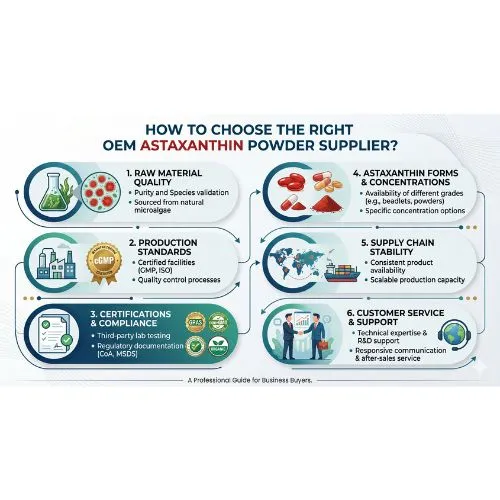
How to Choose the Right OEM Astaxanthin Powder Supplier?
For strategic seller selection to work, your buying needs must match up with the vendor's skills across a number of performance areas. Order number freedom is very important, especially when a product is still being developed and needs to be made in smaller batches before it can be mass-produced. Suppliers of astaxanthin powder with minimum order amounts as low as 1 kg make it possible to try formulations without having to buy a lot of inventory. As numbers rise, you can still get bulk prices.
Evaluating Supplier Technical Capabilities
Supply consistency is directly affected by how much can be produced and how material is managed. Suppliers who keep their stock amounts between 50 kg and 100 kg show that they are ready to complete orders right away, which cuts down on the time it takes to ship an order. The size of a manufacturing facility can tell you about its working scale. For example, a 1,500 m² facility with modern equipment could handle rising demand and multiple production runs going at the same time.
Technical help services set capable providers apart from generic ones. Buyers can get the best performance from ingredients in their specific uses with the help of R&D teamwork tools, formulation advice, and clear information about the extraction methods. Suppliers who give tailoring services, such as changing specifications, packing, and designing logos, are more valuable than just providing raw materials.
Compliance and Documentation Standards
When goods cross foreign borders or enter regulated markets, regulatory compliance paperwork is very important. Suppliers should give full sets of paperwork, such as manufacturing licenses, quality system certificates, ingredient lists, safety data sheets, and compliance statements that are special to each country. Systems that connect finished powder to batches of algae growth make sure that the source can be checked and meets the standards for organic and natural certification.
Communication infrastructure has a big impact on the strength of partnerships. Suppliers who offer 24-hour reaction times, dedicated account management, and international help make it easier to solve problems and coordinate orders. Being open about production plans, quality holds, and possible supply problems helps build trust, which is important for long-term relationships. Checking references with current customers shows trends of how reliable a supplier is when it comes to keeping promises about delivery, quality, and how quickly they respond to problems.
Streamlining Your Bulk Purchase Process: Best Practices
To get the most out of procurement, you need to know how price systems and volume economics affect the total cost of ownership. Suppliers usually use tiered pricing models that credit customers who make bigger promises. For example, prices start to drop at 10 kg, 50 kg, and 100 kg or more orders. Seasonal changes in demand in the makeup and nutrition industries make it possible to make smart purchases when demand is low and supply is limited.
Packaging and Logistics Considerations
Throughout the supply chain, good packing keeps the purity of the product safe. Standard 1 kg metal foil bags keep out light and moisture, which are important for keeping the strength while they are being stored. Customized package choices meet specific handling needs. For example, nitrogen flushing can extend the shelf life of food, and bulk containers with internal repackaging capabilities can be used by people who buy a lot of food. Storage directions that say the original cases should be kept tightly closed and out of the light stop decline between receiving and using them.
International shipping makes things more complicated when it comes to customs paperwork, import rules, and quality control standards. Suppliers who have worked with exports before know how to use standardized tariff classifications, make sure that business bills and packing lists are correct, and work with freight forwarders to find the best shipping routes and prices. Standard products usually have delivery times between one and three days. Customized products, on the other hand, have longer wait times because they need to be scheduled for production.
Quality Verification Upon Receipt
Procedures for batch testing guard against deviations from specifications and the risk of contamination. Visual review should be done after arrival to make sure the packaging is intact, the colors are consistent, and the labels are correct and have batch numbers and expiration dates on them. By asking for samples before the shipment, you can test them yourself or have a third-party lab do a study before agreeing to the full shipment release.
Suppliers who are sure of their quality systems let customers choose which labs to test their products and will arrange for samples to be sent to places like Eurofins or SGS for independent proof. This way of working together to make sure quality cuts down on risks in the supply chain and sets standards for responsibility that are good for long-term relationships. Formalize quality management processes that protect everyone's interests by setting up clear lines of communication for handling disagreements and clearly defining sample keeping, retesting procedures, and timelines for corrective actions.
Future Trends and Innovations in Astaxanthin Powder Market
The changes in the market are a reflection of larger changes in the industry toward products that are pure, sustainable, and scientifically proven. Researchers who are looking into new ways to improve absorption say that the drugs will work better at smaller doses. Liposomal encapsulating, nanoemulsion technologies, and cyclodextrin complexation are new ways to get around the astaxanthin powder compound's low solubility in water and improve absorption rates in the intestines.
Sustainability and Sourcing Innovations
Concerns about the environment that come with large-scale microalgae production are being addressed by improvements in cultivation methods. When compared to open pond farming, closed photobioreactor systems improve yield stability while lowering the risk of contamination. When carbon capture is built into production sites, algae farming becomes a carbon-negative process. This makes it appealing to brands that want to reduce their impact on the climate. Vertical farming technologies allow production to happen closer to where the goods are made, which cuts down on pollution from traffic and makes the supply chain more reliable.
As people look for options to foods that come from krill, demand for vegan and plant-based products is growing. Algae-based natural astaxanthin fits with the move toward clean labels and answers concerns about animal welfare that affect buying choices. The number of farms that get organic approval goes up as they follow rules that meet USDA Organic, EU Organic, or similar standards.
Strategic Procurement Implications
When choosing a provider, buyers who want to prepare for future market conditions should look at how innovative they are and how committed they are to sustainability. When you work with providers who are investing in better extraction technology, more certifications, and tracking systems, you can make your product claims stand out and give you a competitive edge. Diversified sourcing strategies that balance lowering costs with ensuring supply security protect against weaknesses in single sources while keeping quality standards high. Watching how regulations change in target markets makes sure that companies follow the rules when the government changes the rules on how much carotene to use, how labels should look, and how health claims should be backed up.
Conclusion
A successful OEM astaxanthin powder procurement requires a thorough analysis of the specs of the ingredients, the supplier's skills, and the quality assurance systems that directly affect how well the product works and how well it meets legal requirements. The bioactivity of natural extracts from Haematococcus pluvialis is higher than that of synthetic alternatives. This means that suppliers should be carefully chosen based on scientific knowledge, approval standards, and the trustworthiness of their supply chains. For the best results, buyers should focus on working with makers that show they follow GMP guidelines, use third-party testing methods, and offer open service options like technical help and the ability to customize products. If sourcing teams know about market trends like nutrition improvements, green practices, and preferences for clean labels, they can predict what customers will need in the future and stay ahead of the competition by coming up with new ingredients.
FAQ
Q1: What purity level should I specify for supplement formulations?
A: For most food supplement uses, concentrations between 5 and 10 percent work well because they balance the need for strength with the cost of formulation. When it comes to capsules, higher concentrations mean less need for fillers, while lower numbers may mean bigger dose sizes are needed to get the required dosage levels. The best standard choice is based on your recipe goals and target cost structure.
Q2: How do I verify authenticity upon receiving shipments?
A: Ask recognized labs for Certificates of Analysis that show the results of HPLC tests, microbial counts, and heavy metal screens. A visual check should show that the color is the usual dark red, with no clumps or discoloration. Setting up independent third-party testing through companies like SGS or Eurofins adds another layer of security before adding materials to production runs.
Q3: Can this ingredient combine with other antioxidants in formulations?
A: When antioxidants like vitamin C, vitamin E, and CoQ10 are compatible, they often work together to make the product more effective. Stability testing under your specific recipe conditions shows that the ingredients work well together and that the shelf life is good. Consulting with providers that offer expert support can help you find the best combinations of ingredients for the uses you want to make them for.
Partner with Yangge for Premium Astaxanthin Powder Supply
Yangge Biotech is an expert in producing high-quality natural astaxanthin powder from Haematococcus pluvialis. Their products meet the strict requirements that B2B buyers need to stay ahead of the competition. Our 10% HPLC-tested standard makes sure that all batches have the same amount of strength. Our GMP-compliant production and ISO 22000 certification show that we are dedicated to quality excellence. We keep strategic amounts of inventory to support both small-scale production during the development stage and large-scale production on a commercial scale. For formulation tests, our minimum order size is just 1 kg.
When you choose a reputable manufacturer, you can get full technical support, third-party lab partnerships with Eurofins and SGS, and customization services that cover needs for specs, packing, and branding. Our 1,500 m² plant uses cutting-edge extraction tools to make dark red powder that meets the standards for non-GMO, non-irradiated, and allergen-free ingredients that nutritional, cosmetic, and functional food companies need.
Yangge's farm-to-table tracking systems and environmentally friendly buying methods make sure that the ingredients are real and help the company be environmentally responsible. Contact us or email at info@yanggebiotech.com to talk about your specific purchasing needs, ask for samples to be evaluated, or set up a visit to our facility to see for yourself how we handle quality control. Standard specs have delivery times of one to three days on average, which supports your production plans with on-time fulfillment. By forming relationships with experienced suppliers, getting raw materials can be turned from a transaction to a strategic benefit that helps with product development and market success.
FAQ
Q: Can we get some samples to test before purchasing?
A: Of course, we can provide free samples of 20 to 100 grams, but the shipping cost is at the customer's expense. The shipping cost can be deducted from the next order, or the samples can be sent through your courier account.
Q: Do your products have relevant certifications?
A: Yes, our products are certified for HALAL, ISO, HACCP, Kosher, and other certifications.
Q: What is the minimum order quantity (MOQ)?
A: Small batches of samples can be customized according to your requirements.
Q: Do you offer OEM and ODM services? Can the formula be customized based on our own?
A: Of course, we provide ODM and OEM services to many customers. Our product range includes softgels, capsules, tablets, sachets, granules, and private label services. Simply contact us and let us know your requirements. Our experienced R&D team can also develop new products with specific formulas.
Please contact us to design your own branded products.
Q: How do you handle quality complaints?
A: First, we have a comprehensive quality control SOP. We provide authoritative third-party inspection reports for almost all products before shipment to minimize the possibility of quality issues. Second, we have a comprehensive return and exchange procedure. If there is a genuine quality dispute, we will strictly follow the SOP.
Q: How do you ship? How long does delivery take?
A: For small orders, we typically use DHL, UPS, EMS, FedEx, or TNT. Delivery typically takes 3-7 days. We also offer air and sea freight services. We have a strong freight forwarding team and can provide you with a one-stop service, including DDP and DDU.
Q: What are your payment terms?
A: 100% prepayment, payable by T/T, Western Union, MoneyGram, or PayPal.
Q: What is the shelf life of your products?
A: 2 years with proper storage.
References
1. Ambati, R. R., Phang, S. M., Ravi, S., & Aswathanarayana, R. G. (2014). Astaxanthin: Sources, extraction, stability, biological activities and its commercial applications—A review. Marine Drugs, 12(1), 128-152.
2. Capelli, B., Bagchi, D., & Cysewski, G. R. (2013). Synthetic astaxanthin is significantly inferior to algal-based astaxanthin as an antioxidant and may not be suitable as a human nutraceutical supplement. Nutrafoods, 12(4), 145-152.
3. Guerin, M., Huntley, M. E., & Olaizola, M. (2003). Haematococcus astaxanthin: Applications for human health and nutrition. Trends in Biotechnology, 21(5), 210-216.
4. Higuera-Ciapara, I., Felix-Valenzuela, L., & Goycoolea, F. M. (2006). Astaxanthin: A review of its chemistry and applications. Critical Reviews in Food Science and Nutrition, 46(2), 185-196.
5. Shah, M. R., Liang, Y., Cheng, J. J., & Daroch, M. (2016). Astaxanthin-producing green microalga Haematococcus pluvialis: From single cell to high value commercial products. Frontiers in Plant Science, 7, 531.
6. Yuan, J. P., Peng, J., Yin, K., & Wang, J. H. (2011). Potential health-promoting effects of astaxanthin: A high-value carotenoid mainly from microalgae. Molecular Nutrition & Food Research, 55(1), 150-165.

Based on your location and order quantity, you will have the opportunity to receive a limited time free shipping promotion!
Who we are
Popular Blogs