Natural Blue Color Trends: Why Gardenia Blue
In the food, drink, and supplement industries, the need for natural blue pigments has grown as companies try to meet strict regulatory requirements while also meeting customer demands for clean-label products. The Gardenia Blue pigment, which comes from the seeds of Gardenia jasminoides Ellis and is changed by enzymes, solves the important stability-naturalness trade-off that has been a problem for product developers for a long time. This natural colorant is very resistant to heat and has a pH range of 4.0 to 8.0. This makes it a strong alternative to manmade colorants like Brilliant Blue FCF and better than unstable choices like spirulina extract in high-heat processing settings.
Understanding Natural Blue Pigments: The Botanical Foundation of Gardenia Blue
Understanding the unique science behind gardenia-derived colorants is the first step in turning a plant into an industrial-grade pigment. Gardenia Blue pigment is not made using easy extraction methods like many other plant pigments are. Instead, it is made using complex bioconversion processes that make stable chromophores that can handle harsh production conditions.
What Makes Gardenia Blue Unique Among Natural Colorants?
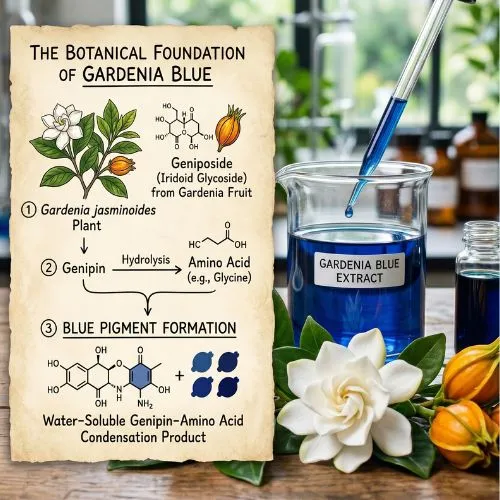
Gardenia, also called cape jasmine, is a flowering plant that grows well and is native to Asia. It is annual and produces flowers. The white flowers are known for their pleasant smell, but the deep orange fruits that look like berries are very valuable for business. These fruits have iridoid glycosides, especially geniposide, which are building blocks for making blue color. During the bioconversion process, beta-glucosidase enzyme is used to break down geniposide into genipin. Genipin then mixes with amino acids in a controlled way to create the blue chromophore. This natural method that is only partly synthetic fills in the gaps between fully synthetic options and pigments that are extracted.
Chemical Composition and Stability Characteristics
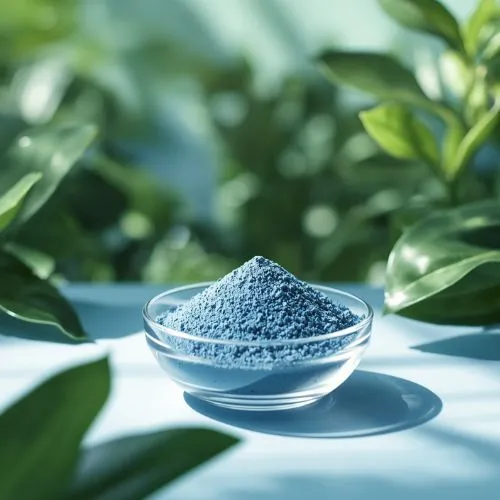
The Gardenia Blue pigment that was made is a fine, dark blue powder that dissolves easily in water and watery ethanol solutions but not in organic liquids. Because it comes in different concentrations, such as E30, E60, E80, E100, and E200, the color doesn't absorb much water and doesn't smell or taste like anything. The color tone stays true between pH levels 4.0 and 8.0, and it doesn't fade after being heated to 120°C for an hour. This remarkable temperature stability is a big plus over phycocyanin from spirulina, which breaks down quickly in the same conditions. The color sticks to proteins better than it does to starches, which makes it great for dairy products and healthy drinks with added proteins.
Cultural and Commercial Significance in Modern Manufacturing
People all over Asia have valued gardenia fruit, which is called "Zhi Zi" in traditional Chinese medicine, for a very long time. This past use gives modern makers interesting story-telling options that connect with customers who want natural ingredients that are real. The change from traditional medical uses to modern food-grade colorants is a sign of how the industry as a whole is moving toward useful ingredients that come from plants. Professionals in procurement can use this cultural history to build brand stories while also meeting the technical requirements for mass production.
Technical Advantages Driving Market Adoption
Extreme pH changes and long periods of heat exposure during processing are just a few of the problems that colorants face in manufacturing settings. Natural blue colors need to work the same way in all kinds of situations while still meeting regulations and being cost-effective.
Superior Thermal and pH Stability Profiles
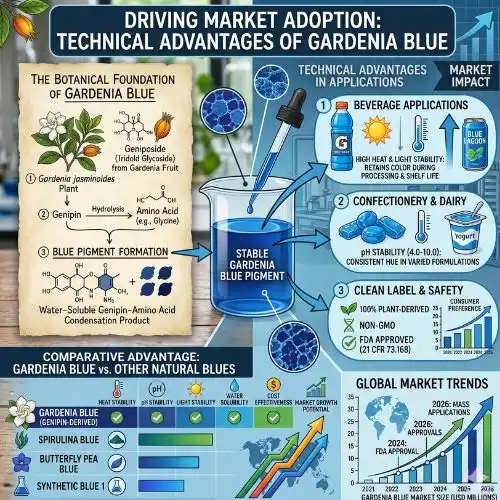
The main technical benefit of Gardenia Blue color is that it is very resistant to damage from the environment. In the process of making hard candies, where temperatures can hit 140°C or more, the color stays bright and doesn't turn brown or dull, which is a common problem with anthocyanin-based blues that turn purple or red when heated. The color stops the precipitation and "blue ring" formation that makes the product look bad and loses customer acceptance in acidic environments like those found in functional drinks and cocktails (pH 3.5–4.5). This acid resistance goes all the way up to no precipitation performance at pH 2.5–4.0, which solves a major problem for formulators making shelf-stable goods that need to last for 12 months or more.
Clean-Label Compliance and Regulatory Positioning
When buying managers look at their raw material portfolios in light of changing regulations, Gardenia Blue pigment has a lot of benefits. The pigment meets the standards for natural food-grade colorants and works just as well as manufactured substitutes. This two-in-one feature lets companies change the way they make current goods so they can comply with clean label requirements without affecting how they look or how quickly they can be processed. The color has been certified to meet GMP, ISO, HACCP, Kosher, and Halal standards, which makes the approval process easier in a number of different markets. Being able to track the process from where the fruit comes from through enzymatic conversion to the final powder form helps meet the growing demands for openness from both authorities and end customers.
Versatility Across Application Environments
Gardenia Blue pigment is used for more than just blue uses; it is also an important part of blended color schemes. It makes steady natural green colors that can be used in matcha drinks, lime-flavored foods, and green smoothies when mixed with gardenia yellow or safflower yellow. This ability to mix gives formulation freedom that copper chlorophyllin can't match because it has different smells and isn't as easily dissolved. When used in alcoholic drinks, the pigment keeps its clarity and strength in ethanol-containing mixtures where anthocyanins would change colors in ways that aren't desired. Because it dissolves easily in water and stays stable in ethanol, it is perfect for RTD cocktails, colored liqueurs, and spirit-based drinks that aim for "Blue Lagoon" looks without using any fake ingredients.
Strategic Applications in B2B Manufacturing
To figure out where Gardenia Blue pigment is most useful, you have to look at specific manufacturing situations where its special qualities solve long-standing formulation problems. The following tools offer buying managers and R&D teams big chances to make a difference.
High-Temperature Confectionery and Gummy Production
During the sugar cooking part of making candy, there is a lot of heat stress. In these situations, natural blues don't work, so companies have to use fake colors or make their products look less good. Gardenia Blue pigment can handle these working conditions and still give customers the bright "berry blue" or "cool mint" visual cues they want. The protein affinity of the pigment makes sure that it is evenly distributed throughout gelatin structures in gummy recipes. This keeps the color from settling or separating during cooling and storage. The lack of off-flavors protects delicate fruit profiles that are important for presenting quality confectionery.
Functional Beverages and Dairy Applications
As healthy drinks and dairy products with added protein become more popular, there is a constant need for colorants that can work in a variety of complex structures. Gardenia Blue pigment meets several technical needs at the same time: it keeps the pH stable in sports drinks that are acidic, it keeps the heat stable when dairy products are pasteurized, and it keeps the brightness of clear drinks. The pigment's ability to strongly stain proteins is helpful in high-protein shakes and yogurt drinks, where even color spread is linked to a sense of quality. When different protein sources change the pH of plant-based milk replacements, the coloring stays the same color from batch to batch.
Bakery, Pastry, and Frozen Dessert Innovation
When things are baked, they go through both heat stress and alkaline pH changes from the leavening agents. Gardenia Blue pigment can handle both problems, so frostings, sauces, and cake recipes will stay the right color from the time they are mixed until they are baked. This regularity cuts down on waste caused by color mismatches and makes it easier to plan for predictable production. When used in frozen desserts like sorbets and ice cream, the pigment's stability during freeze-thaw cycles stops color movement or fading that can hurt the dessert's shelf appeal during shipping and display.
Procurement Considerations for Industrial Buyers
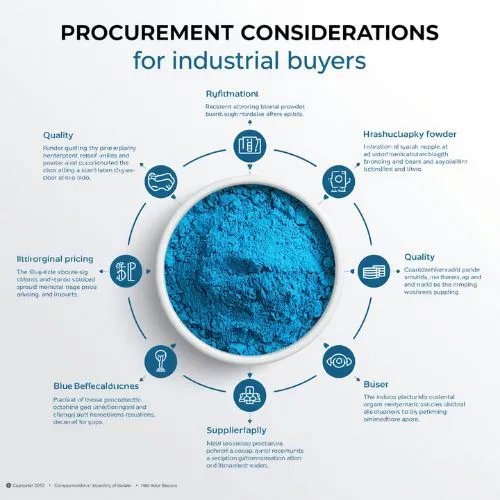
To successfully add Gardenia Blue pigment to industrial processes, it is important to pay attention to how suppliers are evaluated, how quality assurance methods are followed, and how logistics are planned. Procurement managers have to find a balance between technology requirements and business concerns like stable prices and a reliable supply chain.
Supplier Qualification and Quality Standards
Before choosing a supplier, it's important to check their manufacturing licenses and quality control methods. Suppliers should show that they follow GMP by putting together written batch consistency standards and a certificate of analysis (COA) for every shipment. Gardenia fruit extraction, enzymatic fermentation, refinement, concentration, and drying are all steps in the production process that need specialized tools and technical know-how. Buyers should ask for building checks or inspection reports from a third party to make sure that the right environmental controls and steps are being taken to keep the area clean. Formulation teams can make sure that pigments work well in specific matrices and processing conditions that are unique to each production setting by trying samples before placing bulk orders.
Pricing Dynamics and Contract Structuring
The price of natural pigments depends on many things, such as crop rates, how well enzymes convert pigments, and the concentration levels that are required. Higher E-value standards (E100, E200) cost more, but they are used less often in final formulas. Buyers should figure out the total cost of ownership for each concentration choice, taking into account the weight of the shipment, the amount of space needed, and how well the recipe works. Long-term supply deals that include promises to volume can often get better prices and make sure that supplies are distributed during times of high demand. Clear contact between buyers and sellers about the supply of raw materials and production capacity helps buyers plan their inventory based on price changes.
Logistics and Handling Protocols
When pigments are made and used in final formulations, they stay stable as long as they are handled properly. The powder form needs to be kept away from too much water and direct sunlight for a long time, but the pigment is generally stable in controlled factory settings. To keep things from going bad with age, buyers should set up rules for keeping that keep things cool and dry and change stock using the first-in, first-out rule. When the pigment is shipped across foreign lines, the paperwork should make it clear that it is a natural food-grade material that meets the right regulatory standards. By coordinating shipping times with production plans, you can avoid storing pigments for longer than they need to be and keep them at their freshest.
Building Reliable Supplier Partnerships
Because making natural pigments is so complicated, companies need to work together with sources who can offer more than just goods. Long-term ties with suppliers are valuable because they help with new ideas, follow the rules, and solve problems quickly when formulation problems appear.
Technical Support and Application Development
Leading sellers offer formulation help that helps buyers get the most out of the pigments they use, make changes for different pH environments, and figure out why colors change in ways that were not expected. This technical cooperation is especially helpful when changing current goods from synthetic to natural colorants, since replacing one ingredient with another rarely gives the same results. Having access to source R&D teams shortens the time it takes to develop a product and lowers the cost of making mistakes while developing it. Suppliers should give advice on how to use their products in particular types of situations. This should include suggested concentration ranges, compatibility with common ingredients, and processing parameter instructions.
Regulatory Intelligence and Documentation
Food colorants are regulated in very different ways in different parts of the world. These regulations are always changing to reflect new safety studies and buyer concerns. Suppliers who know a lot about regulatory affairs can help buyers figure out these complicated issues by giving them market-specific paperwork to back up product claims and registration. For natural and organic certification claims to be valid, full tracking paperwork from the plant source to the finished pigment is needed. Informing people ahead of time about changes to regulations that could affect colorant approvals or usage levels can help keep things compliant and avoid costly shocks.
Sustainable Sourcing and Ethical Practices
Sustainability concerns go beyond how things affect the environment and include social duty along supply lines. More and more, buyers are looking for providers that use fair labor standards, ethical sourcing, and community development programs in rural areas. Gardenia Blue cultivation methods that include small-scale farms through long-term community development frameworks help rural economies and ensure a steady supply of flowers. Using renewable energy in processing plants and starting programs to cut down on waste show that businesses care about taking care of the environment. These sustainability accolades improve a brand's positioning for buyers who are trying to reach environmentally aware customers and meet corporate responsibility goals set by procurement policies.
Conclusion
Gardenia Blue pigment is a game-changing natural colorant that can help makers find their way around the market. Its special mix of being stable at high temperatures, being able to handle changes in pH, and being clean-label compliant solves important formulation problems in candy, drinks, dairy, and baked goods. It's helpful for procurement workers to understand both the technical performance factors and the strategic supplier relationship factors that make long-term merging work. As clean-label trends pick up speed and government scrutiny of manmade additives grows, Gardenia Blue pigment helps makers meet changing market needs while keeping the visual appeal and processing efficiency that are necessary for making competitive product lines.
Yangge Biotech offers high-quality Gardenia Blue pigment that is made to strict GMP standards and has full ISO, HACCP, Kosher, and Halal certifications. From sustainable fruit sourcing to enzymatic bioconversion, we do everything in-house. This gives us unmatched batch uniformity and tracking, and it means we can meet the strictest quality standards. We offer technical application help that is tailored to your unique formulation problems. This is backed up by responsive customer service that works 24 hours a day, 7 days a week, 365 days a year. Our committed team makes sure that you get what you need at a price that is competitive, whether you need small amounts for development tests or large amounts to support large-scale production. Contact us experts at info@yanggebiotech.com to talk about your Gardenia Blue pigment provider needs and find out how our dedication to quality and technical know-how can help you reach your clean-label innovation goals.
FAQ
Q: Can we get some samples to test before purchasing?
A: Of course, we can provide free samples of 20 to 100 grams, but the shipping cost is at the customer's expense. The shipping cost can be deducted from the next order, or the samples can be sent through your courier account.
Q: Do your products have relevant certifications?
A: Yes, our products are certified for HALAL, ISO, HACCP, Kosher, and other certifications.
Q: What is the minimum order quantity (MOQ)?
A: Small batches of samples can be customized according to your requirements.
Q: Do you offer OEM and ODM services? Can the formula be customized based on our own?
A: Of course, we provide ODM and OEM services to many customers. Our product range includes softgels, capsules, tablets, sachets, granules, and private label services. Simply contact us and let us know your requirements. Our experienced R&D team can also develop new products with specific formulas.
Please contact us to design your own branded products.
Q: How do you handle quality complaints?
A: First, we have a comprehensive quality control SOP. We provide authoritative third-party inspection reports for almost all products before shipment to minimize the possibility of quality issues. Second, we have a comprehensive return and exchange procedure. If there is a genuine quality dispute, we will strictly follow the SOP.
Q: How do you ship? How long does delivery take?
A: For small orders, we typically use DHL, UPS, EMS, FedEx, or TNT. Delivery typically takes 3-7 days. We also offer air and sea freight services. We have a strong freight forwarding team and can provide you with a one-stop service, including DDP and DDU.
Q: What are your payment terms?
A: 100% prepayment, payable by T/T, Western Union, MoneyGram, or PayPal.
Q: What is the shelf life of your products?
A: 2 years with proper storage.
References
1. Chen, L., & Zhang, Y. (2021). Natural Food Colorants: Chemistry, Applications, and Regulatory Frameworks. Academic Press.
2. Johnson, M. R. (2020). "Stability evaluation of plant-based blue pigments in thermal processing environments." Journal of Food Science and Technology, 57(8), 2845-2856.
3. Kim, S. H., & Park, J. W. (2022). Gardenia jasminoides: Phytochemistry, Processing Technologies, and Industrial Applications. Springer Nature.
4. Martínez-López, A., et al. (2019). "Comparative analysis of natural versus synthetic colorants in confectionery manufacturing: Performance and consumer perception." Food Research International, 126, 108634.
5. Patel, R. K. (2023). Clean Label Food Ingredients: Market Trends and Technical Innovations. Woodhead Publishing.
6. Thompson, D. E., & Williams, K. A. (2021). "Enzymatic bioconversion processes for natural pigment production from botanical sources." Biotechnology Advances, 48, 107721.

Based on your location and order quantity, you will have the opportunity to receive a limited time free shipping promotion!
Who we are
Popular Blogs