Oat Beta Glucan Supplier Guide for Health Brands
Yangge Biotech Oat Beta Glucan is a premium natural soluble fiber ingredient extracted from high-quality oats. With excellent purity and solubility, it is widely used in dietary supplements, functional foods, beverages, nutritional powders, cereals, and health products. Yangge Biotech provides reliable bulk supply, multiple specifications, customized packaging, and OEM/ODM solutions to meet the needs of health and nutrition brands worldwide. For product specifications, COA, samples, bulk pricing, or customized solutions, contact Yangge Biotech at info@yanggebiotech.com.
Sourcing the right oat beta glucan supplier is pivotal for health brands developing functional foods, dietary supplements, and immune-supporting products. Oat Beta Glucan, a water-soluble dietary fiber extracted from oat cell walls, stands out for its scientifically validated cardiovascular and immune benefits. This comprehensive guide navigates procurement managers and R&D engineers through critical supplier selection criteria, quality benchmarks, application insights, and market trends, enabling confident decisions that align with regulatory standards and product innovation goals.
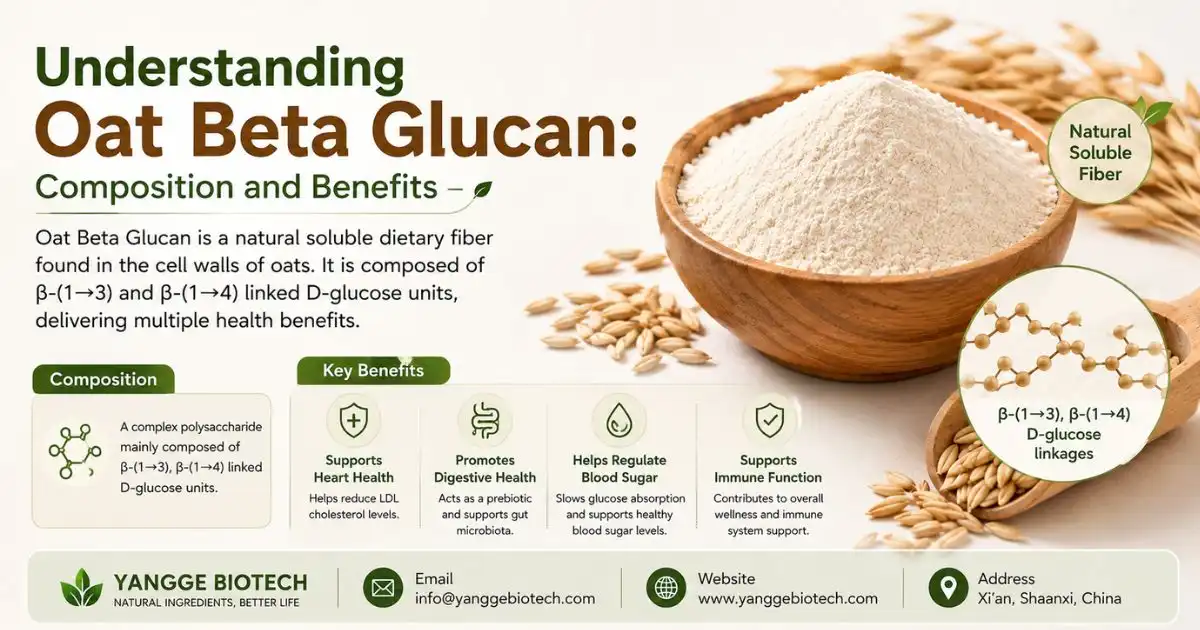
Understanding Oat Beta Glucan: Properties and Benefits
What Makes Oat Beta Glucan Unique?
We get Oat Beta Glucan from the endosperm and bran cell walls of non-GMO oats (Avena sativa). It is a highly processed soluble fiber. There are β-(1→3) and β-(1→4) glycosidic links that connect glucose molecules to make a straight polysaccharide. This is different from yeast or mushroom glucans, which have branched structures. Oat Beta Glucan has a unique chemical structure that makes it very easy to dissolve and thicken. This makes it useful in many areas, such as healthy foods, vitamins, and makeup.
It has been proven over 30 years that Oat Beta Glucan is good for your health. It is made up of the European Food Safety Authority (EFSA) and the U.S. Both the Food and Drug Administration (FDA) and the study agree that eating 3 grams of it every day can lower LDL cholesterol. This is a strong health claim that meets all the requirements. Not only is Oat Beta Glucan good for your heart, it also changes the way your immune system works, helps keep your blood sugar in check, and grows the types of bacteria in your gut by fermenting into short-chain fatty acids.
Key Health Benefits Backed by Science
It is well known that Oat Beta Glucan is helpful for the body in certain ways. Its thick consistency makes it take longer for the stomach to empty and for nutrients to be absorbed. This is good for diabetics because it keeps blood sugar levels steady after a meal. Blood cholesterol levels drop when bile acid binds to cholesterol in the gut. This makes the liver change cholesterol into LDL, which lowers the amount of LDL in the blood. Working with macrophages and dendritic cells to make more cytokines and strengthen the body's defense against germs is part of immune control.
There are two things that Oat Beta Glucan does when it comes to the skin: it keeps the skin wet and calms it down. It helps protect against damage by making a film, and it can be found in lotions and anti-aging creams for sensitive skin.
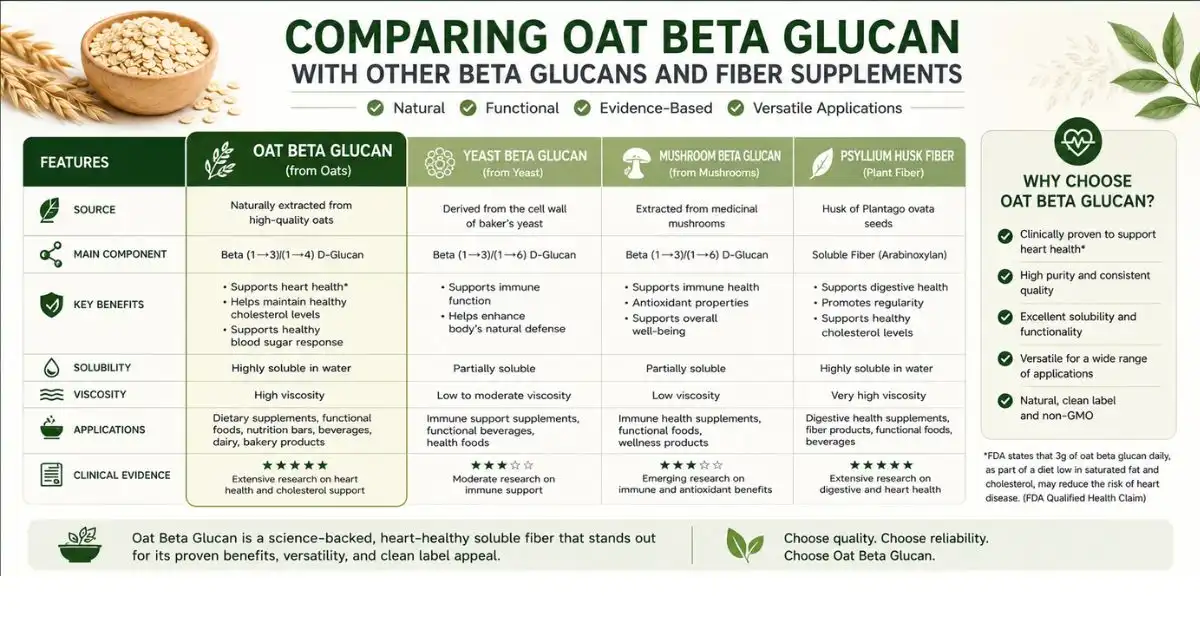
Comparing Oat Beta Glucan with Other Beta Glucans and Fiber Supplements
Molecular Differences and Functional Implications
Purchasing teams can choose the best ingredients when they know how the structures of different beta glucans are different. It is made up of β-(1→3) main chains and β-(1→6) branches. Most of the time, it turns on defense receptors and doesn't break down. The linear structure of barley beta glucan is the same as that of Oat Beta Glucan. However, it has more β-(1→4) links, which makes it less sticky. Even though both psyllium husk and inulin are soluble carbohydrates, they don't work like beta glucan does to lower cholesterol or have health claims that have been approved by the government.
| Fiber Type | Solubility | Primary Health Benefit | FDA/EFSA Health Claim |
|---|---|---|---|
| Oat Beta Glucan | Highly soluble | Cholesterol reduction, immune support | Yes (3g/day) |
| Yeast Beta Glucan | Insoluble | Immune modulation | No |
| Barley Beta Glucan | Soluble | Cholesterol reduction | Yes (3g/day) |
| Psyllium Husk | Soluble | Digestive regularity | Yes (7g/day) |
| Inulin | Soluble | Prebiotic, gut health | No |
Formulation Considerations: Powder vs. Extract
There are numerous applications for Oat Beta Glucan powder. You have to heat or mix native high-molecular-weight powder with a lot of force for it to fully melt. It works well in baked foods and hot breakfast. Versions that have been broken down or clumped together dissolve quickly in cold water, so they can be used in ready-to-mix drinks and meal replacement shakes. Formulators can find the best balance between viscosity and processing ease when providers offer custom molecular weight ratios. This helps fix common issues in production, like material issues or clumps.
Pure Oat Beta Glucan doesn't taste like anything, unlike coarse oat bran, which can make food taste like it has grains in it. Because of this, it is simple to add to drink mixes, energy bars, and pills without changing the way they smell or taste.
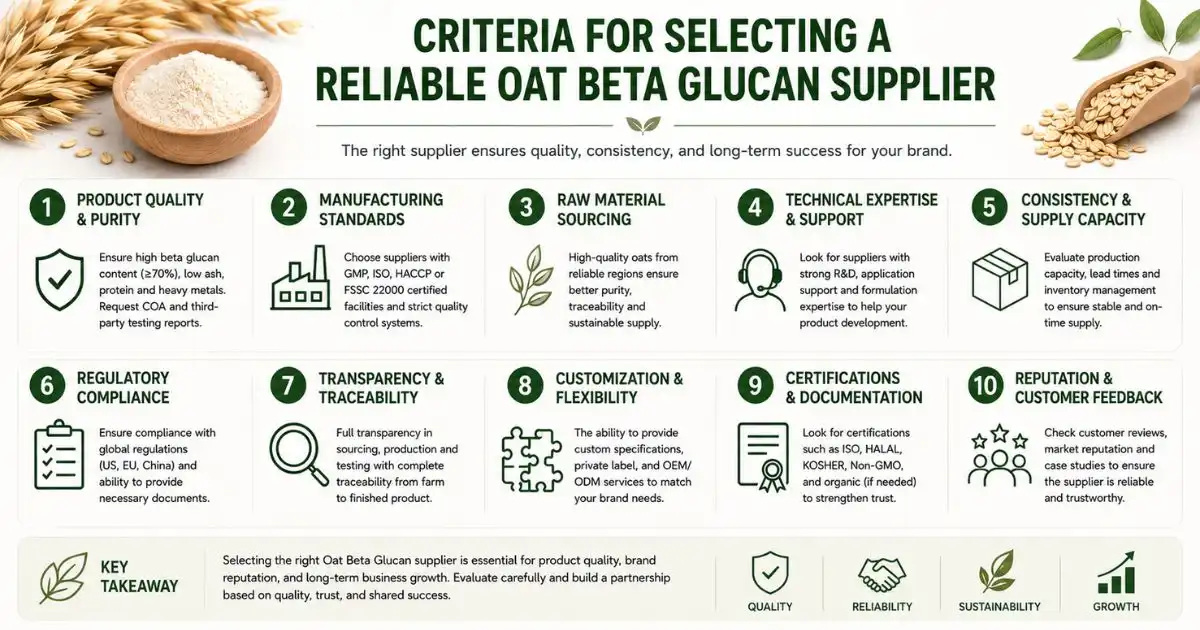
Criteria for Selecting a Reliable Oat Beta Glucan Supplier
Purity, Concentration, and Certification Standards
The specs of something you want to buy must list Oat Beta Glucan content first. This is usually between 70% and 95% pure. While measuring numbers with enzymes (AOAC 995.16 or AACC 32-23), make sure they are not the same as starch toxins. Size-exclusion chromatography (SEC-MALLS) can show how the molecular weight is distributed. This has a direct impact on sticking and bioactivity, which is important for making sure that the amounts claimed for health benefits are met.
With a certification, you can be sure that the seller meets quality and safety standards. With ISO 9001, ISO 22000, and GMP compliance, you can be sure that the way you make things is strong. Brands that want to reach more health-conscious people in North America and Europe can use certifications like organic, Kosher, Halal, and non-GMO to get their products in front of more people. European laws are followed when they check for PAH4 compliance (Benzopyrene ≤10 ppb) and the lack of irradiation.
Traceability and Contaminant Testing
Farmers who you can trust use farm-to-table tracking to keep track of where the oats came from, how they were harvested, and how each batch was checked. Heavy metal tests with an ICP-MS should show that the amounts of lead and arsenic are less than 0.5 parts per million (ppm). There must be microbiological checks to see if the total plate counts are less than 1,000 CFU/g and for Salmonella and E. coli are not there. ELISA testing for gluten makes sure that a product doesn't contain any allergens, which is needed for product lines that are safe for celiacs.
Checking by a third-party lab through an approved facility (SGS, Eurofins, or Intertek) lets you be sure of the quality and lowers the risks in the supply chain. Providers who send Certificates of Analysis (CoA) with every batch show that they are honest and accountable.
Value-Added Services and Technical Support
You should ask the suppliers if they can help with more than just providing raw materials. Find out if they can help with OEM packaging, private labeling, and formulation consultation as well. You can do pilot tests with as little as 1 kg of the product, and you can scale up with the flexibility of bulk orders (50–100 kg of inventory). When wait times and pricing are clear, there is less uncertainty about buying.
Help from technical support teams should be given to find the best viscosity, figure out dosages, and make sure that health claims follow FDA rules. People can work together to make new apps through collaborative creativity connections. This helps brands stay ahead of the curve as consumer tastes change.
Market Overview: Purchasing Oat Beta Glucan in Bulk
Sourcing Channels and Pricing Dynamics
People can find sellers from all over the world on B2B markets like Alibaba, but people still need to do their homework. Often, when you work directly with makers, you can get better deals, more ways to customize, and more control over the quality. In North America and Europe, regional wholesalers may charge more, but they have a wider range of goods and can ship orders more quickly.
Prices depend on the quality level, the proof, and the country where the goods came from. Because of the way it is grown, organic Oat Beta Glucan costs 20 to 30 percent more than regular versions. You can talk about bulk discounts, rules for contract manufacturing, and different ways to pay when you sign a bulk deal for 10 to 50 metric tons per year.
| Purchase Volume | Price Range (USD/kg) | Typical Lead Time |
|---|---|---|
| 1-50 kg | $80-$120 | 1-2 weeks |
| 51-500 kg | $60-$90 | 2-4 weeks |
| 501+ kg | $45-$70 | 4-6 weeks |
Logistics and Regulatory Compliance
The molecular weight stays the same when you put things in aluminum foil bags and flush them with nitrogen. This keeps the bags from absorbing water and oxidizing. So that things don't break, they need to be kept somewhere cool, dry (RH <60%), and away from light. There must be CoAs, MSDSs, and import permits for each country on the shipping paperwork.
To follow FDA and EFSA rules, it's important to know what the standards are for proving health claims. To meet the 3 gram limit, cholesterol-lowering products must have between 0.75 and 1 gram of Oat Beta Glucan per serving. This means that you would have to eat 3 to 4 servings of these products every day. Being able to join a market and get a label accepted faster is possible for suppliers who know the legal ways to do it.
Integrating Oat Beta Glucan into Health Brand Products
Application Across Product Categories
Because it can be changed, Oat Beta Glucan can be found in many health products. Dietary products with powder inside capsules give you high amounts of substances that are good for your heart (500 to 1,000 mg per capsule). To make you feel fuller and add fiber to functional foods like protein shakes, meal replacement bars, and enriched cereals, Oat Beta Glucan is used. These foods still meet the health claim standards.
An ingredient called Oat Beta Glucan is found in many skin care products, such as serums, lotions, and creams for dry or itchy skin. It keeps the skin moist and soft. For pharmaceutical uses, it is looked at as a way to heal cuts and give drugs, but the rules are very different from those for food-grade uses.
Quality Control and Batch Consistency
Tough tests done inside and outside the company make it possible for batches to be the same. A Brookfield viscometer and a 0.5% solution were used to measure the viscosity, which shows that the function works as it should. To keep label claims up to date after the expiration dates, it's important to be able to predict how potent something will be after a short time under fast conditions (40°C, 75% RH).
There are new health claims (like immune support and gut microbiome) and stories about sustainable sourcing that can be seen when you work with your suppliers to come up with new ideas. Customers want brands that are fair and care about the earth to be open about how they run their supply chains.

Conclusion
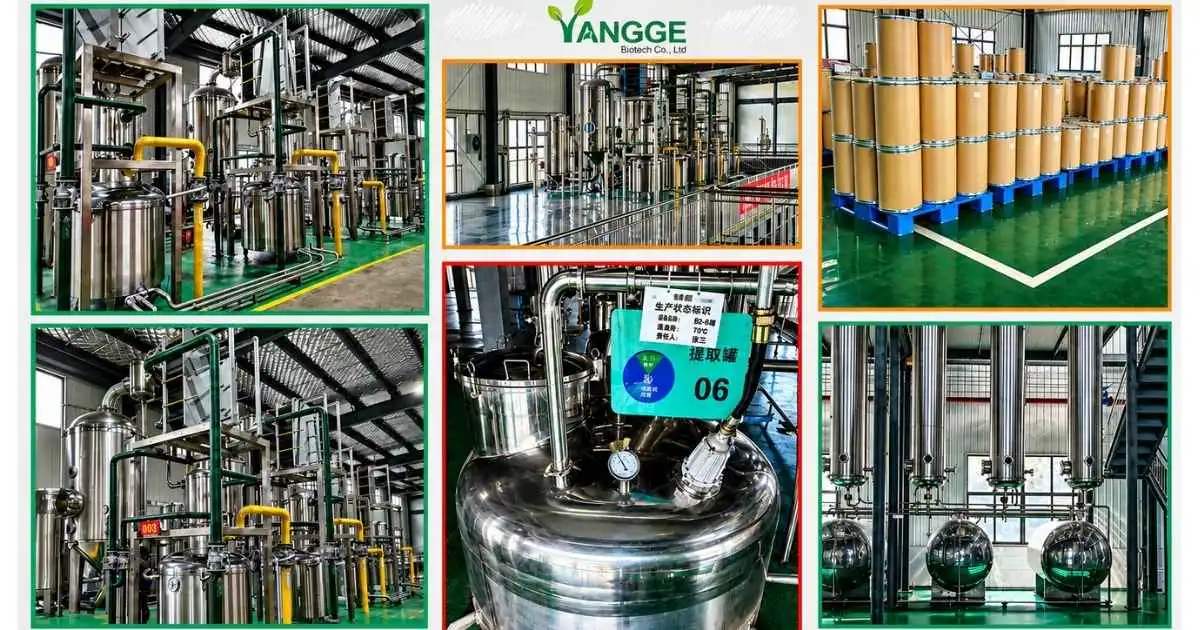
To find a trustworthy Oat Beta Glucan provider, you should think about how pure the goods are, how well they follow the law, how much they cost, and whether or not they offer expert help. Yangge Biotech works hard to keep its ISO, HACCP, Kosher, and Halal licenses up to date. Health brands can trust us to work with them because our goods don't contain any GMOs or allergens and meet European PAH4 standards.
Our strict quality control measures, ability to track food from farm to table, and range of OEM packaging choices assist purchasing managers in bringing new, market-leading goods to the market. Your company can be sure that adding Oat Beta Glucan to products that meet government health goals and standards is safe if you value your suppliers' knowledge and are honest with them.
FAQ
What is the optimal dosage of oat beta glucan for cholesterol management?
The FDA and EFSA say that you should eat 3 grams of Oat Beta Glucan every day to lower your LDL cholesterol in a way that is clinically important. There should be enough in 3 to 4 servings a day for most people to reach the level, since most forms give between 0.75 and 1 gram per serving. How accurate the dose is will depend on how well the enzyme assays measure Oat Beta Glucan.
How can I verify the quality and authenticity of an oat beta glucan supplier?
Ask outside labs like SGS and Eurofins to give you Certificates of Analysis (CoA) that show how much Oat Beta Glucan, heavy metals, bacteria, and toxins are present. Take a look at the GMP, ISO, and organic certificates. Check samples at different labs to see if what the seller says is true and to see how thick, soluble, and smelling they are.
Are there potential side effects or interactions with oat beta glucan?
Generally speaking, Oat Beta Glucan is safe (GRAS) and has few side effects. As fiber ferments, too much of it can make your stomach feel uncomfortable in small ways, like gas or bloating. Talk to your doctor if you are taking drugs to lower cholesterol. The dose may need to be changed because of the side effects of other drugs. If you have celiac disease, you should always look for the gluten-free seal.
Partner with Yangge for Premium Oat Beta Glucan Supply
Yangge Biotech specializes in delivering high-purity Oat Beta Glucan powder tailored for functional food manufacturers, supplement brands, and cosmetic innovators. As a certified Oat Beta Glucan supplier with ISO, HACCP, Kosher, and Halal credentials, we ensure every batch meets stringent European and American regulatory standards. Our off-white fine powder, sourced from non-GMO oats, offers 70-95% Oat Beta Glucan concentration with verified molecular weight profiles for optimal viscosity and bioactivity. We support minimum orders of 1 kg for sampling and maintain 50-100 kg inventory for rapid scaling.
Custom OEM packaging, private labeling, and technical formulation assistance empower your brand to innovate confidently. Our dedicated R&D team collaborates with clients to navigate FDA health claims, optimize processing parameters, and integrate sustainable sourcing narratives. Contact us at info@yanggebiotech.com to request samples, discuss bulk pricing, and explore how Yangge's commitment to quality and transparency can elevate your product portfolio. Visit blog.yanggebiotech.com for additional insights on functional ingredient innovation.
References
1. Othman, R. A., Moghadasian, M. H., & Jones, P. J. (2011). Cholesterol-lowering effects of oat β-glucan. Nutrition Reviews, 69(6), 299-309.
2. Tiwari, U., & Cummins, E. (2011). Meta-analysis of the effect of β-glucan intake on blood cholesterol and glucose levels. Nutrition, 27(10), 1008-1016.
3. Rebello, C. J., O'Neil, C. E., & Greenway, F. L. (2016). Dietary fiber and satiety: the effects of oats on satiety. Nutrition Reviews, 74(2), 131-147.
4. Zhu, F., Du, B., & Xu, B. (2016). A critical review on production and industrial applications of beta-glucans. Food Hydrocolloids, 52, 275-288.
5. El Khoury, D., Cuda, C., Luhovyy, B. L., & Anderson, G. H. (2012). Beta glucan: health benefits in obesity and metabolic syndrome. Journal of Nutrition and Metabolism, 2012, Article ID 851362.
6. Wolever, T. M., Tosh, S. M., Gibbs, A. L., Brand-Miller, J., Duncan, A. M., Hart, V., ... & Wood, P. J. (2010). Physicochemical properties of oat β-glucan influence its ability to reduce serum LDL cholesterol in humans: a randomized clinical trial. American Journal of Clinical Nutrition, 92(4), 723-732.

Based on your location and order quantity, you will have the opportunity to receive a limited time free shipping promotion!
Who we are
Popular Blogs