Where to Buy Sweet Potato Red Food Color Powder?
Sweet Potato Red Powder from Yangge Biotech is a natural plant-based coloring ingredient derived from sweet potato, offering an attractive red to reddish-purple color for a variety of food and beverage applications. It is suitable for use in beverages, confectionery, bakery products, dairy products, snacks, and other formulations requiring a natural color solution. Yangge Biotech focuses on natural plant extracts and food-coloring ingredients and provides quality-controlled raw material solutions for global customers.
For bulk orders, product specifications, samples, quotations, or OEM/ODM requirements, contact Yangge Biotech today.
Email: info@yanggebiotech.com
Finding a reliable source for Sweet Potato Red food color powder can transform your product development journey. As a procurement manager or R&D engineer in the beverage, confectionery, or bakery sector, you're likely searching for a natural colorant that delivers vibrant hues without compromising clean-label standards.
This guide walks you through trusted procurement channels, supplier evaluation criteria, and quality benchmarks to help you source premium sweet potato extract that meets both your technical specifications and budget requirements. Whether you're replacing synthetic dyes or developing innovative red-hued products, understanding where and how to buy this anthocyanin-rich pigment will streamline your decision-making process.
Understanding Sweet Potato Red Food Color Powder
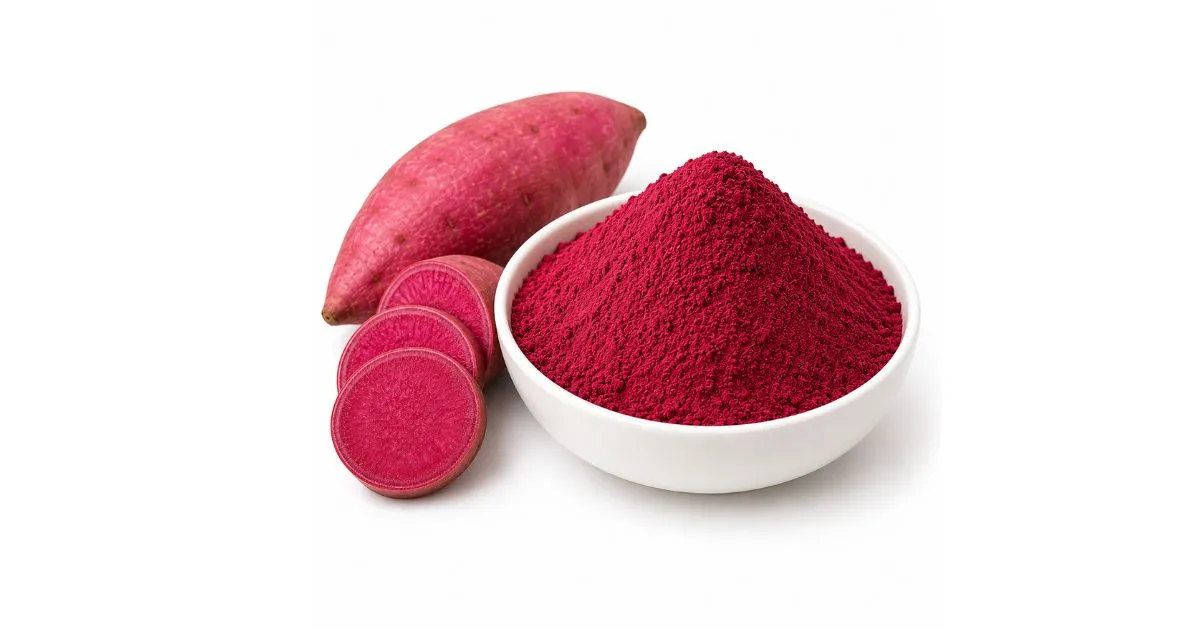
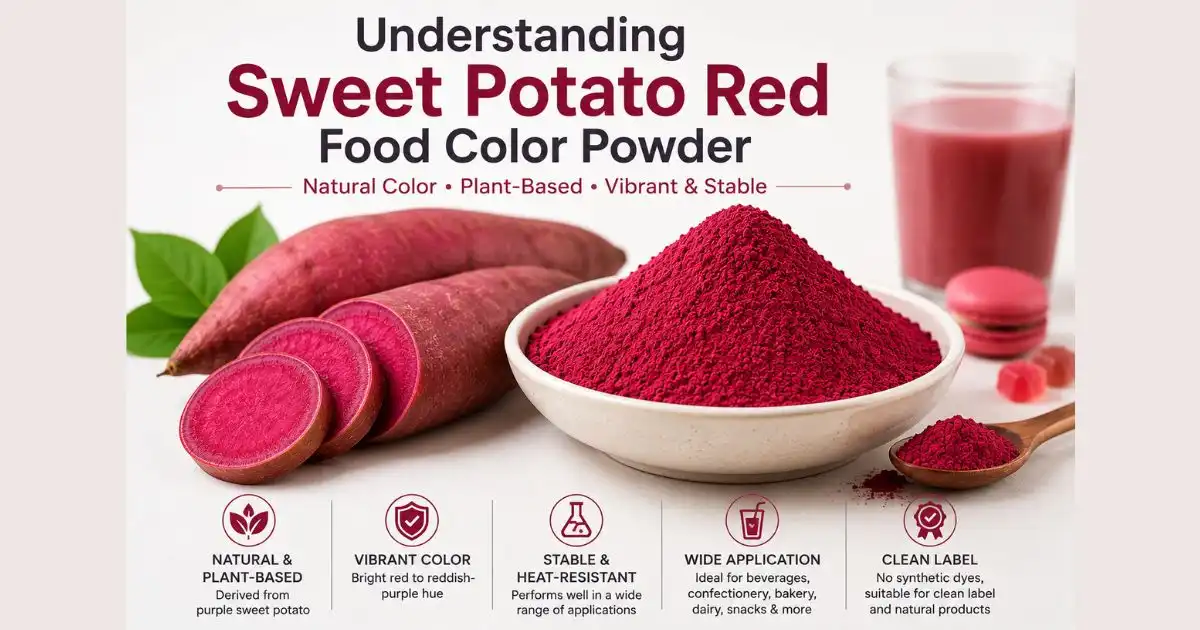
For food companies that want to make products with clean labels, Sweet Potato Red food color powder is a big step forward in natural coloring. This water-soluble colorant comes from purple sweet potato roots (Ipomoea batatas) and gets its striking violet-red color from anthocyanins, especially acylated cyanidin and peonidin compounds. Unlike most anthocyanins that come from fruits, the chemical structure of anthocyanins from sweet potatoes has phenolic acid acylation, which makes them very stable when heated.
Why Manufacturers Choose Sweet Potato Extract
People are pushing for natural red colorants because they don't want to use artificial dyes like Allura Red AC. Sweet Potato Red food color powder is good for more than just looks. Its antioxidant properties, which can be seen in large ORAC values, make finished products more useful. Depending on the extraction ratio, the color has between 1% and 25% anthocyanidins, with concentration levels ranging from 4:1 to 50:1.
Technical Advantages Over Synthetic Alternatives
One big benefit is that it is thermally stable. It is better for the acylated structure to stay intact during scalding processes that go above 95°C than for beet red or radish extracts. In commercial grades, the color value (E1% 1cm at 530nm) usually falls between E30 and E90, which means that the tinctorial strength stays the same from batch to batch. This purple Sweet Potato Red food color powder pigment keeps the flavor balanced, so it doesn't have the veggie notes that come from colorants made from cabbage or radish.
How to Select the Right Sweet Potato Red Food Color Powder Supplier
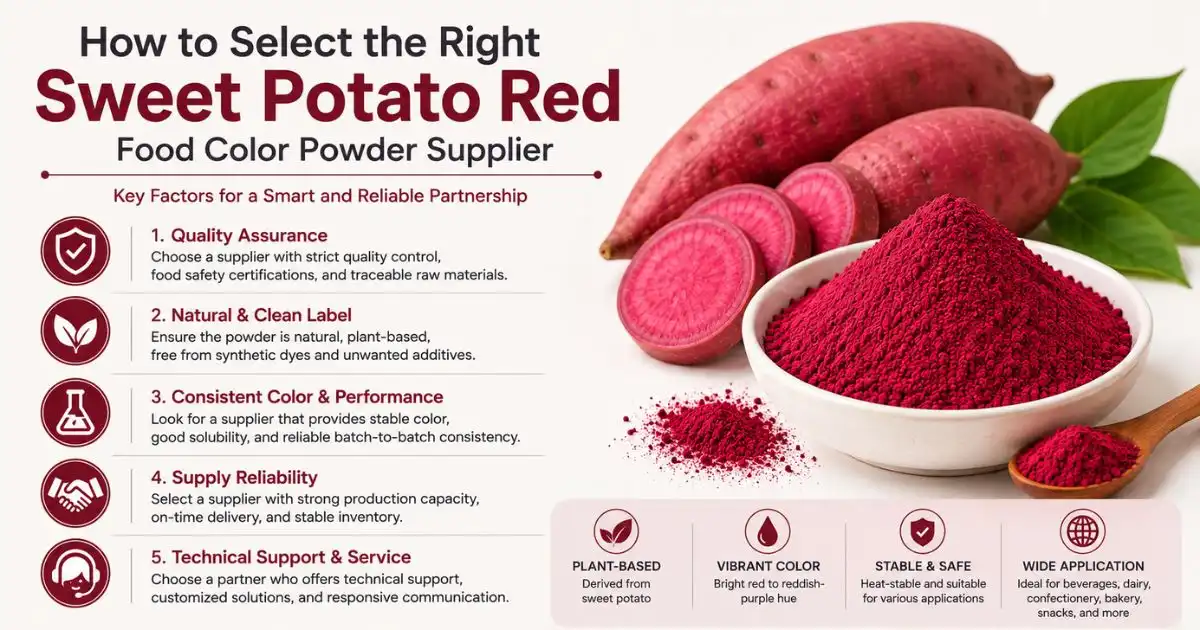
To choose a supplier, you need to carefully compare their skills to your procurement priorities. To make sure the relationship works in the long term, the decision framework should strike a balance between technology requirements, legal compliance, and business terms.
Certification and Compliance Standards
International certificates are what give buyers faith in a seller. Certifications like ISO 22000, HACCP, and GMP show that quality control is done in a planned way. Getting Kosher and Halal licenses can help you get into more markets, especially when you're sending food to places where religious dietary rules apply. For each batch, suppliers should give a Certificate of Analysis (CoA) that lists the anthocyanin level, microbial limits, heavy metal screening, and solvent residue tests.
Product Purity and Color Consistency
Formulation predictability is based on how consistent the color value is. Please send me spectrophotometric data that shows absorption peaks at 530nm wavelength. High-quality Sweet Potato Red food color powder should have very little difference from batch to batch, usually only about 5% of the stated color value. Ask suppliers about the way they remove the color; spray-drying vs. freeze-drying has an effect on how well the color dissolves and stays in the skin. Testing with UV/TLC confirms the quantity of the active ingredient, making sure you get the right anthocyanidin percentage.
Minimum Order Quantities and Pricing Structure
For production to keep going, industrial buyers usually need 100 kg to 1,000 kg per order. Suppliers with a flexible MOQ (minimum order quantity) range from 25 kg to 100 kg can handle test runs and changes in demand during different times of the year. Fees for packaging, certification, and shipping should be kept separate from the cost of raw materials in clear price models. When you buy 500 kg or more, you can get big savings on the price per kilogram, which are usually 15% to 20%.
Sample Testing Protocol
Reliable suppliers offer free samples of 10–30g for testing stability. Do heat exposure tests (85°C for 30 minutes), pH stress tests (pH 2.5 to 6.0), and light stability tests (500 lux for 7 days) during your two to three week evaluation period. Use a colorimeter to measure color shift in CIE Lab color space and write it down. This real-world data backs up what suppliers say before they commit to big buying.
Where to Buy Sweet Potato Red Food Color Powder Reliable Procurement Channels
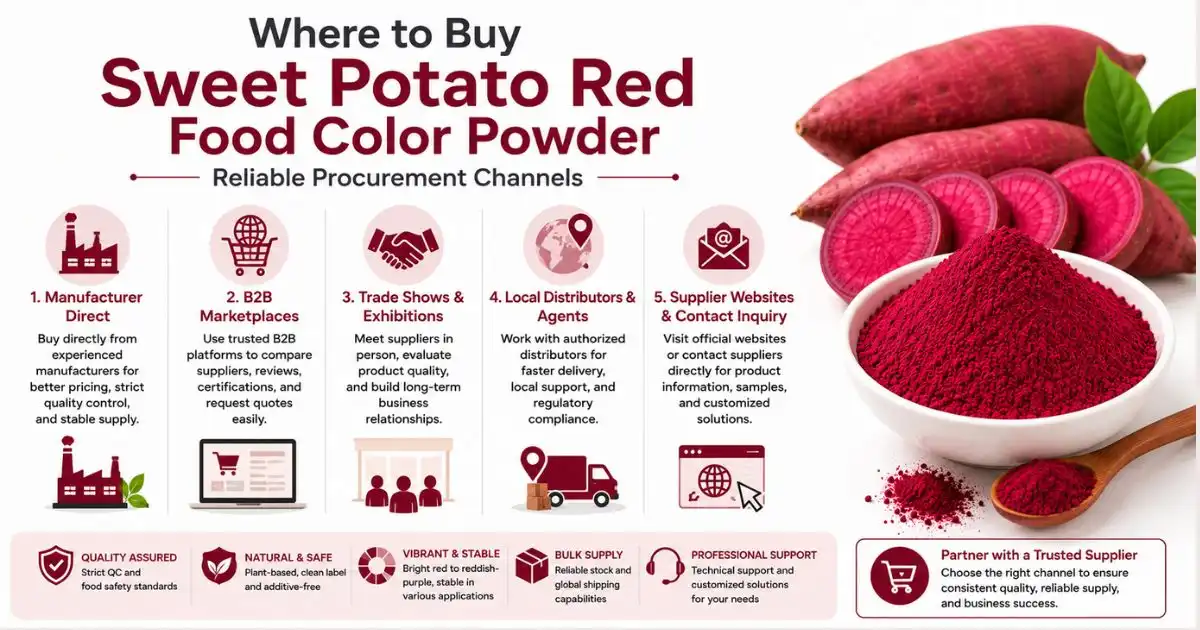
There are several ways for business-to-business buyers to get Sweet Potato Red food color powder, and each has its own benefits in terms of service levels, cost-effectiveness, and being able to track down the product.
Online Wholesale Marketplaces
The market for natural colorants is dominated by Alibaba and Global Sources, which connect buyers with suppliers in Asia and South America. Initial checks for trustworthiness are done by platform verification systems like Alibaba's Gold Supplier status and SGS audited providers. When you use these methods to find suppliers, give more weight to those who have transaction assurance programs and verified plant checks. Ask for video tours of the plant to get an idea of how clean it is and how advanced the equipment is.
Direct Manufacturer Partnerships
Building relationships with producers who are vertically integrated makes the supply chain more clear. When manufacturers are in charge of growing, extracting, and packaging, the batches are more consistent and problems are solved more quickly. Direct partnerships don't have to pay markups to distributors, which are usually 20% to 30% of the retail price. This makes them cost-effective for businesses that sell more than $50,000 a year. Yangge Biotech is a good example of this model because they keep track of food from farm to table by building long-term partnerships with farming communities.
Regional Distributors and Specialty Suppliers
For just-in-time production processes, local distributors are especially helpful because they cut down on wait times and make logistics easier. In Southeast Asia, Japan, and South America, distributors often keep a variety of natural colorants in stock. This lets packages be combined, which saves money on freight costs. Specialty providers that focus on organic or non-GMO certifications cater to high-end product groups, but their prices are 25% to 40% higher than regular grades.
Trade Shows and Industry Networks
Going to FiE (Food Ingredients Europe), SupplySide West, or area food additive shows makes evaluating suppliers in person easier. These places let you compare products side-by-side, get expert help right away, and build relationships that speed up the trust-building process. A lot of sellers offer special prices or trial packages at trade shows to get people to come by their booths.
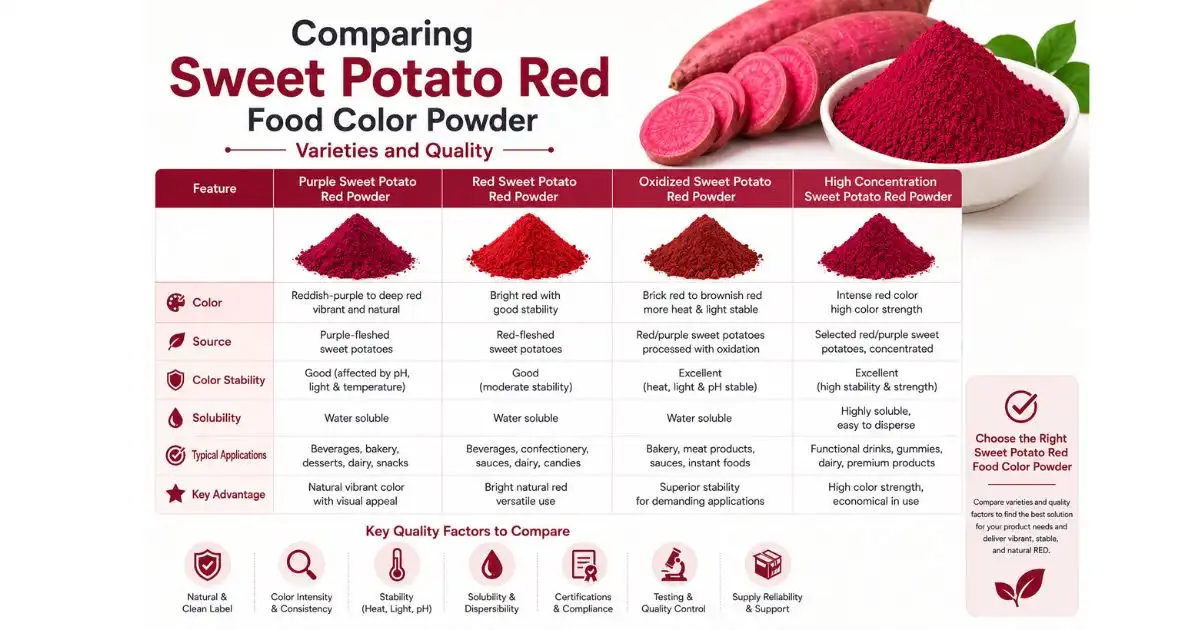
Comparing Sweet Potato Red Food Color Powder Varieties and Quality
Different Sweet Potato Red food color powders have different levels of quality depending on where the plants come from, how they are processed, and how they are stored. Understanding these factors helps with the development of specifications.
Varietal Differences and Pigment Profiles
The purple types of sweet potatoes have the most anthocyanin, usually 200 to 600 mg per 100 grams of fresh weight. There are both cyanidin-based and peonidin-based anthocyanins in the pigment profile. The acylation patterns change the pH stability. Red and orange types have different color tones when they are acidic because they have different amounts of beta-carotene and anthocyanins. White sweet potatoes don't have much color, so they are only used to add bulk to powder mixes.
Processing Methods Impact on Quality
The way the product is extracted fundamentally changes its properties. Because the wetness is removed quickly, spray-dried powders are easier to dissolve and last longer—up to 24 months in controlled conditions. This is because the anthocyanin structure is kept intact. Freeze-drying keeps more of the antioxidants and makes the colors more vibrant, but it costs about 40% more to make. Residual solvent amounts are found by solvent extraction with ethanol or water. For clean-label compliance, water extraction is recommended.
Storage and Shelf Life Considerations
Anthocyanin breaks down faster when it is stored incorrectly. The best conditions are temperatures below 15°C, humidity levels below 60%, and shade from direct sunlight. Stability is increased by limiting oxygen contact during packaging in metal foil bags with nitrogen flushing. If a supplier packages powder properly, they should tell you how to store it and guaranty that it will stay fresh for 18 to 24 months. If you're keeping items for more than six months, check on the color value decline every three months.
Table 1: Processing Method Comparison
| Processing Method | Solubility | Color Intensity | Shelf Life | Relative Cost |
|---|---|---|---|---|
| Spray Drying | Very good | Good | 24 months | Baseline |
| Freeze Drying | Good | Very good | 18 months | +40% |
| Air Drying | Moderate | Okay | 12 months | -20% |
Price Trends and Bulk Purchase Tips for Sweet Potato Red Food Color Powder
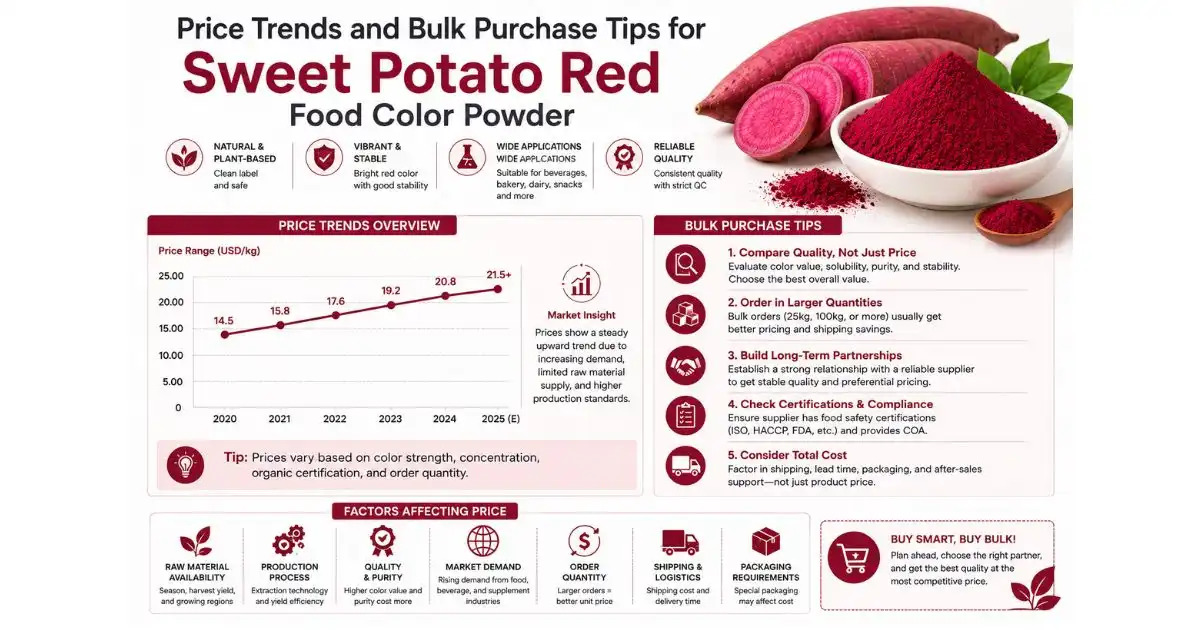
The way the market for Sweet Potato Red food color powder changes is affected by changes in regulations, patterns in agricultural goods, and sustainability premiums. To do strategic procurement, you need to know about these price drivers.
Factors Influencing Market Pricing
Price changes are mostly caused by the supply of raw materials. In warm areas, the best time to gather purple sweet potatoes is from September to November. This causes price changes of 10% to 15% each season. Certification fees add real costs: organic certification raises prices by 25% to 35%, but regular grades stay the same. Logistics costs are affected by where the goods are sourced. For example, Asian suppliers usually offer FOB prices that are 15% to 20% lower than South American exporters for the same specifications.
Bulk Purchase Negotiation Strategies
When you make a volume commitment, you can get better pricing. When you sign an annual contract for 2,000 kg to 5,000 kg, you can negotiate rates that are 12% to 18% less than spot prices. Price changes of 3% to 5% may be necessary if payment terms are flexible, like 30-day net terms instead of direct payment. To meet volume goals faster, group orders of more than one product together, like Sweet Potato Red food color powder with other plant extracts.
Future Market Outlook
Clean label laws in North America and Europe are pushing up the demand for natural colorants at an 8.5% CAGR until 2028. Single-source risks are lessened by diversifying the supply chain. This is especially true when climate change affects food yields. Sustainability-certified sellers get top billing because ESG (Environmental, Social, and Governance) metrics are important to business buyers and are included in vendor scorecards.
Table 2: Price Benchmarking by Order Volume
| Order Volume (kg) | Price Range (USD/kg) | Typical Application | Decision Timeline |
|---|---|---|---|
| 25-100 | $45-60 | Samples or trials | 1-2 weeks |
| 100-500 | $35-48 | Seasonally Made Goods | 2-3 weeks |
| 500-2,000 | $28-38 | Everyday Manufacturing | 3-4 weeks |
| 2,000+ | $22-32 | Contract for a year | 4-6 weeks |
Building Trust: Why Choose Our Sweet Potato Red Food Color Powder?
To build a supplier's trust, they need to show consistent quality, compliance with regulations, and service that is quick and fits the needs of industrial buyers' operations.
Quality Assurance and Certifications
Yangge Biotech keeps its ISO 22000, HACCP, Kosher, and Halal certifications up to date. This makes sure that our Sweet Potato Red food color powder meets all foreign food safety standards. UV/TLC tests are done on every output batch to make sure that the anthocyanidin content is between 1% and 25%, based on what the customer wants. Our quality control lab does tests that are approved by a third party to look for heavy metals (like lead, cadmium, and mercury), chemical residues, and microbial pollution. The results are written down in detailed COA packages.
Farm-to-Table Traceability
Our model for sustainable sourcing involves working directly with farming communities to make sure that supply chains are clear from planting to harvesting. This vertical integration makes it possible to solve problems quickly and keep the quality of the raw materials consistent. Environmental responsibility is still very important to us. In China, our green energy projects have won praise for their environmentally friendly making methods. Traceability paperwork connects each batch to a specific harvest lot, meeting the stricter monitoring needs of customers.
Customized Solutions for Industrial Buyers
Different packaging needs can be met by flexible production: 1–5 kg aluminum foil bags for test runs, 10 kg paper drums for medium-volume users, and 25 kg drums for high-throughput operations. Custom extraction ratios (4:1 to 50:1) and anthocyanidin concentrations align with specific formulation needs. Our R&D team helps with application advice for pH optimization and heat stability improvement, and our private marking services help brands stand out.
Proven Performance and Customer Success
Manufacturers of drinks that use our sweet potato extract say that the color stays stable for more than six months in acidic drinks (pH 3.0-3.5) kept at room temperature. Customers in the candy industry can get bright, fade-resistant reds in pectin sweets that don't have any fake ingredients. Our quick technical support, which you can reach at info@yanggebiotech.com 24 hours a day, 7 days a week, solves formulation problems during product development cycles, which speeds up the time it takes for new products to hit the market.
Conclusion
To find high-quality Sweet Potato Red food color powder, you need to carefully look at the skills of the suppliers, the product specs, and the ways to buy it. There are many choices in the market for natural colorants, from online marketplaces with low prices to direct maker partnerships that make it easier to find products. Product development will go smoothly if you only work with sellers who have strong certifications, consistent color value performance, and flexible order amounts.
As the need for clean-label options grows, building partnerships with dependable anthocyanin suppliers will put your brand in a competitive position. Because it is technically stable, follows the rules, and comes from sustainable sources, Sweet Potato Red food color powder is a smart choice for natural food makers who want to stay ahead of the curve.
FAQ
How do I verify the quality of sweet potato red powder before bulk purchase?
Ask for a free sample of 10 to 20 grams and test it in the lab for anthocyanin content using UV spectrophotometry at a wavelength of 530nm. Test the stability of the product under settings similar to those used in production, such as heat treatment, pH range, and light exposure. Check the spectrophotometric data against the supplier's instructions to make sure that the color value fits the E values that were given. Reliable suppliers give CoA documents that have been checked by a third-party lab.
What certifications should I look for in a sweet potato extract supplier?
For food safety, ISO 22000, HACCP, and GMP approvals should come first. Certifications like Kosher and Halal make it easier to get into more markets. Organic certification (USDA, EU) costs more but meets the requirements for a clean label. Ask for copies of up-to-date certifications and check with the organizations that issued them to make sure they are real.
What is the typical lead time for bulk orders of natural red colorant?
Lead times are usually between two and four weeks for orders of 100 kg to 500 kg, but they can be longer or shorter depending on stock levels and customization needs. For unique extraction ratios and orders over 1,000 kg, it may take 4 to 6 weeks. During times of high demand, seasonal harvests from September to November may add one to two weeks to lead times.
Partner with Yangge for Reliable Sweet Potato Red Supplier Solutions
Yangge Biotech provides reliable, high-quality Sweet Potato Red food color powder that meets the exact needs of companies that make drinks, sweets, and baked goods. Our 100% water-soluble anthocyanin powder comes in extraction ratios ranging from 4:1 to 50:1. It gives your products the tinctorial strength and pH stability they need. We give you free 10–30g samples to make sure they work in your production environment, and we'll be there for you with full technical support as you test them.
With ISO, HACCP, Kosher, and Halal certifications, our Sweet Potato Red food color powder for sale meets global regulatory requirements while maintaining competitive bulk pricing for orders from 25 kg to multi-ton annual contracts. Contact our team at info@yanggebiotech.com to discuss your specific colorant needs and receive personalized quotations. Explore our full range of natural plant extracts at blog.yanggebiotech.com.
References
1. Terahara, N., et al. "Acylated Anthocyanins from Purple Sweet Potato: Structural Characterization and Stability." Journal of Food Science, vol. 69, 2004, pp. C428-C433.
2. Montilla, E.C., et al. "Natural Food Colorants: Chemistry, Stability and Application in Foods." Annual Review of Food Science and Technology, vol. 7, 2016, pp. 295-318.
3. Rodriguez-Amaya, D.B. "Natural Food Pigments and Colorants." Current Opinion in Food Science, vol. 7, 2016, pp. 20-26.
4. Giusti, M.M., and Wrolstad, R.E. "Anthocyanins: Characterization and Measurement with UV-Visible Spectroscopy." Current Protocols in Food Analytical Chemistry, 2001, pp. F1.2.1-F1.2.13.
5. Stintzing, F.C., and Carle, R. "Functional Properties of Anthocyanins and Betalains in Plants, Food, and in Human Nutrition." Trends in Food Science & Technology, vol. 15, 2004, pp. 19-38.
6. Wallace, T.C., and Giusti, M.M. "Anthocyanins in Health and Disease." Advances in Nutrition, vol. 6, 2015, pp. 620-622.

Based on your location and order quantity, you will have the opportunity to receive a limited time free shipping promotion!
Who we are
Popular Blogs