Lion’s Mane Extract OEM Manufacturing Guide
Yangge Biotech Lion's Mane Mushroom Extract (Hericium erinaceus) is a premium functional mushroom ingredient produced from carefully selected Lion’s Mane mushrooms using advanced extraction technology. Naturally rich in polysaccharides and beta-glucans, the fine powder is suitable for dietary supplements, capsules, tablets, gummies, functional beverages, coffee blends, nutritional powders, and other wellness formulations. Yangge Biotech provides various specifications, bulk supply, customized packaging, and OEM/ODM manufacturing services to meet different formulation and business requirements. For product specifications, COA, samples, pricing, or customized solutions, please contact Yangge Biotech or email info@yanggebiotech.com.
Choosing the right OEM partner for Lion's Mane mushroom extract manufacturing requires careful evaluation of quality standards, extraction methods, and regulatory compliance. This guide walks you through the complete process of selecting suppliers, understanding production workflows, and ensuring your cognitive health supplement meets the expectations of today's discerning consumers. We address the unique challenges superfood brands face from verifying strain authenticity to managing sensory consistency across batches—offering practical strategies to navigate the complex landscape of functional mushroom procurement.
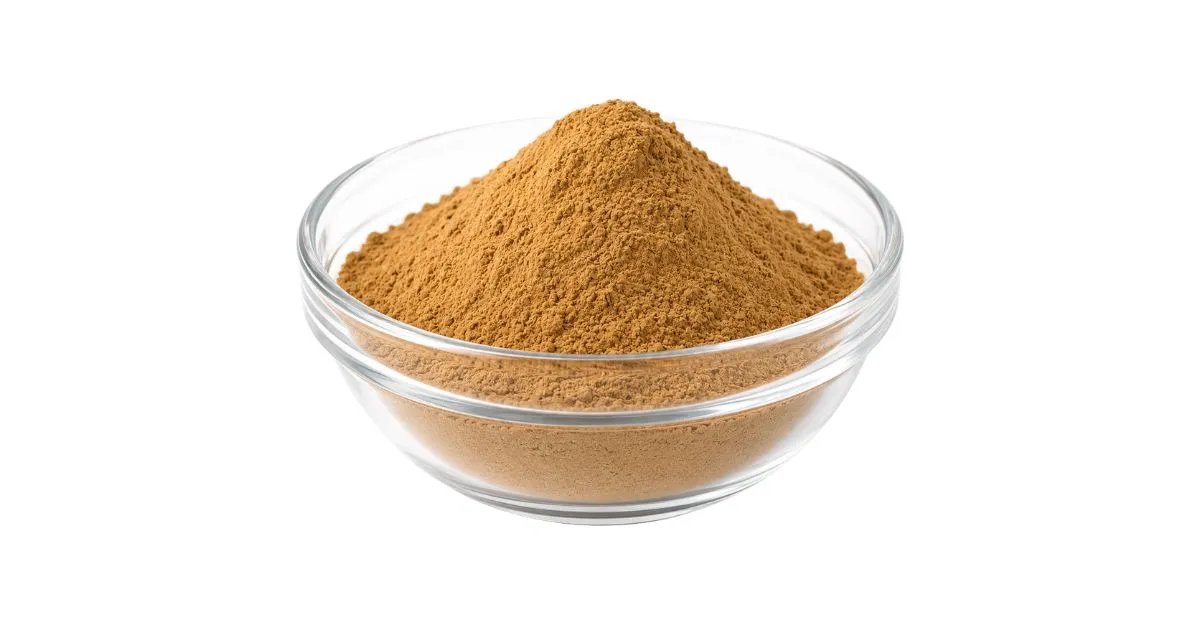
Understanding Lion's Mane Extract and Its Market Potential
Origins and Active Compounds
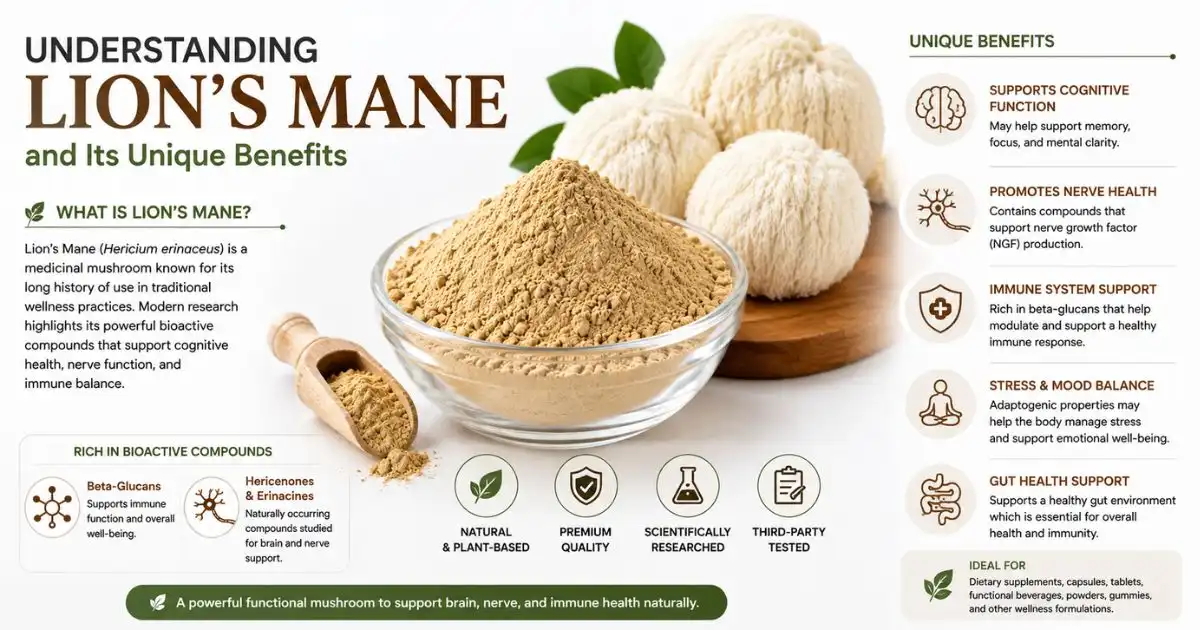
The plant Hericium erinaceus, which is often called "Lion's Mane," grows naturally on hardwood trees in North America, Europe, and Asia. This unique mushroom has white spines that fall down and includes special bioactive substances like hericenones, erinacines, and beta-glucans. A lot of study has been done on these chemicals because they might help nerve growth factor production and brain function. Both the growing body and the mycelium have healing chemicals in them, but the amounts are very different.
Market Drivers in Functional Foods
The market for nootropic supplements has grown incredibly fast, and more and more people are looking for plant-based alternatives to help their brains. A lot of mushroom coffee blends, superfood powders, and functional drink mixes now have Hericium erinaceus as a main ingredient. This trend shows that more and more people want clean-label products that can be tracked back to their sources and have benefits that have been proven by science. As more and more regulatory bodies recognize mushroom extracts as dietary supplements, this momentum is especially good for brands that are just starting out in North America and Europe.
Procurement Challenges and Opportunities
There are some challenges that come with finding high-quality extract that set it apart from other botanical ingredients. It is still hard to confirm strains without more advanced tests because mycelium-on-grain goods often have a lot of starch, which dilutes the functional compounds. Different batches have different color, flavor, and solubility profiles, which makes it hard for brands to make consistent product lines. On the other hand, these problems also give brands a competitive edge if they build strong supply chains with makers who offer clear testing procedures and crop tracking.
Key Considerations for Lion's Mane Extract OEM Manufacturing
Raw Material Sourcing Impact
Whether mushrooms are gathered in the wild or grown in a farm has a big impact on the quality of the extract and the security of the supply. When compared to mycelium grown on grain, which often has a high starch content that makes bioactivity measures less accurate, types grown on hardwood substrate tend to have more consistent beta-glucan profiles. Organic certification adds another level of difficulty by requiring full records from planting to processing. Geographic origin is very important. Some areas have stricter farming standards and better facilities for tracking products, so the location of the provider is a key factor in the evaluation process.
Extraction Technology Selection
Different extraction methods separate different groups of compounds, so choosing the right technology is important for making sure that the target application is aligned. Polysaccharides and beta-glucans are successfully captured by hot water extraction, resulting in water-soluble parts that can be used in beverages. Lipophilic compounds, such as hericenones and some terpenoids, can be separated using ethanol extraction.
Dual extraction uses both methods together to get full-spectrum profiles, which are what many cognitive health brands want for complete formulations. Each method creates extracts with different solubility, moisture sensitivity, and sensory qualities that have a direct effect on how well the end product works for Lion's Mane formulations.
| Extraction Method | Target Compounds | Best Applications | Solubility Profile |
|---|---|---|---|
| Hot Water | Polysaccharides and beta-glucans | Functional drinks and instant powders | Very well dissolved in water |
| Ethanol | Terpenoids and Hericenones | pills for cognitive support | Level of solubility |
| Dual Extraction | the whole range | High-end vitamins with complicated formulas | Changeable based on amount |
Quality Control and Compliance Standards
OEM partnerships that you can trust are built on strict testing protocols. GMP certification shows that quality management is organized, and ISO standards make sure that operational procedures are always the same. Leading manufacturers use third-party testing for heavy metals, pesticides, microbial contaminants, and active compound verification in addition to certifications.
The Megazyme method accurately measures beta-glucans by telling the difference between beta-glucans from fungi and starches from cereals. This solves a common quality issue in the industry. If a brand wants to sell its products in North America, it should make sure that its suppliers follow testing procedures that are in line with USP standards and FDA guidance for food ingredients.
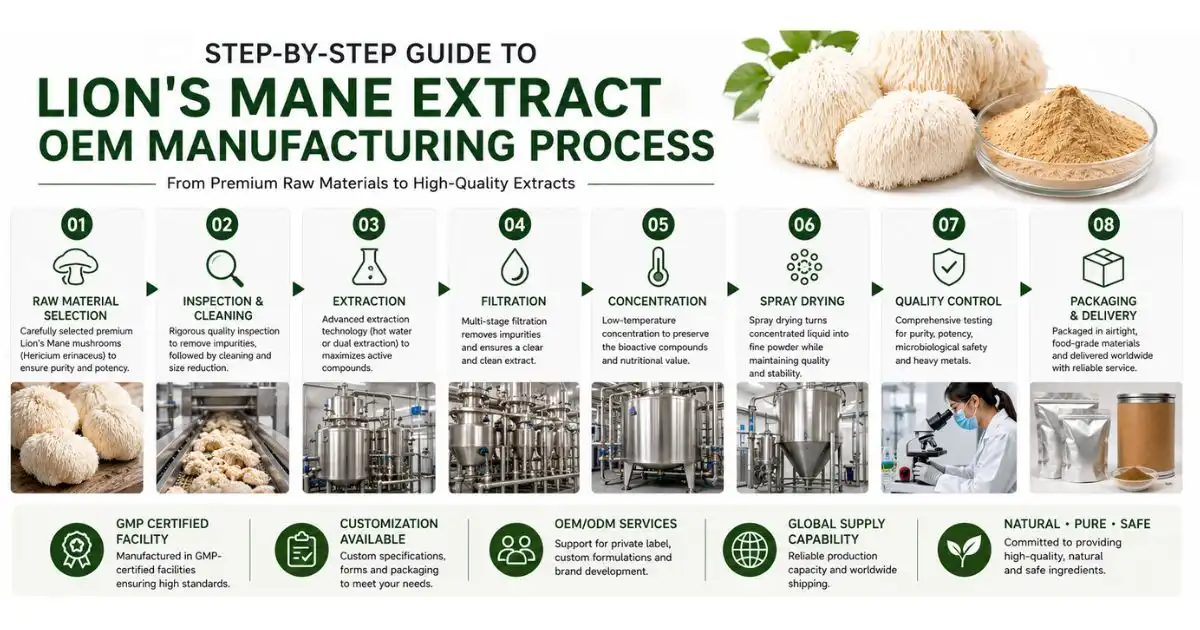
Step-by-Step Guide to Lion's Mane Extract OEM Manufacturing Process
Raw Material Procurement and Verification
The process of making something starts with supplier audits that check how crops are grown and when they are harvested. The harvest stage is very important for the strength of the extract because mature growing bodies have the highest amounts of compounds. Reputable makers keep direct connections with growing facilities, which makes it possible to track the process from choosing the base to harvesting. As soon as the raw materials arrive, they are identified using DNA barcoding and microscopic analysis to make sure they are the right species. This keeps lower-value mushroom types from being substituted in Lion's Mane production.
Extraction and Concentration
The material is cleaned and shrunk before going into extraction vessels. There, the temperature and solvent ratios are carefully controlled to get the most compounds out of the material. Hot water extraction usually takes two to four hours at 80 to 100°C, while ethanol extraction needs precise concentration control to get the most out of isolating the target chemical. Filtration is used to get rid of the solid fiber and chitin from the liquid extract, which makes it easier to stomach and more bioavailable. Concentration by evaporation lowers the volume while keeping heat-sensitive chemicals safe. Spray drying or freeze drying is then used to make a stable powder with a certain goal moisture content.
Formulation Standardization and Testing
Standardization makes sure that every production batch meets the stated polysaccharide content levels, which can be anywhere from 10% to 50% depending on the needs of the application. Analytical testing measures the amount of beta-glucan, the amount of water present, the mass density, and the spread of particle sizes. For the best encapsulation performance, the yellow-brown powder should be able to pass through 80 mesh screens. It should also have a mild, slightly sweet flavor that mixes well with food. In addition to making sure there are no allergens, thorough testing screens also make sure the food hasn't been sterilized, which is something that clean-label brands need.
| Quality Parameter | Specification Range | Testing Method | Significance |
|---|---|---|---|
| Polysaccharides | 10% to 50% | Measurement of UV light | The main reactive marker |
| Beta-glucans | 15% to 30% | Megazyme is an enzyme | Checking the functionality of compounds |
| Moisture | <8% | Loss when it dries | Keeps things stable and long |
| Particle Size | 95% through 80 mesh | Analysis of Sieves | Compatibility of formulations |
| Heavy Metals | <10ppm in total | ICP-MS | Following safety rules |
Packaging and Logistics
Due to its hygroscopic nature, moisture barrier packaging is necessary to keep products stable during shipping. As standard, you can get samples or small batches in 1 kg aluminum foil bags, or you can buy in bulk in 25 kg fiber drums. Customizing the packaging meets the needs for multilingual labeling in different market areas by adding nutritional panels, allergen statements, and legal disclaimers that are specific to the destination country.
Keeping things at the right temperature and following shipping rules keep the environment safe while they're in transit. Lion's Mane is often included in such shipments, and leading OEM partners offer a wide range of paperwork, such as Certificates of Analysis, kosher and halal certifications, and letters of regulatory compliance, which makes it easier to clear customs and start making the product.
How to Choose the Right Lion's Mane Extract OEM Partner
Production Capacity and Technical Expertise
When looking at possible partners, you need to know how much they can produce each year and if they can grow with your business. Manufacturers who prepare 50 to 200 metric tons of food every year usually have the flexibility that new superfood brands need, without having to meet minimum order numbers that put a strain on their working capital.
In addition to basic extraction, technical support for recipe development helps brands make the best mixes of Lion's Mane extracts with ingredients that go well with them, such as coffee, cacao, or protein matrices. R&D collaboration tools let people work together to create unique formulas that set products apart in crowded markets.
Certification Holdings and Sourcing Transparency
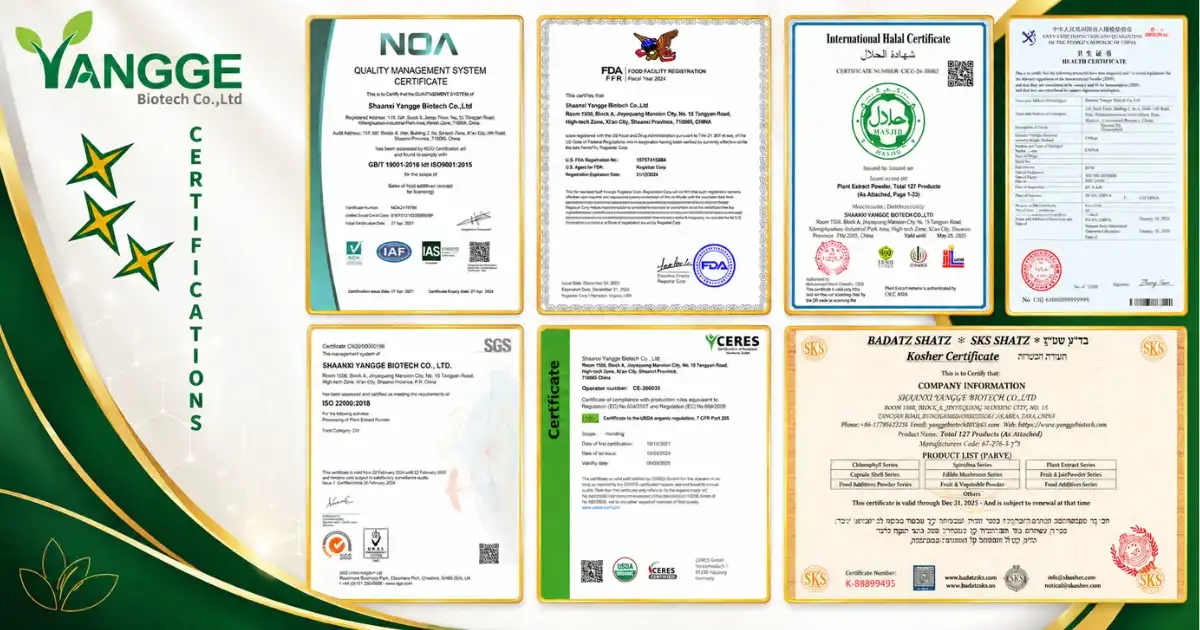
Certification portfolios show how sophisticated a business is and how well it can reach new markets. Quality methods are supported by ISO 22000, HACCP, organic certifications, and building registrations. Kosher and halal approvals help brands reach more customers who are religiously or culturally different. Instead of just looking at certificates, you should also visit the supplier's facility or fill out a thorough form that tells you about their farming partnerships and quality control processes for raw materials. Manufacturers who keep up with farm-to-table tracking systems keep records that back up marketing promises and make sure they follow the rules.
Risk Mitigation and Long-Term Partnership Potential
Diversification tactics that protect against change are needed to keep the supply chain stable. Check to see if potential partners have more than one source of plants and extra processing power. Check out how they handle their inventory and how long it usually takes for orders to be delivered. Financial stability indicators, such as the number of years the business has been open and client references, show if a partnership will work in the long term.
Communication response during the evaluation phase is often a good indicator of how the relationship will go in the future. Manufacturers who offer detailed technical support and clear prices are examples of the collaborative approach that new brands need.
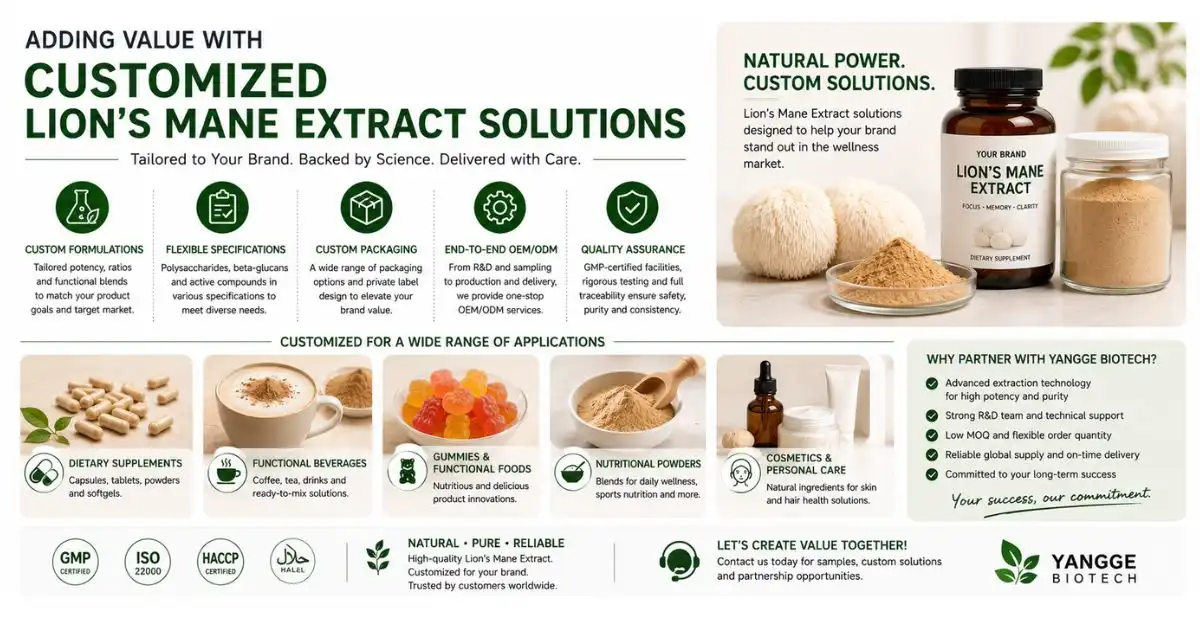
Adding Value with Customized Lion's Mane Extract Solutions
Application-Specific Formulation Development
Dual-extracted products that are standardized to 30% polysaccharides are good for cognitive support supplements because they provide balanced compound profiles that back up marketing claims about mental clarity and focus. For functional beverage uses, the ingredients need to be able to dissolve easily in water and have no discernible taste. This is usually achieved by extracting the ingredients with hot water and then processing them further to make them easier to mix in cold drinks. When making protein powder mixes and meal replacements, it's important to make sure that the flavors go well together. For example, Lion's Mane extracts can add earthy notes that need to be hidden or balanced out with other flavors.
Synergistic Ingredient Combinations
Brands stand out by carefully combining plant ingredients that work well together. When you mix Hericium erinaceus and Cordyceps militaris, you get formulations that work on both brain function and physical energy, which appeals to people who live active lives. The addition of reishi mushrooms backs up claims that they can help with stress management, and the antioxidant content of chaga mushrooms boosts the general health stance. For these multi-mushroom complexes to work, they need to be carefully extracted and kept stable. Formulation knowledge is a valuable trait for an OEM partner to have.
Innovative Delivery Systems
As time goes on, the market is moving toward more handy forms that fit easily into daily life. Instantized powders break down quickly in cold water, which helps the development of ready-to-drink drinks. Single-serve stick packs are more expensive in retail channels because they let you control the amount you eat and are easy to take with you. The fastest-growing section is coffee alternatives and mushroom coffee blends. Brands are making unique taste profiles that appeal to people who want healthy alternatives to traditional caffeine sources. New methods of packaging, like nitrogen washing, make food last longer on the shelf while keeping the ingredients' purity, which helps e-commerce distribution models.
Conclusion
To successfully buy Lion's Mane extract, you need to find a balance between checking the quality, choosing the right extraction method, and evaluating the supplier relationship. The market for functional mushrooms has a lot of potential for brands that can find trusted manufacturers that can provide regular extract quality, thorough testing, and legal compliance.
Your brand can make unique products that meet the growing demand for scientifically proven solutions for cognitive health problems by putting strain authenticity verification at the top of its list of priorities, learning how different extraction methods affect bioactive profiles, and choosing OEM partners with a track record of strong technical skills. Putting money into carefully evaluating suppliers and creating new formulas gives companies a competitive edge that lasts long after the first products hit the market. This sets the stage for long-term growth in the growing category of superfood supplements.
FAQ
What certifications should I require from an OEM manufacturer?
Some of the most important certificates are ISO 22000 for managing food safety, HACCP for analyzing risks, and GMP for good production practices. Organic certification checks that standards for growing and processing are met, and kosher and halal licenses make products easier to find in stores. Ask for copies of current certificates and check with the organizations that issued them to make sure they are still valid. Companies that have more than one license usually have stricter quality processes.
How do I verify the actual beta-glucan content?
It is important to use the Megazyme enzymatic method for testing instead of basic UV spectrophotometry because it can tell the difference between fungal beta-glucans and cereal starches. Ask for Certificates of Analysis that list both the total amount of carbohydrates and the confirmed amount of beta-glucan. Verification by a third-party lab gives you extra peace of mind, especially when you're working with new suppliers or increasing the amount of work you do for your Lion's Mane project.
What minimum order quantities should I expect?
Minimum order numbers change a lot depending on how customized the product needs to be and how much it costs to make a large batch. Standard extract formulations may be available in as little as 25 to 50 kg, but 100 to 500 kg commitments are usually needed for fully customized blends that are made to specific requirements. Talk about sample sizes during the development stages before committing to full production runs. This will help you make sure that the formulation will work with the uses you have in mind for the finished product.
Partner with Yangge for Premium Lion's Mane Extract Manufacturing
Yangge Biotech Co., Ltd. makes pharmaceutical- and food-grade Hericium erinaceus extract powder that is standardized to your exact needs and has polysaccharides levels ranging from 10% to 50%. Our dual-extraction method gets both beta-glucans that dissolve in water and hericenones that dissolve in alcohol. This gives us full-spectrum profiles that back up strong claims about brain health. With ISO, HACCP, kosher, and halal certifications that make it easier for you to get into new markets, we keep full traceability from our certified organic farming partners to the final packaging.
Our expert team works together to make unique mixtures of mushroom extracts and useful ingredients for pills, powders, and drinks. As a Lion's Mane supplier with a lot of experience, we can offer flexible minimums starting at 25 kg, quick samples within 3–5 days, and full documentation to meet your regulatory needs. For competitive prices on extract for sale, please contact our team at info@yanggebiotech.com to talk about your unique formulation needs and get full product specs.
References
1. Friedman, M. (2015). Chemistry, Nutrition, and Health-Promoting Properties of Hericium erinaceus (Lion's Mane) Mushroom Fruiting Bodies and Mycelia and Their Bioactive Compounds. Journal of Agricultural and Food Chemistry, 63(32), 7108-7123.
2. Lai, P.L., Naidu, M., Sabaratnam, V., Wong, K.H., David, R.P., Kuppusamy, U.R., Abdullah, N., and Malek, S.N. (2013). Neurotrophic Properties of the Lion's Mane Medicinal Mushroom, Hericium erinaceus. International Journal of Medicinal Mushrooms, 15(6), 539-554.
3. Sullivan, R., Smith, J.E., and Rowan, N.J. (2006). Medicinal Mushrooms and Cancer Therapy: Translating a Traditional Practice into Western Medicine. Perspectives in Biology and Medicine, 49(2), 159-170.
4. Phan, C.W., David, P., Naidu, M., Wong, K.H., and Sabaratnam, V. (2015). Therapeutic Potential of Culinary-Medicinal Mushrooms for the Management of Neurodegenerative Diseases: Diversity, Metabolite, and Mechanism. Critical Reviews in Biotechnology, 35(3), 355-368.
5. Rathee, S., Rathee, D., Rathee, D., Kumar, V., and Rathee, P. (2012). Mushrooms as Therapeutic Agents. Brazilian Journal of Pharmacognosy, 22(2), 459-474.
6. Grand View Research (2022). Nootropics Market Size, Share & Trends Analysis Report By Product, By Application, By Distribution Channel, By Region, And Segment Forecasts, 2022-2030. Market Research Report.

Based on your location and order quantity, you will have the opportunity to receive a limited time free shipping promotion!
Who we are
Popular Blogs