How Is Oat Beta Glucan Extracted from Oats?
Oat Beta Glucan Powder from Yangge Biotech is a premium-quality soluble dietary fiber derived from carefully selected oats. With excellent solubility and formulation compatibility, it is suitable for use in dietary supplements, functional foods, beverages, nutrition bars, protein powders, bakery products, and other health-focused formulations. Yangge Biotech provides bulk supply, customized specifications, and OEM/ODM services to meet the needs of food, beverage, and nutraceutical manufacturers worldwide. For product specifications, COA, samples, bulk pricing, or customized solutions, contact Yangge Biotech today at info@yanggebiotech.com.
Oat Beta Glucan extraction begins with carefully selected non-GMO oat kernels undergoing cleaning, dehulling, and enzymatic treatment to isolate the endosperm cell walls where beta-glucan concentrates. Through controlled hydrolysis using amylase enzymes, starch content is removed without degrading the linear β-(1→3) and β-(1→4) glycosidic bonds that define this soluble fiber.
The resulting slurry undergoes membrane filtration often utilizing ultrafiltration or diafiltration to achieve concentrated purities ranging from 70% to over 90%. Subsequent spray-drying stabilizes the extract into off-white fine powder, preserving molecular weight and viscosity critical for functional applications in supplements, functional foods, and cosmetics formulations.
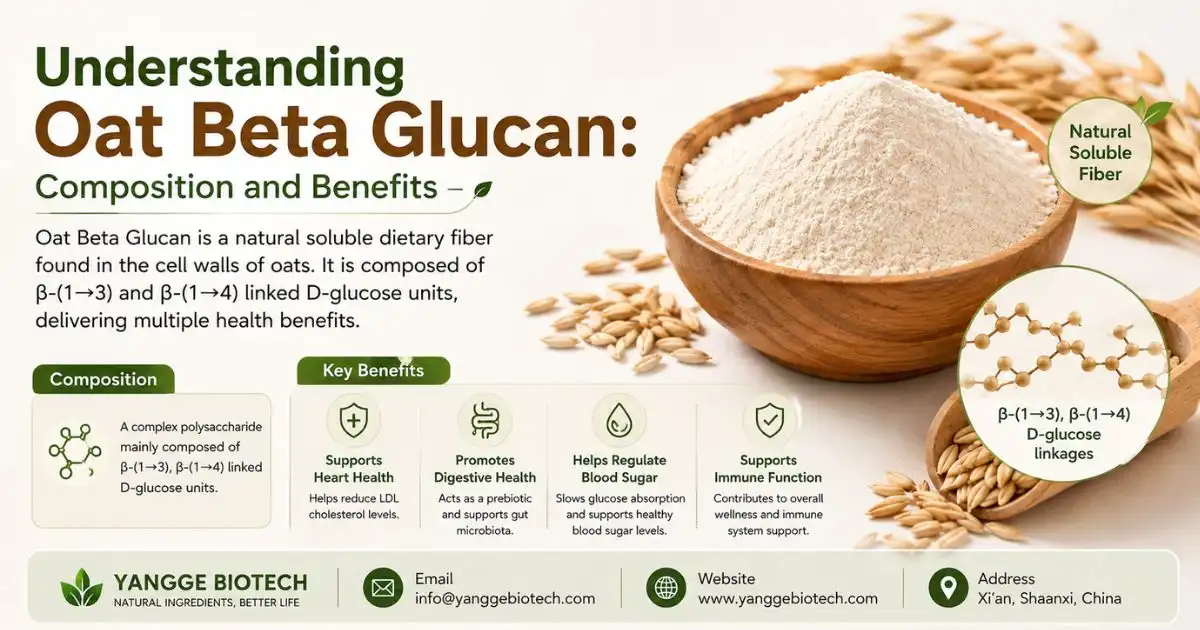
Understanding Oat Beta Glucan: Composition and Benefits
Oat Beta-Glucan powder is a very pure soluble fiber that comes from the endosperm cell walls of oats (Avena sativa). Unlike yeast or mushroom glucans, which have branched structures, this ingredient has a unique linear polysaccharide architecture made up of glucose units linked by β-(1→3) and β-(1→4) linkages. This difference in structure has a big effect on its bioactivity and how it works in commercial settings.
Oat Beta-Glucan has been shown to lower LDL cholesterol levels in over 30 years of clinical study, with both the U.S. FDA and the European EFSA both agree that health claims are valid when the daily intake is at least 3 grams. The process involves making thick liquids in the digestive tract that bind bile acids and cause the liver to use cholesterol more efficiently. In addition to its benefits for the heart, new studies show that this ingredient can also change the immune system by interacting with macrophage receptors. This makes it a good choice for making immune health supplements.
Why Composition Matters for Procurement
When looking for Oat Beta-Glucan powder, the molecular weight distribution has a direct effect on how well the product works. High-molecular-weight variants (>1,000 kDa) have better viscosity and cholesterol-binding ability, making them perfect for functional drinks and heart-health supplements.
Lower molecular weight grades dissolve better in cold water, making them good for ready-to-mix uses without losing their bioactivity. When procurement managers understand these subtleties, they can make sure that the standards for raw materials match the needs for formulation, which saves money by avoiding expensive reformulation cycles during product development.
Health Benefits Driving Market Demand
Ingredients with backed-up health claims are becoming more and more important in the global functional food industry. Oat Beta-Glucan addresses several consumer health trends at once: heart health, blood sugar control, digestive health, and feeling fuller. Because it can do more than one thing, this character lets product designers make a wide range of products, such as meal replacement bars, cholesterol-lowering capsules, and beauty-from-within makeup. The fact that the nutrient comes from nature and isn't made with GMOs makes it even more compatible with the clean-label tastes that are popular in North America and Europe.
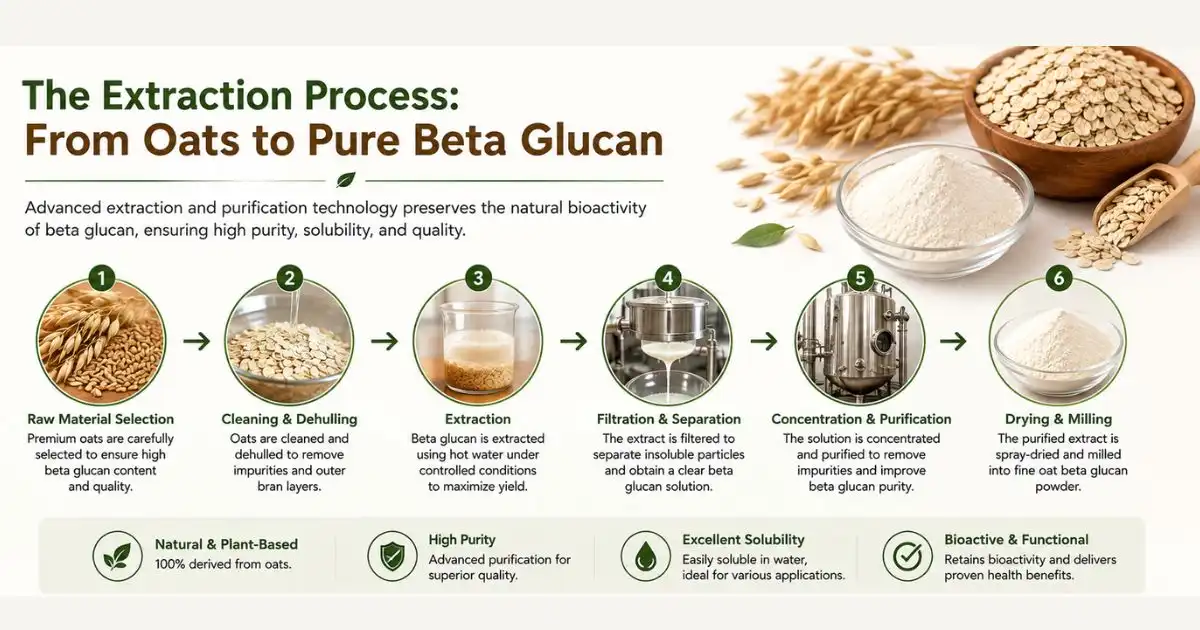
The Extraction Process: From Oats to Pure Beta Glucan
It is important to understand the extraction method when judging the skills of a supplier and guessing how consistent batches will be. Each step in the process of turning whole oats into pharmaceutical-grade powder is closely monitored by technology, which has a direct effect on the quality, absorption, and processing properties of the finished product.
Raw Material Selection and Preparation
The first step is to find oat cultivars that have been bred to have a higher Oat Beta-Glucan content, usually between 4 and 6 percent in whole grain compared to 3 to 4 percent in regular varieties. After being cleaned very well to get rid of field waste, these oats are dehulled to separate the nutrient-rich groats from the indigestible hulls.
Milling reduces the particle size, which increases the surface area and makes extraction more effective. Leading providers keep track of products from the farm to the center during this stage. This makes sure that non-GMO claims are met and allergens are controlled, which are important compliance factors for markets in North America and the EU.
Enzymatic Hydrolysis and Starch Removal
After the oats are ground, they are put into temperature-controlled water tubs where alpha-amylase enzymes break down the starch molecules into soluble sugars without damaging the molecular bonds of the Oat Beta-Glucans. Modern extraction is different from harsh chemical methods that could break down molecules because of this enzymatic precision.
It is very important to keep an eye on the pH levels and length of the hydrolysis process. Too much treatment lowers the molecular weight and stickiness, while not enough processing results in starch pollution that makes purity tests less accurate. At this stage, which is a key quality control point, extraction skills really shine thru.
Advanced Purification Technologies
The slurry that comes after hydrolysis has broken down starch into smaller pieces, proteins that are still there, and lipids. It also has dissolved Oat Beta-Glucan. Molecular-level cleaning is possible with membrane separation methods, especially cross-flow ultrafiltration. High-molecular-weight Oat Beta-Glucan can pass thru membranes with 10–50 kDa cutoffs, but smaller particles can't.
Multiple diafiltration processes gradually raise the concentration and purity until they meet pharmaceutical-grade standards of more than 85% Oat Beta-Glucan content, as tested by the AOAC 995.16 method. This normal way of doing analysis gives procurement teams info from all providers that they can compare.
Drying and Stabilization
Spray-drying turns the concentrated Oat Beta-Glucan solution into a fine powder with a controlled particle size distribution. This process quickly removes the water by atomizing the solution into hot air. The drying conditions have a big effect on the qualities of recovery and the shelf life.
Properly dried stuff has a low moisture content (less than 8%), which stops microbes from growing and enzymes from breaking down the stuff while it's being stored. Some companies use coagulation methods after drying to make the product easier to disperse in cold liquids, which is a useful property for adding nutrients to drinks. When buyers know about these finishing processes, they can choose products that work best with certain manufacturing tools and formulation formats.
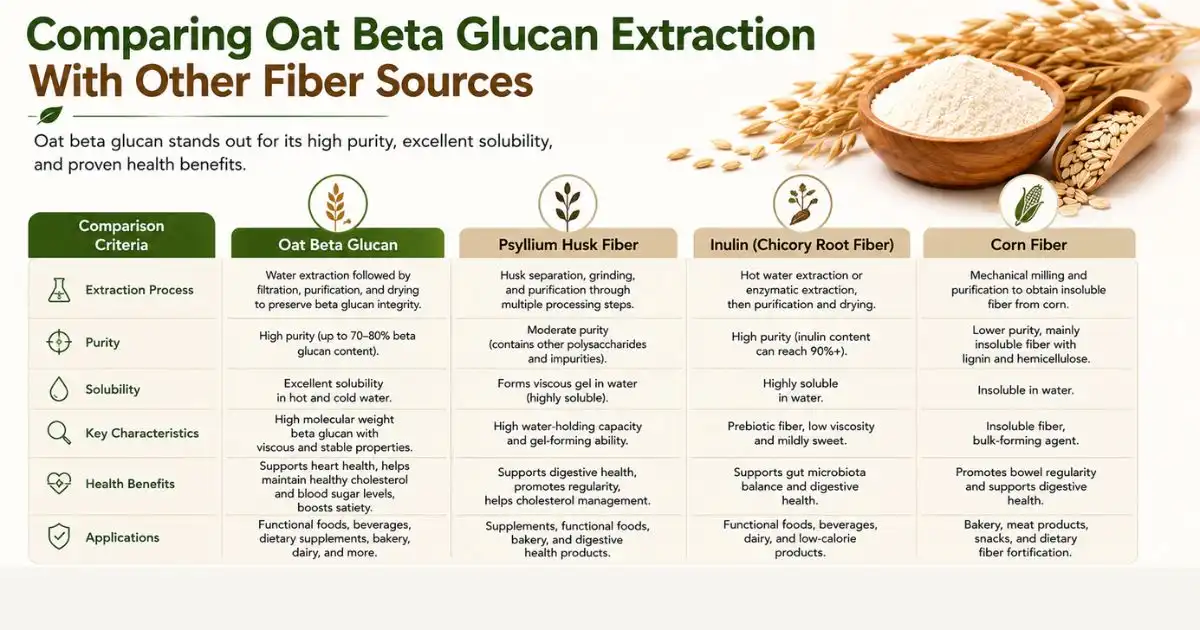
Comparing Oat Beta Glucan Extraction With Other Fiber Sources
Comparing Oat Beta-Glucan-derived soluble fiber to fibers from other sources makes its competitive advantages and specific uses clear in a wide range of product lines.
Oat vs. Barley Beta-Glucan
Both oats and wheat have mixed-linkage Oat Beta-Glucans, but oat extraction methods usually get higher purity concentrations and better organoleptic profiles. Because barley has more protein than other grains, it is harder to clean and usually needs extra enzyme processes that raise the cost of production.
Oat sources are also favored by regulators; for example, the FDA's heart health claim directly mentions Oat Beta-Glucan, which gives marketers an edge in the cholesterol-management supplement category. There are also differences in the supply chains of these two sources. For example, oat farming covers a larger area than barley farming does, which gives buyers more options and lowers supply risk.
Comparison With Alternative Soluble Fibers
Table 1: Functional Characteristics of Common Soluble Fibers
| Fiber Source | Solubility Profile | Viscosity Development | Regulatory Health Claims | Typical Application |
|---|---|---|---|---|
| Oat Beta-Glucan | Very good in warm water | High (depending on dose) | Cholesterol reduction (FDA/EFSA) | Heart health vitamins and oats that are good for you |
| Psyllium Husk | Creating gels | Very high | High cholesterol and regularity (FDA) | Digestive health, laxatives in bulk |
| Inulin | Very soluble | Low | Effects of prebiotics | Sweeteners with few calories and gut health |
| Guar Gum | Soluble | Very high | No specifics | Texture change, fullness helps |
This comparison shows that Oat Beta-Glucan is different from other options with high viscosity that might make it hard to mix with drinks because it has cardiovascular benefits that have been clinically proven. The positioning of the end product and the ability to make it should be taken into account by procurement strategies when weighing these functional trade-offs.
Impact on Final Product Formats
The quality of the extraction directly affects the transport forms that can work. High-purity, low-viscosity grades work well for capsules with 500–750 mg doses, so three-times-daily plans can meet the 3g health claim threshold. On the other hand, local high-molecular-weight powders work best in meal replacement shakes and adding protein to hot cereal because their thickness helps people feel full.
Using Oat Beta-Glucan's ability to form a film is important for cosmetics that need micronized grades with controlled particle size for a smooth feel in soothing creams. Formulation failures can be avoided and product development times sped up by matching extraction characteristics to format requirements.
Procurement Considerations for Bulk Oat Beta Glucan
To make sure that production schedules are met and product effectiveness is maintained, strategic sourcing of Oat Beta Glucan powder means balancing technical specifications, regulatory compliance, and supply chain reliability.
Critical Specification Parameters
Before working with Oat Beta-Glucan suppliers, procurement teams should make detailed specification sheets that cover a wide range of quality issues. Here are the main factors that determine whether a material is suitable for pharmaceutical and food use:
Beta-Glucan Content: The AOAC 995.16 or AACC 32-23 methods used to check the quality usually give results between 70% and 90%. Higher concentrations lower the amount that needs to be taken, which lowers the cost per serve and makes label promises easier to understand. Asking for Certificates of Analysis (CoA) from unbiased labs like SGS or Eurofins verifies the values reported by the supplier and makes sure that each batch is the same.
Molecular Weight Distribution: This measure suggests how viscosity will behave and how bioactive the substance is. It is found using Size-Exclusion Chromatography with Multi-Angle Laser Light Scattering (SEC-MALLS). Specifications should list acceptable ranges instead of single values, since oat cultivars and extraction efficiency naturally vary.
Viscosity Characteristics: Viscosity data can be used to model formulations. It is collected using a Brookfield viscometer on uniform 0.5% water solutions. For cholesterol-lowering supplements, readings between 200 and 600 cPs are best, while for cosmetic uses, readings below 100 cPs may be needed to make the product easier to spread.
Microbiological Safety: The total plate count should stay below 1,000 CFU/g, and Salmonella and E. coli should not be present at all. For moderate-moisture uses, yeast and mold counts below 100 CFU/g make sure stable. Non-irradiated labels meet certain organic standards and the tastes of more and more consumers.
Heavy Metal Limits: The amount of lead must stay below 0.5 ppm, and the amounts of arsenic, cadmium, and mercury must also stay below the limits set by the USP or the European Pharmacopeia. ICP-MS testing is sensitive enough for these analyzes of trace contaminants.
Supplier Evaluation Framework
In addition to meeting specifications, operational capabilities and quality systems of the supplier are also important for good procurement relationships. When looking at possible Oat Beta-Glucan makers, we suggest looking at these strengths of the company: Getting ISO 22000 or FSSC 22000 approval shows that your food safety management system is mature.
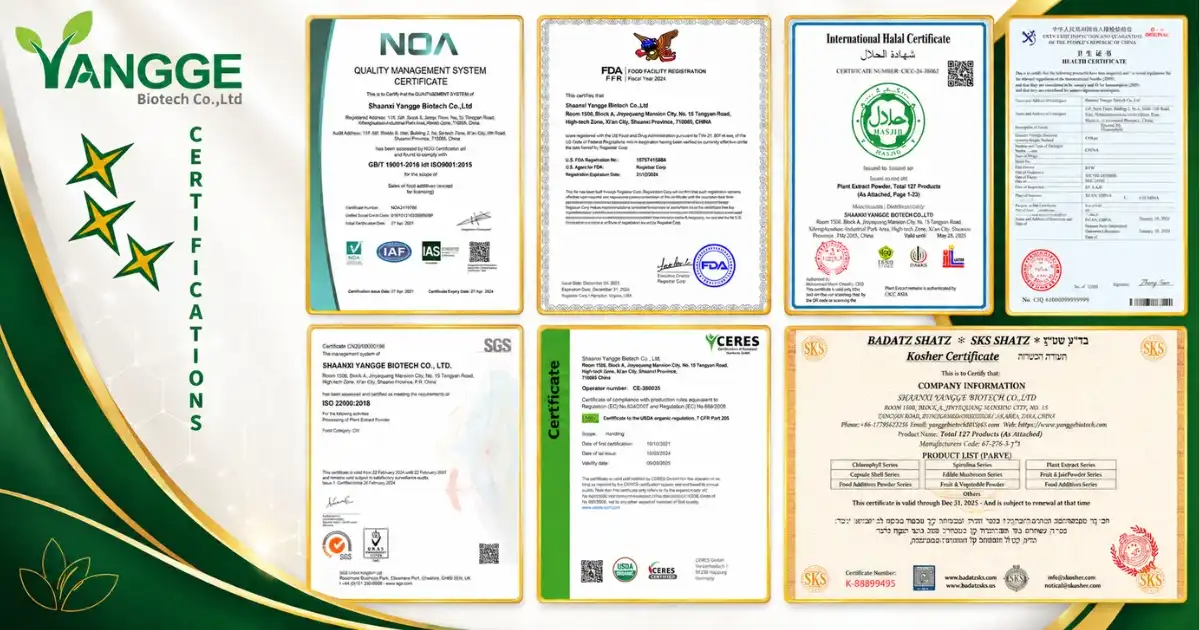
GMP certification means that the process controls are pharmaceutical-grade, which is especially important for supplement uses. Kosher and Halal approvals help brands that are trying to reach certain groups of people get into more markets. Organic certifications from the USDA and the EU cost more but open up health food channels that are growing quickly.
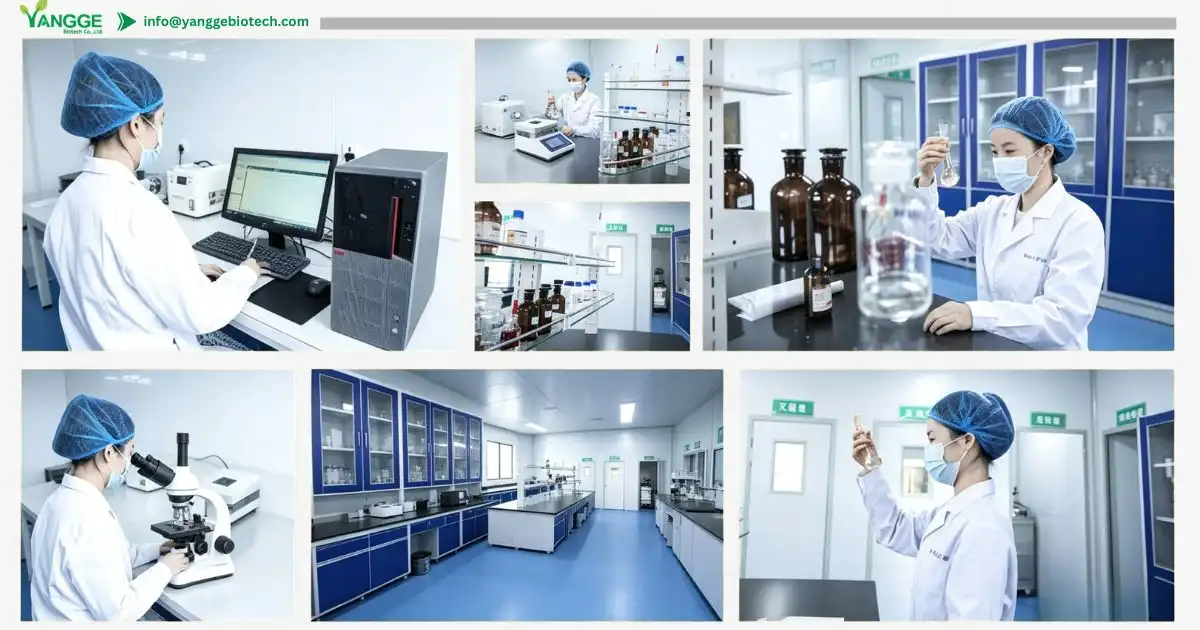
The ability to analyze things is very important. Suppliers with their own HPLC, SEC-MALLS, and microbial labs can quickly prove quality, which speeds up the sample evaluation stages. Being open about the methods used for extraction and being ready to do facility checks are signs of partnership readiness, not transactional relationships.
The strength of the supply chain should be carefully evaluated. Ask where the raw oats come from, how long the inventory lasts (30–90 days is normal for known sources), and what the company's past on-time supply rate was. Multiple sources of supply help reduce crop fails caused by weather, and having enough safety stock keeps production going during times of high demand.
Market Pricing Dynamics
Table 2: Oat Beta-Glucan Powder Pricing Tiers (2026 Market Reference)
| Purity Grade | Molecular Weight | Typical Application | Price Range (USD/kg FOB China) | Minimum Order |
|---|---|---|---|---|
| 70-75% | Native (high MW) | Baking and functional foods | $35 to $50 | 100 kg |
| 80-85% | Mid-range | Supplements for food | $55 to $75 | 50 kg |
| 85-90% | In control MW | Cosmetics and medicines | $80-$120 | 25 kg |
| 90% or more | Low MW / Instant | High-end drinks | $130 to $180 | 25 kg |
Pricing reflects purity concentration, extraction complexity, and certifications. Volume commitments typically unlock 10-15% discounts beyond 500kg annual purchases. Extended payment terms and dedicated production runs become negotiable at enterprise-level procurement volumes exceeding $100,000 annually.
Quality, Safety, and Regulatory Aspects
Figuring out the rules and regulations makes sure that products are made in a way that follows the law, and quality control measures keep the brand's reputation and customers safe all along the supply chain.
Dosage Recommendations and Safety Profile
Based on clinical research, 3 grams a day is the best way to control cholesterol. This dose is usually spread out over three meals so that the bile acid binding continues all day. Most supplement formulas have between 0.75 and 1 gram per serving, which means that you would have to eat 3 to 4 serves every day to meet the health claim standards. Functional foods like oatmeal or nutrition bars may contain 1.5 to 2 grams of protein per serving, which lowers the number of times you need to eat them.
Safety data spanning decades confirms that approved doses are well tolerated. Mild changes in the digestive system, like more gas and softer stools, may happen in the first week as the gut bacteria get used to the higher soluble fiber levels. These changes usually go away on their own.
People who are allergic to oats should not use this ingredient. However, true Oat Beta Glucan protein allergies are still not very common compared to wheat sensitivities. It is important to pay attention to drug interactions. For example, Oat Beta-Glucan's ability to bind cholesterol may make it harder for lipophilic drugs to be absorbed when taken at the same time, which suggests that the doses should be spaced out.
Regulatory Framework Compliance
The U.S. Food and Drug Administration (FDA) allows health claims that Oat Beta-Glucan consumption lowers the chance of coronary heart disease as long as the product has at least 0.75 grams of Oat Beta-Glucan per serving and meets certain labeling standards. The European EFSA also recognizes the benefits of lowering cholesterol and requires that the amount of Oat Beta-Glucan in a given amount be declared. For top placement and supporting clinical evidence in marketing materials, these approved health statements are powerful marketing tools.
Novel food rules may apply in some places to highly purified products that are more than what people normally eat. When growing into Asia-Pacific areas with different regulatory frameworks, suppliers should show proof of regulatory status that shows approvals in target markets. When listing ingredients, different markets have different rules. Some need "Oat Beta-Glucan" to be specified, while others allow "oat fiber" or "soluble oat fiber" to be used. By being clear about these details during buying, you can avoid expensive label redesigns.
Storage Stability and Shelf Life
Oat Beta-Glucan powder is hygroscopic, which means it easily absorbs water from the air if it is not kept properly. When something is exposed to humidity levels above 60% relative humidity, it clumps and may also start leftover enzyme activity that breaks down molecular weight, which lowers viscosity and bioactivity. The best way to store things is in cases that are tightly covered, don't let moisture in, and are out of direct sunlight.
Properly packaged material stays effective for 24 months after it was made as long as it is kept in a controlled environment. Accelerated stability tests at 40°C/75% RH for three months, following ICH standards, indicates long-term performance and finds degradation routes. Stability data should be required by procurement standards, especially for goods that will be shipped to warm climates or that will be part of long supply lines with multiple warehouse stops. Aluminum foil laminate bags with nitrogen flushing are the standard in the packaging industry. They are better at keeping moisture out than standard polyethylene bags.
Conclusion
Oat Beta Glucan is taken out of whole oats using complex methods that balance precise enzyme action, membrane processing, and controlled drying to produce bioactive ingredients that are standard and meet medicinal and food-grade standards. Understanding these technical methods helps buying workers in the functional food and supplement industries choose the best suppliers, check the quality of products, and make sure that formulations are optimized in a way that meets the needs of regulatory health claims.
Oat-derived Oat Beta-Glucan has special structural properties that make it useful for a lot of different processing methods. These properties make it a great ingredient for products in North America and Europe that are trying to promote heart health, immune support, and clean labels.
FAQ
How does powder oat beta glucan differ from yeast beta glucan?
The main difference is in the structure of the molecules. Oat Beta-Glucan is made up of straight glucose chains connected by β-(1→3) and β-(1→4) links. These create water-soluble structures that are good for heart health because they bind cholesterol. Yeast-derived variants have branched β-(1→3) and β-(1→6) structures that make them insoluble and mainly work as immune system modulators by interacting with different receptors.
Is the powder fully soluble in cold water?
Native high-molecular-weight extracts need warm water (above 50°C) or high-shear mixing to fully hydrate and develop viscosity. Specialized forms that have been hydrolyzed or agglomerated and have a lower molecular weight can be dispersed instantly in cold water. They were made for ready-to-drink beverage uses where heat processing isn't possible.
What are the regulatory dosage requirements for health claims?
The EU EFSA and the U.S. Food and Drug Administration both say that people must eat at least 3 grams of Oat Beta-Glucan every day in order to support claims that it lowers cholesterol. Product formulations usually give between 0.75 and 1 gram per serving, so three to four servings a day are enough to meet this limit while still keeping dosage forms that are useful.
How should the powder be kept so that it doesn't break down?
Because this ingredient absorbs water, it needs to be stored in places where the relative humidity stays below 60%, preferably in aluminum foil bags that are tightly sealed and nitrogen flushed. Moisture makes things stick together and turns on leftover enzymes that break down molecular weight. This lowers viscosity and bioactivity, which are important for how well the product works.
Partner With Yangge for Premium Oat Beta Glucan Supply
Yangge Biotech Co., Ltd. is a reliable Oat Beta-Glucan supplier that is dedicated to providing pharmaceutical-grade soluble fiber that meets the exact needs of functional food makers and supplement brands in North America, Europe, and the Asia-Pacific region. Our extraction facilities are certified as ISO 22000, HACCP, Kosher, and Halal, which means that quality control is carried out throughout the whole production process. Each batch goes thru strict testing using AOAC-approved methods. An independent lab checks the Oat Beta-Glucan content, molecular weight profiles, and safety parameters such as heavy metals below 0.5 ppm and PAH4 compliance meeting European standards.
We have variable minimum orders starting at just 1 kilogram for R&D samples, and our expert teams are here to help with formulation and application issues. Our model for sustainable sourcing keeps close ties with communities that grow non-GMO oats. This allows us to track raw materials from the farm to the facility and make sure they are always of high quality. With 50 to 100 kilograms of product on hand, orders can be filled quickly, and OEM package options allow for custom branding needs for private-label programs.
Contact our procurement specialists today at info@yanggebiotech.com to request Certificates of Analysis, discuss bulk pricing for annual supply agreements, or arrange sample evaluation supporting your next product innovation. Visit blog.yanggebiotech.com for additional technical resources and application case studies.
References
1. Othman, R. A., Moghadasian, M. H., & Jones, P. J. (2011). Cholesterol-lowering effects of oat β-glucan. Nutrition Reviews, 69(6), 299-309.
2. Tiwari, U., & Cummins, E. (2011). Meta-analysis of the effect of β-glucan intake on blood cholesterol and glucose levels. Nutrition, 27(10), 1008-1016.
3. Ahmad, A., Anjum, F. M., Zahoor, T., Nawaz, H., & Dilshad, S. M. (2012). Beta glucan: A valuable functional ingredient in foods. Critical Reviews in Food Science and Nutrition, 52(3), 201-212.
4. Lazaridou, A., & Biliaderis, C. G. (2007). Molecular aspects of cereal β-glucan functionality: Physical properties, technological applications and physiological effects. Journal of Cereal Science, 46(2), 101-118.
5. European Food Safety Authority (EFSA). (2010). Scientific Opinion on the substantiation of a health claim related to oat beta-glucan and lowering blood cholesterol. EFSA Journal, 8(12), 1885.
6. Wood, P. J. (2007). Cereal β-glucans in diet and health. Journal of Cereal Science, 46(3), 230-238.

Based on your location and order quantity, you will have the opportunity to receive a limited time free shipping promotion!
Who we are
Popular Blogs