Meso Zeaxanthin vs Lutein: Which Ingredient Fits Eye Health?
When formulators ask which ingredient belongs in an eye health product, the answer depends on the specific retinal target. Lutein distributes broadly across the macula, while meso zeaxanthin concentrates at the foveal center the region most vulnerable to age-related macular degeneration (AMD). Research published in Investigative Ophthalmology & Visual Science confirms that combining all three macular carotenoids, including meso zeaxanthin, produces superior macular pigment optical density (MPOD) gains compared to lutein alone. For product developers and procurement teams, understanding this distinction determines formulation success.
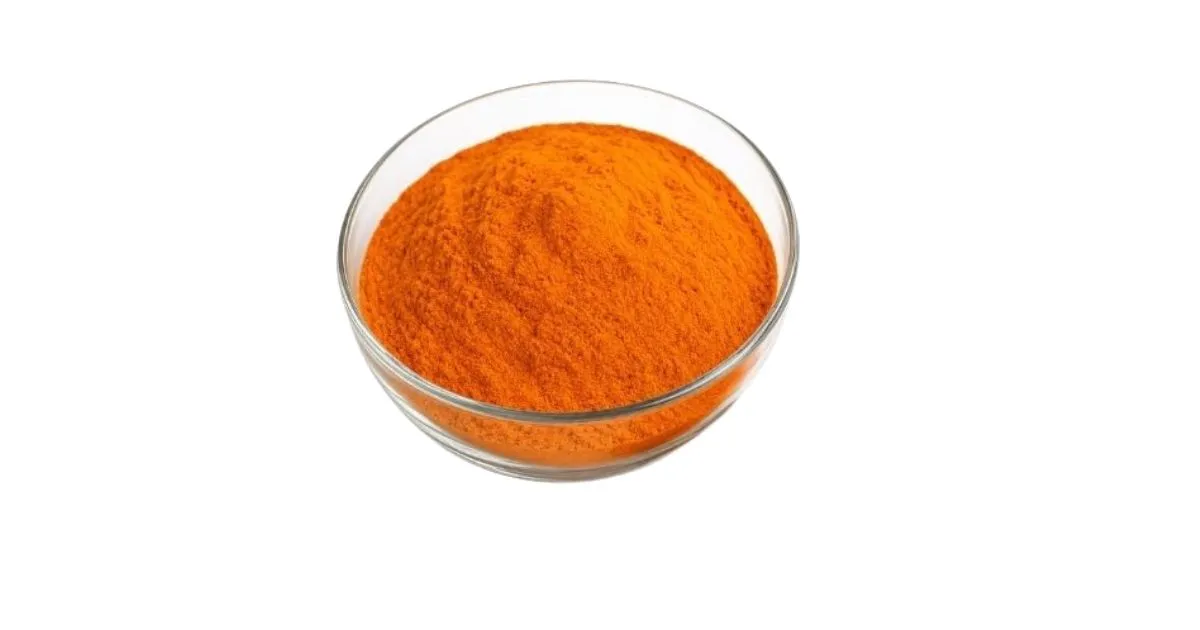
Understanding Meso Zeaxanthin and Lutein: Core Eye Health Nutrients
What Are These Macular Carotenoids?
Meso zeaxanthin and lutein are both xanthophyll pigments that only show up in the retina. There are three carotenoids in the human macula: zeaxanthin, lutein, and meso zeaxanthin. Both of these work together to make the macular pigment, which blocks blue light and protects against free radicals. Their presence in the retina can't be made by the body, so getting them from food or supplements is the only way to keep up good macular defense.
Natural Sources and Dietary Availability
Dark leafy greens like kale and spinach are good sources of lutein. The average daily intake in Western populations is about 1 to 2 mg, which is much lower than the 6 to 10 mg studied in clinical trials. Meso zeaxanthin, on the other hand, is not found in large amounts in most Western foods. Taking extra supplements is pretty much the only way to get it since it's mostly made by enzymes isomerizing lutein that is taken from marigold flowers (Tagetes erecta).
Their Biological Roles in the Retina
Lutein is spread out in the outer macula, and meso zeaxanthin makes up up to half of the macular pigment at the foveal epicenter, which is the clearest part of the retina. Because of this difference in space, lutein by itself can't fully protect the central macula. Meso zeaxanthin is needed to specifically target the central fovea in products that aim to avoid AMD or improve visual performance in people who spend a lot of time in front of a computer.
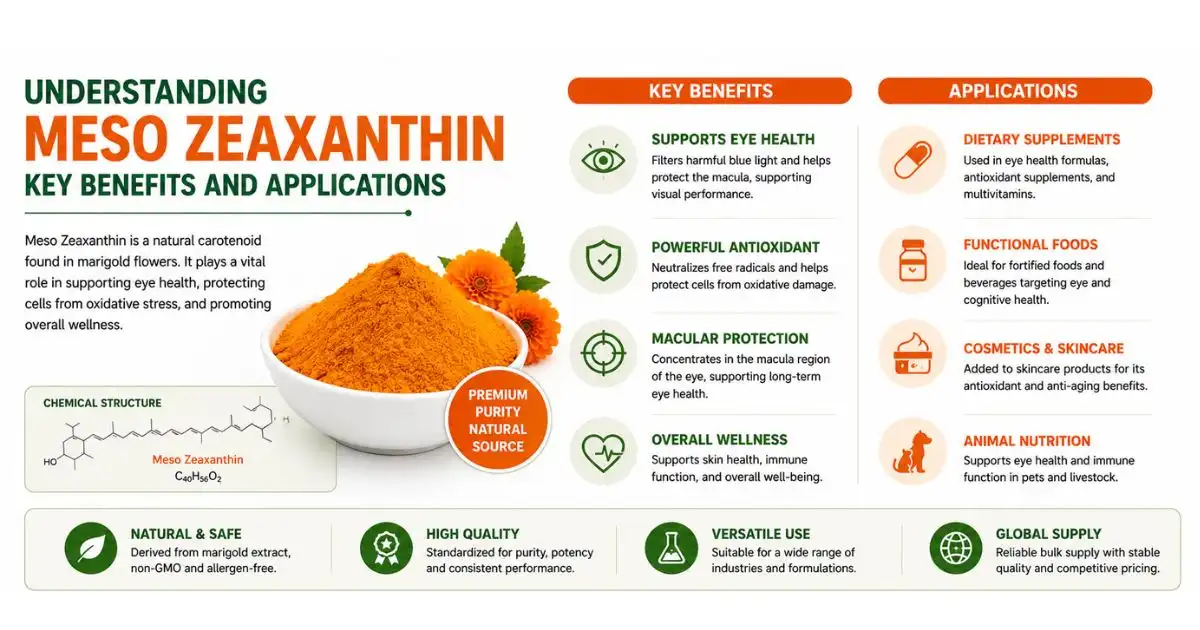
Comparative Analysis: Meso Zeaxanthin vs Lutein for Eye Health
Antioxidant Capacity and Blue Light Filtration
Meso zeaxanthin absorbs high-energy visible (HEV) blue light at around 460 nm, and its unique (3R,3'S) chiral structure makes it easier for membranes to line up within the retinal lipid bilayer. Yangge Biotech's meso zeaxanthin powder can absorb 40% more high-energy blue light than synthetic alternatives. It can also get rid of free radicals caused by UV light 150% faster than β-carotene. Lutein works, but its antioxidant activity in the foveal center is limited by the way it is spread out around the edges.
Here's a side-by-side look at how the two ingredients compare in important recipe areas:
| Parameter | Meso Zeaxanthin | Lutein |
|---|---|---|
| Primary retinal location | Foveal center | Peripheral macula |
| Blue light absorption peak | 460 nm | 446 nm |
| Dietary availability | Minimal | Moderate (vegetables) |
| Source for supplements | Marigold isomerization | Marigold extraction |
| Water-soluble form available | Yes | Yes |
These variations have a direct effect on how well each ingredient works in formulas that aim for various health outcomes in consumers.
Bioavailability and Delivery Format Considerations
Both carotenoids naturally attract fat, so they need to be delivered in fat-soluble forms or put into tiny capsules for proper absorption. Yangge Biotech's meso zeaxanthin powder works best in an oil-soluble form for softgel encapsulation. Custom water-soluble (CWS) forms are also available for functional beverage and dairy uses. The 99% pure CWS grade doesn't change when exposed to high temperatures or low pH, so it can be used to make hot drinks.
Dosage Guidelines and Safety Profiles
A meso zeaxanthin:lutein:zeaxanthin ratio of 10:10:2 mg/day has been used in clinical trials, such as those that supported the AREDS2 formula expansion studies. Compared to lutein-only programs, this mix increased MPOD more significantly. Both ingredients have strong safety records, and at recommended doses, there are no known harmful effects. Formulators who want to make high-end AMD or e-sports vision products should take this ratio into account when they set the amounts of raw materials they need.
Procurement Considerations for Meso Zeaxanthin and Lutein Products
Supplier Qualification and Purity Verification
The biggest problem with getting these substances is still making sure they are pure. This is especially true for meso zeaxanthin, which needs chiral high-performance liquid chromatography (HPLC) to make sure it is the right (3R,3'S) stereoisomer. Normal HPLC can't tell the difference between food zeaxanthin and meso zeaxanthin (3R,3'R). Yangge Biotech works with approved third-party labs to do re-tests and gives full analytical paperwork, such as COA and chiral HPLC data, so the buyer doesn't have to do any verification.
The following are the details for Yangge Biotech's meso zeaxanthin powder product line:
| Specification | Meso Zeaxanthin Powder | Meso-Zeaxanthin CWS |
|---|---|---|
| Purity grades available | 5%, 10%, 20%, 70%, 80% | 99% (min. 98%) |
| Appearance | Yellow to orange fine powder | Reddish orange powder |
| Solubility | Oil-soluble (CWS on request) | Cold water soluble |
| Source | Marigold flower | Marigold flower |
| MOQ | 1 kg | 1 kg |
| Shelf life | 24 months | 24 months |
| Certifications | ISO, HALAL | ISO, HALAL |
| PAH4 compliance | Benzopyrene ≤10 ppb | Compliant |
| GMO / Irradiation | Non-GMO, Non-Irradiated | Non-GMO, Non-Irradiated |
Yangge keeps 50–100 kg of stock on hand, which helps with the sample-to-commercial transitions that happen within the normal 4–8 week procurement cycle.
Certifications, Regulatory Compliance, and Traceability
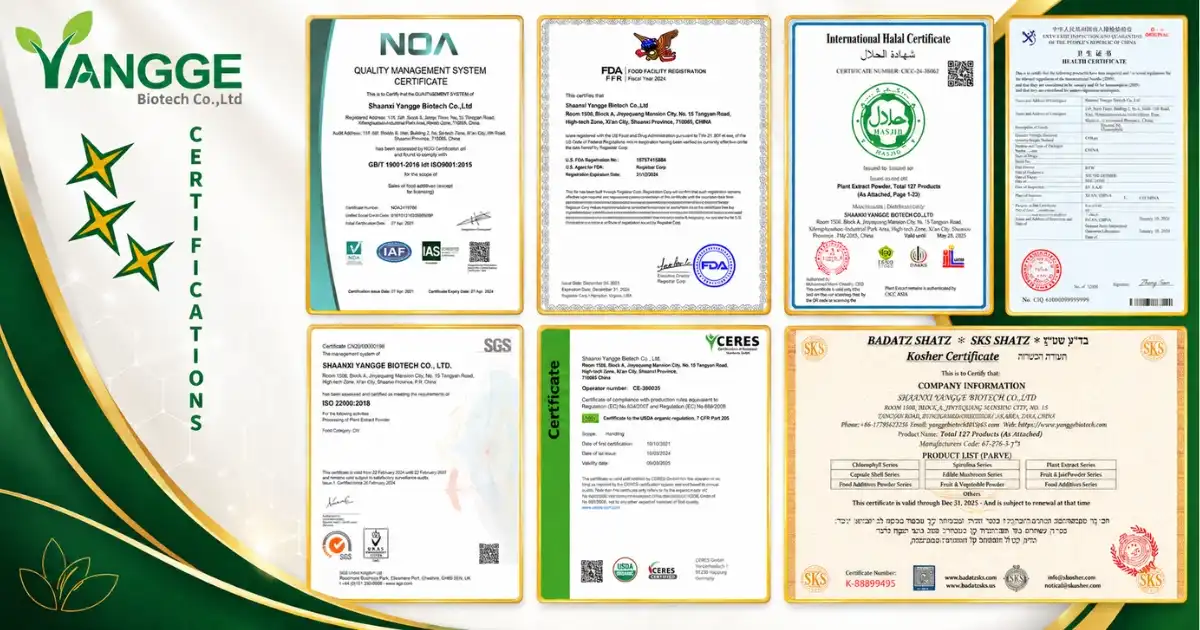
Buying teams that work with markets in North America, Europe, and Japan have to follow different rules. Yangge Biotech's products meet European PAH4 standards (Benzopyrene ≤10 ppb), are certified by ISO and HALAL, and are made in GMP facilities. The raw materials come from communities that grow marigolds in an ethical way, and the supply chains from the farms to the factories can be tracked. This level of tracking helps with filing EFSA Novel Food dossiers and FDA DSHEA compliance paperwork.
OEM and Private Label Capabilities
Yangge Biotech helps OEM and ODM companies make new products from designing the formulas to packaging the finished goods. For raw materials, the smallest order size is 1 kg, and you can get them in custom metal foil bags or under your own brand name. Because of this, the sourcing path is open to mid-sized brands with yearly procurement budgets of $50,000 to $350,000, since they don't have to make big inventory promises up front.
Making the Right Choice: Which Ingredient Fits Your Business Needs?
It's not always a simple matter of picking between these two carotenoids. The full trio of meso zeaxanthin, lutein, and zeaxanthin in clinically proven ratios is helpful for products that aim to prevent AMD, reduce digital eye strain, or improve macular performance in older adults. Formulations with only lutein can still be used for general antioxidant eye health claims and are less expensive.
For e-sports and blue-light defense, meso zeaxanthin is the better active ingredient because it has a higher foveal content and better HEV filtration. Brands that want to stand out in a crowded market should look at the three-carotenoid recipe as a science-based way to build a product.
Future Trends in Eye Health Ingredient Innovation
Microencapsulation and CWS Delivery Systems
As the number of older people in Japan and North America who drink functional drinks for eye health grows, there is more demand for carotene formats that dissolve easily in water. When CWS grades are microencapsulated, lipophilic carotenoids are protected from oxidation during processing and shelf stability is increased. This directly solves a problem that beverage makers often have.
E-Sports and Screen-Time Wellness
The e-sports nutrition category is a new one that is expected to grow quickly. Products that improve contrast perception, reduce glare, and speed up photostress recovery are in high demand among young people who spend a lot of time in front of screens. Meso zeaxanthin is the scientifically correct active for this use because of its high content in the fovea.
Regulatory Evolution and Market Access
Carotene ingredient standards are still being updated by regulatory bodies in the EU, the US, and Japan. Purchasing teams should keep an eye on what the EFSA says about the right amount of meso zeaxanthin to take in and what the FDA says about claims about structure and function for macular support. Compliance work is greatly reduced when suppliers already have regulatory paperwork.
Conclusion
Meso zeaxanthin and lutein are both important macular carotenoids, but they work in different parts of the retina. Lutein covers the macula on the edges, and meso zeaxanthin goes after the foveal center. There is clinical proof that the mixed three-carotenoid formula is the best way to help MPOD. Procurement teams should base their choice on the product's target market, clinical positioning, and delivery format needs. The seller factors that can't be changed are verified purity, approved sourcing, and the ability to provide OEM support.
FAQ
Can meso zeaxanthin replace lutein in an eye health formula?
Not at all. They are in different parts of the macula and protect each other in different ways. Putting the other one in place of the first one doesn't protect part of the retina as well. The method backed by study is to use all three macular carotenoids together to cover the whole macular pigment.
What certifications should I require from a meso zeaxanthin supplier?
Ask for at least ISO certification, proof of GMP compliance, a chiral HPLC purity report, and an analysis certificate from a third-party lab. Make sure that PAH4 is compliant with Benzopyrene ≤10 ppb in order to get into the EU market. Depending on how you want to sell your products, HALAL and Kosher certifications may also be useful.
What is the standard clinical dosage for meso zeaxanthin?
Studies supporting macular pigment improvement used a daily dose of 10 mg meso zeaxanthin combined with 10 mg lutein and 2 mg zeaxanthin. When figuring out how much raw material they need each year, procurement teams should take this number into account.
Is the CWS grade of meso zeaxanthin more expensive than oil-soluble formats?
Yes, microencapsulated water-soluble forms cost more because they have to go through more steps in the processing. But the extra cost is worth it for functional drink uses where oil-based forms would lead to phase separation and flaws in the look.
Partner with Yangge Biotech Your Trusted Meso Zeaxanthin Supplier
Yangge Biotech offers meso zeaxanthin powder that is ISO and HALAL approved and comes in purity levels ranging from 5% to 99% CWS. The powder is backed by chiral HPLC paperwork, non-GMO sourcing, and OEM packaging support. You can get samples starting at 1 kg. For more information, send your recipe needs to info@yanggebiotech.com or go to blog.yanggebiotech.com. To help you meet your product development timeline, our team responds within 24 hours.
References
1. Nolan, J. M., et al. "The Impact of Macular Pigment Augmentation on Visual Performance Using Different Carotenoid Formulations." Investigative Ophthalmology & Visual Science, 2016.
2. Age-Related Eye Disease Study 2 Research Group. "Lutein + Zeaxanthin and Omega-3 Fatty Acids for Age-Related Macular Degeneration." JAMA, 2013.
3. Beatty, S., et al. "Macular Pigment and Risk for Age-Related Macular Degeneration in Subjects from a Northern European Population." Investigative Ophthalmology & Visual Science, 2001.
4. Connolly, E. E., et al. "Macular Carotenoids and Age-Related Maculopathy." Nutrients, 2020.
5. Ma, L., et al. "Lutein and Zeaxanthin Intake and the Risk of Age-Related Macular Degeneration: A Systematic Review and Meta-Analysis." British Journal of Nutrition, 2012.
6. Loughman, J., et al. "Meso-zeaxanthin: Biochemistry and the Role of Supplementation in Disease Prevention." Survey of Ophthalmology, 2010.

Based on your location and order quantity, you will have the opportunity to receive a limited time free shipping promotion!
Who we are
Popular Blogs