How is E153 manufactured through carbonization
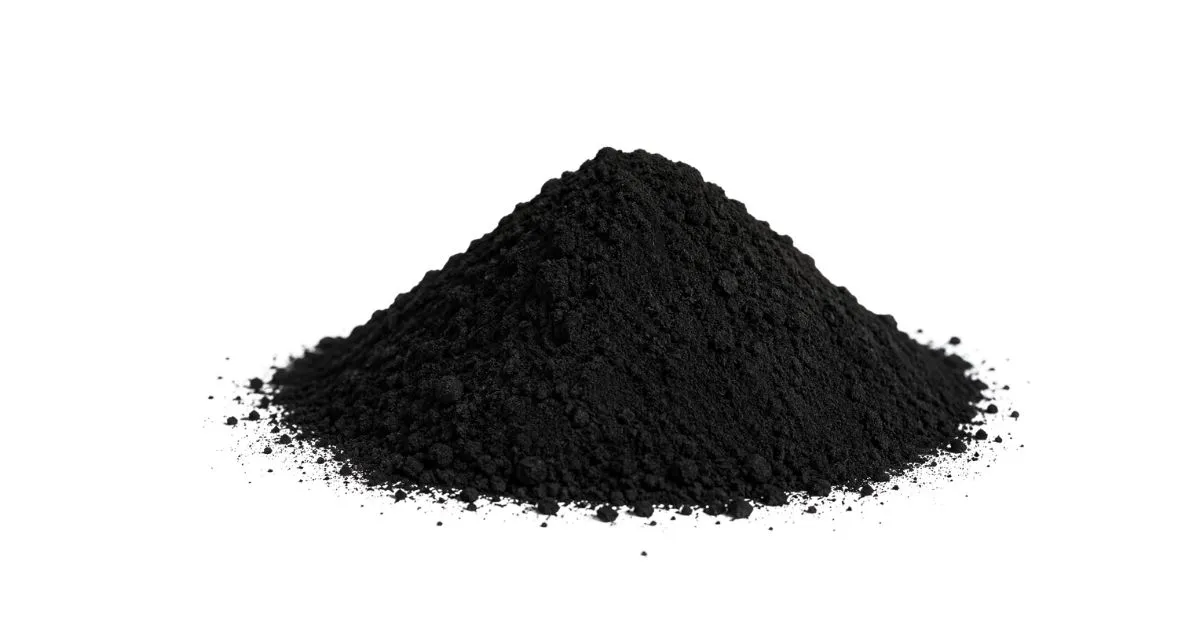
E153 food coloring formally listed as vegetable carbon black is produced by thermally decomposing plant-based materials such as coconut shells, wood, or bamboo in a low-oxygen environment. This controlled carbonization converts organic matter into a stable, intensely black pigment composed of over 95% elemental carbon. The result is an odorless, tasteless black powder that is insoluble in water and organic solvents. For B2B procurement teams replacing synthetic black dyes like E151, understanding exactly how this pigment is made helps verify quality claims and avoid specification mismatches in production.
Understanding E153 Food Coloring: Composition and Applications
What E153 Actually Is
The color vegetable carbon black doesn't dissolve in water, so it's not a dye. It colors not by dissolving into a matrix, but by physically spreading out in food. It usually has more than 95% carbon on a dehydrated base, with less than 12% moisture loss during drying and less than 4% sulfated ash. Because it has an inert chemical structure, it won't react with the sugars, acids, or preservatives in your recipe.
Where It Gets Used
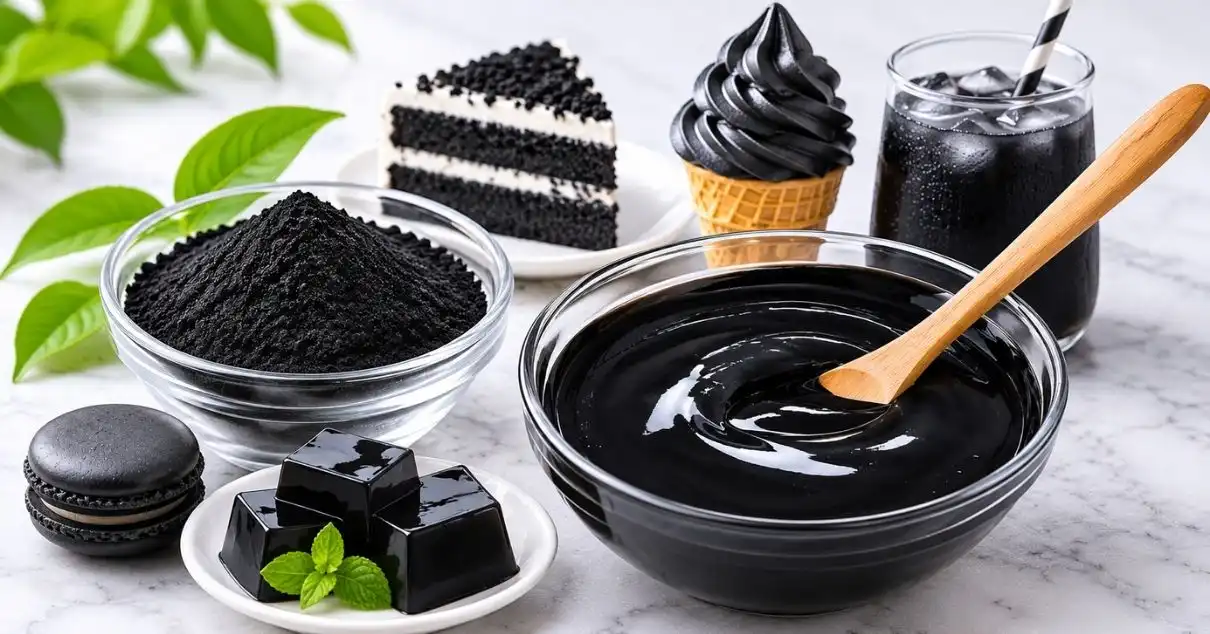
E153 food coloring works successfully with a lot of different types of food. The main uses of it and the performance benefit that each sector values the most are listed below.
| Application Category | Typical Usage Level | Key Performance Need |
|---|---|---|
| Confectionery & Licorice | 0.1% – 0.3% | Glossy black finish, no color bleeding |
| Bakery (black bun, crust) | 0.2% – 0.5% | Heat stability above 180°C |
| Dragée & tablet coating | 0.1% – 0.2% | High opacity in thin film layers |
| Beverages (suspension-based) | 0.05% – 0.15% | Particle dispersion stability |
These usage ranges are consistent with EU Quantum Satis permission for most food categories under Group II.
Regulatory Position and Safety
According to EU Regulation (EC) No 1333/2008, E153 is allowed for most types of food at Quantum Satis levels. The same thing is allowed in Canada. Teams that are buying things to sell in the US should know that E153 is not currently approved by the FDA as a food color additive. This means that products going to the US will need to use other colorants. JECFA safety tests need Benzo(a)pyrene levels to be less than 50 µg/kg and strict limits on heavy metals like arsenic being less than 3 mg/kg, lead being less than 2 mg/kg, and mercury being less than 1 mg/kg.
The Carbonization Process: Core Manufacturing Steps of E153
Raw Material Selection
The feedstock is the first thing that affects the quality of vegetable carbon black. Yangge's E153 is made mostly of coconut shell and bamboo, which are both renewable, traceable plant sources that don't contain many minerals. The thick carbon matrix that comes from coconut shells means that more color is packed into each gram. Procurement teams that are focused on Halal, Kosher, or vegan standards should be wary of suppliers who can't say where their fuel comes from.
Controlled Thermal Decomposition
Carbonization happens in a kiln or retort oven that doesn't let much air in. Temperatures usually fall between 600°C and 1000°C, but this depends on the properties of the target particle for e153 food coloring. The carbon core stays together at these temperatures, but the organic molecules in the shell break down. During the whole process, process engineers keep an eye on the temperature ramp rates, hold times, and gas makeup. Any changes in these factors have an impact on the end pigment's color depth, particle size distribution, and PAH level.
Post-Carbonization Processing
After the carbonization step, the raw carbon goes through a few more steps to make it ready for food use. These steps directly affect batch-to-batch accuracy, which is very important for formulators who are in charge of many SKUs.
Here are the core post-processing stages that convert raw carbon into specification-grade E153:
- Washing: Washing with water gets rid of soluble salts, leftover ash, and small amounts of contaminants. This lowers the amount of sulfated ash and raises the purity.
- Micronization and milling: The carbon is ground so that the average particle size is less than 5 µm. Smaller, more regular particles have a larger surface area, cover more ground, and lower the risk of sedimentation in uses that use suspensions.
- Sieving and classification: Particle size distribution is screened to get rid of parts that are too big and would otherwise make candy layers look uneven or feel rough.
- Drying: The final moisture content is lowered below 12% so that the powder can flow and not stick together while it's being shipped and handled.
These steps together determine whether the finished product moves through your manufacturing line smoothly or causes problems with sedimentation further down the line.
E153 vs. Other Black Food Colorings: A Comparison for Procurement Managers
Performance Differences That Matter
When formulating engineers switch from manmade black dyes to natural ones, they often wonder if E153 can give the same color performance. The table below shows how the three most common black colorants stack up when it comes to the factors that matter most in B2B formulation decisions.
| Attribute | E153 Vegetable Carbon | E151 Brilliant Black (Synthetic) | Activated Charcoal |
|---|---|---|---|
| Origin | Plant-derived (natural) | Synthetic azo dye | Plant-derived |
| Heat stability | Excellent (>200°C) | Moderate | Good |
| pH stability | Stable across pH 2–10 | Shifts in alkaline pH | Variable |
| Water solubility | Insoluble (dispersed) | Soluble | Insoluble |
| Clean-label status | Yes | No | Conditional |
| Regulatory approval (EU) | E153, permitted | E151, restricted in some markets | No specific INS number |
The data shows that E153 is better at being label-friendly than E151 and is also more stable at high temperatures than activated charcoal.
Why Activated Charcoal Is Not a Drop-In Substitute
Activated charcoal is often used instead of e153 food coloring to save money on the cost of purchase. This really slows down production. The process of making activated charcoal increases its adsorption surface area, not its color spread. When mixed with food, it can take in flavorings, vitamins, or even active pharmaceutical ingredients in nutraceutical coatings. In contrast, E153 is processed so that it can be used as an inert pigment. Particle size, purity requirements, and the purpose of the application are all very different.

Choosing the Right E153 Food Coloring Supplier for Your Business
Certifications to Request Before Sampling
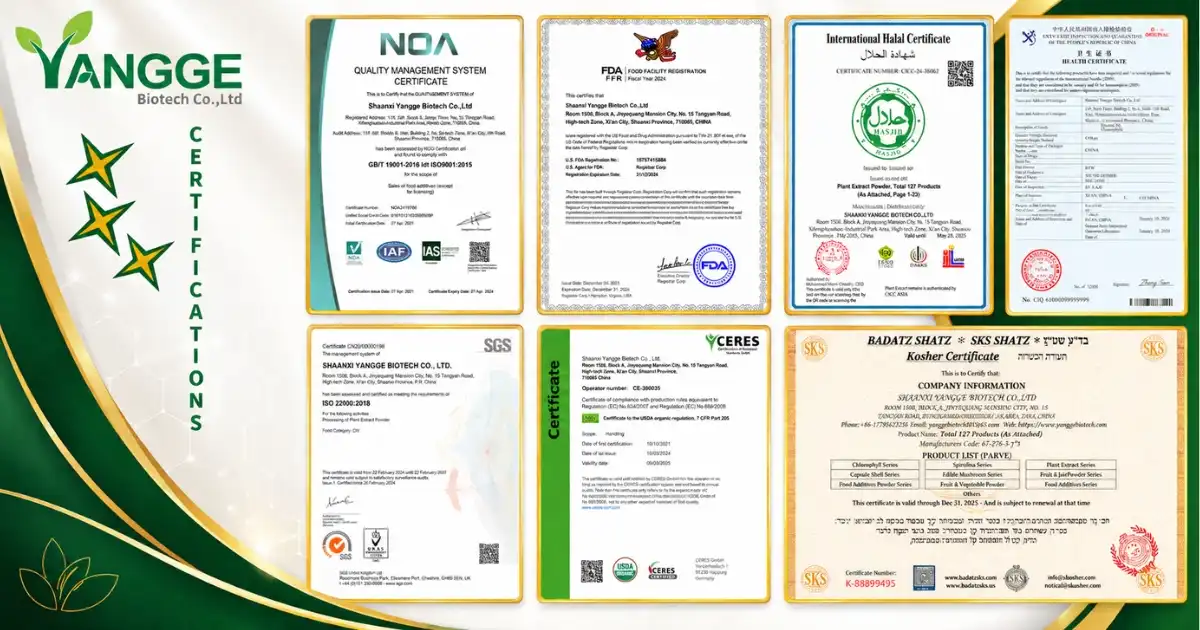
Before you agree to a seller trial, make sure you have proof of three things: the name of the product, compliance with regulations, and ethical sourcing. As a minimum, the paperwork for E153 needs to include a Certificate of Analysis (COA), an MSDS, and a declaration of the raw plant material's country of origin. Halal and Kosher certificates must match the exact batch of food, not just the company name, for places that need religious approval.
Yangge Biotech's Vegetable Carbon Black E153 ships with:
- Kosher Certification (USP grade standard)
- Halal Certificate
- COA validated by international third-party laboratories before each shipment
- Available in FOB/CIF terms, minimum 1 ton, with 5 tons currently in stock
Evaluating Application Support
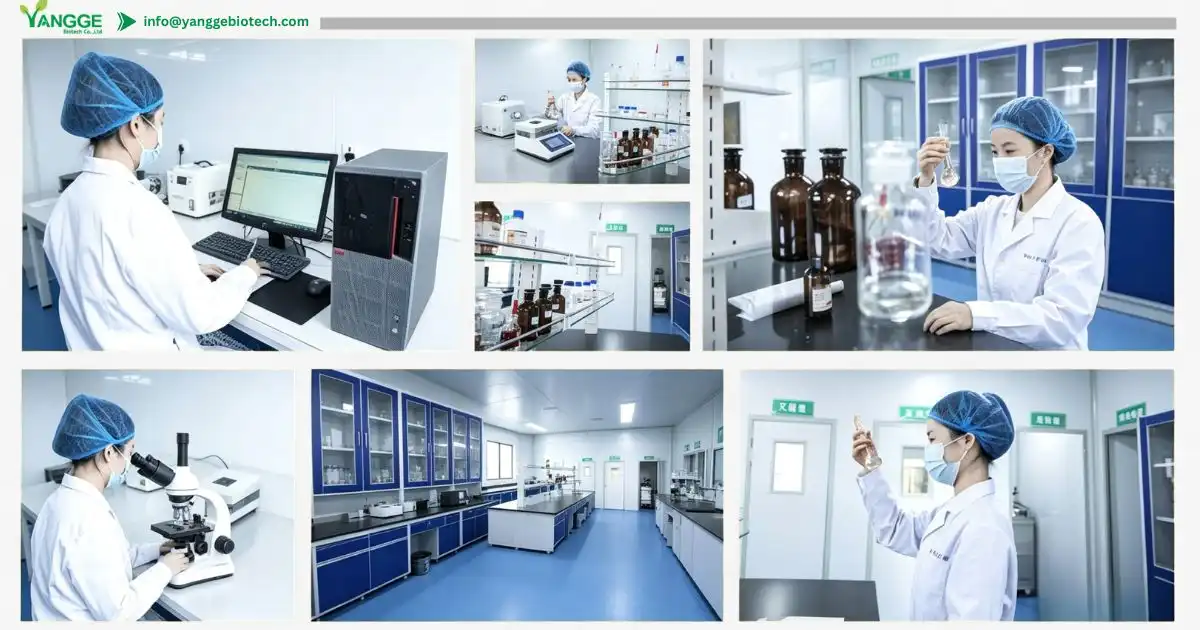
When a seller only sends a picture of the powder and a basic spec sheet, buying teams don't have much to work with during formulation trials. Ask for application data that is specific to your matrix, such as dispersion protocols for water-based systems, suggested pre-mixing steps, and any accelerated stability data that is available at the pH and processing temperature you want. With this knowledge, your approval cycle will be shorter, from 10 weeks to around 4 weeks.
Sampling and Trial Process
Yangge gives away 10–30g of Vegetable Carbon Black E153 for free for research and development tests. In this way, formulation engineers can try the color depth, dispersion, and suitability of the product before placing a large order. If you get free samples from a verified and certified supplier, switching to this e153 food coloring from a synthetic colorant is a lot less risky financially.
Future Trends in E153 Production and Application
Clean-Label Demand Is Growing
More and more people and stores are putting pressure on synthetic food dyes. In the EU, goods that contain E151 need to have warning signs on the package. Retailers in North America are making their own rules about what ingredients can be on a clean label, and synthetic azo dyes aren't allowed. This trend makes buying natural colors like E153 a long-term advantage, especially for candy and drink companies that are shifting their product lines toward natural ones.
Processing Technology Improvements
The accuracy and energy economy of carbonization tools have gotten a lot better. Modern reaction systems make it easier to control the formation of PAH, which is the main food safety issue in the carbon black production process. Better milling technology also makes particle size distribution more uniform, which directly lowers problems with sedimentation in drinking applications and raises the regularity of coatings in dragées.
Sustainability and Traceability Expectations
Traceability in agriculture is no longer a unique selling point, but a standard expectation. More and more buyers want to see proof from the farm that the plant feedstock used to make the colorant is safe. Yangge uses a supply chain model that makes it possible to track where the coconut shells and bamboo come from, which helps with both internal ESG reports and third-party certification checks.

Conclusion
E153, known as e153 food coloring, is made by following a clear carbonization sequence that starts with choosing the plant feedstock and ends with improving the final product. This sequence turns renewable raw materials into a stable black pigment that is safe for food. Understanding this process helps procurement professionals who are in charge of moving away from synthetic black dyes check what suppliers say and set realistic goals for how well formulations will work. Yangge's Vegetable Carbon Black E153 is certified Kosher and Halal, has been tested by foreign labs, and is in stock and ready to ship in small amounts or in mass.
FAQ
Is E153 the same as activated charcoal?
No, even though they both come from plants, E153 is treated to have specific color qualities and particle sizes that can be controlled. Activated charcoal is changed to make it better at absorbing things. If you use activated charcoal as a colorant, it might also absorb flavor compounds or active ingredients by accident, and it doesn't have a specific INS number for food additives.
Can E153 be used in the United States?
At this time, the FDA has not approved E153 as a food color agent in the United States. In the EU and Canada, it is fully okay. Formulations for the US market need different natural colorants. Before finishing your formulation, you should always check the legal situation for the market.
What certifications should I request from my supplier?
Ask for at least a COA, MSDS, Halal certificate, and Kosher certificate that are all special to the batch of product you want to buy. For the EU, check that heavy metal compliance documents and PAH standards (Benzo(a)pyrene < 50 µg/kg) are met.
How do I prevent sedimentation in beverages?
Before adding E153 to the drinking system, mix it with a carrier liquid like water, glycerin, or syrup. A mean particle size less than 5 µm makes the solution more stable. Suppliers should tell you how to use the dispersion procedure for your unique matrix.
What is the typical dosage for a deep black color?
If you use between 0.1% and 0.5%, you can get deep black tones in most food patterns as long as you follow EU Quantum Satis rules. The exact levels depend on the base matrix, the level of opacity that is wanted, and the processing conditions.
Source Yangge's E153 Request Samples or a Bulk Quote Today
Yangge Biotech sells verified Vegetable Carbon Black E153 that is certified Kosher and Halal. They have 5 tons in stock right now and can send you free 10–30g R&D samples if you ask. Our team gives you application data, not just powder specs, so that your formulation team can check stability, color depth, and dispersion more quickly. You can get in touch with an e153 food coloring seller by emailing info@yanggebiotech.com or visiting blog.yanggebiotech.com. Our team supports your full procurement cycle from sample to scale.
References
1. European Food Safety Authority (EFSA). Re-evaluation of Vegetable Carbon (E 153) as a Food Additive. EFSA Journal, 2012.
2. Joint FAO/WHO Expert Committee on Food Additives (JECFA). Compendium of Food Additive Specifications: Vegetable Carbon. FAO JECFA Monographs, 2006.
3. European Commission. Regulation (EU) No 231/2012 Laying Down Specifications for Food Additives. Official Journal of the European Union, 2012.
4. European Parliament. Regulation (EC) No 1333/2008 on Food Additives. Official Journal of the European Union, 2008.
5. Downham, A., & Collins, P. Colouring Our Foods in the Last and Next Millennium. International Journal of Food Science & Technology, 2000.
6. Scotter, M. J. Methods for the Determination of European Union-Permitted Added Natural Colours in Foods: A Review. Food Additives & Contaminants: Part A, 2011.

Based on your location and order quantity, you will have the opportunity to receive a limited time free shipping promotion!
Who we are
Popular Blogs