How to Choose Gardenia Yellow Powder for Natural Food Coloring Needs
Choosing the right gardenia yellow powder starts with understanding what sets it apart from other natural colorants. Derived from the fruit of Gardenia jasminoides, this plant-based pigment delivers a vibrant, stable yellow hue driven by crocin the same carotenoid compound found in saffron. For food and beverage manufacturers replacing synthetic dyes like Tartrazine (Yellow 5), gardenia yellow offers excellent water solubility, clean-label appeal, and processing resilience. Knowing how to evaluate color value, geniposide content, certifications, and batch consistency will determine whether your sourcing decision supports long-term production quality.
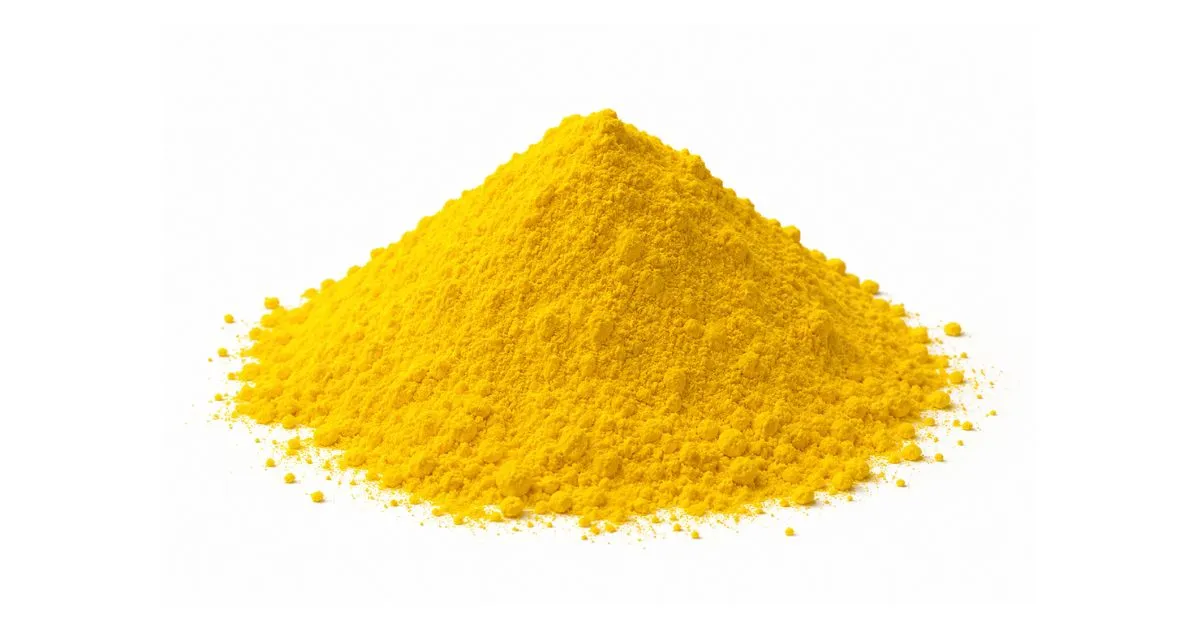
Understanding Gardenia Yellow Powder and Its Significance in Food Coloring
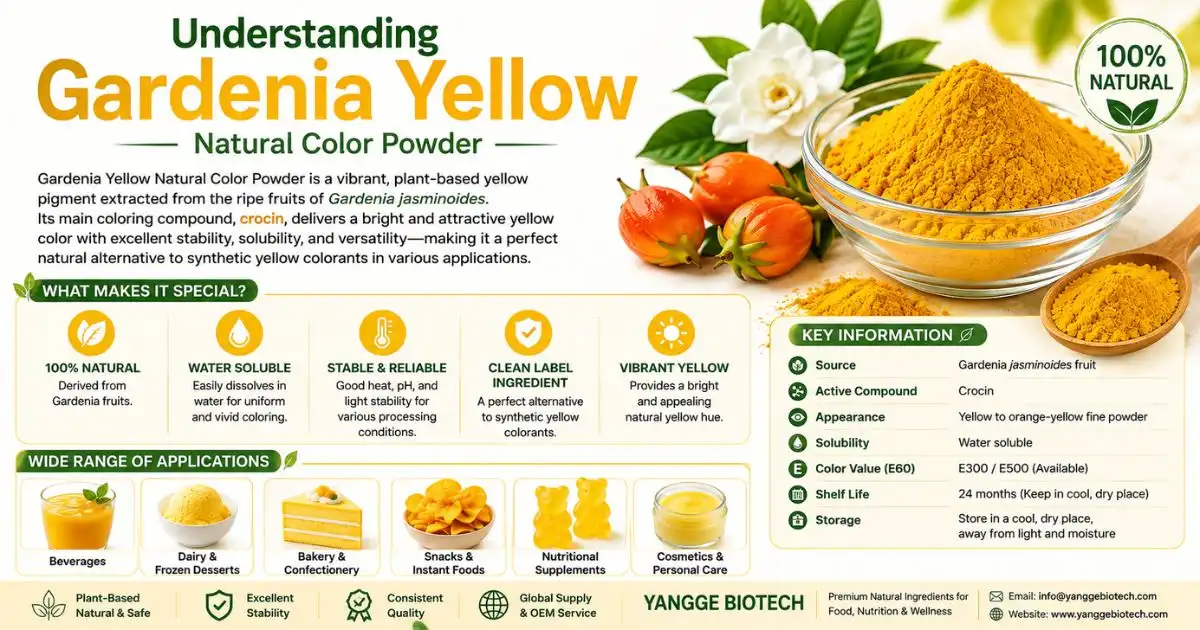
The fruit of the Gardenia jasminoides used to make Gardenia Yellow Powder is carefully selected. It is made in several steps, such as cleaning, liquid extraction, and spray drying. It turns into an orange-yellow powder whose color comes from crocin and crocetin, two water-soluble carotenoids with a main absorption peak at 440nm.
Gardenia Yellow dissolves easily in water, ethanol-water mixtures, and propylene glycol, but beta-carotene needs to be mixed with water first. So you don't have to do anything else to use it right away with drinks, noodles, and sweet glazes. A lot of the time, turmeric makes food taste bad, but this spice doesn't. Its mild flavor keeps the taste of delicate foods pure. Around the world, sales of natural food color were worth USD 2.1 billion in 2022. Grand View Research says that by 2030, sales will reach USD 3.8 billion. People want "clean label" products, which is a big part of the growth. Plant-based yellow colors are at the center of this change.
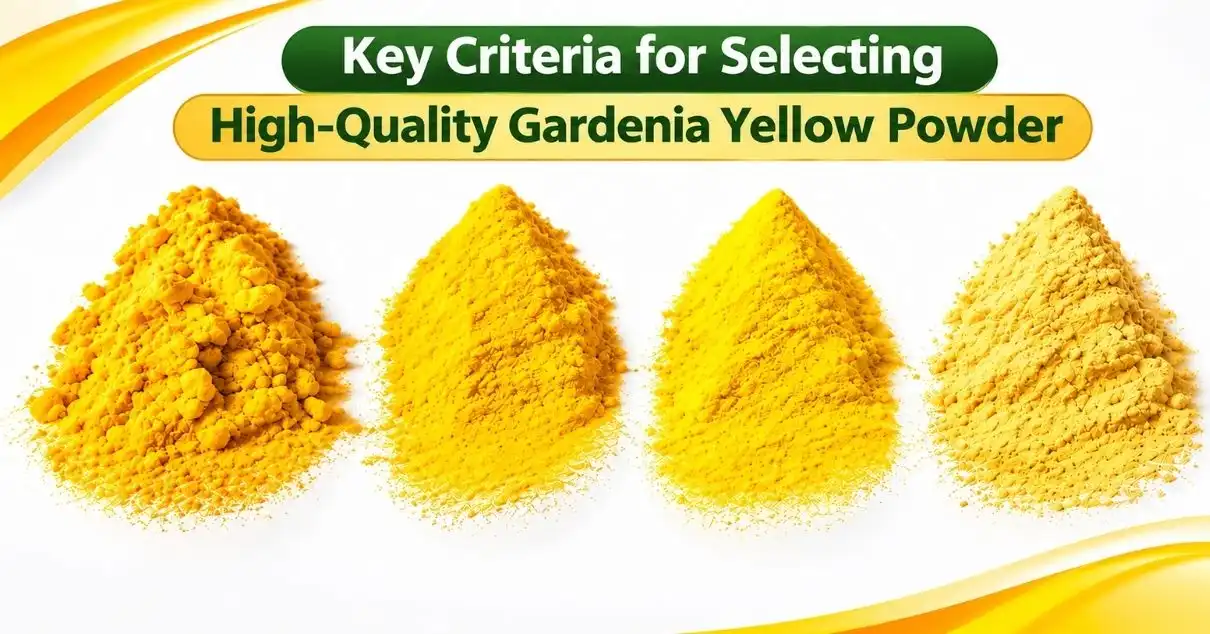
Key Criteria for Selecting High-Quality Gardenia Yellow Powder
Not every Gardenia Yellow Powder works the same on a production line. A lot of technical factors should be looked at by buying managers and R&D experts before they choose a provider.
In the table below, you can see the most important quality factors that professionals use when they buy:
| Quality Parameter | Test Method | Acceptable Standard |
|---|---|---|
| Color Value (E1% 1cm at 440nm) | UV-Vis Spectrophotometry | ≥60 (E60 grade) |
| Geniposide Content | HPLC | Strictly controlled; low-geniposide grade preferred |
| Heavy Metals (Pb, As, Hg, Cd) | ICP-MS | Within global food safety thresholds |
| Microbiological Screening | Standard plate count | Meets food-grade safety limits |
| Solvent Residue (Ethanol) | GC Analysis | Not found or within regulatory limits |
Together, these things let us know if a batch is ready to be made again. There should not be a lot of leftover geniposide because it changes the formula's amino acids and proteins into blue or green color. This is a known point where cheese and noodles stop making.
Solubility and pH Compatibility
Gardenia Yellow thrives in environments with a pH range of 7 to 10. Rain or snow may form when the pH is less than 3, which is very acidic. If procurement teams are making vinegar-based drinks or sauces, they should ask providers for pH-stability test results before they start making samples.
Batch Consistency and Color Traceability
The Color Value (E1% 1cm) must stay the same from one batch of production to the next. There is a spectrophotometric proof from a reliable source with each lot. Gardenia Yellow Powder E-60 from Yangge Biotech is labeled as an E60 grade. If you need a stronger color, you can also get E300 and E500 grades.
Comparing Gardenia Yellow Powder with Other Natural Yellows
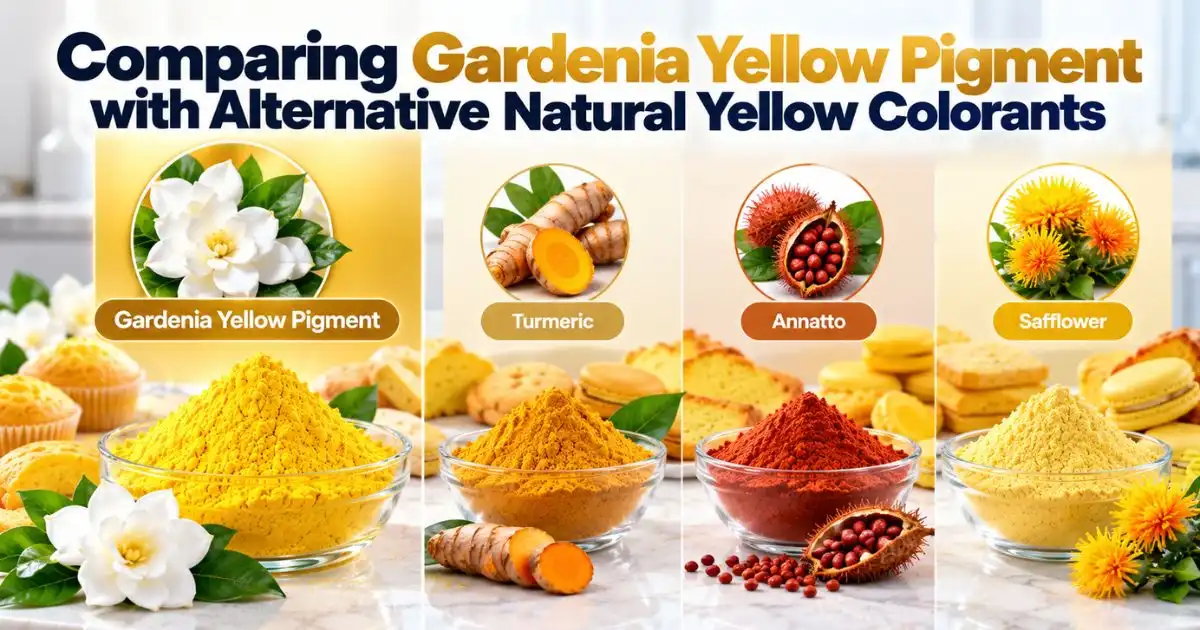
Learning how Gardenia Yellow stacks up against other colorants in terms of how well it dissolves in water, how stable it is in heat (80°C/120 min), how it affects flavor, and how much it costs helps procurement teams make their case. Gardenia Yellow is excellent, superior—no fading, minimal, and high in volume. Turmeric is moderate to strong, earthy, and noticeable. Saffron is good to moderately strong, distinctive, and very low. Beta-carotene is emulsified.
Gardenia Yellow is the best choice for makers who need something stable in the water phase that won't change the taste. It works better in hot water processes than beta-carotene and gives a more consistent color than turmeric, whose color changes because the amount of curcumin in the raw material changes from batch to batch. Under the rules, you can use it in the US, Japan, South Korea, and a few Southeast Asian countries. Before making a product, procurement teams in Europe should check to see what the current state of the EFSA authorization is. This is because there are still open EU clearance routes for this pigment.
Best Practices for Procurement and Quality Assurance
There is a lot less risk when you buy things in an organized way. It usually takes two to four weeks to make up your mind about Gardenia Yellow. We ask for samples, test for stability, make sure we're following all the rules, start trial production, and then place the big order.
When you're looking for a source, these conditions should be met:
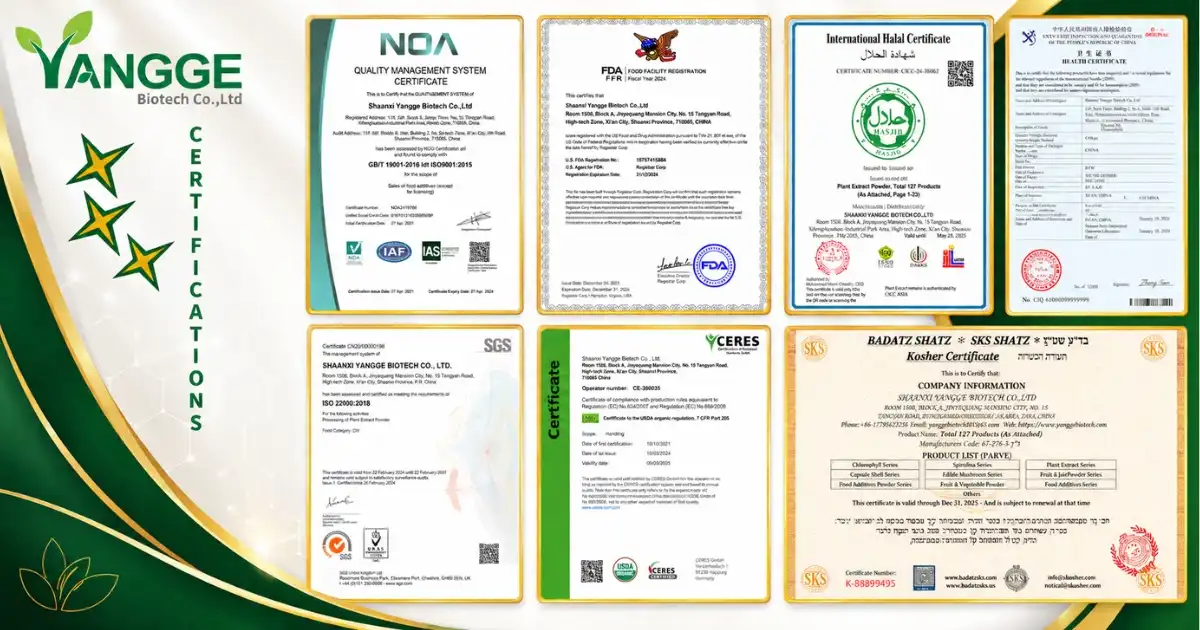
- Certification verification: Certifications must be checked to make sure they are up-to-date and useful to the job. This includes ISO, HACCP, Kosher, and Halal certifications. All four are at Yangge Biotech, which makes it easy to get the paperwork ready for export markets.
- Sample-stage testing: For testing samples, before you place your order, make sure you ask for a clarity test and a pH stability profile for a 1% aqueous solution. A clean extraction is shown by a clear solution that doesn't have any bits in it.
- Batch documentation: Please keep in mind that every package should come with a Certificate of Analysis (CoA) that shows the color, geniposide level, heavy metal readings, and microbial information.
- Packaging integrity: The pigment should be sealed in a way that keeps light and moisture out so it doesn't break down while being shipped or stored.
Because raw materials don't always come in the same form, these checks make sure the quality of the production and stop the need for expensive re-mixing. Making it clear that providers will be audited at least once a year helps keep everyone in the supply chain honest over time.
Case Study: Successful Integration in Noodle Manufacturing
A medium-sized noodle company in Southeast Asia was getting rid of a man-made yellow dye from all of its instant noodles to follow the rules for clean labels in the market. Making sure that the color didn't turn green during the boiling and steaming stages was the hardest part.
They asked for a low-geniposide grade of Gardenia Yellow Powder with an E60 color value. The first test batches showed that the crocin compounds in the color stuck to the noodles' starch-protein matrix very well. The noodles stayed a stable golden color, and the color didn't transfer to the cooking water. Testing the color retention for 12 weeks at 25°C and 40°C showed that it stayed within acceptable ranges. The company then moved all of its goods to the natural colorant. This made it easier for regulators to label the products and gave the company better scores on internal sensory rates of how customers saw the products.
Conclusion
To pick the best Gardenia Yellow Powder, you should carefully think about its color, the amount of geniposide it has, how it breaks, and the supplier's certification. Price isn't enough on its own. Yangge Biotech's Gardenia Yellow Powder E-60 meets all of these technical requirements. Its production is fully approved and can be tracked, and it comes in three different grade levels (E60, E300, and E500). This colorant can be used instead of synthetic ones by companies that make drinks, candy, noodles, or condiments. It is safe and good for the environment.
FAQ
Q1: Is Gardenia Yellow powder safe for all food types?
A: Gardenia Yellow can be used in drinks, sweets, noodles, cheese, and seasonings in the US, Japan, Korea, and most of Southeast Asia. Before putting something on the market, you should always make sure it has been accepted in the right place. This is especially important for things that are going to be sold in the EU.
Q2: How should it be stored to maintain potency?
A: Keep it out of direct sunlight and somewhere cool and dry. UV light and moisture both break down colors faster. Food can usually last for 24 months if it is kept below 25°C in sealed containers that keep out light.
Q3: Can it be used in organic-certified products?
A: To find out if someone is eligible, the certifying body and the extraction method are used. Ask the seller for proof of tests for solvent residue and supply chain tracking to make sure it meets your organic certification standard.
Q4: Why did my product turn green after adding this pigment?
A: The green color comes from geniposide that was left over reacting with amino groups in proteins or amino acids that were mixed in. It won't happen if you ask your supplier for a refined grade with low geniposide.
Q5: What is the difference between E60, E300, and E500 grades?
A: These grades tell you how bright a color is. Most of the time, E60 works well, but E300 and E500 are better for things that need stronger yellow tones or more focused shapes.
Partner with Yangge A Trusted Gardenia Yellow Supplier
Yangge Biotech sends Gardenia Yellow Powder E-60 to producers in North America, Asia, and other places. An ISO, HACCP, Kosher, and Halal certificate has been given to this powder. In 24 hours or less, our team will get back to you whether you need to place a large order, get specific information, or get technical help testing an app. Contact us at info@yanggebiotech.com to request a sample and start your formulation process today.
References
1. Grand View Research. Natural Food Colors Market Size, Share & Trends Analysis Report. 2023.
2. Abdulkarim, S. M., et al. "Natural colorants in food: A review of sources, stability, and applications." Food Chemistry. 2021.
3. Pintó, X., et al. "Carotenoids and their role as natural pigments in food technology." Journal of Food Science and Technology. 2020.
4. Martins, N., et al. "Natural food colorants: Challenges, regulatory aspects, and future trends." Trends in Food Science & Technology. 2016.
5. Yoshikawa, M., et al. "Crocin and crocetin from Gardenia jasminoides: Physicochemical properties and stability in food systems." Food Research International. 2018.
6. FAO/WHO Joint Expert Committee on Food Additives (JECFA). Monograph on Gardenia Yellow. Food and Agriculture Organization. 2006.

Based on your location and order quantity, you will have the opportunity to receive a limited time free shipping promotion!
Who we are
Popular Blogs