Lutein vs Zeaxanthin: Differences for Eye Health
The distinctions between lutein and zeaxanthin in eye health formulas are frequently questioned by procurement experts. Both are xanthophyll carotenoids, which are naturally occurring yellow-orange pigments that are mostly found in the macula. They protect vision in different ways, but they work together to do so. Lutein mostly builds up in the outer retina and blocks blue light as a powerful antioxidant. Zeaxanthin, on the other hand, concentrates in the center macula and protects against oxidative damage very well. R&D managers and buying leaders can make targeted, effective eye health goods that meet regulatory standards and customer expectations if they understand these subtle differences.
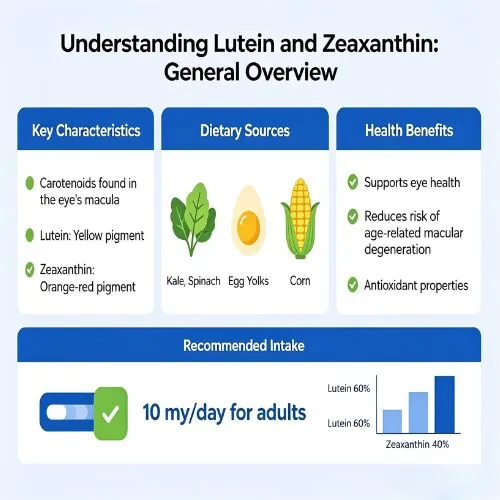
Understanding Lutein and Zeaxanthin: General Overview
These two carotenoids are from the xanthophyll family, which means they have oxygen molecules in their chemical makeup. This makes them different from other carotenoids, such as beta carotene. Not by chance are these chemicals found in the retina; they play a key role in protecting photoreceptor cells from harmful colors and free radical attack.
Chemical Nature and Structure
Zeaxanthin and lutein are structural isomers because their molecular formulas are similar. The small change is where one of the double bonds is located in their ring structure. Lutein has three chiral centers compared to zeaxanthin's two, a small difference that affects how the two molecules interact with cell walls and different colors of light. Because they are lipophilic, which means they dissolve in fat, they easily blend into fatty tissues all over the body, especially those in the brain and eyes, where lipid levels are high.
Mechanisms of Protection
The ways that these pigments protect cells are many and varied. In a way, they act like internal sunglasses because they block high-energy blue light before it hits the retinal structures below. Because they are antioxidants, they get rid of reactive oxygen species that are made by regular metabolism and light exposure. Lutein has a special structure that lets it cross cell walls and keep them stable from the inside and outside. This two-way positioning makes cells more resistant to oxidative stress, which is a main cause of age-related macular degeneration and other eye problems that get worse over time.
Dietary Sources and Bioavailability
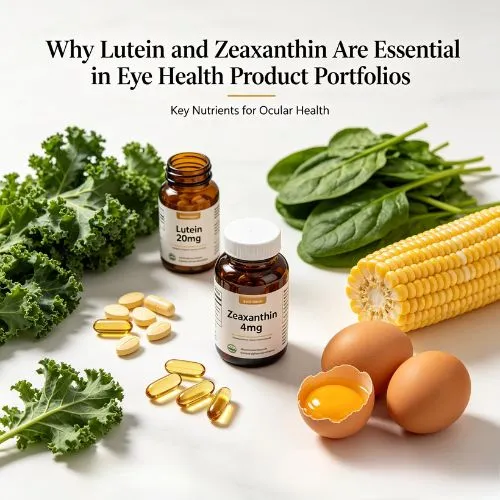
Leafy greens like spinach and kale have a lot of free lutein. Egg yolks have both carotenoids in forms that the body can use because they contain fats that help the body absorb them. Marigold flowers are the main market source for extraction because they naturally contain a lot of lutein esters, which are fatty acid-bound forms of lutein that need to be changed by enzymes in the digestive system to become bioactive free lutein.
Bioavailability relies on a number of things, such as the type of fats in the food, how well the person digests it, and the exact chemical form of the carotenoid. When purchasing raw materials, procurement teams should give more weight to sellers who can show batch consistency and give thorough information on the forms of carotenoids and the rates at which they are expected to be absorbed.
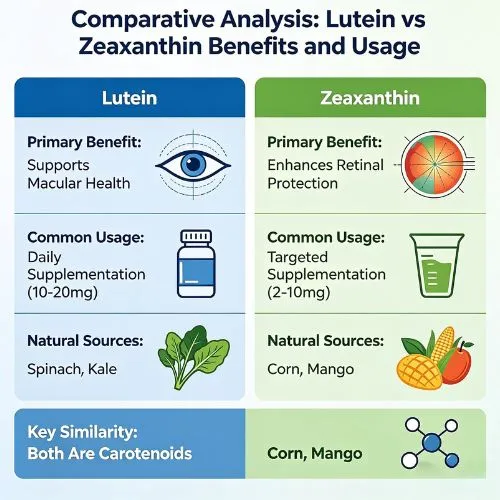
Comparative Analysis: Lutein vs Zeaxanthin Benefits and Usage
Both carotenoids are good for your eyes, but the way they are distributed and the specific benefits they offer show why combo products often do better in clinical studies than single-ingredient products.
Distribution Patterns in the Eye
Lutein is spread out more evenly across the retina, with higher amounts in the edges. Zeaxanthin, on the other hand, is highly concentrated at the fovea, which is the center point where clear, sharp vision happens. This pattern of complementary spread says that evolution has found the best way to protect the whole macula. Because it is located in the middle, zeaxanthin is especially important for activities that need good vision, like reading or driving.
Individual Benefits and Clinical Evidence
Over 4,000 people took part in the famous AREDS2 study, which showed that a formula with 10 mg of lutein and 2 mg of zeaxanthin slowed the progression of age-related macular degeneration by 25% over five years in people with moderate AMD. This study came up with dosage standards based on evidence, which are now used to lead product creation across the supplement business. Lutein has shown potential in improving contrast perception and lowering the disability caused by glare, and zeaxanthin is great at keeping the exact center of vision safe from photochemical damage.
Optimal Dosage Considerations
Lutein should be taken every day in amounts between 6 mg and 20 mg, according to research. Doing 10 mg or more has the most health effects. Because it is more concentrated in the eye, zeaxanthin is usually taken in doses of 2 to 4 mg per day. Safety tests show that these compounds are well-tolerated, even at higher doses. The most common side effect described was harmless carotenemia, which is a yellowing of the skin that goes away when the dose is lowered. Women who are pregnant and kids can easily get these carotenoids from food, but supplement suggestions should follow established rules for kids and pregnant women.
Synergistic Nutrient Interactions
Lutein and zeaxanthin work in harmony with other nutrients, so formulators should take note of this. A lot of omega-3 fatty acids, especially DHA, are found in the membranes of retinal cells and help carotenoids get into the cells. Zinc helps enzymes change lutein esters into free lutein and is an important part of how vitamin A is used and how antioxidant enzymes work. Antioxidant protection in the lipid phase is increased by vitamin E, making a full defense system against oxidative damage.
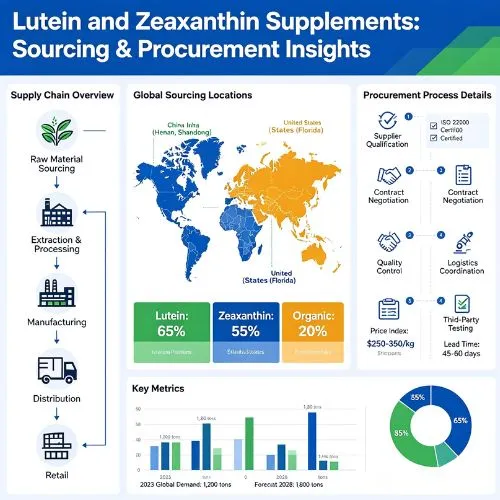
Sourcing and Procurement Insights for Lutein and Zeaxanthin Supplements
When buying these carotenoids, business-to-business buyers have to make a number of important choices, such as choosing the right types of raw materials, checking the certifications of suppliers, and making sure the supply chain is reliable.
Raw Material Forms: Free Lutein vs Lutein Esters
When marigolds are extracted, lutein esters are naturally produced. These can be sold as-is or saponified to make free lutein. The benefit of free lutein is that it is quickly accessible, similar to the form that is mostly found in human food and plasma. Lutein esters are more stable when stored and processed, especially in places where there is a lot of heat.
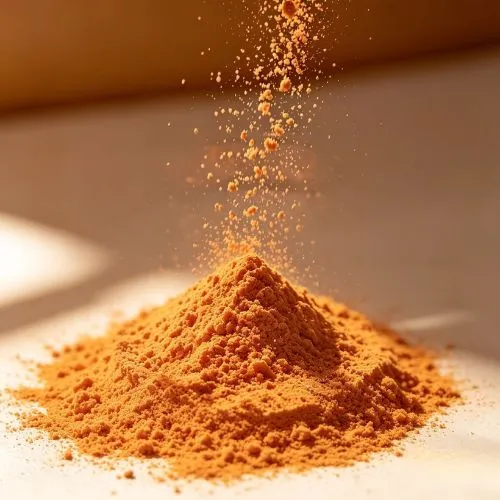
Yangge Biotech sells marigold extract lutein powder with concentrations ranging from 5% to 80%. Our powder is made from high-quality marigold flowers and is processed to keep all of its bioactivity. Our orange fine powder meets high quality standards, such as being non-GMO verified, not being treated with radiation, and meeting European PAH4 standards with benzopyrene levels always below 10 ppb.
Dosage Forms and Manufacturing Considerations
Knowing the pros and cons of each delivery style helps purchasing managers match the right raw materials with the right output methods:
Powders give you the most options for how to make your recipe, so you can get the exact dose of Lutein you need in pills, tablets, or functional foods. They work well in protein shakes, energy bars, and drink mixes, but they need to be handled carefully so they don't go bad. To keep the potency of Lutein throughout the product lifetime, our lutein powder is packed in 1 kg aluminum foil bags with custom choices available. It is then kept in tightly sealed containers that are dark and airtight.
Microencapsulation technology is used in beadlet forms to keep carotenoids safe from damage caused by air, water, and light. These water-dispersible formulations make it possible to add them to drinks and liquid nutrients, where fat-soluble chemicals would normally separate. Beadlets cost more than other beads, but they offer better security and ease of use for customers.
Carotenoids are lipophilic, which means that oil solutions and emulsions work best when eaten with food for better absorption. These forms work great for making softgels, but they need strict controls on oxidation while they are being made and while they are being stored.
Regulatory Certifications and Quality Verification
When making purchases, companies should give more weight to sellers who can show complete sets of certifications. GMP approval proves that good production practices are followed, which protects against contamination and makes sure that the product is always the same. ISO standards check that quality control systems are working, and HACCP approval checks for food safety risks all along the production process. Yangge Biotech keeps its ISO, HACCP, Kosher, and Halal certifications up to date by working with well-known labs to do independent testing that backs up our own quality controls. From the farm to the finished product, our traceability tools keep track of the whole chain of control for every batch we make.
Strategic Procurement Considerations
When buying in bulk, you should talk about minimum order amounts, price tiers based on commitments to buy a lot, and payment terms that protect your cash flow while also making sure you have a steady supply of goods. Lead times are usually between 4 and 8 weeks for normal specs. For unique formulations, more development steps are needed. By working with sellers who keep enough inventory on hand, you can avoid supply problems during times of high demand or problems with farming that affect marigold crops.
Why Lutein and Zeaxanthin Are Essential in Eye Health Product Portfolios?
Lutein and zeaxanthin formulations are positioned for long-term growth by market factors that increasingly favor goods with strong clinical proof and open sourcing practices.
Market Growth Drivers
Vision support products are becoming more popular because people in developed markets are living longer. Screen time is becoming more common among people of all ages. This makes people more aware of the risks of blue light exposure, which opens the door for preventive eye health goods aimed at younger people. The global Lutein market, which was worth about $240 million in 2022, is still expanding at rates higher than 5% per year, thanks to sales of Lutein supplements and foods that have been enhanced.
Product Differentiation Strategies
Combination products that use lutein and zeaxanthin in amounts that have been backed by study are better for marketing than products that only use one ingredient. People who care about plant-based, clean-label ingredients like products that stress that they come from marigold flowers. By adding nutrients that work well together, such as omega-3s, zinc, and vitamin E, you can make special products that are worth the higher prices and offer real extra value through nutrient synergies.
Building Consumer Trust Through Transparency
Consumers today are very knowledgeable and expect to know a lot about where ingredients come from, how they are extracted, and the results of third-party tests. Brands that talk about their quality control methods, pledges to sustainability, and ability to track their products through the supply chain get more loyal customers and command higher prices. This kind of openness is made possible by working with suppliers who provide detailed paperwork on everything from farming methods to final product specs. This also helps goods stand out in crowded markets.
Conclusion
The unique ways that lutein and zeaxanthin are distributed in the retina and their ability to work together to protect cells make combination versions the best eye health products available. If people who work in procurement know about the biochemical differences between these carotenoids, can spot quality signs in raw materials, and work with approved sources, their businesses will be better able to meet the growing demand for goods that are backed by strong clinical proof. These substances are important for more than just the size of the current market; they also help differentiate products and build brand trust in the growing eye health category.
Partner with Yangge Biotech for Premium Marigold Extract Lutein
Yangge Biotech specializes in sending pharmaceutical-grade lutein from marigolds that meets the strict requirements of supplement makers, functional food developers, and OEM customers all over the world. Our committed research and development team creates unique specs ranging from 5% to 80% concentration to ensure the best performance in a wide range of uses, from capsules to beverage systems.
Our ISO, HACCP, Kosher, and Halal certifications show that we keep full supply chain tracking from growing marigolds in a way that doesn't harm the environment to testing the end product. In addition to providing high-quality raw materials, we also offer full expert support to help formulation engineers improve absorption, stability, and regulatory compliance. Our 24-hour customer service makes it easy to talk to us no matter what time zone you're in, whether you need small samples for product development or large amounts delivered on a regular plan. Get in touch with our team at info@yanggebiotech.com to talk about your unique needs and find out why top brands choose Yangge Biotech as their lutein provider for high-quality products and reliable delivery.
FAQ
Q: Can we get some samples to test before purchasing?
A: Of course, we can provide free samples of 20 to 100 grams, but the shipping cost is at the customer's expense. The shipping cost can be deducted from the next order, or the samples can be sent through your courier account.
Q: Do your products have relevant certifications?
A: Yes, our products are certified for HALAL, ISO, HACCP, Kosher, and other certifications.
Q: What is the minimum order quantity (MOQ)?
A: Small batches of samples can be customized according to your requirements.
Q: Do you offer OEM and ODM services? Can the formula be customized based on our own?
A: Of course, we provide ODM and OEM services to many customers. Our product range includes softgels, capsules, tablets, sachets, granules, and private label services. Simply contact us and let us know your requirements. Our experienced R&D team can also develop new products with specific formulas.
Please contact us to design your own branded products.
Q: How do you handle quality complaints?
A: First, we have a comprehensive quality control SOP. We provide authoritative third-party inspection reports for almost all products before shipment to minimize the possibility of quality issues. Second, we have a comprehensive return and exchange procedure. If there is a genuine quality dispute, we will strictly follow the SOP.
Q: How do you ship? How long does delivery take?
A: For small orders, we typically use DHL, UPS, EMS, FedEx, or TNT. Delivery typically takes 3-7 days. We also offer air and sea freight services. We have a strong freight forwarding team and can provide you with a one-stop service, including DDP and DDU.
Q: What are your payment terms?
A: 100% prepayment, payable by T/T, Western Union, MoneyGram, or PayPal.
Q: What is the shelf life of your products?
A: 2 years with proper storage.
References
1. Bone, R.A., Landrum, J.T., Fernandez, L., and Tarsis, S.L. "Analysis of the macular pigment by HPLC: retinal distribution and age study." Investigative Ophthalmology & Visual Science, vol. 29, no. 6, 1988, pp. 843-849.
2. Age-Related Eye Disease Study 2 Research Group. "Lutein + zeaxanthin and omega-3 fatty acids for age-related macular degeneration: the Age-Related Eye Disease Study 2 (AREDS2) randomized clinical trial." JAMA, vol. 309, no. 19, 2013, pp. 2005-2015.
3. Sommerburg, O., Keunen, J.E., Bird, A.C., and van Kuijk, F.J. "Fruits and vegetables that are sources for lutein and zeaxanthin: the macular pigment in human eyes." British Journal of Ophthalmology, vol. 82, no. 8, 1998, pp. 907-910.
4. Stringham, J.M., and Hammond, B.R. "The glare hypothesis of macular pigment function." Optometry and Vision Science, vol. 84, no. 9, 2007, pp. 859-864.
5. Granado, F., Olmedilla, B., and Blanco, I. "Nutritional and clinical relevance of lutein in human health." British Journal of Nutrition, vol. 90, no. 3, 2003, pp. 487-502.
6. Landrum, J.T., and Bone, R.A. "Lutein, zeaxanthin, and the macular pigment." Archives of Biochemistry and Biophysics, vol. 385, no. 1, 2001, pp. 28-40.

Based on your location and order quantity, you will have the opportunity to receive a limited time free shipping promotion!
Who we are
Popular Blogs