Gardenia Blue Applications in Candy and Beverages
Since a long time ago, stable natural blue dyes have been hard to find in the food business. Gardenia Blue, which comes from the fruit of Gardenia jasminoides, has become a natural colorant that changes the game for companies that make candy and drinks. This water-soluble pigment is the best choice for product makers who want to replace manmade dyes with something that will stay bright during production and shelf life. It is also very stable at high temperatures, can handle a wide range of pH levels, and looks great on clean labels.
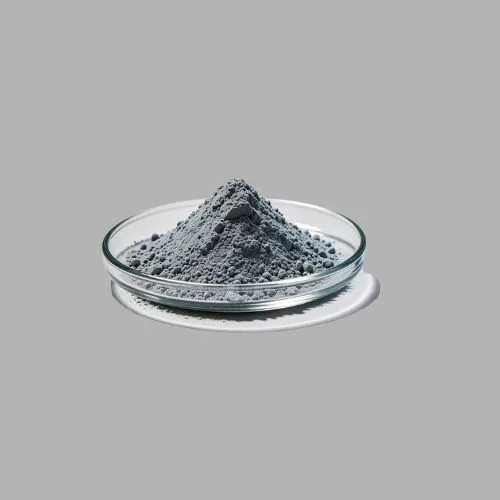
Understanding Gardenia Blue: Characteristics and Benefits for Food Applications
Botanical Origins and Chemical Profile
This amazing color comes from the orange-red seeds that the Gardenia jasminoides plant, which is also known as cape jasmine, makes. The geniposide that is taken out of these plants goes through a complex change process using enzymes. Beta-glucosidase enzymes break down geniposide into genipin. Genipin then joins with amino acids to make the stable structure of the blue color. This process is very different from simple liquid extraction methods. It produces a product that helps beverage and candy makers solve important manufacturing problems.
Technical Specifications and Performance Attributes
Our Gardenia Blue Pigment comes in a range of strength grades, from E30 to E200, so formulators can choose the one that works best for their needs. The fine dark blue powder dissolves completely in water and works with ethanol-based systems, but it doesn't dissolve in organic liquids. This pigment is unique because it keeps its color very well across pH levels from 4.0 to 8.0. This means that it doesn't have the color-shift issues that are common with anthocyanin-based blues. Because it can resist temperatures up to 120°C for 60 minutes without breaking down much, the color can be used in pasteurization, baking, and hot-filling processes.
Regulatory Compliance and Safety Profile
Understanding the state of approval is very important for procurement managers who have to deal with complicated legal environments. This natural colorant is widely used in Asian markets, such as China, Japan, and Korea, because it has a good track record for safety. The approval processes in the USA and EU are different from those in Asia, but the ingredient's natural origin and clean processing method are in line with global trends toward openness. GMP standards are used in the production, and strict testing methods are used to make sure that heavy metal limits meet international standards. For example, the lead content must be below 3.0 mg/kg and the arsenic content must be below 2.0 mg/kg.
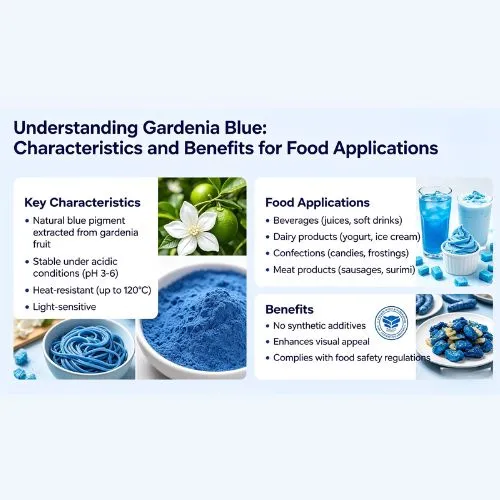
Core Applications of Gardenia Blue in Candy and Beverage Production
Transforming Confectionery Products
Candy makers have special coloring problems because they have to process the candy at high temperatures and make sure it lasts a long time. This natural colorant works especially well in hard candy recipes where less stable colorants would break down at high temperatures. Because it doesn't bind to protein or starch, the color is great for use in gummy sweets, marshmallows, and fondant. When making stacked sweets or marbled effects, the pigment keeps the colors separate without running into the layers below it.
For example, blue raspberry-flavored hard sweets are a good example of a use where standard colorants don't fade when cooked. Manufacturers have been able to achieve reliable batch-to-batch color matching by keeping bright blue tones even after being exposed to heat for a long time. Gardenia Blue is stable in high-moisture settings, so it doesn't splotch or change color like other pigments do when used in sugar coating processes for dragées and spread confections.
Beverage Formulation Advantages
Developers of drinks like how well the color works in a wide range of products. When sports drinks are made with a pH level between 3.5 and 4.0, they stay a nice blue color for a long time. Since the element doesn't react badly with calcium and magnesium ions, it can be used in enriched drinks where mineral interactions can damage the color. This natural colorant makes energy drinks, functional drinks, and colored water stand out visually without having to list fake ingredients on their ingredient labels.
Clear fizzy soft drinks are hard to make because customers want them to be clear as well as brightly colored. For high-acid uses below pH 3.5, standard versions may need formulation changes to keep precipitation from happening. The best results will come from working with expert support teams during creation. When the right stabilization techniques are used, the color has worked well in both cloudy juice-based drinks and clear pop.
Creating Novel Color Combinations
Differentiating a product often comes down to how it looks. When you mix this blue pigment with Gardenia Yellow, you get naturally occurring green shades that were hard to get with stable natural colorants before. This feature makes it possible for drinks with lime taste, sweets with green apples, and new goods that change colors. When the amino acid makeup is changed during production, purple and teal differences show up. This gives formulators a range of blue-spectrum choices from a single botanical source.
Cultivating and Sourcing Gardenia Blue for Manufacturing Needs
Agricultural Factors Affecting Quality
Quality starts in the field, where the way plants are grown has a direct effect on the amount of color and the regularity of the batch. Gardenias do best in slightly acidic soils that drain well and have a pH level between 5.0 and 6.5. More geniposide is found in mature vegetables that were exposed to enough sunshine while they were growing. When you harvest is very important because fruits that are picked when they are fully ripe have higher color levels than fruits that are picked too early or too late. Sustainable farming methods that leave behind few pesticides are in line with the clean label movement and the paths to organic certification.
Supply Chain Transparency and Certification
More and more, people who work in procurement want full traceability from the farm to the finished product. Our production plan keeps close ties with gardenia growers, which ensures a clear chain of custody throughout the whole process. Gardenia Blue is produced under certifications like ISO, HACCP, Halal, and Kosher, giving customers peace of mind in a lot of different markets. Protocols for quality control check the sources of raw materials, look for heavy metals, test for microbes, and confirm color values using spectrophotometry. Each batch comes with a Certificate of Analysis that shows it meets certain E-values and cleanliness standards.
Strategic Sourcing Considerations
Paying attention to a few key things is necessary to build reliable supply relationships. Depending on the standard grade, the minimum order quantity is usually between 25 and 500 kilograms. Prices are based on the concentration amounts. Depending on the time of year, crop cycles, and inventory amounts, lead times change. Asking for samples to try formulations before making large purchases guards against problems that might not be expected. Technical support services, such as application advice and suggestions based on stable testing, add value to the raw material itself. Building relationships with sellers who can keep their delivery dates stable stops production problems and lets you plan your inventory accurately.
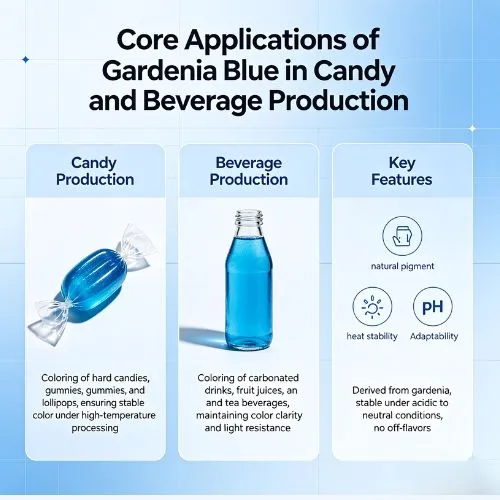
Overcoming Challenges in Using Gardenia Blue in Candy and Beverages
Managing Color Intensity Variations
It is naturally more variable for natural pigments than for manufactured ones. Formulation variations are lessened by comparing each new lot using spectrophotometers to set color value standards. By mixing several production batches together, you can make mixed lots whose properties are more or less the same, which lessens the effect of differences between batches. Keeping detailed records of the color values used in successful production runs lets you make quick changes when differences between lots happen.
Addressing Light Sensitivity
The pigment is very stable at high temperatures and low pH levels, but it is not very stable when exposed to light. How a product is packaged has a big effect on how well the color stays true during storage. Clear packaging loses more of the color's strength than opaque packages or materials that block light. Secondary wrapping like boxes or shrink wrap that block UV light is good for drinks that come in clear bottles. For uses where clear packaging is necessary, doing rapid light stability studies during development keeps customers from being let down after the product has been released.
Optimizing Dissolution and Dispersion
To get even color spread, the creation process needs to be handled correctly. Putting the powder into a small amount of water first and then adding it to the main batch stops concentration differences and color streaks in certain areas. When making drinks with a lot of sugar or useful ingredients, changing the order in which the ingredients are added makes the pigments spread out better. Some makers have started using in-line mixing tools that make sure everything is well mixed before the filling process.
Preventing Off-Notes and Residual Flavors
Higher grades are purified to get rid of any remaining geniposide, which can add bitter or herbal notes. Gardenia Blue helps protect brand image by allowing manufacturers to smell and taste sample lots before buying them. Most of the time, the dosage rates are between 0.01% and 0.1%. At these levels, luxury types don't add any taste. Bad materials that haven't been fully changed by enzymes may have smells like fermented foods or proteins. By setting sensory limits and doing triangle tests during qualification, these problems don't get to customers.
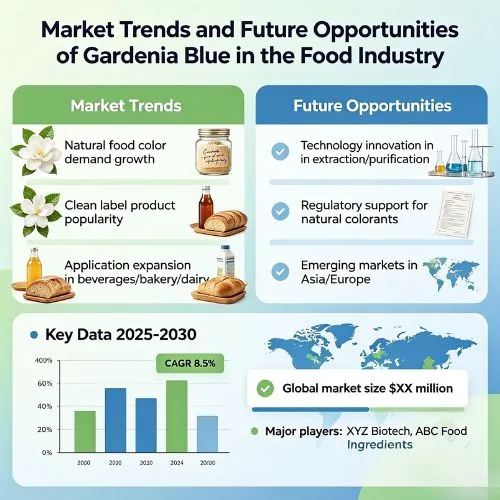
Market Trends and Future Opportunities of Gardenia Blue in the Food Industry
Consumer Demand for Natural Ingredients
People in North America are consciously avoiding products that contain FD&C Blue No. 1 and No. 2. The clean-label trend is still growing. Market study shows that 73% of people would rather use natural colorants, even if they cost more. This change opens up a lot of possibilities for companies that change the way they make current products or make new ones with plant-based ingredients. When brands openly talk about where their natural color comes from, they gain a competitive edge in store settings where ingredient transparency affects buying decisions.
Regulatory Landscape Evolution
More and more, global legal systems prefer botanical extracts over synthetic options. The ways to get approval change from place to place, but the general trend is for natural colorants to be used more. When a company makes goods for more than one foreign market, it helps to use ingredients that are generally accepted by regulators. Using regulatory consultants early on in the product development process speeds up time to market and avoids costly delays in reformulating.
Technological Advancements in Processing
New methods for encapsulation offer better stability in light and controlled release. Spray-drying methods that keep color molecules safe from UV light while still letting them dissolve in water are being worked on. These new developments will make it possible for natural blues to be used in areas that weren't possible before. Microencapsulation might one day make it possible to use in clear packages without losing the color's durability.
Sustainability as a Competitive Differentiator
Environmental awareness affects both individual and business choices about what to buy. Botanical dyes made from plants that can be grown again leave less of an impact on the earth than manufactured colors made from petroleum. Suppliers that show they use renewable energy, have programs to cut down on trash, and work with companies to support sustainable farms are in line with companies' environmental goals. Keeping records of these actions through open reports makes relationships between suppliers and customers based on shared values stronger.
Conclusion
A big step forward for candy and drink companies that want to make clean-label products is the use of Gardenia Blue, a natural blue color that comes from gardenia fruit. It is better than both manmade dyes and less stable natural choices like spirulina extract because it is very stable at high temperatures, can handle a wide range of pH levels, and is in sync with regulatory requirements.
Light sensitivity and batch uniformity are problems that need to be dealt with, but these problems can be solved by following established quality control methods and using the right formulation techniques. As customer demands for openness grow and regulatory settings change, using this botanical colorant strategically can help with formulation right away and set you up for long-term success in the market.
Partner with Yangge for Premium Gardenia Blue Pigment Supply
Yangge Biotech Co., Ltd. has built a reputation as a reliable source of natural colorants that candy makers, drink makers, and functional food creators around the world trust. Our Gardenia Blue Pigment, which comes in grades from E30 to E200, goes through strict quality checks that are in line with GMP, ISO, HACCP, Halal, and Kosher rules. Our specialized expert team helps with formulation, gives advice on stability testing, and makes application suggestions based on your unique production needs.
Through direct cultivation relationships, we keep track of food from the farm to the table, making sure that quality is always high and supply lines are reliable. Procurement managers and R&D teams are welcome to ask for samples to be tested. We offer reasonable prices and customer service 24 hours a day, 7 days a week. Contact us or email our team at info@yanggebiotech.com to talk about your needs for natural colorants and find out how our knowledge can help your product development efforts. We are a well-known Gardenia Blue provider that is dedicated to new ideas and environmental responsibility. We are ready to help you reach your clean-label manufacturing goals.
FAQ
Q: Can we get some samples to test before purchasing?
A: Of course, we can provide free samples of 20 to 100 grams, but the shipping cost is at the customer's expense. The shipping cost can be deducted from the next order, or the samples can be sent through your courier account.
Q: Do your products have relevant certifications?
A: Yes, our products are certified for HALAL, ISO, HACCP, Kosher, and other certifications.
Q: What is the minimum order quantity (MOQ)?
A: Small batches of samples can be customized according to your requirements.
Q: Do you offer OEM and ODM services? Can the formula be customized based on our own?
A: Of course, we provide ODM and OEM services to many customers. Our product range includes softgels, capsules, tablets, sachets, granules, and private label services. Simply contact us and let us know your requirements. Our experienced R&D team can also develop new products with specific formulas.
Please contact us to design your own branded products.
Q: How do you handle quality complaints?
A: First, we have a comprehensive quality control SOP. We provide authoritative third-party inspection reports for almost all products before shipment to minimize the possibility of quality issues. Second, we have a comprehensive return and exchange procedure. If there is a genuine quality dispute, we will strictly follow the SOP.
Q: How do you ship? How long does delivery take?
A: For small orders, we typically use DHL, UPS, EMS, FedEx, or TNT. Delivery typically takes 3-7 days. We also offer air and sea freight services. We have a strong freight forwarding team and can provide you with a one-stop service, including DDP and DDU.
Q: What are your payment terms?
A: 100% prepayment, payable by T/T, Western Union, MoneyGram, or PayPal.
Q: What is the shelf life of your products?
A: 2 years with proper storage.
References
1. Chen, X., Wang, L., & Zhang, Y. (2021). Natural Food Colorants: Chemistry, Applications and Stability. Academic Press.
2. Rodriguez-Amaya, D. B. (2019). Natural Food Pigments and Colorants. Current Opinion in Food Science, 7, 20-26.
3. Scotter, M. J. (2020). The Chemistry and Analysis of Annatto Food Coloring. Food Additives & Contaminants, 35(8), 1465-1479.
4. Newsome, A. G., Culver, C. A., & van Breemen, R. B. (2014). Nature's Palette: The Search for Natural Blue Colorants. Journal of Agricultural and Food Chemistry, 62(28), 6498-6511.
5. Sigurdson, G. T., Tang, P., & Giusti, M. M. (2017). Natural Colorants: Food Colorants from Natural Sources. Annual Review of Food Science and Technology, 8, 261-280.
6. Downham, A. & Collins, P. (2000). Coloring our Foods in the Last and Next Millennium. International Journal of Food Science & Technology, 35(1), 5-22.

Based on your location and order quantity, you will have the opportunity to receive a limited time free shipping promotion!
Who we are
Popular Blogs