Why Organic Matcha Powder Is in Demand
Demand for Matcha Powder keeps rising as more buying workers see how valuable it is in today's market. This bright green powder comes from Camellia sinensis leaves that were grown in the shade and then carefully baked and ground at low temperatures. It contains concentrated beneficial chemicals that people are actively looking for. Organic certification is becoming more important to business-to-business sellers in the health supplements, functional foods, cosmetics, and drinks industries in order to meet legal requirements and meet customer demands for clean-label ingredients. As people become more health aware and quality standards get stricter, it opens up great business possibilities for companies that add certified organic Matcha Powder to their product lines.
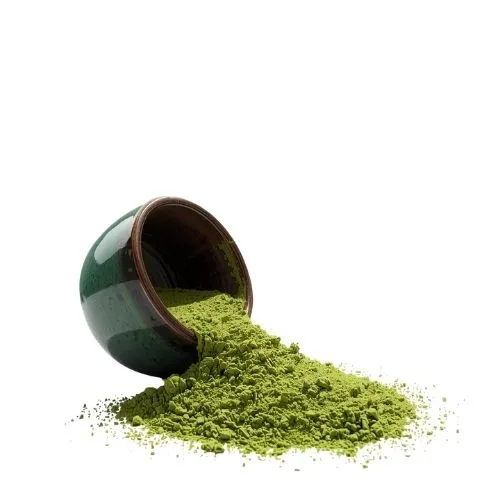
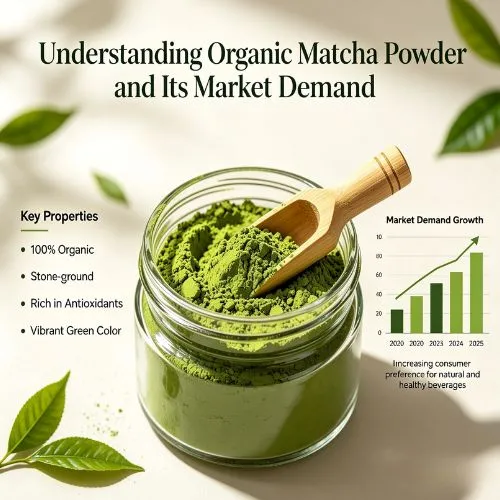
Understanding Organic Matcha Powder and Its Market Demand
Defining Organic Matcha and Its Unique Characteristics
Organic Matcha Powder is a high grade of finely ground green tea that is grown without using synthetic pesticides, chemical fertilizers, or organisms that have been genetically changed. Using traditional shade-growing methods 20 to 30 days before harvest raises the amount of chlorophyll and amino acids, giving the plant its distinctive deep green color and umami taste.
The difference between traditional grade and cooking grade Matcha Powder has a big impact on what people buy. Ceremonial matcha usually has particles that are 2000 to 3000 mesh big and is mildly sweet, making it good for making traditional tea. Culinary grades, which have particles that are 800 mesh big, work well in recipes that need to add strong flavors without lowering the nutritional value.
Global Market Trends Driving B2B Procurement
Market study shows that the organic tea market has higher compound yearly growth rates than other types. This is because more people are focusing on preventive health. Organic certification is becoming more and more important as a standard for quality in North America and Europe. This makes it easier for companies with USDA, EU, or JAS licenses to get goods.
Distributors and OEM partners say that more and more people want products that can be tracked and don't contain pesticides, which fits with clean-label marketing strategies. This trend of buying shows how consumers generally act, where openness and sustainability ratings affect choices about a wide range of products, from ready-to-drink drinks to beauty products.
Real-World Applications Across Industries
Leading beverage companies put organic Matcha Powder in ready-to-drink coffee, energy drinks, and functional water to get the most out of its natural caffeine and L-theanine, which give you energy that lasts without giving you the jitters. Health supplement businesses make antioxidant blends with organic Matcha Powder as one of the main ingredients, using its high EGCG level to market it as healthy.
Fine-particle organic Matcha Powder is used by cosmetic companies in face masks, cleansers, and anti-aging serums to appeal to people who want natural options to synthetic chemicals. Food companies use culinary-grade pure Matcha Powder in energy bars, baked goods, and sweets to make their products stand out in markets that are already full.
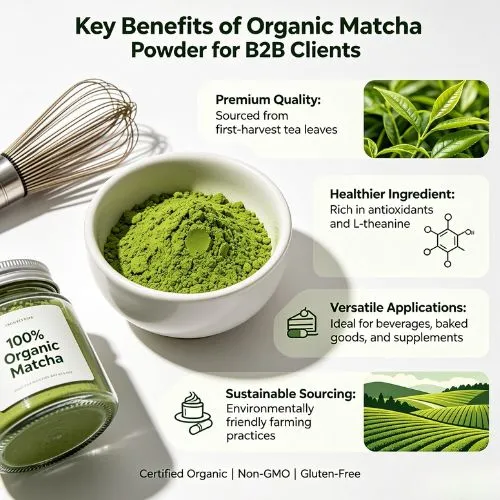
Key Benefits of Organic Matcha Powder for B2B Clients
Nutritional Superiority and Bioactive Compound Profile
Lab tests show that organic Matcha Powder has a lot more of the catechins found in green tea, especially epigallocatechin gallate, which has a lot more antioxidant power than regular green tea extracts. The active ingredient profile includes high amounts of tea polyphenols, caffeine (25–35 mg per gram), and amino acids like L-theanine that work together to create effects that formulators like.
This mix lets research and development teams make goods with true health claims while still using honest ingredient lists. The whole-leaf way of consumption keeps all the nutrients, which other methods based on extraction can't do. This gives formulation developers reliable bioactive delivery systems.
Quality Assurance and Safety Compliance
Through lists of substances that aren't allowed and required testing methods, organic certification naturally addresses a number of safety issues. Suppliers with ISO, HACCP, Kosher, and Halal certifications show that they have a method for quality control, which lowers the risk of buying from companies that follow GMP standards.
When formulas are scaled up, batch stability is very important, and organic Matcha Powder from designated cultivation regions has better regularity in particle size distribution, color values, and active compound concentrations. Verification by a third party of heavy metals, herbicide residues, and microbial contamination gives the proof needed for regulatory applications in more than one area.
Brand Value Enhancement and Market Positioning
In competitive markets where customers carefully read ingredient labels, selling goods with approved organic ingredients makes you stand out right away. Procurement teams know that organic Matcha Powder is both good for you and good for business. This means that they can charge higher prices for it because of the costs of licensing and the higher quality standards.
The element helps brands tell stories about sustainability, honesty, and customer health that appeal to a wide range of age groups. Marketing studies show that organic approval has a real effect on people's decisions to buy, especially health-conscious people who are willing to pay more for guaranteed quality standards.
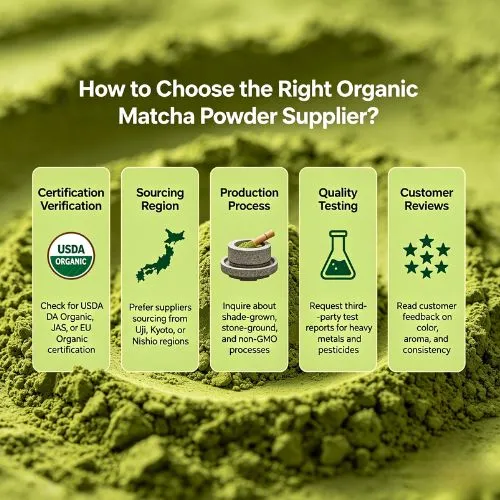
How to Choose the Right Organic Matcha Powder Supplier?
Essential Certification Verification and Traceability
Before choosing providers, make sure they have all the organic certifications that are needed for the places you want to reach. USDA Organic certification lets you sell your products in the US market. JAS certification from Japan and EU Organic certification meet the needs of foreign distributors. Procurement pros should not only ask to see proof of certification, but also for the certificate numbers, validity periods, and paperwork that confirms the exact product grades that are certified. Traceability systems that keep track of where crops are grown, when they are harvested, and where they are processed build trust in the supply chain and help with the due diligence needed for quality checks.
Yangge Biotech keeps full records of every step of the process, from working with farms to packing the finished product. Each step is recorded with information unique to the batch. Our long-term partnerships with farming communities make sure that the quality of our raw materials stays high, and they also help fund social development projects that help growing areas. This farm-to-table exposure meets the needs of consumers who want ethical buying methods and companies that are required to be more responsible for their Matcha Powder sourcing.
Quality Parameters Aligned with Application Requirements
Based on particle size, color strength, and taste profiles, different uses call for different grade choices. Ceremonial grade Matcha Powder with a mesh size of 2000 to 3000 works well in high-end teas and other drinks where minor taste differences make the experience better for the customer. When Matcha Powder is used as an ingredient in smoothies, useful foods, or nutritional supplements, the best cooking grades work well. In baked goods and other uses where Matcha Powder needs to be mixed with complex flavors without needing ultra-fine particle distribution, standard cooking grades at 800 mesh are a cost-effective option.
Evaluating Supplier Capabilities and Service Models
A full review of a provider looks at their production capacity, quality control systems, and logistical skills that can affect the long-term viability of a relationship. Minimum order numbers affect how you handle your inventory and plan your cash flow, while lead times affect how you schedule your production and how quickly you can respond to the market.
Suppliers who offer different packaging choices, unique blending services, and expert help are more valuable than just providing basic ingredients. Being able to send samples for formulation testing lowers the risks of development and lets people buy in bulk with confidence, knowing that their choices are backed by application-specific proof.
Organic Matcha Powder vs Other Alternatives in Procurement
Price-Performance Analysis and Quality Differentials
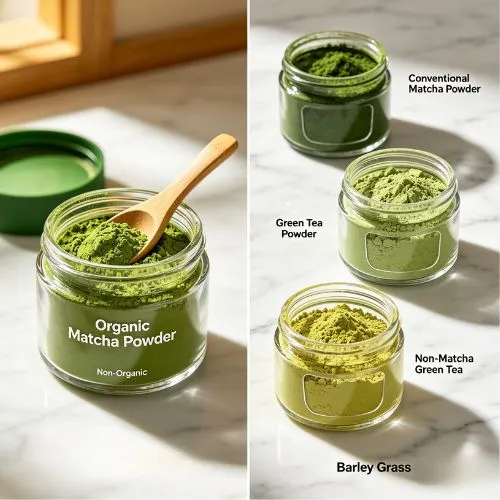
Organic Matcha Powder costs more than non-organic Matcha Powder because it has to go through more quality control steps, is certified more expensive, and has lower yields because of organic growing. Analysis of procurement shows that price differences are usually between 15% and 30%, based on the grade and the number of orders.
The investment pays off through better marketing placement, easier compliance with regulations, and lower supply chain risks related to pesticide poisoning recalls. Studies on how people feel about organic certification show that people are willing to pay more for it. This supports the business case for higher raw material costs that can be offset by better price power and brand loyalty.
Sustainability Advantages and Supply Chain Resilience
Organic farming methods protect the health of the soil, the variety of life on it, and the long-term viability of ecosystems that are threatened by conventional farming. This way of farming makes supply lines stronger and less subject to changes in rules about pesticide use or environmental effect. Buying plans that include organic ingredients plan for legal changes and changing customer tastes that will make them care more about sustainability when making purchases. Suppliers who are committed to organic certification usually have a mindset of quality and practical excellence that goes beyond organic-specific traits. This lowers the risks of a long-term relationship.
Functional Properties Across Ingredient Categories
When you compare organic Matcha Powder to other options like spirulina, collagen peptides, or turmeric, you can see that organic Matcha Powder has clear useful benefits in certain situations. Matcha Powder gives foods a natural color without adding any chemicals. It also gives you healthy energy levels by combining caffeine and L-theanine, and it can be used in both sweet and spicy foods.
The fine grain structure that comes from traditional stone grinding makes it easier for drinks to mix with other ingredients than with coarser plant powders that need more work. By knowing these practical differences, procurement teams can choose ingredients that are best for meeting the goals of product creation.
Best Practices for Using and Marketing Organic Matcha Powder in B2B Contexts
Application Techniques Across Product Categories
Handling Matcha Powder the right way keeps its quality throughout the making process. Low-temperature processing keeps the color stable during preparation and storage and saves catechins that are sensitive to heat. When buying organic Matcha Powder and adding things that go well with it, like vitamins, probiotics, or adaptogens, sourcing teams should think about how the particle sizes and pH levels will affect the stability.
Fine-mesh sizes work well in beverage uses because they are easy to suspend and make smooth textures without being gritty. Cosmetic formulas need to be carefully put together to keep the bright green color that people associate with freshness and effectiveness.
Our facilities offer specialized services that make it possible to mix organic Matcha Powder with other useful ingredients in a way that fits the exact needs of the recipe. Different standard requests are met, from changing the particle size to changing the format of the packaging. This helps meet the production needs of a wide range of businesses. Logo creation and placement services make white-label deals and OEM partnerships easier for clients who need branded materials that are ready to go to market.
Marketing Strategy Development and Educational Content
When it comes to B2B marketing that works, it's important to stress certification credentials, testing methods, and tracking paperwork that meet the criteria for making a purchase decision. Technical data sheets with information on particle size distribution, active ingredient amounts, and stability factors help formulators make new products.
Educational material that explains the standards for organic certification, how to grow crops, and how to check the quality of the products increases trustworthiness and sets informed providers apart from commodity sellers. Case studies that show how organic Matcha Powder has been used in successful product launches can help potential clients make decisions about which ingredients to use.
Emerging Trends and Innovation Opportunities
Recent changes in the market show that people are becoming more interested in rare cultivars and regional differences in the categories of organic Matcha Powder. This means that buying methods can be used to make products stand out. Functional beverage innovation combines new ingredients like CBD, nootropics, and plant-based proteins with organic tea to help people reach their health goals.
Sustainable packaging options fit with the organic brand and take environmental worries into account throughout the span of a product. Supply chain optimization through smart inventory management and partnerships with suppliers makes it possible to react quickly to changes in market demand while keeping quality standards high.
Conclusion
Organic Matcha Powder is a smart choice for B2B buying workers who want to gain a competitive edge through quality, certification, and customer appeal. The known health benefits, ease of following regulations, and unique marketing features support charging more and help the brand be positioned across many different types of products. Long-term relationships that work well are built on choosing sources with a wide range of certifications, clear tracking, and a range of flexible service options. As the market for health supplements, functional foods, drinks, and cosmetics continues to grow, sourcing teams that add certified organic Matcha Powder set their companies up for long-term growth in wellness-focused customer groups.
Partner with a Trusted Matcha Powder Manufacturer for Your Sourcing Needs
Yangge Biotech specializes in high-quality organic ingredients that can help you meet your goals for product innovation and quality. Our KOSHER and USP-grade matcha powder is always available, and we keep a one-ton inventory on hand to support instant fulfillment and a reliable production plan. We offer a wide range of specs, such as 800 mesh, 2000 mesh, and 3000 mesh particle sizes that are best for a wide range of uses, from makeup to drinks. In addition to standard supply, our custom mixing services make unique mixtures of matcha and useful ingredients that work well together, based on the needs of your brand.
OEM package choices include integrating designs and offering a range of flexible formats, which can help you streamline your production processes. Contact us or you can email our team at info@yanggebiotech.com to ask for samples, talk about specific needs, or look into business options that could give you a competitive edge by using quality-certified organic ingredients.
FAQ
Q: Can we get some samples to test before purchasing?
A: Of course, we can provide free samples of 20 to 100 grams, but the shipping cost is at the customer's expense. The shipping cost can be deducted from the next order, or the samples can be sent through your courier account.
Q: Do your products have relevant certifications?
A: Yes, our products are certified for HALAL, ISO, HACCP, Kosher, and other certifications.
Q: What is the minimum order quantity (MOQ)?
A: Small batches of samples can be customized according to your requirements.
Q: Do you offer OEM and ODM services? Can the formula be customized based on our own?
A: Of course, we provide ODM and OEM services to many customers. Our product range includes softgels, capsules, tablets, sachets, granules, and private label services. Simply contact us and let us know your requirements. Our experienced R&D team can also develop new products with specific formulas.
Please contact us to design your own branded products.
Q: How do you handle quality complaints?
A: First, we have a comprehensive quality control SOP. We provide authoritative third-party inspection reports for almost all products before shipment to minimize the possibility of quality issues. Second, we have a comprehensive return and exchange procedure. If there is a genuine quality dispute, we will strictly follow the SOP.
Q: How do you ship? How long does delivery take?
A: For small orders, we typically use DHL, UPS, EMS, FedEx, or TNT. Delivery typically takes 3-7 days. We also offer air and sea freight services. We have a strong freight forwarding team and can provide you with a one-stop service, including DDP and DDU.
Q: What are your payment terms?
A: 100% prepayment, payable by T/T, Western Union, MoneyGram, or PayPal.
Q: What is the shelf life of your products?
A: 2 years with proper storage.
References
1. Hu, F. (2022). Nutritional Benefits and Bioactive Compounds in Matcha Green Tea. Harvard T.H. Chan School of Public Health, Department of Nutrition Research Series.
2. International Tea Committee. (2023). Global Organic Tea Market Analysis: Trends, Growth Drivers, and Regional Demand Patterns. Annual Industry Report.
3. United States Department of Agriculture. (2023). Organic Certification Standards and Compliance Requirements for Tea Products. Agricultural Marketing Service Guidelines.
4. Journal of Functional Foods. (2022). Comparative Analysis of Antioxidant Activity in Organic versus Conventional Matcha: A Laboratory Study. Volume 89, pages 104-118.
5. European Food Safety Authority. (2023). Quality Parameters and Safety Standards for Imported Tea Products in EU Markets. Regulatory Compliance Documentation.
6. Natural Products Insider. (2023). Consumer Preferences and Market Positioning Strategies for Organic Functional Ingredients in North American Markets. Industry Analysis Report.

Based on your location and order quantity, you will have the opportunity to receive a limited time free shipping promotion!
Who we are
Popular Blogs