Astaxanthin Powder: Science-Backed Health Benefits
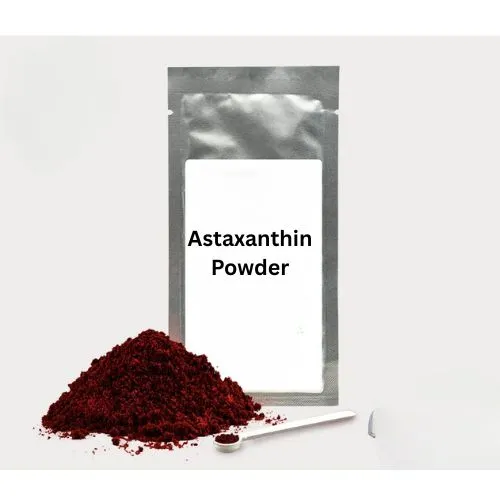
Astaxanthin Powder, which mostly comes from the microalgae Haematococcus pluvialis, is known as one of the most powerful natural defenses. This dark red powder is full of good things for your health. Vitamin E and beta-carotene are two well-known antioxidants that are not as strong as this one. The people who make supplements, cosmetics, and useful foods need to know about the science behind this carotenoid and how it can be used in real life. This way, they can make new, high-quality goods that meet strict quality standards and customer expectations.
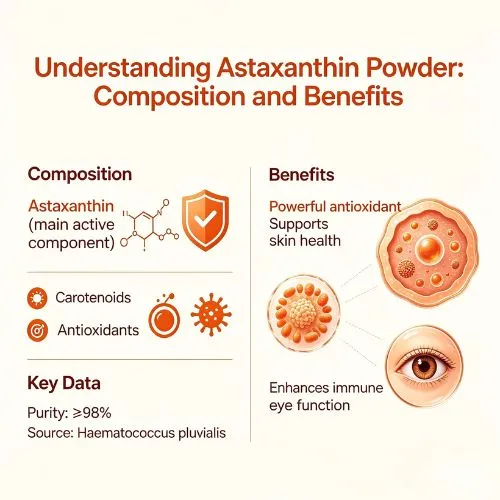
Understanding Astaxanthin Powder: Composition and Benefits
There is a difference between natural astaxanthin and other carotenoids in the way its molecules are built and how well they work in living things. We only get the best astaxanthin from Haematococcus pluvialis here at Yangge Biotech. With this method, we can be sure we are getting the best 10% standardized extract that has been processed with HPLC.
What Makes Astaxanthin Chemically Unique?
There are polar ionone rings at both ends of the polyene chain that make up astaxanthin. This lets it get through all cell walls. It is different from other antioxidants because of its shape. It can get rid of free radicals both inside and outside of cells at the same time. The study says that the natural form is mostly found as the (3S, 3'S) optical isomer, which is better for the body and works better as an antioxidant than man-made versions.
Core Health Benefits Supported by Research
Clinical tests have shown that astaxanthin has a big effect on many parts of health. It can get rid of singlet oxygen and is about 6,000 times stronger as an antioxidant than vitamin C and 550 times stronger than vitamin E. Having this amazing skill is good for your eyes, heart, skin, immune system, and recovery from exercise by protecting it from UV damage. The chemical also does a great job of lowering inflammation by stopping different substances that cause inflammation. Because of this, it can be used in recipes that try to lower long-term inflammation.
A lot of rules say that our dark red powder isn't non-GMO, an allergen, or radioactive. This is important for companies that make health supplements because they need to make sure their goods are safe. A lot of tests are done on each batch to make sure it has the 10% active ingredient. This makes sure that the strength doesn't change from one production run to the next, which is a must for R&D teams that use standard methods.
Bioavailability and Absorption Considerations
Astaxanthin is lipophilic, which means it needs to be mixed in a certain way so the body can take it better. It is most bioavailable when a substance is eaten with fats or combined with the right kinds of carriers. Vitamin and drink makers have to find a balance between how well their products work and how easy they are for customers to use. This trait affects the choices they make. When procurement managers understand these absorption processes, they can choose the best powder, beadlet, or oil type for their production needs.
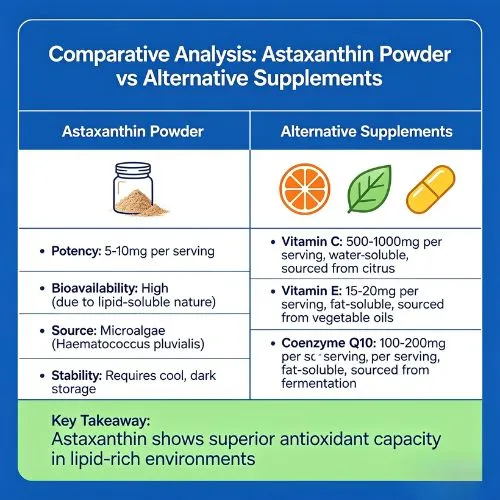
Comparative Analysis: Astaxanthin Powder vs Alternative Supplements
When making health products, people often look at more than one type of carotene. Knowing the good and bad points of each option helps you choose the best place to get the tech you need and the right look for your brand.
Natural Versus Synthetic Astaxanthin
The difference between natural and man-made sources has a big impact on how well a product works and what claims it can make about itself. When Astaxanthin Powder comes from microalgae, it's only the (3S, 3'S) stereoisomer, which has been shown to work better in human clinical tests. When it comes to synthetic forms, they are made up of a racemic mix that only has about 25% of the good (3S, 3'S) form.
This simple difference changes what companies can say about how great their goods are and how much they can charge in a market where there is a lot of competition. It might look like synthetic options are cheaper at first, but because they are less effective, you need to use more of them to get the same effects, which could remove the cost savings.
Comparison With Krill Oil and Other Marine Sources
Krill oil has both astaxanthin and omega-3 fatty acids, which makes it a mixed product with a different status. Astaxanthin levels in krill oil, on the other hand, are usually between 0.1% and 0.5%. This means that much larger dose sizes are needed to get effective amounts. The formulators have complete control over the quality and amount of Astaxanthin Powder. A lot of different carotenoids are found in spirulina, but not a lot of astaxanthin. This makes it hard to make direct comparisons. Buying managers need to know the differences between ingredients so they can pick the right raw materials for their product ideas and health claims.
Powder Form Advantages for Manufacturing
The powder form is clearly better for business use than oil solutions or softgel preparations. When you need to press pills, fill capsules, or blend powders, our normal 10% powder gives you the even mixing qualities you need. The dark red powder spreads out evenly when mixed with the right agents, making sure that the amount is the same in all finished units. Powders are also better for long-term keeping than oil-based ones because they don't go bad as fast when kept out of the light and away from water. It's important for companies that work in warm places or have big distribution networks to manage that these real problems affect the decisions they can make in the supply chain.
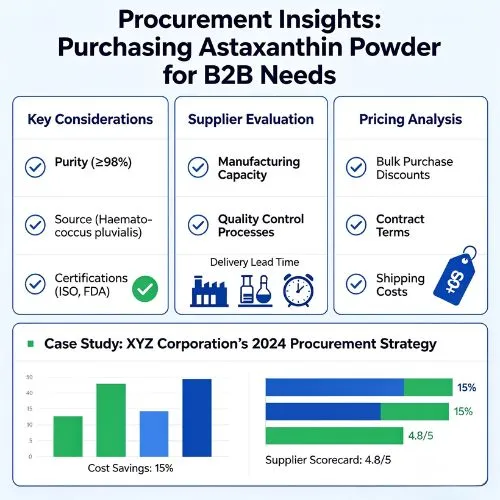
Procurement Insights: Purchasing Astaxanthin Powder for B2B Needs
When planning your search for high-quality astaxanthin, you need to think about more than just the price per kilogram. When you have a long-term relationship with a seller, you can be sure of quality, rely on the supply, and get help from experts.
Quality Verification Protocols
There are strict steps that professional buying teams take to make sure that the raw materials they buy are real. Astaxanthin is found to be stereochemically correct in the chiral HPLC study, which also looks for signs of mixing it with man-made materials. There should be exact amounts of the (3S, 3'S) isomers, heavy metals (lead less than 3ppm, arsenic less than 1ppm, and mercury less than 0.1ppm), microbe counts, and, if needed, tests for extra solvents on the Certificate of Analysis papers.
We still work with Eurofins and SGS labs, which lets someone from outside the company check the work before it is sent out. Buying managers often worry about the accuracy of raw materials, and this open method takes care of that problem. This is especially important since real astaxanthin costs more than synthetic versions.
Evaluating Supplier Capabilities
Trustworthy sellers do more than just have goods for sale. They also have a number of other important skills. Organic certifications, GMP certifications, and ISO22000 certifications show that quality management is consistent, not just different from one batch to the next. Production ability changes how consistent the supply of Astaxanthin Powder is. We keep things in stock that weigh 50 to 100 kg and can be delivered in one to three days.
This lets us handle both test orders and planned production runs. Help with technology is another thing that is often forgotten. For the market they want to reach, suppliers should give tips on how to test for stability, make sure formulations work together, and fill out legal paperwork. These services help internal R&D teams do their jobs better and faster, which means more new goods are made.
OEM and Private Label Opportunities
A lot of great brands work with OEMs to quickly enter new markets without having to spend a lot of money on production. Brands can make their goods stand out by using unique mixes of astaxanthin and other ingredients that work well together, like omega-3s, vitamin E, or coenzyme Q10. You can use different ways to go to market with customized packaging, such as 1 kg metal foil bags or customer units with your own name on them. People in charge of brands can find strategic partners instead of just transactional sellers when they know everything a supplier can do. They can enter new areas more quickly and better this way.
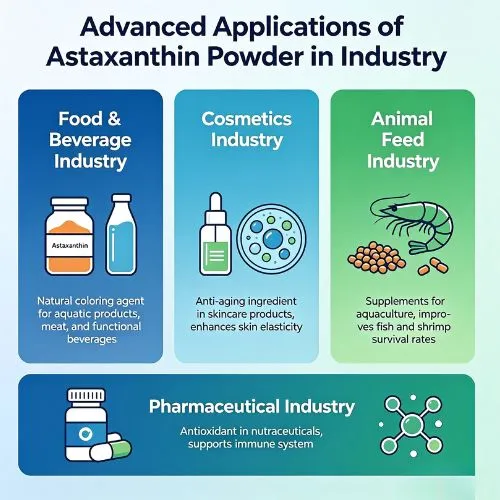
Advanced Applications of Astaxanthin Powder in Industry
Natural astaxanthin is very adaptable, so it can be used in many different goods, each with its own safety and legal needs.
Nutraceutical Supplement Formulations
These days, astaxanthin is mostly used as a supplement, and a clinical report shows that 4 mg to 12 mg a day is the right amount. Based on the active content, formulators have to figure out at what rate to include people. For instance, 200 mg of our 10% powder gives you 20 mg of active astaxanthin. This means that regular pill sizes can be used for a range of dosing plans. Food needs to be safely wrapped and sometimes co-antioxidants like vitamin E to keep it from going bad while it's being stored. So it stays stable.
Regulatory compliance changes from place to place. As an example, the US Food and Drug Administration (FDA) says that Astaxanthin Powder is generally recognized as safe (GRAS) for some uses. However, European markets need Novel Food clearance because of where the ingredient comes from and how it is handled. Purchasing managers who make things to sell in other countries need to know about these legal environments.
Cosmetic and Skincare Applications
Astaxanthin is being used in makeup more and more because it helps protect skin from UV rays and slows down the aging process. When you put it on your face, it reduces fine lines, makes it more flexible, and protects it from UV damage in more than one way. Problems with the formulation include keeping the molecule safe in water-based systems and getting enough of it to go through the skin, even though it likes fat.
They can be fixed with the right carrier methods and packaging technologies. The dark red color needs to be carefully thought out in terms of how it looks when the main product is made. In this case, the packaging can be opaque or it can be added to colored items. Companies that make products like it when suppliers know these little details about recipe and can help them choose the right types or process changes for a given job.
Functional Food and Beverage Integration
Astaxanthin is being used in functional foods more and more, but there are some technical problems that need creative ways to be prepared. The material can't be added straight to drinks made with water unless cold-water dispersible (CWD) technology can make stable suspension possible. This is because it dissolves in fats. If something needs to be treated with heat, heat sensitivity means that extra steps need to be taken after processing or safety needs to be added.
Adding color to things like energy bars and drink mixes can help them look better because they have their own natural color. Regulatory approval for food applications changes from one country to another, so it's important to make sure that every market is following the rules. Because of these problems, skilled ingredient sources offer technology support that is tailored to each application to help new goods do well.
Conclusion
In the supplement, skin care, and functional food businesses, natural Astaxanthin Powder has been shown to be effective. People who are learning more about health are interested in the compound's health promises because it has a lot of antioxidants and has been studied in a lot of clinical settings. When you do strategic sourcing, you need to make sure that the companies you work with can do more than just do business with you.
Some things you can do to check the quality of the goods you buy are heavy metal tests and isomer analysis. In order to make goods that meet both legal requirements and market needs, it is important to know how to formulate powders in a way that makes them more bioavailable and stable. More and more people want natural health ingredients that are backed by science. Astaxanthin Powder puts companies that are ahead of the curve in coming up with new ideas for human nutrition and wellness uses.
Partner With Yangge for Premium Astaxanthin Powder Supplier Solutions
A lot of good things can come from Yangge Biotech for manufacturers who want to work with a reliable Astaxanthin Powder provider. The things that hold their ties together are quality, honesty, and scientific information. The 10% standardized extract from Haematococcus pluvialis we sell is GMP, ISO22000, Halal, and Kosher approved, which means it follows strict rules around the world. We understand that regular materials are not enough to make a good product. It needs tech help quickly, goods that it can count on, and the flexibility to make changes as needed.
To help you make your brand stand out, we offer a full range of services, such as custom recipe mixing, standard changes, package changes, and private label design. Our minimum order size is only 1 kg, and we keep enough stock on hand to ensure delivery within 1 to 3 days. This means we can meet the needs of both small-scale R&D sampling and large-scale production. Your buying team can be sure of the quality of the goods because they've been tested by independent labs like Eurofins and SGS. Also, our direct plant access cuts down on unnecessary supply chain costs.
We want people who own brands, work in buying, and lead research and development to understand what makes Yangge unique. Contact us an email at info@yanggebiotech.com to get full specs, set up test samples before they ship, or talk about how our OEM services can help you get your product to market faster. Because our team is ready to offer technical papers, legal help, and unique solutions, getting ingredients can be turned from a job of buying things into a smart way to get ahead of the competition.
FAQ
Q: Can we get some samples to test before purchasing?
A: Of course, we can provide free samples of 20 to 100 grams, but the shipping cost is at the customer's expense. The shipping cost can be deducted from the next order, or the samples can be sent through your courier account.
Q: Do your products have relevant certifications?
A: Yes, our products are certified for HALAL, ISO, HACCP, Kosher, and other certifications.
Q: What is the minimum order quantity (MOQ)?
A: Small batches of samples can be customized according to your requirements.
Q: Do you offer OEM and ODM services? Can the formula be customized based on our own?
A: Of course, we provide ODM and OEM services to many customers. Our product range includes softgels, capsules, tablets, sachets, granules, and private label services. Simply contact us and let us know your requirements. Our experienced R&D team can also develop new products with specific formulas.
Please contact us to design your own branded products.
Q: How do you handle quality complaints?
A: First, we have a comprehensive quality control SOP. We provide authoritative third-party inspection reports for almost all products before shipment to minimize the possibility of quality issues. Second, we have a comprehensive return and exchange procedure. If there is a genuine quality dispute, we will strictly follow the SOP.
Q: How do you ship? How long does delivery take?
A: For small orders, we typically use DHL, UPS, EMS, FedEx, or TNT. Delivery typically takes 3-7 days. We also offer air and sea freight services. We have a strong freight forwarding team and can provide you with a one-stop service, including DDP and DDU.
Q: What are your payment terms?
A: 100% prepayment, payable by T/T, Western Union, MoneyGram, or PayPal.
Q: What is the shelf life of your products?
A: 2 years with proper storage.
References
1. Ambati, R.R., Phang, S.M., Ravi, S., and Aswathanarayana, R.G. (2014). "Astaxanthin: Sources, Extraction, Stability, Biological Activities and Its Commercial Applications—A Review." Marine Drugs, 12(1), 128-152.
2. Guerin, M., Huntley, M.E., and Olaizola, M. (2003). "Haematococcus astaxanthin: Applications for Human Health and Nutrition." Trends in Biotechnology, 21(5), 210-216.
3. Kidd, P. (2011). "Astaxanthin, Cell Membrane Nutrient with Diverse Clinical Benefits and Anti-Aging Potential." Alternative Medicine Review, 16(4), 355-364.
4. Capelli, B., Bagchi, D., and Cysewski, G.R. (2013). "Synthetic Astaxanthin is Significantly Inferior to Algal-Based Astaxanthin as an Antioxidant and May Not be Suitable as a Human Nutraceutical Supplement." Nutrafoods, 12, 145-152.
5. Yuan, J.P., Peng, J., Yin, K., and Wang, J.H. (2011). "Potential Health-Promoting Effects of Astaxanthin: A High-Value Carotenoid Mostly from Microalgae." Molecular Nutrition and Food Research, 55(1), 150-165.
6. Fassett, R.G. and Coombes, J.S. (2011). "Astaxanthin: A Potential Therapeutic Agent in Cardiovascular Disease." Marine Drugs, 9(3), 447-465.

Based on your location and order quantity, you will have the opportunity to receive a limited time free shipping promotion!
Who we are
Popular Blogs