Lutein vs Meso Zeaxanthin: Key Differences Explained
When discussing carotenoids for eye health formulations, understanding the distinction between lutein and meso zeaxanthin becomes essential for R&D directors and procurement managers. Both carotenoids play critical roles in macular health, yet they differ significantly in chemical structure, bioavailability, and distribution within the retina. Lutein, primarily sourced from marigold flower extract, concentrates in the peripheral retina, while meso zeaxanthin accumulates at the macula's center. These differences influence formulation strategies for dietary supplements and infant nutrition products, directly impacting product efficacy and regulatory compliance in competitive markets.
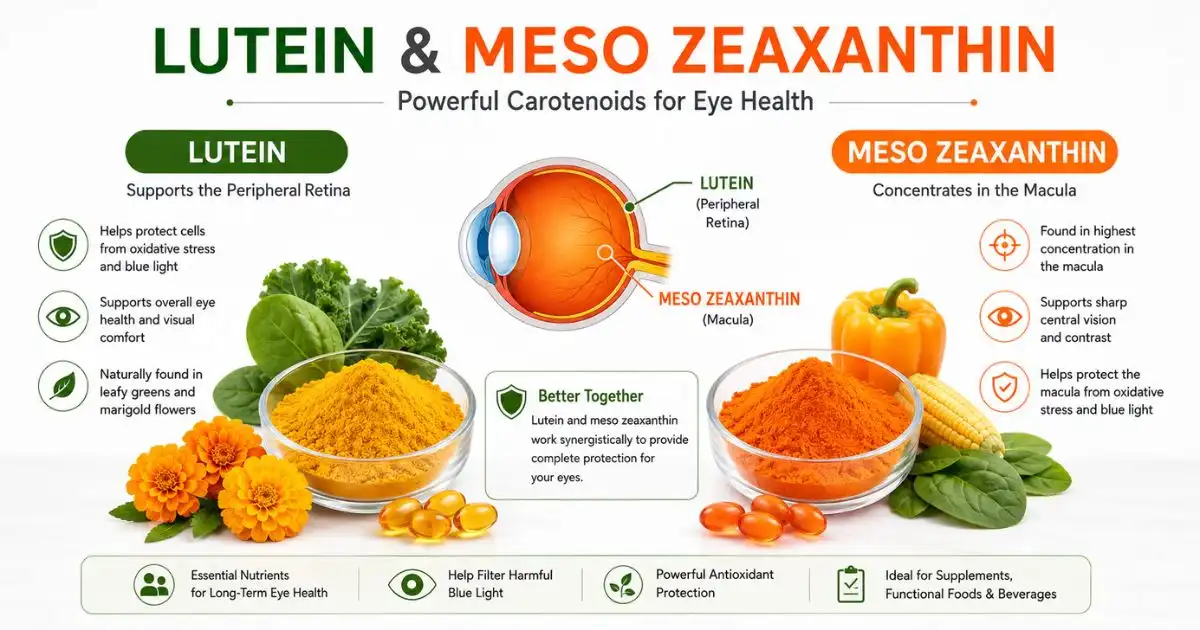
Understanding Lutein and Meso Zeaxanthin: General Overview
Chemical Structure and Natural Occurrence
Lutein and zeaxanthin both have the same molecular formula (C40H56O2), but they are structurally different because they are stereoisomers. Due to differences in the positioning of the double bonds within their end rings, lutein has three chiral centers while zeaxanthin only has two. Meso-zeaxanthin marks a unique stereoisomer of zeaxanthin, made through metabolic conversion of lutein within the eye itself.
In nature, lutein appears abundantly in dark leafy greens, egg yolks, and yellow-orange vegetables. Marigold flowers (Tagetes erecta) have very high concentrations, which is why they are the main commercial source for extraction. Very little meso-zeaxanthin is found in food, but small amounts can be found in some fish types and shrimp. This scarcity necessitates either synthetic production or enzymatic conversion from lutein for supplement formulations.
Production Methods and Forms
Commercial lutein production starts with marigold flower farming, followed by solvent extraction and purification processes. The natural form extracted is lutein ester, which undergoes saponification to create free lutein—the bioavailable form recognized by regulatory bodies. At Yangge Biotech, we sell orange fine powder that is made from marigold extract lutein powder with concentrations ranging from 5% to 80%. Our production follows standards for not using GMOs or irradiation. It also meets European PAH4 requirements and keeps benzopyrene levels below 10 ppb.
Chemical synthesis or biotransformation processes are usually used to make meso-zeaxanthin. Some manufacturers use enzymes to change lutein into meso-zeaxanthin, while others use completely synthetic methods. The way the product is made has a big effect on its purity levels, prices, and the paperwork that is needed by regulators. These are all important things to think about when making B2B purchasing decisions.
Physiological Roles and Absorption
In the cells of the eye, both carotenoids work as strong protectors. Lutein mainly collects in the peripheral retina and lens, filtering harmful blue light wavelengths before they reach photoreceptor cells. Meso-zeaxanthin is mostly found in the fovea's center, which is where clear, sharp central vision happens. This pattern of complementary distribution suggests that when both carotenoids are present in recipes together, they work better than when they are separately.
The intestines take them in, and since both substances are lipophilic, they need fats in the food to be fully bioavailable. It is better for you to absorb free lutein than lutein esters, but enzymes in your stomach system break down esters into free forms. Microencapsulation technology makes things more stable while they are being processed and stored. This helps with oxidation problems that are especially important for infant formula that needs to last a long time.
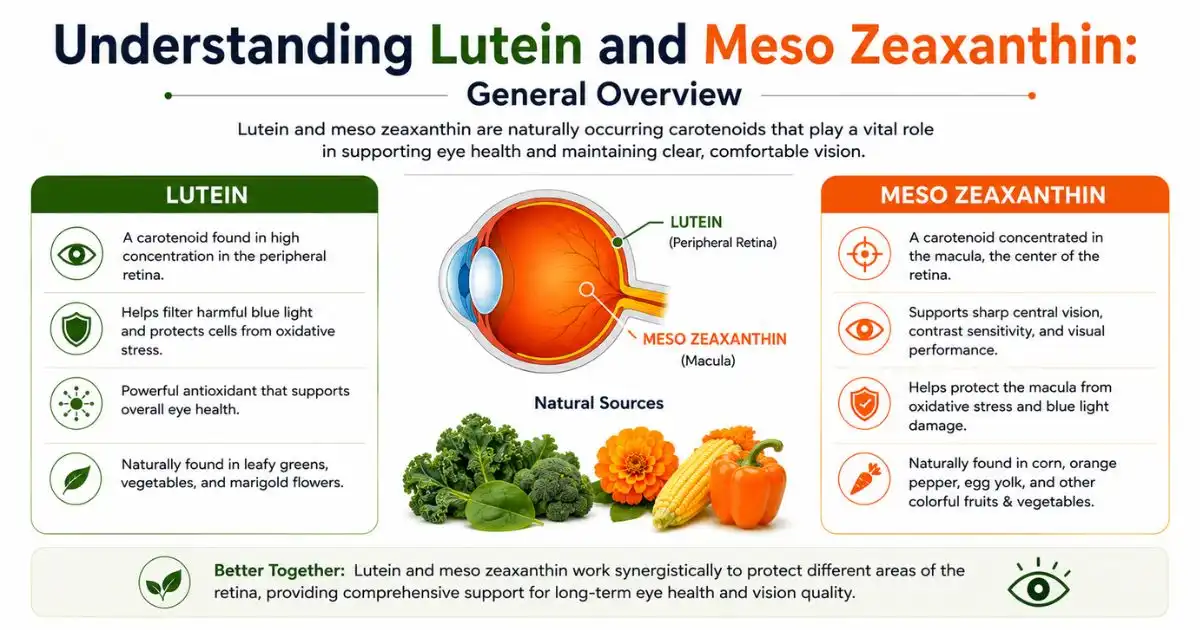
Key Differences Between Lutein and Meso Zeaxanthin
Structural and Chemical Distinctions
There is more to the differences between these carotenoids than just stereochemistry in their molecular design. Lutein's additional chiral center causes different spatial orientations changing how each compound works with cellular membranes and transport proteins. This difference in structure affects how stable each one is at different pH levels, temperatures, and light levels, which are important things for manufacturers to think about when choosing between forms that dissolve in oil, dissolve in water, or are microencapsulated.
Research indicates meso-zeaxanthin exhibits greater susceptibility to oxidative degradation than lutein under certain storage conditions. Because of this, stronger stabilization methods are needed, which usually include higher concentrations of tocopherols or special encapsulation matrices. When setting shelf-life limits and choosing the right packing methods, people who make drinks or gummy vitamins need to take these differences in stability into account.
Clinical Evidence and Macular Benefits
The Age-Related Eye Disease Study 2 (AREDS2) showed that supplementation with 10 mg lutein mixed with 2 mg zeaxanthin slowed progression to advanced age-related macular degeneration by roughly 25% in high-risk groups. Even though AREDS2 didn't specifically find meso-zeaxanthin, it has been studied in more recent clinical trials for its unique effects on macular pigment optical density (MPOD).
Studies released in investigative ophthalmology journals show that meso-zeaxanthin supplementation specifically increases MPOD at the foveal center, whereas lutein mainly improves peripheral macular pigment levels. Because it goes to specific places, meso-zeaxanthin is very useful for formulas that improve central vision and help the body heal from sun stress. Combination products providing all three carotenoids—lutein, zeaxanthin, and meso-zeaxanthin—theoretically offer comprehensive macular coverage, though cost considerations and formulation complexity increase proportionally.
| Parameter | Lutein | Meso Zeaxanthin |
|---|---|---|
| Primary Retinal Location | Lens and peripheral retina | The central fovea |
| Dietary Availability | Vegetables and marigolds are high | Minimal (needs to be converted) |
| Production Method | Getting Marigolds Out | Putting together or changing |
| Clinical Dosage Range | 6–20 mg every day | 2–10 mg every day |
| Oxidative Stability | Moderate (needs safety) | Lesser (needs more stability) |
Formulation Considerations Across Delivery Systems
Depending on the delivery format they choose, supplement makers face different problems. Softgel pills work well with oil-suspended lutein esters or free lutein, and they provide great solubility and stability when mixed with vitamin E. Tablets and hard capsules usually come in beadlet or microencapsulated forms, which are water-dispersible choices good for people who want non-fat delivery methods.
For infant formula, the ingredients need to be able to dissolve in water or be blended so that they are evenly distributed in liquid or dried milk. These special forms keep the doses the same across product batches and keep them from separating while they're being stored, which is necessary to meet strict rules about infant nutrition. Microencapsulation not only keeps carotenoids from oxidizing, but it also hides any color changes that might worry quality control teams as production grows.
Adding to the confusion are functional drinks and gummy vitamins. For beverage recipes, you need cold-water-soluble (CWS) beadlets that mix quickly and don't settle, and that keep their color even when the pH is acidic. Carotenoids are exposed to high processing temperatures and levels of wetness in gummy matrices. This calls for strong encapsulation systems that can handle these tough conditions during production and shelf life.
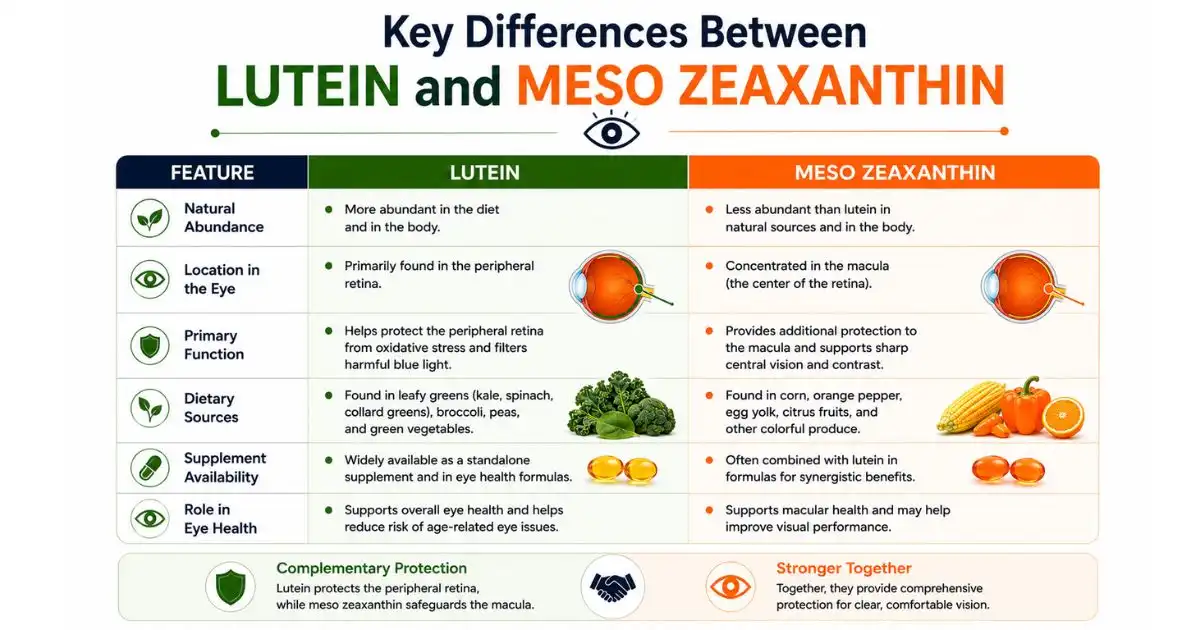
Comparing Sourcing Options: Natural vs Synthetic and Supplier Considerations
Natural Extraction from Marigold Flowers
Lutein from marigolds is the best natural source of carotenoids because it has clean label benefits that health-conscious consumers are increasingly looking for. The process of extraction starts with Tagetes erecta flowers that have been carefully grown and picked when they have the highest quantity of pigments. Lutein-rich oleoresin is isolated by solvent extraction, and chlorophyll, waxes, and other plant matter are then removed.
Good marigold sources should have paperwork that can be used to show that they followed Good Agricultural and Collection Practices (GACP). This makes sure that the food is non-GMO, doesn't contain any chemicals that aren't allowed, and that the harvesting methods meet standards for sustainability. Vertically integrated suppliers, who handle everything from growing the plants to extracting the oil, usually provide more uniform quality and can quickly adapt to changes in specifications or government rules.
Our marigold extract lutein powder strictly follows European rules, such as PAH4 limits that are necessary for entering the EU market. The non-irradiated, allergen-free profile meets the requirements of several regulatory standards at the same time, making paperwork easier for companies that sell their products in a variety of foreign markets. Working with internationally renowned testing labs guarantees impartial checking, which is something that big stores and government inspections are asking for more and more.
Synthetic Production and Quality Assessment
Making synthetic meso-zeaxanthin is cheaper and gets rid of the unpredictability that comes with farming, but it comes with its own quality control rules. To make sure that only the desired meso isomer shows up in the end products, chemical synthesis routes must show that they don't contain any toxic intermediates and achieve high stereochemical purity. Methods for analysis, such as HPLC with photodiode array detection, can prove the name of the isomer and measure the amount of possible impurities.
When looking at synthetic sources, business-to-business buyers should ask for thorough accounts of the manufacturing process, including the starting materials, reaction conditions, and methods for purification. It's especially important to do residual solvent analysis because synthetic routes often use organic solvents that need to be completely removed to meet pharmaceutical-grade standards. Extra layers of quality control include testing for heavy metals, microbes, and contamination, as well as stability studies done quickly.
Certification Standards and Supplier Selection Criteria
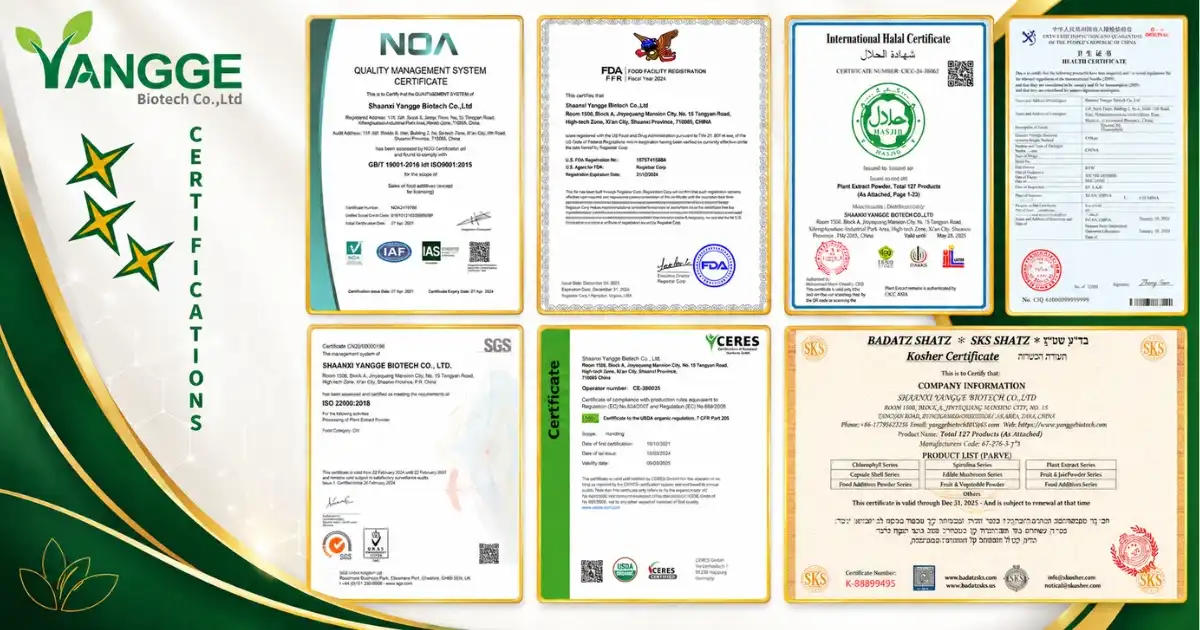
Professionals in charge of buying things should give preference to sellers who have a lot of different certifications that show they have complete quality management systems. Standardized quality control procedures are shown by ISO 9001 certification, while HACCP certification focuses on food safety risks during production. Lutein is not a certification, but its presence in a product can be relevant when evaluating overall quality; nonetheless, Kosher and Halal certifications make more people able to buy products that are aimed at specific groups of people without changing the technical specifications.
When looking at possible providers, you should find out how good their analytical skills are and whether they are willing to send Certificates of Analysis (COA) with every package. Reliable makers use scientific methods that have been tested and regularly test their employees' skills to make sure that the measurements they make are accurate. Sophisticated sellers are different from commodity traders who are just selling materials because they can provide stability data, bioavailability studies, and regulatory support documents.
| Evaluation Category | Important Things | Needs Documentation |
|---|---|---|
| Quality Assurance | Certifications for ISO 9001, HACCP, and GMP | Latest awards and audit reports |
| Regulatory Compliance | It has FDA GRAS clearance and EU Novel Food approval | Safety data and regulatory dossiers |
| Analytical Capability | Spectrophotometry and HPLC done in-house | Reports on method evaluation and COAs |
| Traceability | Documentation for getting raw materials | Supply chain maps and GACP badges |
| Technical Support | Formulation advice and data on stability | Notes for applications and published studies |
| Customization | Changes to specifications and special wrapping | Previous examples of OEM projects |
Strategic Procurement Insights for B2B Clients
Pricing Dynamics and Volume Negotiations
Lutein prices change depending on how many marigolds are harvested, how well the compound is extracted, and how much demand there is in the market from supplement and food coloring industries. Bulk prices for 5-20% lutein powder typically cost between $150 and $400 per kilogram, while high-purity 80% powder costs between $800 and $1,500. Meso-zeaxanthin usually costs 30 to 50 percent more because it is harder to make and costs more to make synthetically.
Volume commitments have a big effect on unit prices. Buyers who buy 500 kilos or more a year usually get savings of 10 to 15 percent off of spot prices. Long-term supply agreements that last two to three years protect prices even more against changes in the harvest and the value of the currency. Some suppliers have tiered price systems that reward brands for buying more, which lets them increase production while still meeting their margin goals.
Strategies for negotiating should include more than just the unit price. They should also include payment terms, minimum order amounts, and help with managing supplies. Vendor-managed inventory programs or consignment agreements can lower the amount of working capital needed while still making sure that materials are available on time for production plans. Quality promises that say materials that don't meet specifications will be replaced or given credit protect against losing money on refused batches.
Market Trends and OEM Opportunities
People who know that digital devices emit blue light can hurt their eyes have increased the demand for eye health supplements aimed at younger people. This trend includes millennials and Gen Z customers who want to protect their eyesight before it gets worse, as well as traditional macular degeneration goods aimed at seniors. Lutein-containing brands that make gaming supplements, formulas for computer users, and products that help with screen time are entering new markets that are expected to grow quickly.
Lutein must be added to infant formula at levels similar to those found in human breast milk (about 25 to 50 mcg per 100 mL) in order to comply with regulatory requirements in various markets. This set of rules makes the demand for high-purity, infant-grade carotenoids that meet strict safety standards steady and reliable. Companies that can offer microencapsulated, water-dispersible forms that have been tested and proven to work for infants have an advantage in this high-priced market segment.
OEM and white-label possibilities abound as well-known brands look to grow their eye health lines without spending money on their own research and development. Brands can get into markets quickly with the help of contract manufacturers that offer "turnkey" solutions, which include everything from formula development to packaging for finished products. In competitive bidding situations, suppliers who offer full support, such as regulatory paperwork, clinical study reports, and proof of marketing claims, stand out.
Regulatory Compliance Across Key Markets
Current Good Manufacturing Practices (cGMP) and truthful labeling claims are required by FDA rules for food supplements sold in North America. Lutein is generally recognized as safe (GRAS) for use in a number of food uses, which makes introducing new products easier, and its stable quality profile also supports compliance with cGMP standards. Structure-function claims must not make claims about treating diseases and must clearly state benefits for eye health. Claims must be carefully backed up by clinical literature.
Novel Food standards and strict limits on different pollutants make European Union rules even more complicated. For baby goods, the PAH4 maximum (the sum of four polycyclic aromatic hydrocarbons) must stay below 10 mcg/kg, and each benzo[a]pyrene concentration must stay below 1 mcg/kg. Heavy metal limits, especially for lead in baby formula ingredients, need strict testing procedures and deals between suppliers that ensure compliance.
Asian markets, like China, have changing rules about how to handle foreign goods. China's food additive standards list the sources of carotenoids that are allowed and the highest amounts that can be used in different types of products. New ingredients may need to be registered for 12 to 24 months, which means that strategies for getting into new markets need to be planned ahead of time. Working with suppliers who know how Chinese regulations work speeds up the approval process and lowers the risk of not following the rules.
How to Choose the Right Eye Health Carotenoid for Your Business
Application-Specific Selection Criteria
Carotenoids are chosen based on product group more than any other factor. Lutein is usually highlighted as the main carotenoid in adult food supplements for general eye health, along with zeaxanthin in a 5:1 ratio that has been shown to be effective in AREDS2 studies. Even though it costs more, meso-zeaxanthin may be worth it for high-end brands that say it helps with central vision or speeds up the recovery process after photo stress.
Lutein that meets baby-grade standards and comes with a lot of safety information is needed for infant formula uses. Water-dispersible forms make sure that the substance is evenly spread throughout liquid recipes, which stops settling problems that could cause dose errors. It is necessary to test for stability in conditions that are similar to re-mixing and storing the formula, because oxidation that changes the color or strength of the product would require expensive recalls.
Functional food and drink designers put nutritional benefits behind color stability and flavor neutrality. For clear drinks, CWS beadlets that spread out quickly and don't make the liquid cloudy work well, and microencapsulated powders mix easily into smoothie mixes and protein bars. When making gummies, where unencapsulated carotenoids could add bad flavor notes, taste masking is very important.
Balancing Cost, Efficacy, and Brand Positioning
When premium brands stress scientific proof and maximum effectiveness, they naturally choose ingredients with higher specifications, and they're willing to pay more because they're in a better position. Lutein, zeaxanthin, and meso-zeaxanthin are frequently present in these goods at therapeutic doses backed up by study. The marketing for these goods stresses that they are backed by science, have high-quality ingredients, and cover all aspects of eye health.
Value-oriented brands that cater to price-conscious customers usually make their products with standard lutein specifications that meet basic effectiveness standards at reasonable prices. These goods focus on being affordable and providing basic eye support, but they don't claim to offer advanced benefits that need high-quality ingredients. Strategically finding mid-range purity grades (10–20% lutein) strikes a balance between the need for the right dose and the cost limits that come with market price caps.
For private label and store brand opportunities to work, formulation strategies need to be flexible enough to meet the needs of retailers' expected profit margins while still giving customers a clear sense of value. Consumer expectations are met by standard formulas that use well-researched mixtures of lutein and zeaxanthin at common doses (10 mg and 2 mg, respectively). Time-to-market is sped up by using known suppliers with stock formulations, and research costs are kept to a minimum.
Long-Term Supplier Partnership Considerations
Getting the right ingredients isn't just about making purchases; it's also about building smart relationships that benefit both parties. When suppliers offer expert support, help with formulation issues, and legal advice to customers, they become real partners in the success of product creation. Access to bioavailability data, stability studies, and application methods speeds up recipe optimization and lowers the cost of internal research and development.
Reliability in the supply chain is one of the most important factors in a relationship, especially for brands that are growing quickly or whose demand changes with the seasons. It's easier to plan production when suppliers keep enough safety stock on hand, offer flexible lead times, and talk openly about possible problems. Having backup sourcing plans and skilled alternative sources can protect you from sudden supply problems that could stop production.
Sharing market data, customer trend insights, and new study results between companies can lead to new ways of working together on innovations. In supplement markets that are already very competitive, getting early access to new forms of carotenoids, new ways of delivering them, or unique stabilization technologies can give you an edge. Joint development agreements for customized specifications or exclusive formulations can help brands stand out while securing favorable pricing structures that reflect the contributions to development.
Conclusion
Being able to tell the difference between lutein and meso-zeaxanthin helps buyers make smart choices that are in line with their product's goals, their target audience, and their budget. Lutein is the most important carotene for eye health because it is easily found in nature, has a lot of safety research, and is widely accepted by regulators. Meso-zeaxanthin has specific benefits for improving central vision, but it needs to be carefully thought out in terms of cost-benefit tradeoffs and formulation stability.
A good buying strategy keeps prices low while balancing the quality of the ingredients, the dependability of the suppliers, and the need to follow the rules. When you work with certified manufacturers who offer full technical support and clear quality documentation, you lower the risks that come with changes to specifications, updates to regulations, and efforts to grow the market. As more people across all age groups learn about how to take care of their eyes, smart carotenoid sourcing becomes more important for brand growth and market positioning.
FAQ
Which carotenoid is more effective for preventing macular degeneration?
Lutein and zeaxanthin together significantly slow the development of AMD in people who are at high risk, according to clinical data from AREDS2. Specifically, meso-zeaxanthin targets the density of pigments in the central macula, which may help protect central vision. For full macular protection, the best formulas probably contain both substances because their distribution patterns in retinal tissues work well with each other.
Are there safety concerns for lutein supplementation during pregnancy?
According to research, dietary lutein during pregnancy seems safe at nutritional levels and may play an important part in the growth of the fetus' eyes. Supplement doses of up to 20 mg per day have not been shown to be harmful to pregnant women, though there are still not many specific prenatal clinical trials available. If a company wants to sell its products to pregnant women, it needs to make sure they have the right safety information and follow the rules for pregnancy-specific labeling.
What storage conditions best preserve carotenoid stability in bulk materials?
Bulk lutein powder needs to be kept in cases that are tightly sealed and shielded from light, air, and humidity. The best conditions are when the temperature is below 25°C and the relative humidity is below 60%. By preventing oxidative decay, nitrogen flushing or vacuum packing greatly increases the shelf life of food. Regularly checking the stability of materials through HPLC analysis ensures their quality during storage, especially for high-purity specifications that are getting close to their expiration dates.
Partner with Yangge Biotech for Premium Lutein Supply
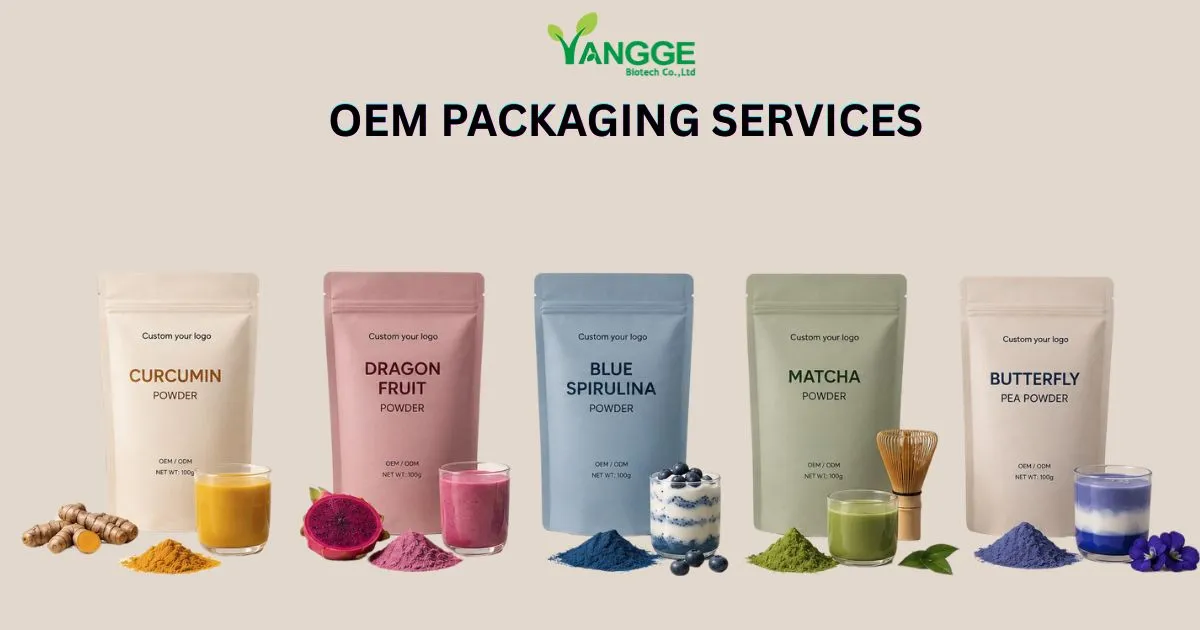
Yangge Biotech is a reputable maker of lutein, providing marigold extract lutein powder in strengths ranging from 5% to 80% for use in dietary supplements, baby formula, and functional foods. Our non-GMO, non-irradiated goods meet strict European PAH4 standards and keep benzopyrene levels below 10 ppb, making sure that all global markets follow the rules. We give your buying team the quality assurance paperwork they need with our ISO, HACCP, Kosher, and Halal certificates.
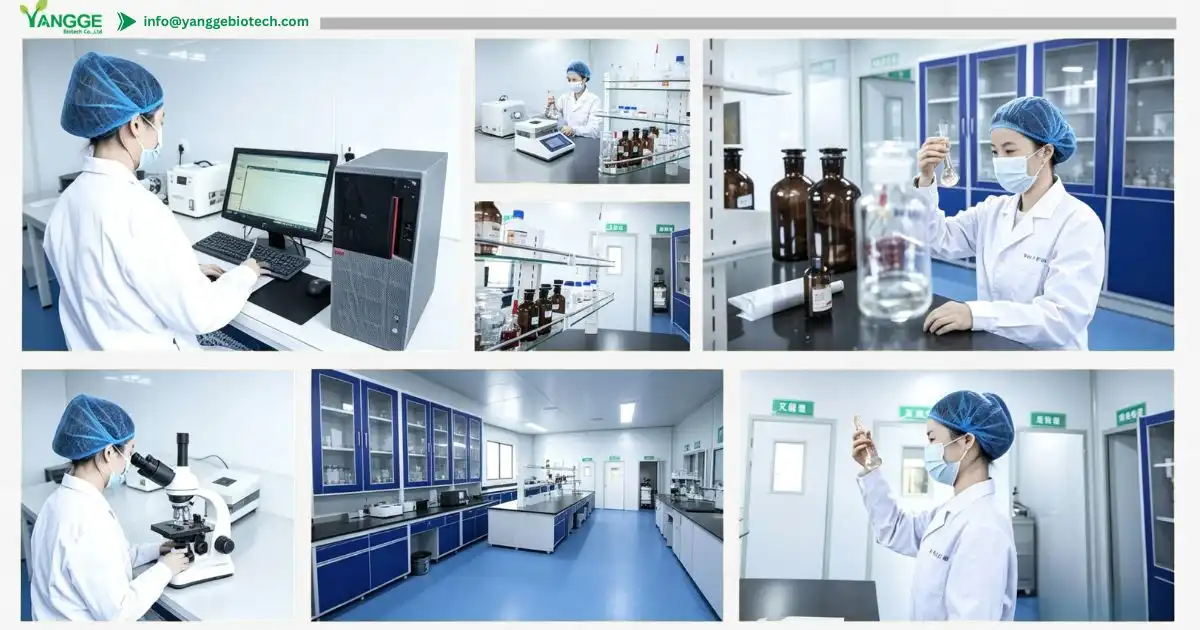
Our dedicated research and development (R&D) team provides full technical support, such as formulation advice, stability testing protocols, and help with regulatory documentation for submissions to the FDA, EU, and Asian markets. For certain uses, you may need forms that dissolve in oil, dissolve in water, or are microencapsulated. Our customizable specifications and flexible packaging options can meet your needs.Contact us or email our expert team at info@yanggebiotech.com to ask for samples, talk about problems with your formulation, or get detailed quotes that are based on your volume needs and delivery schedules.
References
1. Landrum, J.T. and Bone, R.A. (2001). "Lutein, Zeaxanthin, and the Macular Pigment." Archives of Biochemistry and Biophysics, 385(1), 28-40.
2. Age-Related Eye Disease Study 2 Research Group (2013). "Lutein + Zeaxanthin and Omega-3 Fatty Acids for Age-Related Macular Degeneration." Journal of the American Medical Association, 309(19), 2005-2015.
3. Bone, R.A., Landrum, J.T., and Tarsis, S.L. (1985). "Preliminary Identification of the Human Macular Pigment." Vision Research, 25(11), 1531-1535.
4. Nolan, J.M., Meagher, K., Kashani, S., and Beatty, S. (2013). "What is Meso-zeaxanthin, and Where Does It Come From?" Eye, 27(8), 899-905.
5. Thurnham, D.I. (2007). "Macular Zeaxanthins and Lutein – A Review of Dietary Sources and Bioavailability." British Journal of Nutrition, 98(4), 852-858.
6. Buscemi, S., Corleo, D., Di Pace, F., Petroni, M.L., Satriano, A., and Marchesini, G. (2018). "The Effect of Lutein on Eye and Extra-Eye Health." Nutrients, 10(9), 1321.

Based on your location and order quantity, you will have the opportunity to receive a limited time free shipping promotion!
Who we are
Popular Blogs