Is it safe to take MCT powder every day?
Yes, MCT powder is generally safe for daily consumption when used within recommended dosage ranges. Research indicates that most individuals can safely consume 15-30 grams of medium-chain triglycerides daily without adverse effects. High-quality MCT powder derived from coconut sources offers superior bioavailability and digestive tolerance compared to synthetic alternatives, making it an excellent choice for daily supplementation in various formulations.
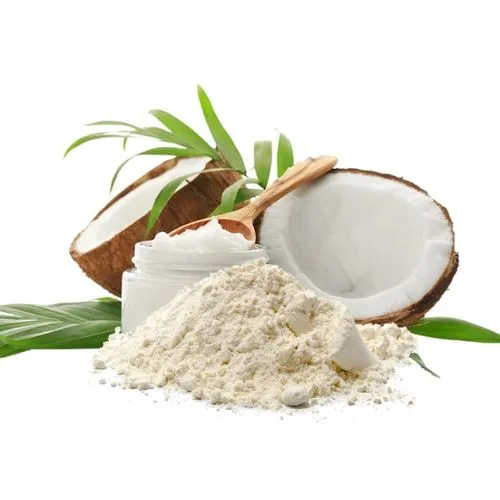
Introducing MCT Powder and Its Daily Use
MCT powder is a complex encapsulation of medium-chain triglycerides, which are generally derived from coconut or palm kernel oil via the use of cutting-edge spray-drying technology. Through the use of this cutting-edge formulation, liquid MCTs are converted into a powder that is both stable and free-flowing. This formulation overcomes important production issues while preserving the bioactive qualities of the original oil.
Origins and Production Methods
The first step in the manufacturing of high-quality MCT powder is the fractionation of coconut oil. During this process, medium-chain fatty acids, especially C8 caprylic and C10 capric acids, are extracted with great care. The high-performance liquid chromatography (HPLC) extraction technology guarantees accurate molecular separation, which ultimately leads to a concentrated triglyceride profile that is designed for optimal metabolic efficiency and quick absorption. Over the course of this process, the integrity of the active chemicals is preserved, while longer-chain fatty acids that might potentially undermine the product's ability to provide rapid energy are eliminated.
If you want to differentiate premium items from ordinary alternatives, organic certification is an extremely important factor to consider. MCT powders that are generated from organic coconuts have higher purity profiles thanks to the absence of pesticide residues and chemical solvents, both of which might potentially undermine the safety of the product when it is consumed on a regular basis. Acacia fiber, which provides zero digestible carbs and retains ketosis-friendly status for specific applications, is usually used in the encapsulation process. Acacia fiber is one example of a natural carrier.
Metabolic Advantages and Industry Applications
Triglycerides with a medium chain length circumvent the conventional routes for the digestion of fat and instead make their way to the liver via the portal circulation straight. This one-of-a-kind metabolic pathway facilitates a speedy conversion to ketones, which results in the production of instant energy without the need for insulin response or the storage of fat. The powder form increases adaptability across a variety of sectors, including clinical nutrition, ketogenic food items, and sports nutrition. Functional drinks and functional beverages are two examples of these businesses.
In addition to broadening the range of possible formulations beyond that of typical oil-based goods, the solubility qualities of high-quality MCT powders make it possible for them to be seamlessly integrated into cold-water applications. This adaptability proves to be especially useful for producers who are manufacturing ready-to-drink drinks, protein powders, and quick nutrition mixes. In these cases, liquid oils might present difficulties during the production process or damage the shelf stability of the product.
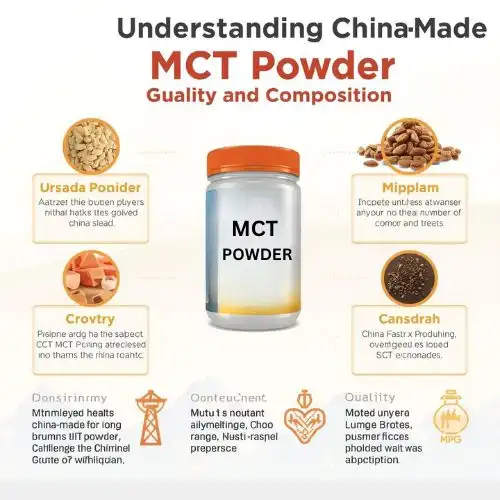
Evaluating the Safety of Daily MCT Powder Consumption
To a considerable extent, the safety of daily intake is contingent upon the quality of the substance, the dose procedures, and the individual tolerance levels. It has been shown via clinical research that consuming MCT on a consistent basis within the criteria that have been established is beneficial to metabolic health without causing any adverse responses in healthy persons.
Nutritional Profile and Health Benefits
MCT powders, due to their concentrated composition, contain roughly 8-9 calories per gram, which is comparable to the amount of calories that are found in other fats but offers different metabolic benefits. Consumption on a daily basis is especially advantageous for persons who are following ketogenic diets or who need regular energy output because of the quick absorption and generation of ketones, which maintain sustained energy levels. According to research, daily ingestion of medium-chain triglycerides (MCT) may improve cognitive function, assist in the achievement of weight management objectives, and boost exercise performance by virtue of more effective fat oxidation.
When preserved in the appropriate manner, high-quality MCT powders keep their fatty acid profiles consistent over their entire shelf life. The method of encapsulation gives protection against oxidation, which guarantees that daily use will deliver constant nutritional advantages without the rancidity risks that are associated with liquid oils that are exposed to air and light.
Potential Side Effects and Risk Mitigation
During the process of beginning daily ingestion of MCT, the most important factor to take into mind is gastrointestinal adaptation. It is possible for digestive systems to adjust to increased medium-chain fatty acid processing by beginning with lower dosages (five to ten grams) and progressively increasing each dose until it reaches the desired amount. Within one to two weeks of persistent usage, the majority of persons acquire tolerance to the substance.
It is possible for the digestive comfort of powder formulations to be affected by the carrier materials that are utilized. When compared to those of products that use maltodextrin or other high-glycemic encapsulation agents, products that use acacia fiber or resistant dextrin as carriers often display a higher level of tolerance. When it comes to procurement specialists, this aspect is especially crucial when it comes to choosing ingredients for sensitive populations or specific dietary applications.

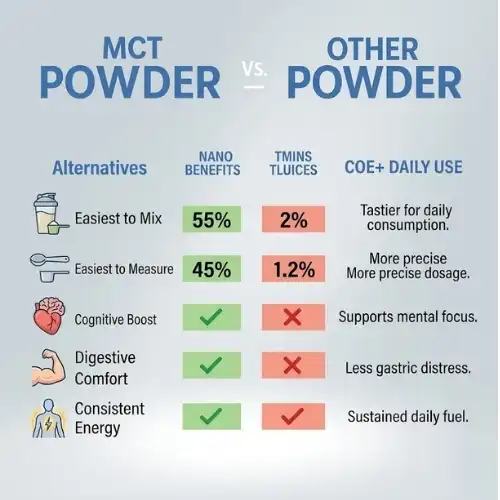
Comparing MCT Powder with Other Alternatives for Daily Use
When it comes to everyday use and commercial applications, the landscape of medium-chain triglyceride supplements provides a variety of forms, each of which has its own set of benefits and limits.
MCT Powder Versus Liquid Oil Formats
Comparatively, the stability and handling qualities of MCT powder are better than those of liquid equivalents. The method of encapsulating reduces issues about oxidation while also offering a prolonged shelf life to the product without the need for refrigeration. For bulk buyers who are in charge of maintaining big stocks, this stability advantage translates to decreased shipping costs and easier storage methods.
There is no significant difference in the absorption rates between powder and oil forms; nevertheless, the powder form often demonstrates greater gastrointestinal tolerability owing to delayed release kinetics. Additionally, the encapsulating matrix helps to control the distribution of fatty acids, which in turn reduces the possibility of digestive discomfort that is linked with the quick absorption of liquid oil.
Alternative Fat Sources and Supplements
Due to the presence of medium-chain triglycerides (MCTs) and longer-chain fatty acids in coconut oil, which accounts for around 15-20% of the total, greater serving sizes are required to reach equal MCT dosages. Because of this dilution issue, concentrated MCT powders are more effective for focused applications for which precision dosage and quick energy delivery are of the utmost importance.
Different physiological roles are served by collagen and other protein-based supplements; however, combination solutions that include MCT powders are gaining favor in the market. The synergistic effects of protein and MCTs assist both the preservation of muscle tissue and the supply of energy, which creates opportunity for creative formulation techniques in the clinical nutrition and sports nutrition industries.
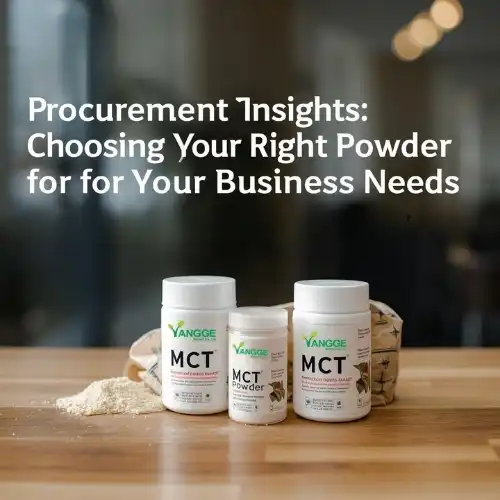
Procurement Insights: Choosing the Right MCT Powder for Your Business Needs
Selecting appropriate MCT powder suppliers requires careful evaluation of multiple quality parameters, regulatory compliance standards, and supply chain capabilities. The complexity of the encapsulation process means that supplier expertise significantly impacts final product performance.
Quality Assessment and Supplier Evaluation
Documentation of fatty acid profiles, microbiological safety, and heavy metals testing is included in the full certificates of analysis that are provided by reputable providers. In order to show their commitment to food safety standards that surpass several regional criteria, European PAH4 has demonstrated compliance with benzopyrene levels that are below 10 parts per billion. This rigorous testing technique guarantees that the product is suitable for products that are intended for premium applications and export markets.
The participation of a third-party laboratory for the purpose of retesting offers an extra level of quality assurance, which is especially significant for producers who are dealing with regulated markets or who are producing therapeutic nutrition products. The availability of conventional as well as organic certifications enables procurement teams to connect the selection of ingredients with particular product positioning and the preferences of consumers.
Wholesale Purchasing Strategies
Minimum order quantities of one kilogram make it possible to conduct testing and formulation development on a smaller scale, while inventory levels ranging from fifty to one hundred kilograms make it possible to schedule production for applications with medium numbers of units. Whether it be via private labeling or unique container sizes, the availability of custom packaging choices makes it possible to differentiate brands and optimize supply chains.
MCT powders that have been appropriately encapsulated have a shelf life of twenty-four months, which enables strategic buying choices to be made. Bulk purchases may be placed to take advantage of volume pricing while still preserving the integrity of the product throughout the supply chain. In order to maintain powder flowability and avoid caking while it is being stored, it is vital to use aluminum foil packaging since it offers good barrier characteristics against moisture and oxygen.
Integrating MCT Powder Into Products and Daily Routines
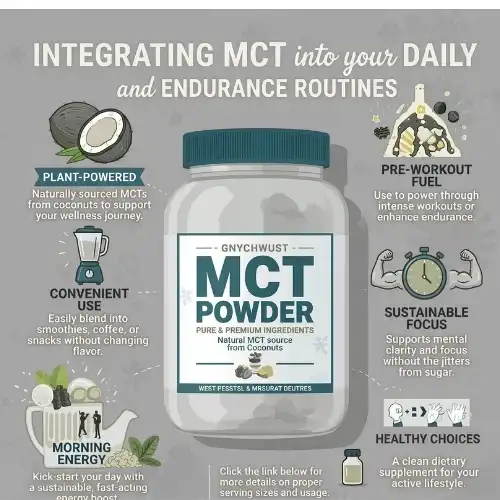
The versatility of MCT powder formulations enables integration across diverse product categories, from consumer-facing supplements to industrial food applications requiring specific functional properties.
Formulation Applications and Scaling Considerations
Quality MCT powders are distinguished from lesser alternatives by their ability to dissolve in cold water. This property makes it possible to include MCT powders into ready-to-drink drinks, smoothie mixes, and instant coffee products. With its neutral taste profile, the product development process is supported across both sweet and savory applications. This is because the neutral taste profile complements rather than competes with other flavoring systems.
In addition to being compatible with high-temperature processing, manufacturing compatibility also includes the capacity of quality encapsulation systems to retain their stability after pasteurization and other heat treatments. In the process of manufacturing shelf-stable goods or those that need prolonged processing durations during production, producers find that this heat stability proves to be very important.
Storage and Handling Best Practices
Through the whole of the supply chain, powder flowability is maintained and agglomeration is avoided by using appropriate storage methods. The preservation of fatty acid integrity is achieved by protection from light exposure, while the prevention of caking, which might affect automated handling systems, is achieved through moisture management. The fact that these storage criteria are in line with the established processes for handling pharmaceuticals and nutraceuticals makes the integration into the quality control systems that are already in place much simpler.
The elimination of refrigeration needs during shipment and storage is made possible by temperature stability, which in turn reduces the complexity of logistics and the expenses connected with it. It is possible to maintain worldwide distribution networks with properly encapsulated MCT powders due to their resilient nature. These powders do not need specialist handling requirements, which might potentially restrict market access or raise operating expenditures.
Conclusion
Daily MCT powder consumption presents minimal safety risks when sourced from reputable suppliers and consumed within established dosage guidelines. The encapsulated format offers superior stability, handling convenience, and formulation versatility compared to liquid alternatives. Quality considerations including organic certification, proper encapsulation technology, and comprehensive testing protocols ensure product safety and efficacy for long-term daily use. Procurement professionals can confidently recommend MCT powder integration across diverse applications, supporting both consumer health objectives and commercial product development goals.
Partner with Yangge for High Quality MCT Powder Solutions
With our excellent MCT Powder, Yangge Biotech Co., Ltd. is prepared to assist you in developing cardiovascular health products. powder formulations. Our USP-grade, 100% water-soluble powder offers concentrated SCOBY advantages in a stable, brown-yellow powder structure while retaining unique MCT flavor characteristics. Our goods satisfy a variety of market demands and guarantee 12-month shelf stability thanks to extensive certifications including Kosher, Halal, and non-GMO status.
Our experienced team provides technical support throughout your product development journey, from initial formulation guidance to scale-up assistance. With 1-ton inventory availability and 25KG packaging options, we accommodate both prototype development and commercial production needs. Contact our specialists at info@yanggebiotech.com to discuss your specific requirements and discover why leading manufacturers choose Yangge as their trusted MCT Powder supplier for innovative health product solutions.
FAQ
Q: Can we get some samples to test before purchasing?
A: Of course, we can provide free samples of 20 to 100 grams, but the shipping cost is at the customer's expense. The shipping cost can be deducted from the next order, or the samples can be sent through your courier account.
Q: Do your products have relevant certifications?
A: Yes, our products are certified for HALAL, ISO, HACCP, Kosher, and other certifications.
Q: What is the minimum order quantity (MOQ)?
A: Small batches of samples can be customized according to your requirements.
Q: Do you offer OEM and ODM services? Can the formula be customized based on our own?
A: Of course, we provide ODM and OEM services to many customers. Our product range includes softgels, capsules, tablets, sachets, granules, and private label services. Simply contact us and let us know your requirements. Our experienced R&D team can also develop new products with specific formulas.
Please contact us to design your own branded products.
Q: How do you handle quality complaints?
A: First, we have a comprehensive quality control SOP. We provide authoritative third-party inspection reports for almost all products before shipment to minimize the possibility of quality issues. Second, we have a comprehensive return and exchange procedure. If there is a genuine quality dispute, we will strictly follow the SOP.
Q: How do you ship? How long does delivery take?
A: For small orders, we typically use DHL, UPS, EMS, FedEx, or TNT. Delivery typically takes 3-7 days. We also offer air and sea freight services. We have a strong freight forwarding team and can provide you with a one-stop service, including DDP and DDU.
Q: What are your payment terms?
A: 100% prepayment, payable by T/T, Western Union, MoneyGram, or PayPal.
Q: What is the shelf life of your products?
A: 2 years with proper storage.
Q: Is the packaging environmentally friendly?
A: We attach great importance to environmental protection and are constantly improving our product packaging. Some products are packaged in recyclable paper. Packaging materials are carefully selected to ensure product safety during transportation and storage, and to minimize environmental impact. We are committed to achieving a balance between environmental friendliness and practicality in our product packaging, and to contributing to sustainable development.
References
1. St-Onge, Marie-Pierre, et al. "Medium Chain Triglyceride Oil Consumption as Part of a Weight Loss Diet Does Not Lead to an Adverse Metabolic Profile When Compared to Olive Oil." Journal of the American College of Nutrition, vol. 27, no. 5, 2008, pp. 547-552.
2. Mumme, Karen, and Welma Stonehouse. "Effects of Medium-Chain Triglycerides on Weight Loss and Body Composition: A Meta-Analysis of Randomized Controlled Trials." Journal of the Academy of Nutrition and Dietetics, vol. 115, no. 2, 2015, pp. 249-263.
3. Traul, Kevin A., et al. "Review of the Toxicologic Properties of Medium-Chain Triglycerides." Food and Chemical Toxicology, vol. 38, no. 1, 2000, pp. 79-98.
4. Clegg, Mark E. "Medium-chain Triglycerides are Advantageous in Promoting Weight Loss Although Not Beneficial to Exercise Performance." International Journal of Food Sciences and Nutrition, vol. 61, no. 7, 2010, pp. 653-679.
5. Rial, Sonia A., et al. "Gut Microbiota and Metabolic Health: The Potential Beneficial Effects of a Medium Chain Triglyceride Diet in Obese Individuals." Nutrients, vol. 8, no. 5, 2016, pp. 281-295.
6. Harvey, Cliff JdC, et al. "The Effect of Medium Chain Triglycerides on Time to Nutritional Ketosis and Symptoms of Keto-Induction in Healthy Adults: A Randomised Controlled Clinical Trial." Journal of Nutrition and Metabolism, vol. 2018, 2018, pp. 1-9.

Based on your location and order quantity, you will have the opportunity to receive a limited time free shipping promotion!
Who we are
Popular Blogs