Does a lion mane give you a high?
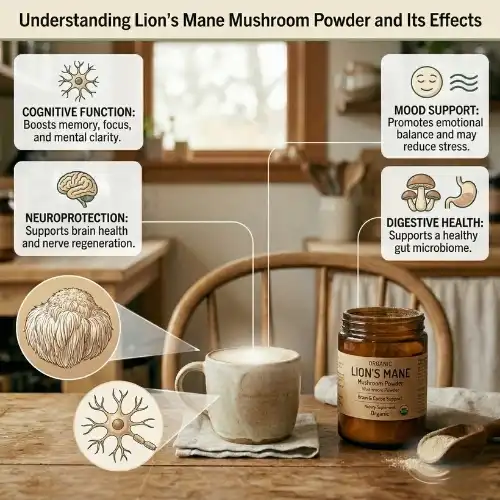
The short answer is no lion's mane mushrooms do not produce any psychoactive effects or "high." Unlike psilocybin mushrooms, lion's mane (Hericium erinaceus) contains no hallucinogenic compounds. When processed into lion's mane mushroom powder, this functional fungus delivers cognitive benefits through bioactive compounds like hericenones and erinacines, which support nerve growth factor production. These nootropic effects enhance mental clarity and focus without altering consciousness or producing euphoric sensations.
Understanding Lion's Mane Mushroom Powder and Its Effects
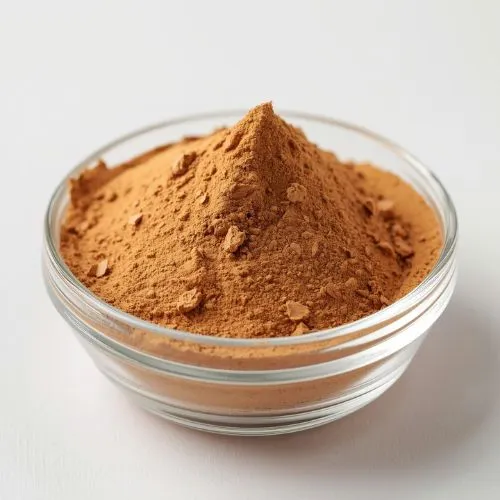
In order to turn fresh Hericium erinaceus into a concentrated powder, advanced extraction techniques are used. These processes ensure that the medicinal potential of the fungus is maintained while simultaneously eradicating those misunderstandings that are associated with its effects. When compared to its psychotropic relatives, lion's mane is a substance that functions via completely distinct biochemical pathways.
The Science Behind Non-Psychoactive Benefits
Hericenones, which are found in the fruiting body, and erinacines, which are found in the mycelium, are the two principal categories of bioactive chemicals that are presented in the extract of lion's mane. Compounds like these are able to pass across the blood-brain barrier and promote the synthesis of nerve growth factor (NGF), which is a protein that is necessary for the development and maintenance of neurons. This process provides an explanation for why users report improved cognitive performance without experiencing changed states of awareness using the substance.
During the extraction process, beta-(1,3)(1,6)-glucans are concentrated to levels that are higher than 25% in premium formulations. Moreover, these polysaccharides contribute to the neuroprotective qualities of the mushroom and help to maintain healthy immunological function. Lion's mane, in contrast to recreational chemicals that bind to neurotransmitter receptors, functions by supplying the body with the building blocks necessary for the development of healthy brain tissue.
Manufacturing Considerations for B2B Buyers
For lion's mane mushroom powder to be of high quality, it is necessary to pay close attention to the extraction procedures and to standardize the product. Through the process of breaking down indigestible chitin cell walls, water-alcohol dual extraction techniques guarantee that best possible bioavailability is achieved. When it comes to formulators who are designing goods where constant potency is important, this particular technical aspect becomes significant.
Heat-sensitive chemicals are preserved via the use of temperature control throughout the processing phase, and the powder's hygroscopic characteristics are kept within acceptable ranges by the use of appropriate drying processes. It is possible to limit the development of microorganisms during storage by maintaining a moisture level below 7%. This allows bulk customers to prolong the shelf life of their products throughout numerous manufacturing cycles.
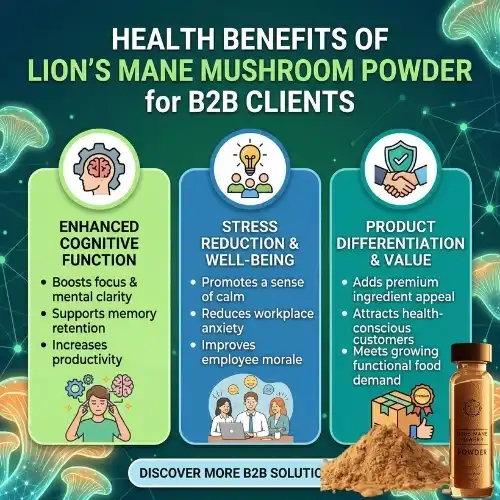
Health Benefits of Lion's Mane Mushroom Powder Relevant to B2B Clients
Additionally, consumers are looking for natural alternatives to synthetic nootropics, which is driving the market for cognitive enhancement to continue rising. In this particular market area, lion's mane extract stands out as a unique product since it provides advantages that are supported by scientific research without the regulatory hassles that are often associated with prohibited drugs. The increasing popularity of lion's mane mushroom powder is a testament to its growing demand in the natural cognitive enhancement sector.
Cognitive Function and Neuroprotection
Consuming lion's mane extract on a daily basis has been shown to be beneficial for memory formation and recall capacities, according to research investigations. Both an increase in neuroplasticity and an improvement in the myelination of nerve fibers are responsible for these benefits. Lion's mane, in contrast to stimulants, which only give momentary alertness, strengthens the cognitive resilience of the brain over the long term by enhancing the structural integrity of neuronal networks.
There are further neuroprotective properties of the mushroom that go beyond the initial cognitive advantages. Studies have shown that regular usage may promote healthy aging of the nervous system, which makes it appealing for goods that are aimed at elderly populations who are worried about cognitive loss.
Safety Profile and Regulatory Compliance
It has been observed that lion's mane has a very low risk of side effects, maintaining a good safety record. This clear profile makes the regulatory approval procedures across various countries easier to understand and administer. As a result of the lack of psychotropic ingredients, issues about prohibited drug classifications are eliminated, which significantly simplifies the process of international shipment and customs clearance.
Another benefit that formulators have is the ability to adjust dosages appropriately. Typically, effective dosage levels are between 500 and 3000 milligrams per day, which enables a wide variety of product formulations, ranging from capsules to functional drinks. That producers are able to target diverse market niches without having to worry about reformulation is made possible by this adaptability.
Quality Parameters for Procurement Teams
It is necessary to have an awareness of essential analytical indicators in order to establish quality standards. Alpha-glucan levels disclose the existence of grain-based fillers that dilute therapeutic effect, whereas beta-glucan content acts as a main sign of potency. Beta-glucan concentration is a measure of fiber content. Testing for heavy metals becomes more critical when considering the natural propensity of mushrooms to concentrate pollutants from the surrounding environment.
The production processes and the bioavailability of a substance are both impacted by the particle size distribution. In order to achieve excellent capsule filling and dissolving properties, standard standards need a transit rate of over 98 percent through 80-mesh screens.
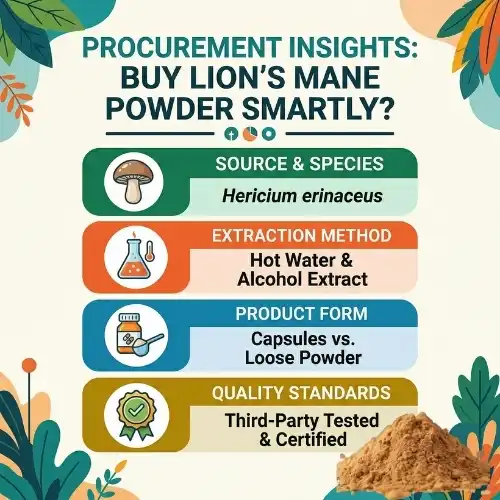
Procurement Insights: How to Buy Lion's Mane Mushroom Powder Smartly?
Strategic procurement approaches that are successful strike a compromise between quality needs and economic concerns, all while ensuring that supply chain management is trustworthy. The fact that mushroom farming is done on a worldwide scale opens up prospects for competitive sourcing, but it also makes quality verification more difficult.
Supplier Evaluation Criteria
Reputable suppliers provide evidence that they comply with worldwide standards such as good manufacturing practices (GMP), ISO certifications, and regulations that are relevant to the area. Certificates of analysis for each batch, results of testing performed by a third party, and records of traceability from cultivation to processing should all be included in the documentation.
A manufacturing capacity evaluation helps to ensure that there are no interruptions in supply during times of strong demand. Suppliers that keep their inventory levels between 50 and 100 kg give sufficient buffer stock for the majority of business-to-business applications while also suggesting that they have developed manufacturing capabilities. This is particularly important for ingredients like lion's mane mushroom powder, where consistent availability is crucial for meeting the needs of the growing cognitive health market.
Pricing Structures and Economies of Scale
There are often considerable cost savings associated with bulk purchase agreements, with minimum orders beginning at 1 kilogram for the purpose of first assessment. Long-term contracts have the potential to provide attractive pricing while also assuring supply continuity for the sake of production planning.
The total landed prices are affected by the expenses of transportation, especially for shipments that are made internationally. The integrity of the product is protected during transport by using aluminum foil bags for proper packing, which also satisfies the standards set out by customs for botanical extracts.
Quality Assurance and Testing Protocols
Microbial limitations, pesticide residues, and heavy metals should all be included in comprehensive testing processes, in addition to active component verification. Gold-standard requirements for premium applications are represented by European PAH4 standards that have benzopyrene limits that are lower than 10 parts per billion.
The use of a third-party laboratory to verify the claims made by suppliers lends credibility to such claims while also safeguarding customers from quality issues. Regulatory requirements in a variety of markets may be satisfied by certifications that are globally recognized and provided by testing institutions that have a good reputation.
Choosing the Best Lion's Mane Mushroom Powder for Your Business Needs
When selecting a product, it is necessary to match the extract requirements to the applications that are intended for it, while also taking into consideration the limits of production and the goals of market positioning. Various extraction techniques result in the production of distinct bioactive profiles that are suited for formulation needs that are particular.
Extract Formats and Concentrations
Extracts that have been standardized provide predictable levels of potency, which is vital for maintaining consistent product performance. Concentration ratios generally fall within the range of 4:1 to 20:1, with larger ratios resulting in improved efficacy per unit weight but at the expense of increased cost per kilogram.
Dual-extracted powders combine triterpenes that are soluble in alcohol with polysaccharides that are water-soluble, hence increasing the number of bioactive chemicals that may be extracted. This all-encompassing strategy is appealing to premium product sectors, which are those in which their effectiveness justifies the greater prices of their ingredients.
Organic Certification and Market Positioning
Organic certification increases the product's market attractiveness while also allowing retailers to charge higher prices for it. In order to proceed with the certification process, documentation of agricultural techniques, processing procedures, and the integrity of the supply chain from the farm to the completed product is required.
Not only does the area of sourcing affect quality features, but it also affects supply dependability. It is common for Asian suppliers to provide low prices and an established manufacturing infrastructure. On the other hand, local sources may offer benefits in terms of traceability and decreased transit complexity.
Brand Differentiation Strategies
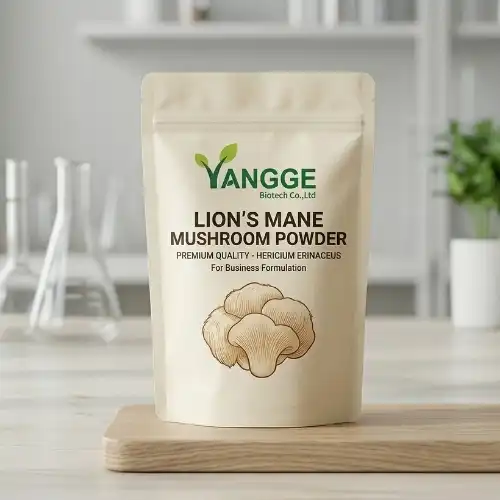
Innovation opportunities exist in developing proprietary extraction methods or combining lion's mane mushroom powder with complementary ingredients. Synergistic formulations featuring adaptogens or other nootropics can create unique market positions while expanding therapeutic potential. Custom packaging options enable brand differentiation while meeting specific storage requirements. Light-protective containers preserve product stability during extended shelf life periods, protecting investment in inventory management.
Maximizing Value with Lion's Mane Mushroom Powder in Your Product Line
In order to successfully integrate lion's mane extract into current product portfolios, it is necessary to have a comprehensive awareness of consumer trends and regulatory environments across respective target regions. The increased awareness of the importance of brain health gives chances for the development of novel formulations that cater to the requirements of certain demographic groups.
Market Trends and Consumer Demand
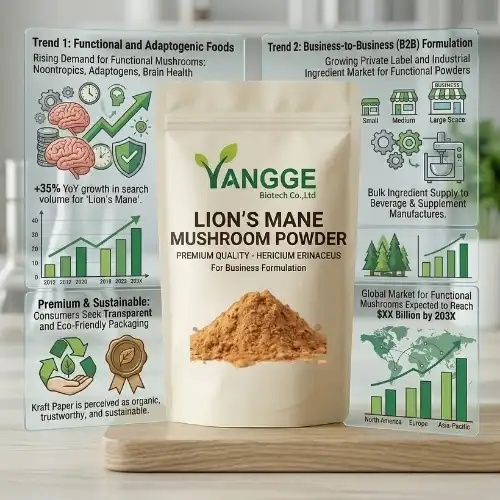
Consumers are becoming more wary about synthetic alternatives, which is driving demand for natural cognitive enhancement solutions. Clean-label efforts are driving this need. At the same time as it offers advantages that have been scientifically confirmed and that support marketing claims, lion's mane extract is exactly in line with this trend.
One of the most important opportunities for expansion in the field of neuroprotective supplements is the growing elderly population. The products that are positioned for cognitive longevity address concerns about the degradation of memory while also providing solutions for the proactive control of health outcomes.
Manufacturing Integration Considerations
For formulation compatibility, it is necessary to have a grasp of how the extract of lion's mane interacts with other substances and the circumstances in which it is processed. Due to the hygroscopic nature of the powder, it is necessary to carefully regulate the amount of moisture present throughout the production process in order to avoid caking and preserve flow characteristics.
The effectiveness of encapsulation is dependent on the properties of bulk density and particle size distribution that are present. Procedures for the proper handling of materials guarantee that fill weights are uniform while also reducing the amount of dust that is generated during manufacturing activities.
Quality Control and Verification Protocols
Inspection of incoming materials should include both microscopic examination and chemical fingerprinting in order to validate the authenticity of the materials. These approaches identify adulteration while simultaneously validating the legitimacy of the species and the quality of the extraction.
The shelf life performance of a product may be predicted by stability testing under accelerated aging settings, which also helps advise storage recommendations. Degradation patterns are revealed by temperature and humidity cycling, which may then be used to drive choices on packaging and inventory rotation plans.
The necessity of thorough testing goes beyond the need to comply with regulations to include the preservation of brands and the happiness of customers. Incidents involving contamination have the potential to destroy a market's reputation while simultaneously producing liability risk that is greater than the immediate financial losses.
Conclusion
Lion's mane mushrooms definitively do not produce psychoactive effects or any form of "high." Instead, these remarkable fungi offer legitimate cognitive benefits through natural compounds that support brain health and neuroplasticity. The growing body of scientific research validates lion's mane extract as a valuable ingredient for cognitive health products targeting increasingly health-conscious consumers. B2B buyers can confidently integrate this versatile ingredient into formulations knowing it provides measurable benefits without regulatory complications associated with controlled substances. The key to success lies in sourcing high-quality, standardized extracts of lion's mane mushroom powder from reputable suppliers who maintain rigorous quality standards and transparent documentation practices.
Partner with Yangge Biotech for Premium Lion's Mane Solutions
Yangge Biotech delivers pharmaceutical-grade lion's mane mushroom powder that meets the most demanding quality specifications in today's competitive marketplace. Our standardized extracts undergo rigorous third-party testing to ensure consistent potency and purity batch after batch. With minimum orders starting at just 1kg and customizable packaging options, we accommodate both emerging brands and established manufacturers seeking a reliable lion's mane mushroom powder supplier. Our sustainable sourcing practices and comprehensive certifications including ISO, HACCP, Kosher, and Halal provide the documentation your regulatory teams require. Contact our technical specialists at info@yanggebiotech.com to discuss how our premium lion's mane extracts can enhance your cognitive health product formulations.
FAQ
Q: Can we get some samples to test before purchasing?
A: Of course, we can provide free samples of 20 to 100 grams, but the shipping cost is at the customer's expense. The shipping cost can be deducted from the next order, or the samples can be sent through your courier account.
Q: Do your products have relevant certifications?
A: Yes, our products are certified for HALAL, ISO, HACCP, Kosher, and other certifications.
Q: What is the minimum order quantity (MOQ)?
A: Small batches of samples can be customized according to your requirements.
Q: Do you offer OEM and ODM services? Can the formula be customized based on our own?
A: Of course, we provide ODM and OEM services to many customers. Our product range includes softgels, capsules, tablets, sachets, granules, and private label services. Simply contact us and let us know your requirements. Our experienced R&D team can also develop new products with specific formulas.
Please contact us to design your own branded products.
Q: How do you handle quality complaints?
A: First, we have a comprehensive quality control SOP. We provide authoritative third-party inspection reports for almost all products before shipment to minimize the possibility of quality issues. Second, we have a comprehensive return and exchange procedure. If there is a genuine quality dispute, we will strictly follow the SOP.
Q: How do you ship? How long does delivery take?
A: For small orders, we typically use DHL, UPS, EMS, FedEx, or TNT. Delivery typically takes 3-7 days. We also offer air and sea freight services. We have a strong freight forwarding team and can provide you with a one-stop service, including DDP and DDU.
Q: What are your payment terms?
A: 100% prepayment, payable by T/T, Western Union, MoneyGram, or PayPal.
Q: What is the shelf life of your products?
A: 2 years with proper storage.
Q: Is the packaging environmentally friendly?
A: We attach great importance to environmental protection and are constantly improving our product packaging. Some products are packaged in recyclable paper. Packaging materials are carefully selected to ensure product safety during transportation and storage, and to minimize environmental impact. We are committed to achieving a balance between environmental friendliness and practicality in our product packaging, and to contributing to sustainable development.
References
1. Lai, P.L., et al. "Neurotrophic properties of the Lion's mane medicinal mushroom, Hericium erinaceus." International Journal of Medicinal Mushrooms, 2013.
2. Mori, K., et al. "Improving effects of the mushroom Yamabushitake on mild cognitive impairment: a double-blind placebo-controlled clinical trial." Phytotherapy Research, 2009.
3. Zhang, J., et al. "Hericenones and erinacines: stimulators of nerve growth factor synthesis." Mycological Research, 2015.
4. Wong, K.H., et al. "Neuroregenerative potential of lion's mane mushroom in treatment of peripheral nerve injury." Neural Regeneration Research, 2012.
5. Spelman, K., et al. "Neurological activity of lion's mane (Hericium erinaceus)." Journal of Restorative Medicine, 2017.
6. Li, I.C., et al. "Prevention of early Alzheimer's disease by erinacine A-enriched Hericium erinaceus mycelia pilot study." Frontiers in Aging Neuroscience, 2020.

Based on your location and order quantity, you will have the opportunity to receive a limited time free shipping promotion!
Who we are
Popular Blogs