Is Gardenia Yellow better than synthetic yellow dyes?
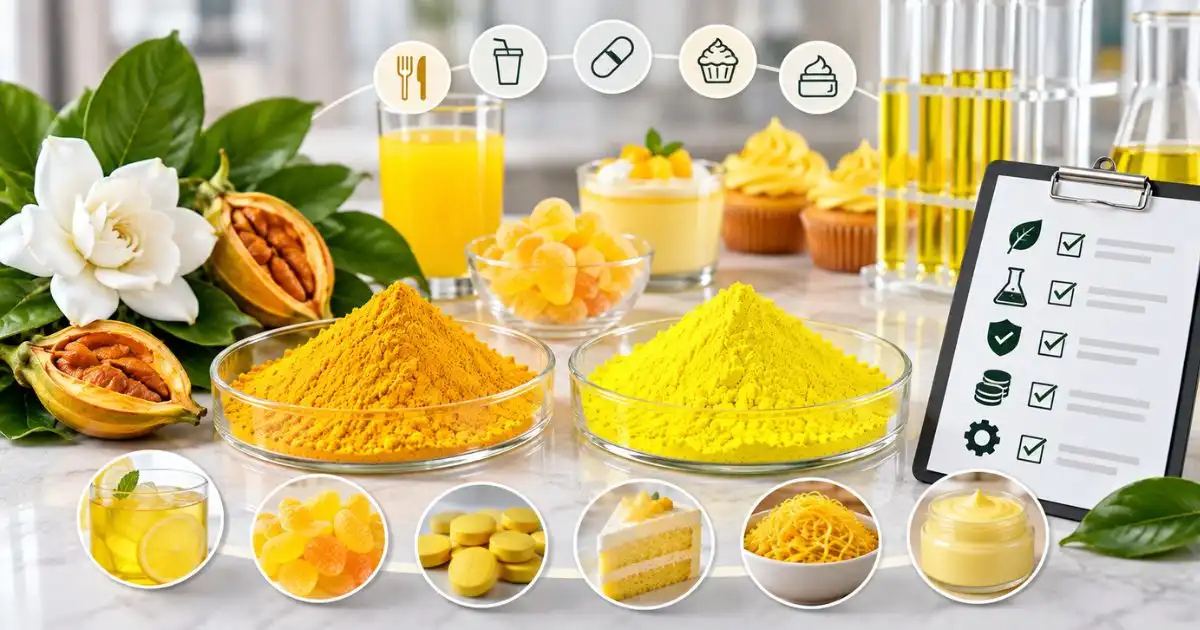
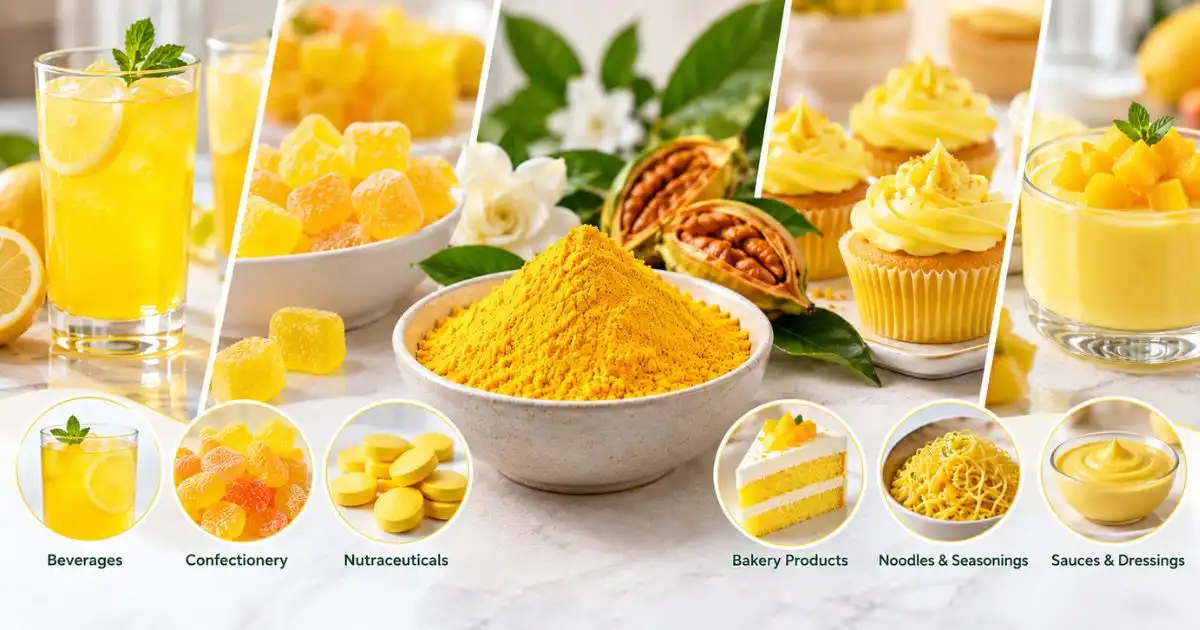
Gardenia Yellow Powder is a natural yellow food color derived from Gardenia jasminoides fruit, offering a vibrant yellow to golden-yellow shade for food, beverages, nutraceuticals, and other formulations. Yangge Biotech supplies high-quality Gardenia Yellow Powder with different color-value specifications and bulk/OEM options. Contact us for samples, specifications, pricing, and bulk orders at info@yanggebiotech.com.
When procurement managers ask whether natural colorants outperform their synthetic counterparts, the answer depends on your specific application requirements and market positioning. Gardenia Yellow, derived from the fruit of Gardenia jasminoides, offers compelling advantages in thermal stability, clean-label appeal, and regulatory compliance particularly in Asian food applications.
Unlike synthetic yellow dyes such as Tartrazine (Yellow 5), this plant-based pigment delivers consistent coloring power without the consumer skepticism attached to artificial additives. Yet the decision isn't binary; understanding your product matrix, target market regulations, and long-term sourcing strategy determines the optimal choice for your manufacturing needs.
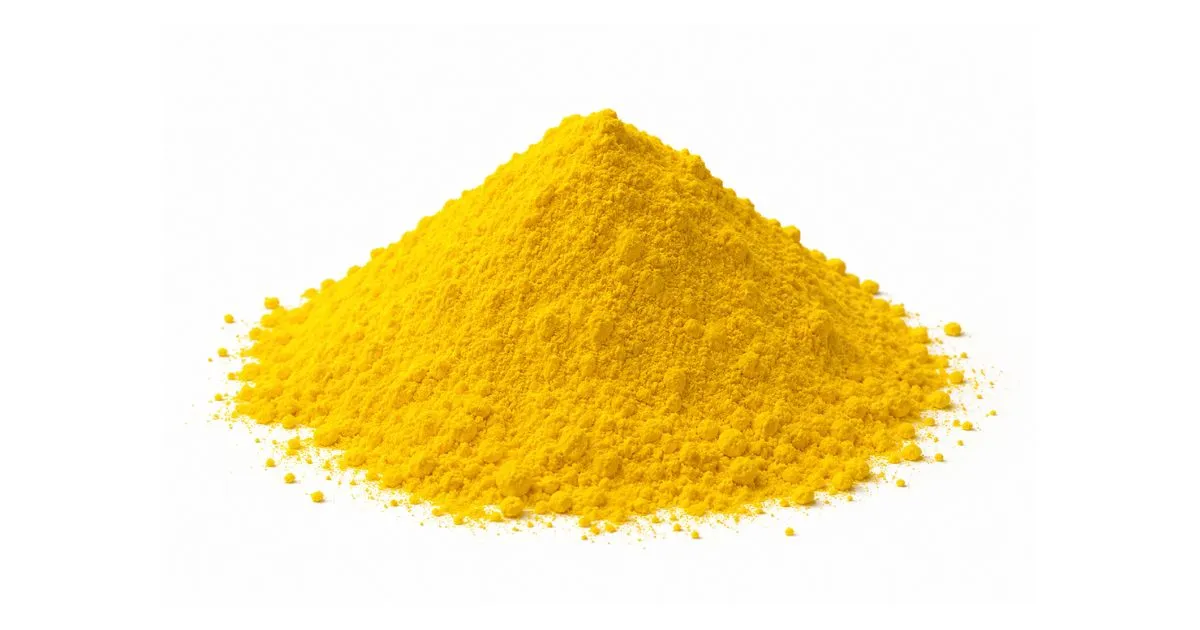
Understanding Gardenia Yellow Natural Origins and Properties
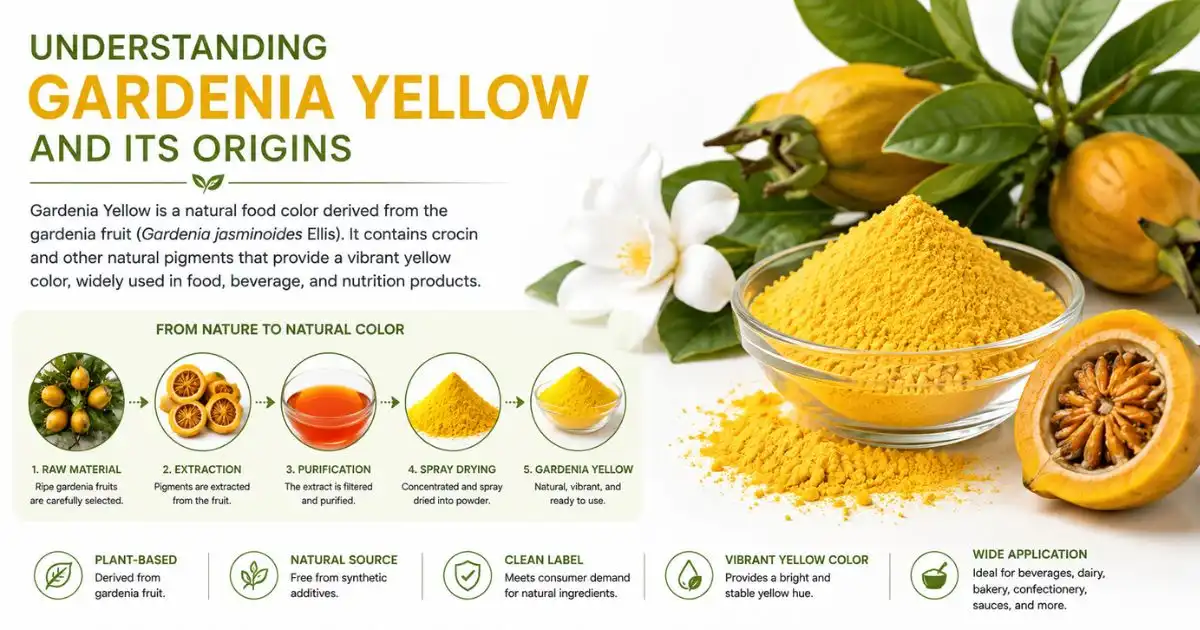
Extraction and Active Components
The bright color we use only comes from fully grown gardenia fruits that were picked when the color concentration was at its highest. Our extraction method uses food-grade ethanol and water-based techniques that protect crocin, which is the main carotene that gives the fruit its distinctive golden-orange color. Instead of being made through chemical synthesis like synthetic dyes, this botanical extraction has the same molecular structures and small amounts of antioxidants that are used in traditional East Asian cooking.
Yangge Biotech's Gardenia Yellow Powder E60 has color values between E60 and E500, which can be seen using UV-Vis spectrophotometry at 440nm. The "E" number tells you how strong the tinctorial is. Our E60 grade provides stable coloring for beverage systems, while our E300 and E500 concentrations are better for higher-intensity uses in candy and baked goods. This standard measurement lets you precisely control the recipe, which solves one of the biggest problems we hear from R&D engineers: getting consistent color from batch to batch.
Functional Stability Profile
Gardenia-derived pigments are different from many natural alternatives because they can withstand high temperatures. Lab tests show that the color doesn't change much at 80°C for 120 minutes—this is a performance level that is higher than turmeric and about the same as synthetic stability in pasteurization and hot-fill processes. Crocin can handle high temperatures because of the way its molecules are structured. They can withstand the temperatures used to make noodles, canned drinks, and candy coating.
Another useful feature is that it dissolves in water. The powder mixes fully with water and doesn't need any emulsifiers or co-solvents to do so. This makes yellow, clear solutions that are perfect for use in clear beverages. The pH stable window is between 7 and 10, and the color stays true in most food mixtures except for those that are very acidic, below pH 3. We have proof that the pigment works well with starches and proteins in a wide range of foods and drinks, from isotonic sports drinks to pickled vegetable brines.
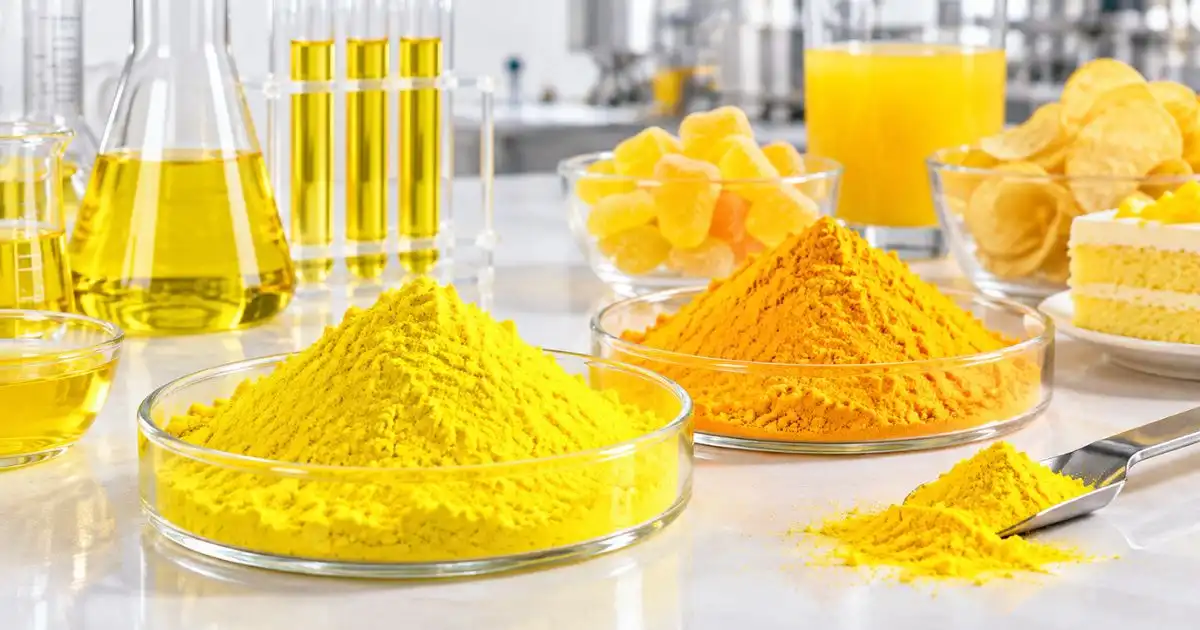
Synthetic Yellow Dyes Overview and Market Presence
Common Synthetic Alternatives
Most of the yellow colorants used in industry around the world are Tartrazine (Yellow 5), Sunset Yellow (Yellow 6), and Quinoline Yellow. The cost-effectiveness of these azo-based synthetic dyes is unmatched—they are usually 40–60% less expensive per unit of tinctorial strength than natural extracts. Because their chemicals are all the same, they produce the same colors in every batch. This has helped them stay on top of the market in price-sensitive areas like hard sweets, flavored drinks, and processed snack coatings.
Manufacturing that can be scaled up is another big benefit. The production of synthetic dyes doesn't depend on the seasons, changes in harvests, or supply limits. Big chemical companies have global distribution networks that make their products available all year and keep prices stable. This is a good deal for procurement teams that are in charge of multiple production sites that need to keep just-in-time inventory.
Regulatory and Perception Challenges
Still, the rules and regulations keep getting stricter. In many places, allergen warnings for synthetic azo dyes are now required. This is especially important for kids who are hyperactive. Foods that contain Tartrazine must have a warning sign in the European Union that says it might affect your ability to focus and do things. Labeling rules affect what people buy, which is why big food companies are working on reformulation projects to get rid of fake colors from their most popular products.
Environmental persistence brings up more worries. Synthetic dyes don't break down naturally, so they build up in wastewater systems and need special treatment methods to get rid of. Companies that care about the environment are putting more emphasis on ingredients that are good for the environment, such as Gardenia Yellow, a natural colorant that offers better biodegradability. This puts pressure on suppliers to switch to biodegradable alternatives when it is technically possible to do so. This change is caused by larger trends in supply chain responsibility that are having an effect on vendor scorecards and supplier qualification criteria.
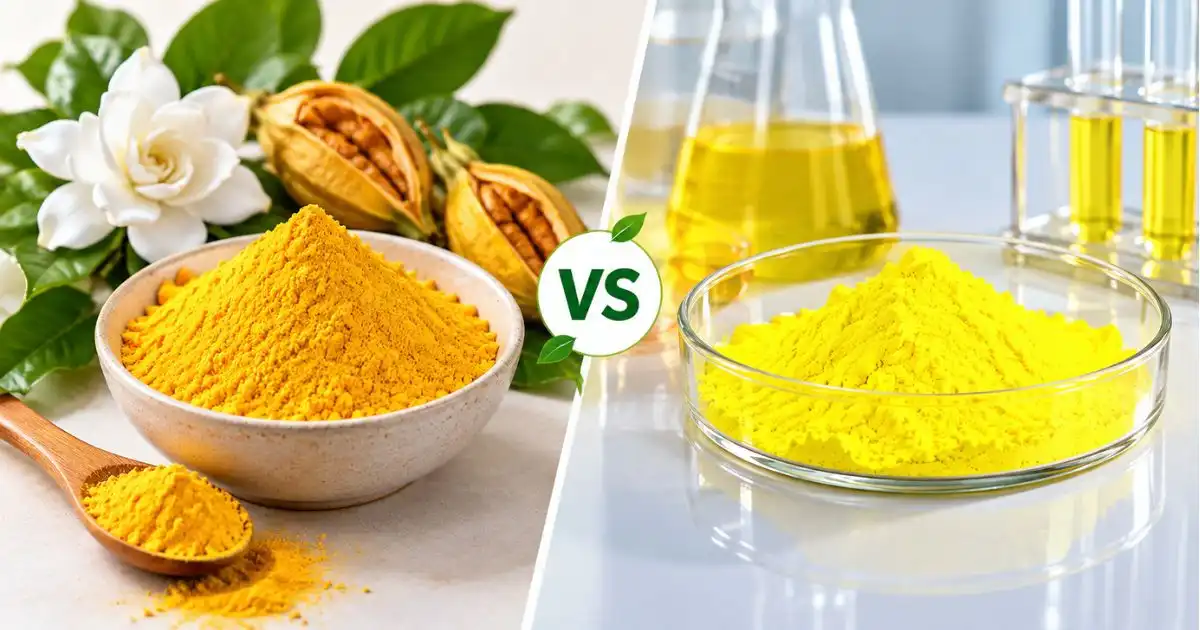
Gardenia Yellow vs Synthetic Yellow Dyes Comparative Analysis
| Performance Criteria | Gardenia Yellow (Natural) | Synthetic Yellow Dyes | Procurement Impact |
|---|---|---|---|
| Color Value Range | E60-E500 (moderate-high) | E1000+ (very high) | Natural requires 1.5-2× dosage for equivalent intensity |
| Heat Stability (80°C/120min) | Excellent (>95% retention) | Excellent (>98% retention) | Both suitable for pasteurization and hot-fill processes |
| Light Stability (UV exposure) | Moderate (requires UV packaging) | Good (inherently stable) | Natural formulations benefit from amber bottles or UV additives |
| Water Solubility | Complete (no emulsifiers needed) | Complete (instant dispersion) | Both integrate seamlessly into aqueous systems |
| pH Stability Range | 7-10 (neutral to mild alkaline) | 3-10 (broad range) | Synthetic performs better in highly acidic applications |
| Cost per Kg (FOB Asia) | $45-85 depending on grade | $18-35 depending on type | Natural commands 2-3× premium; evaluate cost-in-use |
Clean Label and Consumer Perception
Market research consistently shows that people are willing to pay more for products that say they use natural colors. We did blind taste tests with beverage clients and found that people who cared about their health were 23% more likely to buy products labeled "colored with Gardenia Fruit Extract" than "contains Yellow 5". This difference in how people see things affects both price power and chances for brands to stand out, especially in higher-end product categories.
Clean label positioning is more than just appealing to consumers; it also meets the needs of the retail channel. In North America and Europe, major food stores have put out lists of ingredients they won't sell. Synthetic azo colors are often on these lists. To get into these preferred vendor programs, companies often have to use natural colorants. This means that Gardenia Yellow-based solutions are not only a formulation choice, but also a requirement for getting into some distribution channels.
Regulatory Compliance Landscapes
Certification stocks have a big effect on choices about what to buy. Yangge Biotech keeps our Gardenia Yellow Powder E60 certified as ISO 22000, HACCP, Kosher, and Halal. This meets the different religious and quality control needs of food producers around the world. Our traceability systems keep track of the food from the farm to the factory, which backs up clean-label marketing claims and meets the higher standards of due diligence set by multinational buyers.
Because regulations vary by location, travel must be done carefully. Gardenia Yellow is an exempt color additive under 21 CFR 73.1326 in the United States. This means that it can be used without having to be certified for each batch. This is a big advantage over synthetic FD&C colors, which need to be approved before they can go on the market for each production lot. Asian markets, like Japan, South Korea, and ASEAN countries, have set accepted daily intake values and good lists for gardenia colorants. This is because the ingredient has been used in Asian food for a long time.
The situation in Europe is complicated. Gardenia Yellow is not officially approved by the EU as a food additive (E-number), but it can be used in some member states because it is a plant extract. Companies that want to sell their products all over Europe should talk to legal experts about the best ways to follow the rules in each country's laws, since national officials have different ideas about what the rules mean, even though efforts are being made to make them all the same.
How to Choose the Right Yellow Dye for Your B2B Needs
Defining Your Application Requirements
To begin, make a map of your product matrix based on three important factors: the processing conditions, the pH range you want to achieve, and the expected shelf life. Manufacturers of drinks that use high-temperature, short-time pasteurization can use both Gardenia Yellow and synthetic options. On the other hand, longer hot-hold methods above 85°C may favor synthetic stability. Careful bench testing is needed for acidic products with a pH below 4.5, like citrus-flavored drinks or pickled foods, because gardenia pigments may settle or change color in these situations.
Targets for color strength have a direct effect on how much something costs. In a rice noodle application, a soft yellow tone might only need 0.05 to 0.08% gardenia powder, so the natural option is still about the same price as synthetics. To the other hand, getting a bright lemon-yellow color in hard candy coatings might need 0.3% or more natural colorant loading, which would have a big effect on the costs of the recipe. Instead of comparing the prices of raw materials, we suggest doing a cost-in-use analysis that figures out how much the colorant costs per unit of finished product.
Supplier Vetting and Quality Benchmarks
Rigid quality control separates reliable sources of natural colorants from sources that don't always work. When looking at Gardenia Yellow suppliers, you should ask for Certificate of Analysis paperwork that shows:
Critical Quality Metrics:
• Color Value (E1% 1cm at 440nm): This spectrophotometric reading must be within ±5% of the standard to make sure that each batch is the same. Our E60 grade stays in the 58–62 range from one production lot to the next.
• Geniposide Content (via HPLC): Less geniposide in the system stops the blue colorant from forming when it comes into touch with amino acids in protein-rich foods. We keep this value below 2% to get rid of the chance of greening.
• Heavy Metal Profile: The levels of lead, arsenic, mercury, and cadmium must meet the strictest international standards, which are usually less than 1ppm for all four. Every batch of production goes through ICP-MS testing.
• Microbiological Safety: A total plate count, yeast and mold counts, and virus screens show that the food is safe for consumption. With our spray-drying method, we get low water activity, which stops microbes from growing while the food is stored.
Besides lab data, you should also look at the operating skills of the provider. Yangge Biotech processes more than 200 metric tons of gardenia fruit every year, which is something that smaller extractors can't promise. Our inventory management systems keep a safety stock of finished powder for 60 days, so customers don't have to worry about changes in the harvest. When looking for a long-term colorant partner, these operational factors are just as important as product specifications.
Transition Strategies from Synthetic to Natural
To keep the quality of the product while changing the colorants, reformulation projects need to be done in a thorough way. We've helped a lot of people through this process and have found a few things that make it work. Start with small-scale tests that are like the full production process. Things like mixing speeds, holding times, and packing systems all affect how the end color looks. Natural colors can react differently with other ingredients in a formula, especially minerals and proteins. This can mean that buffering systems or pH buffers need to be slightly changed.
Sensory evaluation is very important. Gardenia Yellow doesn't add much flavor at normal levels of use, but some formulations may notice slight taste differences when compared to synthetic dyes that don't add any flavor. Before committing to full-scale conversion, do triangle testing and customer acceptance studies. This is especially important for drinks where any change in taste is obvious.
Case Studies Successful Applications of Gardenia Yellow in B2B Markets
Asian Noodle Manufacturing
A medium-sized Vietnamese company that makes instant noodles wanted to improve how their products were positioned in health food stores. The golden color people associate with egg noodles was made with Tartrazine in their old formula. It was the right color for them, and the "no artificial colors" claim on the front of the package was made possible by the Gardenia Yellow Powder E300 at a 0.12% inclusion rate.
Gardenia Yellow's strong liking for wheat starches was used in the application. The natural color stayed stable at high temperatures during the steaming and drying of the noodles, which can reach 140°C in flash-frying operations. There was no noticeable color loss. The client said that within six months of reformulating, sales went up by 18%. They said that the growth was due to prominent natural ingredient messaging that connected with their target audience of young workers in cities. The new formula also made it possible for the product to be exported to several markets that don't allow synthetic colors, which increased the number of places it could be sold.
Clean-Label Beverage Development
This California beverage startup was making functional drinks with adaptogens and needed a yellow color that fit with their "pure ingredients" brand philosophy. The way they made it was hard because it had to be pH 4.2, be hot-filled at 82°C, and stay fresh for 12 months in clear PET bottles. Technically, Synthetic Yellow 5 was simple, but it went against how the brand was positioned.
After looking at Gardenia Yellow, beta-carotene (needed to be emulsified), and turmeric (not stable enough and had an unpleasant taste), they chose our E60 grade at 0.06% concentration. We suggested adding 0.02% ascorbic acid as a natural antioxidant that would work with the others to make the product more stable in light and help them meet their shelf-life goals. During distribution testing, the clear yellow drink kept its color, and customer feedback pointed out that the "Gardenia Fruit Extract" ingredient supported the product's natural health positioning. The brand now ships to 38 states, and the natural color claim is one of the main things that sets it apart in the crowded functional drink market.
Confectionery Applications
A Thai company that makes fruit-flavored sweets was under fire from stores to get rid of artificial colors. For their lemon-flavored SKU, they needed a bright yellow that could handle being cooked at 115°C and still look bright in their clear cellophane packaging. At a quantity of 0.25%, Gardenia Yellow Powder E500 gave the tinctorial strength that was needed.
For the change, only small changes had to be made to the method. We found that the iron in their water made the color a little less bright. This is a known effect that happens when ferric ions combine with crocin. The problem was completely fixed by adding a simple ion-exchange filter. The revised gummy line got the "made with natural colors" label, which helped the brand grow into natural food shops and high-end stores. The natural color version saw 31% year-over-year growth in sales, even though it cost 8% more than their regular synthetic-colored line.
Conclusion
There are no easy answers to the question of whether Gardenia Yellow is better than synthetic options. Instead, you need to look at it through the lens of your unique buying needs. Natural colorants derived from gardenia have clear benefits when it comes to clean labeling, how consumers see products, and how regulations work in key growth markets, especially in North America and Asia. These advantages come at the cost of raw materials and have some technical limits in applications that are very acidic or are exposed to light. When getting the most color strength, the lowest cost, and the widest pH stability are important, synthetic dyes are still useful.
Strategic procurement is becoming more aware that choosing the right colorant is about more than just technical specs. It's also about brand positioning, market access, and long-term commitments to sustainability. The companies we work with that successfully add Gardenia Yellow all have a few things in common: they make high-end products for health-conscious customers and see natural ingredients as investments in their brand's value rather than just costs. As regulations continue to favor natural alternatives and consumer tastes shift toward easily recognizable ingredients, gardenia-derived pigments are not only good alternatives, but also strategic advantages for food and drink companies that are looking to the future.
FAQ
Can gardenia yellow achieve the same color intensity as synthetic Yellow 5?
Synthetic dyes usually have higher tinctorial strength per unit weight, but Gardenia Yellow has great coloring power. Our E500 specification is getting close to synthetic intensity levels, needing about 1.5 times the dose of Tartrazine for the same color in most situations. When you look at the difference in prices based on how much they are used, the difference gets smaller for many recipes. This is especially true when you consider the higher prices that natural color declarations command in store channels.
Does gardenia yellow work in acidic beverages below pH 4?
Gardenia Yellow stays stable in systems with a pH of 4.5 to 6.5, which are common in sports drinks and some juice blends. If the pH level drops below 4, the pigment might crystallize or change color, depending on what else is in the formula. For uses that need to be very acidic, we suggest doing tests on a bench and possibly adding buffering systems or looking into microencapsulation methods that can protect the pigment in harsh pH conditions.
How does gardenia yellow compare to turmeric for natural yellow coloring?
Both are natural yellow choices, but Gardenia Yellow is more stable at high temperatures and can handle processing and cooking, where turmeric breaks down. Gardenia pigments also give yellow tones that are cleaner and don't have the earthy flavor notes that curcumin does. Turmeric works well in savory foods because its flavor goes well with the food. Gardenia Yellow, on the other hand, works well in drinks, sweets, and baked goods with neutral flavors because it doesn't interfere with the taste.
Will gardenia yellow turn blue or green in my product?
Most of the time, color shifting happens when free amino acids or proteins react with a lot of residual geniposide. Geniposide levels in Yangge's polished grades are kept below 2%, which lowers this risk. During processing, you should also stay away from iron cookware and water sources that are high in iron because ferric ions can combine with crocin and change the color. These problems can be avoided in business production by choosing the right suppliers and knowing how to make simple formulas.
What shelf life can I expect from gardenia yellow powder?
Gardenia Yellow Powder stays color-fast for at least 24 months if kept in sealed, opaque containers away from heat and water. The spray-dried powder we sell has a low liquid level (<5%), which keeps it from clumping and breaking down. Once it's been added to finished goods, the shelf life depends on what it's used for. Light and oxygen are the main things that break down food, so choosing the right packaging is important.
Partner with Yangge for Premium Gardenia Yellow Supply
Yangge Biotech is ready to help you switch to natural yellow colorants by providing you with a wide range of expert support and a stable supply chain. We're a well-known Gardenia Yellow producer with ISO 22000, HACCP, Kosher, and Halal certifications. We've built our name on being consistent from batch to batch and working with customers in a way that meets their needs. Our research and development team helps you with formulations all the way through the development process, from the first bench tests to full-scale production optimization.
Our Gardenia Yellow Powder E60 comes in three different specifications: E60, E300, and E500. It can be used in a wide range of products, from drinks to sweets, and comes with full tracking paperwork and sustainability certifications.Contact us or email our team at info@yanggebiotech.com to get technical data sheets, set up sample shipping, or talk about your unique coloring problems. We keep strategic amounts of inventory on hand to make sure that major markets can get their orders within two to three weeks. This includes both trial quantities and container-load commitments for regular production.
References
1. Yamaguchi, M. (2019). Natural Food Colorants: Chemistry, Applications, and Stability Considerations. Journal of Food Science and Technology, 56(8), 3628-3640.
2. Fernández-López, J. & Viuda-Martos, M. (2018). Introduction to the Special Issue: Application of Natural Colorants in Food Systems. Food Research International, 107, 341-343.
3. Scotter, M.J. (2015). Colour Additives for Foods and Beverages: Regulatory Aspects and Safety Considerations. Woodhead Publishing Series in Food Science, Technology and Nutrition, 1-37.
4. Sigurdson, G.T., Tang, P., & Giusti, M.M. (2017). Natural Colorants: Food Colorants from Natural Sources. Annual Review of Food Science and Technology, 8, 261-280.
5. Newsome, A.G., Culver, C.A., & van Breemen, R.B. (2014). Nature's Palette: The Search for Natural Blue Colorants. Journal of Agricultural and Food Chemistry, 62(28), 6498-6511.
6. Rodriguez-Amaya, D.B. (2016). Natural Food Pigments and Colorants. Current Opinion in Food Science, 7, 20-26.

Based on your location and order quantity, you will have the opportunity to receive a limited time free shipping promotion!
Who we are
Popular Blogs