Is Gardenia Blue a natural alternative to blue dyes?
Absolutely natural blue pigment derived from Gardenia jasminoides fruit represents a viable, plant-based substitute for synthetic blue colorants, addressing clean-label demands without compromising color intensity or production stability. Gardenia Blue Pigment is extracted through enzymatic transformation of geniposide found in gardenia fruits, yielding a dark blue powder soluble in water and ethanol solutions.
Unlike artificial dyes such as Brilliant Blue FCF, this botanical alternative supports the growing clean-label movement while delivering consistent coloration across pH ranges from 4.0 to 8.0, making it particularly attractive for beverage manufacturers, confectionery producers, and dairy product formulators seeking regulatory-compliant, consumer-friendly ingredients.
Understanding Gardenia Blue – Origin and Botanical Profile
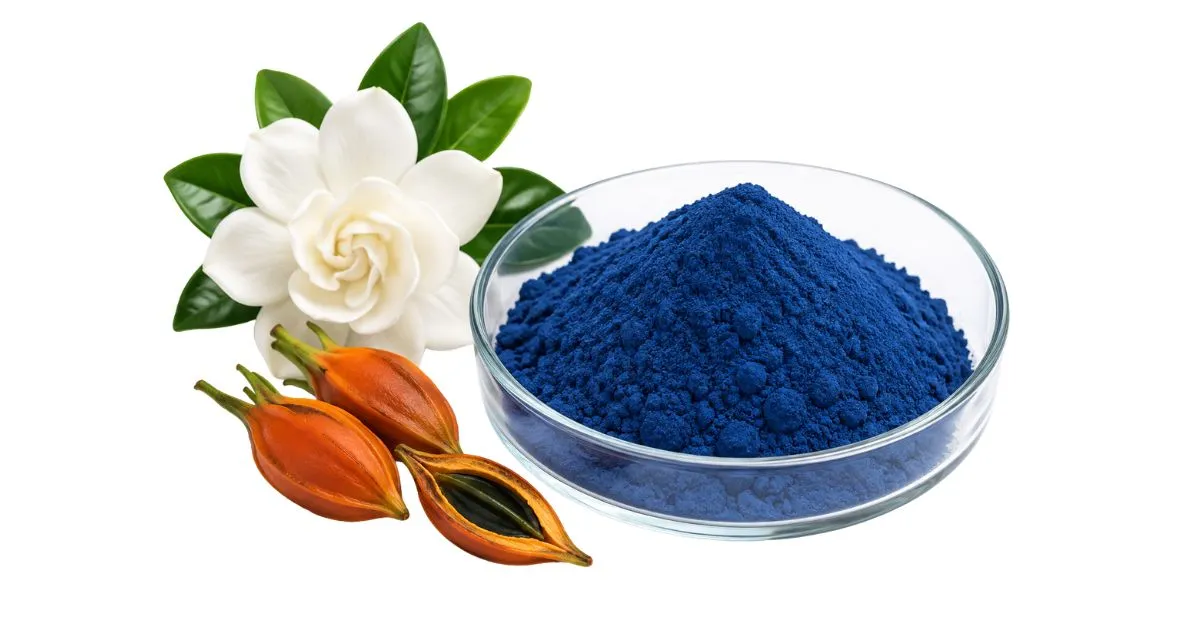
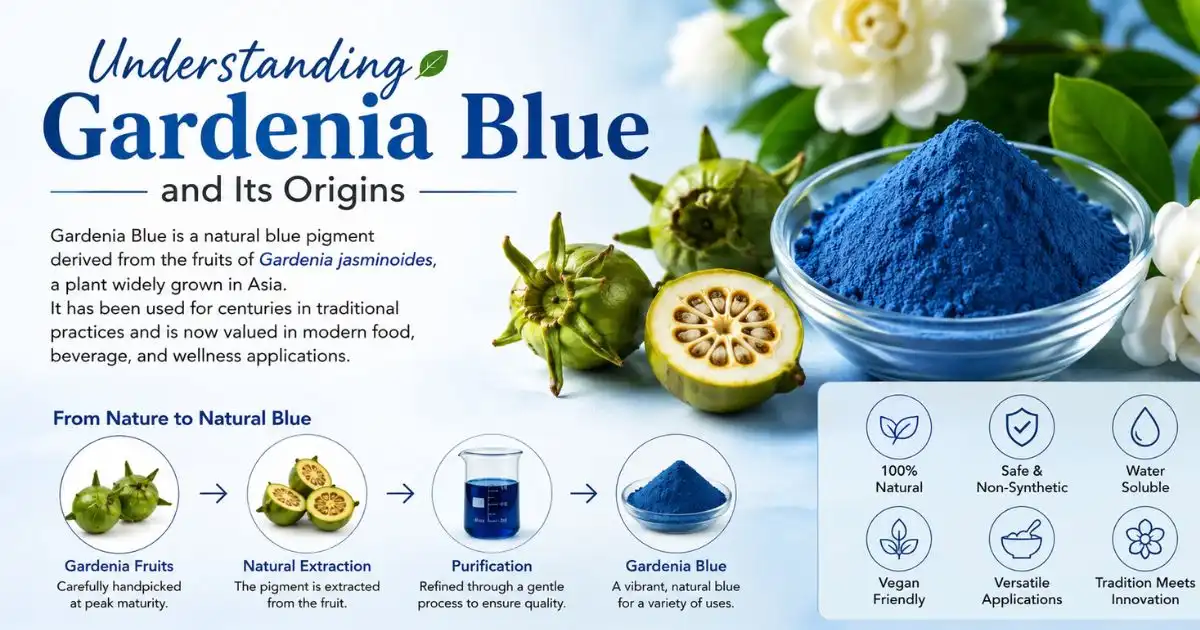
Gardenia jasminoides, or cape jasmine, is an evergreen flowering plant that comes from Asia, mostly China, Korea, and Japan. The plant is known for its fragrant white flowers, but it also has deep orange fruits that look like berries and have been used in traditional Chinese medicine for thousands of years as "Zhi Zi." Geniposide, an iridoid glycoside substance found in these fruits, is the building block for natural blue color production.
Botanical Characteristics and Industrial Cultivation
Certain natural factors are needed to grow gardenias commercially for extracting pigments. The plants do best in subtropical climates with acidic (pH 5.0–6.5) soils that drain well and stay moist. Gardenia shrubs grow to be about 1 to 2 meters tall and have fruits that are about 1.5 to 4 cm long and turn reddish-orange when they are ready. When to harvest is very important; fruits that are picked when they are fully ripe have the highest amounts of geniposide, which has a direct effect on the quality of the pigments and how well they are extracted.
From Fruit to Pigment: Understanding the Raw Material
Complex biotechnology is needed to turn gardenia fruit into a pigment that can be used. When geniposide is taken from the fruits, it is broken down by β-glucosidase, which makes genipin. After joining with amino acids or proteins, this molecule forms a stable blue chromophore. This controlled fermentation process makes gardenia-based colorants different from simple plant pigments that are extracted with solvents. It gives them better stability, which is important for industrial food applications.
Gardenia Blue as a Natural Food Colorant – Technical Advantages
The move toward natural colorants has sped up a great deal. The world market for natural food colors is expected to grow a great deal as more people read ingredient labels carefully. Gardenia-derived pigments are strategic solutions for product developers because natural blue options are still very limited.
Performance Characteristics That Matter to Manufacturers
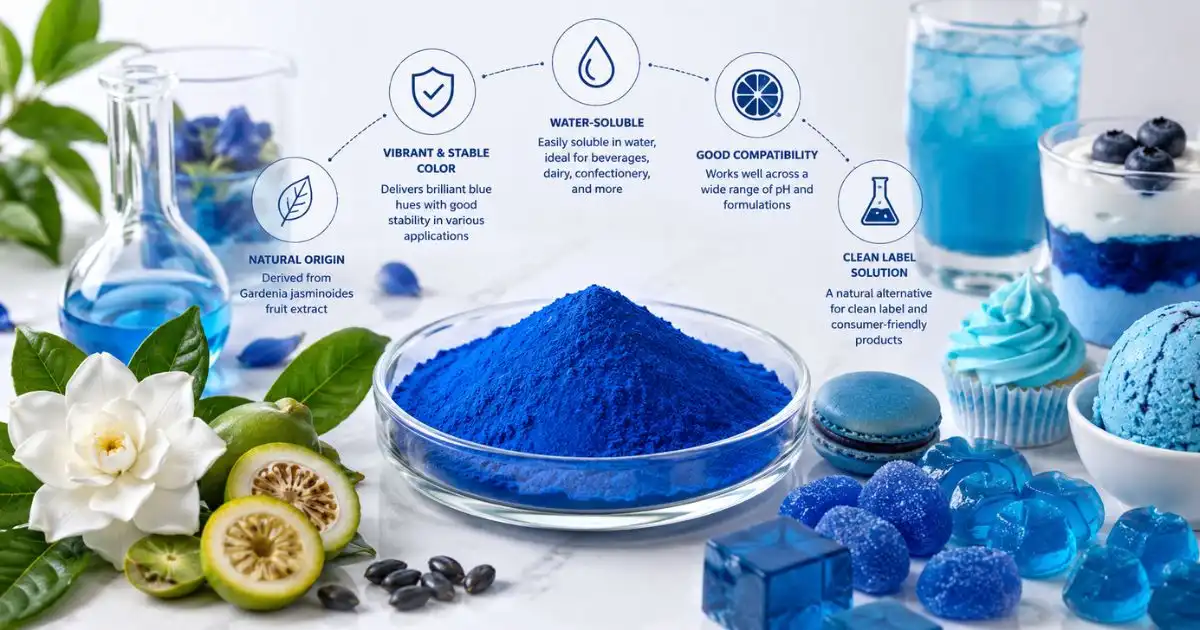
Gardenia Blue Pigment has amazing technical properties that make up for the problems that come with natural colorants. The color stays true even after being exposed to temperatures up to 120°C for an hour, which is very important for baked goods, boiled sweets, and pasteurized drinks. Anthocyanin-based blues change color a lot when the pH changes. Gardenia Blue, on the other hand, stays the same color between 4.0 and 8.0, so it can be used in acidic drinks, neutral dairy products, and mildly alkaline situations.
The table below shows some of the most important security factors that procurement managers look at:
| Stability Parameter | Gardenia Blue Performance | Typical Application Benefit |
|---|---|---|
| Heat Resistance | Stable at 120°C for 60 min | Suitable for baking, pasteurization |
| pH Stability Range | 4.0-8.0 (no hue shift) | Consistent color across product matrices |
| Light Resistance | Moderate (requires protection) | Best for opaque or protected packaging |
| Protein Affinity | Strong binding to proteins | Enhanced color retention in dairy, meat analogues |
| Mineral Tolerance | Unaffected by Ca²⁺, Mg²⁺ | Compatible with fortified beverages |
Application Versatility Across Food Categories
Manufacturers use the Gardenia Blue color in a wide range of products. When added to drinks, the pigment gives functional waters, energy drinks, and alcoholic cocktails bright blue tones without causing sediment to form. Because the colorant is heat stable, it can be used in candy. Hard candies, gummies, and marshmallows all keep their bright colors during production and storage. Dairy makers like how well the proteins stick together, so the color stays the same in yogurts, ice creams, and protein shakes without coloring or separating.
The pigment comes in different types, with names like E30, E60, E80, E100, and E200 showing different levels of color value. This range lets formulators choose the right grades based on the level of intensity they want and the cost. Higher E-values give stronger tinctures and need lower dosage rates.
Comparing Natural Blue Pigment Sources: Strategic Sourcing Decisions
When procurement workers look at natural blue alternatives, they have a number of choices, and each one has its own pros and cons. By understanding these differences, you can make smart decisions about where to source materials that meet your production needs and help you position your business in the market.
Synthetic Dyes: The Benchmark Being Replaced
Brilliant Blue FCF (FD&C Blue No. 1) and Indigo Carmine (FD&C Blue No. 2) have been the most popular for a long time because they are the most stable, cost-effective, and have the most intense colors. Synthetic colorants are getting more attention from regulators, and some places have put limits on them or made warning labels mandatory.
Consumers strongly prefer natural alternatives—studies show that 60–70% of consumers intentionally avoid artificial colors, which has a direct effect on their buying choices. Reformulation efforts are driven by customer pressure, which keeps the demand for natural alternatives high, even though they are more expensive and harder to make.
Spirulina Extract (Phycocyanin): The Heat-Sensitive Alternative
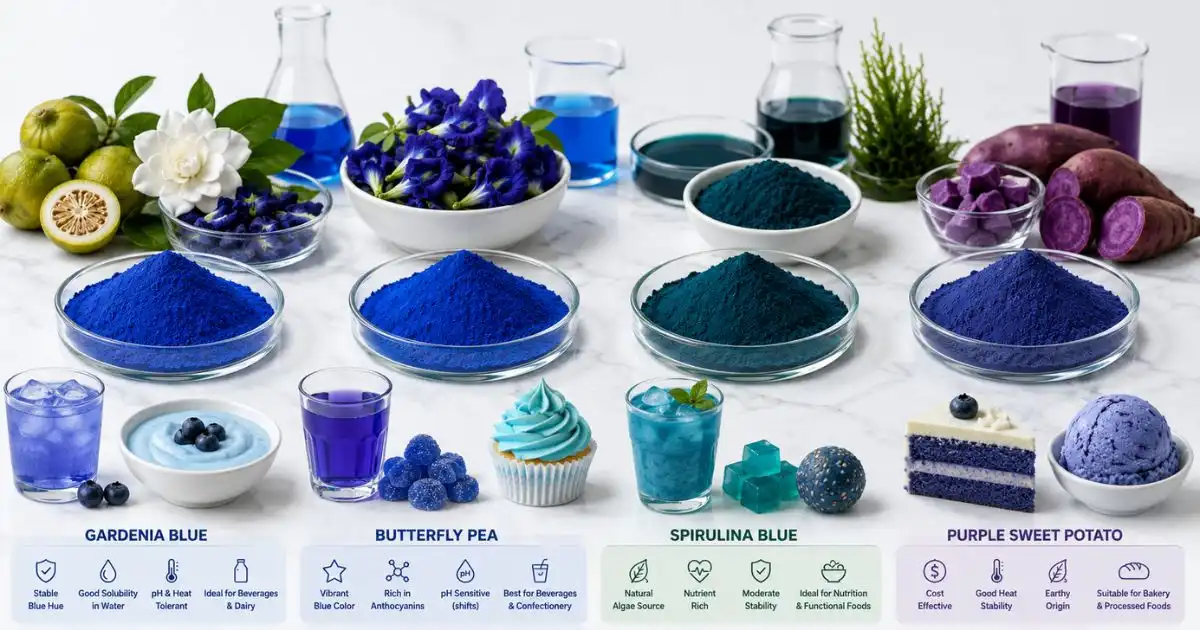
Phycocyanin, which is taken from spirulina algae, gives food its bright blue color and strong "superfood" marketing appeal. Important limitations make it less useful: the protein-based pigment breaks down quickly above 60°C, so it can't be used in products that have been heated. Color changes in acidic settings because of pH sensitivity, and light speeds up degradation. Because of these problems, spirulina blue is mostly used in neutral-pH, chilled foods that don't last long, like milkshakes and fresh sweets.
Gardenia-Derived Pigment: The Stable Clean-Label Solution
Gardenia Blue is one of a kind because it has the qualities of being naturally sourced while also performing close to manufactured standards. The color made by enzymes can survive high temperatures, keeps its pH level, and works well with food that contains minerals, proteins, and different kinds of water activities.
This comparison grid helps with evaluating sources:
| Colorant Source | Heat Stability | pH Range | Regulatory Status (US) | Cost Position | Best Applications |
|---|---|---|---|---|---|
| Gardenia Blue | Excellent (120°C+) | 4.0-8.0 | GRAS pending verification | Moderate-High | Baked goods, candies, beverages |
| Spirulina Blue | Poor (<60°C) | 7.0-8.0 | GRAS approved | Moderate | Refrigerated desserts, supplements |
| Butterfly Pea Extract | Moderate | 3.0-7.0 (pH reactive) | Generally recognized | Low-Moderate | Teas, color-changing beverages |
| Synthetic Blue Dyes | Excellent | 2.0-11.0 | FDA approved (declining use) | Low | Conventional processed foods |
Procurement Considerations: Sourcing Gardenia Blue for Production Scale
Setting up reliable supply chains for natural colorants requires strict rules for evaluating suppliers and making sure quality. Besides just unit price, procurement managers have to think about a number of important factors.
Supplier Qualification Criteria
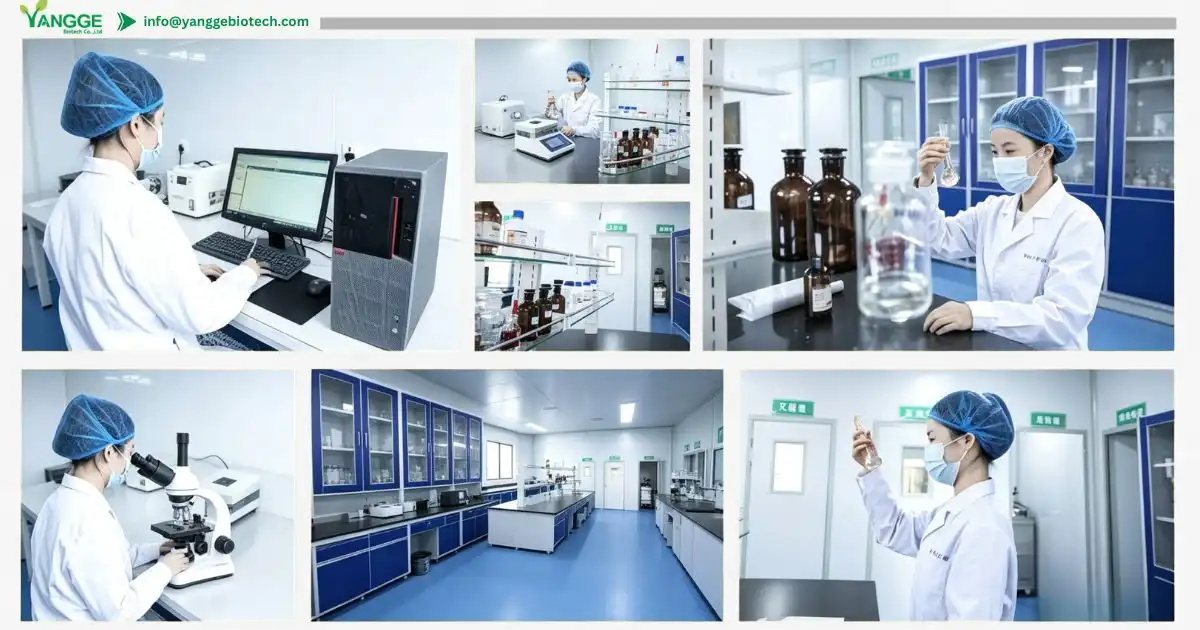
Reliable providers keep a full range of certifications that show they follow the rules and manage quality. Certification in ISO 22000 or FSSC 22000 means that the food safety system is strong, and certification in HACCP means that the danger analysis methods are followed. Kosher and Halal approvals help finished goods reach more customers. Legal access to the market in target countries is guarantyd by FDA GRAS status or compliance with relevant food additive regulations.
When using natural ingredients, batch consistency is very important. Suppliers you can trust use standard methods for extraction and fermentation, and they use HPLC analysis to check the rates of geniposide conversion and the final color values. The Certificate of Analysis should include information about the absorbance at 590nm range, the E-value classification, the amount of leftover geniposide, and microbiological factors such as the total plate count, yeast/mold screening, and pathogen screening.
Technical Support and Application Guidance
Unlike their manufactured counterparts, natural colorants often need to be changed in the way they are made. Preferred suppliers offer technical advice on how to get the best dosage, how the product will react with other ingredients, how to change the processing parameters, and how to test for stability. This app support is especially helpful for projects that involve re-forming products, as it speeds up the development process and lowers the cost of mistakes.
Different suppliers have very different minimum order quantities. Some allow trial orders of 1–5 kg for R&D evaluation, while others demand minimum commitments of 25–100 kg. When you buy more than 500 kg, 1,000 kg, or 5,000 kg, the unit cost usually goes down, which is an incentive to buy more. When talking to suppliers, it's important to be clear about international shipping processes, lead times (usually two to four weeks for normal grades), and payment terms (Letter of Credit, T/T, etc.).
Quality Control Checkpoints
Several important factors should be checked during the incoming material review. Color value testing makes sure that the specs are met—E100 grade should measure within ±5% of the stated value. Organoleptic testing finds unpleasant smells that mean fermentation isn't complete or that microbes are getting into the product; higher grades show up as powders with almost no smell. Before committing to a large-scale production run, solubility testing in relevant application matrices (such as water, ethanol solutions, and real product formulas) finds any possible incompatibilities.
Heavy metal analysis makes sure that the standards set by GB 28311-2012 or JECFA are met, paying special attention to the lead (<3.0 mg/kg) and arsenic (<2.0 mg/kg) limits. Microbiological standards say that the total number of CFU/g on the plates must be less than 1,000, and Salmonella and E. coli must not be present at all coli.
Practical Implementation: Formulation Guidelines and Stability Optimization
To successfully add Gardenia Blue pigment, you need to know the best ways to use it in a certain way so that the color works well and the product stays good quality and lasts a long time.
Dosage Optimization by Product Category
Depending on the target color intensity and E-value specification chosen, the normal usage rates are between 0.01% and 0.1%. For bright blue colors, beverages usually need 0.02% to 0.05%, while 0.03 to 0.08% can be used for sweets to get rich color. Because the pigment binds strongly to proteins, it can often be used in dairy products at lower doses (0.01-0.04%) to get the same results as with carbohydrate-based matrices.
Formulators should do small tests to see how the color changes over 24 to 48 hours, since the pigment may keep getting a little stronger during this time because proteins are still interacting. This trait lets for a little underdosing at first, with the color reaching its target intensity during normal processing hold times.
Stability Enhancement Strategies
Exposure to light is the main way that Gardenia Blue breaks down. Using opaque boxes or cases that block light can help colors last longer. Amber glass, metalized plates, or clear PET boxes are all good ways to keep things safe. Ascorbic acid and tocopherols, which are added to clear packing as antioxidants, help get rid of free radicals that are made by light.
The conditions of keeping affect how long something will last; storing it in the fridge or freezer keeps the color stable for a lot longer than storing it at room temperature. Products that need to stay fresh for a long time at room temperature should be put through rapid stability tests (40°C, 75% RH) to get accurate color retention dates and help with best-by dates.
Addressing Common Formulation Challenges
When Gardenia Blue is added to systems that are very acidic (pH <3.5), some producers see smoke or precipitation. This happens close to the isoelectric point of the color. One solution is to change the pH level to keep it above 4.0, or you can find acid-stable versions from suppliers who offer modified formulations. Chelating agents, like citric acid and EDTA, can sometimes make things clearer by removing trace minerals that help things stick together.
Flavor interactions can happen with lower-quality pigments that still have geniposide in them, which gives them bitter and herbal notes. This issue stresses how important it is to choose a supplier and ask for fully converted, purified grades. Sensory testing during seller approval keeps expensive re-mixing from happening after production is full-scaled up.
Conclusion
Gardenia fruit contains a natural blue pigment that can be used by makers who want to switch from manmade colorants to a more environmentally friendly option. The color stays stable at high temperatures, can handle different pH levels, and binds to proteins, making it ideal for use in drinks, sweets, and dairy products. Gardenia Blue offers a clean-label alternative that aligns with this functionality. Costs are higher than manufactured options, but consumers want ingredients that they can recognize, and regulations are moving in favor of natural colors, so reformulation projects are worth the money.
To make implementation work, you need to carefully choose your provider, make sure that the grade standards match the needs of the application, and make sure that the formulation is optimized to take into account the pigment's unique properties. When purchasing managers form partnerships with qualified suppliers that offer full technical support, their companies are better prepared to take advantage of clean-label market opportunities while keeping product quality and production efficiency high.
FAQ
How does color stability compare to synthetic blue dyes during thermal processing?
Natural pigments from gardenias keep their color even at temperatures up to 120°C for 60 minutes. This means they can be used in pickling, baking, and boiling sweets. It is better for synthetic dyes like Brilliant Blue FCF to be stable in extreme temperatures (>150°C), but Gardenia Blue works well for most standard food processing tasks. Light is the main thing that makes something less stable. Opaque packing or light-protective cases make color retention last a lot longer.
What regulatory approvals should procurement managers verify?
Regulatory situation is different in each area. In Asian areas like China, Japan, and Korea, Gardenia Blue is a legal food flavoring. U.S. and European approvals are still being looked at, so makers need to make sure they know what the current legal situation is for their target markets before they commit to a formulation. Suppliers should show proof of either GRAS self-determination or ongoing regulatory applications, as well as ISO, HACCP, Kosher, and Halal certificates that show they can control quality and get products into markets.
Can this pigment replace spirulina blue in existing formulations?
Gardenia Blue can be used instead of spirulina extract because it doesn't change when heated. This makes it useful for processes that need to be heated. When you directly substitute, you have to change the dosage. Because Gardenia Blue is stronger, you usually need to use it less often. There are some small differences in the flavors. Spirulina has mild seaweed notes, while purified Gardenia Blue is almost flavorless. Reformulation tests should show how well the colors match and how stable the product is in certain matrices.
Partner with Yangge for Reliable Natural Blue Pigment Supply
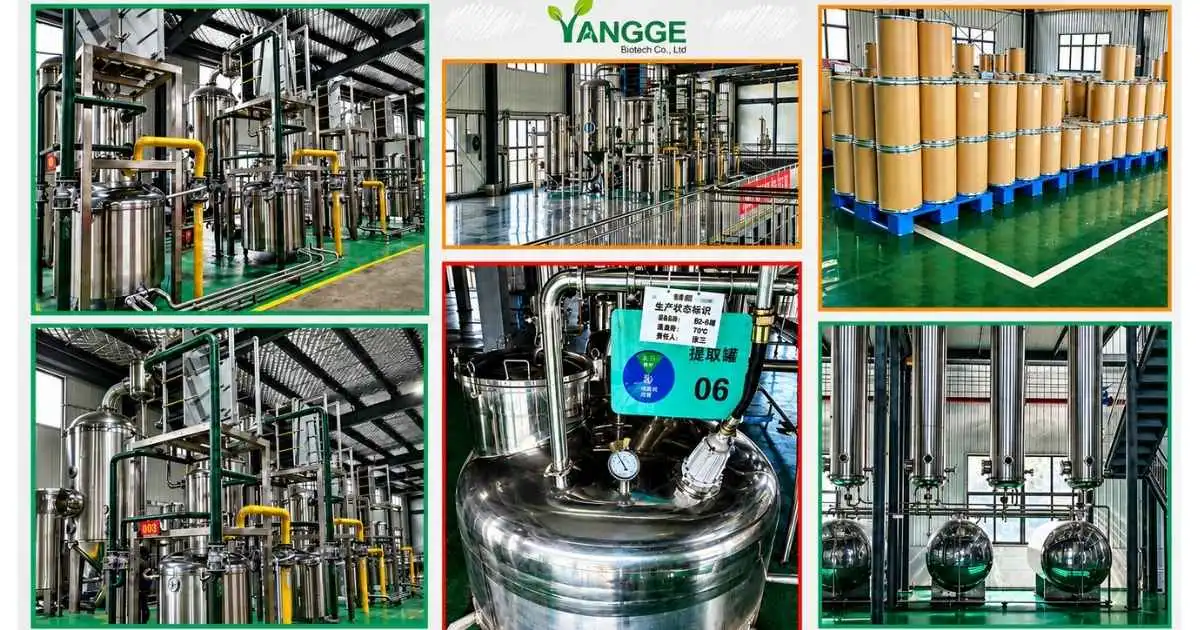
Yangge Biotech specializes in sending pharmaceutical-grade Gardenia Blue Pigment powder to food and drink companies all over the world. They can help you with your clean-label reformulation efforts by providing consistent quality and full technical support. Our production sites are GMP-certified, and they are also ISO/HACCP/Kosher/Halal-certified to make sure they follow all the rules in global markets. We have a range of specifications (E30–E200) that can be changed to fit your needs.
These are backed up by full analytical documentation and stability data. Our skilled technical team can help you with formulation and help you find the best dosage rates and processing conditions so that your new products start successfully. Whether you're changing the way existing products are made or coming up with new blue products, we can provide sample quantities for R&D testing and easily transition to production volumes.
Contact us or get in touch with us at info@yanggebiotech.com to talk about where you need to find natural colorants and to ask for detailed data sheets. As a reliable Gardenia Blue supplier, we're committed to helping you switch to natural ingredients by providing you with dependable supply chains and quick service.
References
1. Smith, J. & Chen, L. (2021). Natural Food Colorants: Chemistry, Applications, an d Regulatory Perspectives. Academic Press.
2. Rodriguez, M. et al. (2022). "Stability Comparison of Natural Blue Pigments in Beverage Systems." Journal of Food Science and Technology, 59(4), 1456-1468.
3. International Food Additives Council. (2023). Global Regulatory Status of Plant-Derived Colorants. IFAC Publishing.
4. Zhang, W. & Tanaka, Y. (2020). Gardenia jasminoides: Phytochemistry, Pharmacology, and Industrial Applications. Springer Nature.
5. European Food Safety Authority. (2022). Scientific Opinion on Natural Color Additives Derived from Plant Sources. EFSA Journal, 20(3), e07124.
6. Williams, R. & Patel, K. (2023). Clean Label Trends in Food Manufacturing: Consumer Preferences and Industry Response. Food Industry Research Institute.

Based on your location and order quantity, you will have the opportunity to receive a limited time free shipping promotion!
Who we are
Popular Blogs