How stable is beta carotene in food applications?
Beta carotene demonstrates moderate stability in food applications, though this varies significantly based on environmental conditions and formulation strategies. The compound's stability depends heavily on exposure to light, oxygen, temperature, and pH levels. When properly protected through encapsulation technologies and stored under optimal conditions, beta carotene maintains its functional properties and vibrant orange-yellow color for extended periods. Understanding these stability factors enables procurement professionals to select appropriate forms and specifications that align with their product requirements and processing methods.
Understanding Beta Carotene Stability in Food Applications
Beta Carotene is an essential component of dietary supplements, functional drinks, and enriched foods because it acts as both a natural colorant and a precursor to vitamin A. This carotenoid pigment is a strong antioxidant that protects cell structures from reactive damage. However, because of its chemical structure, it is easily broken down.
The Chemical Nature of Beta Carotene
The structure of Beta Carotene molecules is made up of eleven conjugated double bonds. These bonds are what give it its good qualities and make it easy to break down. The orange-yellow color that is valued in food uses is caused by these double bonds absorbing light in the visible spectrum. However, they are also easily broken down by oxygen, free radicals, and other reactive species that are present during storage and processing.
Why Stability Matters for Product Quality
Keeping Beta Carotene intact throughout a product's lifecycle has a direct effect on how healthy it is, how it looks, and how happy customers are with it. Degradation causes colors to fade, vitamin A levels to drop, and bad tastes to possibly develop. For companies that make high-end supplements or functional drinks, stable ingredients mean consistent batch performance and longer shelf life, both of which are important for market success and keeping customers.
Bioavailability and Processing Considerations
How Beta Carotene is delivered affects both how well it works and how quickly it is absorbed. While synthetic Beta Carotene is typically made up of almost exclusively trans isomers, natural Beta Carotene from sources like Dunaliella salina algae has a mixture of cis and trans isomers. Natural forms with mixed isomers may be more bioavailable, according to research. However, manufactured forms often show better stability during high-temperature processing. People who make procurement choices have to weigh these trade-offs against the needs of the program.
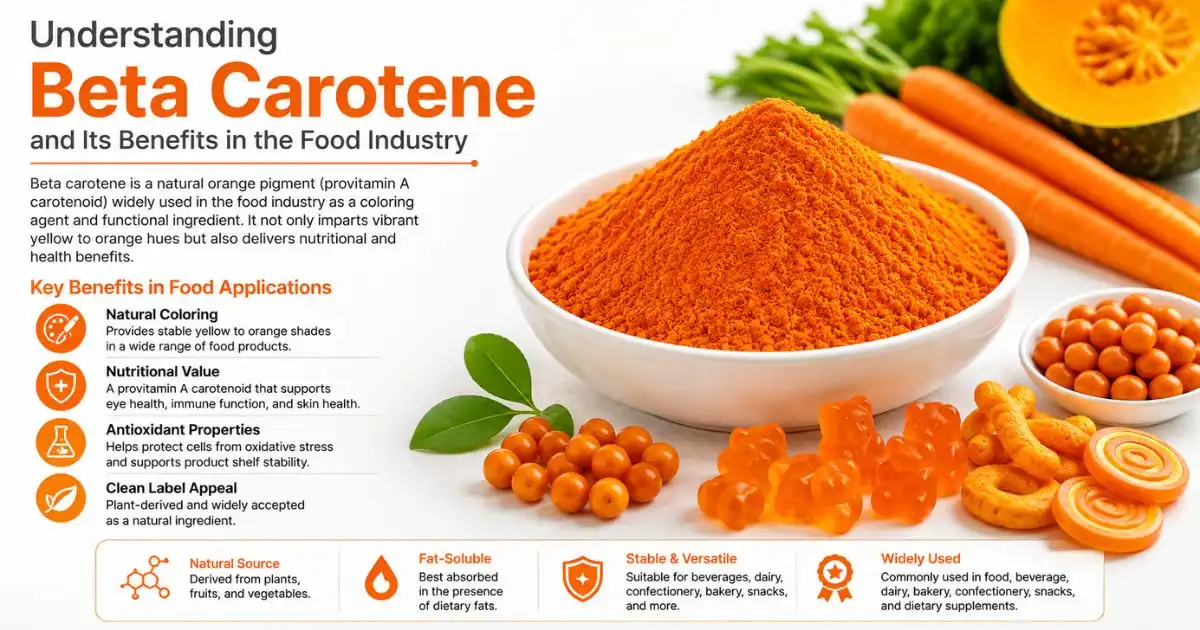
Factors Influencing Beta Carotene Stability in Food Products
Beta Carotene's ability to keep its useful qualities through processing and keeping is affected by a number of external and formulation factors.
Temperature and Thermal Processing
Beta Carotene breaks down faster when it is exposed to heat through isomerization and oxidation pathways. Processes like pasteurization, sterilization, and drying can lower the amount of Beta Carotene by 15 to 40 percent, depending on the time and temperature profiles. Studies have shown that processing at temperatures above 80°C for long periods of time greatly lowers retention rates. Choosing formulations that don't change much when heated and limiting thermal exposure during production can help keep the potency.
Light and Oxygen Exposure
When Beta Carotene comes into contact with UV or visible light, especially when oxygen is present, it breaks down quickly. The rate of this oxidative breakdown increases as the temperature rises, following a first-order kinetic pattern. New types of packaging that use light shields and air scavengers make things much more stable. By blocking these breakdown routes, amber glass cases, metalized films, and nitrogen flushing during packing make products last longer on store shelves.
pH and Food Matrix Interactions
Within pH values of 5.0-7.0, Beta Carotene demonstrates maximum stability. Acidic environments, like those found in citrus drinks and fermented foods, can cause changes in structure and color loss. Through interactions with lipids, proteins, and other ingredients, the food matrix itself affects how stable it is. Although emulsification technology has reduced this difference, Beta Carotene dispersed in oil-based systems typically exhibits greater stability than aqueous dispersions.
| Degradation Factor | Impact Level | Mitigation Strategy |
|---|---|---|
| High temperature (>80°C) | Severe | Minimize heat exposure; use encapsulated forms |
| UV/visible light | High | Amber packaging; light-blocking materials |
| Oxygen presence | High | Nitrogen flushing; oxygen barriers |
| Acidic pH (<4.5) | Moderate | Buffer systems; pH optimization |
| Metal ions | Moderate | Chelating agents; pure ingredient sources |
Natural vs Synthetic Source Stability
Natural Beta Carotene that comes from algae or plants has a mix of isomers and co-extracted compounds that may make it more stable by working together to fight free radicals. Synthetic Beta Carotene is more consistent and has higher purity levels, which makes dosing more accurately and following the rules easier. There are still big price differences between these sources, with natural options charging more because they are harder to make and are marketed as "clean label" ingredients.
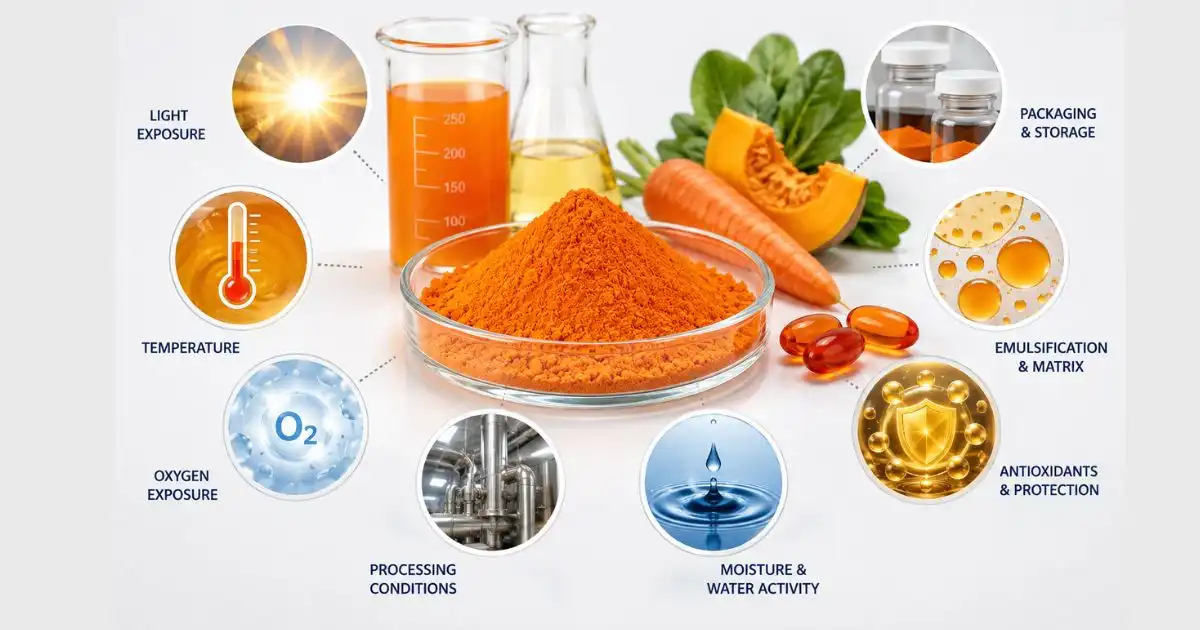
Strategies to Enhance Beta Carotene Stability in Food Applications
Beta Carotene needs to be protected from degradation through strategic formulation approaches that deal with multiple stress factors at the same time.
Encapsulation Technologies
Formulators have access to one of the most effective ways to make a substance more stable: microencapsulation. Beta Carotene molecules are protected by frameworks made from things like modified starches, maltodextrins, or gelatin during this process. The encapsulation layer protects the active ingredient from light, air, and water, and it also makes it easier for the ingredient to spread in water-based systems. This is taken a step further by nanoemulsion technology, which makes very small drops that are more bioavailable and stable.
Antioxidant Synergy Systems
When you mix Beta Carotene with antioxidants that work well together, you get protective networks that slow down oxidative degradation. The tocopherols in vitamin E, ascorbic acid, and polyphenol-rich plant products all work together to stop free radicals from damaging Beta Carotene molecules. Formulation studies show that multi-antioxidant systems can double or triple stability compared to single-ingredient approaches. However, they need to be carefully balanced to avoid interactions that aren't wanted.
Processing Parameter Optimization
Manufacturing methods have a big effect on how stable the end product is. Beta Carotene content can be kept high by limiting processing temperatures, limiting exposure time to heat and light, and managing the environment during production. Higher retention rates are achieved through spray drying in a nitrogen atmosphere, cold-pressed extraction methods, and stabilization right after extraction. Quality assurance programs and regulatory reports can be helped by writing down these factors.
| Specification Level | Beta Carotene Content | Primary Applications | Stability Rating |
|---|---|---|---|
| 1% | 1% | Beverage fortification | Good in protected systems |
| 3% | 3% | Standard supplements | Moderate to good |
| 10% | 10% | High-potency tablets | Requires encapsulation |
| 20% | 20% | Professional-grade formulations | Needs advanced protection |
Innovative Packaging Solutions
Modern packing technologies make food last longer by protecting against things in the world that can damage it. Multilayer films with aluminum or metalized layers stop light from getting through and keep oxygen out. Active packing methods that release antioxidants or soak up water offer extra protection. Choosing packaging that fits the shape of the product and the conditions of marketing makes the whole supply chain more stable.
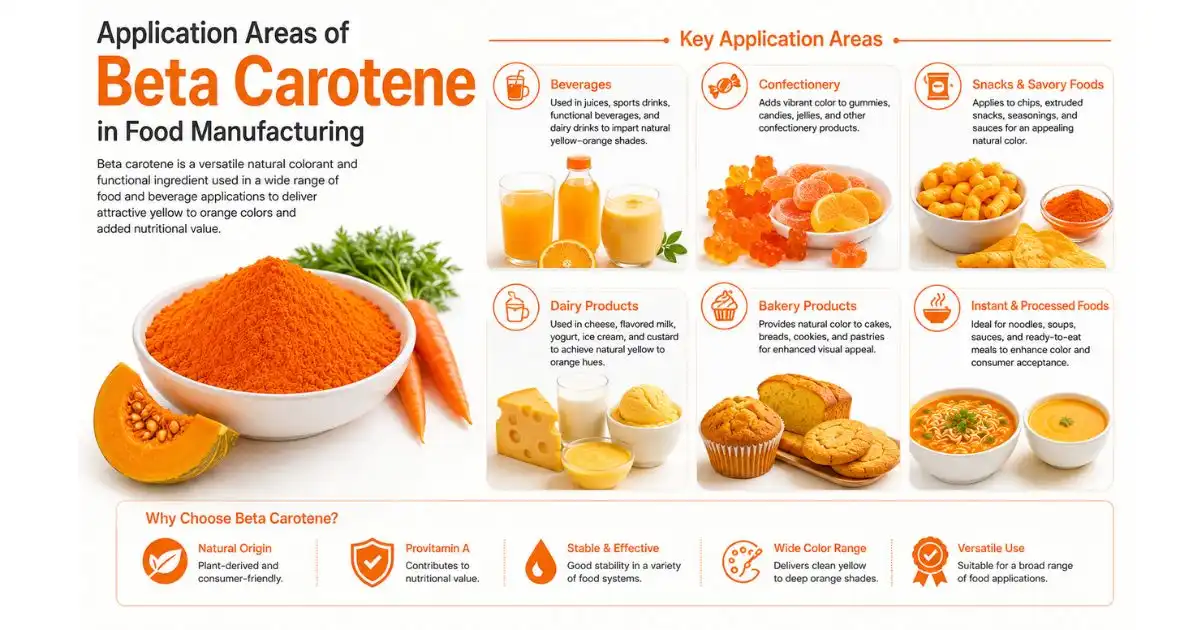
Comparative Insights: Beta Carotene vs Other Nutritional Additives in Food Stability
Knowing how Beta Carotene works compared to other ingredients helps with decisions about where to get it and how to make it.
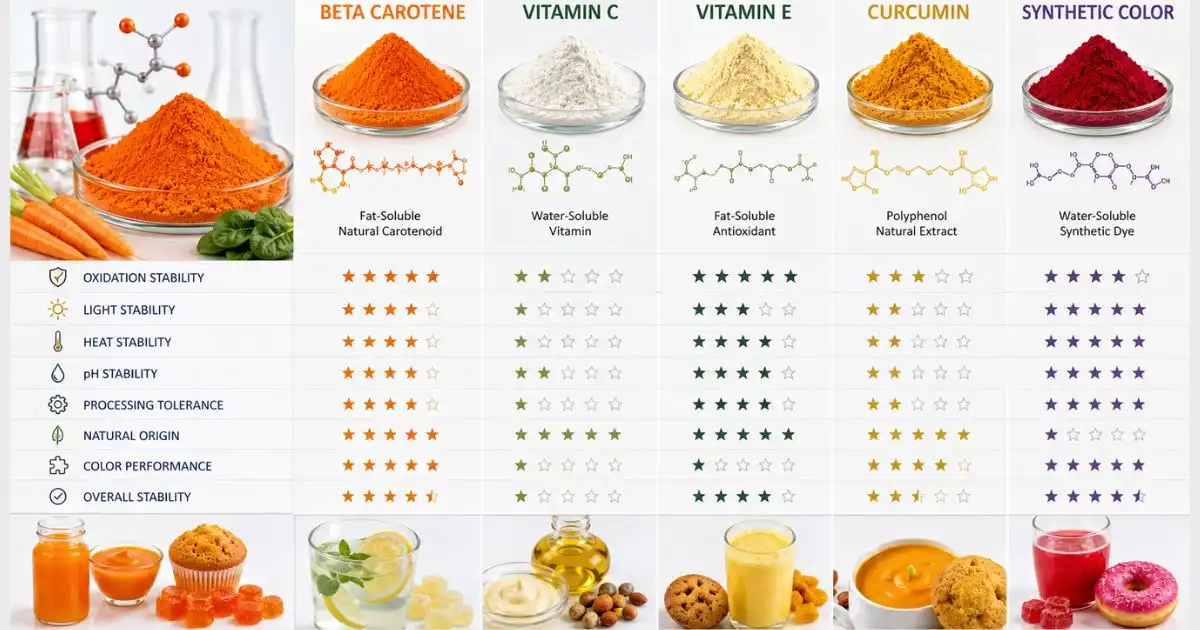
Beta Carotene vs Retinol (Vitamin A)
Beta Carotene needs to be changed into active vitamin A by enzymes in the body, but pure retinol can be used right away. But retinol can be harmful in large amounts and doesn't stay stable in most food materials as well. Beta Carotene is better for goods that want to sell in a wide range of foreign markets because it is less affected by strict regulations than vitamin A. Because Beta Carotene is a provitamin, there are no concerns about hypervitaminosis when formulating it.
Comparing Carotenoid Options
Lycopene and lutein are both antioxidants, but they have different effects on health and look different. Lycopene gives foods red colors that go well with tomato-based foods, and lutein gives foods yellow colors and special eye health benefits. Lycopene and Beta Carotene have different levels of stability, but on average, lycopene has the same or slightly better oxidation protection. Choosing a carotenoid depends on how much it costs and what health claims it wants to make.
Powder Forms vs Capsule Delivery
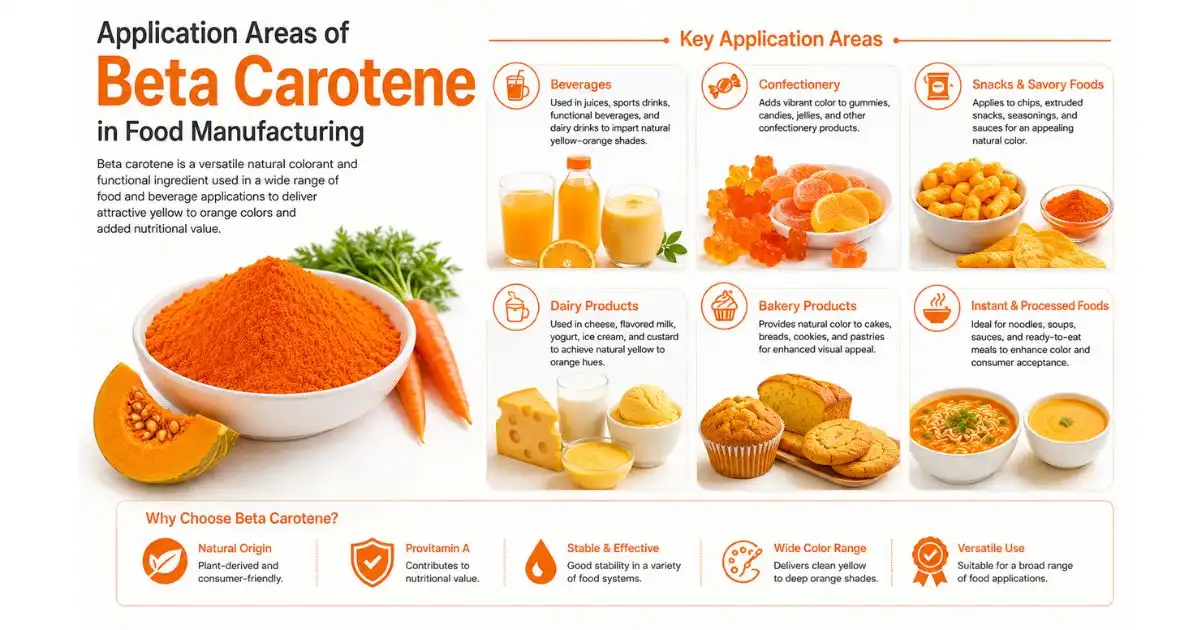
Beta Carotene powder can be added to a wide variety of foods, including drink mixes, baked goods, and nutrition bars, but it needs to be carefully mixed to stay stable. Capsules and pills are great for supplement uses because they allow for controlled dosing and little risk of breakdown during storage. Gummy formats have gained market share, but they are hard to make because they contain a lot of water and need to be processed at high temperatures, which means they need special ways to stay stable.
Procurement Considerations for Beta Carotene in Food Applications
A reliable, high-quality Beta Carotene supply needs careful consideration of a number of purchasing factors that have an effect on how well the product works and how well it meets regulatory requirements.
Quality Standards and Certifications
Beta Carotene powder specs should make it clear what levels of purity are being used, and these levels should be tested using HPLC analysis rather than less accurate UV spectrophotometry. Suppliers you can trust give you certificates of analysis that list the active ingredients, how they are distributed, any solvents that are left over, and the number of microbes that were found. Getting FDA approval, Kosher licensing, and Halal paperwork makes it easier to get into markets in many places and for many types of customers. Products that meet USP grade standards are of pharmaceutical-level quality and can be used to make dietary supplements.
Supply Chain Reliability
By building relationships with suppliers and keeping an eye on inventory levels, you can keep production from stopping. Yangge Biotech keeps a one-ton stock of Beta Carotene powder in a range of concentrations (1%, 3%, 10%, and 20%) so that it can be used for both small-scale tests and large-scale commercial runs. The options for FOB and CIF delivery give logistics managers more freedom, and quality control is ensured by international lab tests that are done on every shipment.
Price vs Performance Evaluation
Depending on the source, purity, and amount of approval, Beta Carotene prices vary greatly. Natural options made from algae cost 30–50% more than synthetic ones, but market research shows that this is a good investment for high-end product lines because more and more people want natural ingredients. Price breaks are often secured by making large orders, and free sample programs, like the 10–30g trial sizes offered by reputable sellers, let formulating happen without putting a lot of money at risk.
Regulatory Navigation Support
Different places around the world have different rules about how much Beta Carotene can be used, how it must be labeled, and what sources are allowed. There are different rules about nutritional supplements and food ingredients in the European Union, the United States, and Asia. Offering regulatory guidance and documentation packages by suppliers makes entering the market easier and lowers the risk of not following the rules. Understanding vitamin A equivalency calculations and the highest levels of fortification can help you avoid making mistakes in the formulation process that could lead to regulatory problems.
By understanding these aspects of procurement, development teams can find a balance between quality requirements and cost constraints while keeping the supply chain safe. Beyond just pricing ingredients, suppliers who show open communication, technology know-how, and flexible service models offer the most value.
Conclusion
Beta Carotene stability in food applications depends on carefully managing environmental stressors and putting protective measures in place. Stability retention is based on keeping the right temperature, blocking light, keeping air out, and making sure the pH is just right. Modern methods, such as microencapsulation and antioxidant synergy systems, make retention rates much higher during processing and storing.
When choosing Beta Carotene ingredients, procurement professionals have to look at a lot of things, such as the type of source, certification standards, supplier reliability, and regulatory compliance. When deciding between natural and synthetic sources, there are trade-offs between quality of stability, cost, and position in the market. To make a good formula, you need to understand how these complicated relationships work and work with suppliers who are knowledgeable and offer technical help along with good ingredients.
FAQ
Does heat processing destroy beta carotene in foods?
Beta Carotene content goes down during thermal processing because of isomerization and oxidation reactions. If retention is exposed to temperatures above 80°C for a long time, it can drop by 15–40%, based on how long it is exposed and how much air is available. When done correctly, pasteurization doesn't lose much, but high-temperature sterilization is harder to control. Using enclosed forms and limiting the time that they are exposed to heat helps keep their effectiveness while they are being made.
What distinguishes natural from synthetic beta carotene?
In contrast to manufactured forms, which are almost completely made up of trans isomers, natural Beta Carotene extracted from sources like Dunaliella salina has about 10% cis isomers along with the predominant all-trans form. Compounds that are co-extracted from natural variants may make them more stable through antioxidant synergy. There are synthetic choices that are more pure, more consistent, and usually more resistant to oxidation, but they cost more. Source selection is also affected by things like regulatory acceptance and market positioning.
Can beta carotene supplements be directly used in food fortification?
Beta Carotene that is made for supplements can be added to foods to make them healthier as long as it meets the quality standards for food and any other rules that apply to the market. Formulation suitability is the most important thing to think about. Supplement forms that are designed to be taken in capsules might not work well in drinks or under food processing conditions. Working with suppliers who offer food-grade specifications makes sure that the particles are the right size, can be mixed well, and will stay stable. Labeling rules and regional limits on fortification must still be followed in order to get into the market.
Partner with Yangge for Premium Beta Carotene Solutions
Yangge Biotech has a wide range of Beta Carotene powder products made just for the functional food and dietary supplement businesses. Our Beta Carotene powder is KOSHER/USP grade and comes in different amounts: 1%, 3%, 10%, and 20%. It was extracted using HPLC methods to make sure it was the right strength. We keep a one-ton collection on hand so that orders can be filled right away, and we offer free samples ranging from 10 to 30 grams to help you develop new recipes.
Before they are shipped, our FDA-approved, Halal-certified, and Kosher-certified products are tested in international labs to make sure they are always of high quality. Our technical team is here to help you every step of the way, whether you need bulk Beta Carotene powder for tablets, capsules, gummies, or to add to drinks to make them healthier. Email us at info@yanggebiotech.com to get samples, talk about specs, or look into OEM customization options that fit your product vision. For more technical information and help with formulation, visit our resource center at blog.yanggebiotech.com.
References
1. Rodriguez-Amaya DB, Kimura M. "HarvestPlus Handbook for Carotenoid Analysis." International Food Policy Research Institute, 2004.
2. Parada J, Aguilera JM. "Food Microstructure Affects the Bioavailability of Several Nutrients." Journal of Food Science, 2007, 72(2):R21-R32.
3. Boon CS, McClements DJ, Weiss J, Decker EA. "Factors Influencing the Chemical Stability of Carotenoids in Foods." Critical Reviews in Food Science and Nutrition, 2010, 50(6):515-532.
4. Delgado-Vargas F, Jiménez AR, Paredes-López O. "Natural Pigments: Carotenoids, Anthocyanins, and Betalains—Characteristics, Biosynthesis, Processing, and Stability." Critical Reviews in Food Science and Nutrition, 2000, 40(3):173-289.
5. Britton G, Liaaen-Jensen S, Pfander H. "Carotenoids Handbook." Birkhäuser Basel, 2004.
6. Mariutti LRB, Mercadante AZ. "Carotenoid Esters Analysis and Occurrence: What Do We Know So Far?" Archives of Biochemistry and Biophysics, 2018, 648:36-43.

Based on your location and order quantity, you will have the opportunity to receive a limited time free shipping promotion!
Who we are
Popular Blogs