Is astaxanthin allowed in Europe?
Yes, astaxanthin is legal in Europe as long as you follow the rules set by the European Food Safety Authority (EFSA). Since 2014, natural astaxanthin powder from Haematococcus pluvialis has been recognized as a new food ingredient and food supplement, with rules about how much to eat each day and how it should be labeled. But buying managers need to make sure that the sources they use are in line with strict EU rules about purity levels, allowed uses, and compliance paperwork. Businesses that sell or make goods with this powerful carotenoid antioxidant need to know about these differences.
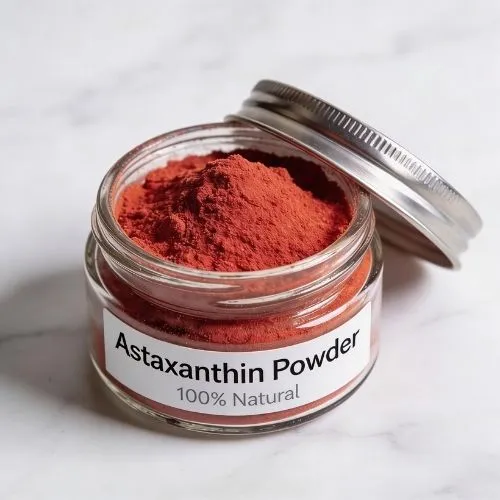
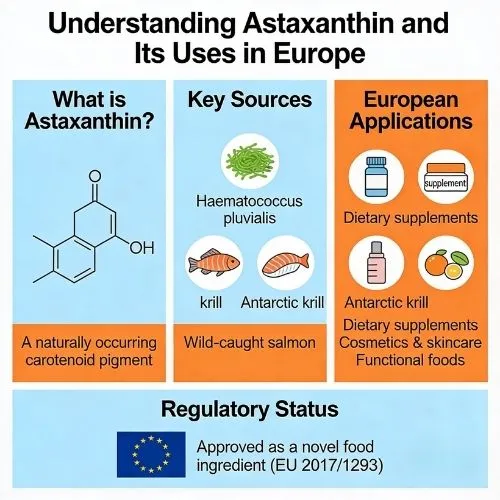
Understanding Astaxanthin and Its Uses in Europe
Astaxanthin is one of nature's most potent antioxidants; it is said to protect against oxidative damage up to 6,000 times better than vitamin C. Multiple European businesses are very interested in this keto-carotenoid pigment, which gives things a unique dark red color. This is because it has been scientifically proven to be good for you and can be used in a lot of different ways.
What Makes Astaxanthin Valuable for B2B Procurement?
The molecular structure of the substance lets it cross over cellular membranes, protecting cells in both water-repellent and water-attracting settings. Because of this one-of-a-kind quality, it is very appealing to companies that are making new formulas. Europeans are becoming more interested in natural, science-backed ingredients, which is driving strong market demand for goods that contain this vitamin.
The natural version that is most popular in European markets is Yangge's astaxanthin powder, which comes from Haematococcus pluvialis microalgae. Our product that meets the 10% criteria looks like a dark red powder. It was extracted using HPLC methods that keep the bioactive purity while meeting the high quality standards needed by European regulatory systems. Traceability is important for buyers who are trying to figure out organic and natural product certifications. The whole herb plant source makes this possible.
Primary Application Sectors in Europe
European demand for this antioxidant is highest in the nutraceutical industry. It is used in food products for eye health, skin protection, heart health, and sports nutrition. Clinical studies show that it works to lower oxidative stress signs and support mitochondrial function, which is something that Europeans who care about their health will agree with.
Astaxanthin is used by cosmetic and personal care companies because it protects against UV rays and slows down the aging process. Formulation scientists like the powder form because it stays stable in dry systems and works with a range of delivery methods, such as encapsulated serums and pressed powder makeup.
Animal nutrition represents another significant application, particularly in aquaculture feed where the pigment enhances coloration in salmon and trout while supporting immune function. European aquaculture operations face stringent welfare and quality standards, making high-purity natural sources preferable to synthetic alternatives.
Format Considerations for Different Applications
Choosing the right product shape has a direct effect on how well the recipe works and how much it costs. Powder forms are the most flexible way for makers to control doses precisely and work with tablet compression, capsule filling, or dry liquid mixes. Our powder stays stable when stored properly in tightly sealed cases that are kept out of the light and still has the ability to move freely, which is important for automated production lines.
Oil-based oleoresins work well in soft-gel pills and liquid vitamins, but they can be unstable and hard to standardize when it comes to oxidation. Capsule forms are convenient for retail goods, but they make it harder for OEM partners to make formulas that are uniquely theirs.
European Regulations on Astaxanthin Powder
To get around in the European regulatory world, you need to know a lot about EFSA standards and new food laws. Astaxanthin powder regulation is very different in some places, like the United States. This means that checking for compliance is a must when buying.
Legal Status Under EU Novel Food Framework
In 2014, EFSA accepted natural astaxanthin from Haematococcus pluvialis as a new food ingredient under Commission Implementing Decision 2014/423/EU. This allowed it to be used in food supplements up to certain amounts, which meant that all EU member states could legally sell it on the market. The permission only covers natural sources of extraction, which is different from manufactured production methods.
The daily maximum recommended amount for adults is 8 mg, but different limits apply to different groups of people. Products sold in Europe have to clearly list the suggested doses and include the right warnings for certain types of customers. These standards have a direct effect on how brands decide what ingredients to use and how to label their goods for the European market.
Compliance Requirements for B2B Buyers
Teams in charge of buying things must make sure that sellers give them all the paperwork they need to show they are following EU rules. Some important certificates are GMP manufacturing credentials, ISO quality management systems, and references for certain new food authorizations. Yangge has ISO22000, HACCP, Kosher, and Halal certifications, which lets them serve a wide range of European markets and make sure their production methods meet European standards.
Certificates of Analysis (CoA) that list purity levels, heavy metal screens, bacterial testing, and pesticide residue analysis should be part of batch-specific paperwork. Through our partnerships with well-known third-party labs like Eurofins and SGS, we can do independent checks on all of our products before they are shipped. This gives buying managers a reliable way to prove the quality of their purchases.
Labeling compliance is more than just translating languages. EU rules say that certain kinds of information must be shown, like the name of the plant source, how the product was extracted, a list of allergens, and directions on how to store it. Our non-GMO, non-irradiated, and allergen-free standards meet the needs of the European market, making it easier for producers further down the line to follow the rules.
Import and Distribution Considerations
According to the Combined Nomenclature code system, European customs officials need the right classification. Astaxanthin usually fits into certain pigment groups. Correct paperwork stops clearing delays and makes sure that the right amount of duty is assessed. Working with providers who know how to send to Europe cuts down on technical problems and speeds up the time it takes to get into new markets.
Traceability is one of the most important ideas in European food safety. Buyers need to make sure that providers can show full proof of the chain of custody, from growing the raw materials to packing them up at the end. Yangge's farm-to-table tracking system, which was created by working closely with farming communities, meets all of the standards for an audit.
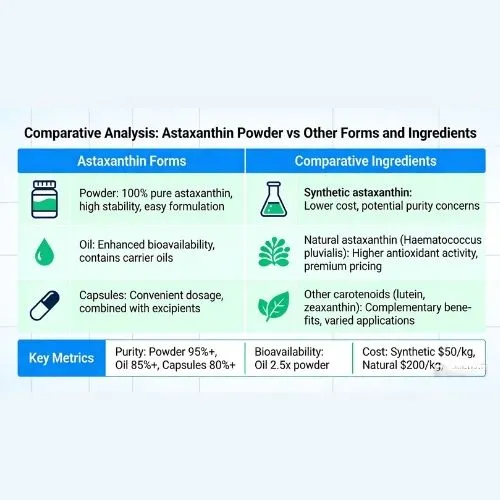
Comparative Analysis: Astaxanthin Powder vs Other Forms and Ingredients
To make smart choices about where to get products, you need to know how different types of products and vitamins stack up in terms of technology, cost, and rules. This research helps procurement managers get the best results from formulations while keeping costs low.
Powder vs. Capsules and Oils
Powder forms have clear benefits for making things on an industrial scale. The bulk density and handling properties of good astaxanthin powder make it possible for accurate automated dispensing, which is important for keeping batch stability in settings with a lot of production. Our aluminum foil bag packaging in 1 kg pieces protects materials while also being easy for formulation labs and production facilities to handle.
Capsules make it easy to sell products, but they limit the creativity of the formulators. Pre-encapsulated goods force makers to stick to set dosing plans and stop ingredients that work well together from blending together. When OEM partners make their own formulas, they can use powder's customizable features to give their products a unique place in competitive markets.
Even though oil-based products naturally work well with lipophilic delivery methods, they have trouble staying stable over time. When applied to powder forms, advanced microencapsulation technologies can actually improve absorption while making the product more stable on the shelf. Powdered oleoresins are less reactive than concentrated oleoresins, which is especially helpful for uses that need to be sensitive to temperature.
Comparison with Alternative Antioxidants
Beta-carotene is well known and usually cheaper, which makes it a good choice for recipes that want to save money. However, controlled tests show that its antioxidant activity is much lower than that of astaxanthin. Astaxanthin's better performance profile and rising customer knowledge are good for brands that put their products in high-end categories.
There is a lot of scientific evidence that lutein and zeaxanthin are good for eye health. These carotenoids are often mixed with astaxanthin in strategic mixtures to use their combined ways of working. Formulators can make evidence-based products that meet multiple buyer wants with just one formulation if they understand the different benefits.
Astaxanthin and omega-3 fatty acids are both found in krill oil, which makes it appealing to people who want to get all the nutrients they need. Pure astaxanthin powder lets you use higher concentrations for specific purposes without having to worry about allergens that come from ingredients derived from crustaceans. Our allergen-free standard is designed to meet the needs of this specific market group.
Natural vs. Synthetic Source Considerations
European consumers strongly prefer natural ingredient sources, which is mirrored in the higher prices and better promotion of naturally derived goods. Even though synthetic astaxanthin is scientifically the same, it is not allowed to be used in some situations and is hard for consumers in quality-conscious areas to accept.
The clean label story from natural extraction from Haematococcus pluvialis fits with European standards for sustainability. Our cultivation agreements stress social and environmental duty, which fits with brands that put supply chain ethics first. More and more, these factors affect purchasing choices in ways other than just cost.
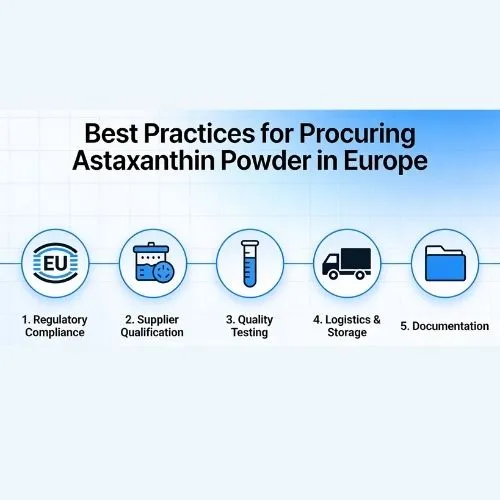
Best Practices for Procuring Astaxanthin Powder in Europe
Setting up reliable buying relationships for specialty ingredients requires a methodical review of suppliers and a strategic approach to negotiations. The tips below help buying teams get good astaxanthin powder while keeping risks in check.
Supplier Evaluation Criteria
The first steps in figuring out a company's manufacturing capability are to certify its facilities and check its quality system. GMP compliance is the minimum standard, and ISO certifications show a dedication to structured quality management. Yangge's modern 1,500m² building lets customers look inside the production process and see how quality is controlled.
The ability to provide technical help sets special sellers apart from commodity vendors. R&D teams should give knowledge on extraction methods, help with dosage specifications, and help with formulations that are specific to an application. Our expert staff works with clients to create custom specifications that meet specific product needs that can't be met by products in our standard list.
Testing equipment shows how reliable quality assurance is. Better batch testing is available from suppliers who have their own analytical skills and also work with third-party labs. Customers can ask for samples before they are shipped so that they can be tested by someone else to make sure the specs meet their needs before committing to large orders. When building partnerships with new suppliers, this technique is especially helpful.
Negotiating Bulk Orders
Minimum order amounts keep the costs of keeping goods in check with the benefits of selling items individually. Our 1 kg MOQ covers the needs of formulating, and our 50–100 kg normal stocking levels make it easy to fill large orders quickly. Knowing lead times—which are usually one to three days after payment is confirmed—helps with accurate planning of production and just-in-time stocking tactics.
In price talks, the total cost of ownership should be taken into account in addition to unit pricing. Customization of the packaging, good instructions, expert help, and the ability to choose different payment terms all add a lot of value. Yangge provides OEM packing services that let private label brands get materials that are ready to go to market. These materials speed up production and lower the cost of handling.
Most of the time, long-term partnerships are more valuable than one-time purchases. Volume agreements may allow you to get better prices and make sure that you always have supplies even when the market changes. Working together with suppliers also makes it easier to come up with new products, since makers can get early access to better specs or new extraction technologies.
Logistics and Storage Management
Throughout the distribution chain, the purity of the ingredients is protected by proper packing. Aluminum foil bags keep out light and moisture, which are both important for keeping carotenoids stable. Different European markets have different rules about how to handle packages or how to name them legally. Custom packaging choices can meet these needs.
The way something is stored has a direct effect on its shelf life and biological power. Temperature-controlled warehouses and light-protected storage keep products in the right condition until they are used in manufacturing. Logistics partners and receiving facilities should be given clear storage instructions, like our suggestion to keep the original packages tightly closed and out of the light.
The paperwork for international shipping has to meet the needs of both exporting and importing. Suppliers with a lot of experience handle customs paperwork quickly and correctly, giving certificates of origin, phytosanitary certificates when needed, and correct product statements. This knowledge speeds up the clearance process and lowers the chance that a package will be late, which would throw off production plans.
Conclusion
Astaxanthin-based goods have a lot of potential in the European market, where regulations are clear and people are becoming more aware of the health benefits of this powerful antioxidant. To be successful at procurement, you need to know the EFSA rules, choose sources with strong quality systems, and use smart sourcing methods that protect product integrity and compliance. Natural astaxanthin powder from confirmed sources like Haematococcus pluvialis can be used in a variety of ways, is more stable, and fits with the natural ingredients that European consumers want. B2B buyers can easily handle this specialized ingredient category while building competitive advantages in the nutraceutical, cosmetic, and functional food markets by putting seller openness, thorough testing methods, and regulatory knowledge at the top of their list of priorities.
FAQ
Q1: Is astaxanthin legal in European food supplements?
A: In 2014, the EFSA approved natural astaxanthin powder that comes from Haematococcus pluvialis as a new food. This means that it can be used in food additives in all EU countries. Adults should not take more than 8 mg of it per day, and goods must have the right labeling and compliance paperwork. Synthetic astaxanthin has to follow stricter rules, so natural sources are better for use in the European market.
Q2: What dosage levels comply with European regulations?
A: The EFSA decided that people should not take more than 8 mg of pure astaxanthin per day in supplement form. Product formulations should follow these rules, and clear instructions for use should keep people from using too much. Different groups of people may need different advice, which means that formulas and labels need to be changed for market segments like sports nutrition or senior health goods.
Q3: How can I verify supplier compliance with EU standards?
A: Ask for a lot of paperwork, like GMP certification, ISO quality management credentials, batch-specific Certificates of Analysis, and references for new food permission. Independent confirmation comes from tests by third parties at approved European labs like Eurofins or SGS. Suppliers who are open about traceability and ready to allow pre-shipment checks show that they are committed to meeting standards.
Q4: What quality specifications should procurement managers require?
A: Minimum requirements should include purity levels (usually ≥10% for business use), heavy metal screening results, bacterial tests, pesticide residue analysis, and proof that the product is not genetically modified. Documentation of the extraction method, allergen labels, and stability testing results are some other things to think about. These parameters make sure that goods meet both the performance standards of the formulation and the requirements of the law.
Partner with Yangge for Compliant Astaxanthin Powder Supply
Yangge Biotech is an expert at providing high-quality natural astaxanthin powder that meets strict European legal standards and helps you reach your goals for recipe innovation. Our Haematococcus pluvialis-derived product is 10% pure as required, has been checked to be non-GMO, and comes with a lot of quality paperwork that meets the strictest compliance standards. We serve a wide range of customers in the European vitamin and cosmetics industries. Our qualifications include ISO22000, HACCP, Kosher, and Halal.
Our expert team offers a wide range of services to help with the buying process, from helping with specifications to creating unique packaging solutions. Through our partnerships with Eurofins and SGS labs, we set up independent tests before shipping. This gives purchasing managers peace of mind about the quality of the product before they commit to buying in bulk. Our flexible buying system works for projects at all stages, whether you need small amounts to test a new recipe or large amounts for mass production. Get in touch with us at info@yanggebiotech.com to talk about your needs and find out why top European companies choose Yangge as their astaxanthin powder provider.
References
1. European Food Safety Authority (EFSA). (2014). Scientific Opinion on the safety of astaxanthin-rich ingredients (AstaREAL A1010 and AstaREAL L10) as novel food ingredients. EFSA Journal, 12(7), 3757.
2. Commission Implementing Decision 2014/423/EU of 27 June 2014 authorising the placing on the market of astaxanthin-rich ingredients as a novel food ingredient under Regulation (EC) No 258/97 of the European Parliament and of the Council.
3. Ambati, R.R., Phang, S.M., Ravi, S., & Aswathanarayana, R.G. (2014). Astaxanthin: sources, extraction, stability, biological activities and its commercial applications—a review. Marine Drugs, 12(1), 128-152.
4. Regulation (EU) 2015/2283 of the European Parliament and of the Council on novel foods, amending Regulation (EU) No 1169/2011 and repealing Regulation (EC) No 258/97 and Commission Regulation (EC) No 1852/2001.
5. Guerin, M., Huntley, M.E., & Olaizola, M. (2003). Haematococcus astaxanthin: applications for human health and nutrition. Trends in Biotechnology, 21(5), 210-216.
6. European Commission Health and Food Safety Directorate-General. (2017). Guidance on the implementation of Regulation (EU) 2015/2283 on novel foods. Brussels: European Commission.

Based on your location and order quantity, you will have the opportunity to receive a limited time free shipping promotion!
Who we are
Popular Blogs