How does lutein prevent oxidative damage in eyes and brain?
Oxidative damage happens in the eyes and brain when dangerous free radicals beat the body's defenses, hurting cells and speeding up the aging process. Lutein is an antioxidant carotenoid that is mostly found in marigold flowers. It stops this damage by directly absorbing peroxide free radicals and keeping cell walls stable in these weak tissues. Its special chemical structure lets it get through fatty brain cell membranes and build up in the macula, where it absorbs blue light and fights oxidative stress from both inside and outside cells, protecting cells in a way that not many other antioxidants can.
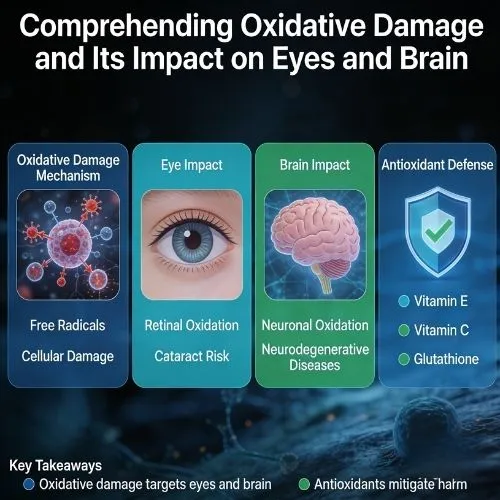
Comprehending Oxidative Damage and Its Impact on Eyes and Brain
Why Eyes and Brain Are Vulnerable to Oxidative Stress?
Because of how they are biologically, the eyes and brain are always under attack by reactive stress. The eye uses more oxygen per gram of tissue than almost any other organ. The brain, on the other hand, is more likely to experience lipid breakdown because it has a lot of lipids. When you are exposed to blue light, UV rays, and pollution every day, your body makes reactive oxygen species faster than its antioxidant enzymes can get rid of them. According to experts, this mismatch leads to oxidative stress, a state that hurts DNA, proteins, and lipids inside cells.
Consequences of Uncontrolled Oxidative Damage
When reactive stress is not dealt with, it speeds up the loss of cognitive and vision abilities that comes with getting older. Oxidative damage builds up in the macula, which is in charge of center vision and color awareness. This damage causes drusen to form and photoreceptors to die. Similarly, oxidative damage to brain neurons makes it harder for neurotransmitters to work and for synapses to talk to each other. Chronic oxidative stress is linked to age-related macular degeneration, cataracts, and cognitive loss, which puts a lot of stress on people and on healthcare systems.
The Business Case for Antioxidant Protection
Understanding how oxidative damage works gives B2B clients the tools they need to create focused nutritional treatments. To make their goods stand out, companies need to use ingredients that have been shown to protect cells and be bioavailable. This body of knowledge helps with formulating decisions and marketing claims. It does this by linking scientific proof to customer benefits in ways that boost brand authority and market share.
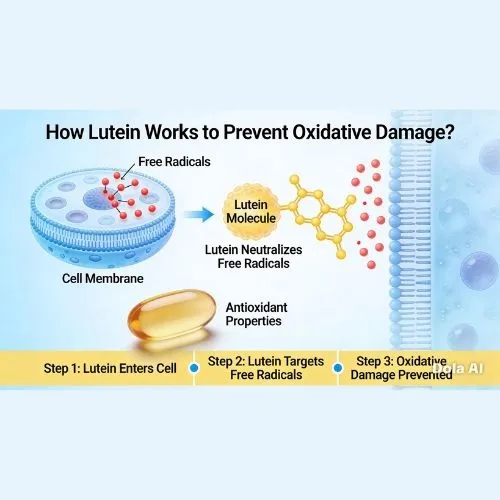
How Lutein Works to Prevent Oxidative Damage?
Free Radical Scavenging and Light Filtration
The conjugated double-bond system of lutein, which allows it to give electrons to unstable free radicals without turning into a radical itself, serves as the starting point for the defensive mechanism. Oxidative threats are stopped before they can damage cell parts by this ability to donate electrons. Carotenoids, such as those found in marigold flowers, also block high-energy blue light wavelengths. They do this by acting as natural optical filters that protect the eye from photochemical damage.
Strategic Tissue Accumulation
When taken by mouth, this xanthophyll pigment collects only in the macula lutea and certain parts of the brain, like the frontal and occipital cortex. Because of this preferred buildup, antioxidant defense is right where metabolic action and oxidative vulnerability meet. The fact that the body can move and place this compound in specific organs shows how important it has evolved to be for brain and eye health.
Synergistic Action with Zeaxanthin
Naturally, marigold extract has both lutein and zeaxanthin in it. These are molecular isomers that are only different in where one double bond is located. Researchers have found that these carotenoids work together, with lutein spreading out in the surrounding areas and zeaxanthin collecting in the center of the macula. As a result of this complementary distribution pattern, the whole macula is protected. This gives B2B clients a scientifically sound reason to use carotenoid blends instead of single chemicals in their formulas.
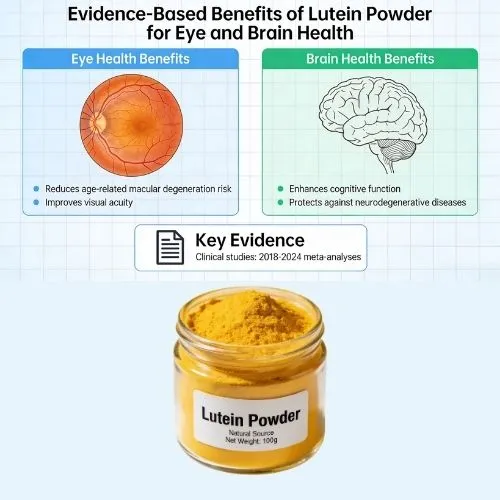
Evidence-Based Benefits of Lutein for Eye and Brain Health
Clinical Support for Eye Health
The important Age-Related Eye Disease Study 2 (AREDS2) showed that taking carotenoids every day cut the chance of getting advanced age-related macular degeneration by 10–25%, based on how much of the vitamin you were already eating. People who took 10 mg every day had changes that could be seen in their macular pigment optical density, which is a measure directly linked to antioxidant defense. More research backs up the idea that these glasses can help people who spend a lot of time in front of a screen by lowering glare disability, improving contrast sensitivity, and protecting against digital eye strain.
Cognitive Function and Brain Protection
New study shows that there are important cognitive effects beyond eyes. A study released in 2017 in the journal of nutritional neuroscience found that older people with higher macular pigment density did better on tests that measured their ability to process information quickly, pay attention to complicated information, and be flexible in their thinking. Brain imaging studies show that the amount of gray matter in areas of the brain that are important for learning and remembering is related to the amount of tissue in those areas. Based on these results, taking extra carotenoids could be a good way to help your brain stay healthy as you age.
Implications for Product Development
This clinical proof can help people who buy things for businesses support making products that are good for both eye and brain health. The scientific proof backs up marketing promises, meets the growing demand for ingredients that can do more than one thing, and sets goods apart in the supplement market, which is very competitive. Adding scientifically studied carotenoid concentrations to age-specific formulations, brain support goods, or eye health supplements gives manufacturers a strategic edge.
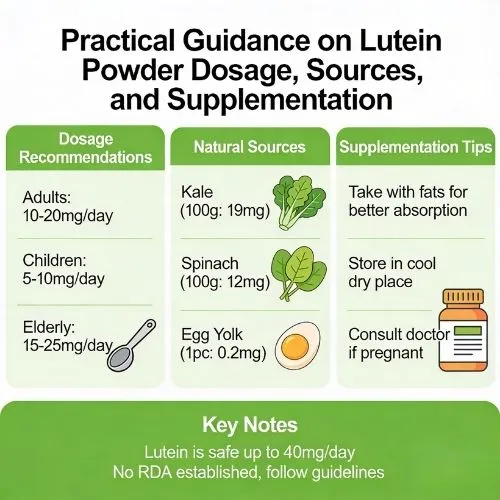
Practical Guidance on Lutein Dosage, Sources, and Supplementation
Understanding Forms and Bioavailability
Free lutein and lutein esters are the two types that can be found in nature. There are lutein esters in marigold flowers naturally. These are made up of fatty acid molecules linked to the structure of a carotene. Manufacturers may change esters to free lutein through saponification during extraction and processing. This makes the form that is most common in leafy veggies and has been studied the most in clinical studies. Both types provide accessible carotenoids, but free lutein may be absorbed a little more quickly. When setting dosage rules, eye support suggestions usually talk about free lutein alternatives.
Recommended Intake Levels
Clinical studies show that daily doses of 6 to 20 mg are beneficial, with 10 mg being the most widely studied dose for protecting the macular. Food fortification uses may give you 2 to 6 mg per serving, while health supplement formulations that aim to improve vision usually give you 10 to 20 mg per serving. Certain groups, like pregnant women, kids, and people who have problems with digestion, may need different advice. When deciding on formulation specs, B2B clients who are making goods for specific groups of people should take these differences into account.
Maximizing Absorption in Formulations
Carotenoids are fat-soluble nutrients, so they are absorbed much better when they are eaten with food fats. Formulation makers can make the ingredient more bioavailable by adding it to emulsions, micelle delivery methods, or products that also contain omega-3 fatty acids. Microencapsulation technologies keep the color from going bad while it's being stored and make it easier for it to mix with water-based materials. These technical issues have a direct effect on how well the product works and how happy customers are with it, so they are very important when formulating.
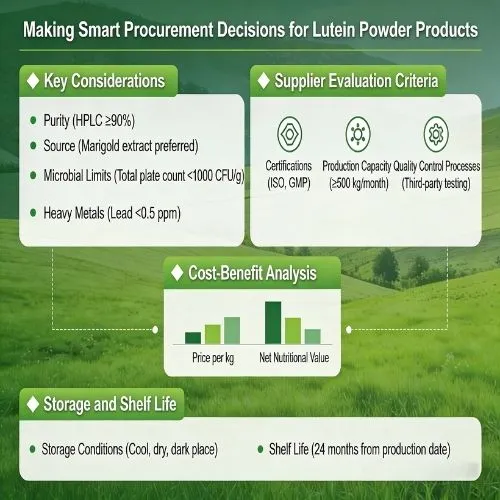
Making Smart Procurement Decisions for Lutein Products
Evaluating Raw Material Quality
Purchasing managers need to give top priority to suppliers who offer marigold extract that meets strict standards for safety and cleanliness. Premium requirements include proof that the product is non-GMO, has not been irradiated, is allergen-free, and meets European PAH4 standards that limit polycyclic aromatic hydrocarbons. Benzopyrene levels should stay below 10 ppb, a safety level that makes sure the raw material meets government rules and customer expectations for clean-label goods.
When figuring out what a provider can do, look at their tests and quality control systems. Reliable partners keep in touch with separate labs for third-party testing, which makes sure that each batch is the same and that the specifications are met. Certificates of Analysis that show amounts of purity, moisture content, heavy metal tests, and microbial limits are very helpful for quality assurance programs because they are clear.
Specification and Format Options
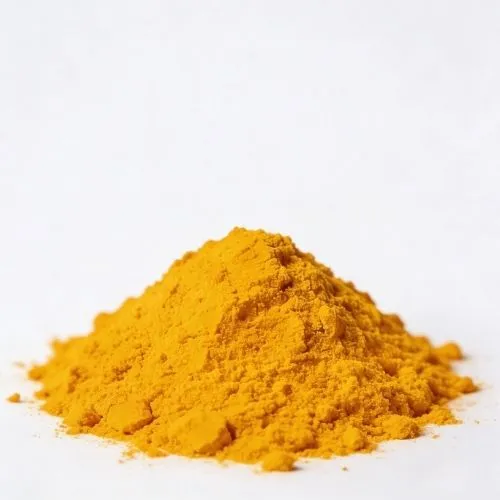
You can get lutein powder from marigold extract in concentrations ranging from 5% to 80%. It looks like an orange fine powder with a characteristic carotene color. Low concentrations (5–20%) work well for tasks that need to be easier to mix and have a lower cost per kilogram. On the other hand, high concentration forms (40–80%) allow for more compact formulations with smaller serving sizes. The decision relies on the final form of the product, the dose that is wanted, and the manufacturing skills.
Storage requirements affect stability and shelf life over time. Premium raw materials need to be kept away from light and rust, so they are usually packed in metal foil bags that are flushed with nitrogen. Carotenoids stay active throughout the supply chain as long as they are stored in their original, tightly sealed packages at controlled temperatures. Suppliers who offer flexible packing choices, such as 1 kg aluminum bags and stock amounts, make it possible for both small-batch development and large-scale production.
Certification and Compliance Considerations
To successfully enter a wide range of foreign markets, your raw products must meet a number of different certification standards. ISO certification shows that a quality management system is being followed, and HACCP certification shows that food safety rules are being followed. Kosher and Halal licenses help businesses reach new customers in certain groups. GMP compliance makes sure that production methods meet standards for pharmaceuticals, which is very important for using dietary supplements in controlled markets.
Professionals in purchasing should check the paperwork that suppliers provide to show that the raw materials can be tracked from the farm to the finished product. As brands react to what people value, ethical labor standards, sustainable buying practices, and environmental management systems become more and more important in deciding what to buy. Suppliers who keep direct relationships with marigold growers offer more openness in the supply chain and chances to build flavor stories.
Conclusion
Eye and brain health are in danger from oxidative damage, but the carotenoid antioxidant lutein, taken from marigold flowers, has been shown to guard against this. You can make smart choices about product development when you know how these substances get rid of free radicals, block blue light, and build up in weak tissues. This ingredient is a flexible answer for many health issues because there is clinical proof that it helps with both vision and brain function. For B2B buying to go well, high-purity raw materials must be bought from sellers who can show that they have quality approvals, consistent batches, and clear testing methods that meet international regulatory standards.
FAQ
Q1: Is long-term supplementation safe during pregnancy?
A: Studies regularly show that daily doses of up to 20 mg are safe, with no negative effects seen in clinical studies that lasted up to two years. Women who are pregnant should talk to their doctors about the right dose, but food sources and mild supplementation usually don't cause any problems. The fact that the chemical is found naturally in fruits and veggies backs up its safety rating.
Q2: Can supplementation prevent macular degeneration entirely?
A: Supplementation greatly lowers the risk of development in people with early-stage disease, but it can't completely stop the disease from getting worse. Diseases can be caused by genes, living choices, and long-term oxidative pollution. Clinical evidence suggests that taking carotene supplements as part of a complete eye health plan should include wearing protective glasses, giving up smoking, and managing your heart health.
Q3: How can formulations optimize absorption?
A: Adding three to five grams of food fat to supplements greatly improves absorption. To do this, manufacturers can mix fish oil, flaxseed oil, or medium-chain lipids into their products. Advanced delivery systems, such as liposomal encapsulation and nanoemulsion technologies, make it even easier for the drug to be absorbed by the body, but they also make the mixture more complicated and cost more.
Partner with Yangge for Premium Marigold Extract Lutein Supply
Yangge Biotech makes high-quality marigold extract lutein powder with concentrations ranging from 5% to 80%. The powder is given as a bright orange fine powder that meets the strict quality standards of companies that make health supplements, functional foods, and nutraceuticals. Our marigold extract lutein provider has ISO, HACCP, Kosher, and Halal certifications, and our GMP-compliant production facilities make sure that the accuracy is pharmaceutical-grade. We work directly with communities that grow marigolds in a way that doesn't harm the environment. This way, we can track the food from the farm to the table, which meets the standards for organic certification and meets the needs of consumers who want clean labels.
As a reputable lutein producer, we provide raw materials that are not sterilized, GMO, or allergen-free, and that meet European PAH4 standards. We also keep benzopyrene levels below 10 ppb. Our specialized research and development team offers full technical support, including advice on how to separate, how much to concentrate, and how to use the product in ways that are specific to your formulation problems. We work with well-known, independent labs to do retests, and we make sure that every batch meets your exact requirements by giving you Certificates of Analysis.
Email our team at info@yanggebiotech.com to get prices for large orders, technical data sheets, and free samples for trying formulations. Our customer service is available 24 hours a day, 7 days a week, so we can answer your questions quickly and help you meet your product development and buying deadlines. Find out how our dedication to quality, ecology, and new ideas can help you stay ahead of the competition in the growing market for eye and brain health supplements.
References
1. Khachik, F., Bernstein, P. S., & Garland, D. L. (1997). Identification of lutein and zeaxanthin oxidation products in human and monkey retinas. Investigative Ophthalmology & Visual Science, 38(9), 1802-1811.
2. Hammond, B. R., Miller, L. S., Bello, M. O., Lindbergh, C. A., Mewborn, C., & Renzi-Hammond, L. M. (2017). Effects of lutein/zeaxanthin supplementation on the cognitive function of community dwelling older adults. British Journal of Nutrition, 117(10), 1429-1443.
3. Seddon, J. M., Ajani, U. A., Sperduto, R. D., Hiller, R., Blair, N., Burton, T. C., & Willett, W. (1994). Dietary carotenoids, vitamins A, C, and E, and advanced age-related macular degeneration. Journal of the American Medical Association, 272(18), 1413-1420.
4. Age-Related Eye Disease Study 2 Research Group. (2013). Lutein + zeaxanthin and omega-3 fatty acids for age-related macular degeneration. Journal of the American Medical Association, 309(19), 2005-2015.
5. Johnson, E. J., McDonald, K., Caldarella, S. M., Chung, H. Y., Troen, A. M., & Snodderly, D. M. (2008). Cognitive findings of an exploratory trial of docosahexaenoic acid and lutein supplementation in older women. Nutritional Neuroscience, 11(2), 75-83.
6. Stringham, J. M., & Hammond, B. R. (2007). The glare hypothesis of macular pigment function. Optometry and Vision Science, 84(9), 859-864.

Based on your location and order quantity, you will have the opportunity to receive a limited time free shipping promotion!
Who we are
Popular Blogs