Is almond protein a complete source of essential amino acids
Wat is Almond Powder?
Almond powder is produced by grinding blanched or natural almonds into a fine powder. Depending on processing methods, it can have varying fat contents and particle sizes for different industrial applications.
Common types include:
· Full-fat almond powder
· Defatted almond powder
· Blanched almond powder
· Natural almond powder
· Organic almond powder
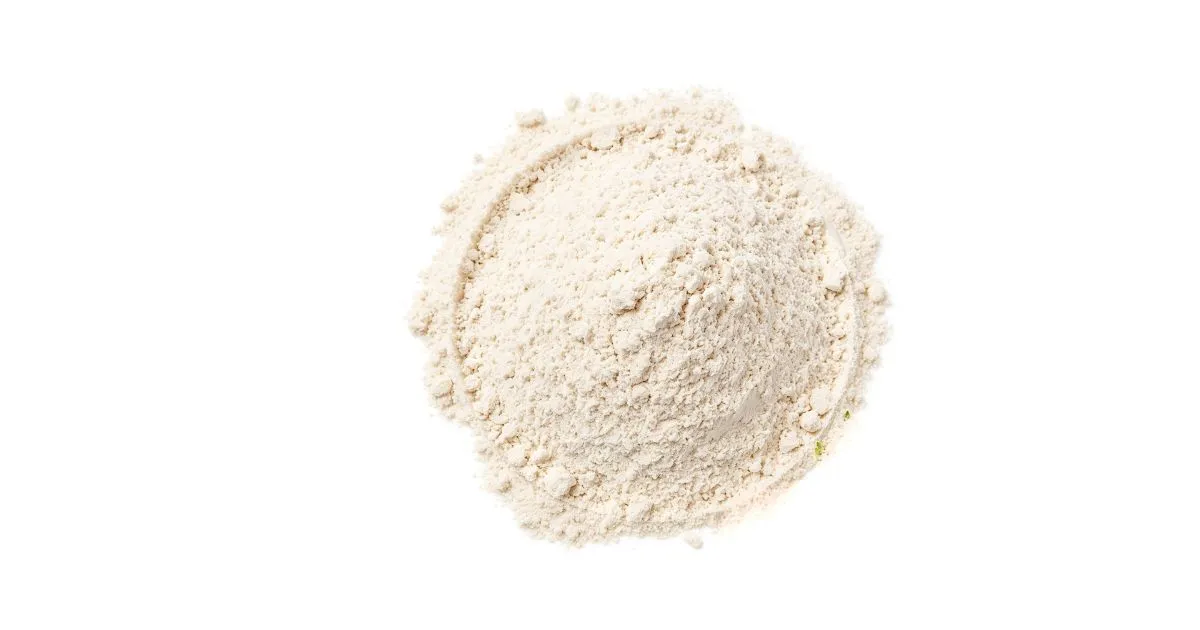
Main Functions of Almond Powder
1. Nutritional Enhancement
Almond powder naturally increases:
· Plant protein
· Healthy monounsaturated fats
· Dietary fiber
· Vitamin E
· Magnesium
· Calcium
· Potassium
This makes it ideal for functional foods and healthy snacks.
2. Texture Improvement
Almond powder creates:
· Smooth mouthfeel
· Moist texture in baked goods
· Creamy consistency
· Improved product density
It replaces part of wheat flour while improving eating quality.
3. Natural Flavor Enhancement
Almond powder delivers:
· Mild nutty flavor
· Rich aroma
· Pleasant sweetness
· Premium taste profile
It reduces the need for artificial flavoring.
4. Gluten-Free Ingredient
Since almonds are naturally gluten-free, almond powder serves as an excellent alternative to wheat flour in gluten-free formulations.
5. Natural Fat Source
Its healthy oil content improves:
· Richness
· Creaminess
· Product softness
· Shelf stability in some formulations
6. Functional Ingredient
Almond powder contributes:
· Protein fortification
· Satiety
· Natural energy
· Clean-label positioning
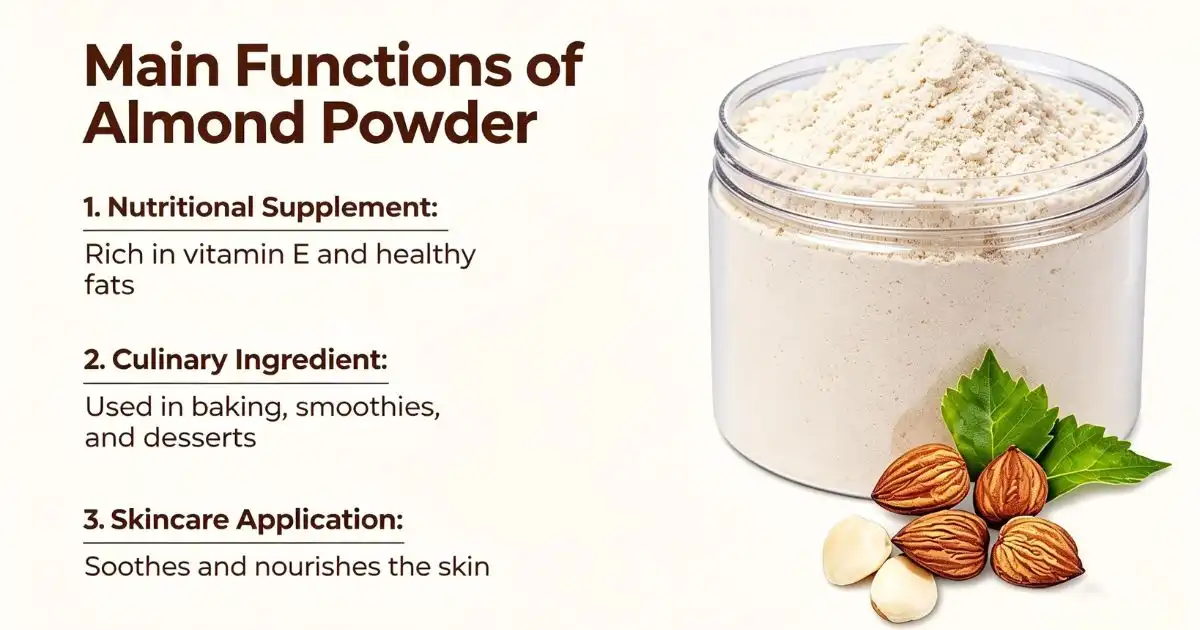
Benefits of Almond Powder
Rich in Plant Protein
Supports:
· Muscle development
· Sports nutrition
· Protein-enriched foods
Excellent Source of Healthy Fats
Contains heart-friendly monounsaturated fatty acids that support cardiovascular wellness.
High in Vitamin E
Vitamin E functions as a powerful antioxidant that helps protect cells from oxidative stress.
High Fiber Content
Supports:
· Digestive health
· Gut microbiome
· Satiety
· Blood sugar management
Low Carbohydrate Ingredient
Ideal for:
· Keto diets
· Low-carb foods
· Diabetic-friendly products
Naturally Gluten-Free
Suitable for consumers with:
· Gluten intolerance
· Celiac disease
· Wheat allergies (provided cross-contamination is controlled)
Clean Label
Consumers appreciate almond powder because it is:
· Natural
· Minimally processed
· Non-GMO (depending on source)
· Free from artificial additives
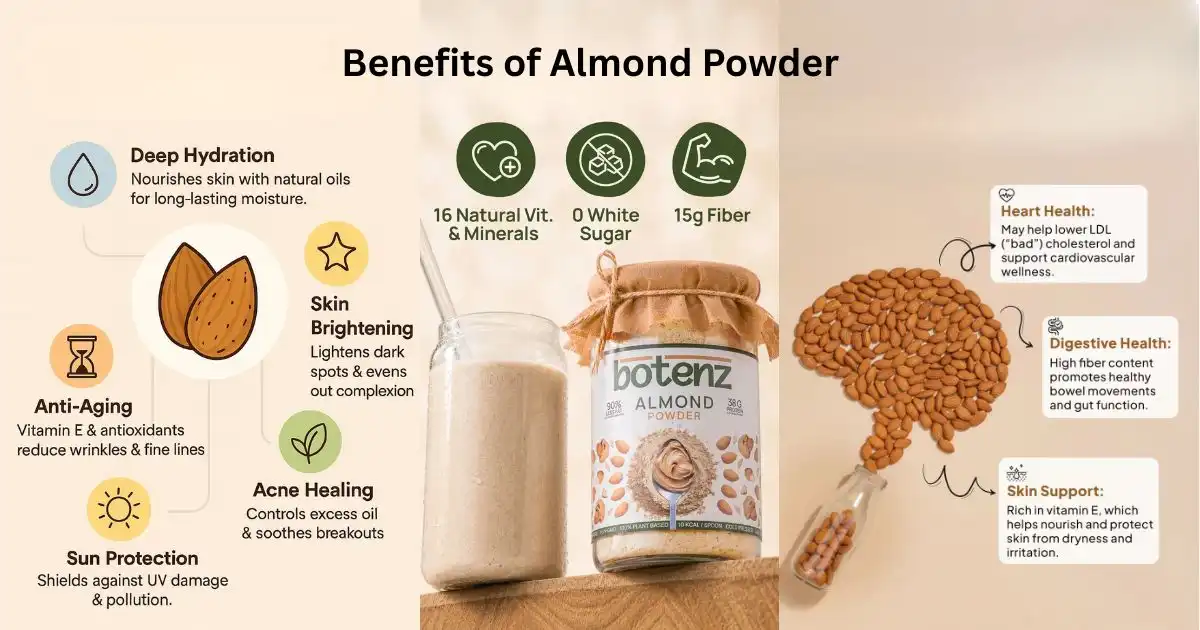
Typical Specifications
|
Parameter |
Specification |
|
Appearance |
Fine cream to light beige powder |
|
Odor |
Natural almond aroma |
|
Taste |
Mild nutty flavor |
|
Moisture |
≤8% |
|
Protein |
20–25% (full-fat) |
|
Fat |
50–55% (full-fat) |
|
Dietary Fiber |
10–15% |
|
Ash |
≤4% |
|
Particle Size |
80–200 mesh |
|
Shelf Life |
12–24 months |
|
Storage |
Cool, dry place away from sunlight |
Specifications may vary depending on the grade and manufacturing process.
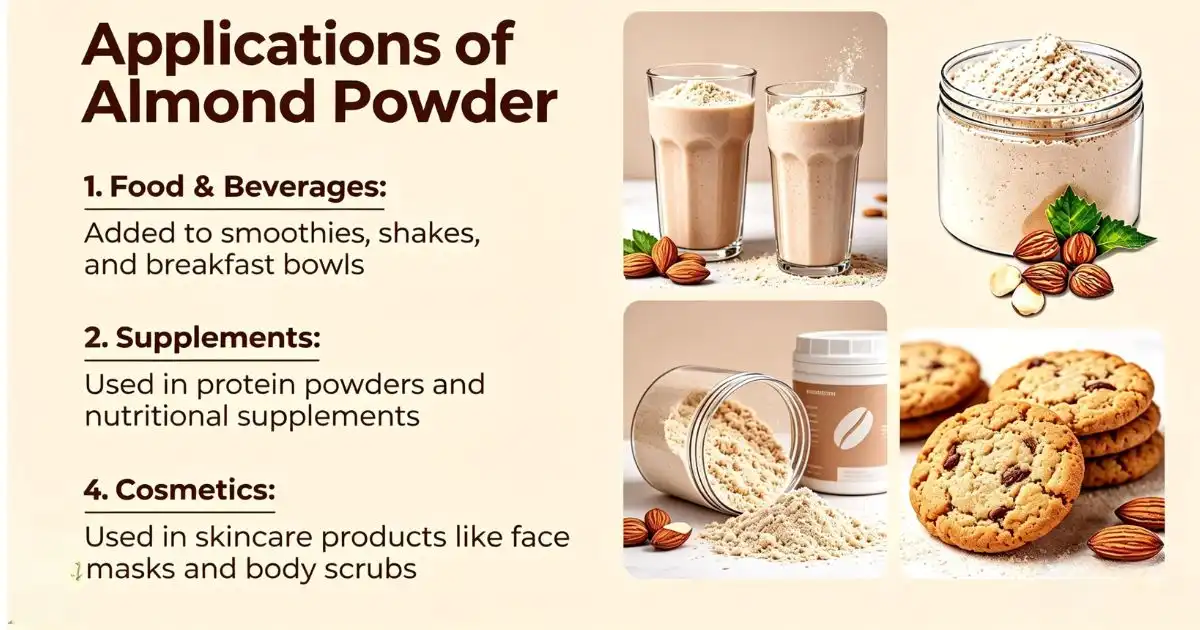
Applications of Almond Powder
Bakery
Almond powder is widely used in:
· Bread
· Cookies
· Cakes
· Muffins
· Brownies
· Macarons
· Pastries
· Pancakes
Benefits:
· Moist texture
· Rich flavor
· Better nutritional profile
Confectionery
Used in:
· Chocolate fillings
· Marzipan
· Energy bites
· Truffles
· Protein snacks
Dairy Products
Ideal for:
· Yogurt
· Ice cream
· Dairy desserts
· Milk beverages
Plant-Based Foods
Used in:
· Vegan cheese
· Plant-based yogurt
· Dairy alternatives
· Vegan desserts
Functional Beverages
Added to:
· Protein shakes
· Meal replacement drinks
· Smoothie powders
· Sports nutrition beverages
Breakfast Foods
Common in:
· Granola
· Breakfast cereals
· Instant oatmeal
· Nutrition bars
Nutraceutical Products
Included in:
· Protein blends
· Meal replacement powders
· Functional nutrition mixes
· Healthy snack formulations
Cosmetics
Almond powder is used in:
· Facial scrubs
· Natural exfoliants
· Beauty masks
· Skin-care formulations
Example Formulations
1. High-Protein Almond Smoothie Powder
|
Ingredient |
Percentage |
|
Almond Powder |
35% |
|
Pea Protein |
30% |
|
Oat Powder |
20% |
|
Coconut Milk Powder |
10% |
|
Natural Vanilla Flavor |
3% |
|
Natural Sweetener |
2% |
2. Gluten-Free Almond Cookie Mix
|
Ingredient |
Percentage |
|
Almond Powder |
45% |
|
Rice Flour |
30% |
|
Tapioca Starch |
15% |
|
Baking Powder |
2% |
|
Salt |
1% |
|
Coconut Sugar |
7% |
3. Nutrition Bar
|
Ingredient |
Percentage |
|
Almond Powder |
25% |
|
Oats |
30% |
|
Dates |
20% |
|
Whey Protein |
15% |
|
Honey |
8% |
|
Natural Flavor |
2% |
4. Vegan Almond Beverage
|
Ingredient |
Percentage |
|
Almond Powder |
8% |
|
Oat Base |
85% |
|
Sunflower Lecithin |
0.5% |
|
Stabilizer |
0.3% |
|
Natural Flavor |
0.7% |
|
Sweetener |
5.5% |
OEM & Private Label Manufacturing Services
Many manufacturers offer OEM (Original Equipment Manufacturer) and private-label services for almond powder products, enabling brands to launch customized products without investing in their own production facilities.
Typical OEM services include:
Custom Formulation
Develop formulations based on:
· Protein content
· Fat level
· Organic certification
· Keto-friendly
· Vegan
· Gluten-free
· High-fiber
· Functional nutrition
Product Development
Support includes:
· Recipe optimization
· Ingredient selection
· Sensory evaluation
· Stability testing
· Pilot-scale production
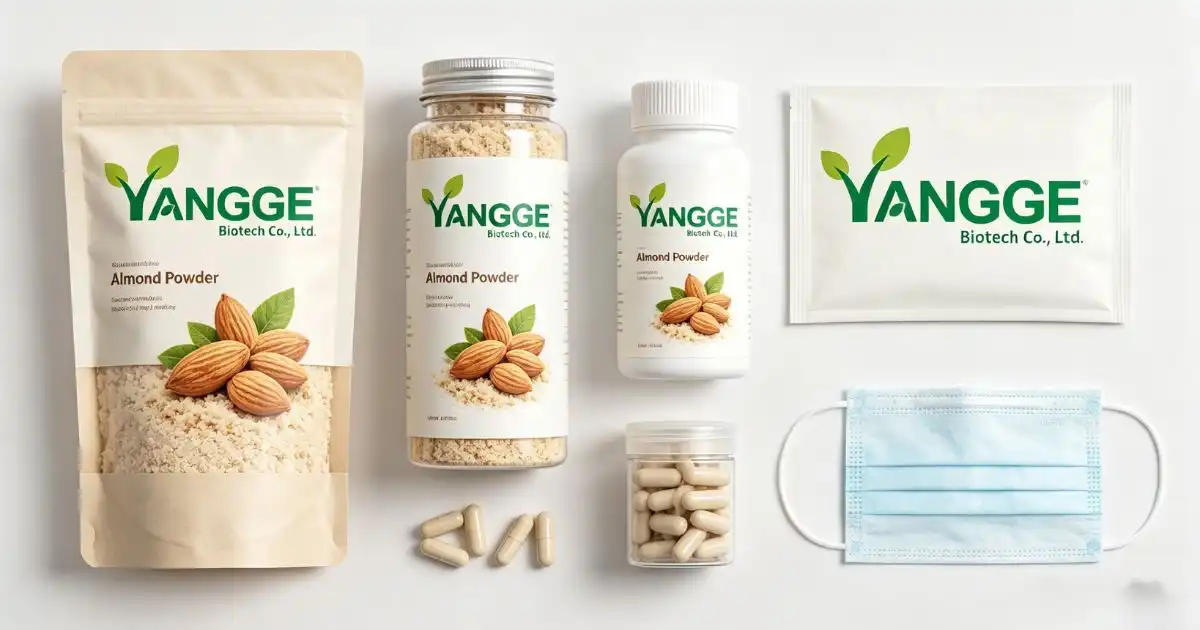
Packaging Options
Available in:
· Bulk bags (10–25 kg)
· Foil pouches
· Stand-up zipper bags
· Sachets
· Retail containers
· Private-label packaging
Quality Assurance
OEM manufacturers commonly provide:
· HACCP-compliant production
· GMP-certified facilities
· Microbiological testing
· Heavy metal testing
· Allergen management
· Batch traceability
Documentation
Often available upon request:
· Certificate of Analysis (COA)
· Specification Sheet
· Safety Data Sheet (SDS), where applicable
· Allergen Statement
· Non-GMO Statement
· Organic Certificate (if applicable)
· Halal Certificate
· Kosher Certificate
Storage Recommendations
To maintain quality:
· Store in a cool, dry environment.
· Keep packaging tightly sealed after opening.
· Protect from direct sunlight and humidity.
· Avoid exposure to strong odors, as almond powder can absorb surrounding aromas.
Market Trends
Demand for almond powder continues to grow due to:
· Rising interest in plant-based nutrition
· Expansion of gluten-free products
· Growth of high-protein foods
· Increased consumer preference for clean-label ingredients
· Popularity of keto and low-carbohydrate diets
· Greater use of natural ingredients in food and personal care products
Conclusion
Almond powder is a highly versatile ingredient that combines exceptional nutritional value with outstanding functional performance. Its rich protein content, healthy fats, dietary fiber, and naturally pleasant flavor make it an excellent choice for bakery products, beverages, dairy alternatives, functional foods, nutraceuticals, and cosmetics.
For manufacturers, almond powder offers flexibility in formulation, supports clean-label and health-focused product development, and aligns with current market trends toward plant-based and gluten-free nutrition. Through OEM and private-label manufacturing services, businesses can efficiently develop customized almond powder products that meet specific market demands while maintaining consistent quality, safety, and regulatory compliance.
Partner with Yangge for Premium Almond Protein Solutions
Almond protein finding necessitates partners who comprehend the technical difficulties and government regulations of contemporary food production. With uniform amounts of 50%, 70%, and 90% to meet your exact formulation needs, Yangge Biotech specializes in providing high-purity Almond protein powder extracted using cutting-edge HPLC technology. Our white powder requirements are put through strict tests in foreign labs. These tests make sure they meet FDA standards and get Kosher and Halal certifications, which let us sell our products all over the world.
As a reliable Almond protein manufacturer, we offer full technical support that includes extraction techniques, concentration requirements, and application suggestions that are specifically suited to your product development goals. Our farm-to-table traceability systems and organic certification options address clean-label needs, and our always-on availability and flexible delivery options help you stick to your just-in-time production plans. Email our team at info@yanggebiotech.com to get samples, talk about problems you're having with formulation, or get personalized quotes from our Almond protein source pros who want you to succeed.
FAQ
Q: Can we get some samples to test before purchasing?
A: Of course, we can provide free samples of 20 to 100 grams, but the shipping cost is at the customer's expense. The shipping cost can be deducted from the next order, or the samples can be sent through your courier account.
Q: Do your products have relevant certifications?
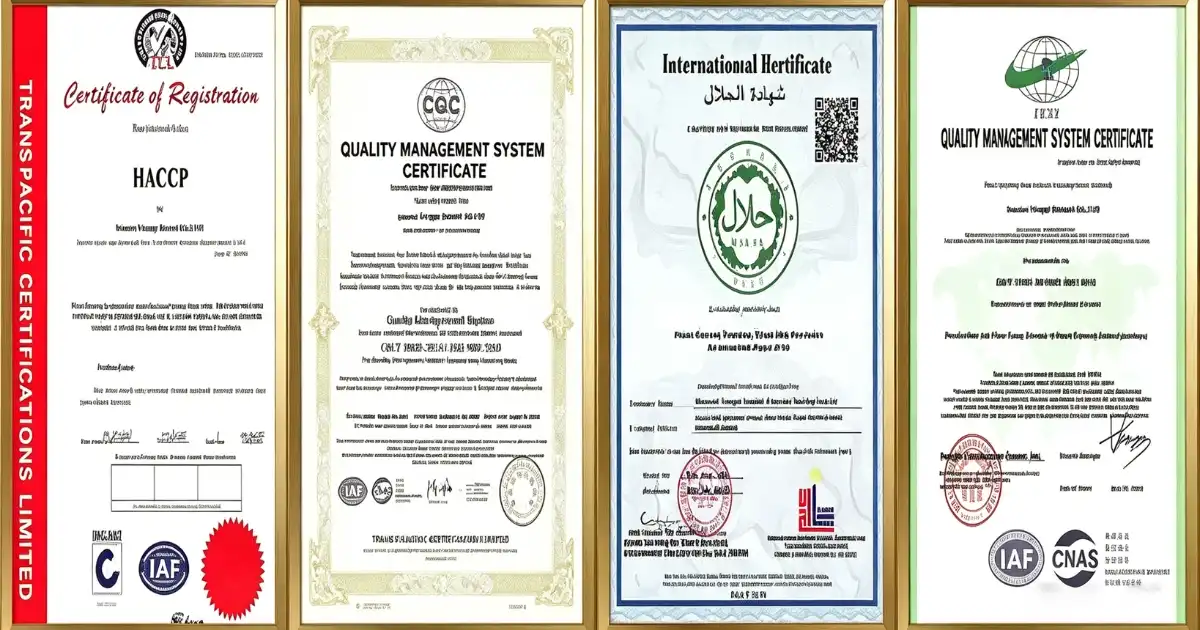
A: Yes, our products are certified for HALAL, ISO, HACCP, Kosher, and other certifications.
Q: What is the minimum order quantity (MOQ)?
A: Small batches of samples can be customized according to your requirements.
Q: Do you offer OEM and ODM services? Can the formula be customized based on our own?
A: Of course, we provide ODM and OEM services to many customers. Our product range includes softgels, capsules, tablets, sachets, granules, and private label services. Simply contact us and let us know your requirements. Our experienced R&D team can also develop new products with specific formulas.
Please contact us to design your own branded products.
Q: How do you handle quality complaints?
A: First, we have a comprehensive quality control SOP. We provide authoritative third-party inspection reports for almost all products before shipment to minimize the possibility of quality issues. Second, we have a comprehensive return and exchange procedure. If there is a genuine quality dispute, we will strictly follow the SOP.
Q: How do you ship? How long does delivery take?
A: For small orders, we typically use DHL, UPS, EMS, FedEx, or TNT. Delivery typically takes 3-7 days. We also offer air and sea freight services. We have a strong freight forwarding team and can provide you with a one-stop service, including DDP and DDU.
Q: What are your payment terms?
A: 100% prepayment, payable by T/T, Western Union, MoneyGram, or PayPal.
Q: What is the shelf life of your products?
A: 2 years with proper storage.
References
1. Mandalari, G., Nueno-Palop, C., Bisignano, G., Wickham, M.S., & Narbad, A. (2018). Potential prebiotic properties of almond seeds. Journal of Food Science and Nutrition, 69(4), 470-478.
2. Sathe, S.K., Kshirsagar, H.H., & Venkatachalam, M. (2019). Protein quality evaluation of almond protein concentrates. International Journal of Food Science and Technology, 54(6), 2156-2165.
3. Chen, C.Y., Lapsley, K., & Blumberg, J. (2020). Nutrition and health perspectives on almonds and almond protein for functional food applications. Comprehensive Reviews in Food Science and Food Safety, 19(5), 2633-2651.
4. Hayes, M. & Bleakley, S. (2021). Proteins from plant sources: Extraction, characterization, and functional properties for food applications. Critical Reviews in Food Science and Nutrition, 61(9), 1447-1467.
5. Millward, D.J., Layman, D.K., Tomé, D., & Schaafsma, G. (2017). Protein quality assessment: Impact of expanding understanding of protein and amino acid needs for optimal health. American Journal of Clinical Nutrition, 105(3), 755-771.
6. Tang, C.H. & Ma, C.Y. (2019). Plant protein ingredients: Extraction, functional properties, and applications in food systems. Annual Review of Food Science and Technology, 10, 283-308.

Based on your location and order quantity, you will have the opportunity to receive a limited time free shipping promotion!
Who we are
Popular Blogs