What is astaxanthin good for
Astaxanthin, a bright red pigment, has caught the attention of people all over the world who make health supplements, makeup, and foods that are good for you. The body makes a lot of this powerful antioxidant. This amazing stuff comes from the Haematococcus pluvialis diatom. It is a powerful antioxidant that is 6,000 times stronger than vitamin C and 550 times stronger than vitamin E. People in charge of finding and research and development need to know what Astaxanthin is good for so they can find high-quality ingredients that have health benefits that can be measured. This color comes from nature and can be used in many areas, from sports nutrition to skin care that fights age. To make their items stand out in places that are getting more and more crowded, this is a good choice.
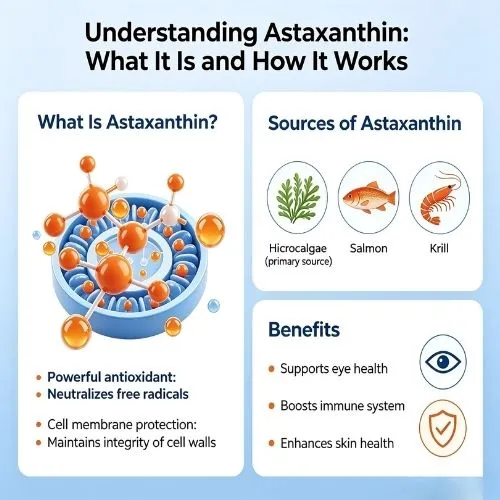
Understanding Astaxanthin What It Is and How It Works?
Chemical Structure and Unique Properties
Astaxanthin is a xanthophyll-class carotene with the CAS number 472-61-7 and the chemical formula C40H52O4. The fact that it has hydroxyl and keto groups on both of its ionone rings makes it stand out. This form of the molecule lets it fully cross over cell walls, protecting both the water- and fat-based parts of the cell at the same time. Unlike beta-carotene and lycopene, which mostly work inside membranes, this compound's structure benefit lets it get rid of free radicals all over the cell. The natural (3S,3'S) stereoisomer found in Haematococcus pluvialis is better for living things than man-made forms, which are made up of racemic mixes that don't work as well.
Molecular Mechanisms of Action
This molecule is a great antioxidant because it has a long chain of conjugated double bonds that reduce reactive oxygen species (ROS) and stop singlet oxygen from reacting. Studies in people have shown that it can get through both the blood-brain barrier and the blood-retinal barrier. It is one of a kind as an antioxidant that can help brain and eye cells immediately. Oxidative stress factors like malondialdehyde (MDA) and 8-hydroxy-2'-deoxyguanosine (8-OHdG) go down when you take supplements on a daily basis. At the same time, antioxidant enzymes like superoxide dismutase (SOD) and catalase go up. At times when cells are under metabolic stress, radiation, or inflammation, all of these systems work together to keep them healthy.
Differentiation from Other Carotenoids
There is one thing that makes this carotenoid different from other antioxidants: it works on more than one structure. This molecule does work in both watery and lipid membranes at the same time. Vitamin C works best in watery conditions and vitamin E mostly protects lipid membranes. When scientists looked at how strong different antioxidants are, they found that this one is by far the strongest at stopping lipid degradation. Beta-carotene can be an antioxidant when there is a lot of oxygen in the air, but this chemical is always an antioxidant in a wide range of bodily situations. Because of these qualities, it works really well in mixtures that try to treat diseases linked to oxidative stress, where single-domain antioxidants fail.
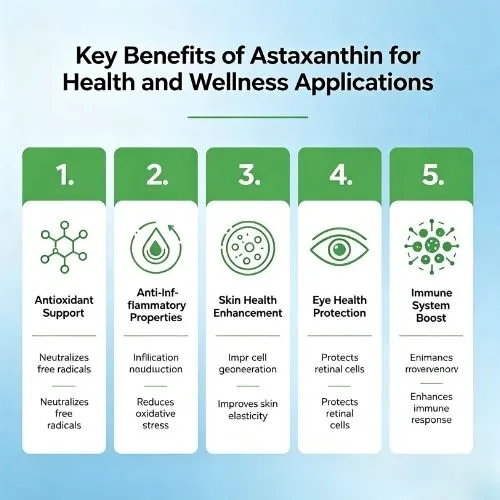
Key Benefits of Astaxanthin for Health and Wellness Applications
Skin Protection and Anti-Aging Effects
So much is known about how this material can be used on the face and in beauty products. Researchers have used oral vitamins at doses ranging from 4 mg to 12 mg daily. After 6 to 12 weeks of continuous use, the skin became more elastic, kept more wetness, and wrinkles got less deep. Direct UV light is absorbed by it, which stops matrix metalloproteinases (MMPs) from breaking down collagen and speeds up the processes that make collagen. Studies in physician journals say that topical and oral treatments that work together are better at improving the smoothness of the skin and lowering the redness caused by UV light by up to 40%. Based on these findings, the ingredient should be used in high-quality skin care products that fight aging, useful drinks that make you look good from the inside out, and nutrition products that fight photoaging.
Eye Health and Visual Performance
Ophthalmological uses are another big business chance. Most of the chemical builds up in the retina, where it protects photoreceptor cells from free radical damage and helps keep the eyes clear. Researchers have found that people who use computers and other digital devices regularly have better ciliary muscle function. This means that they experience less digital eye pain and accommodative tiredness. Researchers have found that people with age-related macular problems gain because signs of retinal oxidative stress don't show up as fast. When zeaxanthin and lutein are put together, they make macular protection solutions that people over 50 and people who work in front of a screen all day want more of. Supplement companies need this ingredient to make unique products that can back up their science claims.
Cognitive Function and Neuroprotection
A new study shows that brain health products need to have antioxidant properties. This chemical can get into neural cells and work as an antioxidant there because it can cross the blood-brain barrier. This keeps neurons from breaking down, which can happen because of inflammation and environmental stress. Supplementation methods that last for 12 weeks have been shown to improve brain processing speed, working memory, and mental tiredness in middle-aged and older people.
Because it lowers inflammation, proteins that cause it, such as TNF-α and IL-6, are also decreased. There is a role for these cytokines in neuroinflammatory diseases. When it comes to goods that help with healthy aging, mental sharpness, and neuroprotection, these benefits make them stand out in the growing area of cognitive health. Based on research, Astaxanthin-rich Haematococcus pluvialis extract supports brain activity in middle-aged and older people.
Muscle Recovery and Exercise Performance
Many people are interested in sports diet because it has been shown to help muscles heal and lower the stress that comes from working out. Runners who took 6 to 12 mg of creatine kinase and lactate dehydrogenase supplements had lower amounts of signs of muscle damage and were able to keep going for longer before they got tired. Protecting mitochondria, better lipid metabolism, and lowering inflammation in muscles that are under a lot of physical stress are all parts of the process. Dominant muscle soreness (DOMS) has gone down and the time it takes to heal between workouts has gotten better. People who are competitive use this ingredient in pre-workout drinks, recovery drinks, and vitamins for endurance sports because it helps them do better and heal faster.
Safety Profile and Dosage Considerations
After 20 years of use by people, safety data shows that the drug is well accepted at amounts that are common in goods sold in stores. Regulatory groups like the FDA and EFSA have said it is safe for the most part. Taking up to 40 mg per day for a long time has not caused any big side effects in tests that have been done. Taking between 4 and 12 mg per day is usually a good idea for general antioxidant support. Higher amounts are used for certain medical reasons when a doctor tells you to. In algae, the esterified form is more soluble when eaten with fats. This is something you should keep in mind when making a supplement. For procurement workers, these safety standards make it easy for regulators to put goods on global markets and give them the confidence to back up what the products say.
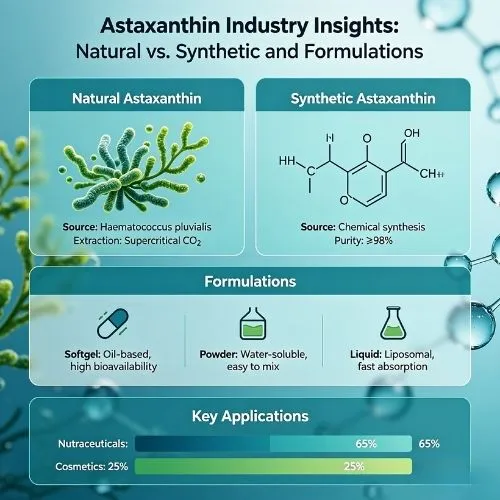
Astaxanthin Industry Insights Natural vs. Synthetic and Formulations
Natural Algae-Derived vs. Synthetic Sources
When choosing what to buy, it's important to know the difference between real and fake forms. Astaxanthin produced by Haematococcus pluvialis is primarily found in an esterified form (>95%), which means that it is linked to fatty acids, making it more stable and accessible. The stereochemistry is mostly made up of the (3S,3'S) isomer, which has been shown to work best in living things. When petrochemical methods are used to make manufactured materials, they create molecules that are not esterified and have mixed stereoisomers.
These molecules don't stick to tissues as well and are less physically effective in comparison studies. Support from regulators varies a lot. For example, in more foreign markets, natural sources are usually okay for people to eat, and they even have standards for organic and clean labels. People really like natural sources, especially in high-end markets where being open and environmentally friendly are important factors in buying decisions.
Sustainability and Sourcing Considerations
A long-term way to make things that doesn't hurt the environment like collecting krill or making petrochemicals is to grow Haematococcus pluvialis in controlled photobioreactor systems or open pond facilities. Green energy integration, farm-to-table traceability, and closed-loop water systems are some of the ways that top providers meet the higher sustainability standards set by businesses. Sustainable fishing, organic farming, and other types of certification can help brands that care about the environment make sure that their goods are safe.
As more people learn about ethical buying, procurement teams should work with sellers who offer clear paperwork about the supply chain and proof from a third party. With the plan to grow microalgae, there are also no worries about upsetting the balance of sea life. Natural sources are the best choice for brands that care about the earth because of this.
Formulation Formats and Delivery Systems
This stuff can be used in many different things because it comes in many shapes and sizes. Microencapsulation technology is used to dry powders, which are then mixed with modified starch, gum arabic, or cyclodextrin to make solid, free-flowing materials that can be used in capsules, pills, and functional foods. The active ingredient runs from 1% to 10% in these powder forms. They get around the problems that come with raw oleoresin being thick and unstable when exposed to air.
There are water-dispersible forms that can be used in drinks made with oil solutions and beadlet technologies. It's easy to add cold-water-soluble (CWS) grades to functional drink recipes. Using oil-based materials in softgels makes them more bioavailable by using the lipophilic feature of the substance. When R&D teams know about these different format options, they can pick delivery systems that work with their product grid and meet their solubility goals.
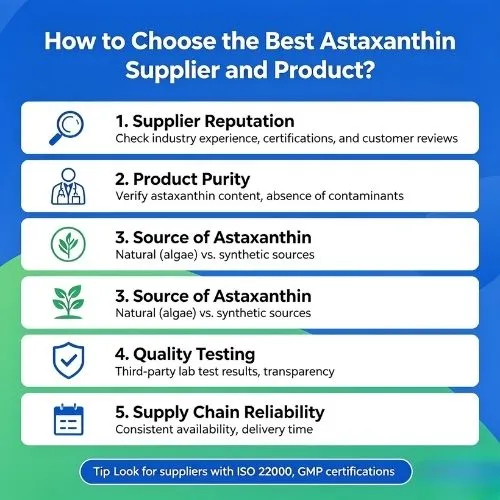
How to Choose the Best Astaxanthin Supplier and Product?
Essential Quality Certifications and Standards
When a business wants to buy something, it should make sure that the seller has a lot of different certificates that show they follow the rules and have good quality control methods. You should follow GMP (Good Manufacturing Practice), ISO 22000 or HACCP (to keep food safe), and Kosher or Halal (depending on what the market wants). Verification of non-GMO and organic approval (USDA Organic, EU Organic) make products more valuable on the market, especially high-end natural goods.
The USP grade standards promise clarity that is good enough for pharmaceutical use and follows strict limits for heavy metals, pesticides, and microbe counts. Third-party testing proof from separate labs makes things clearer and lowers risk by proving the claims of purity and effectiveness. It's important for the final product to be reliable that suppliers give full certificates of analysis (COA) for every production batch. These certificates should include HPLC proof of active content such as Astaxanthin levels.
Purity Standards and Analytical Verification
On specification sheets, it should be easy to see what amount of active material something has. These numbers should be based on a pure material of 1%, 2%, 3%, 5%, or 10%, and they should be found using approved HPLC analytical methods. It should look like a fine powder that ranges from dark red to violet. What if the color changes a lot? That could mean the product isn't pure or has been messed with. One important way to tell the difference between natural and artificial sources is by the esterification rate.
More than 95% of natural products are made up of esters. When you know that a product will last in a variety of storage conditions, you can trust the results of stable tests like fast shelf-life studies. Suppliers should tell you a lot about how the extracts were made. Supercritical CO2 extraction is the best way to keep the bioactivity and avoid leaving behind chemical solvents that are bad for quality and following the rules.
Supply Chain Transparency and Traceability
Brands that want to keep up with tighter rules and more careful customers must now have clear papers for their supply chains. Leading sellers use farm-to-finished-product tracking methods that let you see how each production lot was grown, when it was harvested, and how it was processed in the past. The type of algae grown, how they grew, and when they were gathered should all be written down in the documentation. These are all things that affect the quality and active ingredients of the final product.
Companies that report on their sustainability use, energy sources, and carbon footprint can meet ESG (Environmental, Social, and Governance) goals, which are being pushed for by stakeholders more and more. There is a better chance that suppliers will always be able to get raw materials if they can show that they have long-term links with certified farming groups. It's less likely that supply problems will happen, which can throw off production plans and keep customers from getting what they promised.
Pricing Structure and Order Flexibility
Prices for bulk items usually depend on how concentrated they need to be to meet standards, how many orders there are, and what the approval requirements are. In this case, the prices are low for 10% pure powder types that can be used to make vitamins. The smallest amount you can buy from each provider is different. Companies that are well-known tend to be more flexible and can handle both large-scale production needs and smaller test runs for new products.
Packaging should be made of food-safe materials that keep out light, air, and wetness, which would otherwise make the food less stable. Just-in-time manufacturing methods can work when suppliers keep goods on hand, like Yangge Biotech's 1-ton stock. This is because buyers don't have to wait for longer lead times. Some of the extra services that set top sellers apart from commodity buyers are flexible payment terms, help with handling (like knowing how to ship goods to other countries), and help with regulatory paperwork (like clearing customs).
Practical Applications and Integration in Your Product Line
Nutraceutical Formulation Strategies
When this strong Astaxanthin antioxidant is added to food products, bioavailability needs to be improved and good ingredient combinations need to be thought through. They need to be mixed with oil carriers or eaten with high-fat foods because they are lipophilic. Because of this, softgel release ways are very helpful. It creates full antioxidant structures that help with a wide range of health problems when mixed with omega-3 fatty acids, vitamin E, and CoQ10.
Powder types are popular with people who like natural products because they can be made into clean multivitamin pills, stick packs, and superfood mixes. The fact that the ingredient is safe in structures that are properly made supports the need for a longer shelf life. But it's still important to store and ship the product in a way that keeps it safe from too much heat, light, and moisture. When it comes to unique recipes in pill, tablet, and candy forms, OEM services from manufacturers cut down on the time it takes to make a new product.
Cosmetic and Personal Care Integration
A study in dermatology has shown that these ingredients can be used in skin care products because they have direct protective benefits and can also reduce inflammation. Skin care products that fight aging, protect against the sun, and fix damaged skin can work well when they use oil-dispersible forms in emulsion systems. It's hard to create because it's naturally red. You have to be careful about which cars to use and how to hide the color. But for some names, the color is a clear sign of quality.
To keep makeup matrices steady, they need to be mixed with the right antioxidants (like vitamin E) and stored in a way that keeps light and air out as much as possible. Rules and laws are different in different places. For instance, safety tests and guidelines for cosmetics are needed for uses on the skin but not for nutrients taken by mouth. The beauty-from-within field is growing, which means that planned product plans that mix taking supplements by mouth with putting them on the skin could give customers more benefits.
Functional Food and Beverage Applications
Powder grades that dissolve in cold water have opened up a lot of opportunities in the functional beverage business. More and more people want healthy drinks that are also easy to make. This part is added to energy drinks, beauty drinks, and drinks for sports recovery to make them taste good and offer antioxidant benefits. Microencapsulation technologies keep the active ingredient safe and also let it settle or lose its color when it's spread out in water.
You should think about taste hiding because the ingredient doesn't add much taste, but the carrier matrix you choose changes how your senses work as a whole. There are different rules about how food can be used in different places. There are places where new food approvals are needed and places where "generally recognized as safe" (GRAS) standing is enough. You can get what you need from sellers who know how to make goods safe for food and how the rules work in your area.
Regulatory Compliance Across Global Markets
Knowing the rules that apply in different places can help you get your goods on the market faster and cheaper without breaking the law. Under DSHEA rules, the ingredient is a dietary supplement in the US. It has also self-affirmed GRAS status, which means it can be used in food and drinks. There need to be new rules about food in European markets, but natural sources from Haematococcus pluvialis have been allowed. There are rules about how much can be used and how it needs to be labeled. The element was first offered as a supplement in Japan. There are clear rules about how it can be used and a lot of information about how it has been used in the past.
What kind of proof is needed for different health claims is very different. Structure-function statements can be made in some supplement systems, but to make treatment claims, you need pharmaceutical-level clinical data and permission from the government. There is a lot less work for procurement and regulatory affairs teams to do when sellers offer regulatory paperwork packages that include safety studies, workplace compliance certificates, and market-specific product dossiers.

Conclusion
For people who work in business-to-business buying, this amazing Astaxanthin carotenoid is worth a lot more than just being a great defender. Because this nutrient helps your eyesight and keeps your face healthy, knowing what it does for your body can help you choose where to get it in a way that meets customer needs and market trends. Natural sources from algae are better than man-made ones because they are bioavailable, legal, and last longer. Because of this, they are the best choice for making high-end products.
You can tell the difference between shady product sellers and long-term partners you can trust by checking the quality of the product, making sure the supplier's licenses are thorough, making the supply chain open, and seeing if the supplier can offer technical help. It gives formulators a lot of freedom to make different goods and find new ways to sell them because it can be used in cosmetics, functional foods, and nutrition products. A lot of people around the world are learning about how antioxidants are good for your health. Procurement teams that can consistently get their hands on high-quality, approved products have an advantage in the health and wellness categories, which are growing very quickly.
Partner with Yangge for Premium Astaxanthin Solutions
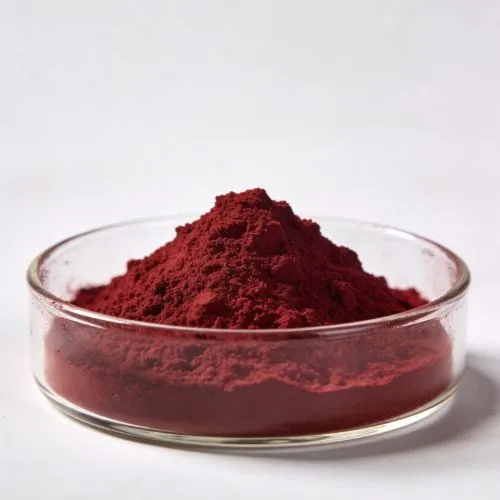
Yangge Biotech Co., Ltd. knows how to help people buy the best natural Astaxanthin powder that comes from Haematococcus pluvialis sources that have been approved. We have KOSHER and USP-grade materials in stock right now in 1-ton amounts. These meet the strict needs of companies all over the world that make cosmetics, health products, and useful foods. We keep a lot of approvals, such as ISO, HACCP, Kosher, and Halal ones, to make sure we follow the rules in all places around the world. We expect dark red fine powder to have between 1% and 10% active content. HPLC testing methods are used to check this, and each batch of output comes with a full proof of analysis.
We not only offer raw materials, but we also help OEMs make unique superfood mixes that come in powder, pill, tablet, and chewy forms. We have R&D teams and expert support available 24 hours a day, 7 days a week to help you. Our commitment to sustainable sourcing and farm-to-table traceability meets the environmental standards of leading brands. Our GMP-compliant production sites make sure that the quality and reliability of each batch are the same. Send us an email at info@yanggebiotech.com to get samples, talk about your product needs, or look into ways to work together with a trustworthy supplier who wants your business to succeed.
FAQ
Q: Can we get some samples to test before purchasing?
A: Of course, we can provide free samples of 20 to 100 grams, but the shipping cost is at the customer's expense. The shipping cost can be deducted from the next order, or the samples can be sent through your courier account.
Q: Do your products have relevant certifications?
A: Yes, our products are certified for HALAL, ISO, HACCP, Kosher, and other certifications.
Q: What is the minimum order quantity (MOQ)?
A: Small batches of samples can be customized according to your requirements.
Q: Do you offer OEM and ODM services? Can the formula be customized based on our own?
A: Of course, we provide ODM and OEM services to many customers. Our product range includes softgels, capsules, tablets, sachets, granules, and private label services. Simply contact us and let us know your requirements. Our experienced R&D team can also develop new products with specific formulas.
Please contact us to design your own branded products.
Q: How do you handle quality complaints?
A: First, we have a comprehensive quality control SOP. We provide authoritative third-party inspection reports for almost all products before shipment to minimize the possibility of quality issues. Second, we have a comprehensive return and exchange procedure. If there is a genuine quality dispute, we will strictly follow the SOP.
Q: How do you ship? How long does delivery take?
A: For small orders, we typically use DHL, UPS, EMS, FedEx, or TNT. Delivery typically takes 3-7 days. We also offer air and sea freight services. We have a strong freight forwarding team and can provide you with a one-stop service, including DDP and DDU.
Q: What are your payment terms?
A: 100% prepayment, payable by T/T, Western Union, MoneyGram, or PayPal.
Q: What is the shelf life of your products?
A: 2 years with proper storage.
References
1. Ambati, R.R., Phang, S.M., Ravi, S., and Aswathanarayana, R.G. (2014). "Astaxanthin: Sources, Extraction, Stability, Biological Activities and Its Commercial Applications—A Review." Marine Drugs, 12(1), 128-152.
2. Tominaga, K., Hongo, N., Karato, M., and Yamashita, E. (2012). "Cosmetic Benefits of Astaxanthin on Humans Subjects." Acta Biochimica Polonica, 59(1), 43-47.
3. Nakagawa, K., Kiko, T., Miyazawa, T., Carpentero Burdeos, G., Kimura, F., Satoh, A., and Miyazawa, T. (2011). "Antioxidant Effect of Astaxanthin on Phospholipid Peroxidation in Human Erythrocytes." British Journal of Nutrition, 105(11), 1563-1571.
4. Katagiri, M., Satoh, A., Tsuji, S., and Shirasawa, T. (2012). "Effects of Astaxanthin-rich Haematococcus pluvialis Extract on Cognitive Function: A Randomised, Double-blind, Placebo-controlled Study." Journal of Clinical Biochemistry and Nutrition, 51(2), 102-107.
5. Fassett, R.G. and Coombes, J.S. (2011). "Astaxanthin: A Potential Therapeutic Agent in Cardiovascular Disease." Marine Drugs, 9(3), 447-465.
6. Capelli, B., Bagchi, D., and Cysewski, G.R. (2013). "Synthetic Astaxanthin is Significantly Inferior to Algal-based Astaxanthin as an Antioxidant and May Not be Suitable as a Human Nutraceutical Supplement." Nutrafoods, 12(4), 145-152.

Based on your location and order quantity, you will have the opportunity to receive a limited time free shipping promotion!
Who we are
Popular Blogs