How to Choose Yeast Extract Beta Glucan Products for Immune Support
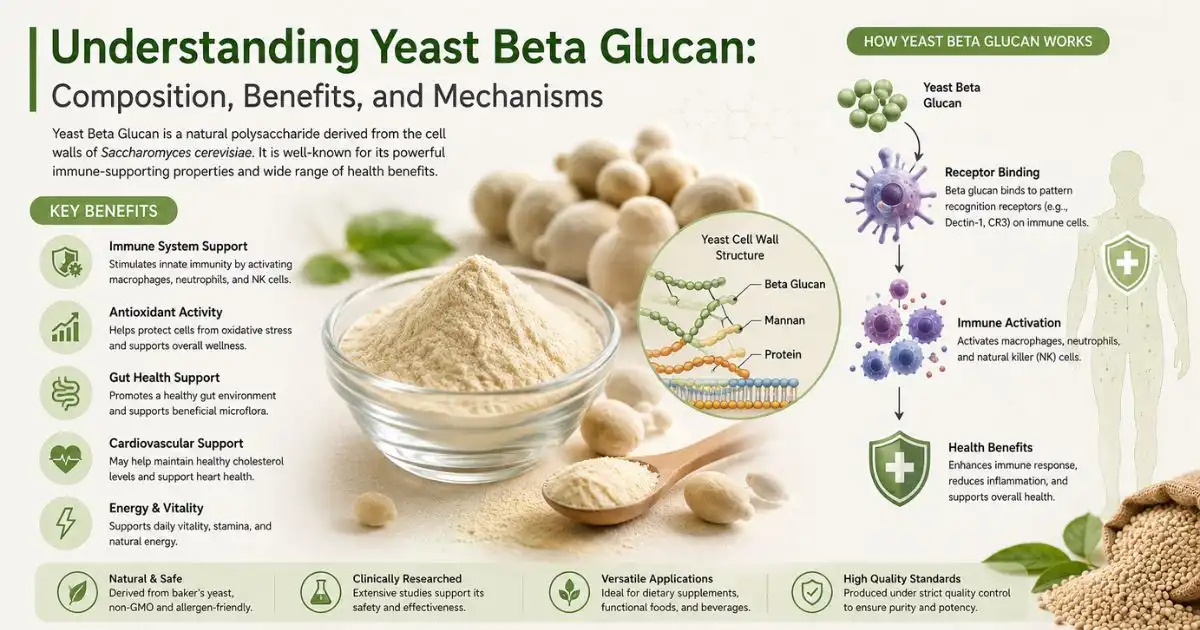
You need to differentiate functional from generic ingredients so that you can choose the right yeast extract beta glucan product. Bioactive polysaccharide of Saccharomyces cerevisiae. cell wall has β-1,3/1,6-glucan backbone which stimulates immunological receptors to improve the defences of the organism. The right immune support ingredient needs to meet purity criteria, match your dosage form or come from a dependable supplier for B2B buyers. This guide details each option.For more details and informations you may send us email at info@yanggebiotech.com.
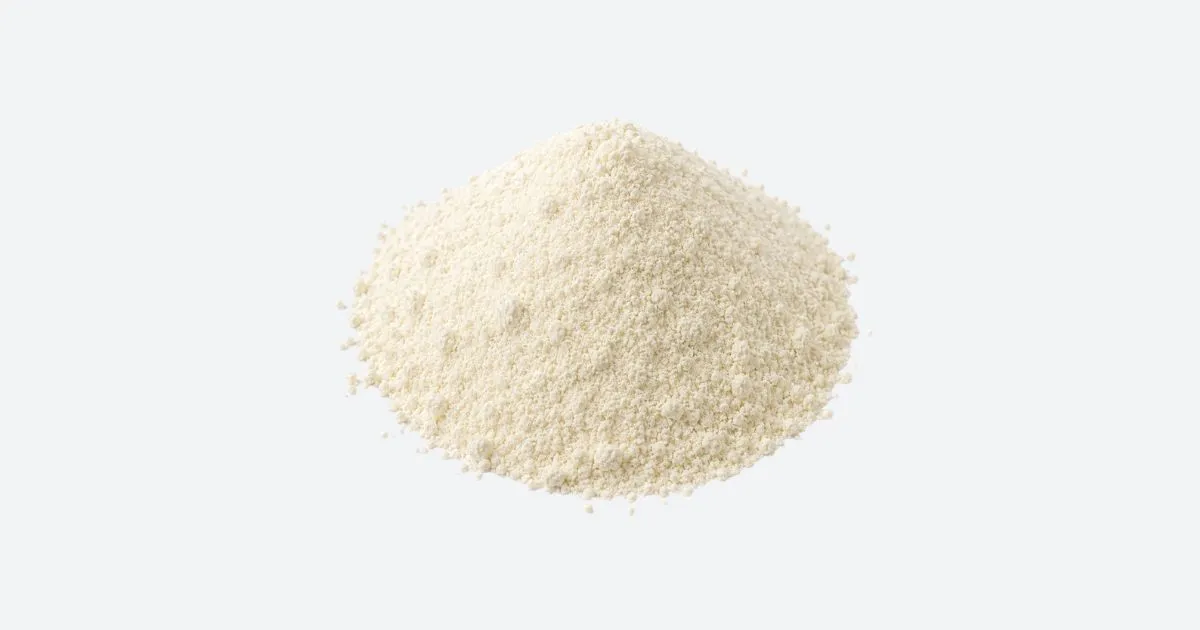
Understanding Yeast Extract Beta Glucan and Its Immune Benefits
What Is β-1,3/1,6-Glucan Structurally?
Active beta glucan at yeast extract has a linear glycan the foundation and glucan-1,6 side chains. Its triple-helix branching structure is the engine of life. It is a Pathogenic Medicinal Pattern (PAMP) that activates the Dectin-1 receptors found on macrophages of normal size and dendritic cells. This receptor contact hyperstimulates the immune system, switching it on. Liquids and drinks could provide soluble forms, but insoluble forms preserve particle cohesiveness for phagocyte detection.
Clinically Supported Immune Mechanisms
In the peer-reviewed literature, glucan-1,3/1,6 in S. cerevisiae stimulates the honest and adaptive immune systems. The Journal of Medicinal Food found daily ingestion of yeast extract of any kind and beta glucan increased the circulating monocytes. Human studies generally use 250–500 mg per day. In addition to immunological control, the chemical also enhances blood lipid balance, integrity of the intestinal barrier, and cell regeneration, making it useful in a range of product categories.
Why Yeast Source Outperforms Alternatives for Immune Applications
Although they share the same identity, oat beta glucan has a unique β-1,3/1,4-glucan linkage structure. The primary permitted use is cholesterol reduction, not immune modulation. Mushroom-derived beta glucans function similarly to yeast versions, but are more difficult to scale up. In commercial supplement manufacturing, yeast extract beta glucan consistency, scalability yeast-based production, and clearly defined receptor binding are critical.
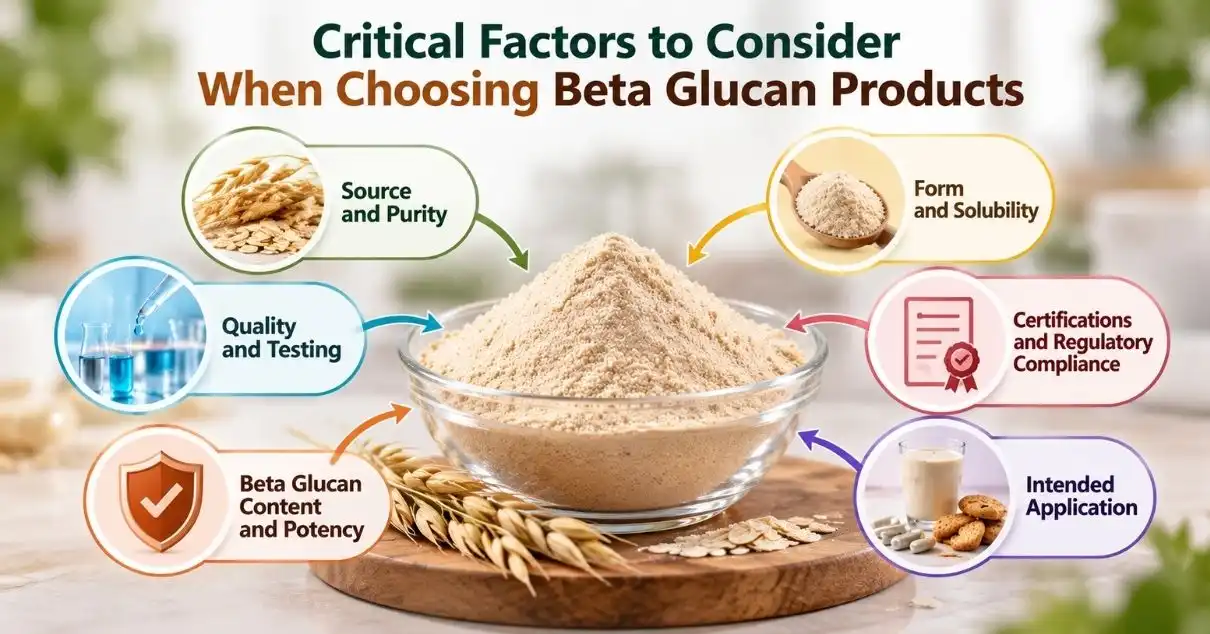
Critical Factors to Consider When Choosing Beta Glucan Products
Purity Grade and Structural Integrity
Purity is the first screening criterion. Products labeled "yeast extract beta glucan" can range from 30% to over 80% actual beta-glucan content. At Yangge, the specification is ≥70% purity, with controlled protein impurities and no irradiation treatment. It is worth specifying the enzymatic assay method (Glucan Enzymatic Method) when requesting a certificate of analysis standard HPLC carbohydrate panels often count alpha-glucan impurities as beta-glucan, which inflates reported values.
| Specification Parameter | Yangge Standard |
|---|---|
| Beta-Glucan Purity | ≥ 70% |
| Source Organism | Saccharomyces cerevisiae |
| PAH4 / Benzopyrene | ≤ 10 ppb (EU standard) |
| Irradiation | None |
| GMO Status | Non-GMO |
| Allergen Status | Non-Allergen |
Soluble vs. Insoluble Form: Match to Dosage Format
Both forms carry immune activity, but they behave differently in manufacturing. Insoluble yeast extract beta glucan is preferred for capsules, tablets, and animal feed where particle integrity matters. Soluble (modified) forms suit beverages, stick packs, and liquid formats where clarity and mouthfeel are priorities. The wrong choice leads to sedimentation, off-texture complaints, or reduced bioavailability. Confirming which form fits your formulation early prevents costly reformulation downstream.
Testing Protocols and Batch Consistency
Batch-to-batch variation is a real procurement risk. Ask potential suppliers for multi-batch COA comparisons, not just a single data point. Yangge cooperates with third-party laboratories for retesting and follows GMP production standards. PAH4 and benzopyrene limits meet the EU standard (benzopyrene ≤10 ppb), which gives QA teams a concrete compliance benchmark — especially valuable for brands exporting to European markets.
Evaluating Suppliers and Brands: Quality and Reliability
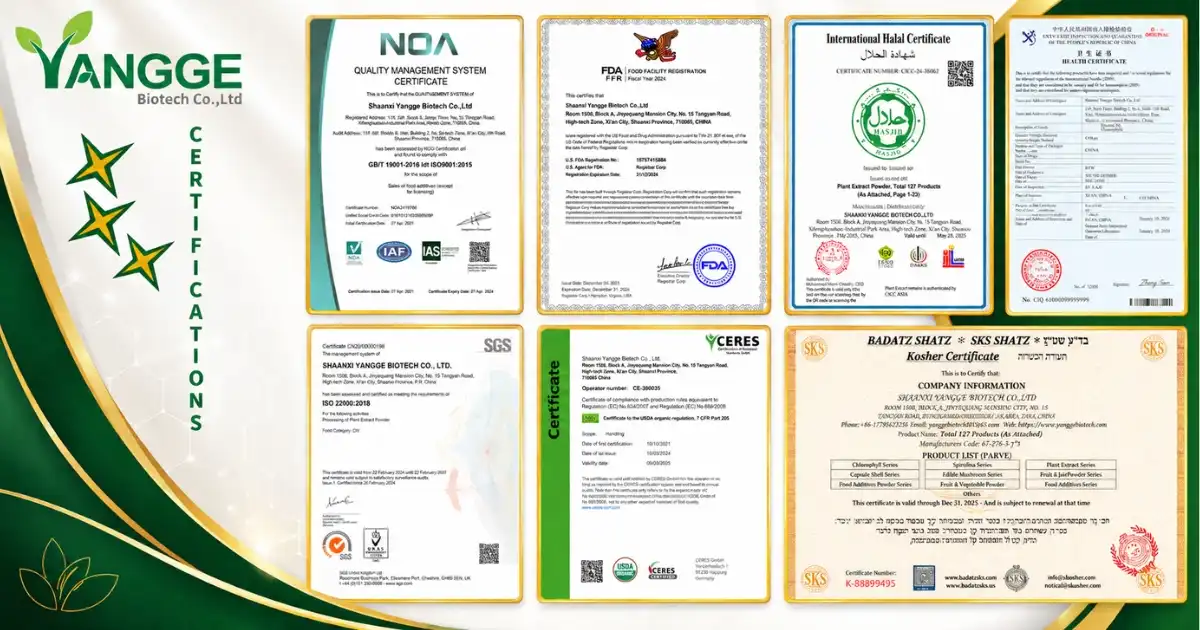
Certifications That Signal Seriousness
| Certification | Relevance to Buyer |
|---|---|
| ISO / HACCP | Process control, food safety compliance |
| Kosher / Halal | Access to global religious-diet markets |
| Non-GMO | North American retail requirement |
| GMP | Pharmaceutical-grade production standards |
Supply Chain Transparency and Minimum Order Flexibility
A supplier's willingness to share traceability data signals confidence in their process. Yangge maintains 50–100 kg ready inventory and accepts a minimum order of 1 kg a practical threshold for R&D teams running early-stage trials before committing to volume. OEM packaging is available for brands needing private-label configurations. Storage requires a tightly sealed container protected from light; Yangge ships yeast extract beta glucan in 1 kg aluminum foil bags or custom packaging per client specification.
Assessing Technical Support Capacity
A helpful supplier does more than just offer ingredients; they also address formulation questions. Does the team know how yeast extract with beta glucan combines with emulsification in a beverage matrix? Can they help on form of administration compatibility? This kind for use assistance lowers trial and error in your R&D cycle, shortening time to market. It is a factor that is sometimes disregarded in price-driven evaluations but is much appreciated when formulation issues emerge.
Matching Yeast Beta Glucan Products to Business Needs
Immune and Gut Health Supplement Brands
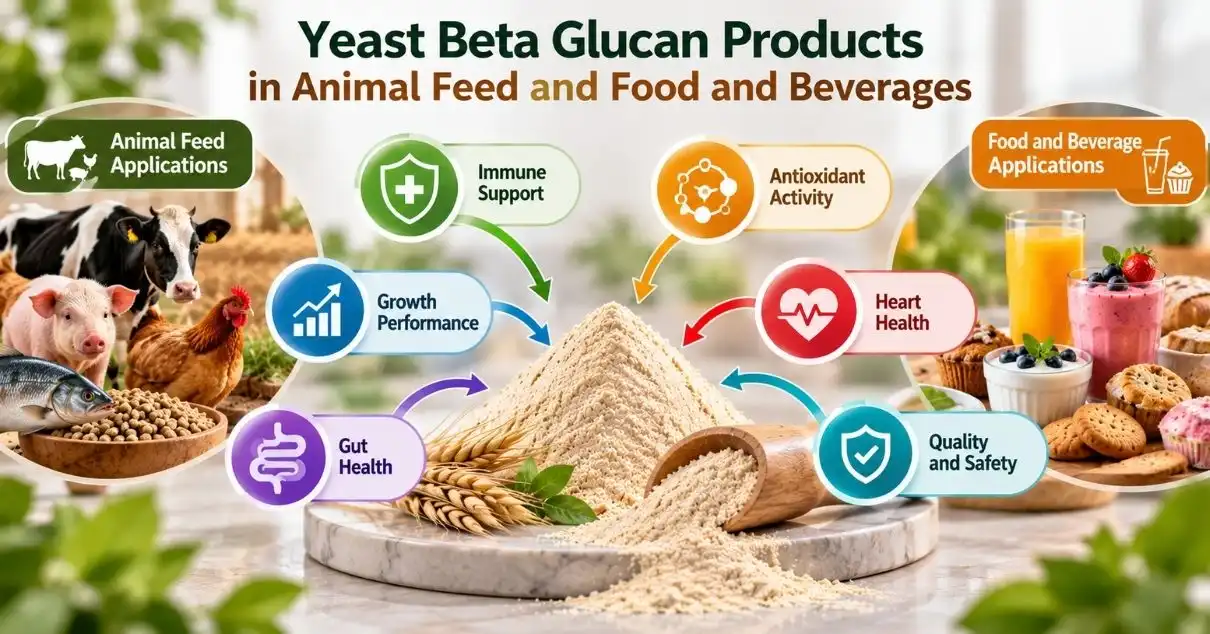
For businesses developing seasonal immune stimulation or gut wellness product lines, its β-1,3/1,6 structure is ideal. Insoluble kinds of yeast extract that contains beta glucan perform well in capsules that target immunological priming. Soluble versions are suitable for daily functional drinks or gummies. The substance works well with the antioxidant vitamin C and zinc in immunological stacks, as well as prebiotics in gut health recipes. The clinically approved dose range of 250-500 mg daily provides product makers with a viable foundation for label claims.
Pet and Animal Nutrition Applications
In aquaculture and companion the diet of animals, yeast extract beta glucan serves as a biological response modulator. It improves inherent immunity in fish, prawns and pigs, lowering reliance on antibiotic growth boosters – a goal as pressure from regulators on antibiotics in feed grows worldwide. Its durability at temperatures of processing used in feed manufacture (up to 121°C) guarantees that active content survive extrusion with little degradation.
Functional Food and Beverage Formulation
This ingredient is thermally stable throughout a pH range of 2.0 to 12.0, making it suitable for UHT processing, acidic drinks, and fortified dairy. Soluble grades especially address the settling and gritty texture issues that regular insoluble powders cause in liquid matrices. The non-allergen & non-GMO designation enhances on-pack messaging for functional food makers aiming for clean-label positioning.
Making the Final Decision: Practical Steps for Procurement Managers
Build a Side-by-Side Supplier Comparison
Request samples from at least three shortlisted suppliers. Test each against your COA parameters purity by enzymatic assay, moisture content, particle size distribution, and microbial load. Evaluate solubility behavior of yeast extract beta glucan in your intended matrix. Score each supplier on technical documentation quality, response time, and willingness to share third-party test reports. Price matters, but it should be the final filter, not the first.
Run a Realistic Formulation Trial
Lab bench testing seldom reproduces production settings. Run your assay at the pH and desired temperature of processing. Test completed product texture, look and stability throughout first 90 days. If you are sourcing the soluble form, test for clarity and neutral taste throughout many manufacturing runs for a beverage. Typically, the procurement period for this category is 4-10 weeks from spec approval to trial production, therefore include this in your product launch timeline.
Confirm Regulatory Compliance for Your Target Market
In the U.S., the FDA considers yeast extract to be beta glucan from S. cerevisiae used as a dietary supplement. There are certain types of Novel Food status for the EU so ensure you are aware of the form you are sourcing and the legal status for your distribution market. If your supplier provides Kosher and Halal certification, it simplifies the compliance paperwork when making religious diet claims. Always check with your regulatory affairs department before you finalise label copy.
Conclusion
There are four things that matter when choosing a suitable yeast extract beta glucan ingredient: structural correctness (-1,3/1,6 ) linkage), verified purity (less than 70% by enzymatic method), an right physical form (solved vs. insoluble) that is appropriate for your dosage structure, and a supplier who's certifications and standard documentation hold up to audit. Companies who do these four things generate superior goods with fewer reformulation roadblocks. Yeast Beta-Glucan from Yangge satisfies the criteria with immediate stock and a flexible MOQ from 1kg, providing a pragmatic first step for any team at R&D or growth stage.
FAQ
What is the difference between yeast and oat beta glucan for immune support?
Yeast extract beta glucan carries a β-1,3/1,6 linkage that binds Dectin-1 receptors on immune cells, making it specific to immune modulation. Oat beta glucan has a β-1,3/1,4 structure validated primarily for cholesterol reduction. They are not interchangeable for immune applications.
Why do lab results differ between testing facilities for the same batch?
Standard carbohydrate HPLC methods count alpha-glucans alongside beta-glucans, inflating reported values. Always request results using the Glucan Enzymatic Method to verify the true β-1,3/1,6 content.
What is the clinically supported daily dosage for immune benefits?
Published clinical studies support 250 mg to 500 mg per day for adults to achieve measurable immune system priming.
Can this ingredient withstand heat processing?
Yes. It remains stable at 121°C for up to 30 minutes, making it compatible with UHT processing, extrusion, and pasteurization.
Is yeast beta glucan safe for allergen-sensitive consumers?
High-purity preparations are non-allergenic. Yangge's product carries a Non-Allergen designation and contains no live yeast only purified cell wall fragments.
Request a Sample From Yangge Your Trusted Yeast Beta Glucan Supplier
Yangge Biotech holds ISO, HACCP, Kosher, and Halal certifications, with GMP-compliant production and in-stock inventory of 50–100 kg. Our yeast extract beta glucan for sale starts at a 1 kg MOQ, ideal for R&D sampling before scale-up. Contact our team directly at info@yanggebiotech.com or visit blog.yanggebiotech.com to request your sample, technical datasheet, or a custom OEM quote today.
References
1. Vetvicka, V., and Vetvickova, J. 2015. Maitake & shiitake extracts boost immunity. Nutraceutical Association journal.
2. Akramiene D., Kondrotas, E., Didziapetriene, R., & Kevelaitis, A. (2007). Immune effects of beta-glucans. Medicina (Kaunas).
3. Talbott, S. & J. (2012). Beta-glucan from Baker's yeast decreases upper respiratory problems. the American Academy of Nutrition Journal.
4. Volman, J. R., Ramakers, J. D., Plat, J. (2008). Nutritional beta-glucans modulate immunity. Physiology, behaviour.
5. Murphy, D. A., Davis, J. D., & Carpenter, M. D. (2010). Beta-glucan immune modulation. Latest sports medicine reports.
6. Zhu, E., Du, B., Xu, B. (2016). Fruit, vegetable, and legume phytochemicals reduce inflammation. Critical Food and Nutrition Reviews.

Based on your location and order quantity, you will have the opportunity to receive a limited time free shipping promotion!
Who we are
Popular Blogs