How to Choose a Vegetable Carbon Supplier for Global Import Needs
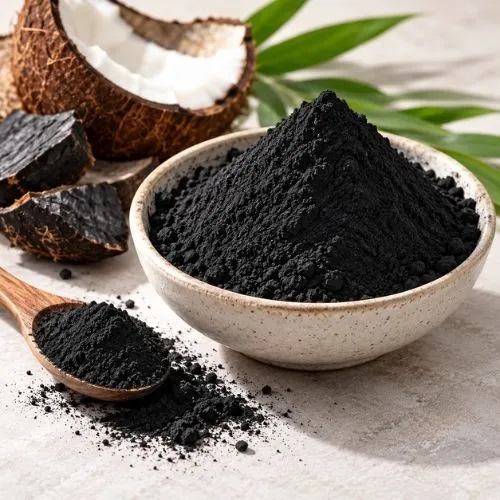
Global import of vegetable carbon suppliers Vegetable carbon suppliers are selected based on source material, certifications, uniformity of batches and adherence to regulations. Vegetable carbon (carbonized plant material like coconut shells or bamboo) is used as a natural black colorant in food, cosmetics and medicines under INS code E153. For B2B buyers, what differentiates a trustworthy partner from a high-risk one is a supplier’s ability to offer verifiable COAs, international lab testing, clean-label paperwork, and flexible MOQ conditions.For more details and informations you may send us email at info@yanggebiotech.com.
Understanding the Vegetable Carbon Market Landscape
What Is Vegetable Carbon and Why Does It Matter?
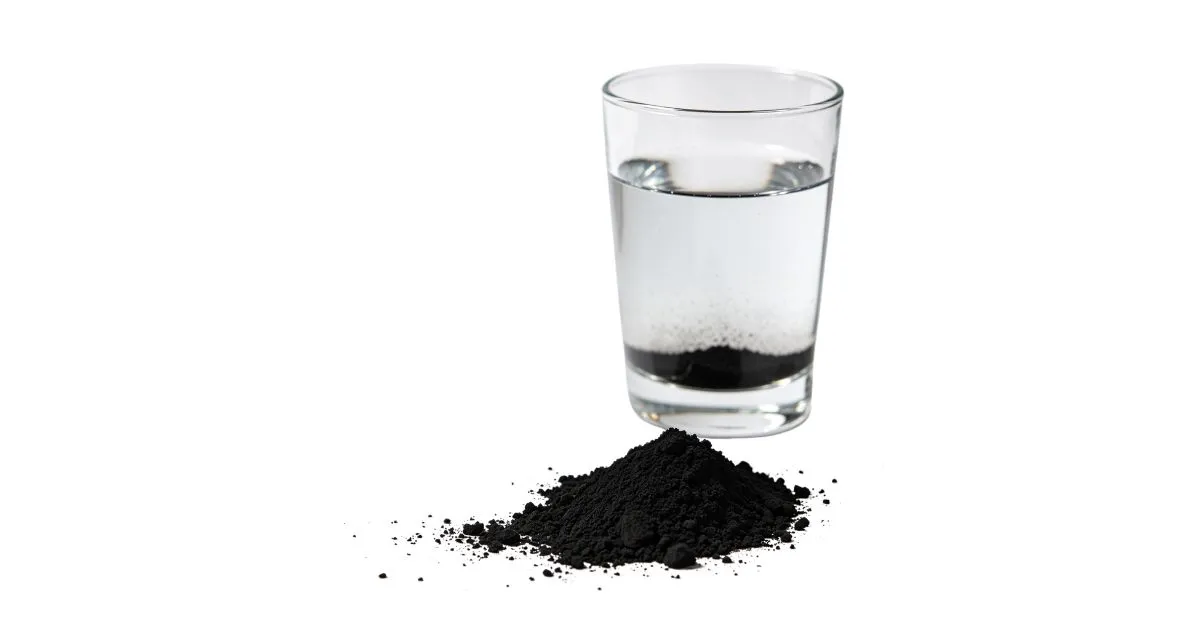
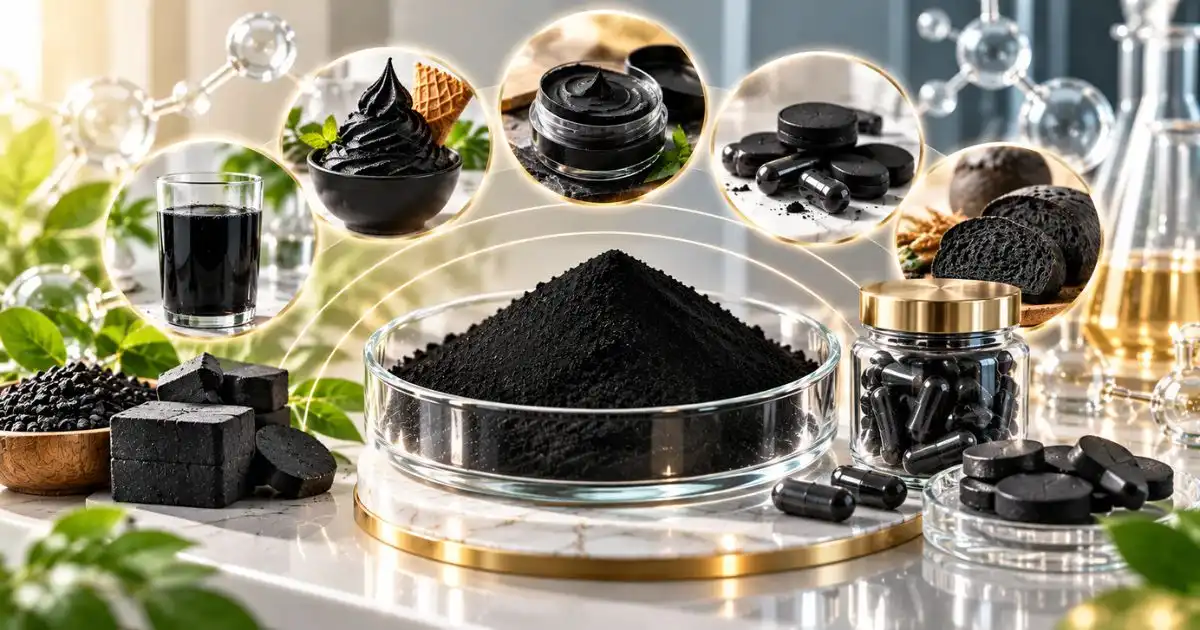
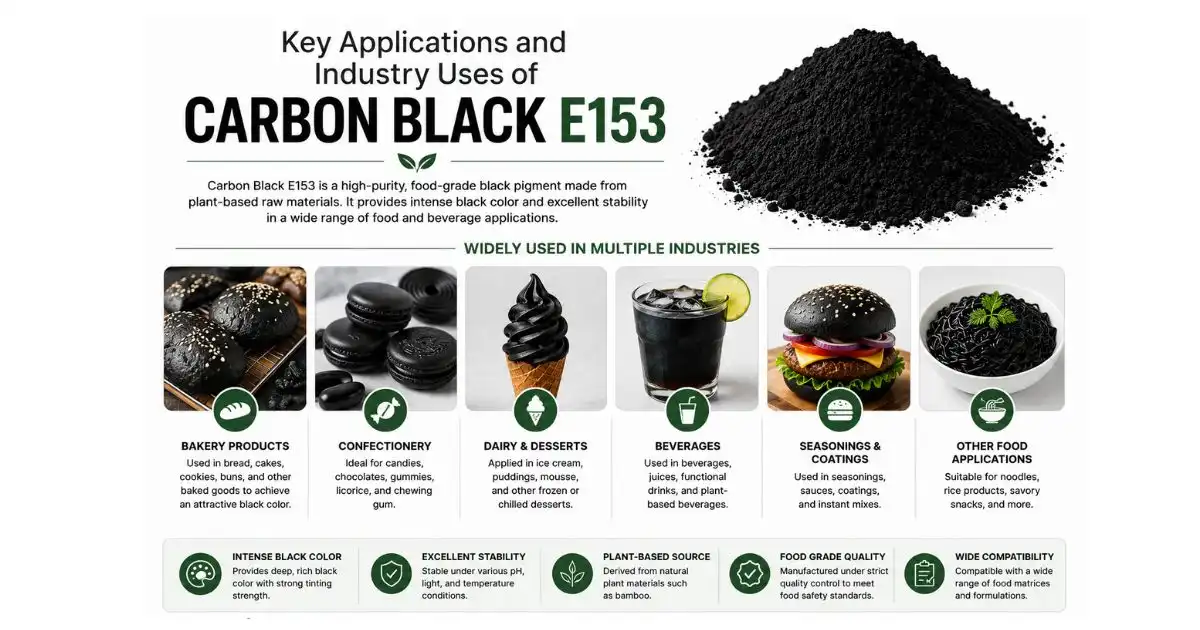
Vegetable carbon black (E153) is a fine black powder made from the carbonization of vegetable matter, most often coconut shells or bamboo. It is odorless and tasteless and will not combine with water or organic solvents. Candy, ice cream, baked products, plant-based foods and others Food makers use it for a rich, solid black hue that won’t change with time. This supports companies in maintaining clean-label goods.
Global Demand and Supply Dynamics
Plant-based black colorants are also growing in popularity, as customers demand that manufacturers use natural ingredients. Much of the manufacturing is in Asia, with exports to the EU, North America and the Middle East. According to a 2023 research, the natural food color market is growing at a compound annual growth rate of roughly 7% and was valued at around USD 1.8 billion in 2022.
The Role of Certifications in Market Access
Customs will not let food-grade E153 through unless it passes certain retailer and safety criteria in controlled markets. It has to be certified in advance.
| Market Region | Key Regulatory Standard | Required Certifications |
|---|---|---|
| United States | FDA 21 CFR | FDA, Kosher, Halal |
| European Union | EC No 231/2012 | PAH/Heavy Metal COA, EU E153 Spec |
| Middle East | GCC Halal Standards | Halal Certificate |
Core Criteria for Selecting a Vegetable Carbon Supplier
Quality Standards and Third-Party Testing
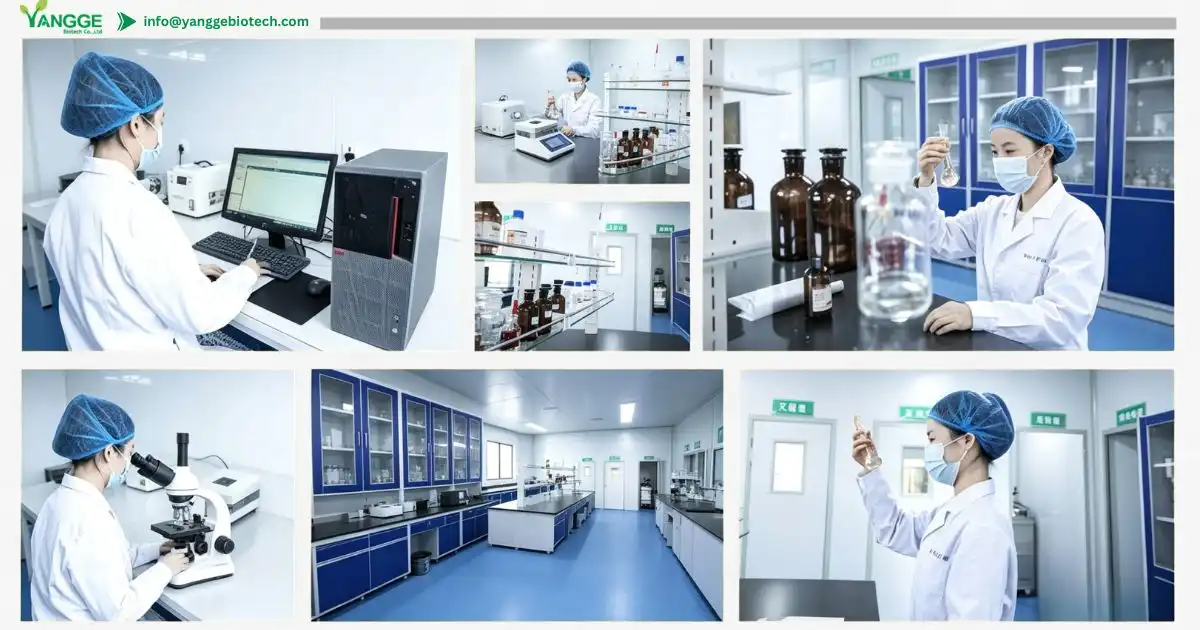
A supplier's quality framework tells you more than any sales pitch. ISO 22000, HACCP, and GMP clearances should be taken more seriously. Find out more by asking if they test every production batch in a third-party laboratory. Before Yangge Biotech's Vegetable Carbon Black E153 is dispatched, it is inspected and tested by international labs outside the company. What buyers receive is verified data, not just self-reported claims.
Production Capacity, Traceability, and Raw Material Source
The key is the traceability of raw ingredients to keep the color constancy the same from batch to batch.” Ask the company to specify what feedstocks it uses when you buy. Mineral carbon black, coconut shell carbon and bamboo carbon have diverse qualities, which directly effect your product label. Suppliers that can establish traceability from farm to production are less likely to provide contaminated or mislabeled items, a known risk in the E153 category.
MOQ Flexibility and Pricing Transparency
Running pilot batches is challenging for small to medium-sized food enterprises due to rigid Minimum Order Quantity (MOQ) restrictions. Yangge has a minimum order of one ton and offers delivery choices of FOB or CIF. Samples of 10g to 30g are available for R&D purposes free of charge so you may evaluate before committing to a big purchase. This framework allows your development team to evaluate color depth, covering power, and dispersibility in your real formula.
Comparing Vegetable Carbon with Alternative Carbon Products
Vegetable Carbon vs. Activated Charcoal
Both materials originate from carbonized plant matter, but they are utilized in different manners. Activated charcoal, processed via chemicals or steam, is made more porous to increase surface area for adsorption, which is useful in pharmaceutical and detox applications. In contrast, Vegetable Carbon Black (E153) is used strictly as a colorant, not an adsorbent. Using activated charcoal in food coloring applications often produces inconsistent gray tones rather than a true black.
Vegetable Carbon vs. Synthetic Carbon Black (Petroleum-Derived)
Synthetic carbon black is sourced from petroleum and is not allowed in food. It has increased tinting strength and is often used in industrial paints and inks but has severe regulatory and safety issues. For food and cosmetic applications where a clean-label position is required, plant-based E153 is the right and legal choice. Buyers shopping from untrusted sources might be getting synthetic carbon black disguised as vegetable origin material.
| Product Type | Source | Food-Grade | Clean Label | Regulatory Status (US/EU) |
|---|---|---|---|---|
| Vegetable Carbon E153 | Coconut shell / Bamboo | Yes | Yes | Permitted (with conditions) |
| Activated Charcoal | Plant-based (activated) | Limited | Partial | Varies by application |
| Synthetic Carbon Black | Petroleum | No | No | Not permitted in food |
Application Suitability by Product Category
E153 performs best in low-moisture applications such as dry mixes, confectionery coatings, and baked goods, where its water insolubility is not a limitation. In ice cream and dairy matrices, proper pre-dispersion in fat or oil ensures a more uniform color. Procurement teams should understand these application-specific behaviors before selecting a supplier to write better specifications and reduce formulation failures during the pilot stage.
Evaluating and Shortlisting Vegetable Carbon Suppliers
Verifying Certifications and Documentation
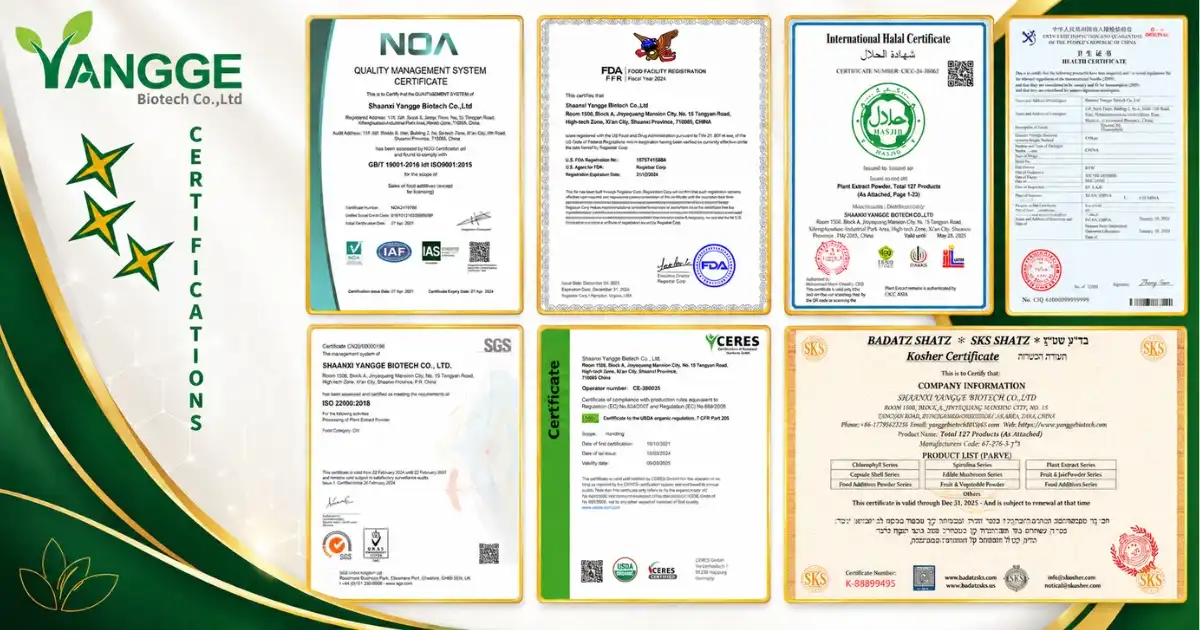
A full documentation package must be requested before finalizing a supplier: Certificate of Analysis (COA), Certificate of Origin, heavy metal test reports (arsenic, lead), PAH test results, and applicable certificates like FDA, Halal, or Kosher. Yangge Biotech’s Vegetable Carbon Black E153 is FDA-approved and holds both Kosher and Halal certifications, with COA documentation available for download directly from the product page.
Supplier Audit and Reference Verification
If possible, request a virtual facility tour or a third-party audit record. Seek references from buyers in your specific product category; for example, a supplier experienced in exporting to EU bakeries will understand labeling nuances that a general ingredient trader might not. Yangge Biotech maintains dedicated R&D and production teams with GMP-compliant manufacturing and a proven track record of exporting to regulated markets in North America, Europe, and the Middle East.
Contract Terms, After-Sales Support, and Risk Mitigation
Negotiate clear terms regarding batch replacement if color deviation occurs from agreed specifications. Confirm lead times, packaging options, and restocking schedules. Yangge Biotech keeps five tons of Vegetable Carbon Black E153 in stock to provide supply continuity for buyers managing production schedules. Various packaging solutions are available to match different warehouse and handling requirements.
Case Studies and Best Practices in Procurement
Lessons from European Clean-Label Bakery Buyers
European bakery brands switching from Brilliant Black BN (E151) to E153 report that supplier selection is the single largest determinant of success. Buyers who prioritized COA transparency and batch consistency data during the RFQ stage experienced significantly fewer color deviations during production. Those who selected based on price alone often faced high reformulation costs when batches arrived outside the required color range.
Procurement Checklist for Global E153 Import
Before committing to a supplier, evaluate the following points:
| Evaluation Stage | Key Action | Document to Request |
|---|---|---|
| Initial Screening | Confirm plant origin and E153 spec | COA, Certificate of Origin |
| Sample Evaluation | Test dispersibility and color depth | Lab report, Sample batch record |
| Pre-Order Compliance | Verify certifications and PAH limits | Halal/Kosher/FDA cert, PAH report |
Conclusion
Selecting the right E153 supplier affects product quality, regulatory compliance, and brand credibility simultaneously. Buyers who invest time in verifying raw material origins, certification authenticity, and batch testing protocols report fewer production issues and stronger supplier relationships. With a transparent documentation process, verified certifications, in-stock availability, and sample access, the right supplier partner reduces procurement risk across the entire product development cycle. Vegetable carbon suppliers that meet these criteria are positioned to serve brands across food, cosmetic, and personal care applications.
FAQ
What certifications should I require from a vegetable carbon black E153 supplier?
At a minimum, request FDA compliance documentation, Halal and Kosher certificates, a current COA with heavy metal results (arsenic, lead), and PAH test data from a third-party laboratory. For products bound for the EU, confirm the supplier can provide documentation meeting EC No 231/2012 specification limits.
How is vegetable carbon E153 different from activated charcoal?
E153 is a colorant intended to impart a stable black color to food or cosmetic products. Activated charcoal is an adsorbent processed to bind substances in the industrial or digestive processes. They are not interchangeable; using activated charcoal as a colorant often results in gray tones rather than a true black.
What are typical lead times for bulk E153 import orders?
Lead times vary by supplier and destination. With in-stock inventory, orders can typically ship within 5–10 business days after payment confirmation. FOB and CIF delivery options affect total transit time; buyers in North America should account for 15–30 days for ocean freight plus customs clearance.
Is E153 permitted in the United States?
E153 is not currently an FDA-listed color additive for direct food use in the US in the same manner as EU-approved additives. Buyers should confirm specific application permissions with their regulatory team before finalizing formulations for the US market.
Request Your Free Sample of Yangge Vegetable Carbon Black E153 Today
Yangge Biotech offers FDA-approved, Halal- and Kosher-certified Vegetable Carbon Black E153 from coconut shell and bamboo sources, with five tons in stock and 10–30g free samples available for R&D trials. As a trusted Vegetable Carbon manufacturer with ISO, HACCP, and GMP compliance, we provide third-party lab-tested batches and personalized service for global import buyers. Contact us at info@yanggebiotech.com to request your sample and COA today.
References
1. MarketsandMarkets. (2023). Natural Food Colors Market Global Forecast to 2028.
2. European Commission. (2012). Commission Regulation (EU) No 231/2012 laying down specifications for food additives. Official Journal of the European Union.
3. Food and Agriculture Organization of the United Nations / World Health Organization (FAO/WHO). (2019). Compendium of Food Additive Specifications: Vegetable Carbon (E153). JECFA Monographs.
4. Downham, A., & Collins, P. (2000). Colouring our foods in the last and next millennium. International Journal of Food Science & Technology, 35(1), 5–22.
5. Regulation (EC) No 1333/2008 of the European Parliament and of the Council on food additives. (2008). Official Journal of the European Union.
6. Grand View Research. (2022). Clean Label Ingredients Market Size, Share & Trends Analysis Report, 2022–2030.

Based on your location and order quantity, you will have the opportunity to receive a limited time free shipping promotion!
Who we are
Popular Blogs