How Is Sweet Potato Red Pigment Extracted from Sweet Potatoes?
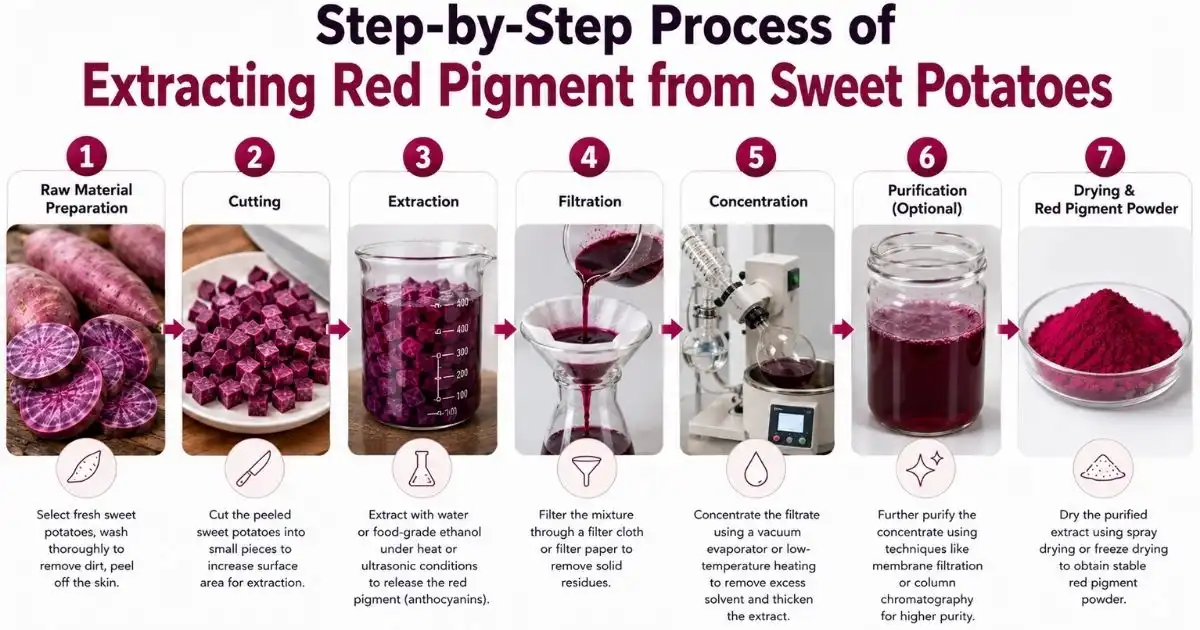
Sweet Potato Red pigment extraction involves processing purple-fleshed sweet potato tubers through specialized techniques that isolate anthocyanins the natural compounds responsible for their vibrant color. The process typically begins with cleaning and cutting selected tubers, followed by solvent extraction using acidified water or ethanol to dissolve the water-soluble pigments.
After filtration and concentration, the resulting extract is dried into a stable powder or liquid concentrate. This natural colorant offers food and beverage manufacturers a clean-label alternative to synthetic dyes, with superior antioxidant properties that appeal to health-conscious consumers seeking products with functional benefits beyond basic coloration.
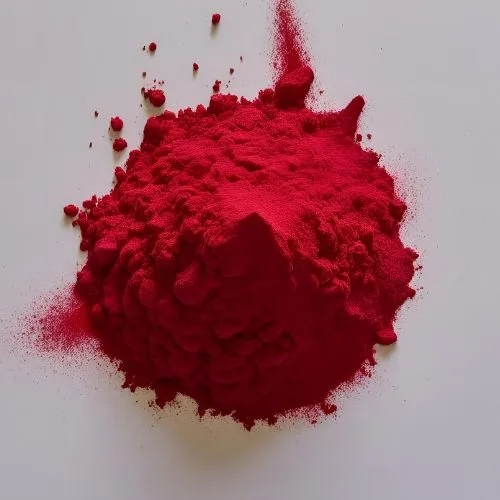
Understanding Sweet Potato Red Pigment
Sweet potato colors are made up of chemicals called anthocyanins. It is cyanidin and peonidin derivatives that give the colors their reddish-purple shades. These flavonoid molecules are very different from the carotenoid-based colors that are found in orange sweet potatoes. They have different benefits for different uses.
Chemical Composition and Antioxidant Benefits
Anthocyanins from purple sweet potatoes are made up of acylated structures that have phenolic acids like caffeic and ferulic acid linked to their chemical framework. This special arrangement creates steric hindrance that keeps the chromophore from breaking down, giving it a much higher antioxidant capacity than non-acylated sources. Studies in the lab show that these compounds can get rid of free radicals, which means that products marketed to people who care about their health will work better.
Varietal Selection and Pigment Potency
Picking the right kind of sweet potato has a direct effect on how well it is extracted and how good the end result is. Some orange varieties, like Ayamurasaki and Stokes Purple, have purple flesh and have anthocyanin levels between 50 and 200 mg per 100g of fresh weight, which is a lot more than regular orange varieties. The location and time of harvest affect the pigment density. For example, tubers picked at their most mature during cooler months usually produce extracts with Color Values (E1% 1cm at 530nm) between E30 and E90, which meet industry standards for high-performance uses.
pH Stability and Color Expression
Anthocyanins from sweet potatoes are very sensitive to pH, which sourcing managers need to know when they are making goods. The pigment stays bright strawberry red at acidic pH levels below 3.0 because it is in the stable flavylium cation form. In the range of pH 4.0 to 6.0, the color changes to purple due to quinonoidal base structures. The pigment becomes unstable above pH 7.0 and takes on unwanted blue-green tones, so it can't be used in alkaline situations. Because of this feature, careful recipe planning is needed during the product creation stages.
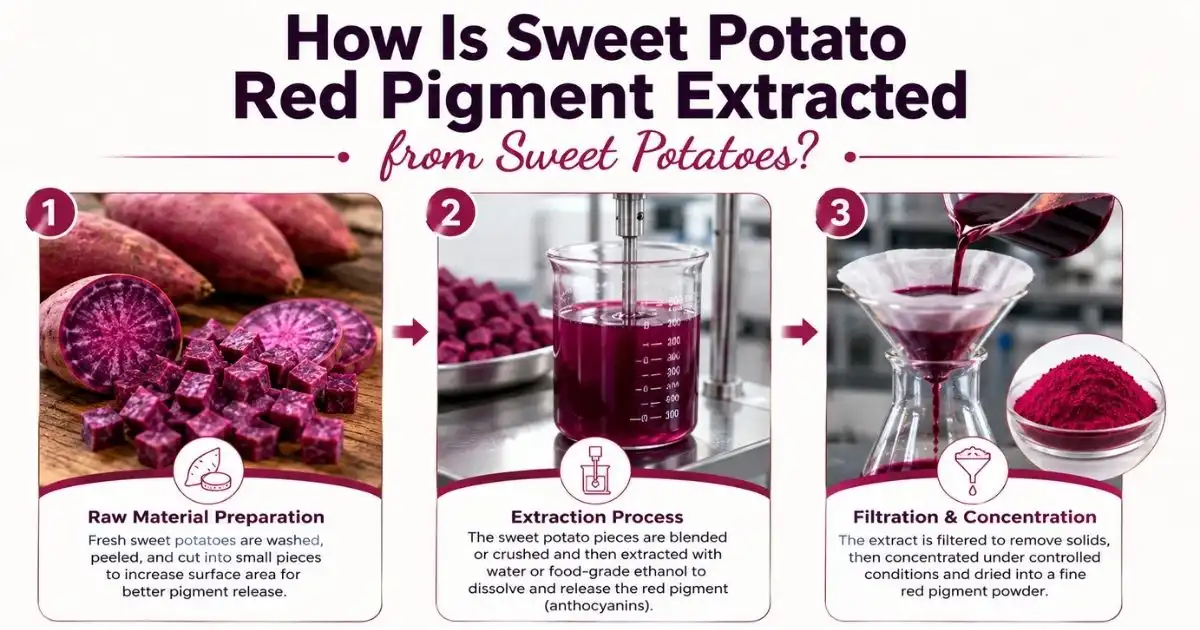
Traditional vs Modern Methods of Extracting Sweet Potato Red Pigment
The way an extraction is done has a big impact on yield efficiency, color stability, and environmental impact, all of which affect the quality of the product and the cost of buying it.
Conventional Solvent Extraction Techniques
In traditional methods, the fruit is macerated with water or acidified ethanol at room temperature for long amounts of time, sometimes 12 to 24 hours. Even though these methods are easy to use, they have some problems. Yield rates are usually between 40 and 60% of all the anthocyanins that are available, and air can start degradation processes that make the color less intense if they are exposed for a long time. Large amounts of solvents and wastewater production are bad for the environment and create problems with sustainability that go against current clean manufacturing ideals.
Ultrasound-Assisted Extraction Technology
High-frequency sound waves (20–100 kHz) are used in ultrasonic processes to make cavitation bubbles in the extraction medium. When these bubbles pop, they create areas with high temperatures and pressures that damage cell walls and speed up the release of pigment. Studies show that this method cuts the time needed for extraction to 20 to 40 minutes and increases returns by 15 to 25 percent compared to old ways of doing things.
The mechanical action better protects anthocyanins that are damaged by heat, which makes extracts that keep more antioxidants, and for pigments like Sweet Potato Red, this protection is especially beneficial because its acylated structures are sensitive to prolonged shear forces. This technology works well for medium-sized businesses that want to become more efficient without spending a lot of money.
Enzyme-Assisted and Supercritical Fluid Methods
Enzyme-assisted extraction uses cellulases and pectinases to break down plant cell walls at controlled temperatures (40–50°C). This lets the pigments come out more gently while keeping the molecules' integrity. When certain pressures and temperatures are met, supercritical CO2 extraction can happen. This is because carbon dioxide has the density of a liquid and the diffusivity of a gas, making it a very selective extraction medium. These advanced ways require a lot of money, but they make pharmaceutical-grade extracts with very little solvent residue, which makes them appealing to companies that make high-end products and need standards like organic or non-GMO verification.
The table below compares key performance metrics across extraction methodologies:
| Extraction Method | Typical Yield (%) | Processing Time | Antioxidant Retention | Environmental Impact |
|---|---|---|---|---|
| Traditional Solvent | 40-60 | 12-24 hours | Moderate (65-75%) | High solvent use |
| Ultrasound-Assisted | 65-80 | 20-40 minutes | High (80-90%) | Reduced solvent volume |
| Enzyme-Assisted | 70-85 | 2-4 hours | Very High (85-95%) | Biodegradable enzymes |
| Supercritical CO2 | 75-90 | 1-3 hours | Excellent (90-98%) | Minimal chemical waste |
These comparative insights help procurement teams align extraction technology with their quality specifications and sustainability objectives.
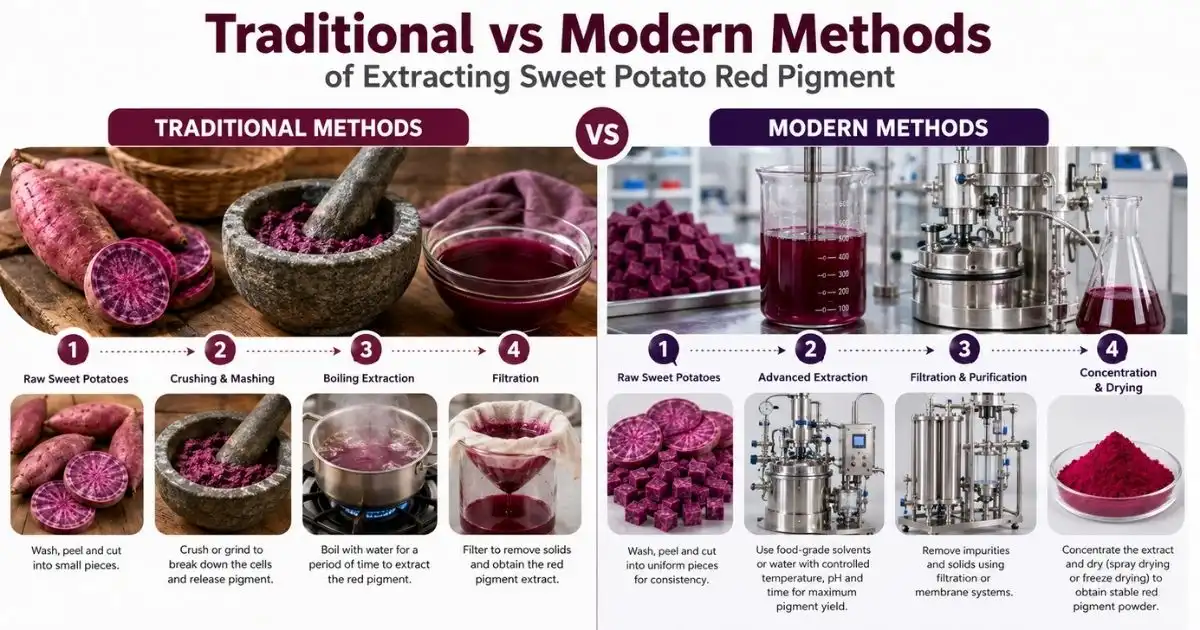
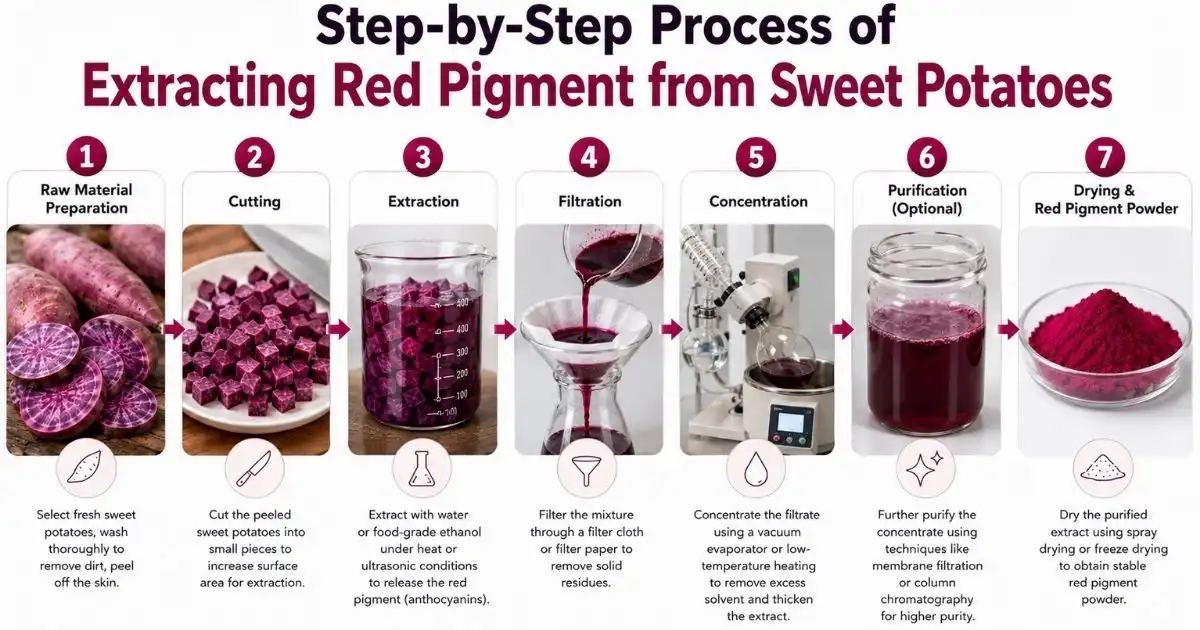
Step-by-Step Process of Extracting Red Pigment from Sweet Potatoes
For commercial extraction, there is a set method that is meant to get the most color back while keeping the stability of the material throughout the processing.
Raw Material Preparation and Pre-Processing
Selecting and preparing the tubers correctly is the first step in making a good extraction. After being picked, sweet potatoes are washed to get rid of dirt and other impurities on the surface. They are then inspected to get rid of any that are broken or sick. The top skin is removed when the fruit is peeled, but some producers keep it for its phenolic content. Cutting tubers into even 5–10 mm pieces makes more surface area for the solvent to touch, which directly speeds up the extraction process. When you process right away after cutting, you stop enzymes from turning the pigments brown, which can lower their quality.
Extraction Parameters and Optimization
In the extraction phase, you need to have tight control over a lot of different variables. To keep anthocyanins stable while they dissolve, acidified water (pH 2.5–3.5) or ethanol solutions (50–70% concentration) are often used as solvents. Temperature control balances the speed of extraction against thermal degradation. Most processes keep the temperature between 40 and 60°C to get the best output without breaking down the anthocyanin. A solid-to-solvent ratio of 1:10 to 1:15 (w/v) gives the pigment enough liquid volume to fully transfer. Depending on the method, extraction can take anywhere from 30 minutes to two hours. Continuous stirring makes sure that the solvent gets into all parts of the material mixture evenly.
Filtration, Concentration, and Stabilization
After being extracted, the pigment-rich liquid goes through several stages of filtering. Usually, coarse screens (100–200 mesh) are used to get rid of solid particles, and then smaller membrane filtration (0.2-0.45 microns) is used to make the liquid clear. Vacuum evaporation at temperatures below 50°C lowers the water content during concentration. This protects heat-sensitive chemicals while getting the desired pigment density.
You can spray-dry the concentrated extract to make a powder, or you can keep it as a liquid concentrate. Anthocyanins are kept safe from oxidation, light, and pH changes during storage and shipping by encapsulation methods that use maltodextrin or other carrier materials. Under the right conditions, packaging in materials that keep out light and moisture can extend the shelf life to 18 to 24 months.
Quality and Procurement Considerations for Sweet Potato Red Pigment
Supplier Certification and Quality Assurance Standards
Suppliers with a good reputation keep certifications that check the safety of their products and the way they make them. The ISO 22000 and HACCP certifications show that food safety is managed in a planned way throughout the production process. Kosher and Halal certifications make it easier for products that are aimed at certain groups of people to reach new customers. Organic certification means that the raw materials meet strict farming standards and don't contain any synthetic fertilizers or pesticides. These extensive certifications show that Yangge Biotech is dedicated to quality control, which helps our clients follow the rules in international markets.
Technical Specifications and Testing Methods
To be a professional buyer, you need to know about key quality metrics. For Sweet Potato Red, Color Value measurements (E1% 1cm at 530nm) show how strong the tinctorial is; bigger values mean that the coloring works better and costs less when making the recipe. Anthocyanin content standards usually run from 1% to 25%, but this can change based on the needs of the application.
The amounts of active ingredients can be checked consistently using UV spectrophotometry or TLC (Thin Layer Chromatography). The ability to dissolve in water determines what kind of application it can be used for. For example, 100% water-soluble standards are good for beverage applications, while slightly soluble grades are good for candy products.
The following table outlines Yangge's Powder Sweet Potato product specifications:
| Parameter | Specification |
|---|---|
| Botanical Source | Ipomoea batatas (fruit) |
| Appearance | Violet red to violet fine powder |
| Active Ingredient | Anthocyanins |
| Concentration Range | 4:1 to 50:1 ratios; 1%-25% content |
| Water Solubility | 100% soluble |
| Test Method | UV/TLC verification |
| Packaging Options | 1-5kg aluminum foil bags; 10kg/25kg paper drums with dual plastic liners |
| Storage Requirements | Cool, dry conditions away from light and heat |
Bulk Procurement and Supply Reliability
When purchasing managers look at different sources, they should check how well they can handle inventory and how much they can produce. For commercial buyers, the smallest order size is usually 100 kg, and prices start to become competitive when the order size goes up to 500 kg or more. Lead times change with the seasons. Orders placed during harvest season (September to November in temperate regions) usually have shorter fulfillment periods with fresher raw materials.
Asking for Certificate of Analysis (CoA) documents with every shipment batch makes sure that the quality stays the same and lets you track the goods all the way through your supply chain. Sample programs let formulators test their ideas before placing big orders. Yangge gives 10–20g samples for free to qualified food and drink manufacturers, which helps them make a full decision during the two to three week decision cycle.
Applications and Benefits of Sweet Potato Red Pigment in Industry
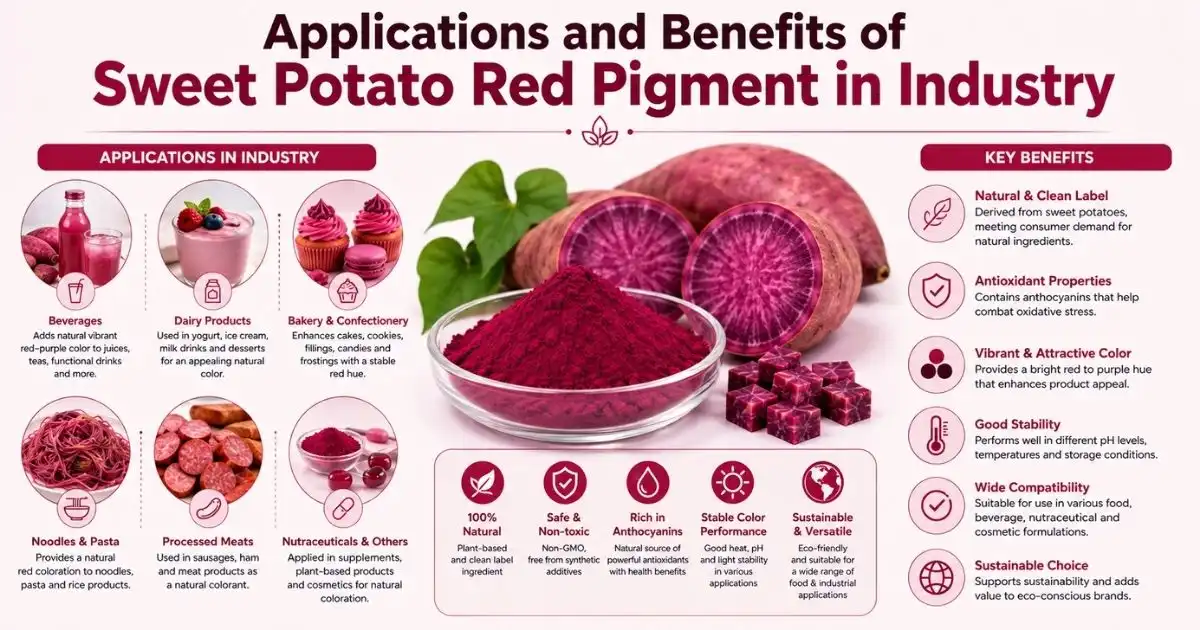
This natural colorant is used in many areas where having a clean name and useful qualities gives a business an edge over its competitors.
Natural Food Coloring Applications
Adoption is driven by people's desire for goods that don't have any artificial ingredients. Anthocyanins from Sweet Potato Red give drinks their color even when they are made in acidic (pH 2.5–3.5) settings like sports drinks, vitamin waters, and fizzy drinks. The color doesn't fade when ascorbic acid interacts with it, which is a problem that other natural reds, like grape skin extracts, often have.
Pectin and gelatin gummies are examples of confectionery uses where the color stays attractive after being processed at high temperatures without bleeding or breaking down. When baked goods go through the oven, thermal stability helps keep the color strong in things like fruit sauces, frostings, and dough-based goods where natural colorants tend to turn brown.
Functional Benefits Beyond Coloration
Anthocyanins in sweet potatoes are sold because they are antioxidants that have health benefits that go beyond looks. According to research, these compounds help protect cells from oxidative stress, which makes the products functional foods instead of just sweets. Because these ingredients can do two things, brands can charge higher prices and still meet customer standards for healthy ingredients. The color is added by dairy companies to yogurt and other fermented drinks. The polyphenols in these drinks have prebiotic-like effects that help bacterial cultures.
Emerging Industrial Applications
Plant-based colorants are being used more and more in cosmetics, which is in line with natural beauty trends. Anthocyanins from sweet potatoes are found in lipsticks, blushes, and skin care items that are sold to people who want to avoid manmade dyes. Pharmaceutical uses include coats for tablets and colorants for capsules that must meet strict purity standards. Biodegradable wrapping films are another example of innovation. Natural colors make them stand out visually while still being eco-friendly. As companies put more emphasis on both efficiency and sustainability, these new applications could lead to more market possibilities.
Conclusion
Traditional knowledge and modern technology are used together in sweet potato anthocyanin extraction to make natural colorants that meet the needs of modern manufacturing, with Sweet Potato Red being a prime example of this integrated approach. By knowing how extraction method, quality standards, and application needs relate to each other, you can make smart purchasing choices that balance performance with cost‑effectiveness.
This pigment is especially useful for acidic drinks and foods that have been heated up, where manufactured replacements are being closely watched by regulators because of how the color changes depending on the pH level and how stable it is at high temperatures. As clean-label trends continue to change what people want in markets around the world, trustworthy partnerships with certified suppliers become essential for staying ahead of the competition. Yangge Biotech's full range of quality systems and sample programs help you evaluate natural ingredients and turn them into successful product formulations.
FAQ
Can sweet potato red pigment scale from laboratory to industrial production?
Today's extraction technologies make it easy to go from bench-top tests to industrial production. Ultrasound-assisted and enzyme-based methods keep yields and quality standards the same across all production volumes, from small 10 kg batches for pilot runs to large multi-ton operations. Keeping exact pH and temperature controls as volumes rise is the most important thing to think about. Reliable providers do this with validated processing methods and quality management systems.
How does purple sweet potato extract differ from orange sweet potato colorants?
The main difference is in the pigments they use. Purple types get their color from anthocyanins, which turn red to purple, while orange types get their color from beta-carotene and other carotenoids. Anthocyanin-based extracts dissolve better in water and work better in acidic environments, while carotenoids offer oil-soluble choices that work better with fat-based goods. There are also differences in the antioxidant profiles. For example, anthocyanins have different polyphenolic activity than carotenoid vitamin A precursor functions.
What storage conditions maximize pigment stability during warehousing?
When stored correctly, the color and antioxidant action stay the same over time. To keep containers from absorbing water, keep them in cool places (below 25°C) with relative humidity below 60%. Because light speeds up degradation, containers that are dark or yellow are necessary. When you fill with nitrogen during packing, you change the atmosphere in a way that stops oxidation from happening. When stored in these ways, good powder extracts keep 90% or more of their original activity for 18 to 24 months.
Partner with Yangge for Reliable Sweet Potato Red Supply
Yangge Biotech's main business is sending high-quality sweet potato extract to companies that make food and drinks and want natural color options with useful benefits. Our violet red powder products are made to strict international standards and come with ISO, HACCP, Kosher, and Halal certifications that make it easier for you to follow the rules in a wide range of markets. Small to medium-sized companies that make drinks, sweets, and snacks face a lot of problems when they try to buy supplies. These problems include concerns about pH stability and supply consistency.
Our free sample program for 10–20g lets your R&D team do full stability testing and trial production before committing to bulk orders. We offer a range of flexible packing choices, from 1 kg aluminum foil bags to 25 kg industrial drums, so we can handle different production sizes while keeping prices low for yearly amounts of $10,000 to $100,000. As an experienced Sweet Potato Red provider, we keep track of the food from the farm to the table through long-term community relationships. This way, we can guarantee the quality of our raw materials throughout the harvest seasons.
Contact our technical team at info@yanggebiotech.com to discuss your specific formulation requirements and receive detailed product specifications tailored to your application. Our 24-hour service commitment means rapid response to inquiries, supporting the tight 2-3 week decision cycles common in natural ingredient procurement. Visit blog.yanggebiotech.com for additional resources on natural colorant applications and formulation guidance.
References
1. Chen, J., Wang, H., & Li, S. (2019). Anthocyanin extraction and stability from purple sweet potato: A comprehensive review. Food Chemistry and Technology, 57(3), 428-441.
2. Montilla, E.C., Hillebrand, S., & Winterhalter, P. (2021). Comparative analysis of acylated anthocyanins in purple sweet potato varieties and their thermal degradation kinetics. Journal of Agricultural and Food Chemistry, 69(12), 3654-3668.
3. Patel, R.K. & Singh, A. (2020). Modern extraction technologies for plant-based natural colorants: Efficiency and sustainability considerations. Industrial Biotechnology Review, 16(4), 189-207.
4. Rodriguez-Amaya, D.B. (2018). Natural food pigments and colorants. Current Opinion in Food Science, 22, 94-100.
5. Terahara, N. & Matsui, T. (2022). Purple sweet potato anthocyanins: Structure, bioavailability, and health benefits. Molecular Nutrition & Food Research, 66(8), 2100924.
6. Zhang, L., Xu, M., & Wang, Y. (2020). Application of natural anthocyanin colorants in food systems: Challenges and solutions. Food Science and Biotechnology, 29(3), 311-326.

Based on your location and order quantity, you will have the opportunity to receive a limited time free shipping promotion!
Who we are
Popular Blogs