How Is Gardenia Yellow Food Color Used in Foods and Beverages?
Gardenia yellow food color is a water-soluble natural pigment derived from the fruit of Gardenia jasminoides Ellis. Its primary coloring compounds, crocin and crocetin, deliver a clear, bright yellow hue across a wide range of food and beverage applications — from fruit juices and noodles to dairy desserts and baked goods. Unlike synthetic tartrazine, it carries no azo-dye regulatory burden, making it a practical choice for manufacturers targeting clean-label markets. As global demand for natural colorants grows, understanding how this pigment performs in real production settings matters more than ever.Contact us or you can email us at info@yanggebiotech.com or go to blog.yanggebiotech.com to ask for a sample, price list, or application data pack.
What Is Gardenia Yellow Food Color and Its Key Characteristics?
Botanical Origin and Active Compounds
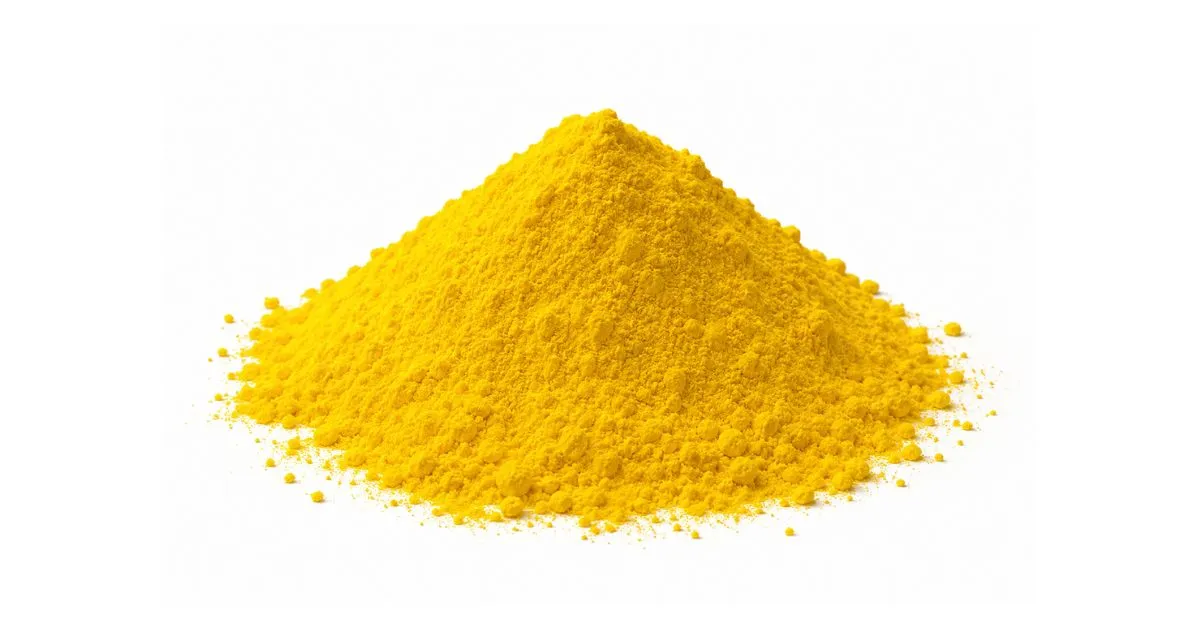
Water extraction and spray drying are used to get gardenia yellow color from the dried fruit of Gardenia jasminoides. Yangge Biotech's Gardenia Yellow Powder E60 is made using HPLC-guided extraction, which creates an orange-yellow powder with a Color Value (E1%/1cm at 440 nm) that ranges from E60 to E500 based on the level of processing. There are two main pigments in the powder, crocin and crocetin. They are both carotenoids and give it its color and protective properties.
Physical and Chemical Properties
The main technical factors that food technologists and quality control teams usually look at when judging this ingredient are summed up in the table below:
| Parameter | Value / Range |
|---|---|
| Appearance | Orange-yellow powder |
| Maximum absorption wavelength | 440 nm |
| Solubility | Fully water-soluble; insoluble in ether/gasoline |
| Stable pH range | 4.0 – 8.0 |
| Thermal stability | Color retained after 60 min at 80°C |
| Color Value specification | E60, E300, E500 |
Since gardenia yellow food color has these qualities, it is much easier to use than fat-soluble colors like curcumin, which need emulsifiers to mix with water-based systems.
How It Compares to Other Natural Yellow Colorants
Turmeric has an earthy taste that makes it hard to use in goods with a bland taste. The color anatto leans toward orange. Saffron is too expensive to grow on a large scale. Gardenia yellow has a neutral taste and dissolves completely in water, making solutions that are clear to the naked eye. This is a huge benefit for functional drinks, clear fruit drinks, and dairy uses where cloudiness is not acceptable.
Practical Uses of Gardenia Yellow Food Color in Foods and Beverages
Beverages and Dairy Products
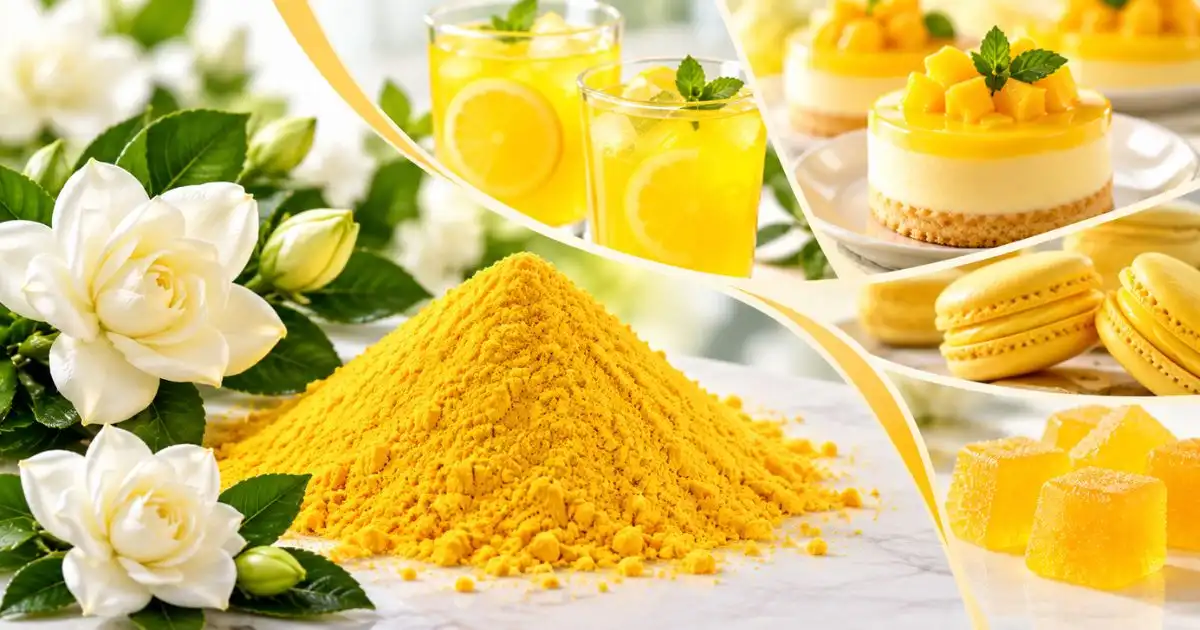
Gardenia yellow mixes totally and doesn't make the liquid cloudy in fruit juices, sports drinks, and colored waters. For dairy uses like yogurt, ice cream, and milk-based treats, it works well in the pH range of 4.0 to 8.0 where most dairy products are found. Depending on the goal color depth and the E-value grade chosen, the dosage in drinks is usually between 0.01% and 0.05% by weight.
Bakery, Noodles, and Confectionery
The mild heat of baking and cooking doesn't change the color of this pigment much, which is why bakeries and companies that make noodles like it. It gives hard sweets, gummies, and sauces the same color from batch to batch in the candy industry. Important technical note: iridoid glycosides (geniposide) that are still present in lower-purity grades can react with amino acids when heated, which can lead to a greenish shift. This risk is taken away by specifying a high-purity grade with an OD ratio above 0.4.
Snacks, Seasonings, and Functional Foods
Here is a useful list of application categories and how much of a drug is usually needed for each:
| Application | Recommended Grade | Typical Use Level |
|---|---|---|
| Clear beverages | E300 – E500 | 0.01% – 0.03% |
| Dairy desserts | E60 – E300 | 0.02% – 0.05% |
| Noodles / pasta | E60 – E300 | 0.03% – 0.08% |
| Baked goods | E60 | 0.05% – 0.10% |
| Confectionery / gummies | E300 | 0.02% – 0.06% |
Formulators of functional foods and dietary supplements also like its antioxidant qualities. Crocin has been studied for its ability to protect against oxidative stress, which adds a health benefit beyond just looking good.
Handling, Storage, and Shelf Life
Optimal Storage Conditions
Gardenia yellow is sensitive to UV light, which breaks down materials faster. In order to keep things fresh, they should be kept in tight metal foil bags that keep out light and keep the temperature below 25°C and the relative humidity below 60%. In these settings, the shelf life is usually 24 months from the date it was made. Exposure to direct sunlight, even for a short time during production, can make colors less vivid.
Equipment and Processing Precautions
When iron ions (Fe⁺) mix with crocin, the solution turns dark or almost black. The tools used on production lines should be made of Grade 304 or 316 stainless steel. If the mineral content of tap water is high, this reaction can't happen. To stop it, add EDTA as a chelating agent or switch to softer water while mixing. Including a list of the materials used in the tools in the specification sheet helps make sure that all output runs are the same.
Quality Control Indicators
The QC and procurement teams should keep an eye on two signs of degradation for gardenia yellow food color: a change that can be seen from clear yellow to brown, and a drop that can be measured at 440 nm in the OD reading. The most accurate way to accept or reject inventory before it goes into production is still to test each incoming lot against the Certificate of Analysis (CoA), which includes HPLC purity data and an OD ratio.

Procurement Insights: Buying Gardenia Yellow for Bulk Use
Certifications and Supplier Qualification
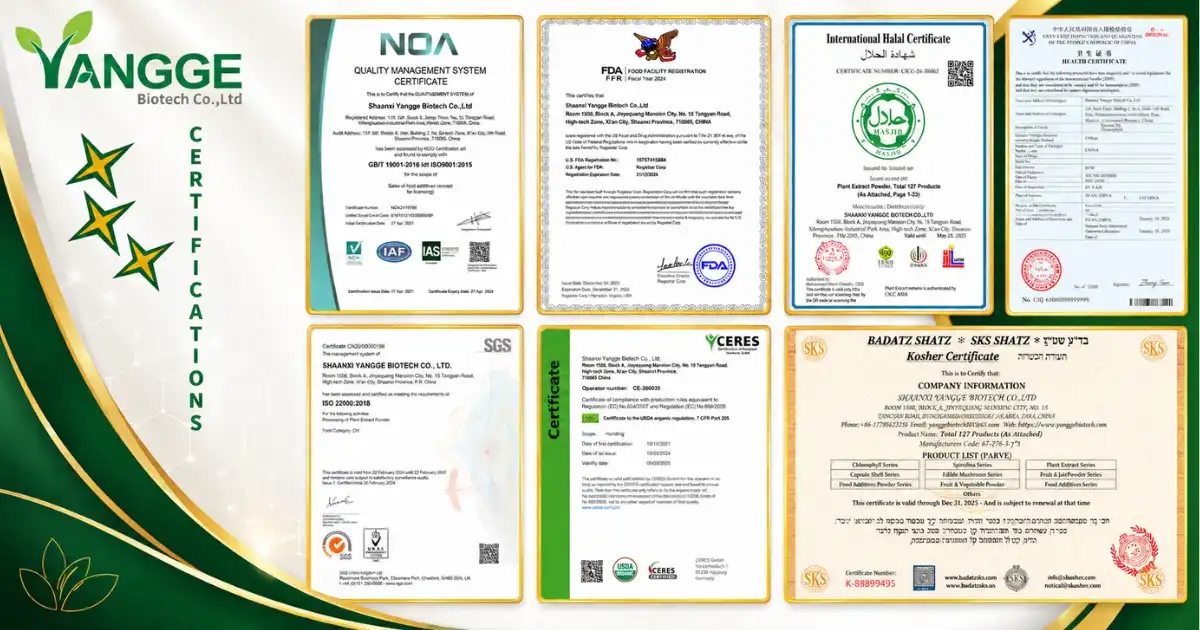
Yangge Biotech is certified by ISO, HACCP, Kosher, and Halal, and they follow GMP guidelines when they make their products. For food companies that want to sell, these qualifications make it easier to get into regulated markets in the EU, the Middle East, and Southeast Asia with less paperwork. Requesting a full regulatory document during the sampling stage, which includes the MSDS, CoA, and any relevant market-specific approval letters, cuts the time needed for the compliance review by a large amount.
Minimum Order Quantities and Sample Policy
One problem that mid-sized food companies often have is that suppliers' MOQ requirements are higher than what they need for a trial batch. Yangge lets formula engineers do stability testing and production runs before committing to full volume with low-MOQ sample orders. This directly addresses the evaluation cycle of 3–8 weeks that is common for projects that replace ingredients.
Logistics and Shelf-Life Management
Standard export packing is 25 kg per drum, but you can ask for different bag sizes. Because the color changes with light, standard practice is to put aluminum foil bags inside outer cardboard drums. For foreign shipments, buyers should check the remaining shelf life when the goods arrive; a fair contractual requirement is that the goods have at least 18 months left to go.
Comparing Gardenia Yellow with Market Alternatives
Artificial colorants, such as tartrazine (FD&C Yellow No. 5), are still cheaper per unit, but they are losing ground in the eyes of regulators. Foods that contain tartrazine must have a warning sign in the EU. Some Asian and Middle Eastern export markets are also moving toward stricter rules on azo dyes. Because natural yellow colorants are label-compliant, makers of multiple SKUs that are sent to different countries will have to change the formulas less often over time.
To mix with water, curcumin needs polysorbate emulsifiers, which makes the process more expensive and difficult. When taken in larger amounts, beta-carotene tends to turn orange. Gardenia yellow works well in a certain range of conditions: it dissolves in water, doesn't change the taste of food, and stays solid in the pH and temperature ranges that most food makers work with. Not just the way it's marketed, but also these practical differences are what make beverage and bakery producers want to use it.
Conclusion
Gardenia yellow food color is a safe and label-friendly option to manmade yellow dyes for companies that make food and drinks. Its ability to dissolve in water, stay stable at high temperatures, and have a neutral flavor profile make it useful for formulating drinks, dairy, baked goods, and sweets.
Performance results depend on choosing the right grade that fits your processing conditions and target matrix. Adding this natural color to existing production lines is easy as long as the right storage is used, the supplier is properly documented, and there are clear rules for the equipment. This helps meet both product quality and export compliance goals.
FAQ
Does gardenia yellow food color affect product flavor?
No, gardenia yellow doesn't have a taste at normal use amounts like turmeric does. This makes it perfect for neutral-taste items like clear drinks, white candy coatings, and dairy bases, where other natural colorants can cause issues with off-notes.
Why did my product turn greenish after using this pigment?
This usually happens when leftover geniposide reacts with amino acids or proteins when heat or enzymes are present. To fix this, you need to select a high-purity grade with an OD ratio above 0.4, which can be proven by HPLC data on the COA. Yangge's E300 and E500 grades are designed to reduce this risk as much as possible.
Is it stable in acidic soft drinks?
Gardenia yellow does well in pH ranges of 4.0 to 8.0. Below pH 3.0, color changes and precipitation may happen, so highly acidic applications need stability testing. For the most part, it works well in weakly acidic to neutral matrices.
What documents are available for export compliance?
Yangge gives out MSDS, CoA, HPLC test results, and regulatory support letters that are special to each market. You can get ISO, HACCP, Kosher, and Halal certificates upon request. These meet the needs of most major export destinations.
Can small food manufacturers place trial orders?
Yes, Yangge does accept low-MOQ sample and trial orders to help mid-sized producers test things out before committing to full production.
Request a Sample of Yangge's Gardenia Yellow Powder E60 Today
It doesn't have to be hard to find natural yellow colorants. Yangge Biotech has Gardenia Yellow Powder E60, which is an approved and application-tested gardenia yellow food color supplier option. It has a low MOQ, all the necessary regulatory paperwork, and our formulation team is available for direct technical support. You can email us at info@yanggebiotech.com or go to blog.yanggebiotech.com to ask for a sample, price list, or application data pack.
References
1. Schwartz, S.J., Cooperstone, J.L., Cichon, M.J., et al. Colorants. In Fennema's Food Chemistry, 5th ed. CRC Press, 2017.
2. Mortensen, A. Carotenoids and other pigments as natural colorants. Pure and Applied Chemistry, 2006.
3. Hadden, W.L., et al. Carotenoid composition of marigold (Tagetes erecta) flower extract used as nutritional supplement. Journal of Agricultural and Food Chemistry, 1999.
4. Tsuda, T., et al. Antioxidant properties of crocin from Gardenia jasminoides. Journal of Nutritional Science and Vitaminology, 1995.
5. European Food Safety Authority (EFSA). Re-evaluation of gardenia yellow (E 164) as a food additive. EFSA Journal, 2013.
6. Scotter, M.J. Methods for the determination of European Union-permitted added natural colours in foods: A review. Food Additives & Contaminants: Part A, 2011.

Based on your location and order quantity, you will have the opportunity to receive a limited time free shipping promotion!
Who we are
Popular Blogs