What Are the Benefits of Marigold Extract for Natural Skin Care Uses?
Tagetes erecta 's golden petals contain skin-beneficial lutein, zeaxanthin,. flavonoids, and carotenoids. Bioactive compounds reduce UV-induced oxidative damage, inflammation, and skin moisture barrier weakness. When standardized to established lutein quantities (5% to 90%) and extracted under regulated conditions, marigold extract provides a reliable, clean-label substance for skin care products seeking efficacy and traceability. Contact our team at info@yanggebiotech.com or visit blog.yanggebiotech.com to request a COA, product datasheet, or bulk sample today.

Marigold Extract and Its Growing Role in Natural Skin Care
Where the Ingredient Comes From
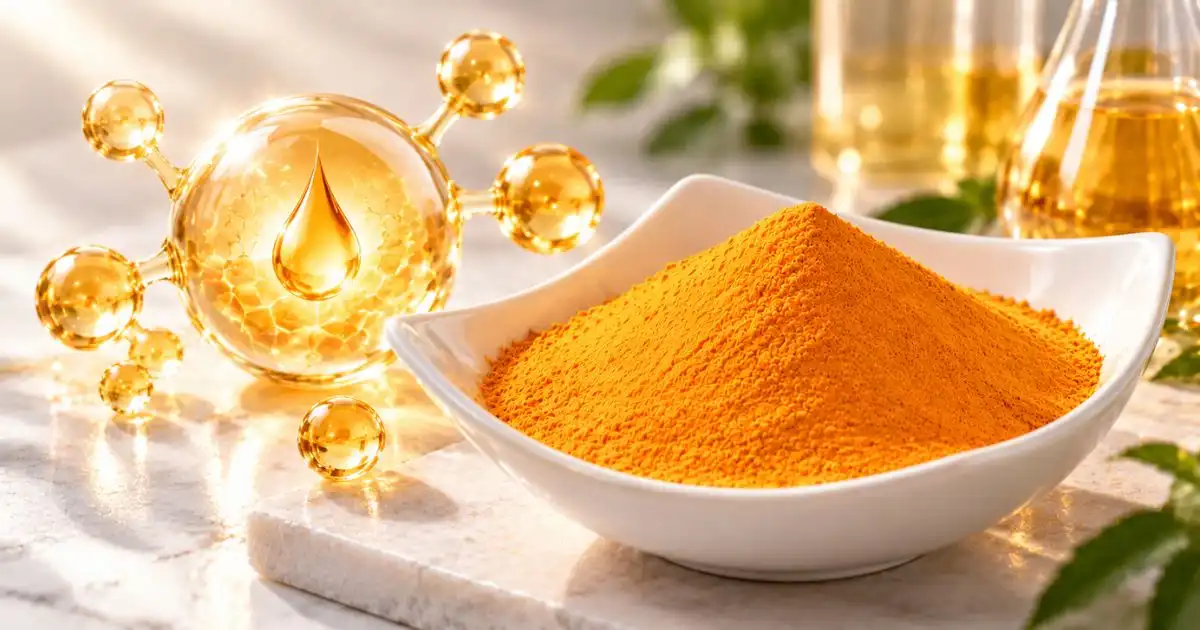
The commercial "marigold" Calendula officinalis is distinct from Tagetes erecta L., cultivated for carotenoid extraction. Yangge's lutein powder originates from Tagetes erecta flowers grown at its own plant base in Yunnan, where unique soil and high-altitude sunlight produce marigold with a long blooming duration and high pigment content.
Why B2B Buyers Are Paying Attention
Plant-derived, safe-label skin care products are in demand. Global botanical extracts business could reach $9 billion by 2030, in accordance with Grand View Research. North American, European, and Asian-Pacific topical, active, and beauty product procurement teams are investigating natural antioxidants.
What Makes This Extract Different
Standardized Tagetes erecta extract contains detectable xanthophyll carotenoids, unlike generic plant oils or infusions. Yangge's orange-yellow lutein powder containing zeaxanthin as a co-active ingredient is HPLC-standardized between 5%–90%, providing formulators accurate bioactive load control.

Core Skin Benefits Backed by Science
According to peer-reviewed study, lutein-rich marigold extract benefits skin health. A 2016 Skin Pharmacology and Physiology research revealed that oral and topical lutein supplementation enhanced skin hydration by 38% and elasticity by 8% above placebo. These findings suggest lutein's photoprotective and skin-conditioning properties.
Antioxidant Protection Against Oxidative Stress
Marigold extract carotenoids, especially lutein, reduce UV and blue light-induced ROS. This lowers skin cell membrane lipid peroxidation, which causes photoaging and pigmentation.
Anti-Inflammatory Action on Sensitive Skin
Flavonoids found in marigold extract, also known as Tagetes flower extracts, inhibit pro-inflammatory cytokine production. This makes the ingredient suitable for skin care lines targeting reactive, post-procedure, or eczema-prone skin where redness and irritation are primary concerns.
UV Photoprotection and Skin Barrier Support
The two substances absorb blue-violet HEV light (400–500 nm). This feature helps prevent photodamage in topical preparations. Research shows that 10 mg lutein daily raises skin carotenoid levels in 4 weeks.
| Benefit | Active Compound | Application Format |
|---|---|---|
| UV photoprotection | Lutein, Zeaxanthin | Topical serum, oral supplement |
| Anti-inflammation | Flavonoids, Triterpenoids | Cream, mask, capsule |
| Skin hydration & elasticity | Lutein (free form) | Oral softgel, functional beverage |
| Antioxidant defense | Carotenoids, Saponins | Powder, emulsion, gummy |
These benefits collectively position marigold-derived lutein as a multi-functional ingredient, not simply a pigment source.
How to Use Marigold Extract in Skin Care Formulations
Concentration Guidelines for Topical Products
In topical applications, lutein extract is typically incorporated at 0.1%–1.0% of total formulation weight. Powder forms with 5%–20% lutein standardization work well in water-based serums and emulsions. Higher purity grades (up to 90%) are better suited for encapsulated oral supplements where dosage precision is required.
Formulation Compatibility and Stability
Lutein is sensitive to light, heat, and oxygen. Here are the primary formulation strategies used to protect potency:
- Micro-encapsulation: Encapsulating lutein in a lipid or maltodextrin matrix significantly extends shelf life and improves bioavailability in water-based systems, including functional beverages and infant formula.
- Water-dispersible formats: Water-dispersible lutein powder allows uniform distribution in aqueous formulations—useful for beverage fortification and soft candy (gummy) production.
- Antioxidant co-additives: Combining lutein with tocopherol (Vitamin E) or ascorbic acid in formulations slows carotenoid degradation.
These methods help procurement and R&D teams choose the right ingredient format for eye-health pills, beauty gummies, and topical cream bases. Packaging products in opaque, airtight bags with nitrogen flushing protects them throughout transport.
Oral Supplementation vs. Topical Use
Two delivery methods are scientifically proven for marigold extract. Topical use protects the stratum corneum, while oral supplementation boosts systemic carotenoid levels and improves skin. Many skin care firms use both approaches to appeal to health-conscious customers from the inside out.

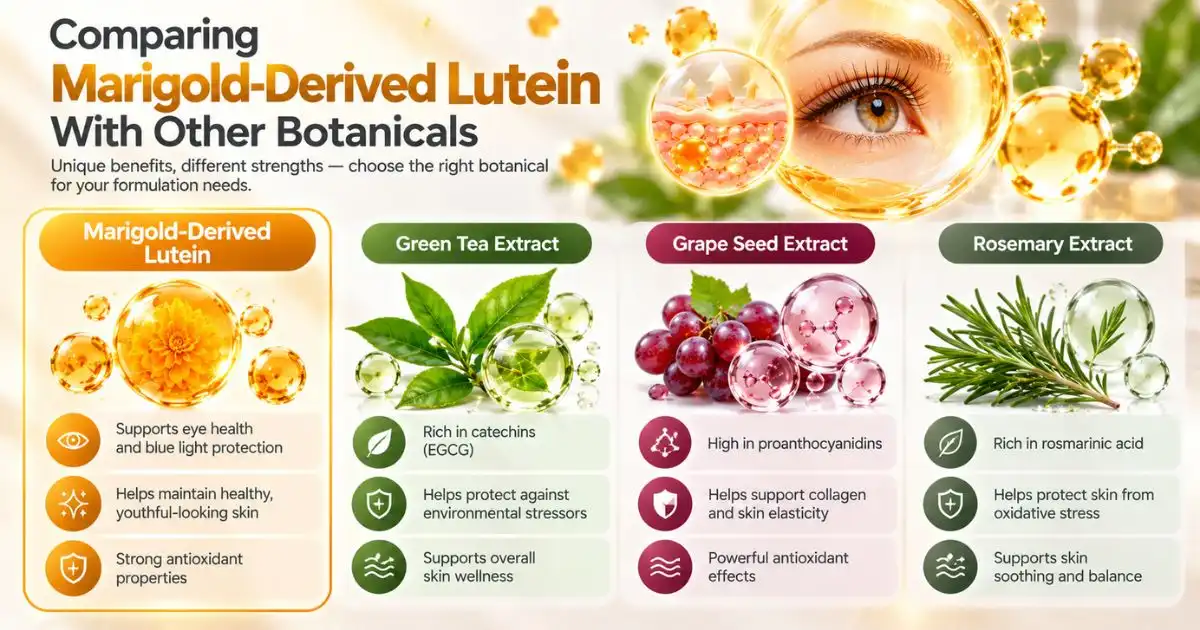
Comparing Marigold-Derived Lutein With Other Botanicals
When evaluating ingredient options, procurement teams often compare marigold extract against other natural skin-active botanicals. The table below summarizes key differentiation factors.
| Ingredient | Primary Bioactives | Skin Benefit Focus | Lutein Content | Typical Format |
|---|---|---|---|---|
| Tagetes erecta extract | Lutein, Zeaxanthin | UV protection, antioxidant | 5%–90% (HPLC) | Powder, oleoresin |
| Calendula officinalis | Flavonoids, Saponins | Soothing, wound healing | Trace | Infused oil, tincture |
| Chamomile extract | Apigenin, Bisabolol | Anti-inflammatory, calming | None | Hydrosol, oil |
| Turmeric extract | Curcumin | Anti-inflammatory, brightening | None | Powder, CO2 extract |
Tagetes erecta extracts is the only widely scalable biological source of regulated lutein and zeaxanthin, offering it an edge for companies that require carotenoid claims. Chamomile and calendula boost lutein's photoprotective properties.
Organic certification adds value in premium retail segments. However, for B2B buyers focused on functional efficacy, HPLC-verified purity, traceability documentation, and FDA GRAS status often carry more weight than organic labeling alone.
Procuring Marigold Extract: What B2B Buyers Should Know
Supplier Credentials That Matter
Before placing large orders, buyers should seek COA, Non-GMO, and GMP manufacturing documents. Yangge has ISO, HACCP, Kosher, etc Halal certifications. Infant formula and regulated supplement markets demand complete farm-to-finished-product traceability, which its Yunnan planting business provides.
Production Process and Quality Control
Yangge's lutein powder from marigold extract follows a controlled production flow: Raw Material → Immersion in Water → Filtering → Purification → Vacuum Concentration → Sterilization → Drying → Powder. Each batch is tested by HPLC for lutein and zeaxanthin content, with COA reports available upon request.
Specifications at a Glance
| Parameter | Detail |
|---|---|
| Product Name | Lutein Powder |
| Plant Source | Tagetes erecta L. (Flower) |
| Active Ingredients | Lutein, Zeaxanthin |
| Specification Range | 5%–90% |
| Analysis Method | HPLC |
| Appearance | Orange-yellow powder |
| Certifications | ISO, HACCP, Kosher, Halal, Non-GMO |
Yangge offers bulk lutein powder across all specification tiers, accommodating small-batch trials and large-volume production runs. Custom micro-encapsulated and water-dispersible formats are available upon inquiry.

Conclusion
Lutein powder from marigold extract adds scientific value to natural skin care products. Clinically proven antioxidant and photoprotective characteristics make it a reliable active for UV protection, anti-aging, and barrier support products. This ingredient satisfies regulated market quality and compliance standards with Yunnan supply chain traceability and 5%–90% uniform grades. With the proper supply partner, matching the correct lutein format to your topical serum, oral beauty supplement, or functional gummy is easy.
FAQ
Is marigold extract safe for sensitive skin types?
Yes. When properly standardized and tested, Tagetes erecta lutein extract is well-tolerated. Individuals with ragweed allergies should conduct a patch test before use, as cross-reactivity is possible with members of the Asteraceae plant family.
Can lutein from marigold be used in both topical and ingestible products?
Yes. Free-form lutein powder works in topical emulsions and creams, while encapsulated or water-dispersible grades suit oral supplements, functional beverages, and gummies. Yangge provides both formats.
What storage conditions preserve lutein potency?
Store in a cool, dry location below 25°C, away from direct light and moisture. Packaging in airtight, opaque containers with nitrogen flushing is recommended for bulk ingredients to maintain label-claimed potency.
How do I verify actual lutein content matches stated specification?
Always request HPLC-based COA documentation from your supplier. Yangge provides batch-level test reports that confirm both lutein and zeaxanthin content against stated specification ranges.
What is the typical sample-to-order timeline?
Most R&D teams complete stability and formulation testing within 6–10 weeks. Yangge supports this process with technical data sheets, sample dispatch, and formulation guidance.
Request a Sample from Yangge Trusted Marigold Extract Supplier
Yangge Biotech supplies pharmaceutical and food-grade lutein powder in specifications from 5% to 90%, backed by ISO, HACCP, Kosher, and Halal certifications. Our Yunnan-grown raw materials and full traceability records support your regulatory submissions and quality audits. Contact our team at info@yanggebiotech.com or visit blog.yanggebiotech.com to request a COA, product datasheet, or bulk sample today.
References
1. Juturu, V., & Bowman, J.P. (2016). Skin health with lutein and zeaxanthin. Skin Pharmacology and Physiology 29(5):224–230.
2. Palombo, P., Fabrizi, G., Ruocco, V., & E. (2007). Long-term skin benefits from oral/topical antioxidant therapy with lutein and zeaxanthin. Skin Pharmacology and Physiology 20(4):199–210.
3. Roberts & Green (2009). Eye and skin health with lutein and zeaxanthin. Dermatology Clinics, 27(2), 195–201.
4. Cho, R., Lee, D. M., Won, C. H., Kim S. M., Lee S., Lee, R. J., & C hang, J. H. (2009). Beta-carotene supplementation affects photoaging and I collagen a gene expression in skin cells in vivo differently at low and high levels. Dermatology 219(1):81–88.
5. Zanatta, C. F., Mercadante A. Z., & Bobbio, F. A. Carotenoids have from marigold (Tagetes erecta) petals: Identification and stabilization. Food Chemistry, 91(3), 479–486.
6. N. Nisar, L. Li, S. Lu, N. C. Khin, & B. J. Pogson (2015). Plant carotenoid metabolism. Molecular Plant, 8(1), 68–82.

Based on your location and order quantity, you will have the opportunity to receive a limited time free shipping promotion!
Who we are
Popular Blogs