How Does Yeast Beta-glucan Support Immunity and Gut Health for Adults?
Yeast Beta-Glucan Powder from Yangge Biotech is a high-quality functional ingredient derived from the cell walls of Saccharomyces cerevisiae (baker’s yeast). Rich in β-1,3/1,6-glucans, it is designed for use in dietary supplements, functional foods, beverages, nutraceuticals, cosmetics, and animal nutrition products. Yangge Biotech offers fine yeast beta-glucan powder with consistent quality, flexible specifications, and bulk/OEM packaging options for manufacturers and brands.
For businesses looking to source Yeast Beta-Glucan Powder in bulk, Yangge Biotech provides samples, COA and technical documentation, OEM/private-label packaging, and customized solutions. Contact Yangge Biotech today or email info@yanggebiotech.com for product specifications, samples, pricing, and bulk supply inquiries.
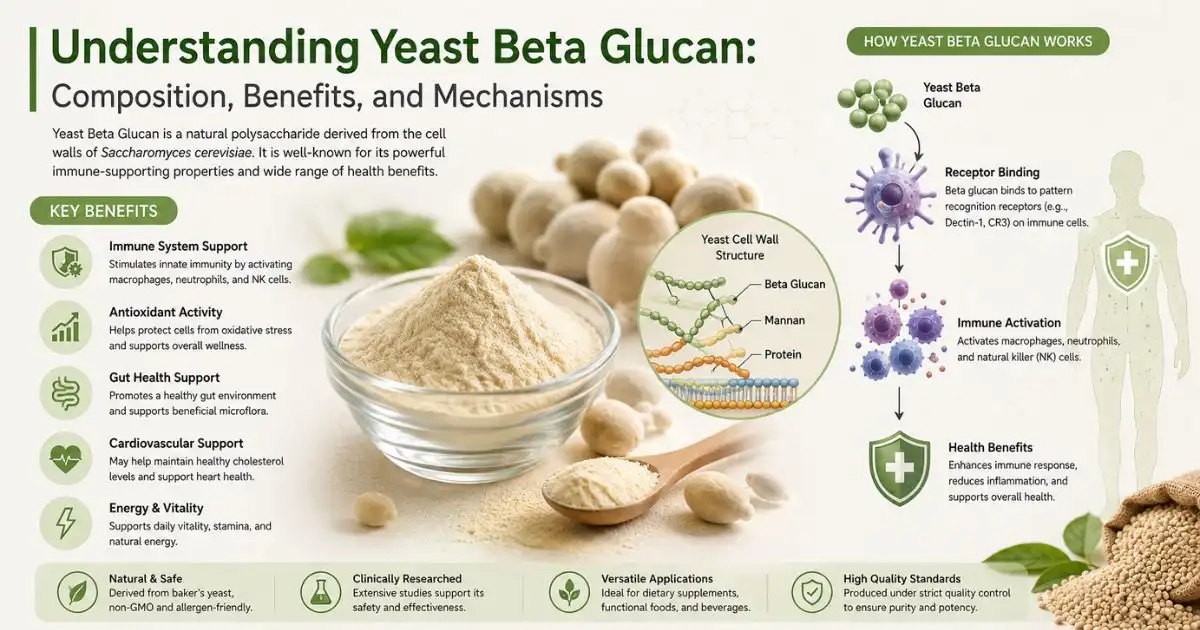
Yeast beta-glucan, derived from the cell walls of Saccharomyces cerevisiae, is a bioactive polysaccharide with a distinctive β-1,3/1,6-glucan molecular structure. For adults, it works by activating key immune cells macrophages, neutrophils, and dendritic cells through Dectin-1 receptor binding, priming both innate and adaptive immune responses. Simultaneously, it acts as a prebiotic fiber, nourishing beneficial gut microbiota and reinforcing the intestinal barrier. Clinical evidence consistently supports daily intake of 250–500 mg for measurable immune modulation and digestive resilience in healthy adults.
Understanding Yeast Beta-Glucan: Structure, Sources, and Health Benefits
The shape of the β-1,3/1,6-glucan linkage in polysaccharides made from yeast is different from that of the β-1,3/1,4 linkage in beta-glucan from oats. The way living things work is changed by this difference in structure, not just how it looks. Some immune cells in the gut can recognize certain types of glucan from yeast because of its triple-helix shape. This isn't something that glucan from oats can do as well. The cell walls of Saccharomyces cerevisiae yeast are used to make Yangge's Yeast beta-glucan (β-1,3/1,6-glucan). Extra cellular impurities are taken out during processing to keep the structure whole. There is a fine, off-white to yellowish powder that is at least 70% pure and comes in both types that dissolve and don't dissolve.
| Feature | Yeast Beta-Glucan (β-1,3/1,6) | Oat Beta-Glucan (β-1,3/1,4) |
|---|---|---|
| Primary Linkage | β-1,3 with β-1,6 branches | β-1,3 and β-1,4 linear |
| Key Health Function | Immune Modulation | Cholesterol Reduction, Fiber |
The element can help the defense system, but it can also be used for many other things. It keeps blood sugar and cholesterol in check, keeps cells from getting hurt, and makes the bowels work better. Because of these things, it's a great candidate for use in useful foods, cosmetics, dietary supplements, and animal feed.
How Yeast Beta-Glucan Supports Immunity and Gut Health?
Activating the Innate Immune Response
When it gets to the Peyer's patches in the small intestine, it connects to Dectin-1 receptors on macrophages and dendritic cells. Some cells further down the line start to phagocytose, release cytokines, and work as natural killer (NK) cells. To put it simply, this warns the defense system without causing inflammation that is bad for you. A study published in 2021 in the journal Nutrients found that giving healthy people 250 mg of beta-glucan produced from yeast every day for eight weeks made their natural killer cells work a lot better.
Gut Microbiota and Intestinal Barrier Support
This polysaccharide feeds only good bacteria, like Lactobacillus and Bifidobacterium, because it is a soluble prebiotic fiber. This makes more short-chain fatty acids (SCFAs). SCFAs, especially butyrate, feed colonocytes directly and make epithelial tight junctions tighter, which stops food from passing through the intestines. There are two ways that yeast beta-glucan helps the immune system: it boosts the immune system and keeps the bacteria in balance.
As more and more adult health products are made, yeast-origin glucan is being chosen over plant-based choices because it works better with the immune system and the microbiome. It is possible to prove the process, figure out the amount needed, and be sure that it will stay stable during production.
Comparing Yeast Beta-Glucan with Other Beta-Glucans for Immunity and Gut Health
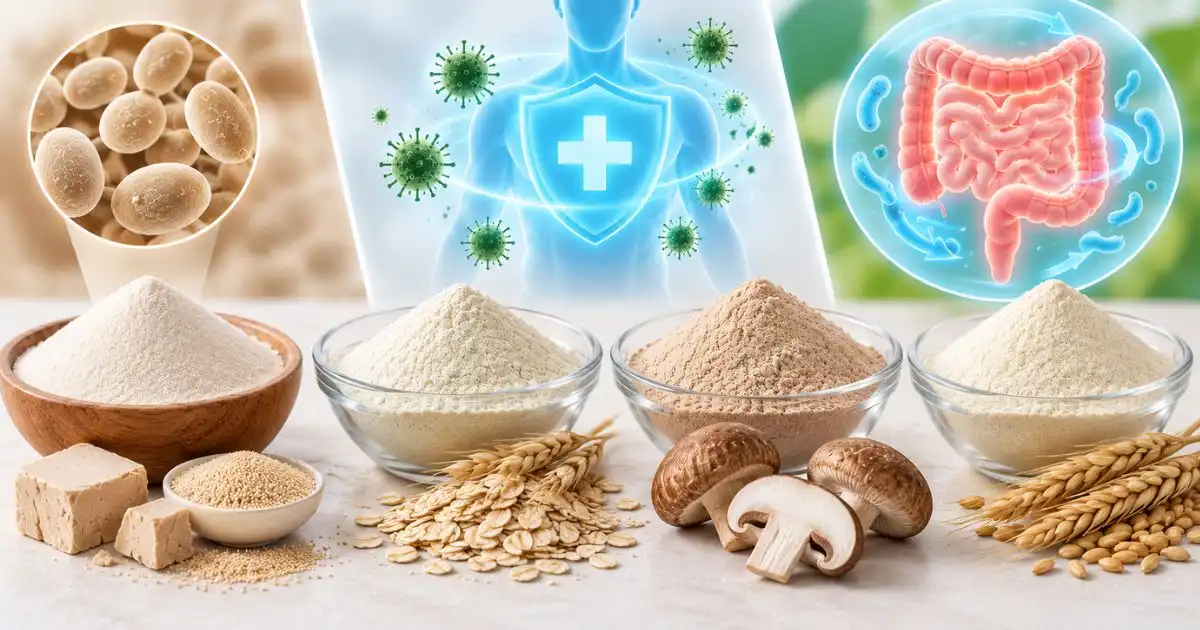
Different kinds of beta-glucan work in different ways. The people who work in procurement often mix up yeast, oat, and mushroom sources. The main changes between immunity and gut health that you need to know about are shown below in the table.
| Source | Molecular Structure | Primary Application | Immune Efficacy |
|---|---|---|---|
| S. cerevisiae (Yeast) | β-1,3/1,6-D-Glucan | Immune modulation, gut health | High |
| Oat / Barley | β-1,3/1,4-D-Glucan | Cardiovascular, cholesterol | Low |
| Mushroom (Lentinus) | β-1,3/1,6-D-Glucan | Cancer treatment, immune | Moderate–High |
There are some kinds of mushrooms that have the same β-1,3/1,6 bond as glucans that come from yeast. But the process of making it is more standardized, and the purity that comes out of it is always the same. It's very helpful for business clients who need to be able to repeat batches.
Yangge's product has three main technology advantages that help makers figure out how to make it:
- Soluble fiber compatibility: They work well with soluble fibers because they dissolve in water. This means they can be easily added to capsules, tablets, powdered drink mixes, and functional dairy forms without changing the taste or consistency.
- High bioavailability: The drug is easily taken at the mucosal layer of the gut because of the way its molecules are structured. Because of this, less of it is needed to work than with rivals that aren't as pure, which makes the price per unit lower.
- Heat and pH stability: There is no change in the ingredient's activity when it is heated, pasteurized, or fermented at low pH or high temperatures. This is because many useful vitamins are broken down during these processes.
All of these technical features directly lead to more product formats, fewer times of reformulating, and lower rates of QC rejection. These are all things that R&D engineers and procurement managers care about when sourcing yeast beta-glucan.
Practical Considerations for Procuring Yeast Beta-Glucan for B2B Clients
When a yeast glucan supplier is being looked at, the testing method has to be written on the certificate of analysis (COA). The USP method, also known as the Megazyme Enzymatic (GOPOD) method, is the accepted method in the area. People who are buying something should make sure that the amount of beta-glucans listed does not include alpha-glucans, which are extra sugar. Less than 2 to 3 percent of a good product should be alpha-glucan. It's important to look into any COA that only gives you "total polysaccharides" without also giving you the active β-1,3/1,6 part.
Safety guidelines that can't be changed include limits on heavy metals (Lead < 1 ppm, Arsenic < 1 ppm) and the absence of Salmonella and E. coli germs. The grade of the organoleptic is also important. If the powder is clean and doesn't smell, it has been washed and cleaned very well. On the other hand, if it smells like yeasty fermentation, there are still protein impurities that can cause allergic reactions.
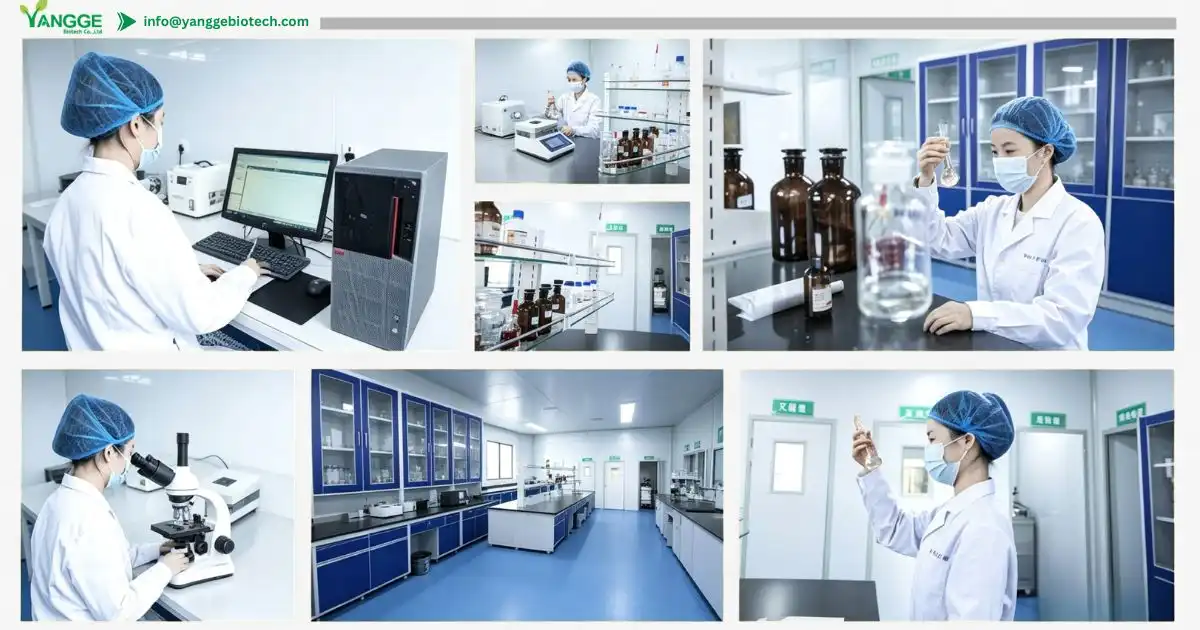
A quality check by approved third-party labs showed that Yangge's yeast beta-glucan meets European PAH4 standards (Benzopyrene ≤ 10 ppb), is Non-GMO and Non-Allergen, has not been treated with irradiation, and meets safety requirements. The company makes sure that all of its products follow GMP rules and are certified by ISO, HACCP, Kosher, and Halal.
Procurement Specifications at a Glance:
| Parameter | Specification |
|---|---|
| Purity | ≥ 70% β-1,3/1,6-Glucan |
| Appearance | Fine, off-white to yellowish powder |
| Min Order Quantity | 1 kg |
| Standard Packaging | 1 kg aluminum foil bag |
| Inventory | 50–100 kg in stock |
| OEM | Available |
| Storage | Tightly sealed, protected from light |
Safe Usage and Dosage Guidelines for Adult Health Applications
A daily amount of 250 mg to 500 mg is recommended for people who want to keep their guts healthy and boost their immune systems. In these amounts, yeast beta-glucan is well tolerated and hasn't been shown to hurt healthy people in any major way. Before using, people who are taking immunosuppressants should talk to their doctor because more macrophage activity could change how the drugs work.
It is generally thought to be safe (GRAS) in the United States, according to the Food and Drug Administration (FDA). At the European level, the EFSA has mostly looked at claims about beta-glucan sources that come from oats. Labels on products that claim to help the immune system should use the most up-to-date language for claims that have been shown to be true. Labels that are clear and based on facts protect both the customer's trust and the brand's bottom line.
Conclusion
If you want to improve your defense system, yeast beta-glucan (β-1,3/1,6-glucan) is the only one like it. Because it works in a very specific way, has two types of prebiotic effects, and is stable during production, it is a one-of-a-kind raw material for supplement brands, pet food makers, and functional food makers. It always works well in the lab at doses that are useful as long as it comes from a reliable source and its purity and structural integrity can be shown. In a busy market, buying teams need to know these differences in order to find the right ingredients. Knowing these differences directly leads to better product performance and more trust from customers.
FAQ
Q1: How is yeast beta-glucan different from oat beta-glucan?
A: The most important difference is what sets them apart. Because it has a β-1,3/1,6 bond that binds to Dectin-1 receptors on immune cells, yeast beta-glucan is an efficient immunomodulator. Most of what oat beta-glucan does is change the thickness of the gut and the amount of cholesterol in the body. If your product claim is that it helps the defense system, yeast-origin glucan is the scientifically correct pick.
Q2: Can yeast beta-glucan cause allergic reactions or yeast infections?
A: Pure yeast glucan is made up of cleaned and dead cell wall pieces, not live yeast. It does not promote yeast overgrowth and is classified as Non-Allergen. Products that aren't very good may still have proteins in them that can cause sensitivity reactions. That's why it's important to check the COA method and make sure the purity is at least 70%.
Q3: How do I verify that a supplier's product contains genuine β-1,3/1,6-glucan?
A: Get a COA that says "Megazyme Enzymatic (GOPOD) method." With this method, the useless alpha-glucan is separated from the active beta-glucan part. Never buy from someone whose paperwork only shows the amount of total carbohydrates or total polysaccharides and not anything about the structures.
Q4: What is the recommended adult dosage for immune support?
A: Clinical studies that have been published consistently show that 250–500 mg per day is the best amount for healthy people to get their immune systems ready. After six to eight weeks of taking supplements every day, you should start to see results.
Partner with Yangge — Your Trusted Yeast Beta-Glucan Supplier
You can get pharmaceutical-grade yeast beta-glucan from Yangge Biotech. It is at least 70% pure, fully certified by ISO, HACCP, Kosher, and Halal, and can be packed in a way that works for your production size. Right now there is stock, and the smallest order is only 1 kg. Buyers and researchers who want to learn more about this ingredient can send an email to info@yanggebiotech.com to ask for samples or detailed technical documents.
References
1. Vetvicka, V., & Vetvickova, J. (2014). Immune-enhancing effects of Maitake (Grifola frondosa) and Shiitake (Lentinula edodes) extracts. Annals of Translational Medicine.
2. Akramiene, D., Kondrotas, A., Didziapetriene, J., & Kevelaitis, E. (2007). Effects of beta-glucans on the immune system. Medicina (Kaunas).
3. Volman, J. J., Ramakers, J. D., & Plat, J. (2008). Dietary modulation of immune function by beta-glucans. Physiology & Behavior.
4. Talbott, S., & Talbott, J. (2009). Effect of BETA 1, 3/1, 6 GLUCAN on upper respiratory tract infection symptoms and mood state in marathon athletes. Journal of Sports Science & Medicine.
5. Bashir, K. M. I., & Choi, J. S. (2017). Clinical and physiological perspectives of β-glucans: The past, present, and future. International Journal of Molecular Sciences.
6. Fuller, R., Moore, M. V., Lewith, G., Stuart, B. L., Ormiston, R. V., Fisk, H. L., Noakes, P. S., & Calder, P. C. (2017). Yeast-derived beta-1,3/1,6 glucan, upper respiratory tract infection and innate immunity in older adults. Nutrition.

Based on your location and order quantity, you will have the opportunity to receive a limited time free shipping promotion!
Who we are
Popular Blogs