Alpha-GPC vs Citicoline: Which Nootropic Is Better for Focus Support?
Alpha-GPC Powder (L-Alpha Glycerylphosphorylcholine) is a highly bioavailable choline compound commonly used in dietary supplements and nootropic formulations. It is valued for its role as a choline source and is widely incorporated into products designed to support cognitive and nutritional wellness. Yangge Biotech supplies high-quality Alpha-GPC Powder for bulk and B2B applications, with reliable sourcing, consistent quality, and flexible packaging options. Contact Yangge Biotech at info@yanggebiotech.com for product specifications, COA, pricing, and bulk orders.
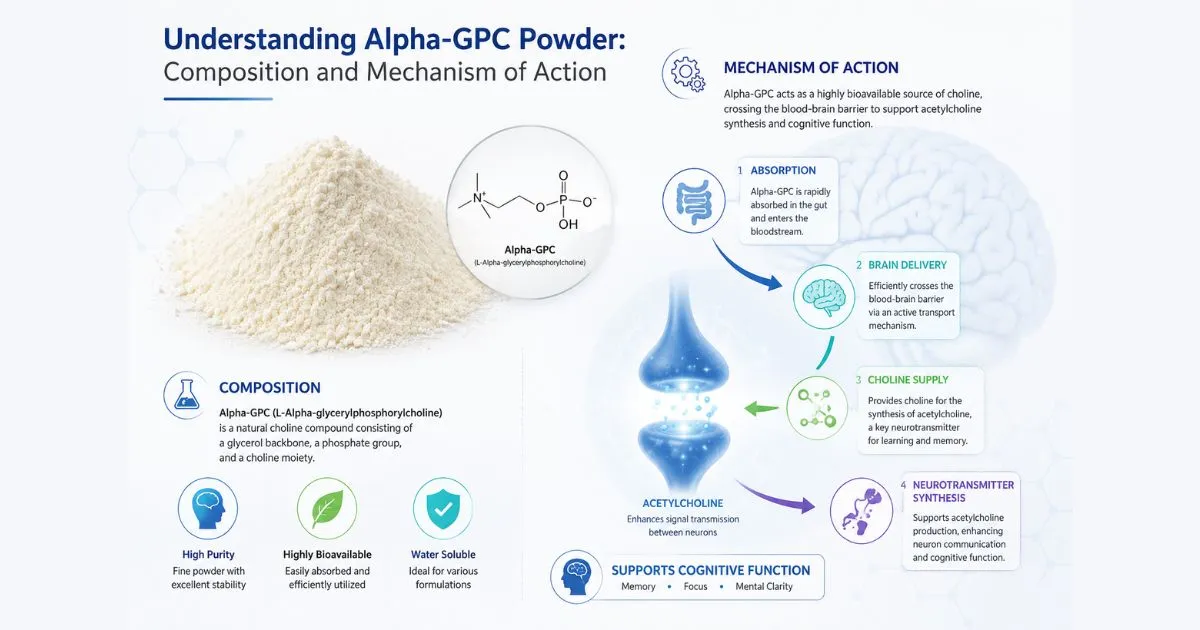
When comparing alpha-GPC and citicoline for focus support, alpha-GPC holds a measurable edge for brands targeting rapid cognitive uplift and physical performance. As L-Alpha Glycerylphosphorylcholine, it crosses the blood-brain barrier efficiently, driving acetylcholine synthesis more directly than citicoline. Citicoline, meanwhile, offers dual-action neuroprotection by supplying both choline and cytidine. For product developers building nootropic stacks or sports nutrition lines, the choice depends on formulation goals, target audience, and desired onset speed. Both compounds are clinically validated, but their procurement and application profiles differ in ways that matter at scale.
Understanding Alpha-GPC and Citicoline: The Cognitive Enhancers Explained
What Makes Each Compound Unique?
Alpha-GPC, also known as L-alpha glycerylphosphorylcholine, is a phospholipid molecule that is found naturally in soybean lecithin. Directly donating choline, it quickly changes into acetylcholine after crossing the blood-brain barrier. This is what makes it different from basic choline salts like choline bitartrate. Citicoline (CDP-choline) gives you both choline and cytidine. Cytidine changes into uridine in your body, which helps make neural membranes. Because it works in two ways, citicoline is very good at protecting neurons over a long period of time.
It is safe to say that both compounds are safe. Tolerability tests on humans have shown that normal supplement doses are safe for healthy people with few side effects. For procurement teams that work in regulated markets, like the US, EU, and Australia, this tolerability profile lowers formulation liability and makes regulatory paperwork easier.
| Feature | Alpha-GPC | Citicoline |
|---|---|---|
| Primary action | Acetylcholine precursor | Choline + cytidine donor |
| Blood-brain barrier crossing | High efficiency | Moderate efficiency |
| Natural source | Soy or sunflower lecithin | Synthetic or fermentation-derived |
| Regulatory status | GRAS (USA); widely approved | GRAS (USA); prescription in some EU countries |
Knowing this biochemical difference helps R&D directors choose the right ingredient for each type of product right from the start.
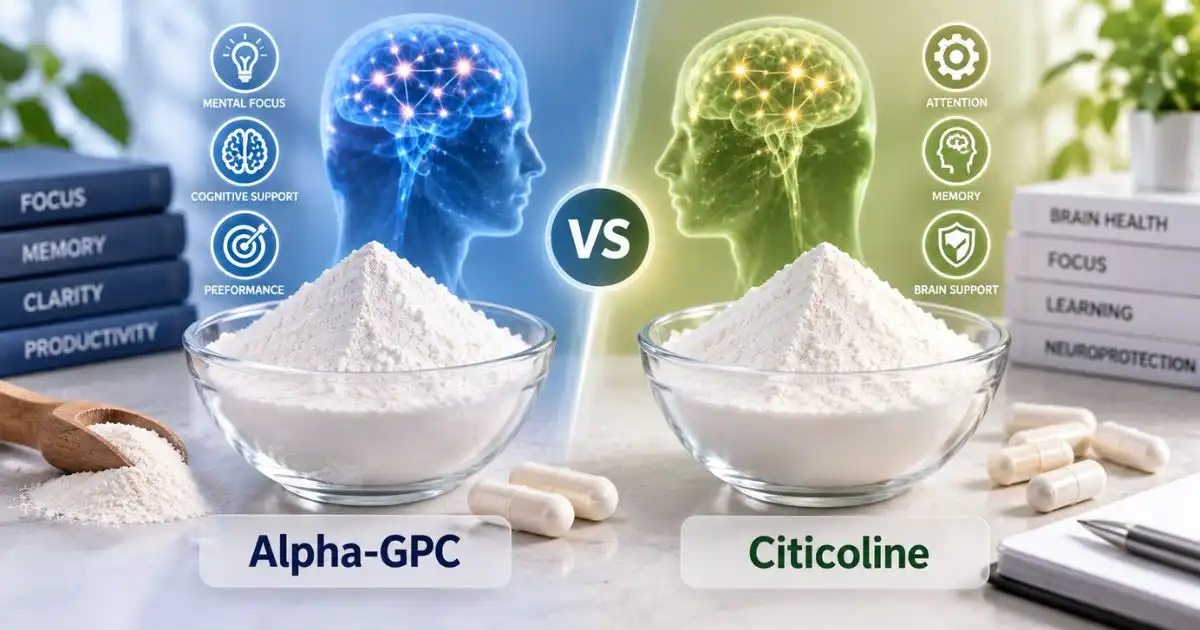
Comparing Alpha-GPC and Citicoline: Effectiveness for Focus Support
Onset Speed and Duration
Alpha-GPC makes the brain reaction much faster, both subjectively and objectively. A 2015 randomized study in the Journal of the International Society of Sports Nutrition showed that single doses of Alpha-GPC at 600 mg led to large improvements in the production of lower body force and the release of growth hormone. In thinking settings, subjects said they had clearer minds within an hour. Citicoline, on the other hand, seems to work better over time. For example, studies have shown that taking it for 28 days can improve attention and working memory.
The faster rates of Alpha-GPC are more in line with what consumers want from brands that make pre-workout or acute-focus goods. Citicoline's long-lasting neuroprotective profile makes it a good choice for memory aids or daily cognitive support products for older people.
Dosage and Practical Formulation Notes
Normal doses that work differently for the two substances are shown below. For product developers, here is a useful comparison:
- Alpha-GPC at 300–600 mg per serve increases acetylcholine levels and has been shown to improve power output; higher amounts are linked to the release of growth hormone
- Citicoline (250–500 mg per serving) helps with focus and brain growth after repeated use, and it has a good safety level
- Alpha-GPC 50% vs 99% specifications are important for manufacturing. The 99% API is better for liquid formulations and precise dosing, while the 50% stabilized matrix keeps capsule or tablet lines from clumping when water is added
- Citicoline is inherently less hygroscopic, which makes it easier to make solid dosages compared to pure Alpha-GPC
These facts about composition have direct effects on choices about how to make production lines work together and how to keep products fresh on the shelf.
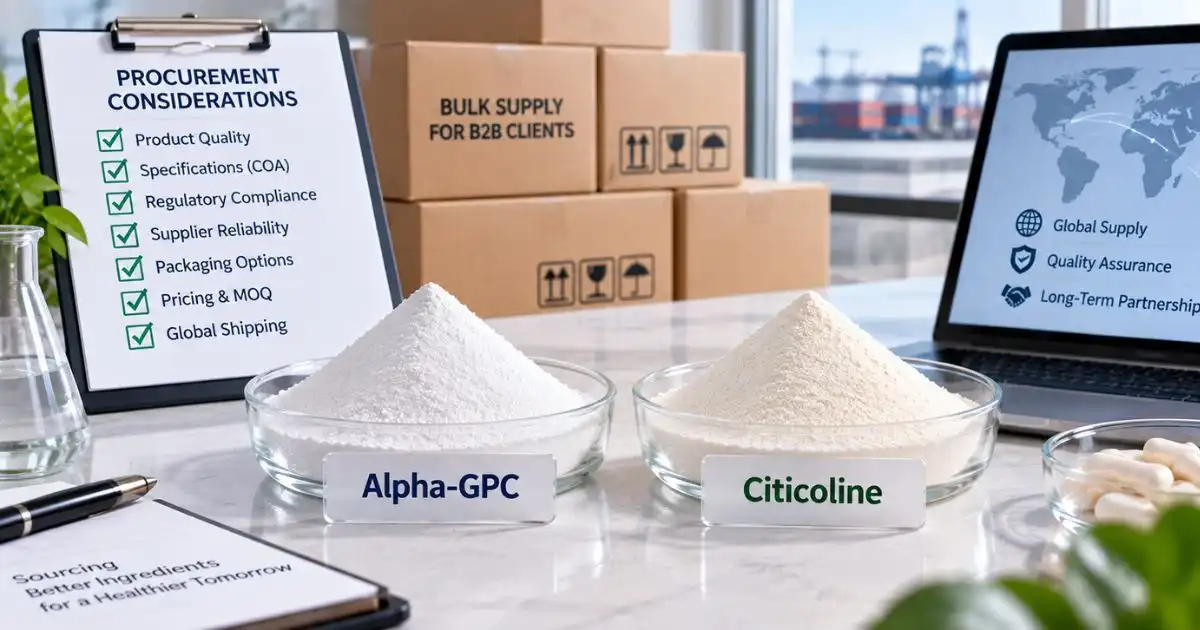
Procurement Considerations: Buying Alpha-GPC and Citicoline for B2B Clients
What Procurement Teams Should Prioritize
When buying large amounts of nootropic ingredients, you need to do more than just compare prices. Brands that want to sell in the US and Europe have to have purity proof, supply chain tracking, and certification stack. In this buying decision matrix, the factors that are most important to mid-sized supplement brands are shown.
| Procurement Factor | Why It Matters | Alpha-GPC Specific Note |
|---|---|---|
| HPLC-verified purity (≥99%) | Prevents label fraud claims; protects brand liability | Request COA with HPLC data before each batch |
| cGMP + ISO manufacturing | Needed for FDA dietary supplement compliance | Check facility audit history |
| Non-GMO + non-allergen status | Consumer trust in North American and EU markets | Soy-derived vs. sunflower lecithin origin matters |
| Moisture content (Karl Fischer) | Affects shelf stability and dose uniformity | Important for 99% Alpha-GPC handling |
| OEM/ODM packaging capability | Shortens lead time for private-label launches | Make sure drum sizes and labeling options |
All five of those things are true for Yangge Biotech's Alpha-GPC Powder. The product is shipped as a fine white to light yellow powder in drums of 25 kg, and OEM packaging is also available. The product has a 2-year shelf life, is compatible with EU PAH4 standards (benzopyrene ≤10 ppb), and comes in both 50% and 99% grades that have been checked by HPLC. The product is non-GMO, not irradiated, and does not contain any common allergens. This directly addresses label sensitivities in North America and Europe.
Besides meeting specifications, procurement teams gain from working with a seller that keeps 5 tons of ready stock and gives free samples for pre-order confirmation. This helps with the normal R&D cycle: check specifications, test samples, come up with a new formula, and then make an OEM trial batch.
Choosing the Right Nootropic for Your Business Needs
Matching Ingredient to Product Category
When choosing between Alpha-GPC and citicoline, it's not so much which compound is better in general as it is which one works best with a certain product architecture. The link between Alpha-GPC and growth hormone is more helpful for brands that are making pre-workout or sports performance products. Citicoline's neuroprotective range may make it more appealing to companies that are making daily nootropic stacks or cognitive health products for people aged 45 and up.
Some of the most popular nootropics on the US market today use both, with citicoline helping neurons stay healthy over time and Alpha-GPC helping them work faster. This two-ingredient architecture gives OEM clients the chance to position their products as high-end without dramatically raising COGS. The final choice is also based on the reputation of the supplier and the quality of the documents. Working with a manufacturer that is ISO, HACCP, Kosher, and Halal approved cuts down on legal issues and speeds up the onboarding process for retailers.
Future Outlook: Trends in Nootropic Use for Cognitive Enhancement
Growth Drivers Reshaping the Market
By 2030, the global market for nootropics is expected to be worth more than $5.8 billion. This is because working professionals, older people, and athletes who want to perform better will all be buying them. In customer choice polls, natural cognition enhancers with clinical proof, such as Alpha-GPC and citicoline, are doing better than synthetic options. Innovations in delivery are also changing how things are bought. For example, edible forms, RTD shots, and sublingual sprays are creating new demand for choline sources that dissolve easily in water and don't have a taste.
For business-to-business buyers, this trend means two things: getting a steady supply of clinically proven ingredients in bulk and making sure that OEMs can be flexible in their agreements with suppliers so that they can adapt to new formats. When the market changes, brands that lock in supply relationships with manufacturers that can support production lines for capsules, powder, softgels, and gummies will have a structural edge.

Conclusion
Alpha-GPC and citicoline both have a valid place in formulations for cognitive enhancement, but they are used for different things. Alpha-GPC raises acetylcholine more quickly, has been shown to improve sports performance, and has a strong reputation in the nootropics community. Citicoline protects neurons for longer periods of time and helps in two different ways. For many sports nutrition and nootropic brands in North America and Europe, Alpha-GPC is the best way to grow quickly, especially if it comes from a seller that is cGMP-certified and doesn't use GMOs. Buying choices based on pure data, traceability, and OEM freedom will always work out better than price-only decisions.
FAQ
Q1: Is it safe to mix Alpha-GPC and citicoline in the same formula?
A: Yes. Both chemicals work through choline pathways that work with each other, and they have been used together in nootropic stacks without any reports of bad effects. When mixed together, formulas might offer a faster start from Alpha-GPC along with the longer neuroprotective benefits of citicoline.
Q2: What's the difference between Alpha-GPC powder that is 50% and 99%?
A: The 99% grade is a very pure API that can be used in liquid formulas and precise doses. Because the 50% grade is fixed with silicon dioxide or calcium phosphate, it can be used to make capsules and tablets http://info@yanggebiotech.com , where hygroscopicity would normally cause the amount to change and the capsules to stick together.
Q3: How should you store bulk Alpha-GPC powder?
A: Keep it cool and dry, below 25°C, with desiccant packs inside. If you leave the compound out in the air for a long time, it will quickly absorb water and may solidify. Karl Fischer titration should be used to keep an eye on the moisture content.
Q4: Does the source (soy vs. sunflower lecithin) change how well people accept it?
A: Yes, it can. More and more, brands that want to reach non-GMO or soy-sensitive customers prefer Alpha-GPC that comes from sunflower lecithin. Before making label claims, you should always check with your source to make sure you have proof of location.
Q5: What kinds of licenses should a trustworthy Alpha-GPC provider have?
A: At the very least, you need cGMP, ISO, an HPLC-verified COA for each batch, non-GMO paperwork, and Kosher or Halal approval to sell your products in more foreign markets.
Source Yangge's Alpha-GPC Powder for Your Next Formulation
Pharmaceutical-grade Alpha-GPC powder, in both 50% and 99% strengths, is available from Yangge Biotech, which gets it straight from a certified plant and keeps 5 tons on hand. Yangge is a reliable Alpha-GPC manufacturer that has ISO, HACCP, Kosher, and Halal certifications. They also offer OEM packaging, free samples, and help with research and development. Contact us or you can email our team at info@yanggebiotech.com to ask for a sample or talk about your needs for a large sale.
References
1. Bellar, D., LeBlanc, N. R., & Campbell, B. (2015). Journal of the International Society of Sports Nutrition, 12(1).
2. Yáñez, J. A., et al. (2013). "Pharmacokinetics of alpha-GPC in human subjects." Drug Metabolism Letters, 7(1).
3. Alvarez, X. A., et al. (1997). "Citicoline improves memory performance in elderly subjects." Methods and Findings in Experimental and Clinical Pharmacology, 19(3).
4. Moreno, M. D. J. M. (2003). "Cognitive improvement in mild to moderate Alzheimer's dementia after treatment with the acetylcholine precursor choline alfoscerate." Clinical Therapeutics, 25(1).
5. McGlade, E., et al. (2012). "Improved attentional performance following citicoline administration in healthy adult women." Food and Nutrition Sciences, 3(6).
6. Parker, A. G., et al. (2011). "The effects of alpha-glycerylphosphorylcholine on neurological functioning and cognitive performance." Journal of the International Society of Sports Nutrition, 8(Suppl 1).

Based on your location and order quantity, you will have the opportunity to receive a limited time free shipping promotion!
Who we are
Popular Blogs