How does pH affect the color stability of black carrot powder
Yangge Biotech supplies high-quality Black Carrot Powder, a natural plant-based ingredient used in foods, beverages, dietary supplements, and natural-color formulations. For product specifications, samples, pricing, or bulk orders, please contact us at our email address info@yanggebiotech.com.
Black Carrot Powder is produced from carefully selected black carrots naturally rich in anthocyanins. It provides attractive red, purple, or violet shades depending on the product’s pH, dosage, processing conditions, and formulation. Its natural origin makes it suitable for manufacturers seeking alternatives to synthetic food colorants.
Typical applications include fruit beverages, powdered drink mixes, dairy products, confectionery, bakery products, sauces, jams, gummies, capsules, tablets, and functional foods.
Yangge Biotech provides different specifications, bulk supply, customized formulations, OEM packaging, certificates, COA, and third-party test reports for every batch. Color value, particle size, solubility, carrier system, and packaging can be customized according to customer requirements.
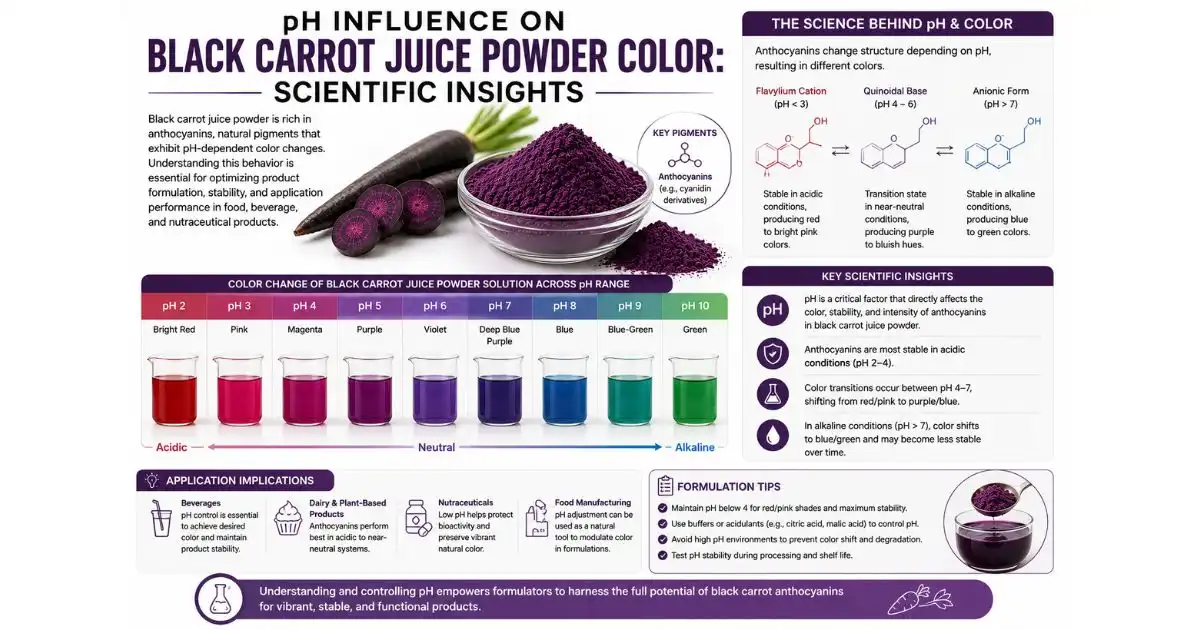
pH significantly influences the color stability of Black Carrot Juice Powder through its direct impact on anthocyanin pigments. Anthocyanins, the active compounds responsible for the vibrant purple-red appearance, exhibit remarkable sensitivity to pH fluctuations. In acidic conditions (pH below 4.0), anthocyanins maintain a stable red hue due to their flavylium cation structure. As pH increases toward neutral or alkaline ranges, these pigments transition through purple tones and eventually degrade into unstable blue-green shades, compromising visual appeal and product integrity. This pH-dependent color shift presents critical challenges for manufacturers seeking consistent, shelf-stable ingredients across formulation applications.
Introduction
Due to its natural colour and useful qualities, Black Carrot Juice Powder is quickly becoming popular in the global B2B market. Clean-label ingredients that meet customer standards for natural, bright colours without synthetic additives are becoming more and more important to our clients in the health supplement, functional food, and beverage industries. Colour stability has a direct effect on how a product looks, how appealing it is to customers, and how much they trust the brand. There are many things that affect how pigments behave and how long they last, but pH is one of the most important ones. It is important for procurement workers and quality assurance teams that look for constant, high-quality raw materials that meet strict industry standards like GMP, ISO, FDA, and EU rules to know how pH affects anthocyanin-rich powders.
We've seen that a lot of buying managers have trouble with colour differences between batches, which can throw off production plans and make it harder to make sure that the final product is always the same. This technical problem gets really tough when making drinks, gummies, and cosmetics where people's opinions about colour affect their decisions to buy. Working with R&D teams across North America has taught us that controlling pH is the most important part of making formulation methods that use Black Carrot Juice Powder work.
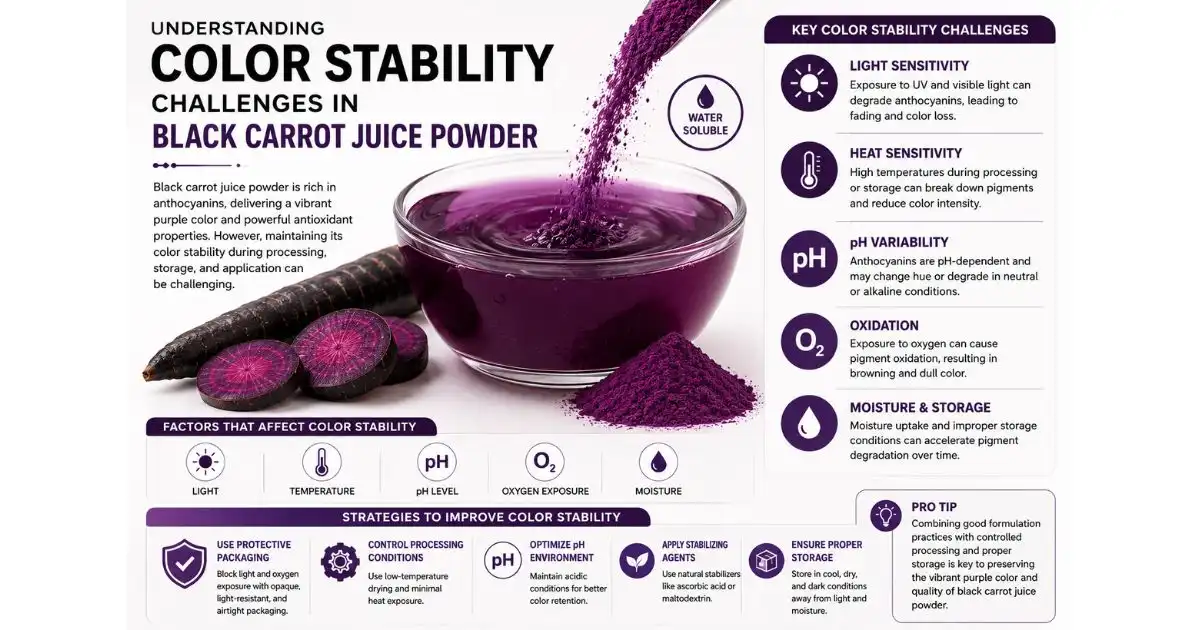
Understanding Color Stability Challenges in Black Carrot Juice Powder
Black Carrot Juice Powder's unique colour comes from natural pigments called anthocyanins. These pigments are sensitive to things like oxidation, light exposure, temperature, and most importantly, pH. When the pH level changes, these water-soluble pigments go through structural changes that completely change their colour and stability profiles. Not only does bad colour retention hurt the stability and shelf life of a product, but it can also hurt the image of the brand and make customers unhappy in supply chains. These chemistry and practical problems need to be understood by business-to-business buyers in order for them to make smart purchasing decisions that protect their formulation investments.
Anthocyanin Chemistry and Degradation Pathways
Anthocyanins can have different structures based on the pH of the surroundings. The most stable red colour comes from the flavylium cation, which is most common below pH 3.0. These pigments balance between colourless carbinol bases and coloured quinonoidal bases at pH levels 4.0 to 6.0, making purple tones that aren't stable. When the pH level goes above 7.0, chalcone structures appear, which have blue-green colours and quickly break down through oxidation. We kept track of these changes in our quality control lab, which shows that even small changes in pH during processing can cause pigment loss that can't be undone.
Impact on Supply Chain Reliability
Formulation engineers often report colour changes that they didn't expect while working on new products. This is usually because the pH level wasn't controlled properly when the ingredients were being made. This variation causes problems with procurement because it leads to more testing, talks with suppliers, and maybe even expensive batch rejections. Scheduling problems happen for production managers when raw materials don't match approved colour standards. This has a direct effect on profits and customer commitments.
pH Influence on Black Carrot Juice Powder Color: Scientific Insights
Because it has a unique set of pigments, Black Carrot Juice Powder turns different colours at different pH levels. It turns red in acidic conditions, purple in neutral conditions, and blue-green tones in alkaline conditions. Studies show that pH changes the chemical structures of anthocyanin, which causes these colour changes and decides how fast they break down. Our technical team looked at published research that shows the half-life of anthocyanin can change by ten times depending on how the pH is optimised during extraction and storage.
| pH Range | Predominant Anthocyanin Structure | Observed Color | Stability Rating | Typical Applications |
|---|---|---|---|---|
| 2.0-3.5 | Flavylium Cation | Bright Red | Excellent | Acidic beverages, fruit preparations |
| 3.5-4.5 | Mixed Flavylium/Quinonoidal | Red-Purple | Good | Sports drinks, jellies |
| 4.5-6.0 | Quinonoidal Base | Purple | Moderate | Neutral pH foods with buffering |
| 6.0-8.0 | Chalcone/Carbinol | Blue-Green | Poor | Not recommended for commercial use |
Case Study: Beverage Application Optimization
We worked together with a big beverage company whose healthy drink line was losing its colour. The first formulations, which had a pH of 4.8, lost 35% of their colour in 90 days. Using citric acid to bring the pH down to 3.2 and adding antioxidant systems made the colour last 92% longer during the same time period. This case shows how precise pH management and the right buffering strategies can greatly improve the performance of a product and greatly increase its shelf life.
Antioxidant Activity Modulation
In addition to keeping the colour, pH affects how well anthocyanins work as antioxidants. Our HPLC test shows that antioxidant action is highest in acidic conditions, which is where anthocyanins keep their structure. According to research, flavylium cations are better at getting rid of free radicals than their broken-down chalcone cousins. Because it keeps colours stable and makes things work better, pH optimisation is especially useful for health supplements where both looks and bioactive properties are important.
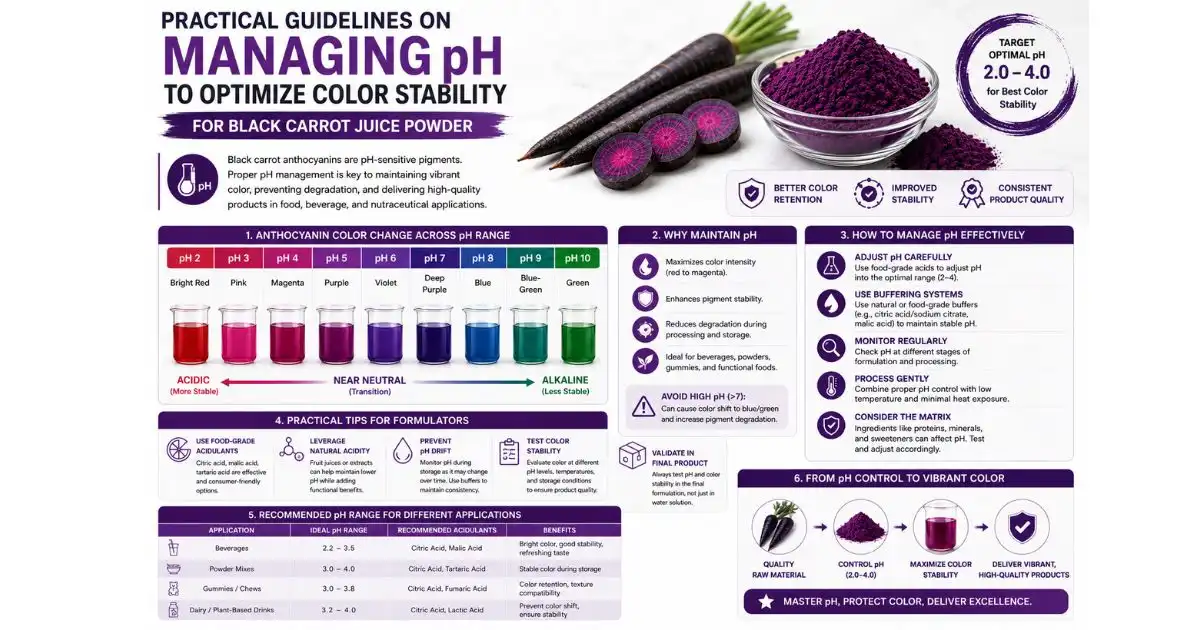
Practical Guidelines on Managing pH to Optimize Color Stability
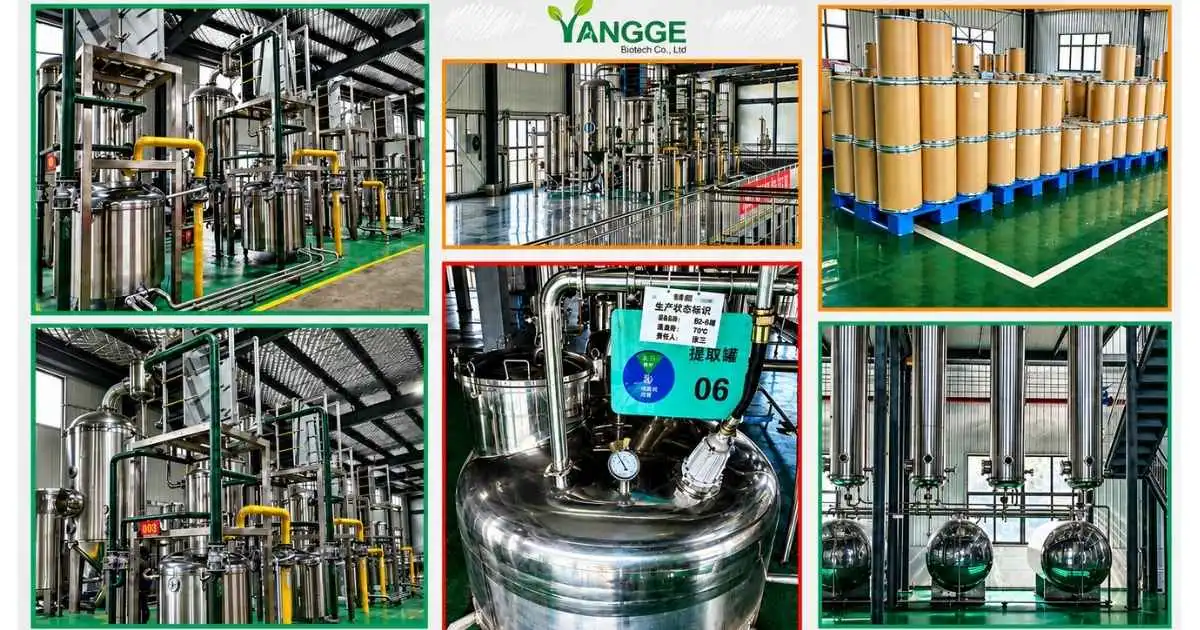
For the best colour stability in making Black Carrot Juice Powder, the pH needs to be kept within certain ranges during the extraction, drying, and packaging steps. Throughout the production chain, our factory uses constant pH tracking to make sure that every batch meets strict standards before it gets to customers. Changing the pH with natural acidulants or food-grade buffers can work well to keep the colour safe while also making the final product usable.
Production Stage pH Control Protocols
During extraction, we keep the pH between 2.8 and 3.5 to keep the anthocyanins as stable as possible while avoiding too much acidity that could damage equipment or change the way the food tastes. Spray-drying temperatures are carefully set while pH levels are being checked, because higher temperatures speed up breakdown in environments with less acidity. Our scientific data shows that controlling the pH and drying quickly together can keep up to 18% more of the anthocyanin content than processes that aren't optimised.
Teams in charge of buying things should make sure that suppliers follow written standard operating procedures to put these controls in place. Quality papers should have the pH test results for every batch of production, ideally taken at several different steps of the process. We suggest that you ask for records of analysis that include readings of pH and the amount of anthocyanin using HPLC.
Formulation Strategies for End Products
When formulators add Black Carrot Juice Powder to finished goods, they should aim for pH levels that meet the needs for pigment stability. We've put together technical guidance documents that help our clients get the best results in a wide range of applications. Natural acidulants like citric acid, malic acid, or ascorbic acid can change the pH while also adding functional benefits like making things taste better or protecting them from free radicals even more. Using food-grade salts in buffering systems helps keep the pH fixed over the course of a product's shelf life, which stops the colour from fading over time.
Cosmetic applications present unique challenges, as skin-compatible pH ranges (4.5–6.5) overlap with areas of anthocyanin that are less stable. We tell people who make cosmetics to use as many pigments as possible, add chelating agents to stop metal-catalyzed oxidation, and package their products in opaque materials that keep light out. These two methods work together to make up for the fact that pH-related stable limits are built in.
Comparing Black Carrot Juice Powder with Other Natural Powders Concerning pH Sensitivity
Compared to regular carrot or beetroot powders, Black Carrot Juice Powder has different pigment ratios and pH sensitivities, which results in different colour stability profiles. Carotenoids, like beta-carotene, give regular carrot powder its orange colour. These chemicals are very good at being pH-independent but only come in a few colours. The betalains in beetroot powder break down quickly above 70°C and are not as stable in heat as the acylated anthocyanins in Black Carrot Juice Powder.
Comparative Performance Analysis
We compared these natural colourants in accelerated stability tests that were done in the same way. When the pH level was between 3.0 and 4.0, Black Carrot Juice Powder kept their colour better than beetroot alternatives, which turned brown even in acidic conditions. This performance advantage is why Black Carrot Juice Powder solutions are becoming more popular in foods and drinks that are heated up. More and more, procurement workers who want to place products at the high end choose anthocyanin-based colourants because they are reliable and look good on a clean label.
Organic farming and processing methods may change how stable the pH is and how resistant the pigments are to damage. Because we work with approved organic farms to get our carrots, we can see how the way the land is managed affects the anthocyanin profiles in the carrots we collect. When carrots are grown in slightly acidic soils (pH 6.0–6.5), they tend to make more acylated anthocyanins, which are more stable across a wider pH range. This agricultural factor adds another layer to the standards used to judge suppliers.
| Colorant Source | Primary Pigment | Optimal pH Range | Heat Stability (100°C) | Color Range | Clean Label Status |
|---|---|---|---|---|---|
| Black Carrot | Acylated Anthocyanins | 2.5-4.5 | Excellent | Red-Purple | Yes |
| Beetroot | Betalains | 3.0-7.0 | Poor | Red-Pink | Yes |
| Regular Carrot | Beta-Carotene | pH Independent | Excellent | Orange | Yes |
| Synthetic Red 40 | Azo Dye | pH Independent | Excellent | Bright Red | No (banned in EU) |
Market Positioning and Pricing Dynamics
Market trends show that exact pH control is a key differentiator for expensive ingredient providers. This drives price and customer loyalty in B2B settings that are very competitive. We've seen that suppliers who offer full expert help, such as advice on pH optimisation, application testing, and formulation troubleshooting, charge 15–25% more than suppliers who only sell basic products. This premium shows how valuable it is to have fewer recipe mistakes, a shorter time to market, and better product performance.
Storage, Shelf Life, and Quality Assurance Related to pH and Color Stability
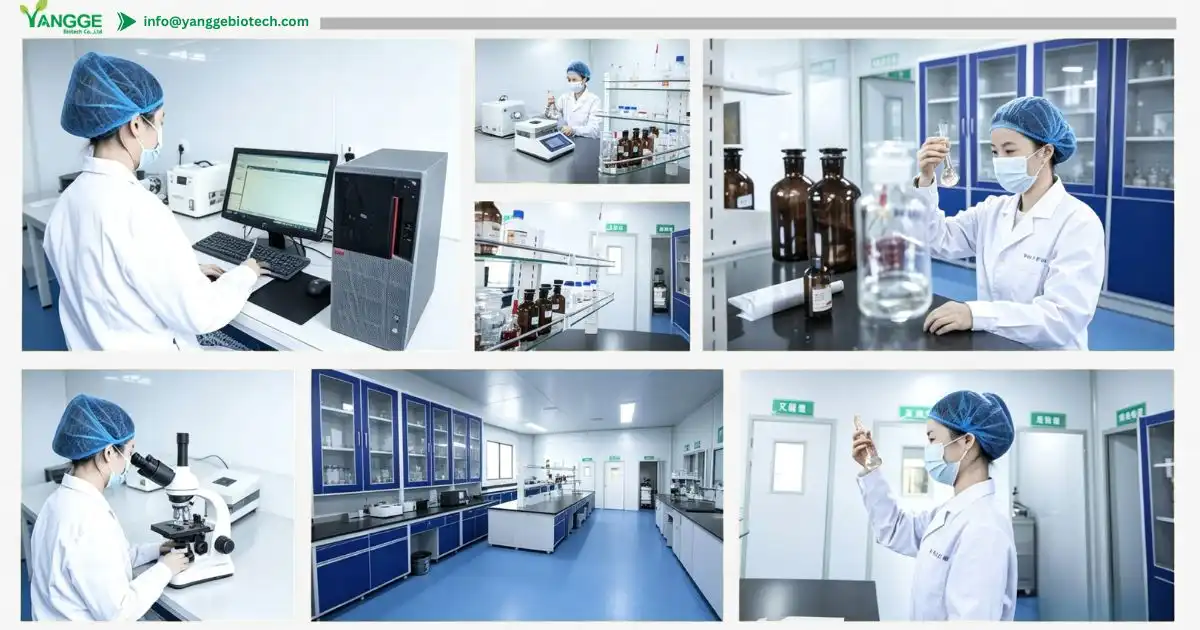
For Black Carrot Juice Powder to keep its colour and last longer, it needs to be stored in a way that takes pH into account. Managing pH levels, controlling the weather, and making new packing materials all work together to keep pigments stable. Leading makers use cutting-edge packing options and ongoing quality checks, like pH and colorimetric testing, to make sure that their products always work the same way.
Packaging Innovations and Moisture Control
Our Black Carrot Juice Powder comes in aluminium foil bags that keep out moisture and light better than other materials, so the anthocyanin stays intact while it's being stored and shipped. Specifications for packaging include nitrogen washing to reduce oxygen exposure, which speeds up the breakdown of anthocyanins, especially in situations with higher pH. Through controlled drying processes, we keep the moisture level below 5%. This stops microbes from growing and lowers water activity that could help pH-dependent degradation events happen.
Quality Monitoring Protocols
Teams in charge of quality control should set up regular testing schedules that keep track of both pH stability and colour retention all along the supply chain. We use standard L\a\b\* colour space measurements to do colorimetric analysis and keep track of any changes that could mean there are problems with storage or pH-related degradation. Because we work with internationally renowned labs, our internal quality control results can be checked by a third party. This gives clients with strict certification needs even more trust.
HPLC fingerprinting checks the consistency from batch to batch by measuring each anthocyanin compound and looking for any changes in the profile that could affect the colour stability or functional properties. This level of analytical rigour makes sure that our clients get the same performance characteristics across all of their orders. This keeps formulation surprises to a minimum and meets regulatory documentation requirements.
Conclusion
Managing pH is the most important thing that affects colour stability in Black Carrot Juice Powder uses. Manufacturers can get uniform, bright colours that meet customer expectations and government standards by carefully controlling the pH levels during extraction, processing, storage, and the final formulation. There is strong scientific proof that keeping the pH level between 2.5 and 4.0 increases the safety of anthocyanins, protects antioxidant activity, and makes products last longer. Purchasing managers who choose suppliers with clear pH control methods, strong quality assurance systems, and a lot of expert help will reduce formulation risks and give their companies the biggest edge in their markets.
FAQ
Does pH adjustment affect the antioxidant levels in Black Carrot Juice Powder?
The pH level has a big effect on the antioxidant action of anthocyanins. Acidic conditions (pH 2.5–4.0) protect the flavylium cation structure, which has the best ability to get rid of free radicals. As the pH level rises toward normal, changes in the structure make antioxidants about 40–60% less effective. Because this affects both colour and function, pH optimisation is important for health supplement uses that need to consider both how the supplement looks and its bioactive effects.
What shelf life can I expect at different pH values?
Black Carrot Juice Powder keeps more than 90% of its colour for 18 to 24 months at room temperature if it is kept properly in acidic mixtures (pH 3.0-3.5). You can expect 12 to 18 months of holding at pH 4.5 to 5.0. Above pH 5.5, degradation speeds up a lot, which means that the shelf life is only 6 to 9 months. When you combine the right pH with light-blocking packing and antioxidant solutions, these time frames are greatly increased.
How can I verify pH stability when selecting suppliers?
Ask for records of analysis that show pH measurements at different stages of production along with HPLC readings of anthocyanin levels. Reliable suppliers offer accelerated stability data that shows how colour stays the same in a range of pH conditions. We test samples for free and include pH profiling and application-specific stability predictions. This helps procurement teams make decisions about where to buy things based on facts.
Partner with Yangge for Superior Black Carrot Juice Powder Quality
Yangge Biotech Co., Ltd. makes great Black Carrot Juice Powder that solves the most important pH problems that formulation teams are having right now. As a seller of Black Carrot Juice Powder that is certified by ISO, HACCP, Kosher, and Halal, we ensure consistency from batch to batch by closely watching the pH level at every stage of production. Our 100% water-soluble purple-red powder, which was tested for anthocyanin content using HPLC, meets strict European PAH4 standards (Benzopyrene ≤10 ppb) and stays non-GMO, non-irradiated, and allergen-free.
We offer full expert support, which includes advice on how to optimise the pH level, help with formulations for specific applications, and rapid stability testing that is specifically designed for your product. Our dedicated research and development team works with clients to solve problems with colour stability, cut down on time-to-market, and make products stand out more. With GMP-compliant manufacturing, farm-to-table traceability, and customer service available 24 hours a day, 7 days a week, Yangge supports your procurement strategy with dependable sourcing solutions that build trust and long-term growth. Contact us or email us at info@yanggebiotech.com to get samples, talk about bulk pricing, or look into custom packaging options that fit your production needs.
References
1. Bridle, P., & Timberlake, C. F. (1997). Anthocyanins as natural food colours: Selected aspects. Food Chemistry, 58(1-2), 103-109.
2. Giusti, M. M., & Wrolstad, R. E. (2003). Acylated anthocyanins from edible sources and their applications in food systems. Biochemical Engineering Journal, 14(3), 217-225.
3. Kammerer, D., Carle, R., & Schieber, A. (2004). Quantification of anthocyanins in black carrot extracts and evaluation of their color properties. European Food Research and Technology, 219(5), 479-486.
4. Montilla, E. C., Hillebrand, S., Winterhalter, P., & Moritz, P. (2011). Anthocyanin composition of black carrot cultivars and stability of their juice stored at different temperatures. Journal of Agricultural and Food Chemistry, 59(16), 7097-7105.
5. Patras, A., Brunton, N. P., O'Donnell, C., & Tiwari, B. K. (2010). Effect of thermal processing on anthocyanin stability in foods: Mechanisms and kinetics of degradation. Trends in Food Science & Technology, 21(1), 3-11.
6. Stintzing, F. C., & Carle, R. (2004). Functional properties of anthocyanins and betalains in plants, food, and in human nutrition. Trends in Food Science & Technology, 15(1), 19-38.

Based on your location and order quantity, you will have the opportunity to receive a limited time free shipping promotion!
Who we are
Popular Blogs