How does MCT powder compare to coconut oil for energy
Yangge Biotech supplies high-quality MCT Powder for dietary supplements, functional foods, sports nutrition, ketogenic products, and powdered beverage formulations. For product specifications, samples, pricing, or bulk orders, please contact us at our email address info@yanggebiotech.com.
MCT Powder is produced by microencapsulating medium-chain triglyceride oil with a suitable carrier, creating a convenient, free-flowing powder. It commonly contains caprylic acid (C8), capric acid (C10), or a combination of both, depending on the required specification.
Its powdered form improves handling, mixing, storage, and formulation flexibility compared with liquid MCT oil. Typical applications include protein shakes, meal-replacement products, instant coffee, powdered drink mixes, nutrition bars, capsules, tablets, and functional food products.
Yangge Biotech provides different MCT oil concentrations, carrier options, customized specifications, bulk supply, OEM packaging, certificates, COA, and third-party test reports for every batch. Oil content, fatty-acid profile, dispersibility, particle size, and packaging can be customized according to customer requirements.
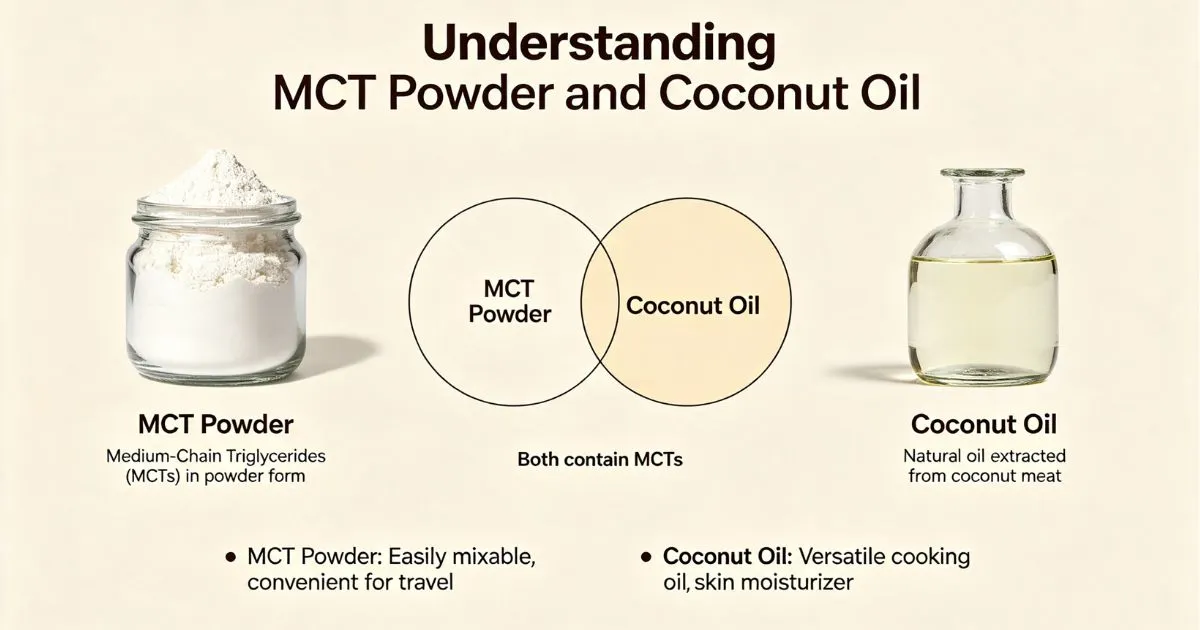
When it comes to energy supplementation, MCT powder and coconut oil frequently emerge as leading candidates in product formulation. Both derive from coconut sources, yet their performance characteristics differ substantially. MCT powder, engineered through spray-drying microencapsulation, delivers targeted medium-chain triglycerides in a stable, water-dispersible format that addresses critical manufacturing challenges. Coconut oil, conversely, contains a broader fatty acid spectrum including lauric acid, offering a natural whole-food profile. Understanding these distinctions enables procurement teams to align ingredient selection with product positioning, regulatory requirements, and market expectations in the competitive functional nutrition landscape.
Understanding MCT Powder and Coconut Oil
Origins and Manufacturing Processes
MCT powder is a big step forward in the technique used to give lipids. It is made from fractionated coconut oil and is carefully extracted using HPLC methods to separate caprylic (C8) and capric (C10) acids, which are the most biologically efficient medium-chain lipids. The liquid concentrate is then spray-dried with carrier matrices like acacia fibre. This turns the hydrophobic lipids into a white powder that can be easily mixed with water. By enclosing the oils in barriers, this process gets rid of the problems that come with handling liquid oils and makes them more resistant to oxidation.
On the other hand, coconut oil is cold-pressed or manually taken from dried coconut meat (copra). The oil that is made has about 60% medium-chain fatty acids, along with long-chain triglycerides and lauric acid (C12), which is broken down differently than shorter-chain MCTs. Coconut oil keeps its whole-food matrix and trace vitamins, but its liquid state and tendency to go bad make it hard to formulate in uses that need to be kept at a certain temperature.
Nutritional Profiles and Energy Mechanisms
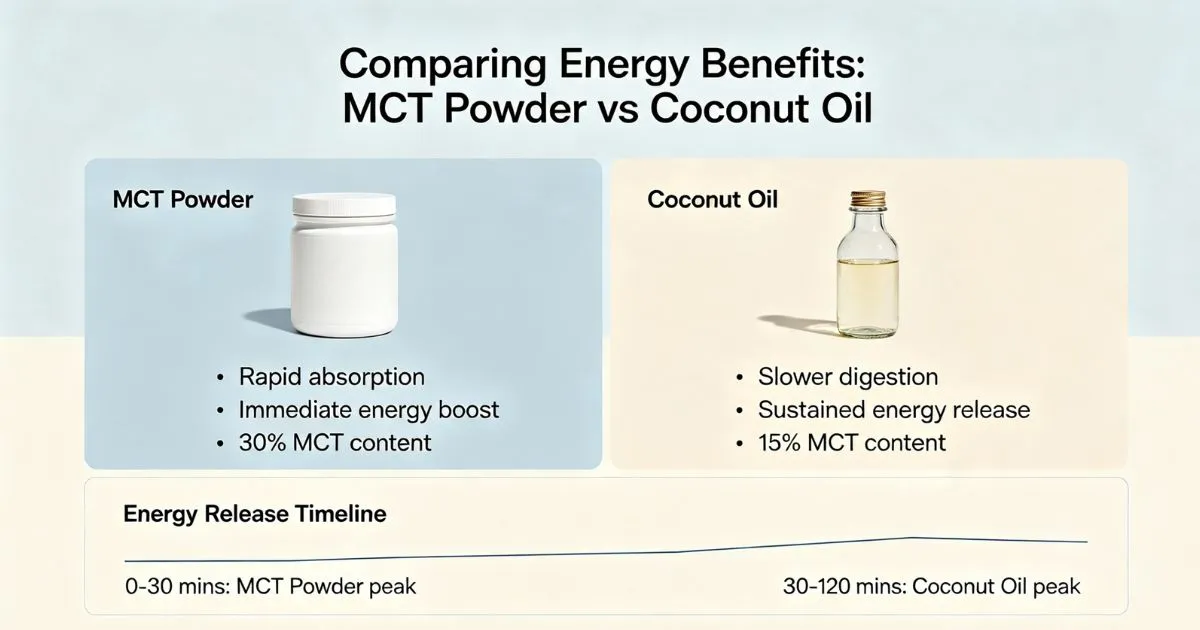
The main difference is the type of fatty acids and how bioavailable they are. Condensed C8 and C10 fatty acids found in Yangge Biotech's MCT powder avoid the normal fat breakdown processes. The portal bloodstream takes these medium-chain triglycerides right away and sends them to the liver, where they are beta-oxidized to make ketone bodies, which are another fuel source for cells to use to make energy. This metabolic pathway gives you energy within 30 minutes of eating it, which makes it great for pre-workout supplement mixes and brain boosters.
A larger group of fatty acids in coconut oil includes about half of lauric acid, which, despite having 12 carbons, acts more like a long-chain triglyceride in the body. Studies show that lauric acid needs to be absorbed by the lymphatic system and chylomicrons to be made. This makes energy access later than with C8 and C10. The short- and medium-chain fatty acids that are still in coconut oil do give you quick energy, but not as much as pure MCT formulas.
Comparing Energy Benefits: MCT Powder vs Coconut Oil
Absorption Rates and Ketone Production
According to a study in the Journal of Nutritional Science, taking pure C8 supplements raises blood ketone levels to 0.3 to 0.6 mmol/L within 60 minutes, while equivalent coconut oil doses only raise them to 0.1 to 0.2 mmol/L. This difference is because MCT powder is very concentrated. Yangge's recipe has 70% oil load and the best C8:C10 ratios, so the ketogenic response is the same across all production batches. The microencapsulation technology stops fatty acids from oxidising too soon, so the product's integrity is kept throughout its lifecycle.
There are two stages in how coconut oil delivers energy: the MCT part (which makes up about 35% of the total fatty acids) is available right away, and the lauric and long-chain components are released later. This makes a steady energy balance that is useful for meal replacement drinks and endurance nutrition. But because different coconut oil suppliers don't always use the same fatty acid profiles, there is variation between batches, which is a big problem for companies that need regular ingredient specs.
Practical Performance in Formulation
MCT powder's better performance qualities are recognised by procurement teams specialising in sports nutrition and functional drinks. The ability to dissolve in cold water gets rid of the separation problems that come with liquid oils, and the neutral organoleptic profile keeps flavours from getting mixed up in complicated mixtures. Yangge's acacia fibre blend has no sugar and no digestible carbohydrates, so it meets the needs of keto-friendly products without changing the texture or taste.
To get stable dispersions, coconut oil needs emulsification systems and high-shear mixing, which makes production more complicated and increases the need for tools. Handling is made even harder by the fact that coconut oil solidifies below 76°F (24°C), which means that heated systems are needed for storage and transfer. In multi-climate distribution networks, these logistical problems can lead to higher costs and problems with quality control.
Use Cases and Application Scenarios in B2B Procurement
While coconut oil has some technical limits, MCT powder is versatile enough to be used in a wide range of products. By understanding these application settings, you can choose ingredients in a way that meets the needs of your target market.
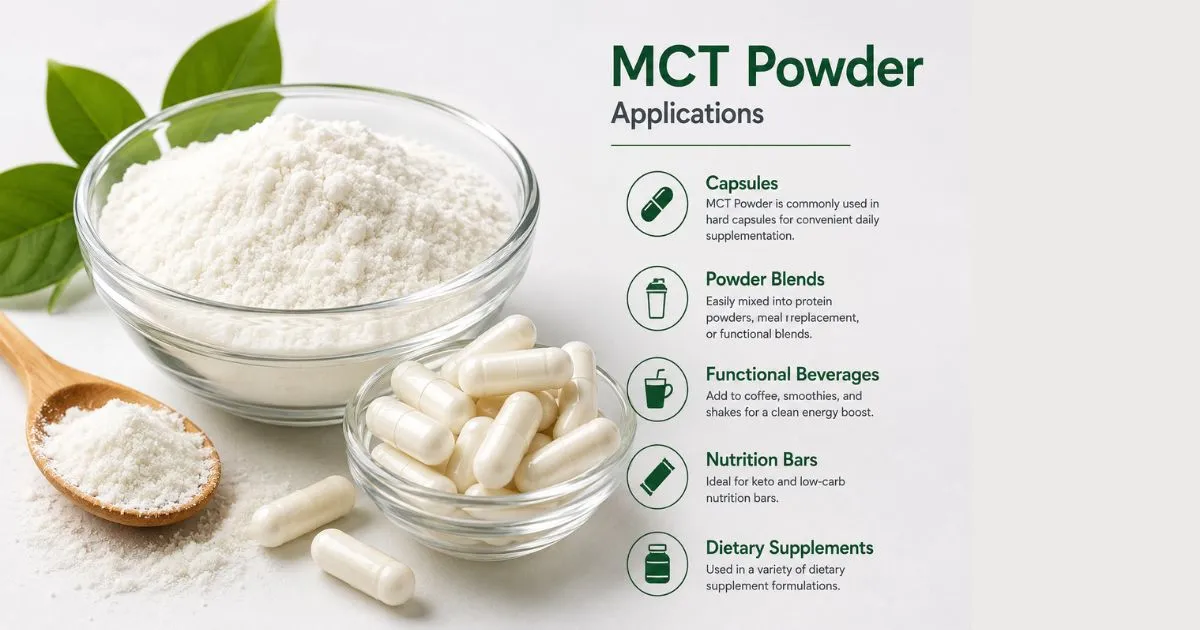
Nutraceutical Capsules and Tablets: MCT powder works perfectly with dry blend encapsulation methods, so there are no leakage issues like there are with softgels that are filled with liquid. When kept properly in aluminium foil, the improved oxidative stability makes the shelf life longer than 24 months, compared to 12 to 18 months for coconut oil formulations.
Protein and Meal Replacement Powders: MCT powder mixes evenly with protein concentrates because it can be mixed right away, so you don't have to use high-speed blending. Yangge's method keeps particle sizes consistent (40–60 mesh), so particles don't separate when it's packaged and reconstituted. On the other hand, complex spray-coating technologies are needed for coconut oil to keep it from clumping and make sure that the lipids are spread out evenly.
Ready-to-Drink Beverages: The emulsion stability of MCT powder is very helpful in cold-processed beverage uses. The microencapsulated format keeps the oil from separating during long-term storage, so there's no need for systems that keep stirring things up all the time. This benefit is especially useful for high-end goods that come in glass containers, where clear visibility shows quality.
Functional Food Products: The heat stability and moisture resistance of MCT powder make it useful in bakeries, energy bars, and sweets. The powder form stops movement problems that happen with liquid oils, so the structure stays the same during production and shipping. Yangge's non-GMO and non-allergen certification meets the clean label requirements that markets in North America and Europe are asking for more and more.
In addition to these main uses, new opportunities are opening up in pharmaceutical preparations that need precise dosing and chemical stability. The consistent fatty acid makeup and low moisture content (<3%) of MCT powder make it suitable for long-term stability studies that are needed for regulatory applications. Certified suppliers like Yangge offer traceability paperwork that includes PAH4 compliance (Benzopyrene ≤10 ppb) and lab retest protocols. This makes quality assurance processes easier.
Making the Choice: Which Is Best for Your Business Needs?
To choose the right ingredients, you need to evaluate them systematically against clear business factors. The following framework helps procurement workers make strategic decisions that are in line with the goals of the company.
Product Format Compatibility: Powder-based products naturally like MCT powder because it is stable and easy to mix. Coconut oil can be used in liquid supplements and oil-based topicals, but it's important to take extra steps to protect against oxidation. Check the possibilities of the production equipment. If the dry-blending infrastructure is already in place, it can be used right away to add MCT powder, but coconut oil needs emulsification systems and to be handled at high temperatures.
Target Consumer Profile: People who are ketogenic or low-carb want the most ketone-producing power and prefer high-C8 MCT formulas. People who like whole foods and the paleo diet like the natural profile of coconut oil, even though it has less MCT. Regulatory factors also affect choice; for example, organic certification requirements might make it harder to find MCT powder suppliers in comparison to easy access to organic coconut oil.
Supply Chain Requirements: Compare inventory change rates to minimum order numbers. Yangge's flexible MOQ (1 kg) helps with developing the first recipe, and keeping a production inventory of 50–100 kg makes sure that growing operations can be completed quickly. Because coconut oil is a commodity, there are many ways to get it, but the quality can vary, so strong supplier qualification processes are needed.
Cost-Effectiveness Analysis: Comparing prices directly isn't accurate if you don't take into account how well something works. Due to its concentrated potency, MCT powder usually contains 5-8 grams per dose, compared to 10-15 grams for coconut oil, to produce the same energy benefits. To find the true economic value, you should use cost-per-dose instead of cost-per-kilogram.
| Evaluation Criteria | MCT Powder | Coconut Oil |
|---|---|---|
| Absorption Speed | 30 to 60 minutes | 60 to 120 minutes |
| Ketone Production | 0.3 to 0.6 mmol/L | 0.1 to 0.2 mmol/L |
| Water Solubility | Right away spread out | needs to be emulsified |
| Shelf Stability | 24 months or more | 12 to 18 months |
| Production Integration | Easy mixing on its own | A complicated emulsification |
| Taste Profile | Not bad | Taste of coconut |
| Regulatory Compliance | Set of standard specs | Composition that changes |
Quality Assurance Priorities: Manufacturers that serve controlled markets put a high value on consistent ingredients and thorough records. Compliance is easier when MCT powder providers offer HPLC proof, batch-specific certificates of analysis, and third-party laboratory retesting, like Yangge does. The natural variation in coconut oil makes standardisation harder, and it might take more than one sourcing partner to keep specifications met.
Innovation and Differentiation: How you position yourself in the market affects your ingredient strategy. Premium wellness brands charge more because MCT powder is said to be more technologically advanced and work better than other brands. Value-driven brands may choose coconut oil to highlight natural sources and whole-food purity, even if it means making some changes to the recipe.
Brand and Supplier Insights for Bulk Procurement
Choosing trustworthy ingredient partners is important for the long-term success of a product and the efficiency of its operations. Yangge Biotech is a good example of the qualities that buying professionals should look for in a seller when they are looking for sources for MCT powder in bulk.
Critical Supplier Evaluation Factors
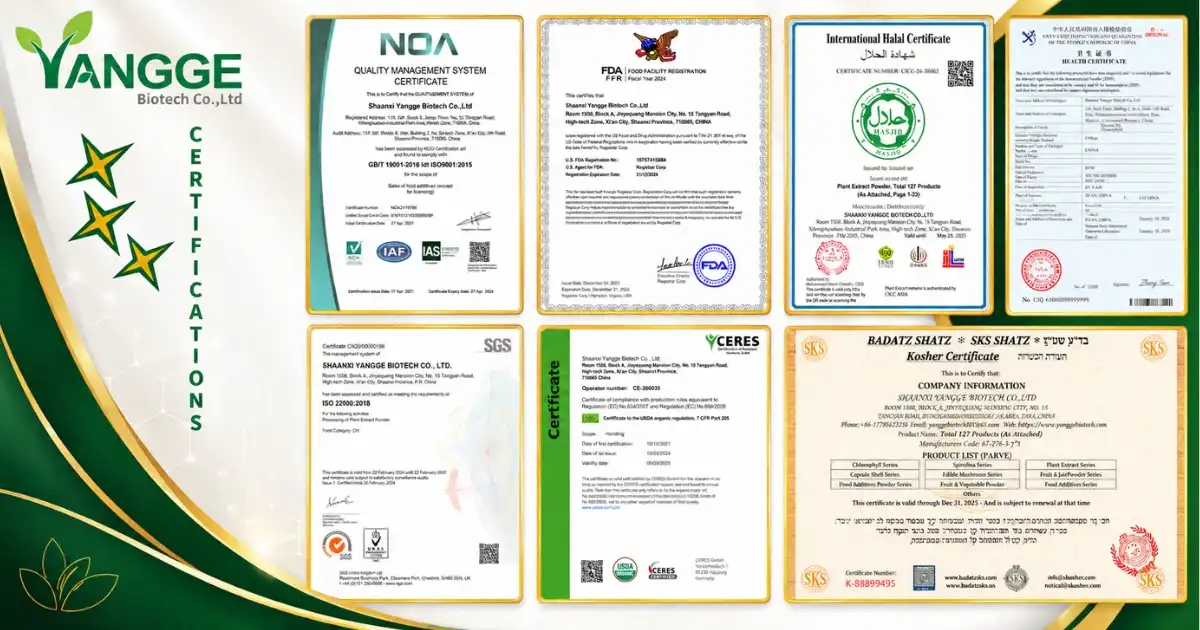
Certification Compliance: Check that possible suppliers have up-to-date ISO, HACCP, Kosher, and Halal certifications that are important to your target markets. Yangge's wide range of certifications shows that they handle quality in a systematic way and lets their products be sold in many legal areas. Ask for audit records and proof of renewal to make sure the license is still valid.
Technical Support Capabilities: Formulation problems always come up during product creation and production. Time-to-market is sped up and risks of reformulation are cut down when suppliers offer specialised R&D collaboration, which includes concentration specs, usage suggestions, and application troubleshooting. Yangge's technical service is available 24 hours a day, 7 days a week, so customers can get help at any time. This is very important for international procurement teams.
Quality Control Infrastructure: Look into the testing protocols and analytical tools available. Preferred providers have their own labs that can do heavy metal analysis, bacterial testing, and fatty acid profiles. They also work with outside testing facilities to make sure the information they give is correct. Working with well-known labs gives Yangge third-party validation, which makes quality assurance documentation stronger.
| Supplier Attribute | What to Verify | Yangge Biotech Example |
|---|---|---|
| Minimum Order Quantity | Ability to change for tests and size | 1 kg sample to large orders |
| Production Capacity | Ability to keep supplying | 50–100 kg of stock on hand |
| Packaging Options | Customisation to meet brand needs | 1 kg metal bags in any size or shape |
| Lead Times | Fitting in with production plans | Get in touch for up-to-date schedules |
| Traceability | Documentation from farm to table | Full visibility of the supply chain |
Sustainability Practices: Buying choices are being affected by corporate duty more and more. Check out the environmental efforts that your providers are making, such as their use of green energy, programs to cut down on waste, and partnerships for community development. Institutional buyers care about ESG (Environmental, Social, and Governance) factors, and Yangge's model for sustainable farming and well-known environmental practices in China meet these needs.
Commercial Terms and Service: Look at more than just the product specs. Also look at the payment terms, the freedom of the orders, and the help with managing the inventory. When suppliers are ready to hold safety stock or set up consignment arrangements, you don't need as much operating capital. Check how quickly people respond to your messages—delays in quotes or technical questions could mean that there are problems with the service during ongoing partnerships.
Procurement Strategy Optimization
Diversified buying methods keep quality standards high while lowering the risk of supply disruptions. You might want to build relationships with two qualified MCT powder suppliers. Choose one to handle 70–80% of the volume and keep the other as a backup source. This method gives you more power in negotiations and keeps your business running even when there are problems with production or not enough raw materials.
Direct relationships with manufacturers usually have better prices than networks of distributors, especially for volumes over 100 kg every three months. But distributors are useful because they combine shipping, make import paperwork easier, and keep stock locally for "just-in-time" needs. When you compare buying sources, you should look at the total landed cost, which includes freight, duties, and carrying costs.
Conclusion
The choice between MCT powder and coconut oil is based on particular formulation needs, target market positioning, and operating skills, not on which is better in general. MCT powder gives you concentrated, fast-acting energy through optimised C8 and C10 fatty acids. It comes in a package that is easy to make, which solves important production problems. Because it dissolves easily in cold water, has no taste, and is very stable, it's perfect for powder supplements, functional drinks, and products that need to be precisely dosed.
Coconut oil is a natural, whole-food option that releases energy slowly over time. It can be used in situations where its unique flavour and wider range of fatty acids make the product seem more real. When you do strategic procurement, you have to carefully evaluate suppliers, focusing on things like quality systems, technical support, and following the rules. Working with licensed makers like Yangge Biotech guarantees consistent ingredients and thorough records that help the product's long-term success.
FAQ
Which ingredient provides faster energy MCT powder or coconut oil?
Due to its concentrated caprylic and capric acid content, MCT powder provides energy more quickly. These medium-chain triglycerides go straight into the bloodstream and are changed into ketones in 30 to 60 minutes. Only 35 to 50 percent of the fatty acids in coconut oil are medium-chain. The rest are short-chain fatty acids, which are absorbed more slowly by the lymphatic system and don't give you energy until 60 to 120 minutes after eating it.
Can MCT powder and coconut oil be used interchangeably in formulations?
They can't be switched out straight without changing the recipe. The water-dispersible nature of MCT powder and the lipophilic nature of coconut oil call for different processing methods. Powder supplements and quick drinks need MCT powder's ability to dissolve, while coconut oil works well with blended liquids and topicals that are oil-based. Because MCT powder is more concentrated, 5–8 grams of it can have the same benefits as 10–15 grams of coconut oil.
What are the shelf-life differences between these ingredients?
When kept in sealed, light-protected cases, MCT powder exhibits better stability, keeping its quality for 24 months or more. The microencapsulation protects the fatty acids from breaking down due to oxygen. Under ideal conditions, coconut oil usually stays good for 12 to 18 months. However, light, heat, and air can make it go bad faster. This advantage of stability cuts down on waste and makes the product more viable in more distribution channels.
Partner with Yangge Biotech for Superior MCT Powder Supply
Source choices affect how well a product works and how competitive it is in the market. With pharmaceutical-grade materials and ISO, HACCP, Kosher, and Halal certifications, Yangge Biotech is the most reliable MCT powder maker. Our formula comes from coconut and is very good at dissolving in cold water. It also has no taste and is made with an acacia fibre matrix that has no sugar. This makes it perfect for high-end functional products. We can help you with everything from developing your formula to making it available on a large scale. Our flexible 1 kg minimum orders, GMP-compliant production, and thorough PAH4 compliance documentation make this possible.
Our specialised research and development team gives expert advice on concentration requirements and application optimisation, making sure that they work well with your existing products.Contact us and email with info@yanggebiotech.com right away to ask for samples, talk about unique packaging needs, or get specific quotes. We are a dedicated MCT powder provider, and we provide consistent quality, clear tracking, and quick service to help your company succeed in the nutrition market.
References
1. Bach, A.C., & Babayan, V.K. (1982). Medium-chain triglycerides: An update. American Journal of Clinical Nutrition, 36(5), 950-962.
2. St-Onge, M.P., & Jones, P.J. (2002). Physiological effects of medium-chain triglycerides: Potential agents in the prevention of obesity. Journal of Nutrition, 132(3), 329-332.
3. Mumme, K., & Stonehouse, W. (2015). Effects of medium-chain triglycerides on weight loss and body composition: A meta-analysis of randomized controlled trials. Journal of the Academy of Nutrition and Dietetics, 115(2), 249-263.
4. Augustin, K., Khabbush, A., Williams, S., Eaton, S., Orford, M., Cross, J.H., Heales, S.J.R., Walker, M.C., & Williams, R.S.B. (2018). Mechanisms of action for the medium-chain triglyceride ketogenic diet in neurological and metabolic disorders. The Lancet Neurology, 17(1), 84-93.
5. Liu, Y., & Wang, C. (2013). Functional properties of spray-dried medium-chain triglyceride powder and its application in food systems. Food Science and Technology Research, 19(4), 551-558.
6. Traul, K.A., Driedger, A., Ingle, D.L., & Nakhasi, D. (2000). Review of the toxicologic properties of medium-chain triglycerides. Food and Chemical Toxicology, 38(1), 79-98.

Based on your location and order quantity, you will have the opportunity to receive a limited time free shipping promotion!

Who we are
Popular Blogs