How does lutein differ from zeaxanthin?
While lutein and zeaxanthin are both carotenoids belonging to the xanthophyll family, their molecular differences significantly impact formulation performance and biological activity. The primary distinction lies in their structural arrangement: these compounds share an identical chemical formula but differ in the position of one double bond within their ring structures. This subtle variation creates three chiral centers in lutein molecules compared to two in zeaxanthin, affecting their selective accumulation in ocular tissue and stability profiles during manufacturing processes. Understanding these structural differences becomes essential when selecting raw materials for supplement formulations, as they directly influence bioavailability, extraction efficiency, and end-product quality.
Introducing Lutein and Zeaxanthin: General Overview
Both carotenoids are specialised oxygenated pigments that are mostly produced by plants and have vital defences against exposure to high-energy light and oxidative stress. These substances have become well-known in the nutraceutical sector for their functions in promoting macular health and shielding skin from photodamage.
Natural Sources and Extraction
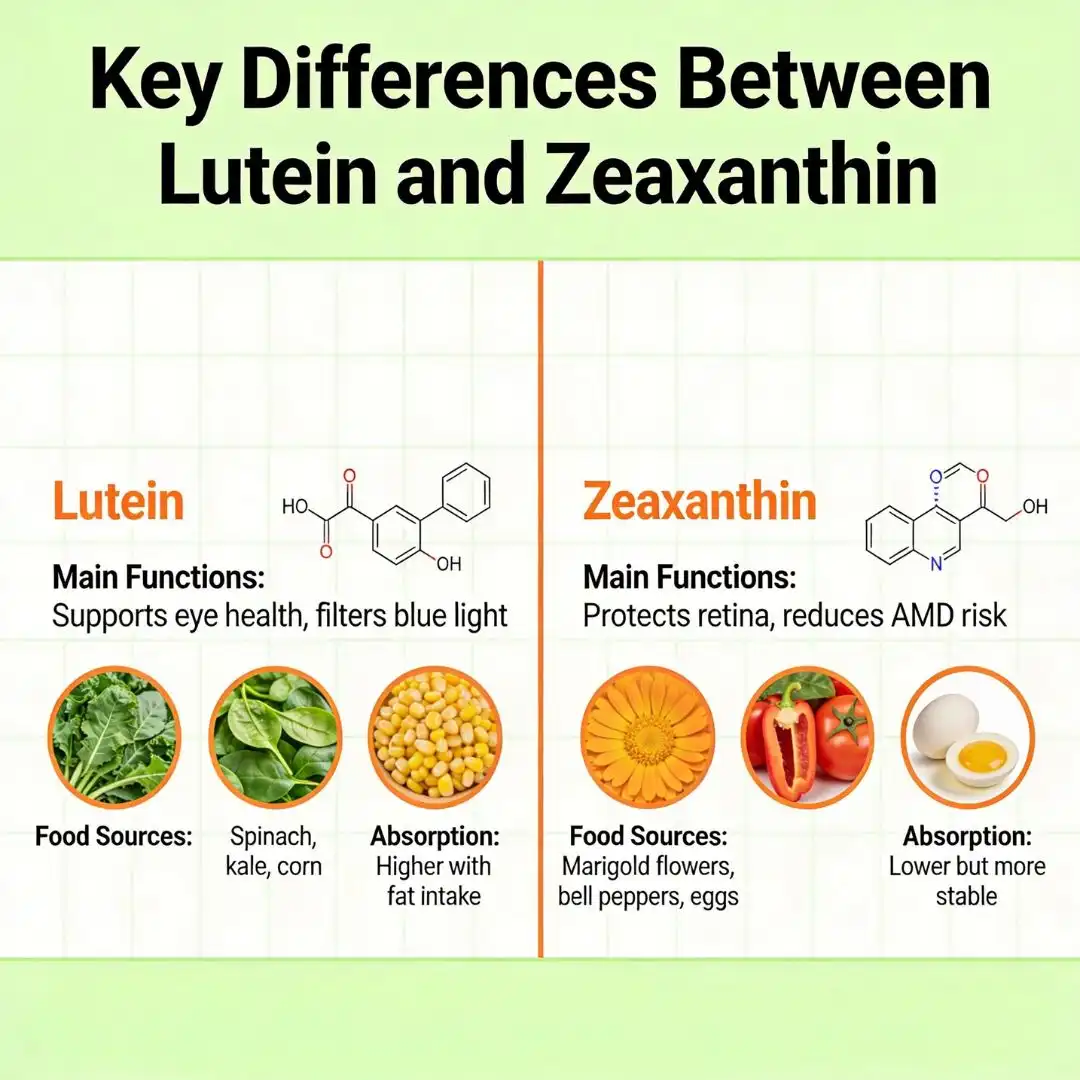
The most profitable commercial source for industrial-scale extraction is marigold flowers. Because of their remarkable xanthophyll concentrations, these colourful blooms are the chosen raw material for B2B suppliers that work with makers of nutritional supplements. We provide traceability from cultivation to final processing by sourcing our marigold extract from carefully chosen farms that adhere to strict agricultural regulations. These carotenoids are also found in dark green crops like spinach and kale, but their lower concentration makes large-scale extraction less feasible for commercial uses.
Biological Functions in Human Health
The macula, the primary area of the retina in charge of fine vision, is where these carotenoids are concentrated. They can filter dangerous blue light wavelengths and neutralise reactive oxygen species produced by photochemical processes according to their distinct molecular structure. Beyond protecting the eyes, new studies show how beneficial they are for skin health by preventing UV-induced damage and preserving dermal integrity. These substances are becoming more widely acknowledged by procurement experts creating skin care formulas as useful components that provide quantifiable advantages beyond mere colouring.
Applications Across Industries
These carotenoids have been adopted by the functional food industry as nutritious, clean-label substitutes for artificial colouring. Manufacturers of beverages use them in fortified drinks aimed at customers who use digital devices and are worried about screen time. Their dual function as natural pigments and potent antioxidants in anti-aging treatments is highly valued by cosmetic formulators. Procurement managers may find cross-category possibilities that optimise ingredient investment returns by having a thorough understanding of application adaptability.
Key Differences Between Lutein and Zeaxanthin
Subtle structural differences provide unique performance characteristics that affect formulation choices and sourcing tactics despite their chemical similarity. Understanding these distinctions enables procurement managers to establish suitable quality standards and R&D teams to maximise product effectiveness.
Molecular Structure and Isomeric Forms
The double bond position difference generates unique three-dimensional configurations that affect how each molecule interacts with cellular membranes and transport proteins. Zeaxanthin exists primarily in the meso-zeaxanthin form within retinal tissue, though this isomer rarely occurs naturally in plants and typically requires enzymatic conversion in the body. This metabolic requirement influences dosage calculations and formulation strategies for eye health products. Our marigold extract naturally provides predominantly free lutein following saponification, though we can also supply lutein ester forms depending on formulation requirements.
Distribution in Ocular Tissue
These carotenoids exhibit patterns of selective accumulation in the macula. While lutein is distributed across the peripheral macular regions, zeaxanthin is mostly concentrated in the central macular region. In clinical investigations, combination formulae usually work better than single-ingredient methods, which may be explained by this complimentary distribution pattern. Many eye health supplements now adhere to the benchmark ratio set by the AREDS2 experiment, giving procurement experts evidence-based formulation objectives.
Bioavailability and Absorption Characteristics
Due to variations in molecular weight and polarity, lutein esters, free lutein, and zeaxanthin have different absorption efficiencies. Although enzymatic conversion during digestion may narrow this gap, free lutein typically exhibits better bioavailability than lutein esters. Our technical staff helps formulators determine the right doses to reach target plasma concentrations by providing comprehensive absorption data for various product forms. During product development, matrix effects from co-ingredients like fats and emulsifiers must be carefully taken into account since they have a substantial impact on absorption rates.
Sourcing Challenges and Production Methods
For both carotenoids, natural extraction from marigold flowers continues to be the most popular commercial manufacturing technique. However, marigolds usually contain far less zeaxanthin than lutein, which leads to supply issues and pricing disparities. Our unique extraction techniques optimise production while upholding the purity requirements needed for pharmaceutical-grade applications. With ISO, HACCP, Kosher, and Halal certifications, our manufacturing plant follows GMP procedures, guaranteeing uniform quality across production batches. Although customer demand is shifting toward organically produced substances, some businesses use synthetic zeaxanthin to overcome supply constraints.
Practical Considerations for Procurement and Application
In order to source ingredients successfully, a number of elements must be balanced, such as cost control, supply chain dependability, regulatory compliance, and quality standards. Our expertise dealing with makers of dietary supplements in international markets offers insightful information on how to make the best procurement choices.
Quality Control and Purity Standards
High-performance liquid chromatography remains the gold standard for verifying carotenoid identity and concentration. Our quality assurance protocols include testing for specific isomeric forms, ensuring customers receive precisely specified products. We maintain specifications ranging from 5% to 80% concentration in our marigold extract lutein powder, accommodating diverse formulation needs from beverage fortification to concentrated supplement capsules. The orange fine powder appearance provides natural coloration without synthetic dyes, meeting clean-label requirements increasingly demanded by end consumers.
Monitoring for contamination is another important aspect of quality. With benzopyrene levels maintained below 10 ppb, our goods satisfy European PAH4 criteria, allaying worries about impurities associated to manufacturing. For independent verification, we collaborate with globally renowned labs and provide clients third-party supporting material for regulatory applications. Product marketability is further improved in areas with different regulatory frameworks by being non-GMO, non-irradiated, and allergy-free.
Dosage Forms and Formulation Compatibility
For unique formulations, powder forms provide the most versatility, allowing for exact dose control in tablets, capsules, and functional meals. Although stability issues need careful consideration of pH, light exposure, and temperature throughout processing, water-dispersible preparations make beverage applications easier. By supplying the lipid matrix required for carotenoid absorption, oil solutions improve bioavailability. Based on anticipated uses and production capabilities, we work with formulation teams to provide the best delivery methods.
Supplier Evaluation Criteria
It's important to consider more than just price when choosing trustworthy partners. Supply continuity is strongly impacted by production capacity, especially during the seasonal demand swings that are typical in the supplement sector. Regardless of differences in agricultural harvests, our strategic raw material inventories and specialised manufacturing lines guarantee continuous availability. Technical support skills set really useful providers apart from commodity vendors. Our R&D team offers concentration standards, use guidelines, and extraction procedure documentation that are suited to particular application needs.
Storage and Stability Requirements
Because carotenoids are sensitive to heat, light, and oxygen, they need to be stored under carefully regulated settings to retain their effectiveness over time. Aluminium foil bags, which provide superior barrier qualities against environmental deterioration, are used to package our goods. Activity is maintained throughout storage and transit when original containers are kept completely covered and shielded from light. Accelerated stability testing provides predictive data for determining suitable expiry dates. Consumers are given comprehensive handling instructions that facilitate appropriate inventory control and quality maintenance throughout distribution networks.

Comparing Lutein and Zeaxanthin in Supplement Formulations
Understanding how these carotenoids react to different dose ratios and interact with complementing nutrients is essential for product development. Evidence-based formulation techniques improve production efficiency while maximising therapeutic potential.
Optimal Ratio Guidelines
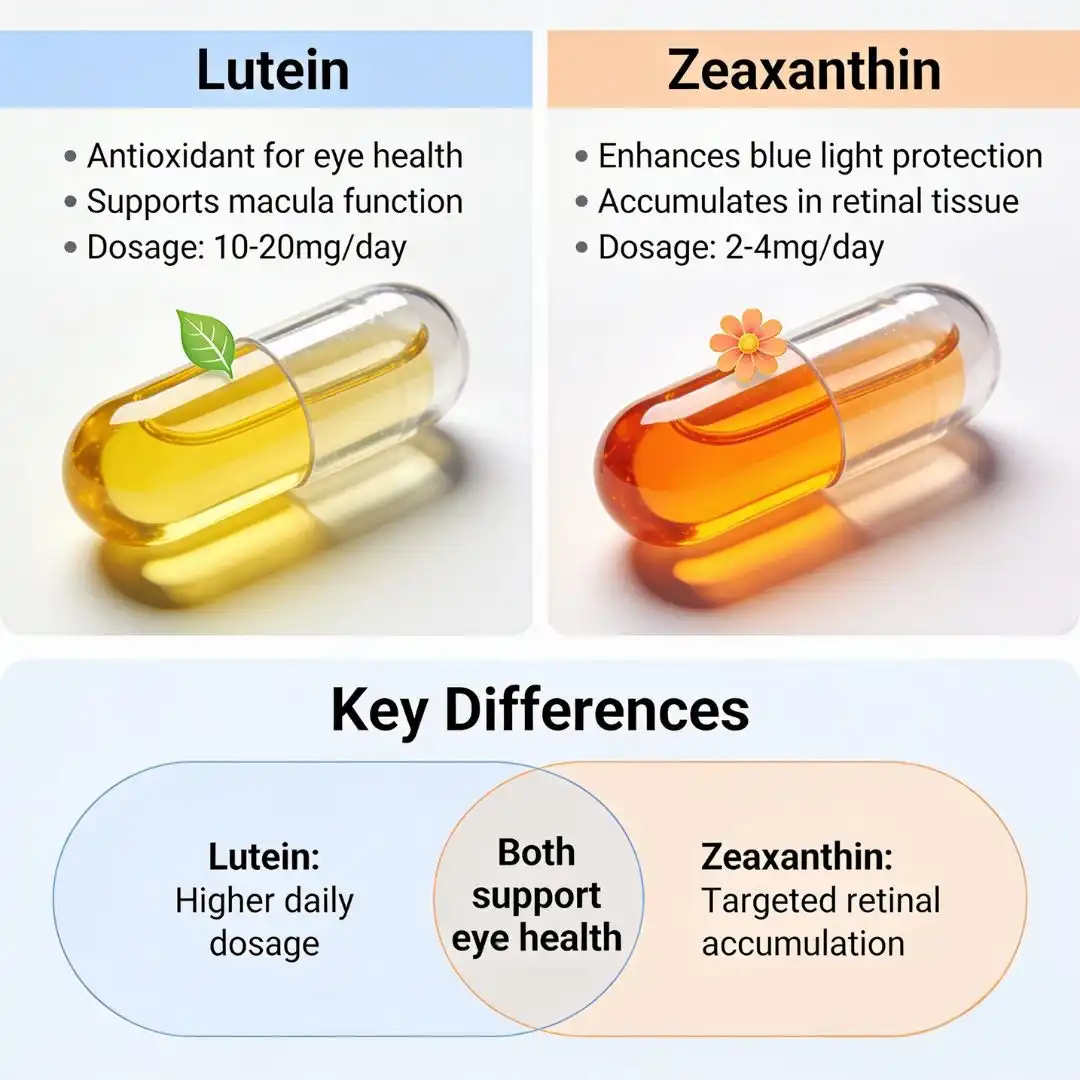
Clinical research suggests that formulations containing both carotenoids in specific proportions deliver superior outcomes compared to single-ingredient products. The widely referenced 5:1 ratio of lutein to zeaxanthin reflects concentrations tested in landmark studies, though emerging research explores alternative proportions for targeted applications. Our technical advisors help customers interpret clinical literature and translate research findings into practical formulation specifications. Meso-zeaxanthin inclusion represents an advanced approach adopted by premium eye health products, though its higher cost requires careful market positioning.
Synergistic Nutrient Combinations
Based on extensive nutritional research showing improved antioxidant network effects, vitamin C, vitamin E, and zinc are often added to carotenoid formulations. In addition to promoting overall eye health, omega-3 fatty acids increase carotenoid bioavailability by improving lipid absorption. We see an increase in interest in multi-ingredient solutions that target overall wellbeing as opposed to specific nutritional deficiencies. As buyers look for suppliers that can provide many complementing elements from unified quality systems, this development affects procurement tactics.
Market Demand Trends
The conventional age-related market has grown to include younger populations that are worried about screen time due to consumer knowledge of digital eye strain. Innovative delivery modalities like candies and ready-to-drink drinks that appeal to a wider audience than traditional supplement consumers are made possible by this demographic change. Growing middle-class populations that prioritise preventative health measures are reflected in geographic development into Asian markets. Procurement specialists may predict volume needs and negotiate advantageous long-term supplier agreements by having a thorough understanding of these dynamics.
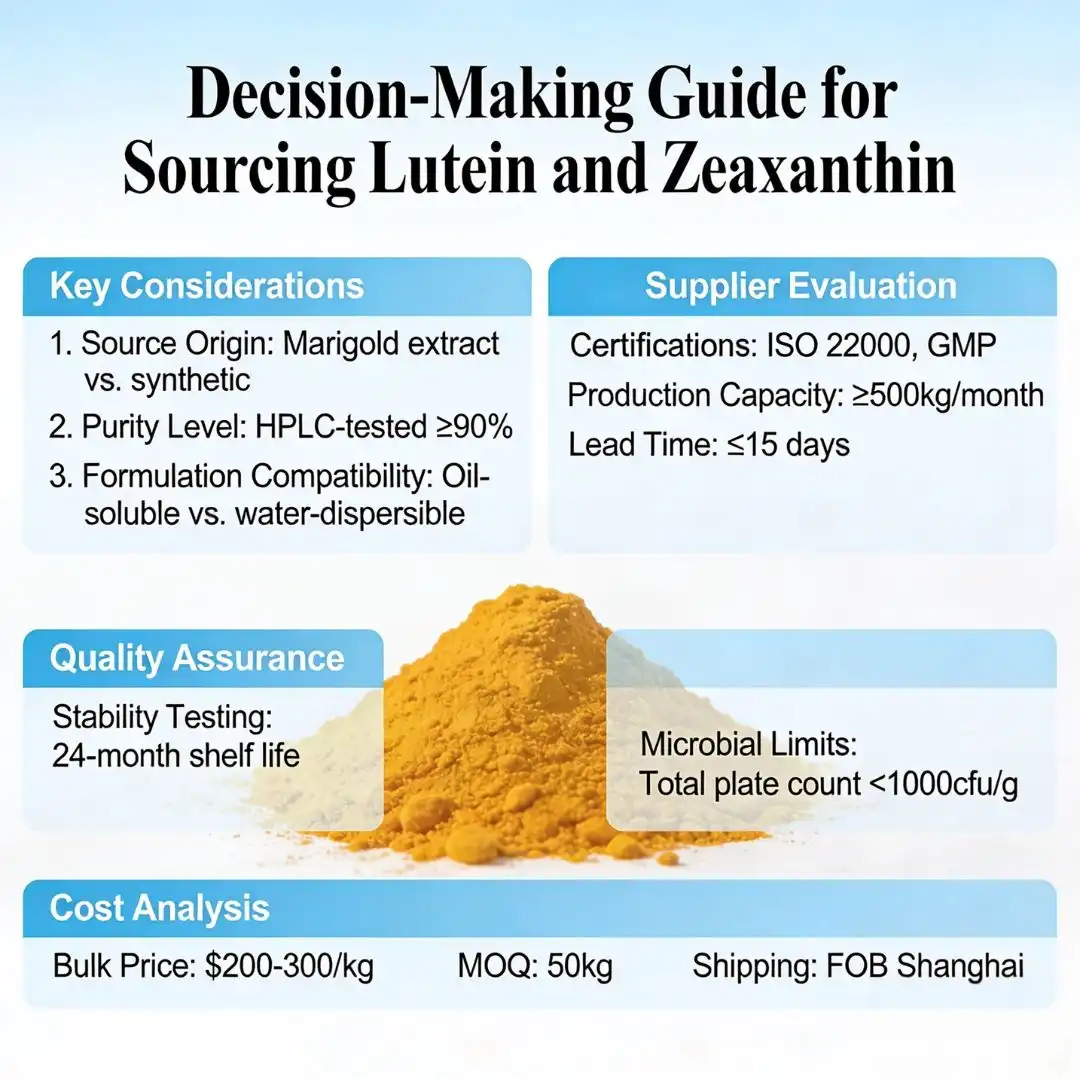
Decision-Making Guide for Sourcing Lutein and Zeaxanthin
Systematic review procedures that match ingredient selection with overarching corporate goals are necessary for strategic procurement. Throughout the sourcing process, the following framework facilitates well-informed decision-making.
Defining Application Requirements
Ingredient requirements are essentially shaped by product positioning. While mass-market functional meals may place more emphasis on cost effectiveness and processing stability, premium supplements aimed at health-conscious customers defend claims of higher-purity materials and natural sourcing. Meaningful supplier comparisons are made possible by precise application specifications, which also avoid specification incompatibilities that lead to formulation difficulties. In order to provide suitable product grades and specifications, our customer support team does thorough requirements assessments.
Certification and Compliance Verification
Market-specific regulatory environments differ greatly, necessitating close attention to certification needs. Ingredient acceptance is influenced by FDA registration, EU Novel Food approvals, and national supplement laws. We keep thorough records, such as country-of-origin statements, allergy declarations, and certificates of analysis, to support regulatory filings. Although the certification process increases complexity and costs across the supply chain, organic certification is becoming a more significant factor in consumer purchase choices.
Risk Management Strategies
Geopolitical issues, quality issues, and agricultural difficulties may all cause supply chain interruptions. Careful vendor certification procedures are necessary to diversify supplier connections while maintaining constant quality requirements. Farm-to-table traceability systems that track ingredient origin throughout the whole supply chain have been put in place. Adulteration is still a problem for the business, especially when it comes to expensive materials where financial incentives promote dishonest behaviour. Customers are shielded from quality compromises by our relationship with independent testing facilities, which offers proof.
Conclusion
Distinguishing between these structurally similar carotenoids, such as lutein, enables procurement professionals to make informed sourcing decisions aligned with formulation goals and market positioning. Their complementary distribution in ocular tissue, differing bioavailability profiles, and distinct sourcing considerations all influence optimal ingredient selection. Successful product development balances clinical evidence with practical manufacturing constraints, requiring suppliers who provide technical expertise alongside quality raw materials. As consumer awareness of preventive eye health continues expanding, demand for naturally derived, scientifically validated carotenoids will grow across diverse product categories.
Partner with Yangge for Premium Marigold Extract Lutein Supply
Yangge Biotech specializes in providing pharmaceutical-grade marigold extract lutein powder to dietary supplement manufacturers, functional food developers, and cosmetic formulators worldwide. Our product range spans concentrations from 5% to 80%, accommodating applications from beverage fortification to concentrated supplement capsules.
As a trusted lutein supplier with comprehensive certifications including ISO, HACCP, Kosher, and Halal, we deliver consistent quality backed by rigorous testing protocols. Our commitment to sustainable sourcing ensures complete farm-to-table traceability, meeting organic certification requirements while supporting farming communities. Contact our technical team at info@yanggebiotech.com to discuss your specific formulation requirements and receive customized recommendations for optimizing your product development initiatives.
FAQ
Q: Can we get some samples to test before purchasing?
A: Of course, we can provide free samples of 20 to 100 grams, but the shipping cost is at the customer's expense. The shipping cost can be deducted from the next order, or the samples can be sent through your courier account.
Q: Do your products have relevant certifications?
A: Yes, our products are certified for HALAL, ISO, HACCP, Kosher, and other certifications.
Q: What is the minimum order quantity (MOQ)?
A: Small batches of samples can be customized according to your requirements.
Q: Do you offer OEM and ODM services? Can the formula be customized based on our own?
A: Of course, we provide ODM and OEM services to many customers. Our product range includes softgels, capsules, tablets, sachets, granules, and private label services. Simply contact us and let us know your requirements. Our experienced R&D team can also develop new products with specific formulas.
Please contact us to design your own branded products.
Q: How do you handle quality complaints?
A: First, we have a comprehensive quality control SOP. We provide authoritative third-party inspection reports for almost all products before shipment to minimize the possibility of quality issues. Second, we have a comprehensive return and exchange procedure. If there is a genuine quality dispute, we will strictly follow the SOP.
Q: How do you ship? How long does delivery take?
A: For small orders, we typically use DHL, UPS, EMS, FedEx, or TNT. Delivery typically takes 3-7 days. We also offer air and sea freight services. We have a strong freight forwarding team and can provide you with a one-stop service, including DDP and DDU.
Q: What are your payment terms?
A: 100% prepayment, payable by T/T, Western Union, MoneyGram, or PayPal.
Q: What is the shelf life of your products?
A: 2 years with proper storage.
References
1. Bone, R.A., Landrum, J.T., and Tarsis, S.L. "Preliminary identification of the human macular pigment." Vision Research, 1985.
2. Seddon, J.M., Ajani, U.A., and Sperduto, R.D. "Dietary carotenoids, vitamins A, C, and E, and advanced age-related macular degeneration." Journal of the American Medical Association, 1994.
3. Age-Related Eye Disease Study 2 Research Group. "Lutein + zeaxanthin and omega-3 fatty acids for age-related macular degeneration: the Age-Related Eye Disease Study 2 randomized clinical trial." JAMA, 2013.
4. Landrum, J.T. and Bone, R.A. "Lutein, zeaxanthin, and the macular pigment." Archives of Biochemistry and Biophysics, 2001.
5. Hammond, B.R., Johnson, E.J., Russell, R.M., Krinsky, N.I., Yeum, K.J., Edwards, R.B., and Snodderly, D.M. "Dietary modification of human macular pigment density." Investigative Ophthalmology & Visual Science, 1997.
6. Krinsky, N.I., Landrum, J.T., and Bone, R.A. "Biologic mechanisms of the protective role of lutein and zeaxanthin in the eye." Annual Review of Nutrition, 2003.

Based on your location and order quantity, you will have the opportunity to receive a limited time free shipping promotion!
Who we are
Popular Blogs