How Does Gardenia Yellow Compare With Turmeric as a Food Colorant?
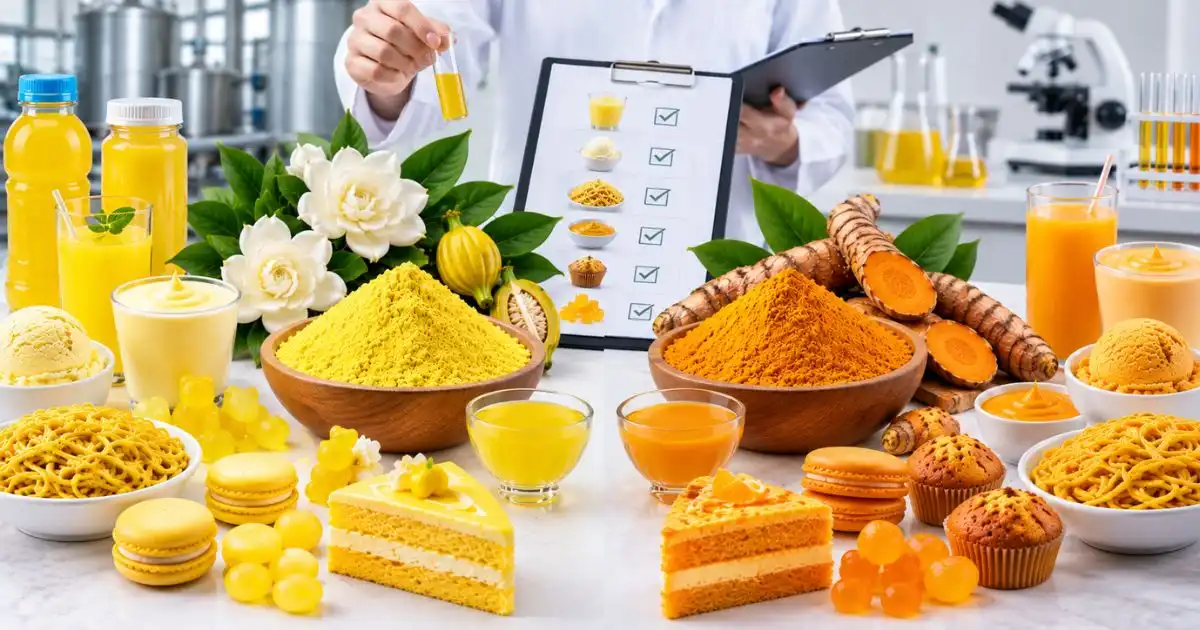
When choosing between natural yellow colorants, procurement managers face a critical decision. 4, extracted from Gardenia jasminoides fruit, delivers superior heat and light stability compared to turmeric (curcumin), particularly in aqueous systems. Unlike turmeric's pronounced earthy flavor and aroma, Gardenia Yellow offers a clean, neutral taste profile, making it ideal for beverages, confectionery, and noodle products where color intensity matters without sensory interference. Both carotenoid-based pigments provide antioxidant benefits, yet their performance diverges significantly across processing environments and regulatory landscapes. For Gardenia Yellow samples, specifications, COA, pricing, or OEM/ODM solutions, please contact Yangge Biotech. Email info@yanggebiotech.com.
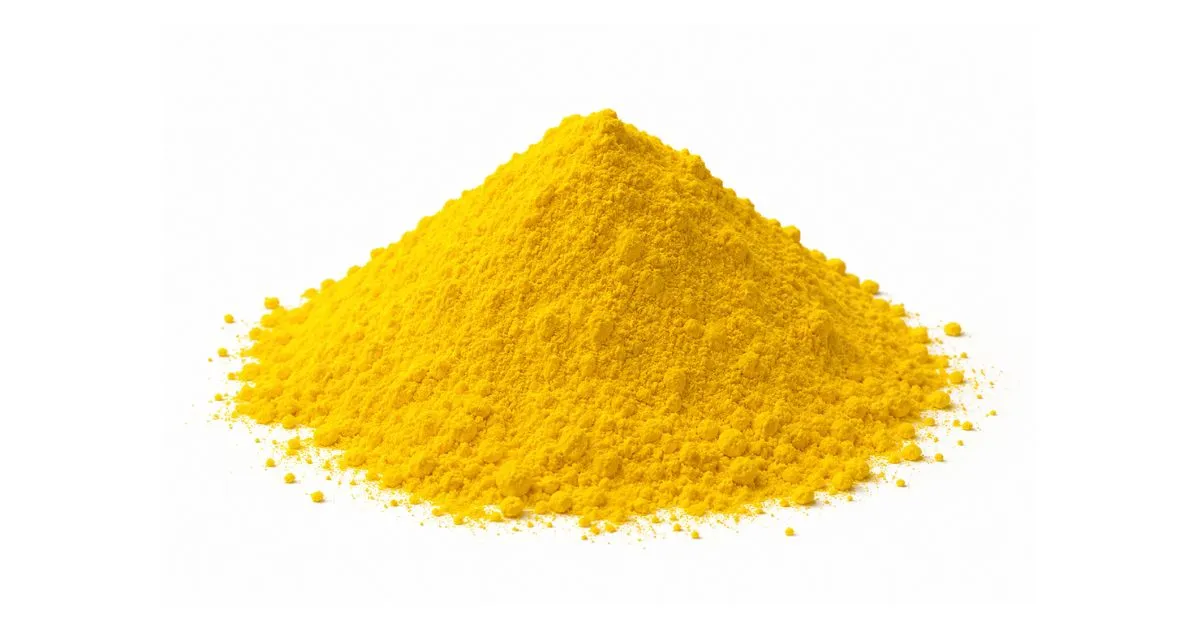
Understanding Gardenia Yellow and Turmeric as Food Colorants
Botanical Origins and Extraction Methods
Gardenia Yellow comes from the fully ripe fruit of the plant Gardenia jasminoides Ellis, which is mostly grown in Southeast Asia. Water- or ethanol-based liquid solutions are used for the extraction process. The powder is then filtered, cleaned, and sprayed dry to make it more concentrated.
Crocin, a water-soluble carotenoid glycoside that gives the colour its bright, clear yellow shade (Rodriguez-Amaya, 2016), is what does the colouring. Yangge Biotech's Gardenia Yellow Powder E60 is a good example of this way of making things. It uses advanced HPLC-verified extraction to meet standards of E60, E300, or E500, which are numbers that show the colour value per gram.
When Curcuma longa rhizomes are used to make turmeric, they go through a different process. To get curcumin, the main pigment, from the rhizomes, they are dried, ground, and extracted using organic solvents. The amount of curcumin in commercial turmeric extracts ranges from 3 to 5 percent in ground turmeric to 95% in pure oleoresins. Crocin has a bland taste, but curcumin has the earthy, slightly bitter flavour that you would expect from curry spices.
Chemical Composition and Color Properties
How these colours work in food is based on how their chemical structures are set up. Crocin's glycoside structure makes it easier for water to dissolve, so it can be easily added to clear drinks without using emulsifiers. Because curcumin doesn't like water, it needs solubilisation tools or oil phases to spread evenly. Both substances absorb light best around 440nm, but their spectral properties change when the pH level changes. Gardenia Yellow stays the same in neutral to slightly alkaline (pH 7–10) settings, but curcumin changes from yellow to reddish brown above pH 8.
Regional Application Preferences
Asian food companies like Gardenia Yellow for traditional items like fresh noodles, pickled vegetables, and tofu-based foods that don't have a strong flavour and dissolve easily in water. Because the colourant sticks to starch and protein structures, it stays put while mixing and doesn't move around much while cooking. In South Asian and Middle Eastern cuisines, turmeric is very popular because of its unique flavour. For example, mustard sauces, curry powders, and golden milk drinks all use curcumin, which is both a colourant and a spice.
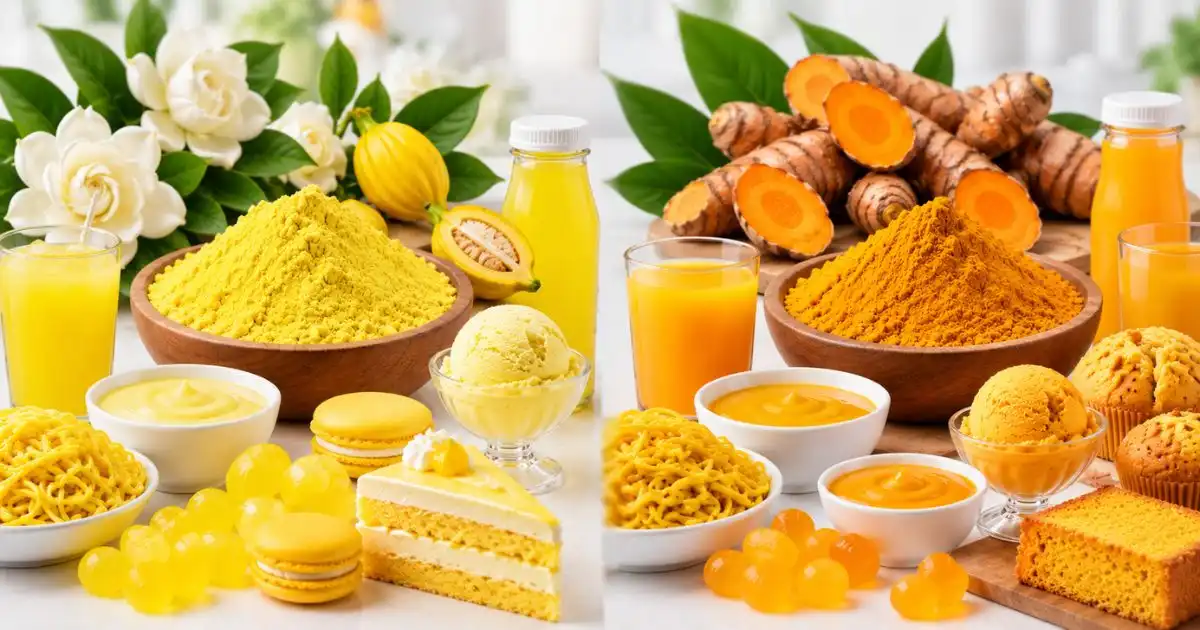
Comparative Analysis of Gardenia Yellow and Turmeric for Food Coloring
Thermal and Light Stability Performance
Thermal resistance is one of the most important things that sets something apart in industrial settings. Gardenia Yellow is very resistant to heat; it can survive 80°C for 120 minutes without losing much of its colour. This is a very important property for UHT processing, retort sterilisation, or high-temperature extrusion (Scotter, 2015). Yangge's E60 specification keeps the colour the same even after being heated many times, which is common when making instant noodles.
Curcumin is moderately sensitive to heat, especially in water-based solutions where it breaks down faster above 70°C when exposed for a long time. Products that have been pasteurised or filled with hot air will not last as long because of this restriction. Both colours need to be packed in UV-protective material, but Gardenia Yellow is slightly more resistant to direct sunlight when mixed with vitamins like ascorbic acid.
Sensory Impact on Product Formulations
The fact that Gardenia Yellow doesn't change the taste of anything is a huge plus for companies that are making goods where the colour shouldn't be noticeable to the taste buds. Candy makers who are making lemon-flavored hard candies or drinks with citrus flavours need bright yellow that doesn't have any other flavours that compete with it.
Turmeric has a flavour profile that works well with savoury foods but not so well with fruit or dairy bases. When I talked to beverage companies, sensory panels consistently picked up on the earthy undertones of turmeric at concentrations above 0.02%, but they couldn't pick up on Gardenia Yellow at the same colour strength.
Regulatory Status and Clean Label Advantages
Acceptance by regulators varies a lot from market to market. The FDA does not require certification of either colourant in the United States. Gardenia Yellow is not required to be certified as a colour additive (21 CFR 73.1326), and turmeric oleoresin is not required to be certified either (21 CFR 73.600). Asian markets, like Japan, South Korea, and Southeast Asian countries, generally agree with both pigments, and safe daily intake levels have been set.
There are some problems with the European Union. Turmeric has the E100 label, but Gardenia Yellow doesn't have any specific authorisation as a food additive in EU rules yet, which means it can't be used in goods going to European markets (EFSA, 2016). This regulatory gap is a very important thing for producers who want to sell to think about.
Nutritional and Functional Benefits
In addition to colouring, both pigments have antioxidant properties that back up what the companies say on the label. In published studies, crocin has been shown to protect against oxidative stress. This means that lipid-containing products may be able to last longer on the shelf. Curcumin is found in functional foods and dietary supplements because it reduces inflammation. Its bioactive effects make it worth the higher price.
Key success indicators are shown in the table below:
| Parameter | Gardenia Yellow (E60) | Turmeric Extract (95% Curcumin) |
|---|---|---|
| How Water Dissolves | Excellent (straightforward answer) | Not good (needs emulsifiers) |
| Stability at 80°C for two hours | >95% of the time | 60-75% retention |
| Profile of Flavour | Not bad | Spicy and earthy |
| pH Range of Stability | 7 to 10 (best) | 3–7 (colour change above 8) |
| Typical Dosage (0.1% w/v) | 0.005% to 0.02% | 0.01 to 0.05% |
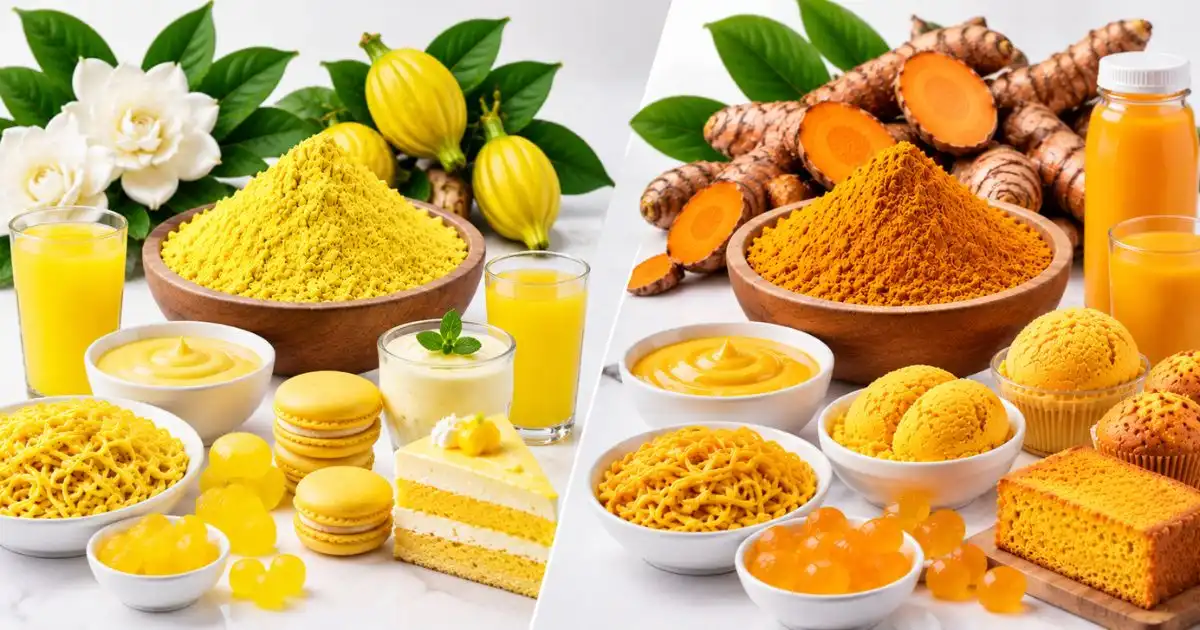
Procurement Considerations for Gardenia Yellow and Turmeric
Supply Chain Reliability and Sourcing Geography
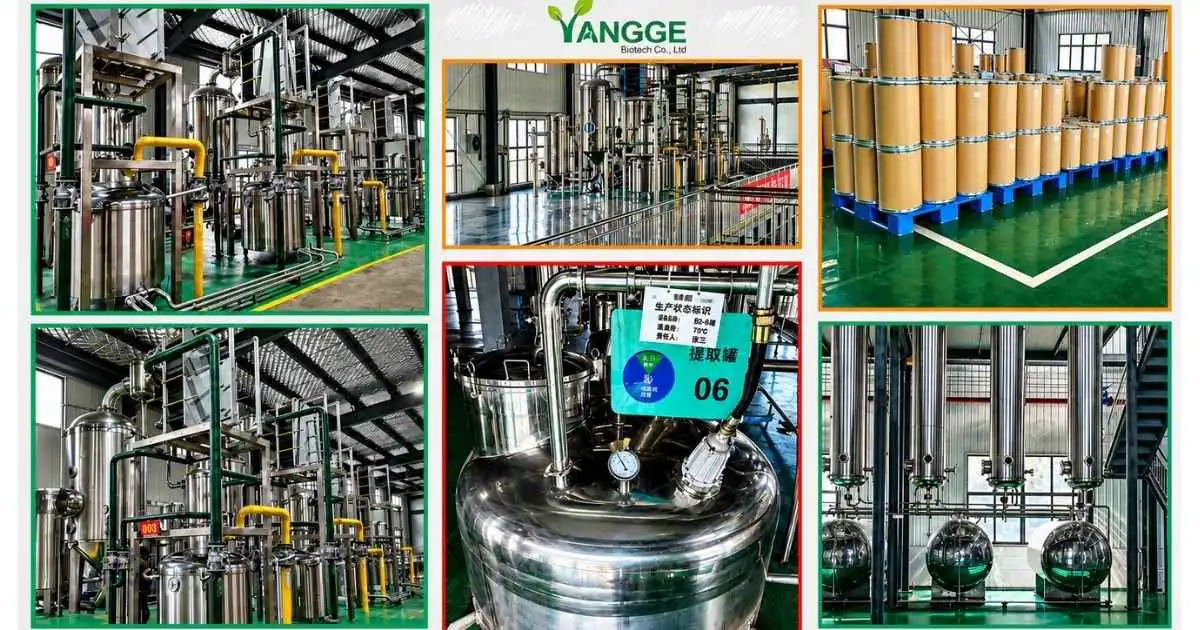
The stock of Gardenia Yellow comes from controlled farming areas, mostly in China's Jiangxi and Hunan provinces, where the subtropical temperatures are perfect for the plant. Specialised extraction sites close to growth areas keep raw materials fresh and cut down on shipping costs. Yangge Biotech's integrated farm-to-factory approach makes sure that the product can be tracked from harvest to final tests. This takes care of batch consistency issues that are common when natural colourants are sourced.
A more diverse supply base for turmeric includes India (70% of the world's production), Indonesia, and Thailand. This geographic spread makes the supply safe, but the amount of curcumin varies depending on the cultivar, the soil, and when the crop is harvested. When buying turmeric, procurement teams have to take yearly price changes into mind. Indian harvests happen from January to March, and prices go up during the off-season months.
Cost Analysis and Total Ownership Considerations
Price per kg doesn't tell the whole story. When looking at tinctorial strength (how much colour you get for your money), Gardenia Yellow E60's concentrated formula is often a better deal than turmeric extracts when the dosage rates are the same. For example, in the beverage industry, to reach the desired yellow colour in a 10,000-liter production run, about 500g of Gardenia Yellow E60 is needed instead of 1,200g of standardised turmeric extract, taking into account their different colour values and how well they dissolve.
Moving things and storing things are two different problems. Because Gardenia Yellow absorbs water, it needs to be packed in a way that keeps wetness out and stored in a way that keeps the humidity low (below 60% RH). This makes storing more complicated. Even though turmeric extracts are less sensitive to moisture, they still need to be kept away from light to keep the curcumin from breaking down. Along with unit price, these infrastructure needs must be added to the total cost of ownership.
Quality Assurance and Certification Requirements
B2B buying requires suppliers to be carefully checked out. Important quality indicators for Gardenia Yellow are:
- Colour Value (E1% 1cm at 440nm): This reading, which was confirmed by UV-Vis spectrophotometry, tells you how strong the tinctorial is. The extinction rate is given as 60 in the E60 standard.
- Geniposide Content: An HPLC test confirms that the amount of geniposide is very low (usually less than 0.1%). This keeps an unwanted blue colour from forming when the colourant reacts with amino acids during processing.
- Heavy Metal Tests: The levels of Pb, As, Hg, and Cd that can be found by ICP-MS must meet the standards set by the FDA and Codex Alimentarius.
- Microbiological Details: The total plate count was less than 1,000 CFU/g, and Salmonella and E. coli tests came back negative.
Because of the chance of contamination in tropical storage settings, turmeric providers should offer curcuminoid profiles (curcumin, demethoxycurcumin, and bisdemethoxycurcumin ratios), residual solvent analysis (ethanol or acetone), and aflatoxin tests. ISO 9001, HACCP, Kosher, and Halal proof are all certifications that are needed for foreign trade. Yangge Biotech keeps these certifications up to date along with GMP compliance, which helps regulatory filings go smoothly in all target markets.
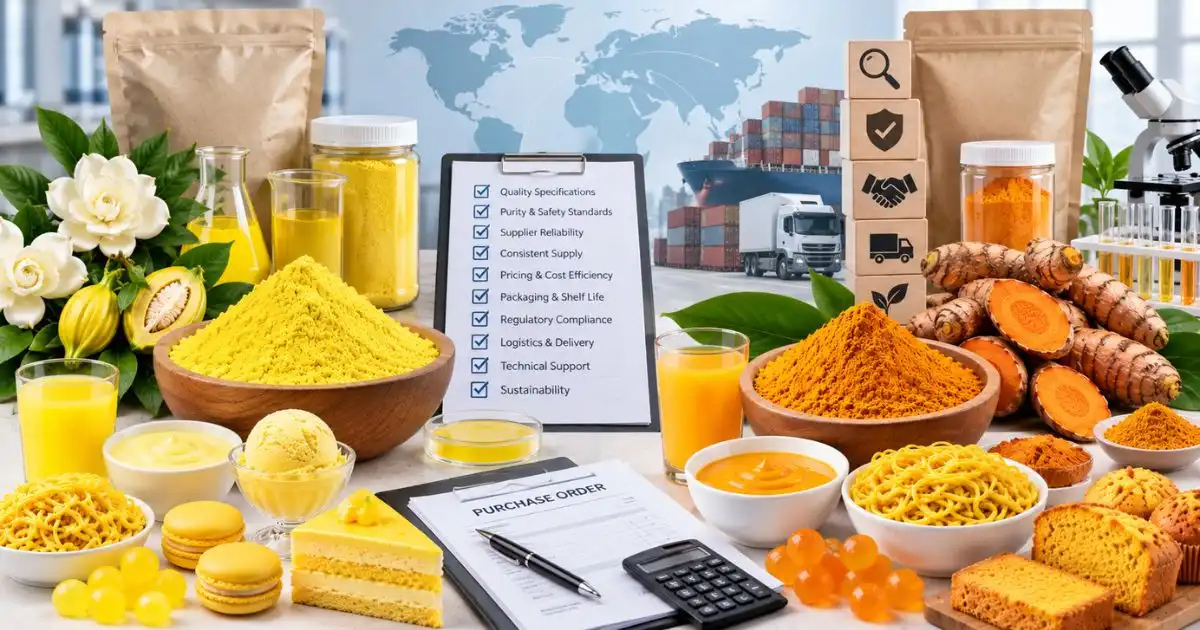
Practical Guidance: Selecting the Right Food Colorant for Your Product
Application-Specific Recommendations
Product designers have to choose colourants that work with the way the product is made and with what customers want. Based on the needs of each group, here are some strategy guidelines:
Uses in Beverages: Gardenia Yellow works great in clear functional drinks, sports drinks, and alcoholic premixes that need to be clear and stable at high temperatures during pasteurisation. The neutral taste of the colourant keeps flavour systems that are carefully balanced. Turmeric works well in golden milk, wellness shots, and drinks with curry flavour because its natural taste adds to the authenticity of the recipe.
Confectionery and Bakery: Gardenia Yellow doesn't fade easily and works well in high-sugar environments, which is good for hard candies, panned chocolates, and sugar coatings. Turmeric works well in cookies, crackers, and savoury snacks where adding a little flavour helps the product stand out.
Noodles and Pasta: Asian companies that make noodles use Gardenia Yellow because it sticks well to starch mixtures and doesn't fade when boiled. Fresh ramen, udon, and instant noodles keep their golden look even after being cooked and while they're still in the package. Turmeric can be used instead of wheat in whole-grain or health-focused pasta lines because it is high in nutrients.
Troubleshooting Common Formulation Challenges
Unexpected colour changes are a common worry in procurement talks. Gardenia Yellow can turn greenish-blue when geniposide residues react with proteins or amino acids at high pH. This problem can be avoided by choosing refined, low-geniposide grades (as shown by 440nm/328nm OD ratios). Because turmeric is sensitive to pH, it needs to be used with care in buffer systems. Adding citric acid or ascorbic acid to acidic goods keeps the yellow colour stable.
Contamination with iron is another danger. Both colourants can combine with ferric ions to make things darker than they should be. This risk can be reduced by using processing equipment made of stainless steel and chelating agents like EDTA in the mixtures.
The comparison table below guides selection based on product categories:
| Product Category | Recommended Colorant | Key Advantage | Typical Dosage |
|---|---|---|---|
| Poured Drinks | Gardenia Yellow | Transparency and heat resistance | 0.005% to 0.01% |
| Foods Made with Milk | Gardenia Yellow | Neutral taste, works with proteins | 0.008 to 0.015% |
| Noodles to Go | Gardenia Yellow | Starch preference, resistance to boiling | 0.02% to 0.03% |
| Sauces with curry | Turmeric | Realness and flavour synergy | 0.1% to 5% |
| Functional Supplements | Turmeric (high curcumin) | Antioxidant value and bioactive claims | 0.05% to 0.2% |
Future Trends and Innovations in Natural Food Colorants
Technological Advances in Extraction and Stabilization
Biotechnology and process engineering are still changing the natural colourant industry. New techniques include enzymatic extraction methods that increase yield and purity while decreasing the use of solvents, which is important for brands that care about the environment. Microencapsulation technologies now make it possible for Gardenia Yellow products to dissolve in oil, which means they can be used in fat-based systems where turmeric or beta-carotene were previously the only options.
Sustainability and Traceability Initiatives
Consumers' interest in the ethics of the supply chain drives the need for clear sources. Yangge Biotech's partnership model with farming communities makes sure that farmers are fairly paid and that farming methods are long-lasting. This addresses concerns about social responsibility and environmental impact. Blockchain-based traceability systems are being tested to provide batch-level records from harvesting to delivery. This will let customers check the organic certification, pesticide residue testing, and carbon footprint data.
Market Dynamics and Consumer Preferences
Market experts predict that demand for natural colourants will grow by 8–12% each year until 2028, which shows that the clean-label trend is not going away. Younger people really value simple ingredients and are willing to pay more for goods that don't have any artificial ones. This trend opens up possibilities for Gardenia Yellow in Western markets, even though EU regulations currently limit its availability. Forward-thinking producers are actively participating in the EFSA's approval process, hoping that it will be possible to get more permissions in three to five years.
Conclusion
To choose between Gardenia Yellow and turmeric, you need to carefully look at their technical performance, how they smell and taste, how well they meet regulations, and how the supply chain works. For drinks, sweets, and Asian noodles that need bright colours and clean tastes, Gardenia Yellow is the best choice because it is more stable at high temperatures, doesn't change flavours, and dissolves easily in water.
Turmeric is still useful in places where its unique flavour helps products stand out and in places where medicinal claims are important. The people who work in procurement have to weigh these differences in functionality against things like cost, the need for approval, and rules for the target market. As technology for natural colourants improves, both pigments will continue to change to meet the needs of manufacturers and consumers as they change.
FAQ
Can Gardenia Yellow and turmeric be used interchangeably in formulations?
They cannot be directly switched out because they don't dissolve or taste the same. Turmeric needs oil phases or special dispersants to work in water-based systems, but Gardenia Yellow can dissolve in water without any help. Crocin doesn't change the taste of food, but curcumin's bitter taste does.
How do storage conditions affect shelf life for each colorant?
Gardenia Yellow needs to be kept in cool, dry places (below 25°C, <60% humidity) in containers that keep out moisture. Turmeric products need to be kept away from air and light. Vacuum-sealed, opaque containers keep them fresh longer. Both keep their quality for 24 months if they are stored properly.
Which colorant offers better value for high-volume production?
Cost-effectiveness changes based on the use. Because Gardenia Yellow has a higher tinctorial strength, it often gives clear goods and drinks more colour for the same amount of money. Turmeric may be cost-effective in savoury foods where its flavour adds value beyond colour.
What certifications should procurement teams verify?
ISO 9001, HACCP, and food-grade GMP compliance are all important certificates. Buyers who want to export should make sure that the food is certified Kosher and Halal. Ask for testing for heavy metals (ICP-MS), testing for microbes, and specification sheets that list the colour value and active compound content.
Partner With a Trusted Gardenia Yellow Supplier for Your Production Needs
Gardenia Yellow Powder E60 is what Yangge Biotech does best, and their consistent quality is backed by ISO, HACCP, Kosher, and Halal certifications. Our farm-to-factory tracking makes sure that each batch is the same, which solves the problem of variability that throws off production plans. With specifications from E60 to E500, we can meet the needs of a wide range of applications, from beverage lines to candy making.
Our research and development team can help you with formulation, stable tests, and regulatory paperwork to make the process of qualifying your ingredients easier.Contact us or you can email our technical sales specialists at info@yanggebiotech.com to ask for examples, talk about your specific colour stability needs, and look into how to get competitive prices for bulk Gardenia Yellow maker agreements.
References
1. EFSA (European Food Safety Authority). (2016). Scientific Opinion on the re-evaluation of curcumin (E 100) as a food additive. EFSA Journal, 14(9), 4539.
2. Grand View Research. (2021). Natural Food Colors Market Size, Share & Trends Analysis Report. Grand View Research Industry Reports.
3. Rodriguez-Amaya, D. B. (2016). Natural food pigments and colorants. Current Opinion in Food Science, 7, 20-26.
4. Scotter, M. J. (2015). Colour additives for foods and beverages. Woodhead Publishing Series in Food Science.
5. Sigurdson, G. T., Tang, P., & Giusti, M. M. (2017). Natural colorants: Food colorants from natural sources. Annual Review of Food Science and Technology, 8, 261-280.
6. U.S. Food and Drug Administration. (2021). Color Additive Status List. FDA Regulatory Information.

Based on your location and order quantity, you will have the opportunity to receive a limited time free shipping promotion!
Who we are
Popular Blogs