How does chaga extract compare to reishi or turkey tail
It is important for procurement professionals to know the differences between chaga extract (Inonotus obliquus), reishi extract (Ganoderma lucidum), and turkey tail extract (Trametes versicolor) when they are looking at medicinal mushroom extracts for supplement formulation. All three mushrooms have polysaccharides that affect the immune system, but chaga extract is the best because it has a lot of antioxidants. This is mostly because it comes from a birch tree and has a lot of melanin and betulinic acid. Triterpenes in reishi help the body deal with stress in a healthy way, and protein-bound polysaccharides in turkey tail are known to help with cancer. Each has its own specific bioactive profiles that are used to meet different formulation goals in the functional food and nutraceutical industries.
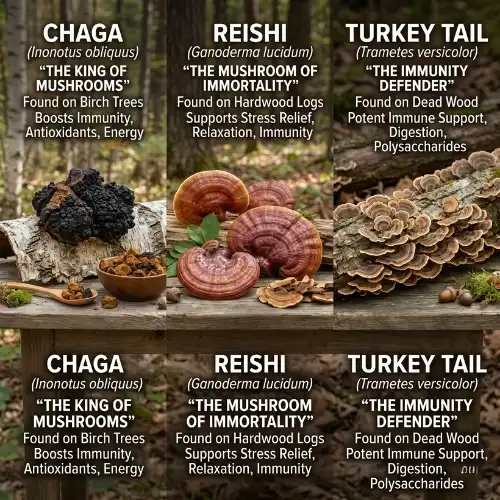
Overview of Chaga, Reishi, and Turkey Tail Mushrooms
Botanical Classification and Natural Habitats
These three types of medicinal mushrooms live in different types of ecosystems. Chaga extract only grows on birch trees in circumboreal forests in Siberia, northern Canada, and Alaska. Instead of a fruiting body, it makes a sclerotium that looks like charcoal. Reishi usually grows on hardwood trees in temperate and subtropical areas, making fruiting bodies that look like kidneys and have a shiny reddish-brown surface. The colorful, fan-shaped turkey tail mushroom gets its name from the fact that it grows on dead hardwood logs all over the world.
It is one of the most widespread polypore mushrooms. Understanding these growth patterns is very important for sourcing because birch bark absorbs more betulinic acid in wild-harvested chaga extract, while reishi and turkey tail are usually grown under controlled conditions to make sure that each batch is of high quality.
Historical Use in Traditional Medicine Systems
These mushrooms have been used in traditional medicine for hundreds of years, though their uses are very different. Reishi has been known as the "mushroom of immortality" in Chinese medicine for more than 2,000 years. It is mostly used to calm the spirit and help people live longer. Chaga extract is an important part of Russian folk medicine and Baltic traditions. It was used to make tea to help with digestive problems and to boost overall health. Shamans in Siberia thought it was a gift from the spirits of the forest. In traditional Chinese medicine, turkey tail has been used under the name Yun Zhi, especially in formulas that help people get better after being sick. These uses from the past now guide modern research and consumer expectations in the functional food sector.
Key Bioactive Compounds Driving Therapeutic Value
The healing power of these mushrooms comes from bioactive compounds that are structurally different. Chaga extract has one of the highest ORAC scores of all natural substances because it contains beta-glucans, unique betulinic acid, inotodiol, and a very high concentration of melanin pigments. Over 400 bioactive compounds make up most of reishi's pharmacological profile. Ganoderic acids and other triterpenes give it its bitter taste and help the body adapt.
Turkey tail has protein-bound polysaccharides called PSK (polysaccharide-K) and PSP (polysaccharide-peptide). These have been studied a lot in Japan and China for their use in cancer treatment. Understanding these differences in compounds helps people who make products choose the right mushroom extract based on health claims they want to make and the rules that govern them.
Global Market Demand and B2B Industry Trends
The market for medicinal mushroom extract has grown incredibly quickly, and growth is expected to continue until 2030. There is a lot of demand in three areas through business-to-business channels: immune health supplements, functional drinks like mushroom coffee blends, and antioxidant-focused cosmetics. Chaga extract has become very popular in North America and Europe because people there connect it with Nordic health traditions.
Reishi is still in high demand in Asia, and it is being used more and more in stress-management supplements around the world. Turkey tail has made a name for itself in the market for integrative oncology support products. Supply chain pressures, especially for wild-harvested chaga extract, have sparked interest in verified sustainable sourcing and traceability documentation, which is something that procurement managers should keep in mind.
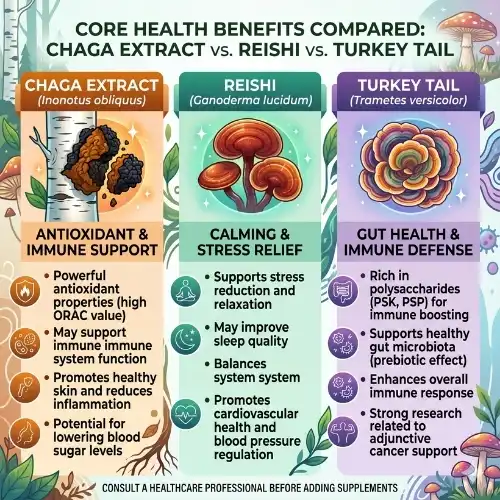
Core Health Benefits Compared: Chaga Extract vs. Reishi vs. Turkey Tail
Immune System Modulation Mechanisms
There are different ways that all three mushroom extracts affect the immune system. Beta-1,3/1,6-D-glucans in chaga extract boost the body's natural defenses by attaching to dectin-1 receptors on macrophages and dendritic cells. This makes natural killer cells work better. A study in the journal Mycobiology shows that chaga extract can boost the production of cytokines like interleukin-6 and tumor necrosis factor-alpha without causing too much inflammation.
Reishi works by both improving the immune system through polysaccharides and lowering it through triterpenes. It can regulate the immune system in two ways: it can stimulate when needed and calm down when it's working too hard. Over 400 clinical trials have looked at Turkey tail's PSK and PSP compounds, which have shown promise in helping T-cells work and keeping immune parameters healthy during tough health situations. Formulation teams making immune-supporting products need to think about these differences in how the mushrooms work when choosing the main mushroom ingredient.
Antioxidant and Anti-Inflammatory Properties
The ability to control oxidative stress is a key difference between these extracts. According to lab tests, chaga extract is a better antioxidant than most foods. Its ORAC values are sometimes higher than 50,000 per gram, which is a lot higher than most antioxidant foods. Its unique melanin complex and superoxide dismutase content come from the birch host and give it its power. Studies published in the International Journal of Medicinal Mushrooms confirm that chaga extract can lower markers of oxidative DNA damage in cell models.
Reishi is an antioxidant that works mostly through triterpenes and polysaccharides. It also reduces inflammation by blocking the NF-κB pathway. Turkey tail has some antioxidant power, but its phenolic compounds really shine when it comes to supporting healthy inflammatory responses. Cosmetic makers like chaga extract for its ability to protect the skin from environmental stress, and supplement makers often mix reishi with adaptogens to help the body's stress response in a more complete way.
Additional Therapeutic Applications and Safety Profiles
Besides helping the immune system and being an antioxidant, each mushroom has its own unique therapeutic benefits. Because it contains betulinic acid and polyphenolic compounds, chaga extract has shown promise in early studies for helping to keep blood sugar levels healthy and heart health. Reishi is unique because it has been shown to improve the quality of sleep, make people more resistant to stress, and help the liver work better. This makes it a popular choice for adaptogenic formulations.
A lot of research on turkey tail has been done on how to support the gut microbiome. Its prebiotic polysaccharides help good bacteria grow. All three have generally good safety profiles, with few side effects being reported in clinical literature. Standard supplementation for powdered extracts is between 500 mg and 3000 mg per day, but concentrated preparations need to be adjusted for proportion. Regulatory teams should be aware that even though these mushrooms are GRAS or have been used in traditional foods in the past, health claims need to be backed up and vary from place to place.
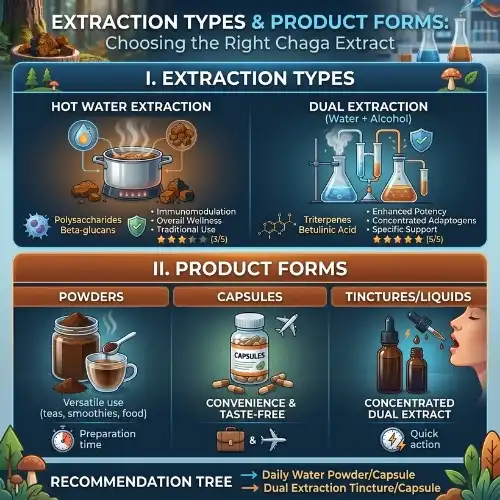
Extraction Types and Product Forms: Choosing the Right Chaga Extract
Extraction Methods and Bioavailability Impact
The way the mushrooms are extracted has a big impact on their therapeutic value and how well they work in other applications. Hot water extraction is a good way to separate water-soluble polysaccharides and beta-glucans, making extracts that can be used in drinks and products that target the immune system. Using both hot water and ethanol for extraction captures both polysaccharides that dissolve in water and compounds that dissolve in alcohol, such as triterpenes and betulinic acid. This gives the most complete bioactive profile.
Yangge's chaga extract uses cutting edge dual extraction technology to make it more bioavailable while keeping the compound stable. Standardization to certain polysaccharide concentrations (10%, 20%, 30%, or 40%) lets formulators make sure that doses are the same from one production batch to the next. The choice between water-only extraction and dual extraction should depend on the bioactives that are being looked for. For example, immune support formulations should use polysaccharide-rich water extracts, while comprehensive wellness formulations should use full-spectrum dual extracts.
Raw Material Sourcing: Wild-Harvested versus Cultivated
Where the materials come from has a big effect on both the profile of the compound and environmental concerns. Betulinic acid levels are higher in wild-harvested chaga extract from Siberian or Canadian birch forests than in cultivated varieties. This is because the fungus absorbs the compound from the host tree instead of making it itself. But gathering chaga extract in the wild raises concerns about sustainability and supply stability, since it takes 15-20 years to fully mature.
Reishi and turkey tail can be grown successfully on added sawdust or logs, providing a steady supply all year long with controlled growing conditions that reduce heavy metal contamination and pesticide residues. At Yangge, our chaga extract comes from wild-harvesting operations that follow sustainable practices and have forest management certifications and protocols that have been checked. With benzopyrene levels ≤10 ppb and compliance confirmed by Eurofins testing, we keep pesticide residue profiles low enough to meet EU standards. To make sure the supply chain is honest, procurement teams should ask for proof of harvesting and testing by a third party for both wild and farmed sources.
Standardization Requirements for Industrial Applications
For commercial formulations, it is essential that the concentrations of active ingredients stay the same. Quality extracts are standardized to guaranteed minimum levels through strict testing protocols, while raw mushroom powders have polysaccharide contents that can range from 2 to 15%. As part of our chaga extract specifications, the polysaccharides must be standardized from 10% to 40% and confirmed by UV spectroscopy. TLC confirmation is also included for compound fingerprinting.
Ratio extracts (5:1 or 10:1) show the concentration factor but don't promise specific bioactive levels. This makes them less useful for situations that need to prove a health claim precisely. When making products that are NSF-certified or USP-verified, manufacturers should put marker-compound standardization ahead of simple ratio requirements. With every batch, we send full analysis reports that include polysaccharide content, heavy metals screening, microbiological testing, and pesticide residue analysis. These reports help with regulatory submissions in many places.
Evaluating Supplier Quality and Certifications
To find a reliable supplier of mushroom extract, you need to look at a number of quality factors. When putting your products in high-end markets, look for suppliers who have more than just GMP certification. For example, look for ones that have ISO 22000 food safety management, HACCP implementation, and organic certifications. Third-party testing partnerships with well-known labs around the world, like Eurofins or SGS, offer independent checks of specifications and screening for contaminants. Our facility keeps its ISO, HACCP, Kosher, and Halal certifications up to date, and regular audits make sure that it stays in compliance.
Systems for tracking should keep track of the whole supply chain, from the forest or cultivation site to the point of extraction and packaging. We use farm-to-table tracking and batch-specific documentation so that customers can check where the raw materials came from and how they were processed. Request a sample test before committing to a bulk order. Our low minimum order of 1 kg lets formulation teams do a full evaluation without having to spend a lot of money. Being able to customize packaging and offer OEM formulation support shows that the supplier is sophisticated and wants to work with the customer instead of just trading goods.
Comparative Market Analysis: Brands, Pricing, and Supplier Insights
Wholesale Pricing Structures and Cost Drivers
Understanding how prices change over time helps procurement managers keep quality standards high while staying within budget. For large industrial amounts, raw chaga extract powder costs between $30 and $60 per kilogram. Standardized extracts, on the other hand, cost between $80 and $250 per kilogram, depending on the level of certification and polysaccharide concentration. The price range for reishi extract is about the same ($70–200/kg), while the price range for turkey tail extract is slightly lower ($60–180/kg) because it is easier to grow. Source method (wild vs. cultivated), extraction complexity (water vs. dual extraction), standardization levels, organic certification, and testing rigor are some of the things that affect the price.
Changes in supply have a bigger effect on chaga extract than on cultivated mushrooms, and the seasons affect wholesale prices. When suppliers offer incredibly low prices, they often lower the quality of the extraction by using low-temperature methods that don't break down the chitin walls or adding carriers to the extracts to make them less concentrated. Before signing a purchase agreement, make sure that the prices given include all the testing paperwork and that the products will meet the stated specifications.
Regulatory Compliance and Quality Assurance Standards
To deal with international rules and regulations, suppliers need to have a full compliance infrastructure. Mushroom extracts used in dietary supplements in the US must follow FDA rules under DSHEA, with facilities that are registered and following current Good Manufacturing Practices. European markets have stricter rules, such as Novel Food assessments for some mushroom preparations and tests that must be done for polycyclic aromatic hydrocarbons (PAH4). European PAH4 standards say that our chaga extract has benzopyrene levels of less than 10 parts per billion, which was proven by testing in a recognized lab.
The product has non-GMO certification, non-allergen certification, and confirmation that it has not been irradiated, all of which are becoming more and more important for clean label positioning. Specifications, safety data sheets, allergen statements, and BSE/TSE declarations should all be given in English by suppliers. Instead of generic specification sheets, Certificate of Analysis documents must include testing results that are specific to each batch. We keep import registrations active in key markets and can provide regulatory support documentation for customer product registrations, which makes it easier for purchasing organizations to follow the rules.
Import Logistics and Supply Chain Risk Management
When you buy mushroom extract from other countries, you have to think about a lot of logistics. For established supplier relationships, the time between placing an order and receiving it is usually between 3 and 4 weeks. This includes planning production, making sure the quality is good, and shipping the goods internationally. Minimum order quantities vary a lot. For example, we have a practical minimum of 1 kg, which lets you test formulations, and we keep 50–100 kg of stock on hand so that production orders can be filled quickly. Shipping costs and the ease of handling materials are both affected by the type of packaging you choose.
Our standard 1 kg aluminum foil bags are great at keeping moisture out, and custom packaging helps with direct-to-production workflows. Dried extracts don't usually need to be shipped in a temperature-controlled environment, but we do suggest keeping them away from extreme heat while they're in transit. Diversifying suppliers for key ingredients, keeping a safety stock of products that sell quickly, and setting up clear quality dispute resolution procedures are all good ways to lower risk. Our reliable freight forwarders and efficient logistics network make sure that deliveries are always made on time, even during busy times or when there are problems with shipping around the world.

Strategic Recommendations for B2B Buyers: Selecting Between Chaga, Reishi, and Turkey Tail Extracts
Matching Mushroom Selection to Target Health Claims
The choice of mushroom extract should be based on the product positioning strategy. Both chaga extract and turkey tail have a lot of scientific support for immune wellness formulations that target seasonal health problems. Chaga extract offers more antioxidant positioning angles, while turkey tail provides more specific immune cell function research. When adaptogenic properties and calming effects are in line with what consumers want and what clinical evidence is available, reishi becomes the best choice for products that help with stress management and sleep quality.
Chaga extract has a lot of antioxidants that make formulas that fight active aging and promote longevity work better. This is especially true when other polyphenol-rich botanicals are added. Multi-mushroom blends are popular because they let formulators use the benefits of several different species. This works especially well in high-end functional drinks with complex flavor profiles that support the "superfood blend" positioning.
Assessing Supplier Transparency and Batch Consistency
Long-term supply partnerships depend on deliveries of the same high quality across multiple production runs. Ask for batch-to-batch consistency data that shows how the polysaccharide content changes over time; good suppliers keep the changes within ±5% of the targets set by the specification. Ask for the standard deviation of key markers and details on the process controls that make sure the results can be repeated. Being open about where the raw materials come from, when they are harvested, and how they are extracted shows that the supplier is knowledgeable and trusts their supply chain.
We include full traceability paperwork with every shipment, such as proof of where the raw materials came from and records of how they were processed. The ability to provide samples from previous batches that have been kept shows that the quality system is mature and helps with problem-solving if there are questions about the performance of the formulation. Set up clear ways to communicate about changes to specifications, problems with supplies, or quality issues. Our 24-hour customer service will make sure that technical questions and order management needs are met quickly.
OEM Customization and Private Label Opportunities
A lot of suppliers of ingredients offer services that add value on top of selling commodity extracts. OEM formulation support lets brands make their own blends while using the extraction and processing know-how of suppliers. We can create custom formulations for customers who want one-of-a-kind combinations of mushrooms or concentration ratios that work best for their needs. With private label packaging options, brands can get finished goods that are ready to be shipped, which means they don't have to spend as much on processing equipment and infrastructure for regulatory compliance.
Custom standardization to proprietary marker compounds makes products stand out and protects intellectual property. When looking at OEM partnerships, you should find out if the supplier has experience with formulations in the category you want to work in, if they are flexible with order sizes, and if they are willing to sign confidentiality agreements to protect your proprietary formulations. Our research and development team works with clients from the idea stage all the way through commercial production. They give technical advice on how to improve solubility, mask flavors, and make delivery formats more stable.
Conclusion
Which of chaga extract, reishi, and turkey tail to use depends on the formulation goals, health claims you want to make, and market positioning strategy you use. Chaga extract has the highest antioxidant capacity and is starting to help with metabolic health. Reishi has a wide range of adaptogenic benefits that can help with stress management. And turkey tail has specific immune cell function support that is backed by a lot of clinical research.
To source quality products, you need to pay attention to the way they are extracted, the quality of the raw materials, how rigorously they are standardized, and how much testing documentation there is. The market for mushroom extract is still changing very quickly. More informed customers are driving demand for high-quality, traceable ingredients that have been proven scientifically to work. To be successful at procurement, you need to work with suppliers who can provide technical know-how, consistent quality delivery, and regulatory support across all target markets.
FAQ
Q: Can we get some samples to test before purchasing?
A: Of course, we can provide free samples of 20 to 100 grams, but the shipping cost is at the customer's expense. The shipping cost can be deducted from the next order, or the samples can be sent through your courier account.
Q: Do your products have relevant certifications?
A: Yes, our products are certified for HALAL, ISO, HACCP, Kosher, and other certifications.
Q: What is the minimum order quantity (MOQ)?
A: Small batches of samples can be customized according to your requirements.
Q: Do you offer OEM and ODM services? Can the formula be customized based on our own?
A: Of course, we provide ODM and OEM services to many customers. Our product range includes softgels, capsules, tablets, sachets, granules, and private label services. Simply contact us and let us know your requirements. Our experienced R&D team can also develop new products with specific formulas.
Please contact us to design your own branded products.
Q: How do you handle quality complaints?
A: First, we have a comprehensive quality control SOP. We provide authoritative third-party inspection reports for almost all products before shipment to minimize the possibility of quality issues. Second, we have a comprehensive return and exchange procedure. If there is a genuine quality dispute, we will strictly follow the SOP.
Q: How do you ship? How long does delivery take?
A: For small orders, we typically use DHL, UPS, EMS, FedEx, or TNT. Delivery typically takes 3-7 days. We also offer air and sea freight services. We have a strong freight forwarding team and can provide you with a one-stop service, including DDP and DDU.
Q: What are your payment terms?
A: 100% prepayment, payable by T/T, Western Union, MoneyGram, or PayPal.
Q: What is the shelf life of your products?
A: 2 years with proper storage.
Q: Is the packaging environmentally friendly?
A: We attach great importance to environmental protection and are constantly improving our product packaging. Some products are packaged in recyclable paper. Packaging materials are carefully selected to ensure product safety during transportation and storage, and to minimize environmental impact. We are committed to achieving a balance between environmental friendliness and practicality in our product packaging, and to contributing to sustainable development.
Partner with Yangge for Premium Mushroom Extract Sourcing
Yangge Biotech sells chaga extract that is safe for use in medicine. Their products are tested to strict EU standards and can be tracked all the way back to the source. You can place an order for as little as 1 kg. Our chaga extract supplier can offer a range of polysaccharide standardizations (10% to 40%), dual extraction technology that makes bioactive compounds more available, and full quality documentation, such as Eurofins test reports that confirm low pesticide residues and PAH compliance.
As a manufacturer of chaga extract that is ISO, HACCP, Kosher, and Halal certified, we can help you come up with new formulas by giving you technical advice, custom concentration options, and OEM packaging solutions that are made to fit your brand's needs. Contact us or email our team at info@yanggebiotech.com to ask for samples, talk about your specific application needs, and find out how our environmentally friendly sourcing methods and dependable supply chain can help your product innovation strategy.
References
1. Glamočlija, J., Ćirić, A., Nikolić, M., et al. (2015). Chemical characterization and biological activity of Chaga (Inonotus obliquus), a medicinal "mushroom." Journal of Ethnopharmacology, 162, 323-332.
2. Wachtel-Galor, S., Yuen, J., Buswell, J. A., & Benzie, I. F. F. (2011). Ganoderma lucidum (Lingzhi or Reishi): A Medicinal Mushroom. In Herbal Medicine: Biomolecular and Clinical Aspects (2nd ed.). CRC Press/Taylor & Francis.
3. Standish, L. J., Wenner, C. A., Sweet, E. S., et al. (2008). Trametes versicolor mushroom immune therapy in breast cancer. Journal of the Society for Integrative Oncology, 6(3), 122-128.
4. Zheng, W., Miao, K., Liu, Y., et al. (2010). Chemical diversity of biologically active metabolites in the sclerotia of Inonotus obliquus and submerged culture strategies for up-regulating their production. Applied Microbiology and Biotechnology, 87(4), 1237-1254.
5. Batra, P., Sharma, A. K., & Khajuria, R. (2013). Probing Lingzhi or Reishi medicinal mushroom Ganoderma lucidum (higher Basidiomycetes): a bitter mushroom with amazing health benefits. International Journal of Medicinal Mushrooms, 15(2), 127-143.
6. Pallav, K., Dowd, S. E., Villafuerte, J., et al. (2014). Effects of polysaccharopeptide from Trametes versicolor and amoxicillin on the gut microbiome of healthy volunteers: a randomized clinical trial. Gut Microbes, 5(4), 458-467.

Based on your location and order quantity, you will have the opportunity to receive a limited time free shipping promotion!
Who we are
Popular Blogs