How to source or buy oat beta glucan 70%-80% powder?
In order to source high-purity Oat Beta Glucan 70%-80% powder, it is necessary to carefully consider the skills of potential suppliers, check the quality of the powder, and be aware of applicable laws. Finding manufacturers with tested extraction technologies, full certifications (GMP, ISO), and clear traceability systems is key to successful procurement. This guide helps purchasing managers, research and development teams, and production supervisors get this functional ingredient while making sure batch consistency, compliance, and a reliable long-term supply for functional food, cosmetics, and nutraceuticals.
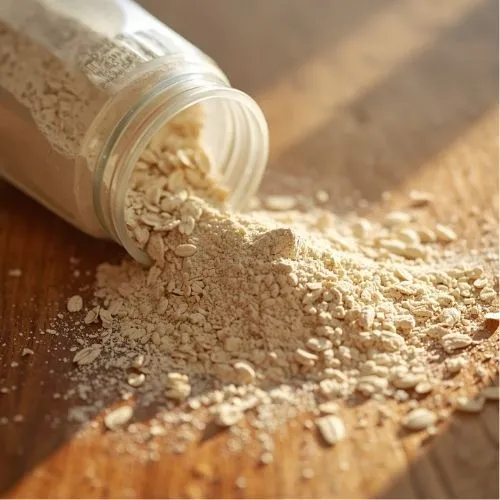
Understanding Oat Beta Glucan 70%-80% Powder: Key Features and Benefits
High-purity soluble fiber extracted from oat bran is a big step up from the standard 20% to 30% concentration extracts that are usually sold in commodity markets. The structure is made up of linear D-glucose units connected by beta-(1,3) and beta-(1,4) glycosidic bonds. This gives the substance its own viscosity properties that are important for its therapeutic effectiveness.
Purity Levels and Their Functional Significance
The difference between 70% and 80% concentrations has a direct effect on how well the formulation works and how well the finished product works. When something is purer, it gets rid of extra starch and protein that can make liquids less stable or clear drinks cloudy where they're not wanted. Formulators who work with the 80% specification can get therapeutic doses (usually 3 grams daily for cholesterol management claims) with smaller capsule sizes or less powder volume. This means that consumers will be more likely to take the product as directed and the cost of production will be lower.
Scientifically Validated Health Benefits
Over thirty years of clinical research has shown that this ingredient helps keep the heart healthy by removing bile acid. When the fiber gets wet in the digestive tract, it turns into a thick gel that binds to cholesterol-containing bile acids. This helps the body get rid of them and changes how the liver handles cholesterol. Authorized health claims that are recognized by regulatory bodies in the US and EU are based on this mechanism.
The polysaccharide does more than just control lipids; it also changes how quickly glucose is absorbed after a meal and activates macrophage immune responses. Because of these bioactivities, it is useful in a lot of different areas, from immune system supplements to diabetic-friendly food recipes. When used on the skin, certain molecular weight fractions can get through the stratum corneum and help fibroblasts make collagen and improve the skin's ability to keep water in.
Extraction Methods and Quality Determinants
When you combine advanced enzymatic purification with membrane filtration technology, you get pharmaceutical-grade material that can be sold in regulated markets. The process starts with controlled enzymatic treatment to get rid of any leftover proteins and starches. Next, the target polysaccharide is concentrated through multi-stage ultrafiltration while keeping its original molecular weight distribution. Gel Permeation Chromatography is used by good suppliers to do molecular weight profiling, which makes sure that the rheological properties are the same from one production batch to the next.
Knowing these extraction principles helps procurement teams check the technical skills of suppliers during audits. Manufacturers who use old alcohol precipitation methods might get molecular weight profiles that aren't consistent, which can make it hard to predict how the viscosity will behave during formulation development.
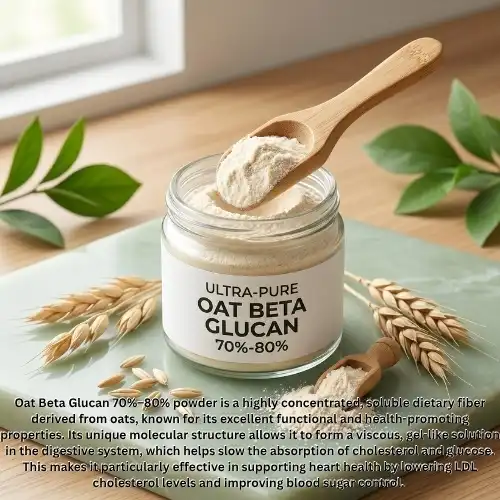
How to Choose the Right Oat Beta Glucan 70%-80% Powder for Your Business?
To start specification alignment, you need to be very clear about what your application needs and how they relate to specific technical parameters. For nutritional uses, higher molecular weight distributions (1,000–2,000 kDa) are usually preferred to get the best gastrointestinal viscosity and cholesterol-binding ability. On the other hand, topical cosmetics work better with lower molecular weight fractions (100–500 kDa) because they can better penetrate the dermis and form a film on skin surfaces. Using the correct grade of Oat Beta Glucan 70%-80% ensures target efficacy in these varied applications.
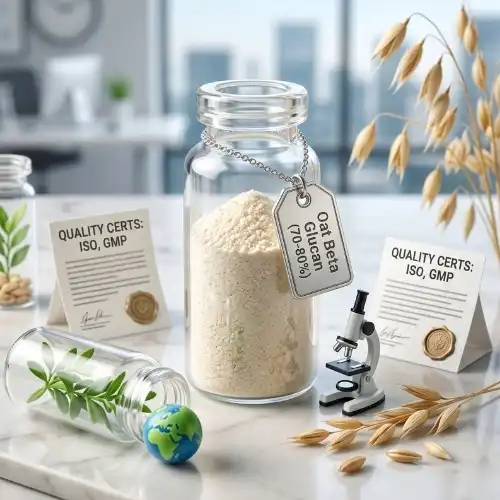
Critical Certification Requirements
Compliance with regulations is the basis of buying ingredients from other countries. ISO 22000 certification shows that the food safety management system works, and GMP certification shows that the manufacturing process follows the rules for pharmaceuticals. We suggest that suppliers keep up-to-date HACCP plans with written critical control points for managing allergens, especially since there is a chance that oat protein will get contaminated.
Organic certification (USDA Organic, EU Organic) is useful for brands that want to position themselves as having clean labels, but it usually costs more. Kosher and Halal certifications make it easier for products that appeal to certain groups of people to reach new customers. In addition to certificates, you should ask for third-party lab testing reports that confirm the gluten content is below the 20 ppm threshold (using the ELISA method) to back up claims on the label that the product is allergen-free.
Quality Testing Protocols
A full check of the ingredients should include a beta-glucan purity assay using the AOAC 995.16 (McCleary Method), which measures the target polysaccharide using enzymes while keeping it separate from other carbohydrate parts. Molecular weight distribution analysis using HPLC or GPC gives important information for guessing how a formulation will behave. Using standard viscometry protocols for rheological profiling makes sure that the texture and thickening capacity are the same from batch to batch.
ICP-MS testing must look for heavy metals (lead, arsenic, and cadmium below 1 ppm), GC-MS testing must look for pesticide residues, and microbiological limits must be met (total plate count below 1,000 CFU/g). Testing for polycyclic aromatic hydrocarbons (PAHs) with benzo[a]pyrene levels below 10 ppb meets European rules for ingredients that come from plants.
Comparative Analysis with Alternative Sources
Beta-glucans that come from Reishi or Shiitake mushrooms have beta-(1,3)/(1,6) linkage patterns instead of the beta-(1,3)/(1,4) structure that is typical of oat sources. This difference in structure leads to different biological effects. For example, mushroom variants mainly work on immune system modulation, while oat-derived material is great at controlling cholesterol and blood sugar. Comparable cardiovascular benefits can be found in barley beta-glucan, but it usually achieves lower maximum purity levels and commands a different price structure.
Procurement teams should look at these options based on specific health claim goals, how customers see them (in North American markets, oat sources are often seen as more of a "superfood"), and how reliable the supply chain is.
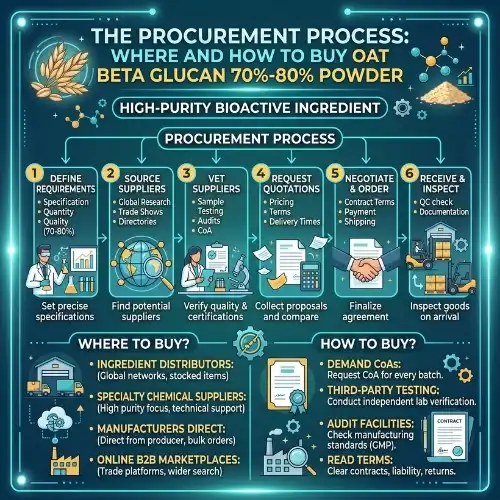
The Procurement Process: Where and How to Buy Oat Beta Glucan 70%-80% Powder?
For supplier identification to work, performance must be evaluated in a planned way across a number of areas. Manufacturers that have been in business for at least five years and have exported more often tend to have better quality systems and infrastructure for following regulations. Location is important; suppliers in places with advanced farming technology and strict food safety rules usually provide more consistent raw material quality when sourcing Oat Beta Glucan 70%-80% powder.
Supplier Evaluation Criteria
When we first look at potential suppliers, we check their manufacturing capacity to make sure they can grow with your business. To protect against supply problems, production facilities should show that their annual output is at least 40% higher than what you think your three-year demand will be. When suppliers control where the oats come from, how they are extracted, cleaned, and packed, this is called vertical integration. It usually means that quality control and traceability are better.
Superior suppliers are different from commodity brokers because they can offer technical support. Check to see if potential partners have food scientists or formulation chemists on staff who can help with application guidance, stability testing data, and regulatory documentation. During the evaluation phase, we've found that suppliers who offer free sample testing and formulation consultation tend to have stronger customer partnership orientations.
Strategic Sourcing Tactics
When negotiating prices based on volume, the minimum order quantity should be taken into account. For specialized ingredients, this is usually between 25 kg and 100 kg. Setting up framework agreements with tiered pricing structures encourages customers to commit to buying while still allowing for changes in demand. To get a good idea of normal quality levels, sample testing procedures must use production batches that are typical instead of samples that were specially made.
Payment terms that balance reducing risk with building relationships with suppliers could include letter of credit for first orders and then net-30 or net-60 terms once the supplier's reliability has been proven. Quality hold-back clauses that protect against deviations from specifications give you extra peace of mind during the relationship development stages.
Purchasing Channel Comparison
Direct relationships with manufacturers provide the most openness, access to technical support, and competitive pricing. This channel is good for buyers who need customization (like specific molecular weight profiles or special packaging) or who want to build long-term partnerships. B2B marketplaces like Alibaba make it easy to find suppliers and make transactions, but they may add fees for the middleman and limit direct technical communication.
Specialized ingredient distributors add value by keeping inventory close to home, requiring smaller minimum orders, and streamlining logistics when getting multiple ingredients. This channel has slightly higher unit costs, but it is easier to run and doesn't keep as much capital in inventory. The best channel choice depends on how often you buy things, how much technical support you need, and your supply chain strategy.
Yangge Biotech Co., Ltd. does business through direct manufacturer channels and keeps inventory levels between 50 and 100 kg to be able to quickly fill orders. Our minimum order quantity of 1 kg meets the needs of formulation development, and our technical team offers advice on extraction methods and concentration specifications.
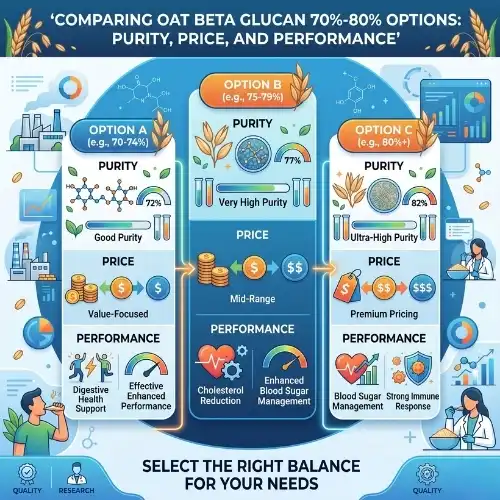
Comparing Oat Beta Glucan 70%-80% Options: Purity, Price, and Performance
It is possible to measure how purity specifications affect formulation economics and functional outcomes. When compared to 80% purity, the 70% specification usually cuts the cost of raw materials by 15–25%. This makes Oat Beta Glucan 70%-80% a good choice for uses where slightly higher inclusion rates are still fine. When making supplements for the mass market, brands that want to stay within their budgets often optimize around 70% of the material, accepting slightly bigger capsule sizes in exchange for better cost positioning.
Performance Differences Across Applications
For cardiovascular supplement formulas with FDA-approved health claims, precise dosage control is needed. When formulators use 80% pure material, they can deliver the required 3-gram beta-glucan dose in fewer capsules or smaller serving sizes. This makes it easier for customers and may be a good reason to charge more. The concentrated specification also lowers the amount of excipients needed in tablet formulations, which makes the manufacturing process easier.
Different skin care uses have different performance profiles based on molecular weight instead of purity alone. A 70% pure ingredient with the best molecular weight distribution (300–500 kDa) might work better than an 80% material with more molecular weight differences when it comes to penetrating the skin and keeping it moist. As you can see, this shows why decisions about procurement should take into account more than just the headline purity numbers.
When making functional drinks, clarity and stable suspension are given the most weight. Higher purity standards lower the turbidity caused by starch and the amount of sedimentation that happens during storage. Makers of drinks that use the 80% material say that it makes ready-to-drink drinks clearer and more stable at high temperatures (121°C+ sterilization temperatures without breaking down).
Price-Quality Correlations
According to market research, 70% pure material costs between $45 and $65 per kilogram for large orders of 100 kg or more, while 80% pure material costs between $65 and $95 per kilogram, depending on the molecular weight requirements and certification levels. No matter how pure the material is, organically certified material usually costs 20–30% more. We see that price changes are linked to the yields of oat crops and the demand from food ingredient sectors.
Cost factors related to quality go beyond unit pricing. When suppliers offer detailed technical documentation, data from stability tests, and regulatory support files, it makes it easier for your company to do its own quality assurance. When you look at the total cost of ownership, you should include the costs of re-formulating, the risk of batch rejection, and the work that is needed to make sure that lower-cost suppliers don't break the law by not having strong quality systems.
Mitigating Risks and Ensuring Long-Term Supply Stability
Verifying the authenticity of ingredients is a persistent problem in the botanical extract market. Risks of counterfeiting include adding cheaper polysaccharides (modified starches) on purpose or lying about the purity levels. Using strict incoming inspection procedures, such as FTIR spectroscopy to confirm identity and enzymatic assays to confirm quantitative purity, will keep low-quality materials from getting into your production stream.
Quality Assurance Framework
Testing by a third party in separate labs is an unbiased way to check what a supplier says. We suggest getting in touch with approved analytical labs that are ISO/IEC 17025 certified and can do a full range of tests, such as a purity test, molecular weight profiling, contaminant screening, and microbiological analysis. The frequency of routine tests should match the level of risk, with checks done every three months for established suppliers and testing of each batch during the qualification phase for new suppliers.
Some of the documentation practices that help with traceability are reviewing the certificate of analysis, declaring the source of raw materials, and keeping records for allergen management. Instead of generic specification sheets, suppliers should give test reports that are specific to each lot. This way, analytical results can be linked to specific production batches. Audit trails that show where oats come from make the supply chain more clear and back up claims of sustainability.
Strategic Supplier Partnerships
Long-term supply agreements with clear quality standards, volume commitments, and performance metrics hold both parties responsible. Including rules for allocating capacity when supply is limited protects against market disruptions. When suppliers work together on forecasting, they can make better plans for production, which could lead to better prices and faster distribution during times of high demand.
Dual-sourcing strategies strike a balance between relationship depth and supply security. Keeping qualified alternate suppliers on hand (representing 20–30% of volume) gives you backup options without breaking up technical support relationships or giving up the price benefits that come with buying in bulk. Geographic diversity between primary and secondary suppliers makes the system more resistant to problems in one area.
Industry Evolution and Future Trends
As extraction technology improves, the main goals are to increase yield and finetune molecular weight control. Brand-new enzymatic methods promise higher purity levels (85%+) and better sustainability profiles by using fewer solvents. Procurement teams should keep an eye on these changes because early adoption of next-generation specifications can help products stand out.
Regulatory environments are always changing, and there is more and more focus on supply chain transparency and sustainability documentation. Environmental practices are closely looked at in European markets, and new rules may require carbon footprint declarations for imported ingredients. By choosing suppliers with well-established environmental management systems and commitments to renewable energy, you can get your supply chain ahead of the rules.
Conclusion
Getting high-purity soluble fiber like Oat Beta Glucan 70%-80% requires both mastering technical specifications and managing relationships with suppliers in a strategic way. We've talked about the important evaluation factors that set sophisticated procurement operations apart from transactional purchasing. These include molecular weight profiling, certification verification, pricing analysis, and risk mitigation frameworks.
The best sourcing strategy takes into account a lot of different factors, such as purity levels that meet the needs of the formulation, technical support from suppliers for product development, a supplier's certification portfolio for easy access to markets, and partnership structures that ensure supply continuity. As procurement professionals try to figure out all of these issues, giving priority to suppliers with clear quality systems, thorough documentation practices, and cooperative technical support sets the stage for long-term product success and market competitiveness.
Partner with Yangge for Reliable Oat Beta Glucan 70%-80% Supply
Yangge Biotech Co., Ltd. is a reliable source for Oat Beta Glucan 70%-80%. They use cutting edge enzyme extraction technology and strict quality control systems. Our fine, off-white powder comes from Avena Sativa L. meets strict requirements: it is non-GMO, non-irradiated, allergen-free, and PAH4 and benzopyrene levels below 10 ppb have been confirmed by an independent laboratory. We keep our ISO, HACCP, Kosher, and Halal certifications up to date, which helps us reach customers around the world.
Our technical team gives advice based on the application, including the best way to extract the substance, the right concentration, and whether it will work with other ingredients. We can help with both product development and large-scale production. Our current stock ranges from 50 kg to 100 kg, and our flexible packaging ranges from 1 kg aluminum foil bags to custom bulk configurations. Contact us or email our purchasing agents at info@yanggebiotech.com to ask for samples, technical information, or detailed quotes. We offer GMP-compliant production, farm-to-table traceability, and responsive 24-hour support to make sure your supply chain runs smoothly.
FAQ
Q: Can we get some samples to test before purchasing?
A: Of course, we can provide free samples of 20 to 100 grams, but the shipping cost is at the customer's expense. The shipping cost can be deducted from the next order, or the samples can be sent through your courier account.
Q: Do your products have relevant certifications?
A: Yes, our products are certified for HALAL, ISO, HACCP, Kosher, and other certifications.
Q: What is the minimum order quantity (MOQ)?
A: Small batches of samples can be customized according to your requirements.
Q: Do you offer OEM and ODM services? Can the formula be customized based on our own?
A: Of course, we provide ODM and OEM services to many customers. Our product range includes softgels, capsules, tablets, sachets, granules, and private label services. Simply contact us and let us know your requirements. Our experienced R&D team can also develop new products with specific formulas.
Please contact us to design your own branded products.
Q: How do you handle quality complaints?
A: First, we have a comprehensive quality control SOP. We provide authoritative third-party inspection reports for almost all products before shipment to minimize the possibility of quality issues. Second, we have a comprehensive return and exchange procedure. If there is a genuine quality dispute, we will strictly follow the SOP.
Q: How do you ship? How long does delivery take?
A: For small orders, we typically use DHL, UPS, EMS, FedEx, or TNT. Delivery typically takes 3-7 days. We also offer air and sea freight services. We have a strong freight forwarding team and can provide you with a one-stop service, including DDP and DDU.
Q: What are your payment terms?
A: 100% prepayment, payable by T/T, Western Union, MoneyGram, or PayPal.
Q: What is the shelf life of your products?
A: 2 years with proper storage.
Q: Is the packaging environmentally friendly?
A: We attach great importance to environmental protection and are constantly improving our product packaging. Some products are packaged in recyclable paper. Packaging materials are carefully selected to ensure product safety during transportation and storage, and to minimize environmental impact. We are committed to achieving a balance between environmental friendliness and practicality in our product packaging, and to contributing to sustainable development.
References
1. Anderson, J.W., et al. (2009). "Health Benefits of Dietary Fiber in Cardiovascular Disease." Nutrition Reviews, 67(4), 188-205.
2. Brennan, C.S., & Cleary, L.J. (2005). "The Potential Use of Cereal (1→3,1→4)-β-D-Glucans as Functional Food Ingredients." Journal of Cereal Science, 42(1), 1-13.
3. Delaney, B., et al. (2003). "β-Glucan Fractions from Barley and Oats are Similarly Antiatherogenic in Hypercholesterolemic Syrian Golden Hamsters." The Journal of Nutrition, 133(2), 468-475.
4. Lazaridou, A., & Biliaderis, C.G. (2007). "Molecular Aspects of Cereal β-Glucan Functionality: Physical Properties, Technological Applications and Physiological Effects." Journal of Cereal Science, 46(2), 101-118.
5. Tosh, S.M. (2013). "Review of Human Studies Investigating the Post-Prandial Blood-Glucose Lowering Ability of Oat and Barley Food Products." European Journal of Clinical Nutrition, 67(4), 310-317.
6. Wood, P.J. (2007). "Cereal β-Glucans in Diet and Health." Journal of Cereal Science, 46(3), 230-238.

Based on your location and order quantity, you will have the opportunity to receive a limited time free shipping promotion!
Who we are
Popular Blogs