How does almond protein compare to pea or soy protein isolates
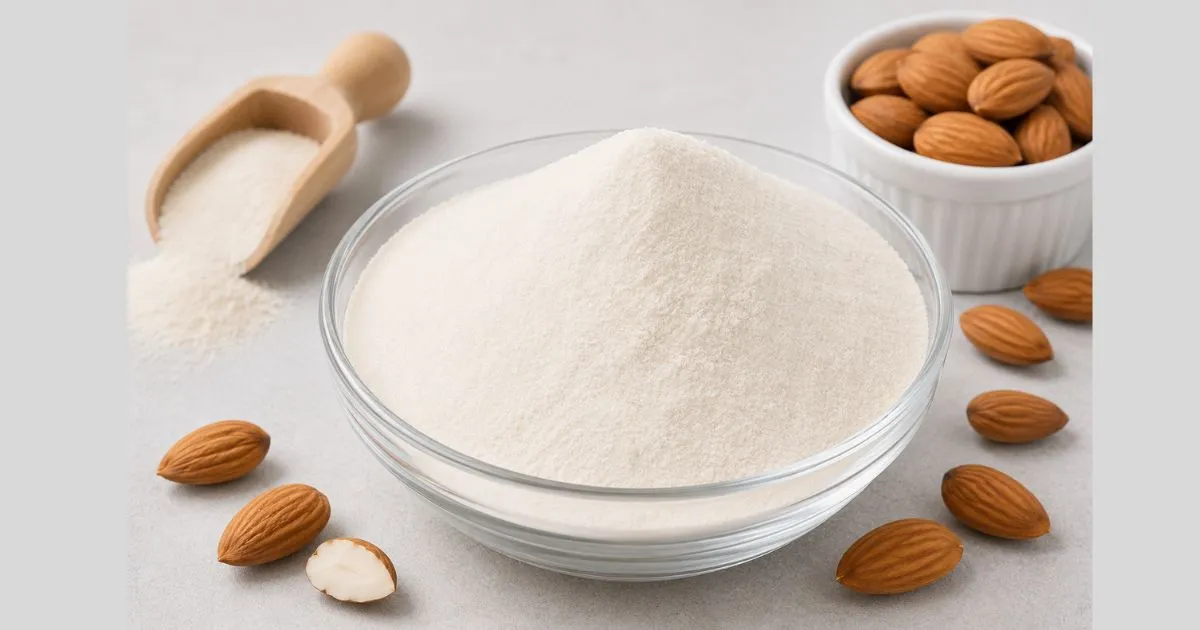
Yangge Biotech supplies high-quality Almond Protein Powder, produced from carefully selected premium almonds using advanced processing technology to preserve its natural nutrients and functional properties. Rich in plant-based protein, dietary fiber, essential amino acids, vitamins, and minerals, our almond protein powder offers excellent solubility and a mild nutty flavor, making it an ideal ingredient for protein beverages, meal replacement powders, sports nutrition, vegan products, bakery, and functional foods.
Manufactured under strict quality control standards, Yangge Biotech's Almond Protein Powder delivers consistent quality, high purity, and reliable performance for global food and nutraceutical manufacturers. We also provide bulk supply, customized specifications, OEM packaging, and comprehensive technical support to meet your business needs.
Contact us at our email info@yanggebiotech.com to request a quotation, Certificate of Analysis (COA), product specifications, third-party test reports, or a free sample.
When evaluating plant-based protein isolates for manufacturing, almond protein delivers a distinctive advantage: its neutral, slightly nutty flavor profile eliminates the need for heavy masking agents common with pea or soy proteins, while maintaining a fine particle structure ideal for beverage suspension and emulsification. Unlike soy's allergen concerns or pea protein's earthy aftertaste, almond-derived protein offers clean-label appeal with exceptional oil-binding capacity, making it particularly suitable for RTD beverages, nutritional bars, and dairy alternatives where taste and texture define consumer acceptance.
Introduction
The global shift toward plant-based nutrition has fundamentally reshaped procurement priorities across food manufacturing, nutraceutical development, and functional beverage sectors. Purchasing managers and R&D teams now face complex decisions: selecting protein sources that satisfy not only nutritional benchmarks but also regulatory compliance, sensory performance, and consumer transparency expectations. As health supplement manufacturers, cosmetics formulators, and OEM/ODM partners seek differentiation in saturated markets, understanding the technical nuances between almond, pea, and soy protein isolates becomes mission-critical.
Consumer demand for allergen-friendly, clean-label formulations continues accelerating, driven by wellness trends and dietary restrictions. Regulatory frameworks across the United States and international markets impose stringent labeling and traceability standards, particularly regarding allergens and GMO content. This landscape requires procurement professionals to evaluate raw materials through multiple lenses: amino acid completeness, functional behavior during thermal processing, supply chain stability, and cost-effectiveness at scale. The protein isolate you choose directly impacts product differentiation, manufacturing efficiency, and ultimately, market success.
Understanding Almond, Pea, and Soy Protein Isolates: Definitions and Production Processes
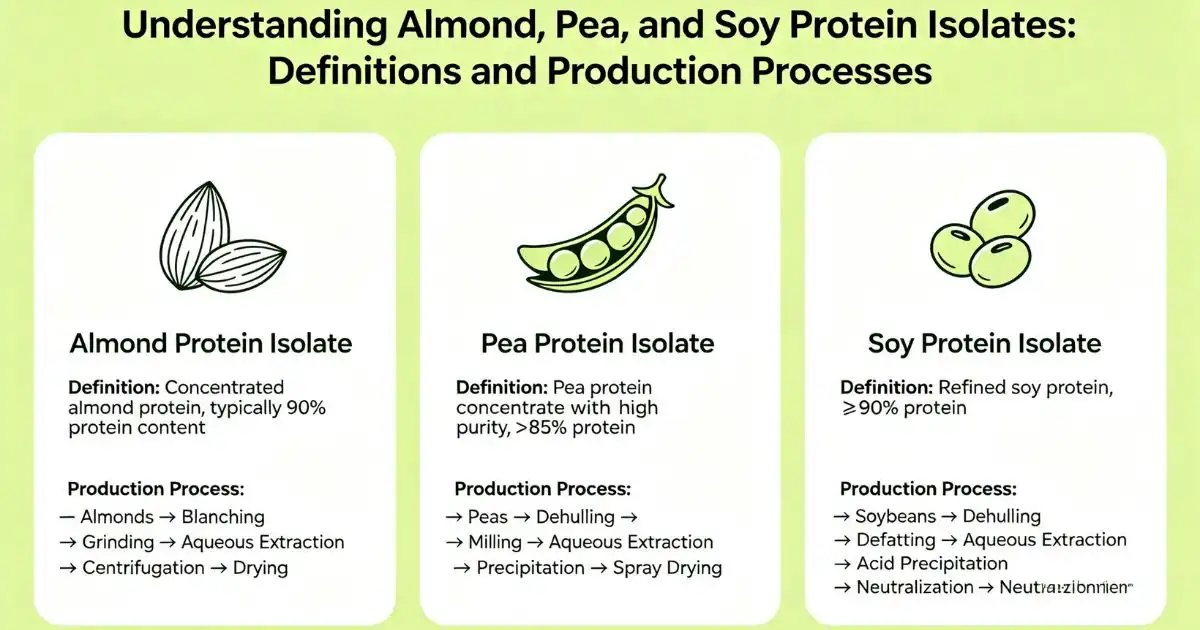
Almond Protein: Extraction from Seed to Powder
Almond protein comes from Prunus dulcis seeds that have been mechanically defatted in a cold press and then extracted with water or enzymes. This method lowers the amount of fat to 10–15% and raises the amount of protein to 50–90%, based on the needs of the design. Yangge's Best Almond protein powder uses HPLC extraction methods to keep bioactive peptides, magnesium, and vitamin E, and it meets specifications at 50%, 70%, or 90% protein concentration. The white powder that is made has a fine mesh size (usually 200 mesh) that makes it easier to mix into liquids without having the gritty taste that comes with using raw almond meal.
As little heat as possible is used in the production process to protect the branched-chain amino acids and arginine-rich amino acid profiles that are important for muscle recovery. Almond protein extraction doesn't use chemical solvents like hexane-based extraction is used in some soy processing. This is in line with FDA, Kosher, and Halal approval standards. This ability to track the powder from the farm to the end product helps brands that want to market their products as natural or organic.
Pea Protein Isolate: Wet Fractionation Methodology
Wet fractionation, which includes mechanical crushing, alkaline solubilisation, and isoelectric precipitation, is how pea protein isolate is made from yellow split peas. This makes protein amounts between 80% and 90%, with some lysine but not much methionine, which changes how full the amino acids are. Large-scale production of pea protein is helped by well-established farming infrastructure. This means that bulk prices are affordable and the protein is always available. But because it has an earthy, legume-like flavour, it usually needs extra flavourings in consumer goods, which makes the formulation more complicated and costs more.
Soy Protein Isolate: Traditional Complete Protein Standard
Soy protein isolate is the most developed type of plant protein. It is made from defatted soybean flakes that have been washed with water and acidic precipitation. Soy has more than 90% protein and a full amino acid makeup similar to animal proteins. This makes it a standard for muscle-building products. Still, worries about GMOs, allergen labelling rules, and isoflavones that act like oestrogen have led many brands to look for alternatives. Supply chains are still strong, and global production supports high-volume, cost-sensitive applications. However, transparency and sustainability practices are still being closely looked at by regulators.
Nutritional and Functional Comparison of Almond, Pea, and Soy Protein Isolates
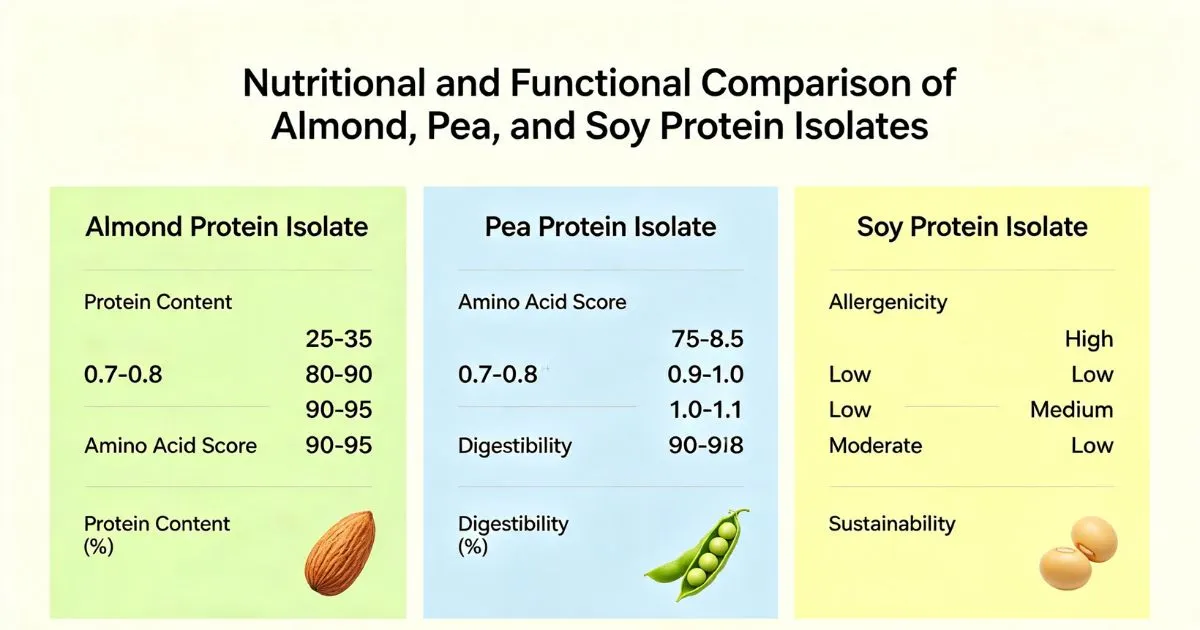
Amino Acid Profiles and Bioavailability
Different protein isolates have different amounts of amino acids, which affects how well they work in different formulas. This table lists the most important health factors that should be taken into account when making B2B purchasing decisions:
| Parameter | Almond Protein | Pea Protein Isolate | Soy Protein Isolate |
|---|---|---|---|
| Protein Content | 50-90% | 80-90% | 90%+ |
| Leucine (BCAA) | Moderate | High | Moderate |
| Arginine | High | Moderate | Moderate |
| Methionine | Moderate | Low | Adequate |
| Digestibility (PDCAAS) | 0.75-0.85 | 0.89 | 0.91-1.0 |
| Allergen Status | Tree nut allergen | Low allergen | Major allergen (FDA) |
Almond protein has a lot of arginine, which supports claims that it is good for your heart and helps your body make nitric oxide, which is important for sports nutrition. But compared to soy, its amino acid makeup is still not complete, so it needs to be mixed in with other ingredients or made stronger in order to make full protein promises. Pea protein is good for building muscle because it has a lot of leucine, but it doesn't have much methionine, so it needs other proteins in complete nutrition products.
Scores for digestibility show that soy is more bioavailable, but how well a product works in real life relies on how the ingredients interact with each other. Almond protein has a moderate amount of fibre (12–15%), which slows digestion and makes you feel full longer. This is a good thing for weight loss products but may not be so good for fast-absorbing sports recovery products.
Allergen Risk and Regulatory Compliance
Managing allergens is an important thing to think about when buying something. Soy is one of the FDA's main food allergens, so it needs to be clearly labelled and made in separate production lines to keep other foods from getting contaminated. Almond protein, despite being a tree nut allergen, appeals to people who don't eat soy or dairy, but it requires just as strict allergen control procedures. Pea protein has the widest sensitive profile, which makes labels easier to read and makes the target market easier to reach.
Manufacturers need to compare these factors to their current production capabilities and the people they want to sell to. To stay away from soy's GMO links, clean-label brands often choose almond or pea proteins. Large-scale makers, on the other hand, may use soy's established supply lines and regulatory precedents.
Application and Performance in Industrial and Consumer Products
Functional Properties in Formulation Environments
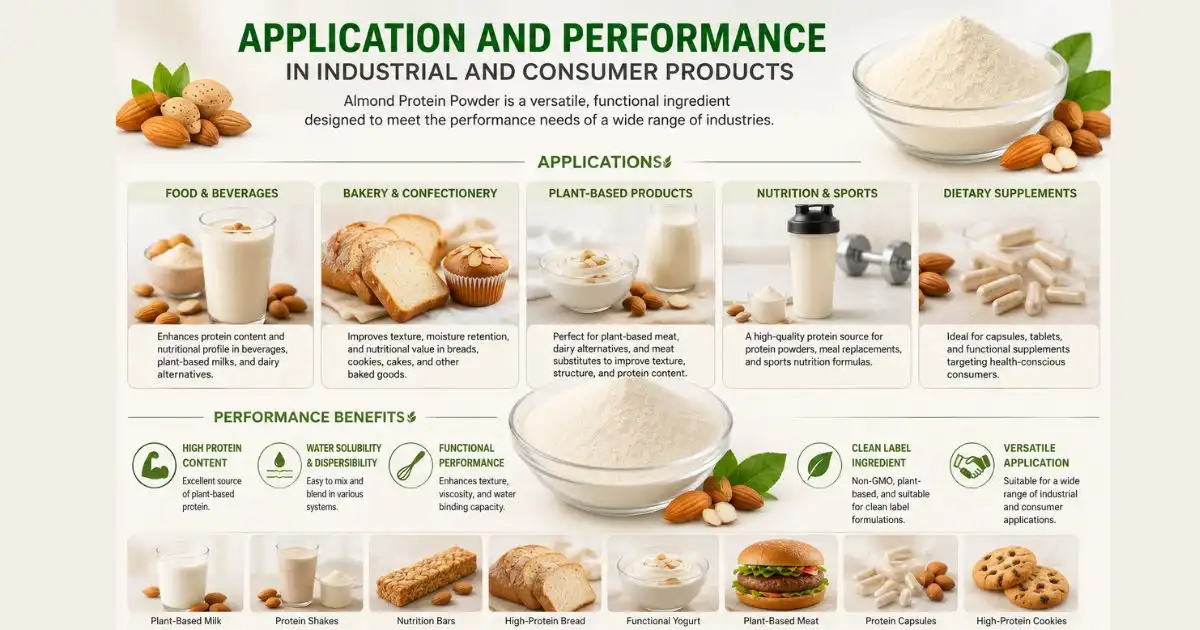
Protein isolates can be used in a wide range of products based on how well they work technically under different processing conditions. R&D teams can make formulations work better and cut down on trial-and-error development processes by understanding these functional traits.
Almond protein is very stable in RTD plant-based beverages; it stays in suspension through UHT processing (137–140°C for 2–4 seconds) without clumping together and becoming insoluble. Its high oil-holding capacity and moderate water-binding qualities help emulsification in dairy replacements, giving them a creamy mouthfeel without relying too heavily on stabilisers. Almond protein's unique lipid-protein conformation avoids the hardening that happens with whey or soy isolates in nutritional bars that are extruded at high pressure, extending the bars' palatability over time. These qualities come from its special globulin-rich part, which polymerises well in acidic conditions (pH 4.2–4.6), which lets cultured goods form gels like yoghurt.
Pea protein exhibits robust foaming capacity, valuable in aerated desserts and meringues, but its poor heat stability limits applications requiring prolonged thermal exposure. Solubility remains moderate, often requiring lecithin or gum blending for beverage clarity. Soy protein isolate offers the strongest emulsification and gelling properties, making it indispensable in meat analogs and structured vegetarian products, though its beany flavor necessitates aggressive masking strategies that can compromise clean-label positioning.
Sensory Attributes and Consumer Acceptance
Taste and texture are what make people buy things again and again, so sensory function is an important part of consumer items. Due to its neutral to sweet nutty flavour, Almond protein requires little flavouring, which lowers formulation costs and promotes open ingredient disclosure. Comparative taste panels consistently rate almond-based protein shakes as tasting better than pea-based equivalents, which means that customers are more likely to stick with the product. The earthy, bitter flavours of pea protein make it hard for formulators to use, especially in uses that don't need much flavour, like vanilla or unflavored protein shakes. Researchers have been trying to mask the taste of soy for decades, but the results have been mixed depending on the concentration and matrix.
Texture factors are also very important. In ready-to-drink forms, Almond protein's fine particle structure provides a smooth, non-gritty taste, whereas pea protein's coarser particles can make products chalky if they are not micronised. Soy's high solubility makes for clean solution, but it may cause problems with viscosity in high-protein recipes with more than 20g of protein per dose.
Alignment with Market Trends and Certifications
Clean-label consumers are paying more attention to how easily they can recognise ingredients and prefer proteins that come from whole foods to those that are highly processed. Almond protein appeals to those who believe that eating almonds is "better for you," taking advantage of almonds' well-known health reputation. Yangge's Almond protein powder adapts to these changes in the market by being FDA-approved, Halal, and Kosher, and is checked by international labs before it is shipped. These qualifications make it easier for regulators to approve exports to a wide range of countries and also help build trust in the brand.
Sustainability factors also play a role in purchasing decisions. Growing almonds takes a lot of water, which is something that brands should make clear. On the other hand, pea protein benefits from crop cycle benefits that fix nitrogen. Soy's impact on the environment is still debated because it is linked to cutting down trees in some sourcing regions. Responsible providers, like Yangge, put a high priority on green energy practices and being able to track food from farm to table. They also provide buying teams with proof to back up their company's sustainability promises.
Market Comparison: Pricing, Availability, and Supplier Landscape
Pricing Dynamics and Cost-Effectiveness
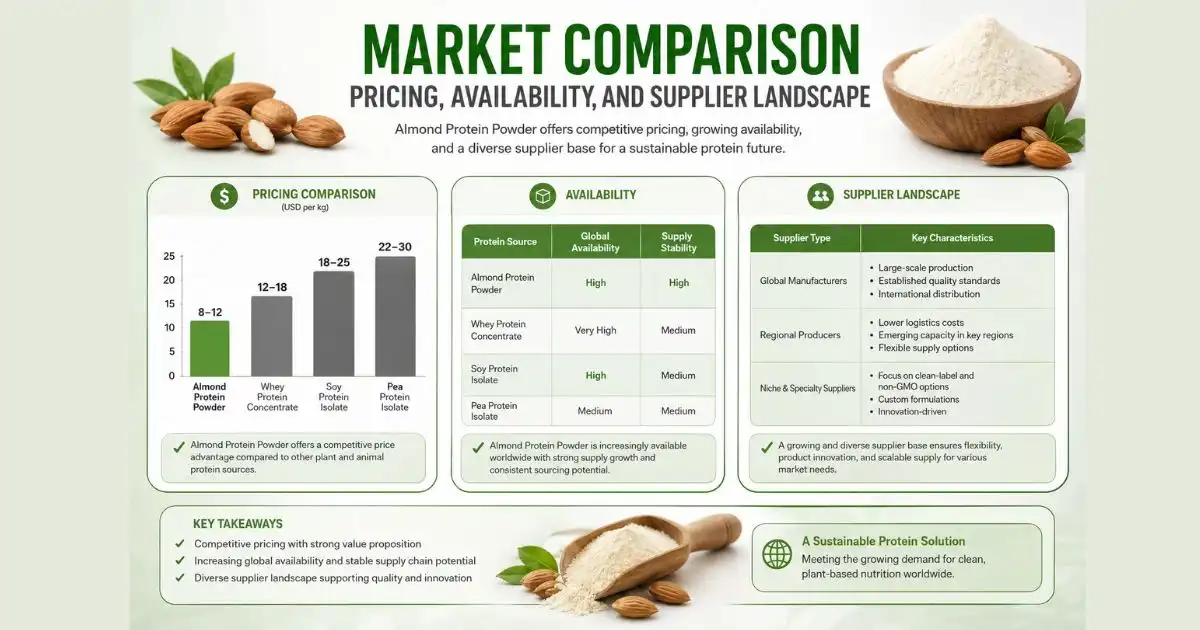
Protein isolate prices depend on the markets for agricultural goods, how hard it is to process, and how flexible demand is. For making B2B purchases, the table below shows rough price ranges for buying in bulk:
| Protein Type | Bulk Price Range (USD/kg) | MOQ Typical | Lead Time |
|---|---|---|---|
| Almond Protein (50-90%) | $12-$28 | 500-1000 kg | 4-6 weeks |
| Pea Protein Isolate (80%) | $6-$12 | 1000+ kg | 2-4 weeks |
| Soy Protein Isolate (90%) | $4-$9 | 1000+ kg | 2-3 weeks |
Almond protein is strategically positioned for high-margin, differentiated products rather than cost-driven commodity applications because of its premium pricing due to raw material costs and specialised extraction processes. The lower prices of pea and soy proteins make them good for mass production where the cost percentage of ingredients has a big effect on profit margins. Total cost analysis, on the other hand, needs to take into account the costs of flavouring, changing the texture, and possibly reformulating in order to get acceptable sensory profiles with cheaper proteins.
Through fully integrated supply chains and sustainable farming partnerships, Yangge provides competitive Almond protein prices while maintaining quality certifications. Different production sizes can be handled by flexible packaging options, such as 25 kg bags and bulk totes, and on-time delivery supports just-in-time manufacturing strategies.
Supply Chain Reliability and Sourcing Channels
After recent problems, the global supply chain's robustness has become very important. Almond protein is mostly found in California and the Mediterranean, which makes buying it vulnerable to changes in regional weather and politics. North America and Europe are both sources of pea protein, and farming is becoming more spread out, which lowers regional risk. The most soy protein is produced around the world, but prices and availability are sometimes affected by changes in trade policies.
Teams in charge of buying things should look at sellers based on a number of factors, such as their ability to meet growing demand, their quality control systems that make sure each batch is the same, their ability to ship goods internationally, and their expert support that helps with formulation. These needs are met by Yangge's 24-hour customer service, personalised solutions, and GMP-compliant manufacturing. This supports long-term partnership stability that purchasing managers looking for reliable raw material pipelines value.
How to Choose the Right Plant Protein Isolate for Your Business Needs?
Segmenting Requirements by Application and Market Position
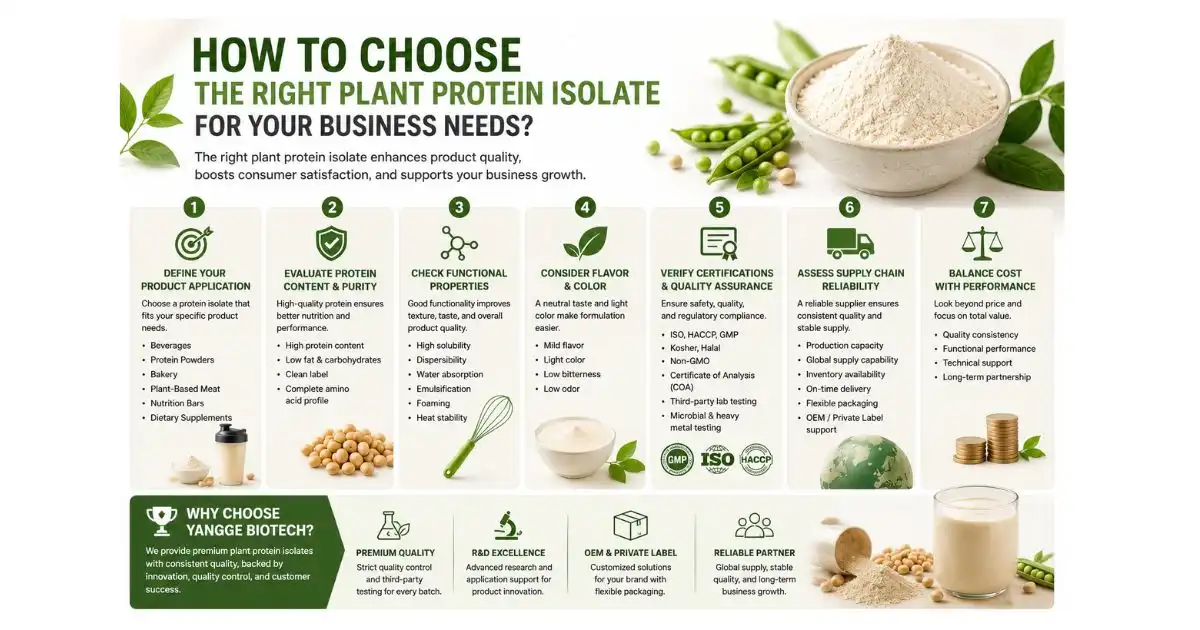
For protein selection to work, product goals must be made very clear. Are you making high-end sports nutrition for wealthy health-conscious people or cheap protein bars for the mass market? Will recipes stress claims of allergen-free products, full amino acid profiles, or short lists of ingredients? The technical details are based on these strategy questions.
Almond protein's neutral sensory profile and recognisable ingredient appeal should be prioritised by brands looking to differentiate themselves with clean labels. They should also be willing to pay more per unit because of this. Pea protein is good for mass-market uses because it is both hypoallergenic and not too expensive. On the other hand, established sports nutrition lines may use soy's complete protein status and consumer familiarity, even though allergen concerns should be taken into account.
Evaluating Supplier Credentials and Quality Metrics
Comparing prices is only one part of due research. Reliability of suppliers and accuracy of products are also important. Some important things to look at when judging a product are its certifications (GMP, ISO, HACCP, organic, Kosher, Halal), third-party testing procedures, paperwork on how the product was made, and references from customers who have bought similar products before. Ask for Certificates of Analysis (COA) that list the amount of protein, amino acids, heavy metals, microbiological parameters, and pesticide residues so that you can compare the results to your own standards.
International labs check Yangge's products for quality before every shipment, which protects the brand's reputation. Their ISO and HACCP certifications show that they handle quality in an organised way, and their Halal and Kosher certifications help them reach more customers. These licenses lower the risk of buying things and speed up the time it takes for regulators to approve new products, which is important for meeting launch dates.
Optimizing Formulation Strategy and Supplier Partnerships
Getting protein should be part of bigger plans for creation. You might want to ask for samples from different specification ranges (Yangge offers 50%, 70%, and 90% Almond protein concentrations) so that you can test how well they dissolve, how well they match flavours, and how much they cost compared to how well they work. Working with suppliers who offer scientific help, such as information on the extraction method, concentration requirements, and suggested uses, speeds up development cycles and lowers the cost of reformulation.
Long-term relationships with capable providers like Yangge have many benefits, such as better pricing through volume promises, priority placement during supply shortages, and the ability to work together on new protein uses. Because of these partnerships, suppliers go from being simple sellers to strategic partners that help businesses gain a competitive edge.
Conclusion
To choose between almond, pea, and soy protein isolates, you have to weigh the benefits and drawbacks of each in terms of cost, regulatory compliance, nutritional performance, and specific product goals and target markets. Almond protein stands out because it has a clean label, better taste, and special functional qualities that make it good for high-end drinks and snacks, but it costs more than pea or soy protein options. To reduce formulation risks and ensure market success, procurement managers must look at these trade-offs in the context of their overall strategy, giving top priority to source dependability, quality stability, and technical support.
FAQ
Is almond protein a complete protein compared to pea and soy isolates?
Almond protein has a balanced amino acid profile with a lot of arginine and BCAAs. However, it is not quite as full as other proteins because it doesn't have enough methionine or other important amino acids. With a PDCAAS score close to 1, soy protein isolate is considered complete, and pea protein is also getting close to being complete, even though it has low methionine. Through careful mixing with complementary protein sources like rice or quinoa protein, formulators can fill in the small amino acid gaps in Almond protein while still keeping a clean label.
What allergen considerations apply to almond protein in manufacturing?
According to FDA regulations, Almond protein is a tree nut allergen, so it must be clearly labelled and produced in a way that controls allergens. Like with other big allergens, manufacturers must use specialised tools or cleaning methods that have been proven to work to stop cross-contamination. This is different from pea protein's low allergen risk but the same as soy's allergen status. Almond protein is not good for brands that want to reach people who are allergic to nuts, but it's good for brands that want to reach people who are allergic to soy, even though they have to list tree nuts on their labels.
How does almond protein pricing compare at bulk procurement scales?
In bulk, Almond protein usually costs between $12 and $28 per kilogram, which is about 1.5 to 3 times as much as pea protein isolate and 2 to 4 times as much as soy protein isolate. This extra charge covers the high cost of almonds' raw materials and their unique handling needs. Total formulation costs may go down, though, if less flavouring is used and the product is positioned as a premium one. Almond protein is economically viable for differentiated product lines where the quality of the ingredients justifies higher retail prices thanks to volume commitments and long-term supplier relationships.
Partner with Yangge: Your Trusted Almond Protein Supplier
Yangge Biotech specializes in premium almond protein powder manufactured under strict GMP standards, offering specifications from 50% to 90% protein concentration to match your formulation requirements. Our HPLC-extracted Almond protein delivers exceptional purity, gluten-free and vegetarian-friendly profiles, and comprehensive certifications including FDA approval, Halal, and Kosher credentials. With farm-to-table traceability, sustainable sourcing practices, and 24-hour technical support, we provide more than raw materials—we offer strategic partnership. Our flexible packaging solutions, on-time delivery, and competitive pricing structure support businesses from emerging brands to established manufacturers. Contact our team at info@yanggebiotech.com to request samples, discuss custom specifications, or secure reliable supply from a dedicated almond protein manufacturer committed to your success.
References
1. Phillips, S.M., & Van Loon, L.J. (2011). Dietary protein for athletes: From requirements to optimum adaptation. Journal of Sports Sciences, 29(sup1), S29-S38.
2. Gorissen, S.H., Crombag, J.J., Senden, J.M., Waterval, W.H., Bierau, J., Verdijk, L.B., & van Loon, L.J. (2018). Protein content and amino acid composition of commercially available plant-based protein isolates. Amino Acids, 50(12), 1685-1695.
3. Mariotti, F., & Gardner, C.D. (2019). Dietary protein and amino acids in vegetarian diets—A review. Nutrients, 11(11), 2661.
4. McClements, D.J., Newman, E., & McClements, I.F. (2019). Plant-based milks: A review of the science underpinning their design, fabrication, and performance. Comprehensive Reviews in Food Science and Food Safety, 18(6), 2047-2067.
5. Day, L. (2013). Proteins from land plants—Potential resources for human nutrition and food security. Trends in Food Science & Technology, 32(1), 25-42.
6. Boye, J., Zare, F., & Pletch, A. (2010). Pulse proteins: Processing, characterization, functional properties and applications in food and feed. Food Research International, 43(2), 414-431.

Based on your location and order quantity, you will have the opportunity to receive a limited time free shipping promotion!
Who we are
Popular Blogs