How do the amino acid profiles of peanut and almond protein compare
Yangge Biotech supplies high-quality Almond Protein Powder, a plant-based protein ingredient with a mild nutty flavor and excellent nutritional value. It is suitable for use in protein shakes, nutritional supplements, functional foods, bakery products, snack bars, and plant-based formulations.
Produced under strict quality-control standards, our Almond Protein Powder is available in bulk quantities with customized specifications and OEM packaging. We also provide a Certificate of Analysis (COA), third-party test reports, and professional technical support.
Contact us at info@yanggebiotech.com to request a quotation, product specifications, COA, test reports, or a free sample.
When evaluating plant-based protein sources for manufacturing purposes, understanding amino acid composition becomes critical. Almond protein and peanut protein differ notably in their amino acid profiles, which directly impacts formulation decisions. Almond protein typically contains higher levels of arginine and delivers a more favorable balance of branched-chain amino acids, making it particularly suitable for sports nutrition and functional beverage applications. Peanut protein, meanwhile, offers robust lysine content but often falls short in methionine, a common limiting factor in legume-derived proteins that affects overall protein quality scoring.
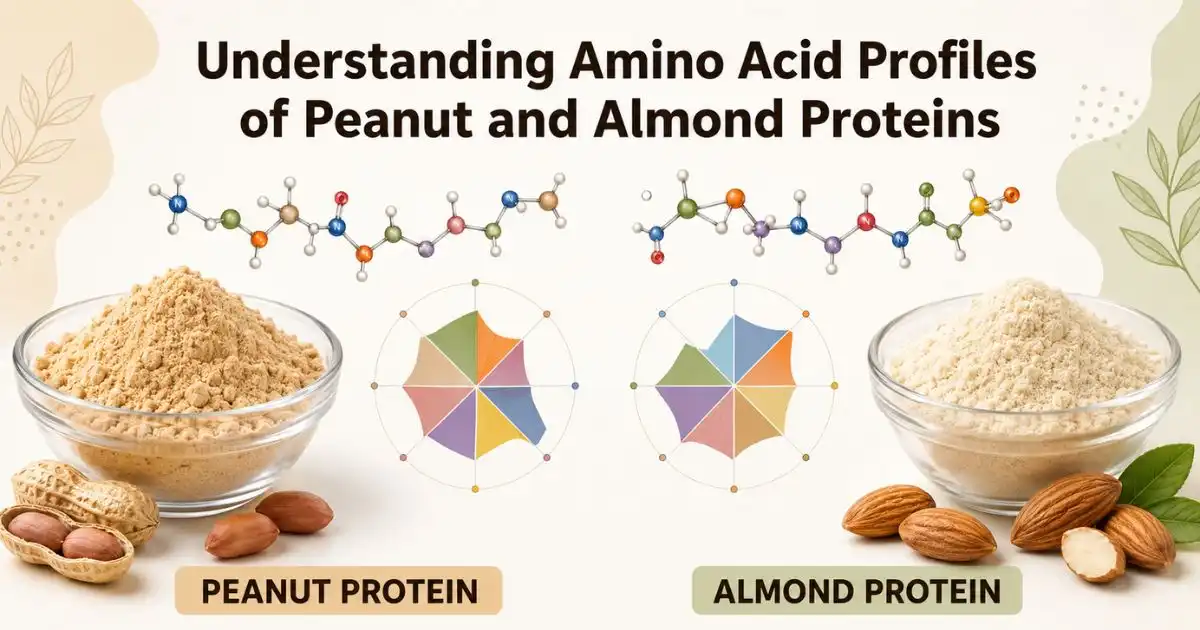
Understanding Amino Acid Profiles of Peanut and Almond Proteins
The type of amino acids in a protein source decides whether it meets the nutritional needs of customers and the technical performance needs of complex formulations. These profiles help buying managers and research and development teams who are making health supplements and useful foods figure out how good a product is and how to set it apart from others.
What Constitutes an Amino Acid Profile?
An amino acid profile is a list of all the amino acids in a protein source, broken down into two groups: essential amino acids (EAAs) that the body cannot make itself and non-essential amino acids that it does make itself. As long as all nine EAAs are present in the right amounts, the profile shows if a protein is "complete" or needs to be mixed with other proteins to make it nutritionally complete. This difference is very important when making products for muscle growth, recovery, or general wellness, because the quality of the protein directly affects how well the product works and how well the brand is known.
Significance for Muscle Synthesis and Nutritional Value
Leucine, isoleucine, and valine are three branched-chain amino acids that are very important for muscle protein production. They start anabolic processes. Almond protein-based protein concentrates naturally have good amounts of BCAAs, which helps recipes for people with busy lifestyles who do not have to worry about allergens from dairy or soy. Arginine in large amounts increases the production of nitric oxide, which is good for the heart and popular with people who care about their health. Peanut protein has a similar protein density to other proteins, but it needs to be carefully formulated because it does not have enough methionine. This can be fixed by strategically mixing it with plant proteins that are similar, like rice or quinoa.
Specific Amino Acid Compositions: Strengths and Limitations
Almond protein has more arginine than most other plant sources (about 2,800 to 3,200 mg per 100g protein), which is better than most other plant sources and helps cardiovascular formulas. It usually has between 1,600 mg and 1,900 mg of leucine per 100g, which makes it competitive in the plant protein market but not up to the standards of whey isolate. The amino acid lysine, which is found in small amounts in almonds (about 600 to 800 mg per 100g), is important to keep in mind when making claims about full protein.
Peanut protein has a higher overall protein concentration potential, reaching 70–80% in premium isolates, and has high levels of lysine, around 900–1,100 mg per 100g. On the other hand, it only has 200–400 mg of methionine per 100g, which is the main nutritional limitation. Both proteins have small amounts of threonine and tryptophan, which help make serotonin precursors available. These can be sold as useful foods that improve mood and sleep quality.
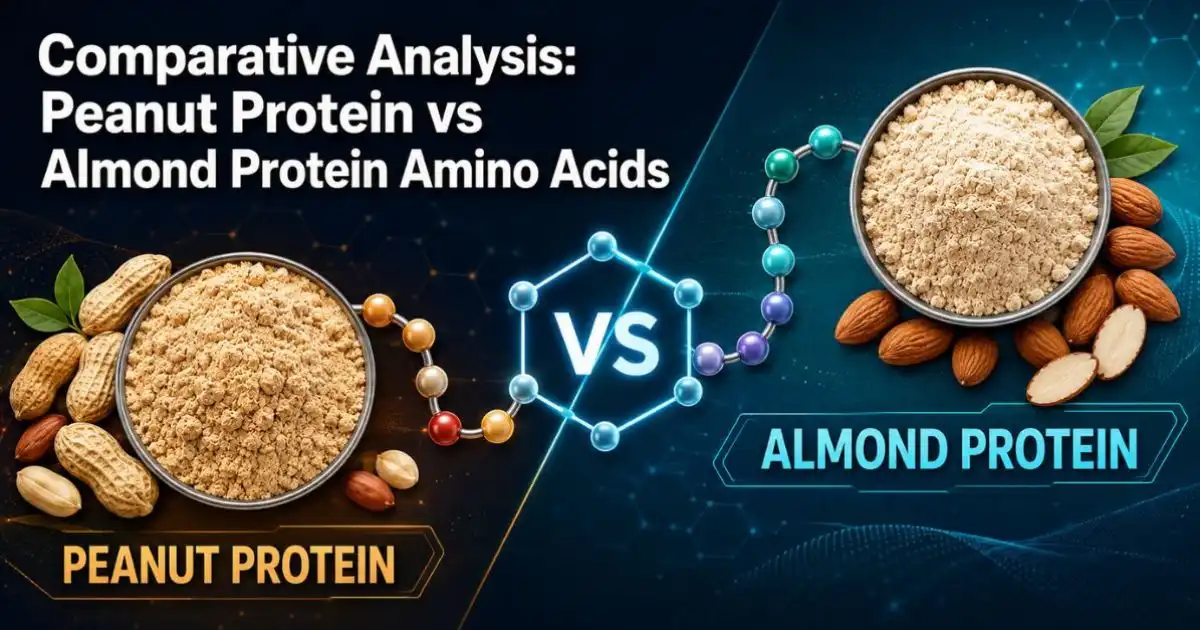
Comparative Analysis: Peanut Protein vs Almond Protein Amino Acids
Direct numeric comparison shows that different formulations have different benefits based on the goal application and the placement of the customer. By knowing these differences, buying teams can choose raw materials that meet the performance goals of a product and the rules for following them.
Quantitative Amino Acid Content Comparison
| Essential Amino Acid | Almond Protein (mg/100g) | Peanut Protein (mg/100g) | Functional Implication |
|---|---|---|---|
| Leucine | 1,600-1,900 | 1,700-2,000 | Start of muscle protein synthesis |
| Lysine | 600-800 | 900-1,100 | Growth and taking in calcium |
| Methionine | 400-600 | 200-400 | One thing that limits peanut formulas |
| Arginine | 2,800-3,200 | 3,000-3,400 | Help for the heart and nitric oxide |
| Threonine | 700-900 | 800-1,000 | Immune system work and making collagen |
The results show that both proteins contribute important amino acids, but neither one can reach full protein state on its own. Although peanut protein's higher lysine content can successfully complement grain-based proteins, Almond protein's better methionine content makes it more flexible for single-source formulations.
Implications for Muscle Growth and Product Formulation
Because the amount of leucine in a protein is directly related to how fast muscles make protein, proteins that are high in leucine are very popular in the sports nutrition market. Almond protein and peanut protein both have enough leucine to make recipes work, but they usually need to be dosed higher than whey protein to have the same anabolic effects. The practical effect for product developers is about the economics of serving size: to get 2.5–3g of leucine per serving the level needed for maximal muscle protein synthesis—you need about 30–35g of either peanut or Almond protein instead of 20–25g of whey.
Digestibility and Bioavailability Factors
The Protein Digestibility-Corrected Amino Acid Score (PDCAAS) and the newer Digestible Indispensable Amino Acid Score (DIAAS) are normal ways to compare the quality of proteins. Peanut protein typically has a PDCAAS of 0.52-0.70 and Almond protein typically has a PDCAAS of 0.40-0.52. Both of these values are below the 1.0 standard for full proteins. These scores show both the balance of amino acids and how quickly the food can be digested, taking into account things in the raw materials that are bad for you, like phytates and tannins.
Using more advanced processing methods, like enzymatic treatment and controlled heat exposure, can make things a lot easier to digest. In comparison to regular cold-pressed almond flour, Yangge's Best Almond protein powder is extracted using HPLC, which maintains the purity of the amino acids while lowering the amount of anti-nutritional compounds. This technical advantage means that labels can make more accurate claims, and customers will be happier with the final goods.
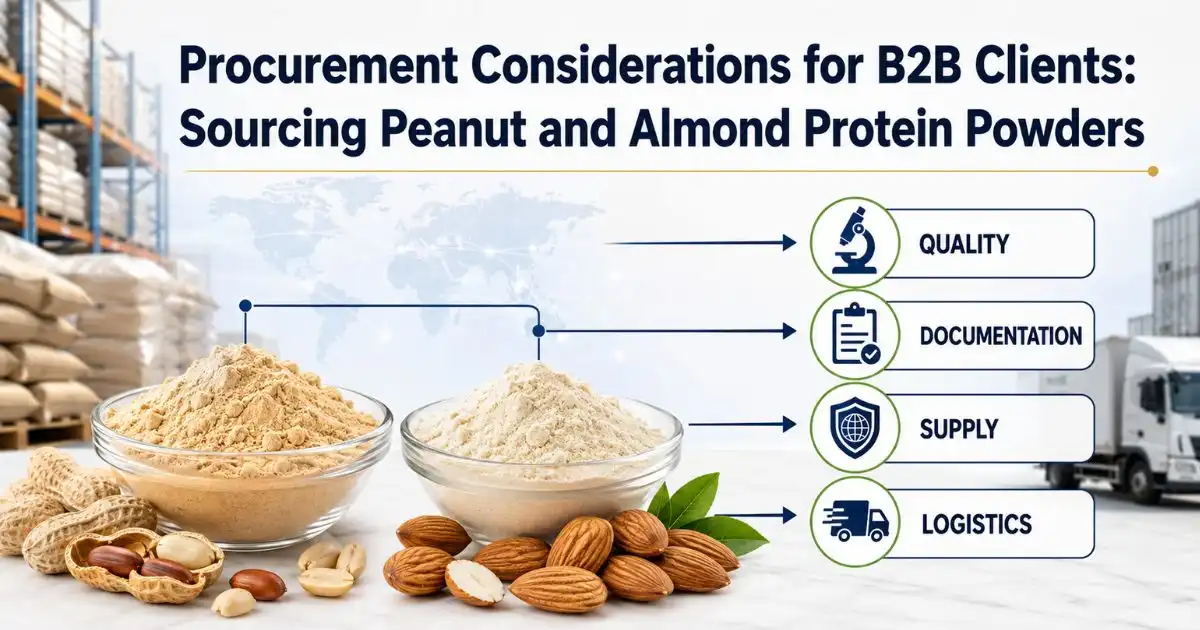
Procurement Considerations for B2B Clients: Sourcing Peanut and Almond Protein Powders
To get reliable, high-quality plant protein ingredients, you need to know about the technical details and how the supply chain works, as these affect the regularity of output and the compliance with regulations. For procurement professionals in charge of making supplements and functional foods, there are a few important criteria that they use to decide which suppliers are best.
Quality Criteria: Testing, Purity, and Certifications
Using standard testing methods to create profiles of amino acids is the basis of quality assurance. Third-party amino acid analysis is done by reputable suppliers using ion-exchange chromatography or HPLC. Each batch comes with a certificate of analysis (COA) that confirms the protein content and amino acid composition. Heavy metal screening (lead, cadmium, arsenic, mercury), microbiological testing (total plate count, yeast/mold, pathogens), and pesticide residue analysis make sure that all safety rules are followed.
Certifications show that a provider is dedicated to quality processes and following the rules. Some important certifications are ISO 22000 for managing food safety, GMP (Good Manufacturing Practice) for pharmaceutical-grade uses, and organic certifications (USDA Organic, EU Organic) for aiming for a clean label position. Due to the high allergen status of both peanuts and tree nuts in North American and European markets, allergen management certificates and site paperwork are very important.
Yangge is registered with the FDA and has Halal and Kosher certifications. They also use full quality management systems to make sure that all of their products are the same from batch to batch. Before every shipment, our Best Almond protein powder is inspected by an international lab. This ensures that every ingredient, from the farm to the finished product, can be verified to meet the strictest procurement standards.
Vendor Landscape and Supply Chain Dynamics
The steps in the plant protein supply chain are getting the protein from farms, basic processing, protein concentration, and packing the ingredients. At each step, there are possible quality and consistency issues. Leading sellers have direct ties with farmers, which lets them better control the quality of the raw materials and figure out the best time to gather to keep the amino acids' integrity. Prices are affected by where the goods come from. Almonds from California are the most popular on the world market because they grow well there and the infrastructure is already there. Peanut protein comes from a wider range of places, including the US, China, Argentina, and India.
Negotiations for Bulk Purchases and Private Label Manufacturing
For B2B negotiations to go well, they need to cover more than just unit price. They also need to cover technical support, sampling methods, and flexible delivery terms that work with production schedules. For R&D teams working on new product lines, forming partnerships with suppliers who offer formulation consultation, such as optimising amino acid profiles through protein blending strategies, is very helpful. Private label and OEM/ODM agreements give brands more options because they let them get customised specs, particle size distributions, and packing designs that work with their own formulas.
Managing lead times becomes very important when coordinating production runs with changes in seasonal demand. Reliable providers keep a buffer stock and clear information about production plans, which keeps costly delays in production from happening. Standard wait times for plant protein ingredients are between two and four weeks for stock items and between six and eight weeks for unique formulas that need special processing conditions.
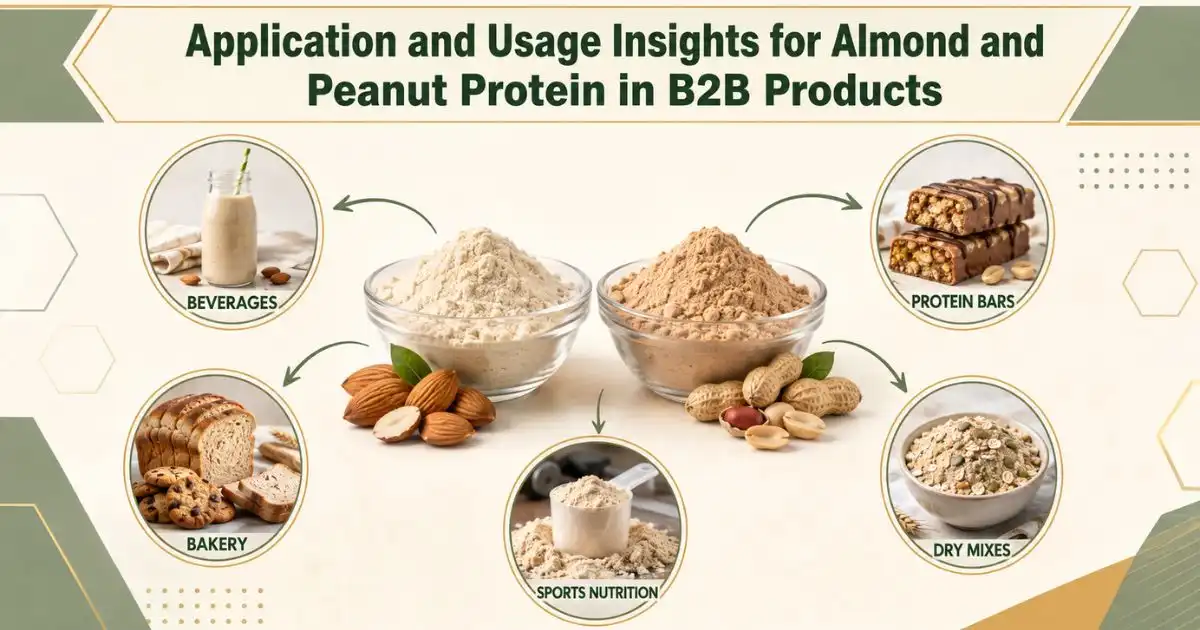
Application and Usage Insights for Almond and Peanut Protein in B2B Products
Knowing how proteins are used in real-world situations helps match the choice of protein with the capabilities of the manufacturing process and the needs of the target market. Almond protein and peanut protein each have their own specific uses in a wide range of products, and each one presents its own set of manufacturing possibilities and challenges.
Typical Applications Across Industries
Almond protein is very useful in ready-to-drink (RTD) plant-based drinks because it has a neutral to sweet flavour profile that means you do not need to use strong hiding agents as much. Ultra-High Temperature (UHT) processing at 137–140°C does not change the structure of the protein, so it does not make insoluble clumps. Instead, it keeps the smooth suspension stability that people expect from high-quality goods. Because it does not change much at room temperature, it is perfect for making protein shakes, coffee creamers, and healthy meal replacements that can be sold in most stores.
Almond protein is great at sticking things together in low-moisture, high-shear extrusion environments, which makes it useful for making nutritional bars and clean-label snacks. Almond protein keeps dough flexible and chewy, extending its commercial viability, as opposed to whey isolates, which contribute to unfavourable bar hardening during storage. The unique lipid-protein conformation of the protein protects material features that make customers happier throughout the product's existence.
| Product Category | Almond Protein Advantages | Peanut Protein Advantages | Formulation Considerations |
|---|---|---|---|
| RTD Beverages | Better steadiness in suspension, bland flavour | High protein density and low cost | Labelling rules for allergens |
| Protein Bars | Keeps softness and clean label appeal | Strong bond and a taste you know | Getting the right texture during shelf life |
| Baked Goods | Fine grain size, keeping moisture in | Economical, adds a lot of flavour | Building structures without gluten |
| Dairy Alternatives | Makes the mouth feel creamy and is heat stable | Strong body, good for fermentation | Stable pH levels in grown goods |
Formulation Challenges and Practical Solutions
Managing flavours is one of the hardest parts of formulation, especially when trying to reach people who are sensitive to off-notes from plant proteins. Almond protein naturally has a mild, slightly sweet flavour that does not need as much flavouring help than pea or hemp proteins, which makes formulations simpler and lowers the number of clean-label ingredients used. Almond protein's natural flavours, such as vanilla, chocolate, or fruit extracts, work well to bring out its natural qualities without making the consumer think the food is fake.
To improve the texture of a product, you need to know how protein hydration and shear forces affect how it feels in your mouth. Almond protein is suitable for emulsified systems like salad dressings, non-dairy spreads, and bakery uses where moisture retention prevents staling because it has a moderate water-binding capacity and excellent oil-holding capabilities. The way you feel the texture is directly related to the size distribution of the particles. For example, 200-mesh particles are smaller and easier to disperse, while coarser grades may add desired textural elements to high-fiber snack bars.
Regulatory Considerations and Allergen Management
According to FDA rules, both peanut protein and Almond protein are major food allergens that need to be listed in a clear way. To keep these ingredients from getting mixed up, factories that use them must have strict allergen control programs that include specialised processing equipment, tested cleaning methods, and environmental tracking routines. Separated production runs and allergen-specific changeover procedures are necessary for brands that use more than one protein source.
Export rules are different depending on the market they are going to. For example, European Union rules require detailed documentation on allergen management, while some Asian markets require extra testing to prove genetic modification, even though both peanut protein and Almond protein are non-GMO. Working with providers who have foreign certifications and export experience makes regulatory risk lower and compliance management easier.
Strategic Recommendations: Choosing Between Peanut and Almond Protein for Your Business
To choose the best plant protein ingredient, you need to find a balance between nutritional performance, cost-effectiveness, market positioning, and the reliability of the supply chain within the context of a well-thought-out procurement strategy. When making decisions, frameworks should take into account both short-term output needs and long-term brand growth goals.
Aligning Protein Selection with Product Goals
Almond protein's clean label appeal and compatibility with popular diets like Paleo, Keto, and allergen-conscious eating patterns are good for products that aim for a premium wellness positioning. However, the fact that tree nuts are an allergen means that the product needs to be carefully market segmented. The protein's better ability to neutralise flavours and stay stable during processing makes it worth the extra cost in areas where customer satisfaction directly affects brand loyalty and return purchases. Almond protein's technical qualities support unique product claims and better organoleptic performance, making it ideal for formulation teams creating cutting-edge functional drinks, gourmet protein bars, or premium dairy alternatives.
Cost-Benefit Analysis and Supply Chain Reliability
Formulations that are meant to appeal to a wide audience may choose peanut protein because it is cheap and has a strong flavour profile that appeals to most people. The protein works well in value-oriented protein bars, bulk powders for sports nutrition, and cost-effective institutional feeds because it has a higher total protein concentration potential and strong binding properties. Brands that know how to handle peanut allergen guidelines and are trying to reach people who do not have serious nut allergies can take advantage of peanut protein's cost savings without sacrificing nutrition.
A full cost analysis must include more than just the direct costs of ingredients. It must also look at how efficient the formulation is, how much the flavour system costs, and how much the product produces. Compared to more difficult plant proteins, Almond protein's neutral flavour cuts flavouring costs by 15 to 25 percent, and its processing stability keeps production losses to a minimum during thermal processing. These operating savings can help cover higher raw material costs, especially in high-end product lines where higher prices at retail encourage ingredient investment.
Emerging Trends in Plant Protein Innovation
As climate change affects crop yields, supply chain security issues have become more important. Almonds have trouble getting enough water in their main growing areas, which could affect the security of prices in the long run. Diversified sourcing strategies, like keeping qualified alternative suppliers on hand and thinking about ways to blend proteins, lower the risks of being dependent on a single source. Yangge's long-term partnerships with farming communities and environmentally friendly farming methods ensure a steady supply that helps with accurate planning of output throughout the year.
As people become more interested in whole-food diets, they want ingredients that are easy to recognise and have been processed as little as possible. This move toward "ingredient simplicity" prefers proteins like peanut protein and Almond protein over highly refined isolates that are thought to be too processed. Brands that communicate clearly about their sourcing, sustainable farming practices, and environmental responsibility gain a competitive edge in groups of consumers who are becoming more environmentally aware.
Hybrid protein systems that combine amino acid patterns that work well together show that formulations are getting more complex. Almond protein can be combined with the proteins of rice, pumpkin seeds, or peas to produce full amino acid profiles with minimal cost. These new methods let brands improve nutrition facts panels, texture characteristics, and the ingredient story all at the same time, giving customers a wide range of benefits that meet their needs.
Conclusion
Almond protein and peanut protein each have unique benefits for B2B formulation uses, according to a study of amino acid profiles. Despite having a low amount of lysine, Almond protein is great for high-end drinks and clean-label products because of its high arginine content, neutral flavour, and thermal processing stability. Peanut protein has a high protein density and a better lysine content than other proteins, but it needs to be supplemented with methionine to get the full profile. When making decisions about what to buy, you should think about how to balance nutritional goals, output skills, allergen control infrastructure, and market positioning goals. When buying managers and research and development teams understand these technical and strategic factors, they can choose plant protein ingredients that improve both product performance and business results in functional food markets that are very competitive.
FAQ
Are almond and peanut proteins considered complete proteins?
Neither Almond protein nor peanut protein is nutritionally complete on its own. While peanut protein contains insufficient methionine, Almond protein does not contain enough lysine. These problems can be fixed by strategically mixing them with plant proteins that go well with them, like rice or quinoa. This makes complete amino acid profiles that can be used for full nutritional claims. Many companies mix these proteins with proteins from hemp, peas, or seeds to get PDCAAS scores close to 1.0. This gives you all the benefits of protein without having to worry about dairy or soy allergies.
How can manufacturers manage allergen risks when using these proteins?
For strong allergen management, you need special processing tools, cleaning methods that have been tested with ATP bioluminescence, and programs that keep an eye on the environment. Cross-contact risks are kept to a minimum by separating production schedules, and traceability is improved by full supplier paperwork proving allergen control at source sites. Labels with clear allergen statements on ingredients and finished goods make sure that all destination markets follow the rules. This protects both consumer safety and the brand's reputation.
Can almond protein effectively replace whey in muscle-focused formulations?
When formula changes are made to account for variations in leucine concentration and digestion rates, Almond protein can be used in place of whey. Due to its lower leucine density and PDCAAS scores, Almond protein needs about 40–50% more serving sizes than whey isolate to achieve comparable muscle protein synthesis. This can be fixed by adding leucine or BCAA supplementation while keeping the plant-based placement. The protein mixes well and tastes good, which makes it easier for people to use in sports nutrition, where taste is a big part of decision-making about what to buy.
Partner with Yangge for Premium Almond Protein Solutions
Yangge Biotech is an expert at providing high-quality Almond protein powder designed especially for companies that make health supplements, functional foods, and OEM partners who are looking for dependable plant-based ingredient options. With the help of cutting-edge HPLC extraction techniques, our Best Almond protein Powder meets the protein requirements of 50%, 70%, and 90% while keeping the full amino acid profiles and ensuring the high batch stability required for production.
We provide the technical documentation, traceability, and regulatory support your procurement team needs as a certified Almond protein supplier with FDA approval, Halal and Kosher certifications, and comprehensive ISO/HACCP quality systems. Our specialised research and development (R&D) experts offer formulation advice, helping you get the most out of your amino acid profiles by strategically blending proteins in a way that meets your unique nutritional goals. Our low bulk prices, open private label manufacturing options, and reliable shipping schedules will help you stick to your production schedules.
Contact our team at info@yanggebiotech.com to request samples, discuss your formulation requirements, and discover how our sustainable sourcing practices and quality commitment support your brand's success in competitive wellness markets.
References
1. Gorissen, S.H.M., Witard, O.C. (2018). "Characterising the muscle anabolic potential of dairy, meat and plant-based protein sources in older adults." Proceedings of the Nutrition Society, 77(1), 20-31.
2. Mariotti, F., Gardner, C.D. (2019). "Dietary protein and amino acids in vegetarian diets—A review." Nutrients, 11(11), 2661.
3. Hughes, G.J., Ryan, D.J., Mukherjea, R., Schasteen, C.S. (2011). "Protein digestibility-corrected amino acid scores (PDCAAS) for soy protein isolates and concentrate: Criteria for evaluation." Journal of Agricultural and Food Chemistry, 59(23), 12707-12712.
4. Rutherfurd, S.M., Fanning, A.C., Miller, B.J., Moughan, P.J. (2015). "Protein digestibility-corrected amino acid scores and digestible indispensable amino acid scores differentially describe protein quality in growing male rats." Journal of Nutrition, 145(2), 372-379.
5. Hoffman, J.R., Falvo, M.J. (2004). "Protein – Which is Best?" Journal of Sports Science and Medicine, 3(3), 118-130.
6. Boye, J., Zare, F., Pletch, A. (2010). "Pulse proteins: Processing, characterization, functional properties and applications in food and feed." Food Research International, 43(2), 414-431.

Based on your location and order quantity, you will have the opportunity to receive a limited time free shipping promotion!
Who we are
Popular Blogs