Gardenia Yellow Natural Color Supplier Buying Guide
Yangge Biotech supplies high-quality PDRN Powder for cosmetic and skincare brands, offering reliable raw materials suitable for professional skincare formulations. We support bulk supply, OEM solutions, product specifications, samples, and third-party testing documentation. Contact our procurement specialists at info@yanggebiotech.com to request technical specifications, sample shipments, or pricing for your next natural colorant project.
Your product's market success and regulatory compliance depend on your natural colourant provider. Food and beverage businesses looking for clean-label alternatives to synthetic colours are turning to Gardenia Yellow, produced from Gardenia jasminoides fruit. Procurement managers, R&D engineers, and quality control specialists learn about natural yellow pigment market assessment criteria, technical standards, and sourcing techniques in this thorough purchasing guide. Whether you're making Asian noodles, functional drinks, or confectionary, knowing supplier skills and product characteristics helps you meet regulatory and production objectives. Contact our procurement specialists at info@yanggebiotech.com to request technical specifications, sample shipments, or pricing for your next natural colorant project.
Understanding Gardenia Yellow Natural Color
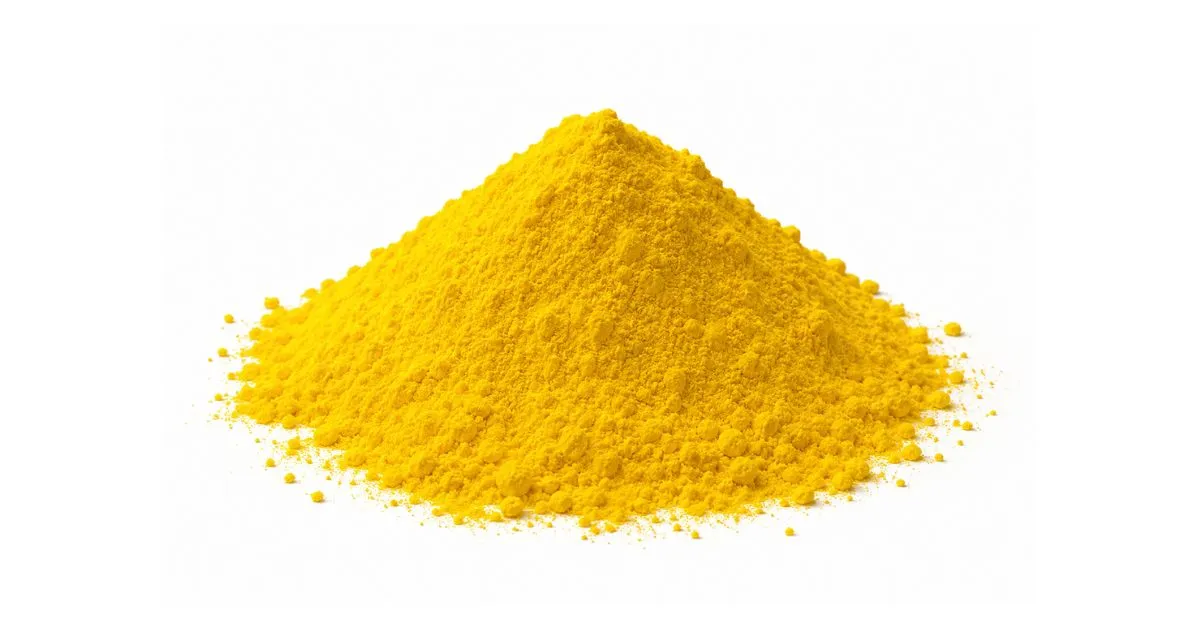
Gardenia Yellow extracts that are naturally yellow are a sophisticated alternative for companies that want to stop using synthetic colorants. Crocin, an active ingredient that is a water-soluble carotenoid, gives the fruit a bright yellow-to-orange color that stays the same under different cooking conditions. Gardenia Yellow dissolves easily in water, unlike turmeric or beta-carotene, which need emulsifiers or have problems dissolving. This makes them perfect for clear drinks, noodle doughs, and dairy uses.
Botanical and Chemical Foundations
Gardenia jasminoides does best in subtropical climates with acidic, well-drained soils that stay moist all the time. Fruit from these trees is carefully extracted to separate crocin while keeping an eye on geniposide levels, which is an important quality factor. When proteins or amino acids in your product react with a high geniposide content, it can cause an unwanted blue-green color change. Premium suppliers use advanced cleaning methods to get rid of this compound, giving customers products with optical density ratios (440nm/328nm) that are higher than the standards set by the industry.
Industrial Application Advantages
Gardenia Yellow helps with a lot of problems in the food production process. Their high thermal stability—they keep their color strength at 80°C for more than two hours is better than that of many natural options. This ability to withstand heat is very important for baked goods, instant noodles, and drinks that have been heated through. The pigment's neutral pH range (7–10) and clear look in solution get rid of the cloudiness problems that come with other natural colorants, making it easier to use in a wide range of products.
Key Criteria for Selecting a Natural Color Supplier
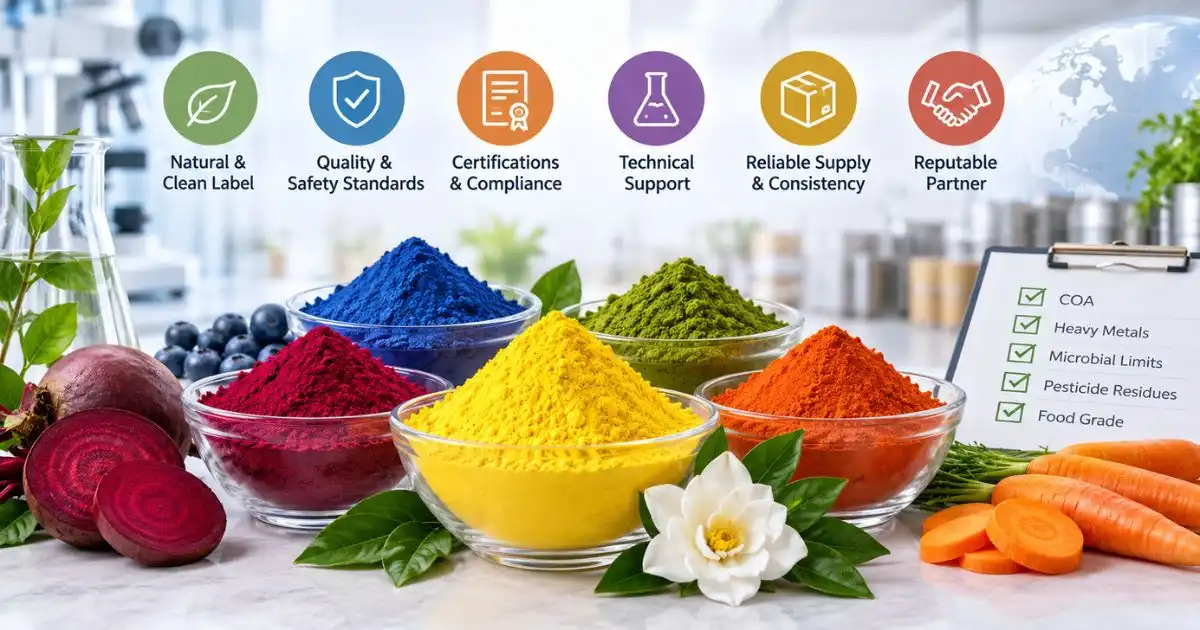
When making decisions about what to buy in the natural colorant space, you have to balance technical performance with the reliability of the supply chain. The criteria you use to evaluate suppliers should focus on factors that have a direct impact on product consistency and regulatory approval timelines for Gardenia Yellow.
Color Value and Tinctorial Strength
The main specification, Color Value measured as E1%1cm at 440nm, tells you how much to use and how much it will cost. The range of specifications is usually from E60 to E500, with higher numbers suggesting more pigment. Using UV-Vis spectrophotometry to test this measure on samples before scaling up keeps shocks from happening. For visual consistency across production runs, batch-to-batch variation should not be more than ±5%. This is especially important for branded products where color recognition builds trust.
Stability Profiles and Processing Compatibility
In addition to the color's original strength, its long-term survival depends on how stable it is under the processing conditions you use. Ask for detailed data sheets that show:
- Thermal stability: curves showing how long colors stay the same at process temperatures (60–100°C) for long periods of time
- pH stability range: limits of performance in systems that are acidic (pH 3–5) compared to those that are neutral
- Light fastness: How quickly something breaks down when exposed to certain UV rays
- Metal ion sensitivity: Reactivity with iron, copper, or calcium that is already in the formulation
Some suppliers offer grades that are best for making noodles (better starch binding) or drinks (better clarity), which cuts down on the time needed to come up with new recipes.
Certification and Regulatory Compliance
Certification portfolios show that a seller cares about quality standards and getting into new markets. Baseline requirements include ISO 22000 (food safety management), HACCP verification, and approvals that are specific to the region. For U.S. markets, make sure the product is GRAS (Generally Recognized As Safe) and has FDA compliance paperwork. Gardenia Yellow must also be verified for permitted food colorant status and purity criteria, as its natural pigment classification often requires additional documentation in export certificates.
To meet the needs of a wide range of markets, Asian importers often need Halal and Kosher certificates. Check that each shipment comes with an analytical certificate of analysis (COA) that lists the heavy metals (lead, arsenic, mercury, cadmium), the number of microbes, and the pesticide residues that were tested according to FDA or Codex Alimentarius standards.
Sourcing Transparency and Supply Chain Ethics
These days, procurement teams look at suppliers' sustainability practices more and more. Trustworthy partners show farm-to-factory tracking by keeping records of where the fruit comes from, how it is harvested, and how the extraction center meets regulations. When looking for providers, ask about:
- Long-term agreements with farming communities that guaranty a steady supply
- Organic farming licenses (USDA Organic, EU Organic) if you want to reach high-end customers.
- Environmental management techniques, such as recovering solvents and treating wastewater
- Social responsibility programs that help farming communities
Being open about these things helps keep supplies running smoothly and matches companies' promises to be environmentally friendly, which consumers really like.
Comparison of Natural Yellow Pigment Solutions in the Market
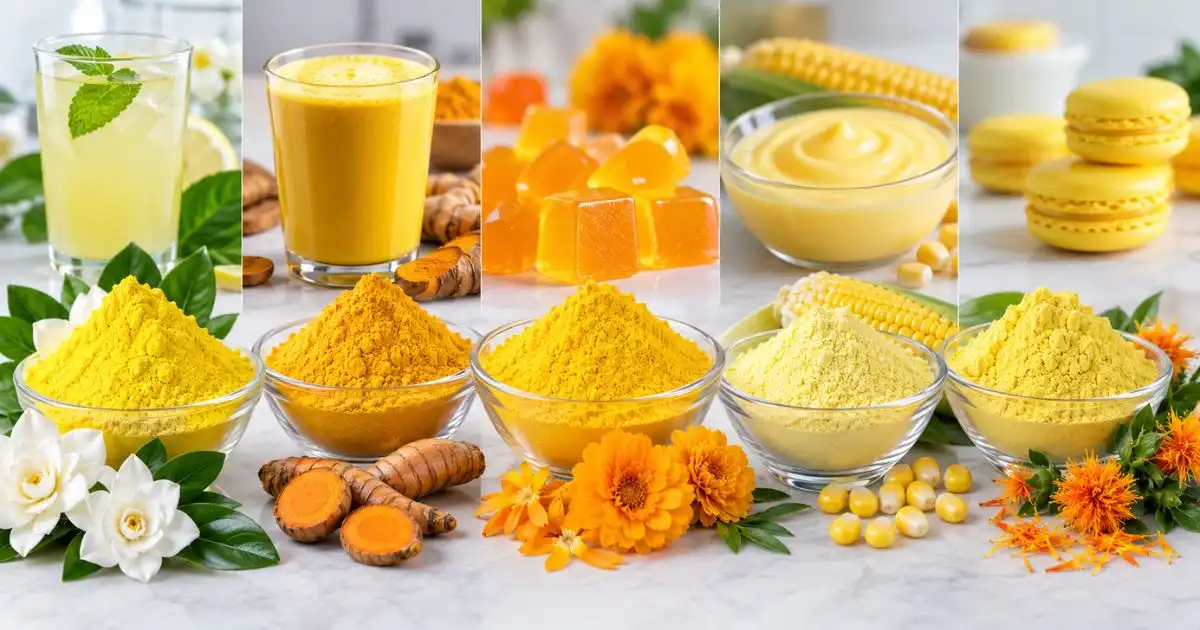
Gardenia Yellow's strategic value for certain uses is made clearer when you know how it compares to other natural colorants.
| Natural Pigment | Primary Source | Solubility | Heat Stability | Typical Cost Range | Best Applications |
|---|---|---|---|---|---|
| Gardenia Yellow (Crocin) | Gardenia jasminoides fruit | Excellent (water) | High (80°C, 120 min) | Moderate | Noodles, beverages, confections |
| Turmeric (Curcumin) | Curcuma longa rhizome | Poor (requires emulsifier) | Moderate | Low | Curries, rice dishes, limited beverage |
| Beta-Carotene | Algae or synthetic | Oil-soluble | Moderate | High | Dairy, margarine, supplements |
| Safflower Yellow | Carthamus tinctorius | Good (water) | Low | Low | Traditional foods, limited processing |
| Saffron Extract | Crocus sativus stigmas | Excellent (water) | Moderate | Very High | Premium products, small-batch use |
Gardenia Yellow is one of a kind because it dissolves in water similarly to saffron but for a lot less money. It also works better in hot conditions than turmeric does without major changes to the recipe. Because of this, it's especially appealing to companies that make medium- to high-volume Asian foods that need to name them as natural and process them well.
Product Format Considerations
Suppliers offer Gardenia Yellow in a number of different forms, each of which is best for a different production setting:
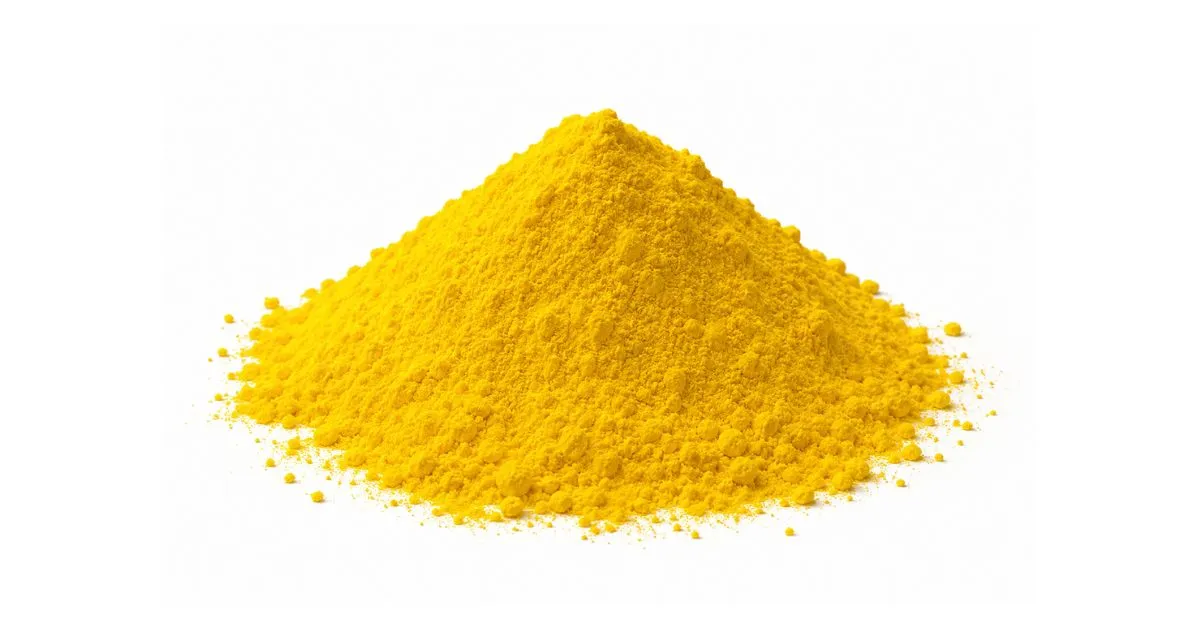
Powder Form (Spray-Dried): This is the most common form. It's easy to store, doses accurately, and has a longer shelf life (24 months in the right conditions). Yangge Biotech's Gardenia Yellow Powder E60 is an example of this type. It is a free-flowing orange-yellow powder that gets its color from fruit extraction processes that have been checked by HPLC. This method works well with dry mixes to make noodles, and it can also be pre-dissolved for use in drinks.
Liquid Concentrates: Pre-dissolved solutions cut down on the number of steps needed to handle liquid mixtures in the plant and make sure that they are evenly distributed. These concentrates usually have stabilizers and preservatives in them, which makes them perfect for making drinks all the time but means they need to be kept in the fridge.
Encapsulated/Granulated: Specialized forms keep pigments safe from oxidation and moisture when they are stored for a long time or used in tough processing conditions. These are more expensive, but they are more stable in tough situations, like when making vitamin-fortified snacks or direct compression tablets.
How to Procure Natural Yellow Pigments Efficiently
Streamlined procurement starts with making clear specifications and working with suppliers in a strategic way to source Gardenia Yellow.
Sample Evaluation Protocol
Structured sample testing is the first step in effective supplier screening. Ask for samples that come from real production runs (not lab-grade reference materials) and do two sets of tests at the same time:
- Visual assessment: uniform color, consistent particle size, and lack of clumping
- Dissolution testing: How long it takes for the substance to dissolve completely in water or a mixture of ethanol and water at the temperature used for the application
- Bench-scale application trials: Mix samples into simplified formulations that are like the environment where your products will be made.
- Accelerated stability studies: Store colored prototypes at a high temperature and humidity (40°C/75% RH) for 4 weeks to guess how long they will last.
Systematically record the results and compare them from different suppliers to clear acceptance criteria before moving on to pilot-scale trials. This methodical approach stops expensive source changes in the middle of production.
Negotiation Strategies for B2B Transactions
The price systems for natural colorants are very different from those for commodity chemicals. Knowing these factors makes your negotiating position stronger:
- Volume commitments: Buying deals that last a year (20,000 to 200,000 USD) usually get you 8–15% off of spot purchases
- Payment terms: Most suppliers offer 2/10 net 30 terms, and early payment discounts can help cover the costs of financing.
- Technical support inclusion: Talk about formulation help, stability studies, or regulatory document preparation as extra services that add value.
- Price escalation clauses: Instead of letting prices rise every year for no reason, tie them to clear indices like the prices of agricultural goods.
Establish dual-source strategies for critical products, qualifying a secondary supplier at 70% capacity to mitigate supply chain vulnerabilities without sacrificing volume-based pricing advantages.
Logistics and Preservation Best Practices
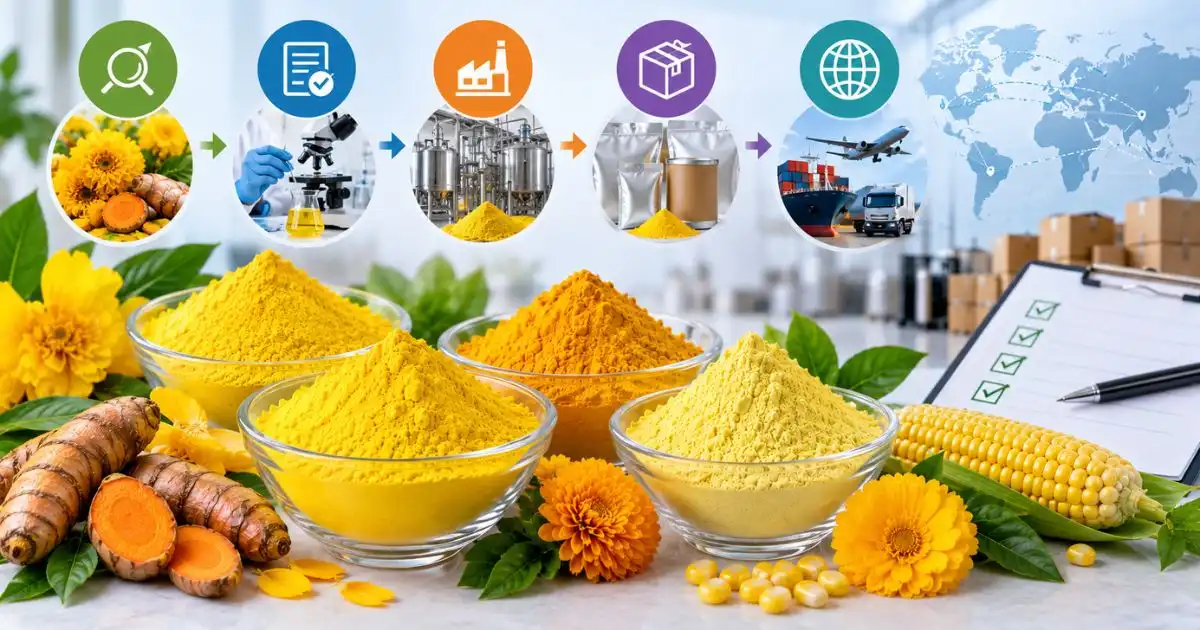
Gardenia Yellow pigments maintain stability when handled properly throughout the supply chain. Coordinate with suppliers to ensure:
- Packaging integrity: Multi-layer laminated bags with moisture shields and nitrogen washing for oxygen-sensitive grades protect the integrity of the packaging.
- Temperature control: For long-distance shipping by ground, climate-controlled containers (below 25°C) are used.
- Documentation completeness: To avoid customs delays, shipments must have phytosanitary certificates, certificates of origin, and COAs.
Internally, store unopened packages in cool, dry locations away from direct light. Once opened, transfer contents to sealed containers and use within 6 months to maintain optimal color performance.
Best Practices for Integrating Natural Colorants into Production
Successful implementation extends beyond supplier selection to formulation optimization and process control for Gardenia Yellow.
Formulation Development Guidelines
When you add Gardenia Yellow, you need to pay attention to how the ingredients interact in a way that doesn't affect synthetic dyes:
- Protein content management: products with more than 15% protein by weight raise the risk of geniposide-protein reactions; for these uses, choose low-geniposide grades (OD ratio >15).
- Metal chelation: To keep fortified products from turning discolored, remove iron ions with EDTA or citric acid.
- Antioxidant synergies: Adding ascorbic acid (0.01-0.05%) to goods that are exposed to light makes the colors last longer by removing free radicals.
- pH optimization: Keep the pH of the end product between 6.5 and 8.5 for the best color stability and strength.
Running small-scale trials across your pH and processing temperature ranges identifies optimal dosing levels, typically 0.002-0.01% (w/w) depending on target shade depth and base color value specification.
Quality Assurance and Batch Consistency
Putting limits on new raw materials stops production from stopping:
| Test Parameter | Method | Acceptance Criteria | Frequency |
|---|---|---|---|
| Color Value (E1%1cm @ 440nm) | UV-Vis Spectrophotometry | E60 ±3 units | Every batch |
| Geniposide Content | HPLC | <5% (low-geniposide grade) | Every batch |
| Heavy Metals (Pb, As, Hg, Cd) | ICP-MS | <1 ppm each | Quarterly or per COA |
| Total Plate Count | USP <61> | <1,000 CFU/g | Every batch |
| Moisture Content | Karl Fischer | <8% | Every batch |
| Solubility (1% solution clarity) | Visual turbidity test | Clear, no sediment | Every batch |
Establishing these controls with supplier-provided COAs creates a system for checking that catches specification drift before it gets to the production lines.
Sustainability Integration
Aligning procurement with environmental goals improves the image of the business and the relationships with suppliers. Yangge Biotech shows its dedication by working directly with farming communities to make sure fair prices and the use of farming methods that protect soil health and wildlife. China's environmental authorities have noticed that their investments in renewable energy and programs to cut down on waste show that they think about sustainability in a more complete way than just making marketing claims.
When judging sellers, you should ask for proof of:
- Carbon footprint assessments for production processes
- Measures of how efficiently water is used and cleaning methods
- Recyclability percentages of packaging materials
- Community development programs supporting grower livelihoods
Conclusion
To get natural yellow colorants, you have to find a balance between technical performance requirements, the stability of the supply chain, and following the rules. Gardenia Yellow is a great choice for food and drink companies that want to switch from synthetic colorants because it dissolves in water, doesn't change much at high temperatures, and looks good on clean labels. For sourcing to work, suppliers must be carefully evaluated based on things like color value consistency, stability profiles, certification portfolios, and sustainability practices.
Structured sample testing protocols and clear formulation guidelines lower the risks of development, and quality controls and strategic negotiations make sure that the supply chain will be strong in the long term. By applying the frameworks outlined in this guide, procurement teams can confidently source natural pigments that meet both technical requirements and corporate responsibility commitments.
FAQ
What differentiates gardenia yellow from synthetic yellow dyes?
Natural Gardenia Yellow is an option with a clean label that meets customer desire for ingredients that can be identified. Crocin-based pigments come from plants and have already been shown to be safe, unlike synthetic dyes like Tartrazine (Yellow 5), which are being closely watched by regulators and staying away from by consumers. The antioxidant qualities of the pigment may have uses beyond coloration, but in some areas, claims need to be backed up by legal evidence.
How can I verify the authenticity and quality of samples?
Ask for Certificates of Analysis that show how the color value was measured, how much geniposide was found using HPLC, and how heavy metals were found using ICP-MS. Authentic Gardenia Yellow mixes completely with water to make a clear yellow liquid that doesn't have any solids in it. For UV-Vis absorption, there should be a clear peak at 440nm. Samples that aren't clear, smell bad, or have unusual spectral profiles should be thrown away and the seller should look at them again.
What are typical lead times and minimum order quantities?
Standard lead times for well-known products are between 2 and 4 weeks, which takes into account when the product is made and when it is shipped internationally. For powder formats, the minimum order quantity is usually 25 kg, but some providers will take smaller trial orders (5–10 kg) at a higher price. Establishing regular buying habits helps you better plan your inventory and give items to people who need them when supplies are low.
Does gardenia yellow work in all food applications?
While versatile, Gardenia Yellow can be used in a lot of different situations, but it does best in neutral to slightly alkaline water systems. Products with a pH of less than 4.0 may have less color intensity or precipitation. Specialized emulsification is needed for oil-based applications, but water-dispersible grades are available. Talking to suppliers' technical teams during recipe development helps find any possible compatibility problems before the test production stage.
Partner with Yangge for Premium Natural Color Solutions
Yangge Biotech Co., Ltd. is a reliable company that makes Gardenia Yellow Powder E60. They use cutting-edge extraction technology and strict quality controls to make natural colorants that work well every time. Our ISO, HACCP, Kosher, and Halal standards make sure that your products meet the needs of a wide range of markets. Our direct farming partnerships also make sure that your products can be tracked and that your supply is stable. Yangge's technical team offers full application support, from initial formulation advice to scale-up optimization.
This cuts down on development times and reduces formulation risks. We serve beverage, candy, and noodle makers in Asia, North America, and Europe with flexible order quantities starting at wholesale-friendly levels and customer service available 24 hours a day, 7 days a week. Contact our procurement specialists at info@yanggebiotech.com to request technical specifications, sample shipments, or pricing for your next natural colorant project.
References
1. Moreno, D.A., et al. "Stability and Application of Natural Carotenoid Pigments in Food Systems." Journal of Food Science and Technology, Vol. 58, No. 4, 2021, pp. 1234-1247.
2. Chen, Y. and Wang, L. "Extraction, Purification and Application of Gardenia Yellow Pigment: A Comprehensive Review." Food Chemistry, Vol. 342, 2020, pp. 128-139.
3. International Food Information Council. "Clean Label Trends in Natural Food Colorants: Consumer Preferences and Regulatory Landscape." IFIC Annual Report, 2023, pp. 67-82.
4. Zhang, H., et al. "Thermal and pH Stability of Crocin-Based Natural Colorants in Beverage Applications." International Journal of Food Properties, Vol. 25, No. 1, 2022, pp. 445-461.
5. Food and Agriculture Organization. "Compendium of Food Additive Specifications: Natural Color Additives." FAO JECFA Monographs, Vol. 19, 2022, pp. 203-218.
6. Liu, X. and Thompson, R. "Sustainable Sourcing Practices in Natural Ingredient Supply Chains: Case Studies from Asia-Pacific." Supply Chain Management Review, Vol. 27, No. 3, 2023, pp. 34-49.

Based on your location and order quantity, you will have the opportunity to receive a limited time free shipping promotion!
Who we are
Popular Blogs