Gardenia Blue Powder: A B2B Guide to Uses, Benefits, and Supply
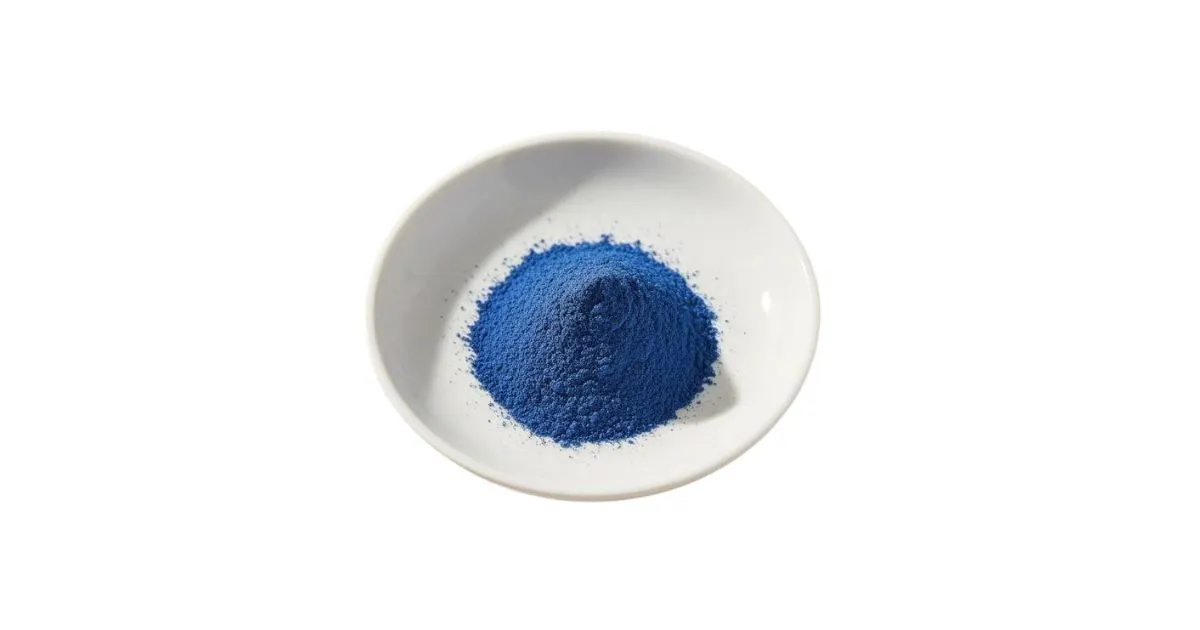
Gardenia blue powder is a plant-derived blue colorant extracted from the fruit of Gardenia jasminoides Ellis. Produced through enzymatic biotransformation of geniposide an iridoid glycoside it delivers a stable, water-soluble blue pigment without synthetic chemicals. For procurement managers and formulation engineers, this natural colorant addresses a persistent industry gap: finding a blue pigment that holds up under heat and pH variation. This guide covers its composition, industrial applications, sourcing considerations, and formulation best practices to support your next purchasing decision.
Understanding Gardenia Blue Powder: Composition and Extraction
Chemical Composition
Genipin is made when β-glucosidase breaks down geniposide. Amino acids then join with genipin to form the blue chromophore. The color is very steady since it is made up of iridoid molecules. It turns out to be a light gray to deep blue powder that can be mixed with water and aqueous ethanol. But most organic solvents can't break it down.
Extraction and Purification Process
HPLC has checked the process of getting the blue color from Yangge's gardenia fruit that has been dried. First, enzymes change the color. Then, it is filtered, concentrated, and sprayed dry to make a fine, even blue powder. That is why every batch is checked for color value (E value), ash content, moisture, and microbial load before it is sold. Gardenia blue powder comes from the fruit of the Gardenia jasminoides plant and looks like fine blue powder. It has E values of 30, 60, 80, 100, and 200 and can be dissolved in water or aqueous ethanol. It was extracted using HPLC and has ISO, HACCP, Kosher, and Halal certifications. It is currently in stock.
Quality Specifications at a Glance
| Specification | Detail |
|---|---|
| Product Name | Gardenia Blue Powder |
| Source | Gardenia jasminoides Fruit |
| Appearance | Blue fine powder |
| Specifications (E value) | E30, E60, E80, E100, E200 |
| Solubility | Water, aqueous ethanol |
| Extraction Method | HPLC |
| Certifications | ISO, HACCP, Kosher, Halal |
| Availability | In stock |
This standard way of making things stops color differences from batch to batch. This is one of the main issues formulation engineers have when they need to find natural blue colors.

Applications and Benefits of Gardenia Blue Powder in B2B Industries
There aren't many blues left in nature. Most of the time, spirulina extract can't handle heat well, and fake FD&C Blue No. 1 is getting more and more attention from regulators in some places. Gardenia blue powder fills this need because it has a performance profile that works in many different types of products.
This color is useful in many areas because it can be used to:
- Confectionery and desserts: The powder disperses evenly in sugar-based systems, coating pans, and gel matrices. Its stability above 100°C means it survives hard candy processing without significant hue drift.
- Alcoholic and non-alcoholic beverages: At pH 4.0 and above, color tone remains consistent across the shelf life of a bottled product. Spirits, ready-to-drink cocktails, and flavored waters benefit from its clean dissolution profile.
- Jams and fruit preserves: High-temperature filling lines (85–95°C) are standard in jam production. Gardenia blue maintains acceptable color performance across these conditions, where spirulina would degrade rapidly.
- Cosmetics and personal care: As a non-toxic, plant-based colorant, it suits lip-safe formulations, bath products, and eye-area cosmetics where clean-label positioning is a market requirement.\

Comparing Gardenia Blue Powder with Alternative Blue Pigments
To pick the best natural blue colorant, you need to directly compare how well they work. The table below shows the three most popular options for business buyers:
| Property | Gardenia Blue Powder | Spirulina (Phycocyanin) | FD&C Blue No. 1 |
|---|---|---|---|
| Source | Gardenia fruit | Algae (protein-based) | Synthetic |
| Heat Stability | Stable above 100°C | Degrades above 60°C | Stable |
| pH Stability | Stable at pH 4.0+ | Unstable in acid | Stable |
| Clean Label | Yes | Yes | No |
| Water Solubility | High | High | High |
| Regulatory Status | Approved in key Asian markets | Broad approval | Restricted in some EU categories |
If you look at natural substances, spirulina blue is the most similar. However, its protein structure starts to break down at 60°C, which is higher than the temperatures used to make candy, pasteurize drinks, and bake things. People and government officials are putting more pressure on companies to make clean-label goods, even though synthetic choices like Brilliant Blue are stable.
Gardenia blue has a good image with officials in China, Japan, and South Korea for buying workers who want to buy things for the Asian market. This is different from other places where spirulina approval for some food types is still less common.

How to Source and Procure Gardenia Blue Powder for Your Business?
Evaluating Supplier Credentials
Anyone who sells gardenia blue powder that you can trust should at least have ISO and HACCP certifications. It's important for food companies that sell their goods all over the world to have Kosher and Halal certification. Get a Technical Data Sheet (TDS) and a Certificate of Analysis (COA) for each standard you want to test. You can get a TDS for E80 from Yangge (TDS-Gardenia blue E80.pdf) as a starting point.
Understanding the Procurement Timeline
In order to buy something from another business, most people follow a five-step process: they look at the E value and matrix compatibility, ask for examples, try the reliability, place a trial order, and then move on to mass production. Most of the time, this cycle lasts between three and eight weeks. The E30 and E60 values are for light applications and pastel tones. They are the entry level for price sensitivity. The E80 value is for balanced performance and is the most common. It is in the middle and offers the best volume value. The E100 and E200 values are for deep color and need less dosage. They have a higher upfront cost but a lower per-unit cost.
MOQ and Pricing Strategy
| E Value | Typical Use Case | Price Sensitivity |
|---|---|---|
| E30 / E60 | Light applications, pastel tones | Lower cost entry point |
| E80 | Balanced performance, most common | Mid-range, best volume value |
| E100 / E200 | Deep color, reduced dosage needed | Higher upfront, lower per-unit cost |
For smaller R&D teams, E80 samples can meet most of their recipe needs until they are ready to place big orders at E100 or E200 grades.
Storage and Handling
The powder can hold water. Keep it below 25°C in a cool, dry place in packaging that can't get wet. When you open a bag, you should close it right away. If food clumps, it doesn't mean it's going bad, but it does change how the color is distributed. If you store food the right way, it will last longer and keep its color.

Best Practices and Guidelines for Using Gardenia Blue Powder
Dosage and Dispersion
Mix the powder with a little warm water (40–60°C) before adding it to the batch. As you go through this step, the color is spread out evenly and the particles don't stick together. With different kinds of goods, you need to use them in different amounts. Taking the goal E value into account, 0.01 to 0.1% is suggested for drinks and 0.05 to 0.3% for candy and cosmetics, among other things.
pH Management
It stays the same over a wider pH range than most natural blues. But if you mix it with colors that have a pH below 3.0, the color might slightly change to a greenish-blue tint. It saves time and work to check the pH of the finished product early on in the development process.
Regulatory Compliance
Before you finish the specs, make sure you know which colorants your target market will accept. China, Japan, and South Korea have all said they like the color. People in the EU and the US may treat it as a natural product, but this isn't always the case. Always check with the food safety body in your area before putting your food on the market.
Conclusion
Gardenia blue powder is a good natural colorant because it is stable at high temperatures, works well with a variety of pH levels, and can be used safely on labels. On a big scale, these are some of the best natural colorants that you can find. Any buying team that works with sweets, drinks, cosmetics, or functional foods can make this choice because it makes sense from a technical and financial point of view. It is even cheaper to make green-shade recipes because they are made with gardenia yellow. Get the right E-value grade for your use. This is the first and most important step, no matter where you are in the formulation process or how big you want to go.
FAQ
Is gardenia blue powder safe for food applications?
Yes. It is a non-toxic, plant-based colorant derived from gardenia fruit. It contains no artificial additives and is GMO-free and gluten-free. It has approved food colorant status in multiple Asian markets and is widely used in confectionery, beverages, and jams.
How does it compare to spirulina blue in heat stability?
Gardenia blue maintains its hue at temperatures exceeding 100°C. Spirulina-derived phycocyanin begins to degrade above 60°C due to protein denaturation. For hot-process food applications, gardenia blue performs significantly more reliably.
What E value should I request for sampling?
E80 is the most practical starting point. It covers the broadest range of food and beverage applications and gives formulation engineers a reliable baseline before deciding whether to step up to E100 or E200 for deeper color targets.
Does it affect product flavor?
At standard dosage levels, gardenia blue is organoleptically neutral. It does not alter the taste or aroma of finished food or beverage products.
What certifications should I require from a supplier?
At minimum: ISO, HACCP, and a COA with batch-specific E value results. Kosher and Halal certification adds value for exporters. Request TDS documentation for the specific grade you are evaluating.
Request Samples from Yangge Gardenia Blue Powder Supplier
There are five different kinds of gardenia blue powder in stock at Yangge Biotech. They are priced from E30 to E200. They are all ready to send out samples. We are an ISO, HACCP, Kosher, and Halal-certified company that makes gardenia blue powder. We can help you with the whole process, from the test batch to the mass production. Email info@yanggebiotech.com with your unique wants or to ask for a sample. You can also read more about our natural colorant products.
References
1. Buchweitz, M. (2016). Colour Measurement of Foods. Woodhead Publishing.
2. Downham, A., & Collins, P. (2000). Colouring our foods in the last and next millennium. International Journal of Food Science & Technology, 35(1), 5–22.
3. Houghton, J. D., & Hendry, G. A. F. (Eds.). (1996). Natural Food Colorants (2nd ed.). Blackie Academic & Professional.
4. Kobayashi, N., & Ichino, T. (2002). Isolation and characterization of blue pigments from gardenia fruit. Phytochemistry, 60(3), 253–260.
5. Mortensen, A. (2006). Carotenoids and other pigments as natural colorants. Pure and Applied Chemistry, 78(8), 1477–1491.
6. Shi, Z., Lin, M., & Francis, F. J. (1992). Stability of anthocyanins from Tradescantia and gardenia pigments in model food systems. Journal of Food Science, 57(3), 761–763.

Based on your location and order quantity, you will have the opportunity to receive a limited time free shipping promotion!
Who we are
Popular Blogs