FDA Blue Spirulina vs Regular: Which Powder Should Buyers Import?
If you source ingredients for dietary supplements, functional foods, or beverages sold in the United States, this question matters more than most. FDA blue spirulina specifically phycocyanin extracted from Arthrospira platensis holds a distinct regulatory position compared to regular whole-cell spirulina powder.
The FDA recognizes phycocyanin-based blue spirulina as the only natural blue pigment approved for use in food under specific conditions, making it the safer procurement choice for US market entry. This article breaks down what separates the two, what documentation you actually need, and how to source confidently. Contact us or you can email us at info@yanggebiotech.com or go to blog.yanggebiotech.com to ask for samples and your full compliance document package.

Understanding FDA Blue Spirulina and Regular Spirulina
What Is Blue Spirulina, Exactly?
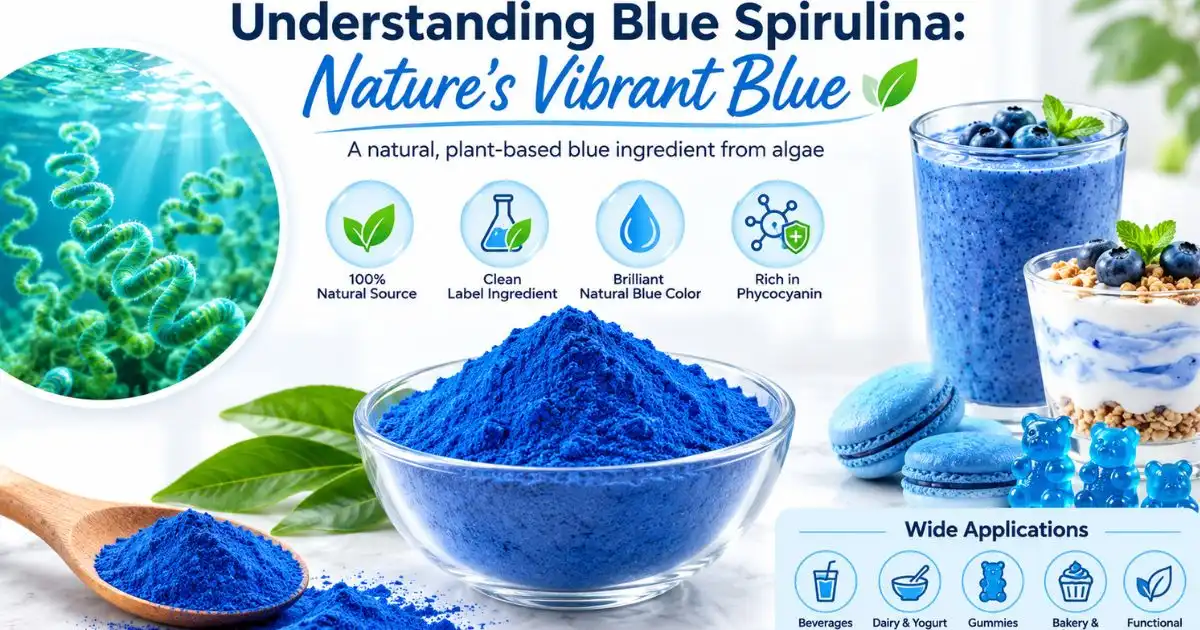
The green powder that most people think of is not the same as blue spirulina. It is the separated phycocyanin pigment-protein complex that was taken from spirulina algae using techniques like HPLC. The end result is a fine, blue powder that dissolves in water and has a protein content of 25% to 70%.
It doesn't taste fishy. Yangge Biotech's phycocyanin, for instance, is completely water-soluble, extracted using HPLC, and comes in color grades E10, E18, and E25. Each grade has a different concentration of phycocyanin that is best for a different product use.
What Is Regular Spirulina?
As a rule, regular spirulina is made from dried algae that is mostly green because of chlorophyll. It has more nutrients than other foods, but it still has a unique taste that keeps it from being used in consumer goods. It is easy to find all over the world, but in the US, it is not allowed to be used as a food colorant. Regular spirulina is mostly sold as an ingredient in food supplements, not as a natural colorant.
Key Differences Impacting Procurement Decisions
Quality Assurance and Risk Management
If you choose phycocyanin-based blue spirulina over synthetic alternatives or green spirulina that hasn't been tested, you lower two big risks: FDA failure to import and penalties for mislabeling. The FDA's import alert database shows that spirulina products that failed heavy metal or microbe tests have been held multiple times. Lead levels should be below 0.5 parts per million (ppm) and arsenic levels should be below 1 ppm, which are both levels that are in line with California Prop 65 standards for the US market.
Product Format and Application Fit
Blue spirulina and normal spirulina are used for different purposes in formulations. Here is a useful reference to help you decide where to source:
- Blue spirulina powder (E10/E18/E25): Best for beverages, gummies, protein powders, ice cream, and confectionery where color impact and water solubility matter. E18 is the most common commercial grade; E25 delivers deeper color at lower usage rates; E10 suits cost-sensitive applications.
- Regular spirulina powder: Better suited for capsule and tablet formats where color is secondary and the full nutrient profile including chlorophyll and carotenoids is the selling point.
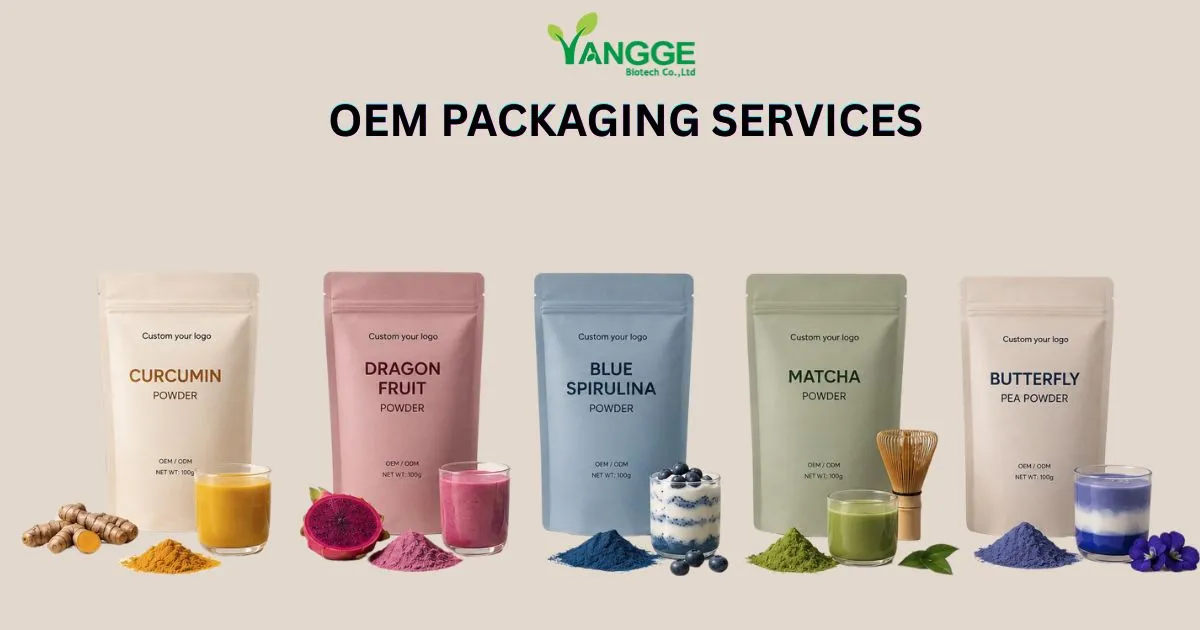
- OEM formats: Both can be processed into capsules, tablets, or custom powder blends. Yangge Biotech supports OEM bagging in 60g, 100g, and 8oz formats, with MOQ starting at 25 kg.
OEM file types: You can turn FDA blue spirulina into capsules, tablets, or your own unique powder mixes. Yangge Biotech can bag OEM items in 60g, 100g, and 8oz sizes, and the minimum order quantity (MOQ) is 25 kg.
Pricing and Supply Chain Realities
Blue spirulina costs more than regular spirulina because it needs to be grown and then processed in more steps to get the phycocyanin out. That price is worth it for colorant uses where natural blue options like butterfly pea flower and gardenia can't compare to phycocyanin's stability or protein content. Yangge keeps 1 ton of KOSHER/USP-grade stock in E10, E18, and E25 grades. This cuts down on lead times for buyers setting up a supply chain in the US.
Comparing Supplier Standards: What to Look for in an FDA-Compliant Source
Certifications That Actually Matter
Not all suppliers who say they are "FDA compliant" have the paperwork to prove it. Here is a basic paper list for blue spirulina shipments going to the US:
COA (Certificate of Analysis): Every shipment contains information on the purity and potency of each batch; MSDS/SDS: Safety handling information; Customs clearance; Third-Party Heavy Metal Test: Lead, arsenic, mercury, and cadmium are tested for compliance with US import laws; Microbial Test Report: Total plate count, E. coli, and Salmonella are tested for compliance with FSMA laws; KOSHER/HALAL Certificate: Market access and labeling for specialty channels; FDA Facility Registration Number: This number confirms that the food facility is registered with the US government;
| Document | Purpose | Required For |
|---|---|---|
| COA (Certificate of Analysis) | Batch-level purity and potency data | Every shipment |
| MSDS / SDS | Safety handling information | Customs clearance |
| Third-Party Heavy Metal Test | Lead, arsenic, mercury, cadmium | US import compliance |
| Microbial Test Report | Total plate count, E. coli, Salmonella | FSMA compliance |
| KOSHER / HALAL Certificate | Market access and labeling | Specialty channels |
| FDA Facility Registration Number | Verifies registered food facility | US import requirement |
The production of FDA blue spirulina at Yangge Biotech is GMP-compliant and has ISO, HACCP, KOSHER, and HALAL approvals. These aren't just badges for marketing; they're the standard that keeps shipments from being held at US ports of entry.
OEM and Private Label Capability
As important as the quality of the raw materials is for brands that are making their own products, how well the supplier can support OEM and private label production is also important. Yangge can make superfood powders, pills, tablets, and sweets for you as an OEM customer. This cuts down on the number of supply chain partners you need to keep track of and keeps all of your paperwork in one place for each supplier.
Organic vs. Non-Organic Considerations
Blue spirulina that is certified organic costs 20% to 40% more and needs USDA NOP-compliant paperwork from the supplier. If the people you want to buy from you care a lot about organic labels, make sure the supplier has a valid organic certificate that can be traced back to the source of the plants. Yangge sells regular phycocyanin that can be tracked from the farm to the production facility. People who want to buy organic choices should ask for proof before taking a sample.

Importing Blue Spirulina Into the US: A Practical Checklist
Documentation Before You Place an Order
When it comes to accepting a new seller, regulatory affairs managers and quality assurance teams often have the most say. Before placing your first order, make sure that any blue spirulina supplier can do the following:
- Valid FDA facility registration (renewed every two years under FSMA)
- Third-party testing completed by an accredited US lab (SGS, Eurofins, or equivalent)
- Complete COA with phycocyanin assay, protein content, heavy metals, and microbial results
- MSDS and specification sheet formatted to US standards
- Clear Incoterms and HS code classification (HS 2102.20 for spirulina; verify with your customs broker)
Customs Clearance Tips
The FDA and US Customs and Border Protection (CBP) work together to check food ingredients including FDA blue spirulina that are brought into the country. If a shipment is sent through the FDA's Prior Notice system without prior notice, it may be held. Before every shipment, make sure your seller files or helps with Prior Notice. One of the most common reasons for detention is products that don't have full labels or don't say what additives they contain.

Making the Right Choice: Which Spirulina Powder Should You Import?
The answer relies on the type of goods you have and how you handle compliance. Phycocyanin-based blue spirulina is the right ingredient if you make colored drinks, functional gummies, or high-end supplements that need to look good and have clean labels. It has clear FDA colorant approval, works better in formulations, and backs up the natural ingredient claims your buyers expect.
Regular spirulina is still a cheap and well-known ingredient that can be used in plain-label spirulina capsules or tablets that are aimed at a wide range of wellness markets. It's important to make sure that the supplier paperwork for any form you import is full, checked by a third party, and made to stand up to scrutiny in the US market.

Conclusion
For people in the US, choosing between FDA blue spirulina and regular spirulina isn't just a matter of nutrition; it's mostly a matter of regulations and formulation. According to FDA rules, blue spirulina that is high in phycocyanin has a clear advantage for use as a colorant. Regular spirulina is still good for supplement forms where its full range of nutrients is what matters most.
In either case, the quality of the paperwork from the supplier will decide whether your import goes through quickly or gets stuck at the port. Before you approve a new source, make sure it has full testing records, verified certifications, and a supplier that knows how to meet US labeling requirements.
FAQ
Is blue spirulina actually FDA approved?
The FDA approved phycocyanin extracted from Spirulina platensis as a color additive for specific food categories under 21 CFR 73.530. This applies to the colorant use of phycocyanin, not to every product containing spirulina. Buyers should not conflate "FDA-registered facility" with "FDA-approved ingredient" these are separate designations with different implications for labeling.
What documents should I request from a blue spirulina supplier?
Request a current COA, third-party heavy metal and microbial test results, FDA facility registration confirmation, MSDS, and any relevant certifications (KOSHER, HALAL, ISO, HACCP). For US imports, also confirm the supplier's ability to support FDA Prior Notice filing.
What is the difference between E10, E18, and E25 grades?
These grades refer to the color value (absorbance) of the phycocyanin powder. E18 is the standard commercial grade. E25 has higher phycocyanin concentration and delivers stronger color at lower usage rates. E10 is suitable for price-sensitive formulations where deep blue intensity is less critical.
What is the minimum order quantity for bulk procurement?
Yangge Biotech's MOQ for blue spirulina phycocyanin is 25 kg, with 1 ton of KOSHER/USP-grade stock available across E10, E18, and E25 specifications.
Source Compliant Blue Spirulina Through Yangge Request Your Document Package Today
Your FDA blue spirulina comes from Yangge Biotech, which has verified KOSHER, HALAL, ISO, and HACCP certifications. HPLC was used to get our phycocyanin (E10, E18, E25), it dissolves completely in water, and we have full third-party testing documents ready for US customs review. You can be sure that brands can enter the US market with us because we have 1 ton in stock and offer full OEM support for powders, capsules, tablets, and gummies.Contact us or you can email us at info@yanggebiotech.com or go to blog.yanggebiotech.com to ask for samples and your full compliance document package.
References
1. U.S. Food and Drug Administration. Color Additives Permitted for Direct Addition to Food for Human Consumption: Spirulina Extract (21 CFR 73.530). FDA, 2013.
2. Eriksen, N.T. "Production of Phycocyanin—A Pigment with Applications in Biology, Biotechnology, Foods, and Medicine." Applied Microbiology and Biotechnology, 2008.
3. Soni, B., Trivedi, U., & Madamwar, D. "A Novel Method of Single Step Hydrophobic Interaction Chromatography for the Purification of Phycocyanin from Phormidium fragile and Its Characterization." Bioresource Technology, 2008.
4. U.S. Food and Drug Administration. Food Safety Modernization Act (FSMA): Foreign Supplier Verification Programs (FSVP). FDA, 2017.
5. Batista, A.P., Gouveia, L., Bandarra, N.M., Franco, J.M., & Raymundo, A. "Comparison of Microalgal Biomass Profiles as Novel Functional Ingredient for Food Products." Algal Research, 2013.
6. Karkos, P.D., Leong, S.C., Karkos, C.D., Sivaji, N., & Assimakopoulos, D.A. "Spirulina in Clinical Practice: Evidence-Based Human Applications." Evidence-Based Complementary and Alternative Medicine, 2011.

Based on your location and order quantity, you will have the opportunity to receive a limited time free shipping promotion!
Who we are
Popular Blogs