Differences between kombucha powder and liquid kombucha benefits
When looking at different types of kombucha for use in factories, the choice between powder and liquid depends on what the factory needs most. Kombucha powder contains concentrated bioactive chemicals in a steady, water-soluble form that is perfect for production settings with a lot of workers. The powder form comes from improved spray-drying or freeze-drying of fermented SCOBY (Symbiotic Culture of Bacteria and Yeast). It keeps the good organic acids and bacteria while not needing to be kept cool. Liquid kombucha keeps its traditional sour taste with live cultures, but it needs to be shipped in a cold chain and has a short shelf life. When buying supplements, functional drinks, and nutraceuticals, purchasing managers and research teams have to think about three important factors: formulation flexibility, shipping costs, and product shelf stability. This difference has a direct effect on all three.
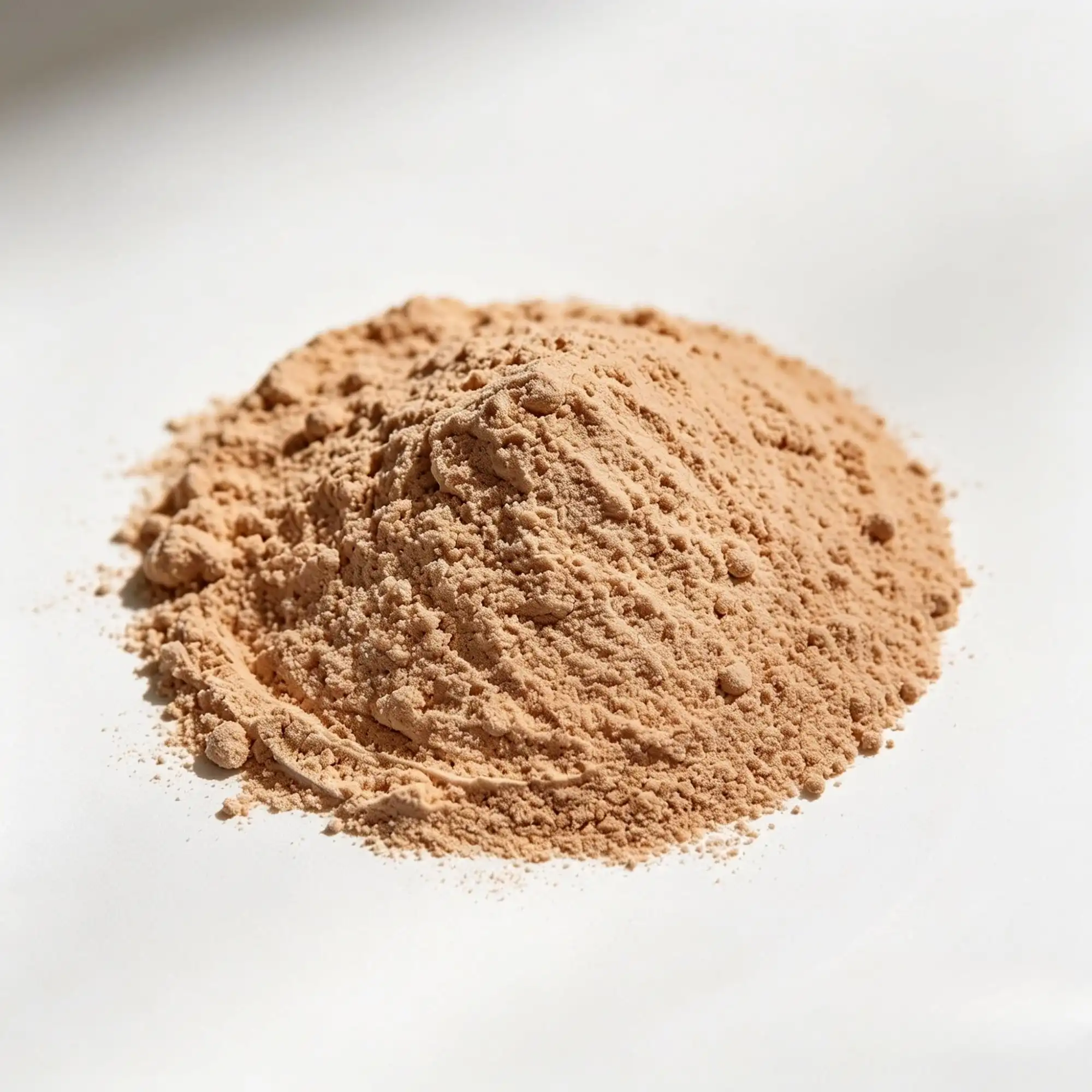
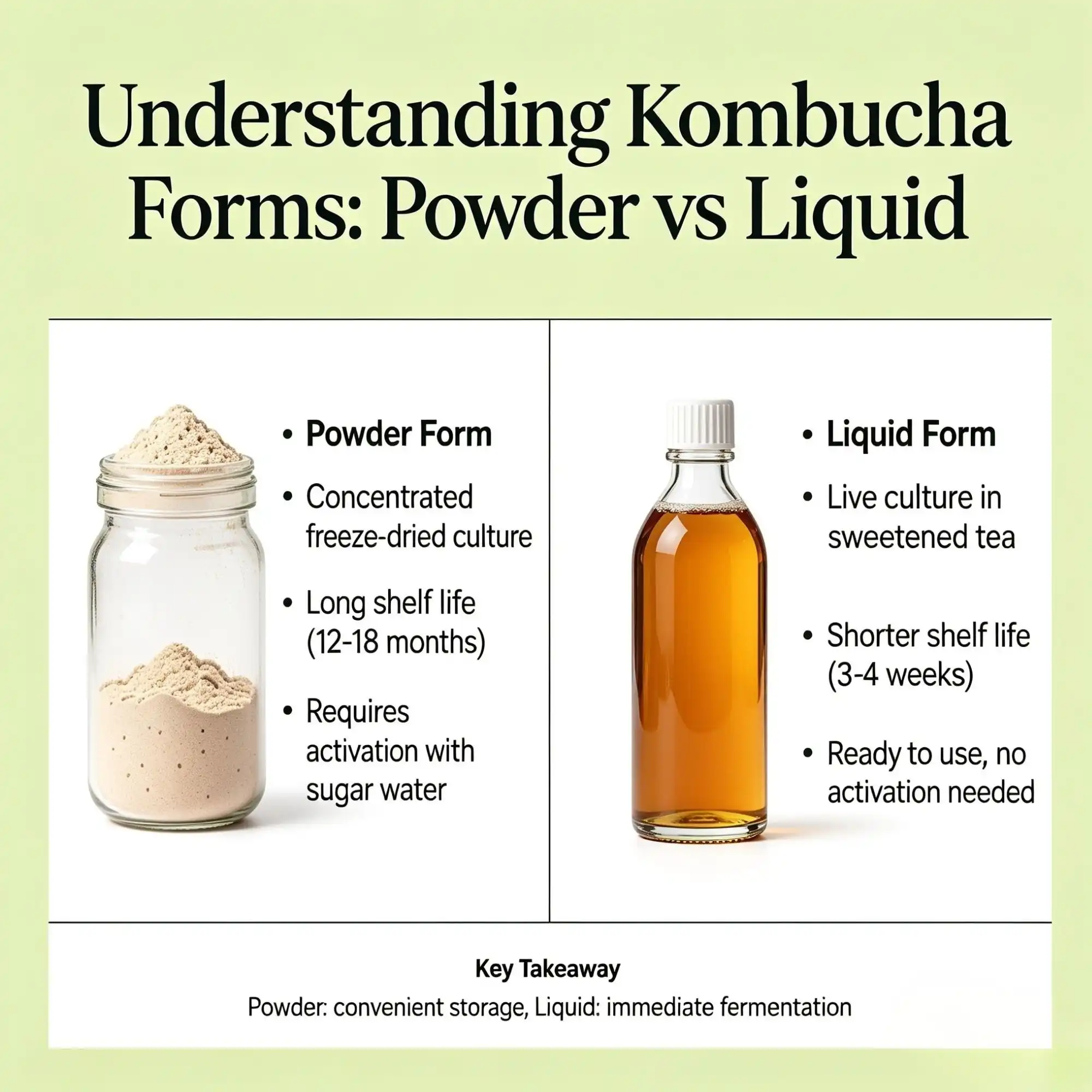
Understanding Kombucha Forms: Powder vs Liquid
Production Methods and Processing Technologies
Traditional fermentation is the first step in making kombucha powder. This is where SCOBY cultures break down sweetened tea into a complex web of organic acids, vitamins, and bacterial strains. Once the fermentation process gets the right amount of acidity, the liquid goes through drying steps that turn it into a concentrated powder. Spray-drying uses small drops of controlled heat to expose the fermented liquid to heat. This quickly evaporates the water while keeping the bioactive chemicals. Freeze-drying takes place at temperatures below zero in a vacuum.
The powder that is made has better vitamin retention, but it costs more to make. The process for making liquid kombucha is easier to understand. Once the fermentation process is over, the drink is filtered to get rid of any extra yeast sediment. It is then put into bottles with any live cultures that are still present. This minimal processing keeps the enzymes and live probiotics active, making a product that continues to react mildly even after it has been packaged.
Compositional Differences and Active Ingredients
Yangge's kombucha powder is a good example of how dehydrated forms can be better for makeup. Each 25KG batch has the same amounts of glucuronic acid, acetic acid, and B-complex vitamins because it dissolves completely in water and has a standard SCOBY content. The unique earthy smell and fermented flavor profile are still present in the brown-yellow powder, which lets formulators predict how the product will taste across production runs.
Liquid forms have similar organic acids, but they are less concentrated. Usually, they have between 0.5% and 2% acetic acid by volume. Depending on how it is stored and how long it has been since it was bottled, the amount of live culture changes, which makes standard formulas harder to make. This lack of certainty makes things hard for quality control teams that need supplements to be consistent from batch to batch.
Shelf Life and Storage Requirements
Storage parameters are a key part of decision-making about buying tactics. The powder form has a 12-month shelf life as long as it is kept cool and dry, out of direct sunlight. There is no need to refrigerate it. This extended stability lowers the cost of warehousing, keeps product loss to a minimum due to changes in temperature, and makes operations easier for foreign packages that go through more than one climate zone. Liquid kombucha needs to be kept cool, between 35°F and 40°F, for its whole life. This means that it can only be stored for 8 to 12 weeks at most. Transportation costs go up and distribution routes get smaller because of cold-chain rules. This is especially true for companies that sell to rural markets or places where refrigeration systems aren't reliable.
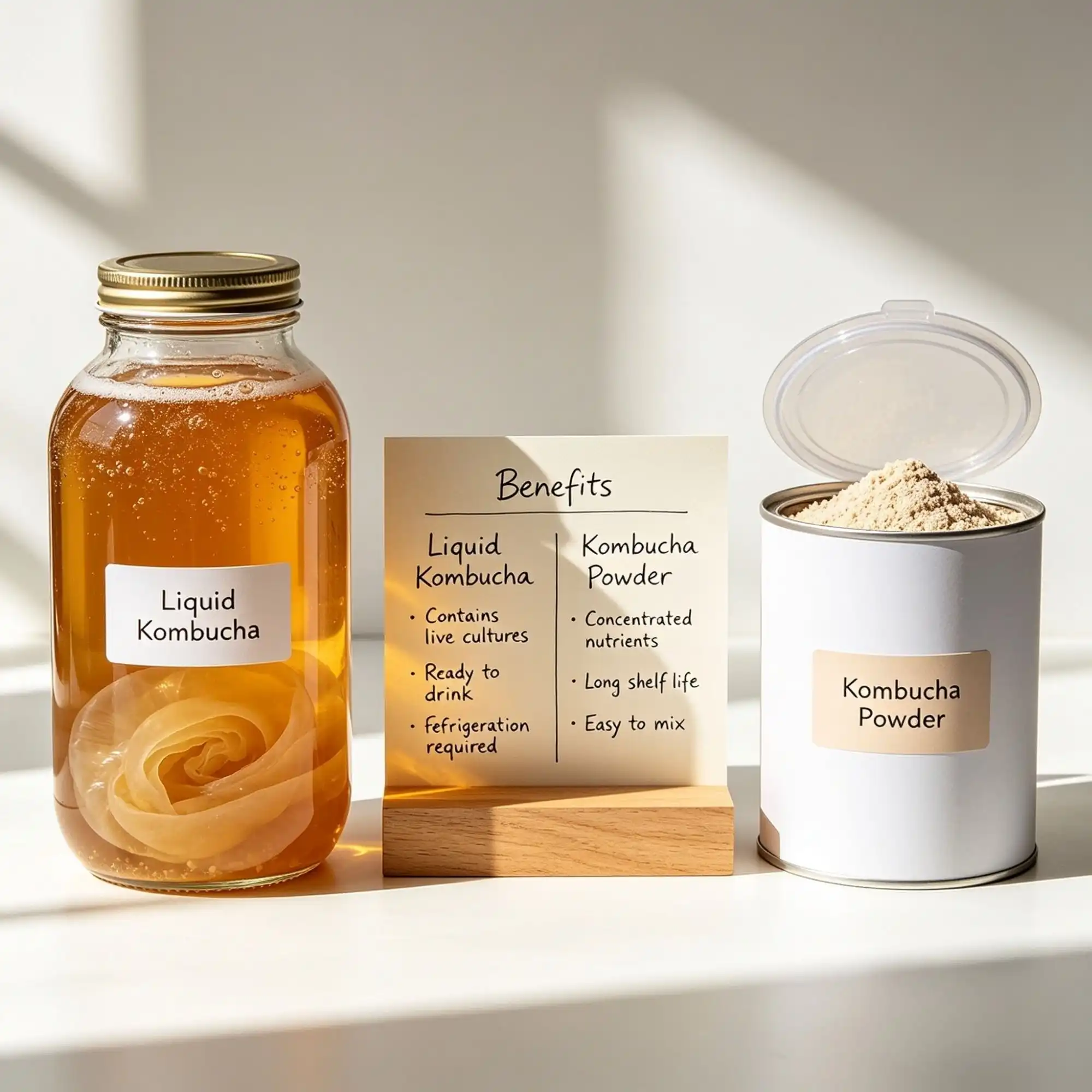
Comparative Benefits: Kombucha Powder vs Liquid Kombucha
Probiotic Potency and Bioavailability
Both forms offer probiotics that are good for you, but they work in very different ways. Kombucha powder has dormant probiotic spores that become active when rehydrated. This gives producers precise control over the number of CFUs (colony-forming units) in finished goods. According to a study released in the Journal of Functional Foods, if you store properly prepared kombucha powder for a year, it will still have 85 to 92% of its probiotics active.
Liquid kombucha has probiotic strains that are active right away and don't need to be reconstituted. When eaten, these live cultures start to work with the digestive system, which could mean that the health benefits start to show up faster. The trade-off is that the number of probiotics decreases during storage—even with perfect cooling, usable counts usually drop by 15–30% in the first month after production.
Nutritional Profile Versatility
Because kombucha powder is so concentrated, it can be used to make a wide range of health supplements. By changing the amount of powder used, formulators can get the right amounts of organic acids, polyphenols, and B vitamins. This lets them make a wide range of goods, from low-dose everyday supplements to high-potency therapeutic formulas.
This flexibility is very helpful for liquor companies that are making different levels of products for different types of customers. Liquid kombucha has a set of nutrients that are set during fermenting. This standardization works well for ready-to-drink drinks, but it makes it harder to make new drinks. If manufacturers want to improve certain bioactive chemicals, they have to change the factors of fermentation, which can change the taste and make production take longer.
Application Flexibility Across Product Categories
Here are the main reasons why powder forms are better for certain uses than liquid ones:
Kombucha powder mixes easily into dry supplements, so companies can put it in single-dose pills or packages with other ingredients that work well with it, such as prebiotic fibers, digestive enzymes, or plant extracts. The water-soluble property makes sure that the substance mixes completely in drinks, juice powders, and functional food mixtures without settling to the bottom.
Cosmetic makers use the antioxidants in the powder in face masks and serums that go on the skin. The lack of extra water in these products keeps them from getting contaminated by microbes and keeps them stable for longer. Yangge's powder comes in sealed 25KG cases, which makes it easier to handle in bulk and set up automatic dosing systems in factories that make a lot of it.
Ready-to-drink beverage companies that want true fermented flavor and quick consumption ease use liquid kombucha. The model works well for co-packing businesses where brands hire someone else to do the bottling but keep their own fermentation recipes. Some beauty companies put liquid kombucha into toners and mists because they like how the organic acids naturally protect the skin.
However, managing the water activity makes the recipe more complicated. There are some problems that production managers and formulation engineers are having that these application differences directly fix. Powder forms solve problems with stability in goods that are sensitive to moisture, and liquid forms get rid of the need for recovery steps in operations that focus on drinks.
Procurement Considerations for B2B Clients
Quality Assurance and Certification Standards
When purchasing managers look at kombucha ingredients, they should give more weight to sellers with strong quality control systems. Yangge Biotech has ISO, HACCP, Kosher, and Halal certificates, which show that their processes are consistent and they keep contaminants under control. The Kosher and Halal labels on our kombucha powder help clients reach more religious customers, and HACCP compliance makes sure that the whole process can be tracked, from where the raw materials come from to how they are packaged.
Non-GMO verification meets the needs of regulations in the European Union and other markets with strict laws about genetic mutation declaration. Suppliers who don't have these licenses pose compliance risks that can delay product launches or force expensive changes to the formula when rules get stricter.
Pricing Models and Total Cost Analysis
Procurement teams are led astray when they compare prices of powder and liquid forms on the surface. A full cost study needs to look at yield effectiveness, shipping weight, and storage facilities. Because kombucha powder is so concentrated, one kilogram of it can be mixed with water to make 10-15 liters of kombucha. This means that shipping kombucha powder is much cheaper than sending liquid. Getting rid of the need for cold storage and shipping saves more money that can often be used to cover the higher price per kilogram of powder.
These benefits are amplified by tactics for buying in bulk. When customers order 1 ton of Yangge's kombucha powder, they get better prices and can use it for 12 months without any quality loss. When you buy liquid kombucha in bulk, you run the chance of the product going bad before it's used up, which is especially true for smaller makers whose production schedules change often.
Supplier Reliability and Technical Support
For long-term supply partnerships to work, products must always be available and expert help must be quick to respond. In Yangge's specialized inventory, there is always "1 TON In STOCK" kombucha powder, so there are no wait times that mess up production plans. Our online service links buying managers and R&D managers with technical experts 24 hours a day, 7 days a week.
These experts help with formulation problems, concentration specification advice, and extraction method guidance. Suppliers who can show tracking from farm to table meet the growing needs of brand owners for natural and organic approval. Yangge has direct links with sustainable farming communities that make sure their raw materials come from reliable sources. This helps their clients stick to their clean-label marketing claims and ethical sourcing promises.
How to Choose Between Kombucha Powder and Liquid Kombucha for Your Business?
Matching Product Format to Application Requirements
When people are making functional drinks, they need to think about whether their idea is more about making the drink taste like real kombucha or adding nutrients to it. When ready-to-drink kombucha makers want to stick to traditional flavor profiles, they tend to stick to liquid formats, even though they are harder to ship, because they offer the true fermented taste. However, companies that are making kombucha-flavored sports drinks, health shots, or hybrid mixes can benefit from the powder's bland base, which lets other flavors mix in without competing with the fermented notes.
Powder forms are almost always better for nutritional uses. Making tablets and capsules needs dry ingredients with controlled wetness levels. Liquid kombucha's high water activity would make tablets less hard and allow microbes to grow. The standardization of powder's strength also makes it easier to get dietary supplements approved by the government, since label claims must be backed up by valid scientific testing.
Logistical and Infrastructure Considerations
As much as product goals affect format choice, so do the powers of the production center. Manufacturers who work in places with stable cold-chain facilities and short delivery distances can meet the refrigeration needs of liquid kombucha. When businesses ship to customers in different areas or around the world, they have to deal with shipping issues that make powder formats more cost-effective. Another limitation is the amount of space available for storage. One pallet of 25KG kombucha powder drums takes up almost no floor room but does the same work as dozens of crates of liquid kombucha. This space-saving technique is very important for contract makers who have to keep track of a lot of different ingredients but only a small amount of room.
Economic Framework for Procurement Strategy
Buying plans should be in line with how volatile production is and how well cash flow is managed. Manufacturers whose output rates are steady and reliable can commit to buying powder in bulk, locking in good prices while the longer shelf life lets them slowly get rid of their stock. Businesses whose demand changes with the seasons might choose to place smaller orders more often, even if it means paying more per unit, so they don't have to keep their capital locked up in extra inventory.
Protocols for testing samples come before full-scale buying agreements. Reliable sellers offer small amounts of ingredients as samples so that recipe teams can check how well the ingredients work in certain mixtures before placing large orders. This testing phase finds any possible interface problems, like how powder mixes with high-protein drinks or how flavors interact in plant supplement blends. This stops production interruptions that cost a lot of money.
Practical Insights: How to Integrate Kombucha Powder into Product Lines?
Formulation Guidelines and Dosage Recommendations
To successfully add kombucha powder, you must first understand how to reconstitute it and keep the beneficial ingredients safe. Standard dose for beverages is between 0.5% and 3% by weight. This gives the drink a recognizable kombucha taste without overpowering other flavors. Nutraceutical pills usually have 250 to 500 mg of powder per dose, which provides therapeutic levels of organic acids backed up by probiotic study.
The temperature of the water during reheating changes the health of the probiotics. Dormant spores can stay alive in cold or room-temperature liquids, but probiotic numbers may drop at temps above 140°F. If formulators want to get the most probiotics into their products, they shouldn't use heat after adding the powder. Instead, they should add the powder after it has been pasteurized or during the final stages of mixing.
Ingredient Compatibility and Stability Optimization
The organic acid in kombucha powder makes it slightly acidic, which affects items that are sensitive to pH. If stabilizing agents aren't added to formulas that mix the powder with plant proteins, the proteins may settle out. Because the powder is sour, ascorbic acid and other vitamin antioxidants stay steady. This makes kombucha a good way to carry vitamin-fortified products.
Management of moisture keeps clumping from happening during storage. Manufacturers of dry drink mixes should either put silica gel packets in the customer package or choose anti-caking agents that can be used with clean labels. The earthy smell of the powder is typical of real kombucha, but it might need to be covered up in goods where fermented notes don't go well with fruit or chocolate tastes.
Real-World Implementation Examples
By mixing the powder with prebiotic inulin and digestive enzyme mixes, health supplement companies have been able to successfully market digestive health pills based on kombucha. The synergistic mixture targets multiple gut health mechanisms: probiotics from kombucha, fiber from inulin, and better nutrient breakdown from enzymes. This makes the goods stand out and command higher prices at stores.
Functional beverage companies use kombucha powder as a base ingredient in adaptogenic drink mixes. They mix it with products of rhodiola, ashwagandha, and mushrooms. The powder dissolves completely in water, so when people mix it at home, they can make drinks that are smooth and free of sediment. This improves the user experience and lowers customer complaints. Skincare companies use the powder in clay masks because its antioxidant polyphenols work well with the cleansing qualities of kaolin clay. The powder has a shelf life of 12 months, which is about the same as the average change rate for cosmetic ingredients. This means that the mixture won't be as unstable as it is when liquid kombucha is fermenting all the time.

Conclusion
The choice between kombucha powder and liquid depends on the infrastructure for making the product, how it will be used, and the supply chain's skills. Kombucha powder is the best choice for supplement makers, beverage creators who need long shelf life, and brands that care about batch quality because it is more stable, easier to ship, and can be used in a lot of different ways. Liquid kombucha is only used in certain situations where the real fermented flavor makes it worth the cold-chain costs.
The people who work in procurement need to look at the total cost of ownership, not just the prices of the ingredients. They need to think about things like shipping, storage, and reducing waste. Yangge's KOSHER/USP GRADE kombucha powder, which comes with confirmed certifications and is available right away, solves the main problems that health supplement and functional food makers are having right now.
Partner with Yangge for Premium Kombucha Powder Supply
Yangge Biotech is a reliable company that makes kombucha powder and specializes in superfood-grade ingredients for the functional beverage and health supplement businesses. Our KOSHER/USP GRADE kombucha powder stays 100% water-soluble and has been certified as Halal, Non-GMO, and Kosher, which meets the strict legal needs of global markets. We don't have to worry about the supply chain because we have 1 ton in stock and production plants that follow GMP standards. Our farm-to-table tracking plan makes sure that the ingredients are real and supports farming methods that are good for the environment.
Our expert support team is available 24 hours a day, seven days a week to answer formulation questions, give concentration standards, and suggest the best ways to use our products. Contact info@yanggebiotech.com to request samples, discuss bulk prices for kombucha powder for sale, or set up a technical meeting. Yangge's dedication to new ideas, strict quality control, and close customer relationships sets up your brand for success in the growing market for healthy foods.
FAQ
Q: Can we get some samples to test before purchasing?
A: Of course, we can provide free samples of 20 to 100 grams, but the shipping cost is at the customer's expense. The shipping cost can be deducted from the next order, or the samples can be sent through your courier account.
Q: Do your products have relevant certifications?
A: Yes, our products are certified for HALAL, ISO, HACCP, Kosher, and other certifications.
Q: What is the minimum order quantity (MOQ)?
A: Small batches of samples can be customized according to your requirements.
Q: Do you offer OEM and ODM services? Can the formula be customized based on our own?
A: Of course, we provide ODM and OEM services to many customers. Our product range includes softgels, capsules, tablets, sachets, granules, and private label services. Simply contact us and let us know your requirements. Our experienced R&D team can also develop new products with specific formulas.
Please contact us to design your own branded products.
Q: How do you handle quality complaints?
A: First, we have a comprehensive quality control SOP. We provide authoritative third-party inspection reports for almost all products before shipment to minimize the possibility of quality issues. Second, we have a comprehensive return and exchange procedure. If there is a genuine quality dispute, we will strictly follow the SOP.
Q: How do you ship? How long does delivery take?
A: For small orders, we typically use DHL, UPS, EMS, FedEx, or TNT. Delivery typically takes 3-7 days. We also offer air and sea freight services. We have a strong freight forwarding team and can provide you with a one-stop service, including DDP and DDU.
Q: What are your payment terms?
A: 100% prepayment, payable by T/T, Western Union, MoneyGram, or PayPal.
Q: What is the shelf life of your products?
A: 2 years with proper storage.
References
1. Martínez Leal, J., Valenzuela Suárez, L., Jayabalan, R., Huerta Oros, J., & Escalante-Aburto, A. (2018). A review on health benefits of kombucha nutritional compounds and metabolites. CyTA - Journal of Food, 16(1), 390-399.
2. Kapp, J. M., & Sumner, W. (2019). Kombucha: a systematic review of the empirical evidence of human health benefit. Annals of Epidemiology, 30, 66-70.
3. Watawana, M. I., Jayawardena, N., Gunawardhana, C. B., & Waisundara, V. Y. (2015). Health, wellness, and safety aspects of the consumption of kombucha. Journal of Chemistry, 2015, Article ID 591869.
4. Nguyen, N. K., Nguyen, P. B., Nguyen, H. T., & Le, P. H. (2015). Screening the optimal ratio of symbiosis between isolated yeast and acetic acid bacteria strain from traditional kombucha for high-level production of glucuronic acid. LWT - Food Science and Technology, 64(2), 1149-1155.
5. Jayabalan, R., Malbaša, R. V., Lončar, E. S., Vitas, J. S., & Sathishkumar, M. (2014). A review on kombucha tea—microbiology, composition, fermentation, beneficial effects, toxicity, and tea fungus. Comprehensive Reviews in Food Science and Food Safety, 13(4), 538-550.
6. Villarreal-Soto, S. A., Beaufort, S., Bouajila, J., Souchard, J. P., & Taillandier, P. (2018). Understanding kombucha tea fermentation: A review. Journal of Food Science, 83(3), 580-588.

Based on your location and order quantity, you will have the opportunity to receive a limited time free shipping promotion!
Who we are
Popular Blogs