Complete Guide to Lion's Mane Extract Sourcing
It takes more than looking at prices on a business-to-business site to find high-quality Hericium erinaceus extract for your health supplement, functional food, or beauty formulations. Understanding the differences between different types of lion's mane mushroom powder, extraction methods, and supplier reliability becomes crucial for purchasing managers and R&D directors as regulations and customer standards for openness rise.
This detailed guide gives procurement workers useful information they can use to get high-purity, batch-consistent extracts that meet GMP standards while reducing costs and improving supply chain reliability. Whether you're making brain support pills or adding neuroprotective ingredients to drinks, the choices you make today will have a direct effect on how well your products work, how well they meet regulations, and how well they stand out in the market.
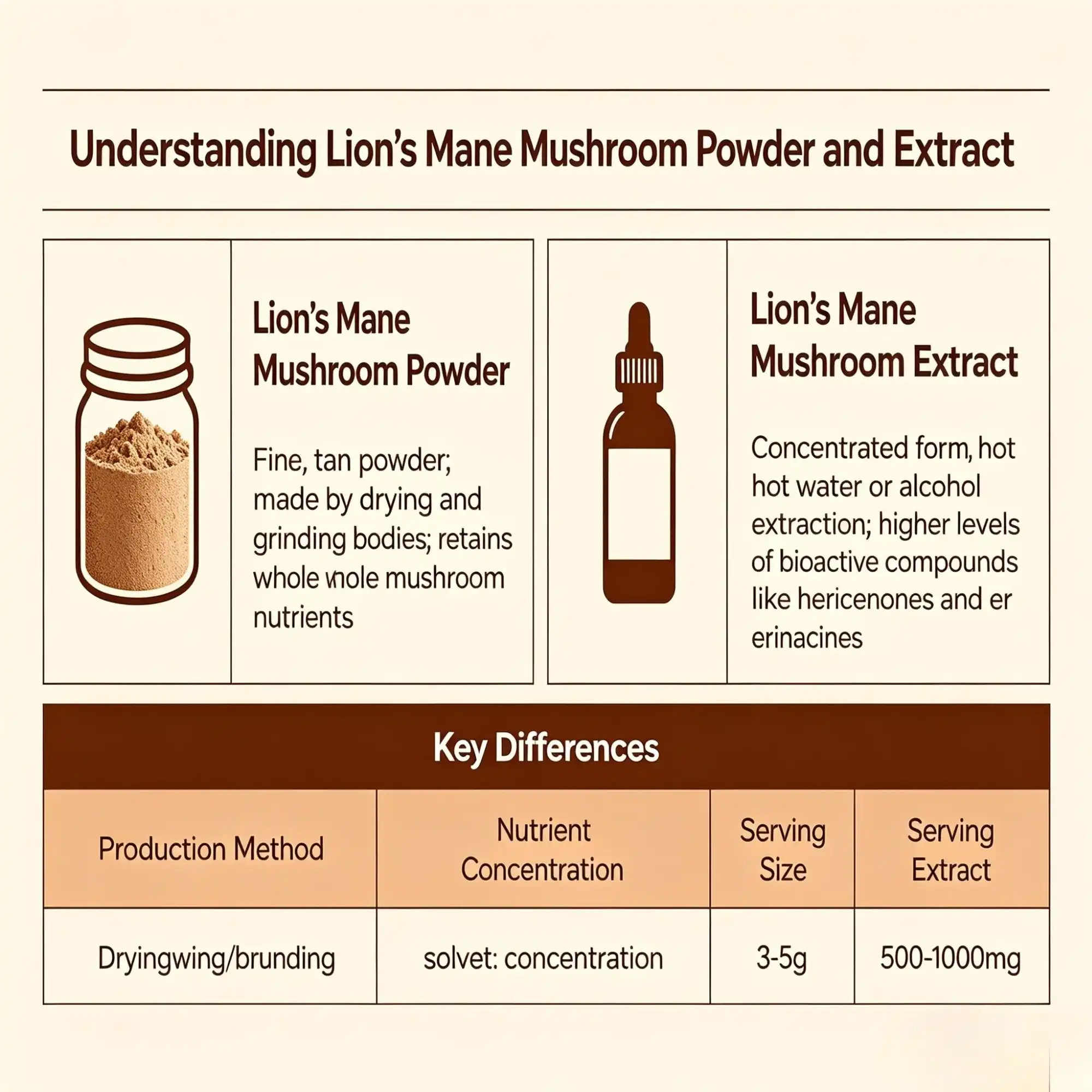
Understanding Lion's Mane Mushroom Powder and Extract
There are two types of useful ingredients on the market: full-spectrum biomass and concentrated fruiting body extracts of Hericium erinaceus. Each is used for a different purpose in preparation. Raw lion's mane mushroom powder usually has 20–30% polysaccharides and chitin cell walls that can't be digested and lower absorption. To get rid of these hurdles and separate bioactive chemicals, professional-grade extracts are heated in water or go through two extraction steps.
Differentiating Powder Forms and Extraction Ratios
Full-spectrum mycelium powder grown on grain surfaces has a problem that keeps coming up in the industry: grain filler dilution. The Megazyme K-YBGL method is used to test the beta-glucan content of high-quality fruiting body extracts. This method tells the difference between real beta-1,3/1,6-D-glucans and cheap maltodextrin or starch fillers. Extraction ratios between 10:1 and 30:1 show how concentrated something is, but ratios by themselves can't ensure effectiveness without assay data to back them up.
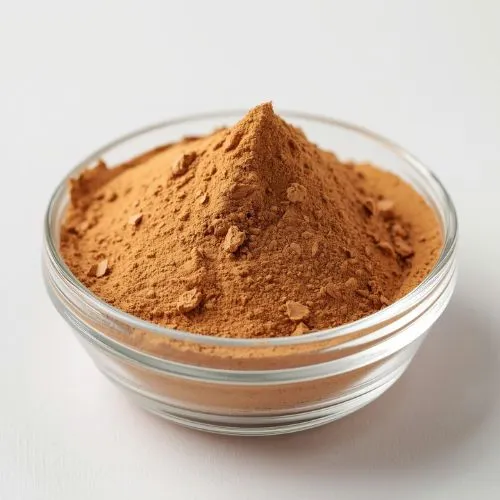
Teams in charge of buying things should give extra weight to sellers who offer testing for both total polysaccharides and specific beta-glucan amounts. The fine yellow-brown powder that comes from carefully chosen fruiting bodies has the right amount of hericenones, which are neuroprotective chemicals that have been linked in the lab to nerve growth factor stimulation.
Cognitive Function and Safety Profile Considerations
Peer-reviewed study shows that standardized Hericium erinaceus products improve brain function in two ways: they do this by promoting myelination and controlling neuroinflammatory pathways. Finished products usually come with dosage suggestions that run from 500 mg to 3000 mg per day, based on the level of standardization. The safety profile has stayed good across all clinical studies, with only a few mild stomach problems reported at high amounts.
Procurement experts need to make sure that sellers give full safety paperwork, which should include heavy metal testing using ICP-MS and herbicide screening that meets USP standards. Because mushrooms naturally take in harmful chemicals from the environment, tight rules on lead, arsenic, cadmium, and mercury must be met for products meant for the U.S. market.
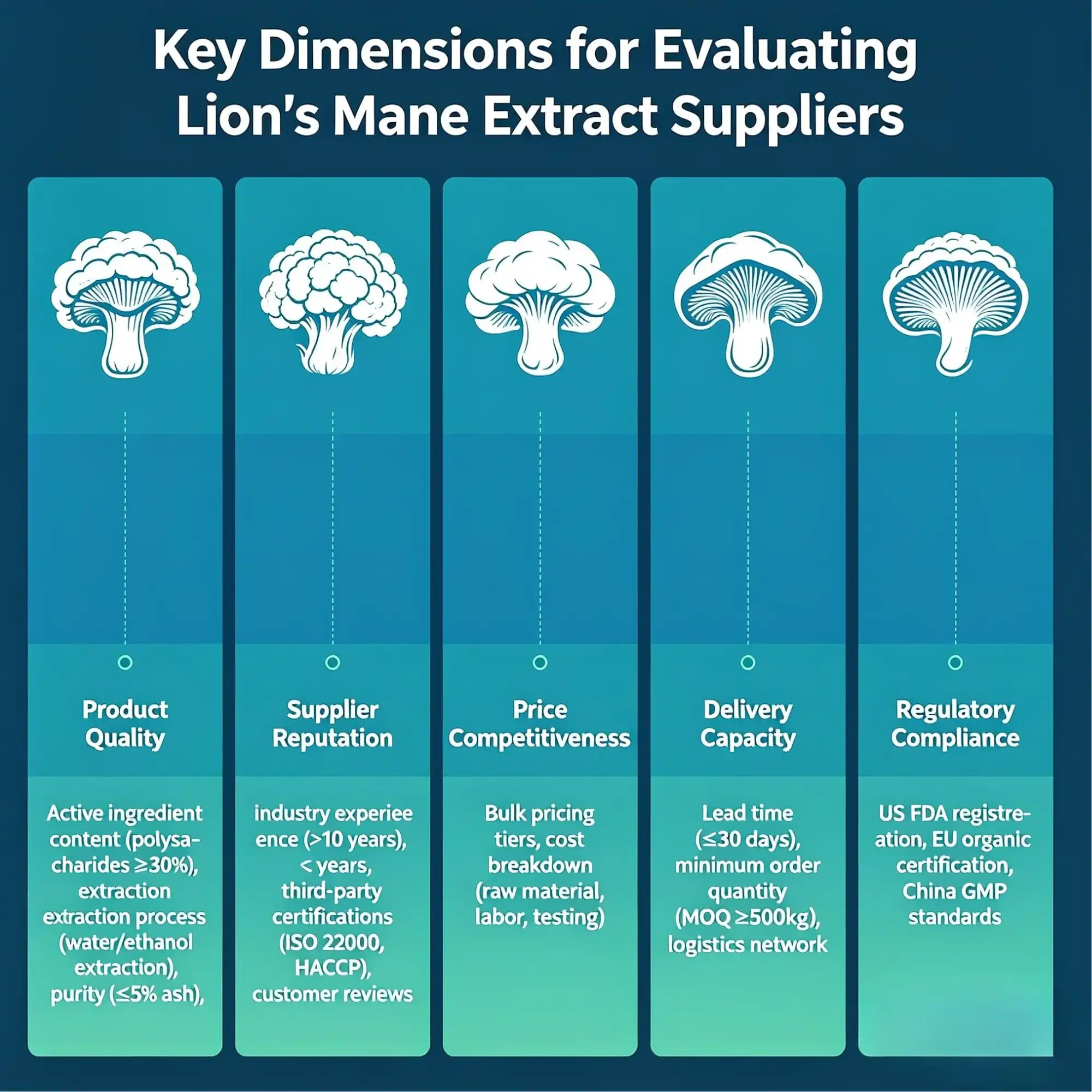
Key Dimensions for Evaluating Lion's Mane Extract Suppliers
When choosing a manufacturing partner, it's important to look at more than just the product specs. You should also look at their technical skills, quality processes, and how open their supply chain is. Vertical integration means that the most reliable providers handle everything from growing the plants to packaging them. This allows for tracking and batch stability, which is something that contract makers can't always promise.
Quality Parameters and Analytical Validation
Verification by a third-party lab is the most important part of trusting a seller. Certificates of Analysis should include HPTLC identity tests that prove the species is real, so cheaper mushroom types can't be used instead. For lion's mane mushroom powder, beta-glucan levels above 15–25% show that the extract is real, while alpha-glucan levels below 5% show that there is only minor starch contamination.
An ash level of less than 5% means that the extraction was clean and there was no extra inorganic residue, which is especially important for beverage uses that need clarity. Standardizing particle sizes between 60 and 80 mesh makes sure that capsule formulations blend evenly and that dissolution rates are reliable.
Certification Infrastructure and Regulatory Compliance
Companies that make things and have ISO 22000, HACCP, or GMP certifications show that they follow international standards for quality management. For the U.S. market, following FDA rules about food supplements and getting organic approval from the USDA or a similar organization gives you an edge over other companies. Verification of non-GMOs and documentation of allergen-free foods handle growing customer worries while making label claims easier to understand.
Suppliers with Kosher and Halal certifications make it easier for brands that want to reach a wide range of demographics to get into new markets. The promise to test for PAH4 compliance with European standards and keep benzopyrene levels below 10 ppb shows careful risk management that safeguards the brand's image.
Supply Chain Transparency and Audit Processes
Reliable sellers give proof of tracking from the farm to the factory, such as records of planting, times of harvest, and processing batch logs. Being ready for a site audit shows how mature your operations are. Suppliers should be happy to have their facilities inspected and keep written standard operating procedures. Having relationships with approved testing labs that can do retests adds another level of proof.
Sustainable buying practices are becoming more and more important in purchasing decisions. Manufacturers who are ahead of the curve have programs for green energy and community development that set them apart. Yangge Biotech's way of working together with farming communities shows how ethical sourcing produces value for everyone while making sure the quality of the raw materials stays the same.
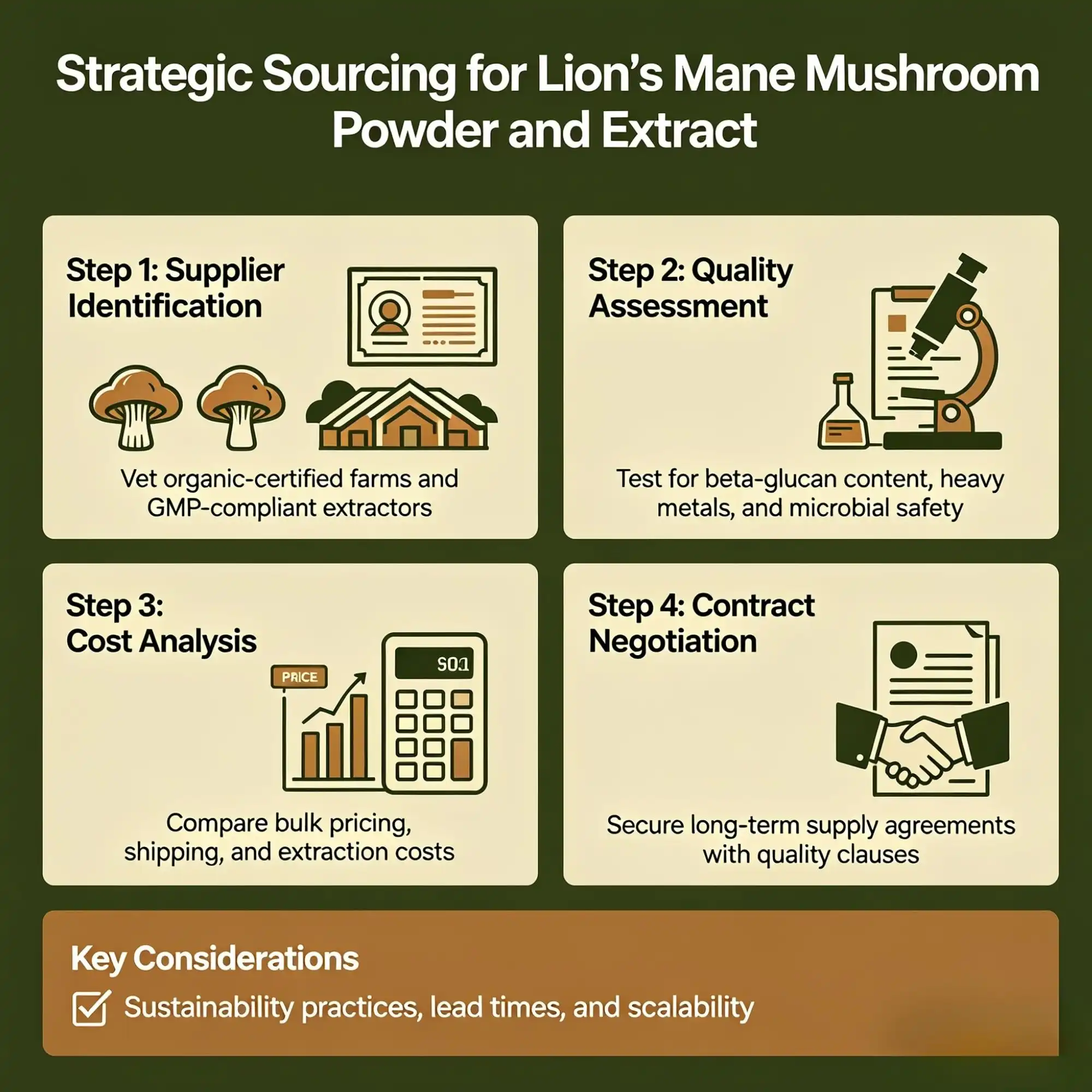
Strategic Sourcing for Lion's Mane Mushroom Powder and Extract
A good procurement strategy for lion's mane mushroom powder and extract combines the need for instant production with the need for long-term supply security. This is done by carefully looking at order quantities, product specs, and the supplier's abilities. The minimum order number of one kilogram allows for initial recipe tests, and the availability of 50–100 kilograms in stock makes it easy to adapt to changes in market demand.
Bulk Purchasing Versus Flexible Ordering
Setting up yearly supply deals that lock in prices and guarantee sharing during busy times is good for large supplement makers. OEM and ODM brand owners often need customized extract ratios. To avoid formulation mistakes, providers should offer customized standardization levels. Different production sizes can be handled by a variety of packing choices, ranging from one-kilogram aluminum foil bags to special bulk cases.
Storage standards define containers that are tightly closed and shielded from light. These are things that affect the cost of keeping and managing the shelf life of goods. To keep production from stopping too often, procurement teams should look at the logistics skills of suppliers, such as their ability to ship items at the right temperature and keep wait times consistent.
Product Format Selection Based on Application
When making supplements for brain health, companies usually choose controlled extracts over lion's mane mushroom powder or raw powder to make sure that the label claims are correct and that the right amount is given. To keep the mixture from settling, people who make drinks use water-soluble extracts with low ash content first. Extracts with higher polyphenol amounts are used in cosmetics that are meant to improve skin health because they are antioxidants. By knowing these application-specific needs, procurement workers can match product specs with performance standards for the end use, which saves money on costly reformulation processes.
Sustainable Sourcing and Organic Certification
As more people buy organic and sustainably grown foods, suppliers' environmental practices become a way to stand out in a competitive market. To meet organic guidelines, crops must be grown without using pesticides and processed without irradiation, which is something that not all providers can do. Yangge Biotech's successes in using green energy and getting praise for caring for the environment show how commitments to sustainability can lead to market benefits. Using these factors in procurement strategies helps companies stay ahead of legal changes and connect with environmentally conscious customers.
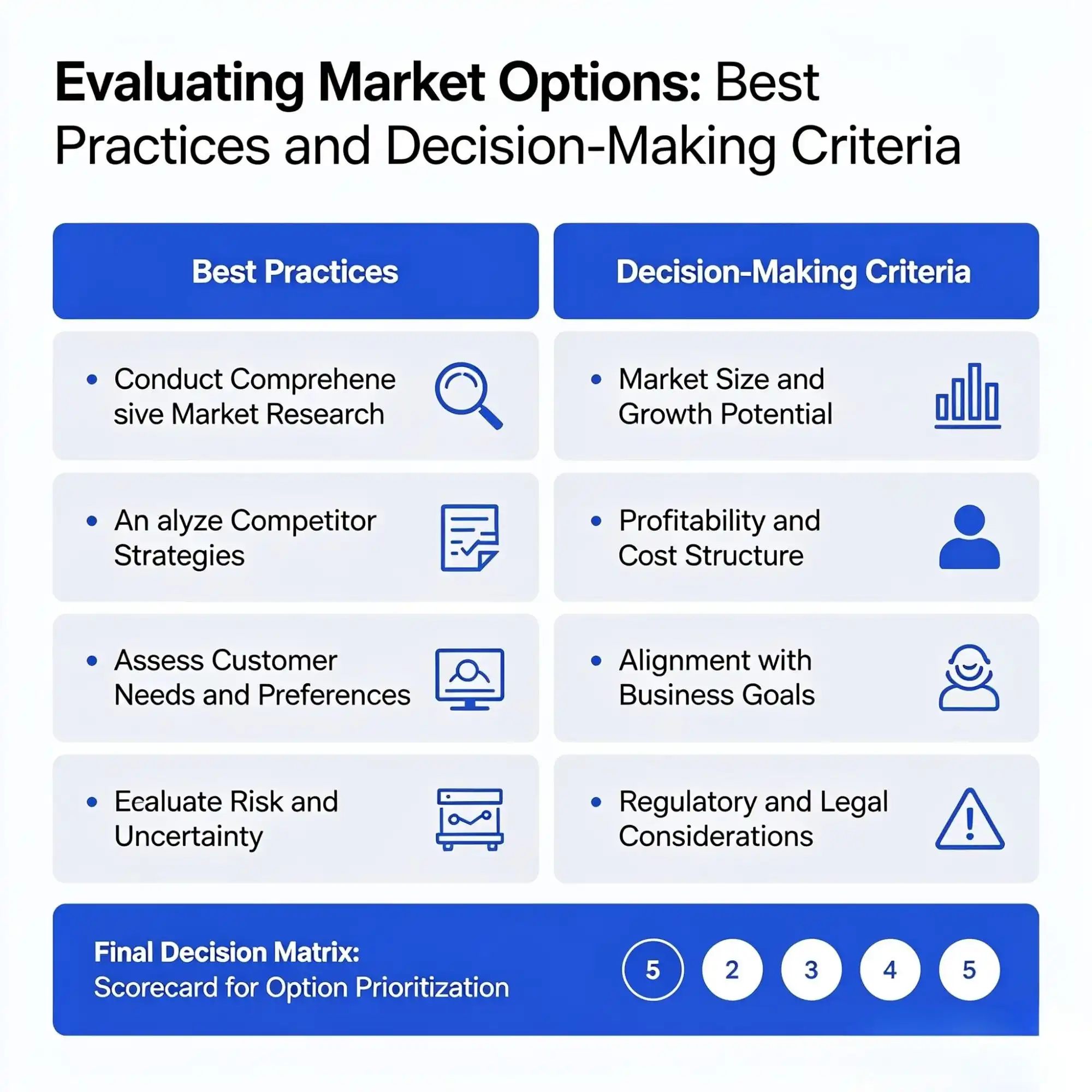
Evaluating Market Options: Best Practices and Decision-Making Criteria
Using structured evaluation frameworks, buying choices aren't just based on price comparisons; they also include other factors that show how well a partnership will work in the long run. Leading supplement companies use scorecard systems that give more weight to quality measures, certifications, technical support, and shipping dependability.
Criteria-Based Supplier Comparison
Creating a weighted evaluation grid helps all buying teams evaluate suppliers in the same way. Some important measures are the results of the beta-glucan assay, the compliance margins for heavy metals, the accuracy of the certification portfolio, and the ability to increase output capacity. The price per kilogram needs to be understood in the context of the extraction ratio and the level of purity. For example, a 30:1 extract that seems expensive may have a lower cost-per-dose than reduced options.
Responding quickly to the RFQ process is often a good indicator of how well the supplier will communicate in the future, and being willing to send samples for recipe testing shows that the supplier cares about the customer. Quality documentation, such as complete COAs and allergy statements, shortens the time it takes for regulators to review products and gets them on the market faster.
Segment-Specific Sourcing Strategies
Nutraceutical OEMs that want to make their products stand out look for suppliers that can offer new ways to remove compounds or standardize rare compounds. Pharmaceutical businesses care more about accurate paperwork and a full audit trail than about price. Functional food makers weigh the cost of ingredients against the draw of clean labels and the security of the formulation. When you choose a provider based on how your business works, you can be sure that your decisions will support larger strategic goals instead of just optimizing single factors.
Case Study Applications
A medium-sized supplement brand switched from using regular mushroom powder to using standardized extracts and teamed up with a source that could offer full technical support, such as absorption studies and formulation advice. This partnership cut the time it took to develop by six months and made it possible to charge more for products using clinical study as proof.
On the other hand, a beverage company chose a cheap source of lion's mane mushroom powder without checking the extraction methods. This led to cloudy products and costs for reformulating that were higher than the initial savings. This shows that carefully checking out a seller gives you a measured return on investment (ROI) that goes beyond the purchase price.
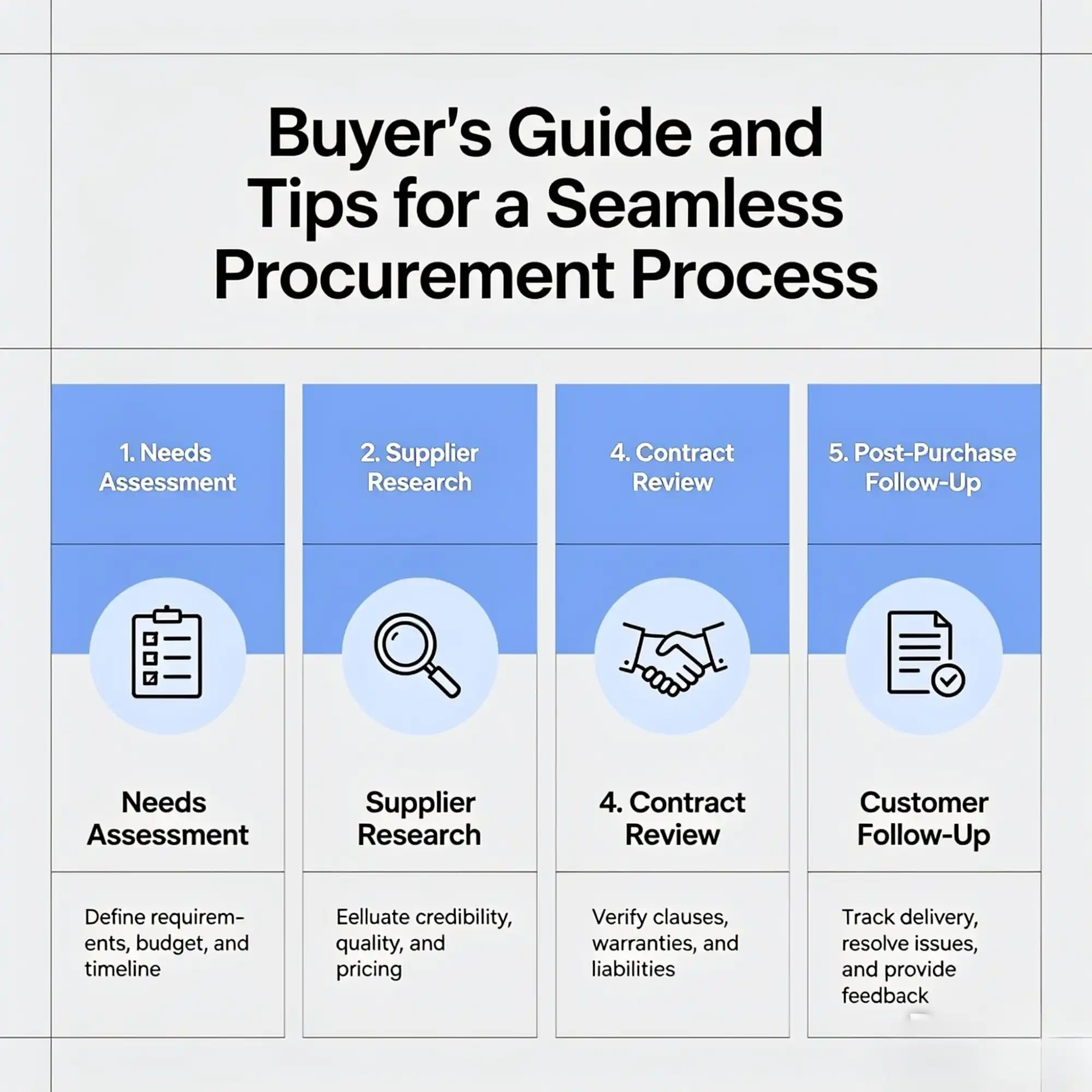
Buyer's Guide and Tips for a Seamless Procurement Process
To find the right ingredients from around the world, you need to use organized ways to check them and relationship management strategies that go beyond simple transactions. Partnering up with highly skilled sellers gives you a competitive edge by giving you access to new ideas and ensuring a steady supply of goods.
Verifying Supplier Claims Through Documentation
Ask for more than one batch COA to check for stability across production runs and make a note of the acceptable ranges of difference for key parameters. Beta-glucan levels should stay within ±2% between batches, and heavy metal levels should always be well below legal limits, never getting close to standards.
Check the accreditations of different testing labs. Reliable labs should have ISO 17025 certification and take part in skill testing programs. For dual-extraction products, solvent residue tests must follow USP guidelines and record ethanol amounts. Non-GMO claims need proof from the sources of the raw materials to the finished product, not just statements from suppliers.
Negotiation Tactics for Optimal Terms
Price tiers are often unlocked by making a volume promise, but procurement teams should weigh the cost saves against the risk of running out of stock and the cost of keeping it. Payment terms vary a lot from one seller to the next. Setting net-30 or net-60 terms is better for managing cash flow than requiring advance payments. For key accounts that show growth potential, minimum order amounts may be able to be lowered. Clear delivery terms avoid confusion, and Incoterms specs spell out who is responsible for what and how much it costs. Non-conforming material problems can be avoided by including clauses in contracts that cover quality escapes and remediation processes.
Building Long-Term Supplier Relationships
The best procurement teams talk to each other on a daily basis about more than just purchase orders. Business reviews every three months that talk about market trends, changes in regulations, and innovation streams help people work together to solve problems. When suppliers do research and development (R&D) that is specific to a customer, like making custom mixes or unique standardization profiles, moving costs go up. This keeps supply chains stable. Being open about limited capacity and the supply of raw materials lets people plan ahead instead of reacting to crises. By building these kinds of partnerships, providers can become strategic partners that help a business gain a competitive edge.
Conclusion
To find the best lion's mane extract, you need to find a balance between scientific rigor and business sense. You can do this by rating suppliers using multidimensional models that predict the value of a long-term relationship. Today's buying choices have a direct effect on how well a product works, how well it meets regulations, and how it positions itself in the market. Purchasing managers reduce quality risks and improve cost efficiency by putting an emphasis on lion's mane mushroom powder beta-glucan validation, complete certification catalogs, and clear supply lines.
As mining technologies improve and regulations become stricter, the landscape keeps changing. This makes it more important for suppliers to have the technical skills and flexibility to react to new conditions. Companies that put money into thorough evaluation processes and working together with their suppliers can take advantage of the growing demand from customers for useful ingredients that are backed by science.
Partner with Yangge for Superior Lion's Mane Mushroom Powder Sourcing Solutions
Yangge Biotech can help you reach your buying goals by providing high-quality Hericium erinaceus products that are backed by strict quality control systems and clear supply lines. Our lion's mane mushroom powder source can offer standardization levels that can be changed from 10% to 30% polysaccharides, beta-glucan content that has been checked by a third party, and full certification files that include ISO, HACCP, Kosher, and Halal credentials.
We always have between 50 and 100 kilograms in stock, and our minimum order size is only one kilogram, so we can meet both recipe samples and production-scale needs. Our dedication to long-term farming partnerships makes sure that we can track raw materials from the time they are grown to the time they are delivered. Our expert support teams also help with preparation and extraction methods. Please email our sourcing experts at info@yanggebiotech.com with specific product requirements, batch-specific COAs, and free samples that are tailored to your needs. This will help us make sure that our products work well with your product development process.
FAQ
Q: Can we get some samples to test before purchasing?
A: Of course, we can provide free samples of 20 to 100 grams, but the shipping cost is at the customer's expense. The shipping cost can be deducted from the next order, or the samples can be sent through your courier account.
Q: Do your products have relevant certifications?
A: Yes, our products are certified for HALAL, ISO, HACCP, Kosher, and other certifications.
Q: What is the minimum order quantity (MOQ)?
A: Small batches of samples can be customized according to your requirements.
Q: Do you offer OEM and ODM services? Can the formula be customized based on our own?
A: Of course, we provide ODM and OEM services to many customers. Our product range includes softgels, capsules, tablets, sachets, granules, and private label services. Simply contact us and let us know your requirements. Our experienced R&D team can also develop new products with specific formulas.
Please contact us to design your own branded products.
Q: How do you handle quality complaints?
A: First, we have a comprehensive quality control SOP. We provide authoritative third-party inspection reports for almost all products before shipment to minimize the possibility of quality issues. Second, we have a comprehensive return and exchange procedure. If there is a genuine quality dispute, we will strictly follow the SOP.
Q: How do you ship? How long does delivery take?
A: For small orders, we typically use DHL, UPS, EMS, FedEx, or TNT. Delivery typically takes 3-7 days. We also offer air and sea freight services. We have a strong freight forwarding team and can provide you with a one-stop service, including DDP and DDU.
Q: What are your payment terms?
A: 100% prepayment, payable by T/T, Western Union, MoneyGram, or PayPal.
Q: What is the shelf life of your products?
A: 2 years with proper storage.
References
1. Friedman, M. (2015). Chemistry, Nutrition, and Health-Promoting Properties of Hericium erinaceus (Lion's Mane) Mushroom Fruiting Bodies and Mycelia and Their Bioactive Compounds. Journal of Agricultural and Food Chemistry, 63(32), 7108-7123.
2. Mori, K., Inatomi, S., Ouchi, K., Azumi, Y., & Tuchida, T. (2009). Improving effects of the mushroom Yamabushitake (Hericium erinaceus) on mild cognitive impairment: a double-blind placebo-controlled clinical trial. Phytotherapy Research, 23(3), 367-372.
3. Li, I.C., Lee, L.Y., Tzeng, T.T., Chen, W.P., Chen, Y.P., Shiao, Y.J., & Chen, C.C. (2018). Neurohealth Properties of Hericium erinaceus Mycelia Enriched with Erinacines. Behavioural Neurology, 2018, 5802634.
4. Sabaratnam, V., Kah-Hui, W., Naidu, M., & Rosie David, P. (2013). Neuronal Health – Can Culinary and Medicinal Mushrooms Help? Journal of Traditional and Complementary Medicine, 3(1), 62-68.
5. Phan, C.W., David, P., & Sabaratnam, V. (2017). Edible and Medicinal Mushrooms: Emerging Brain Food for the Mitigation of Neurodegenerative Diseases. Journal of Medicinal Food, 20(1), 1-10.
6. Kushairi, N., Phan, C.W., Sabaratnam, V., David, P., & Naidu, M. (2019). Lion's Mane Mushroom, Hericium erinaceus (Bull.: Fr.) Pers. Suppresses H2O2-Induced Oxidative Damage and LPS-Induced Inflammation in HT22 Hippocampal Neurons and BV2 Microglia. Antioxidants, 8(8), 261.

Based on your location and order quantity, you will have the opportunity to receive a limited time free shipping promotion!
Who we are
Popular Blogs