Best Matcha Powder for Beverage Manufacturers: A Guide
To pick the best Matcha Powder for making heavy drinks, you should carefully think about quality, stability, and how reliable the seller is. Customers want the best Matcha Powder to be bright green, very fine, and full of vitamins that make it taste good and be good for you. For manufacturers, the best providers are those that have KOSHER and USP-grade approvals, can be tracked, and have specs that can be changed to fit a variety of recipe needs. We know that drinks are always better and stand out in busy markets when they use high-quality Matcha Powder that is made at low temperatures and comes from reliable growth areas because we've worked with beverage companies for a long time.
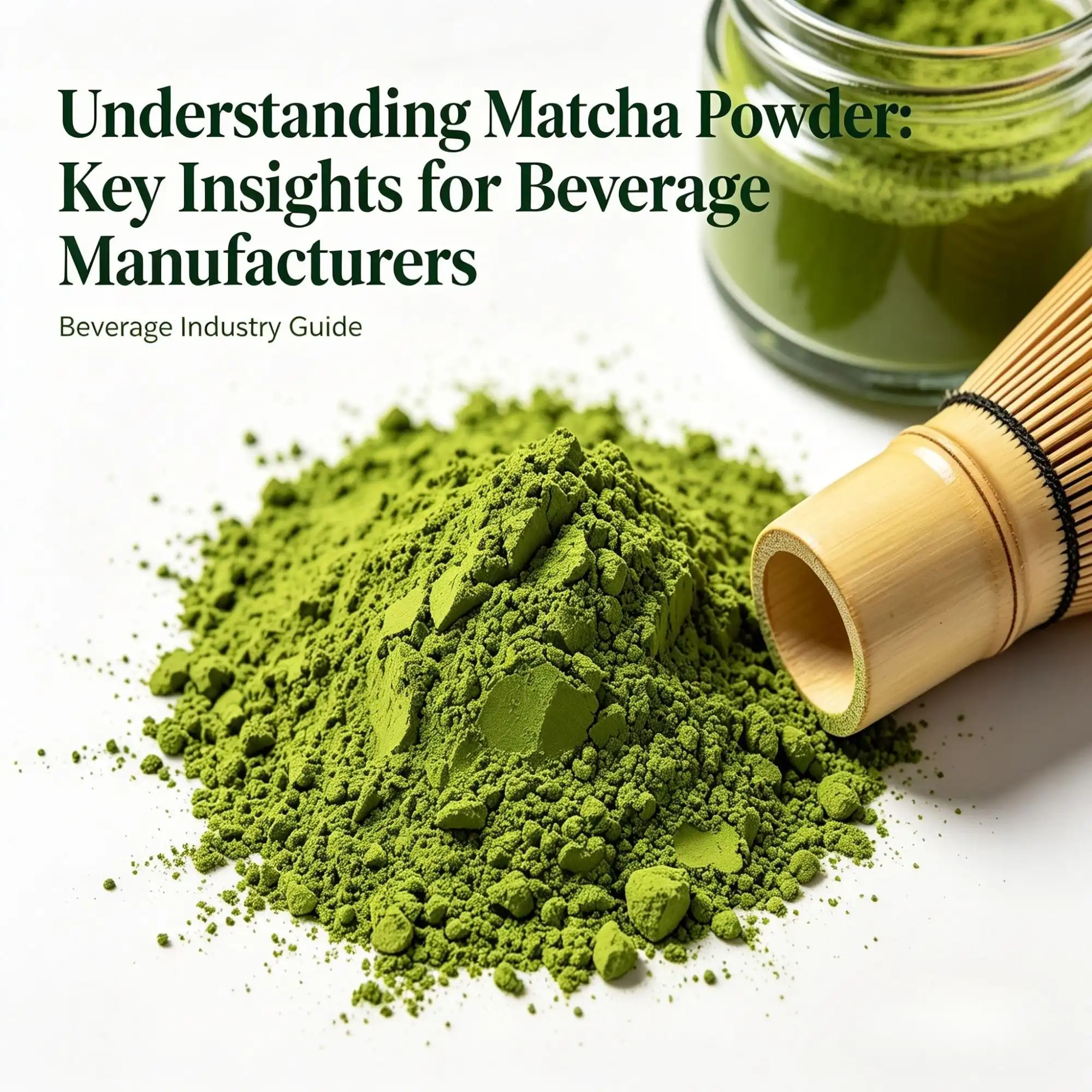
Understanding Matcha Powder: K ey Insights for Beverage Manufacturers
Matcha is a strong powder made from the small, ground leaves of the Camellia sinensis plant. Instead of being grown in the sun, matcha leaves are grown in the shade for three weeks before they are picked. In turn, this makes them contain a lot more chlorophyll and amino acids. This is a unique way to grow plants that people know and like because the plants turn a bright green color and taste sweeter and more complex.
Traditional Cultivation and Processing Methods
When tea plants are grown in the shade, their bodies change in ways that make them healthier. At night, plants make more chlorophyll and L-theanine, an amino acid that helps you calm down without becoming sleepy. After being carefully picked, the leaves are cooked at low temperatures to keep nutrients from being lost when they get too hot. Then, very small pieces of them—between 800 and 3000 mesh—are made by grinding them up. These processing factors have a direct effect on how well something dissolves, how it feels in the mouth, and how stable it is in drinks.
Nutritional Profile and Functional Benefits
The main ingredient in Matcha Powder is epigallocatechin gallate (EGCG), which is found in much higher amounts than in regular green tea. Many tests have been done on this powerful vitamin to see if it could be good for your health. Matcha naturally has both caffeine and L-theanine.
These two chemicals work together to give you a healthy energy boost that people who care about their health and want to stay focused without getting the jitters will enjoy. Frank Hu is the head of the Harvard T.H. Chan School of Public Health. He says that Asian countries, especially China and Japan, have valued drinking matcha tea for a very long time. It's been used a lot in smoothies, sweets, and commercial drinks lately.
Grade Classifications and Application Suitability
It's important to know the changes between grades when you're buying something. It is best to get the formal grade. Matcha Powder drinks that are meant to be fancy can use this kind because it has the best color and nicest taste. The cooking grade has a strong flavor and is a good value for mixed drinks where matcha goes well with other ingredients. People who want to buy natural things are becoming more and more interested in organic approval. In your product line, each type has a different price point and way of being placed in the market.
Criteria for Choosing the Best Matcha Powder for Beverage Production
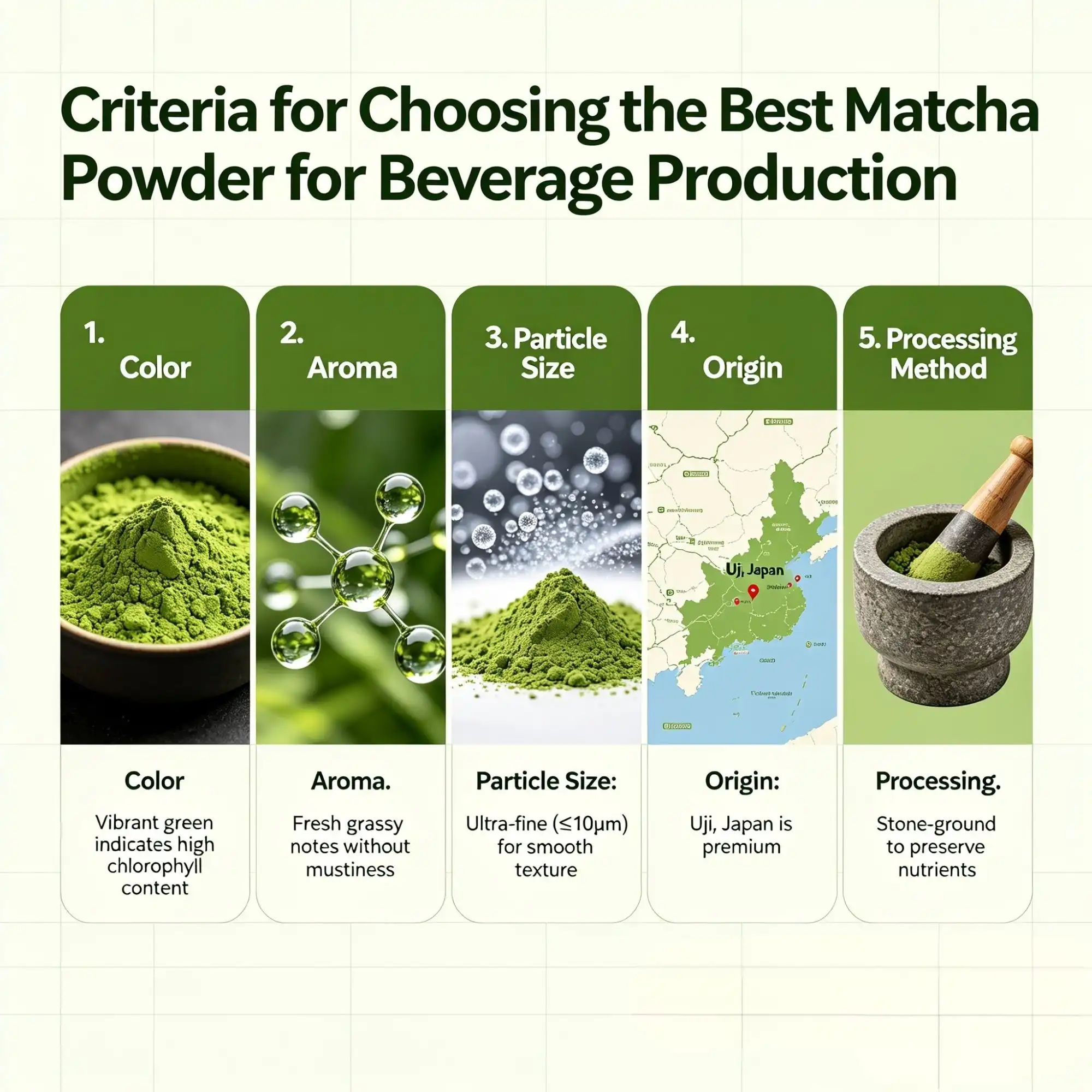
To figure out how good something is, you must first look at it and feel it. The bright jade-green color of premium Matcha Powder indicates that it was grown and handled properly. It should be very thin so that it doesn't stick together and melts quickly in water. Matcha that is still fresh smells green and a little sweet. This item is no longer good if it smells musty or old.
Essential Certification and Compliance Standards
You can't get out of following the rules when making food and drinks. Approvals for KOSHER and USP-grade show that strict rules for quality control have been followed. People who sell things in the US need to make sure that the people who sell their Matcha Powder follow FDA rules and make sure that high GMP standards are met during production.
If you have certifications like ISO, HACCP, and Halal, you can ship to different countries and meet the needs of different markets with more peace of mind. Tracking from farm to plant that can be checked protects the reputation of your brand and makes customers happy who are becoming pickier and want to know where their food comes from.
Particle Size Specifications for Different Applications
The quality of the drink and the cost of making it are directly related to how fine the particles are. An 800-mesh standard works well for hot drinks that need more time to mix. You can use a 2000-mesh grind for both hot and cold drinks because it makes the powder spread out better. Ultra-fine 3000 mesh powder works best in ready-to-drink drinks that need to be smooth and melt quickly. When you match the screen size to how you work, you waste less, get better results, and please your users.
Packaging and Storage Considerations at Scale
When you buy food in bulk, you need to pay close attention to how it is packed so that it stays fresh during long production times. Light, air, and changes in temperature can all quickly make matcha less good. Your investment will be safe if the seller offers vacuum-sealed, light-blocking packaging that is cleaned with inert gases. This will keep the color fixed and the antioxidant activity high. Find out what kinds of packing they offer for one-ton amounts from different providers. Also, ask them if they can come up with solutions that fit your facility's storage needs and production plans.
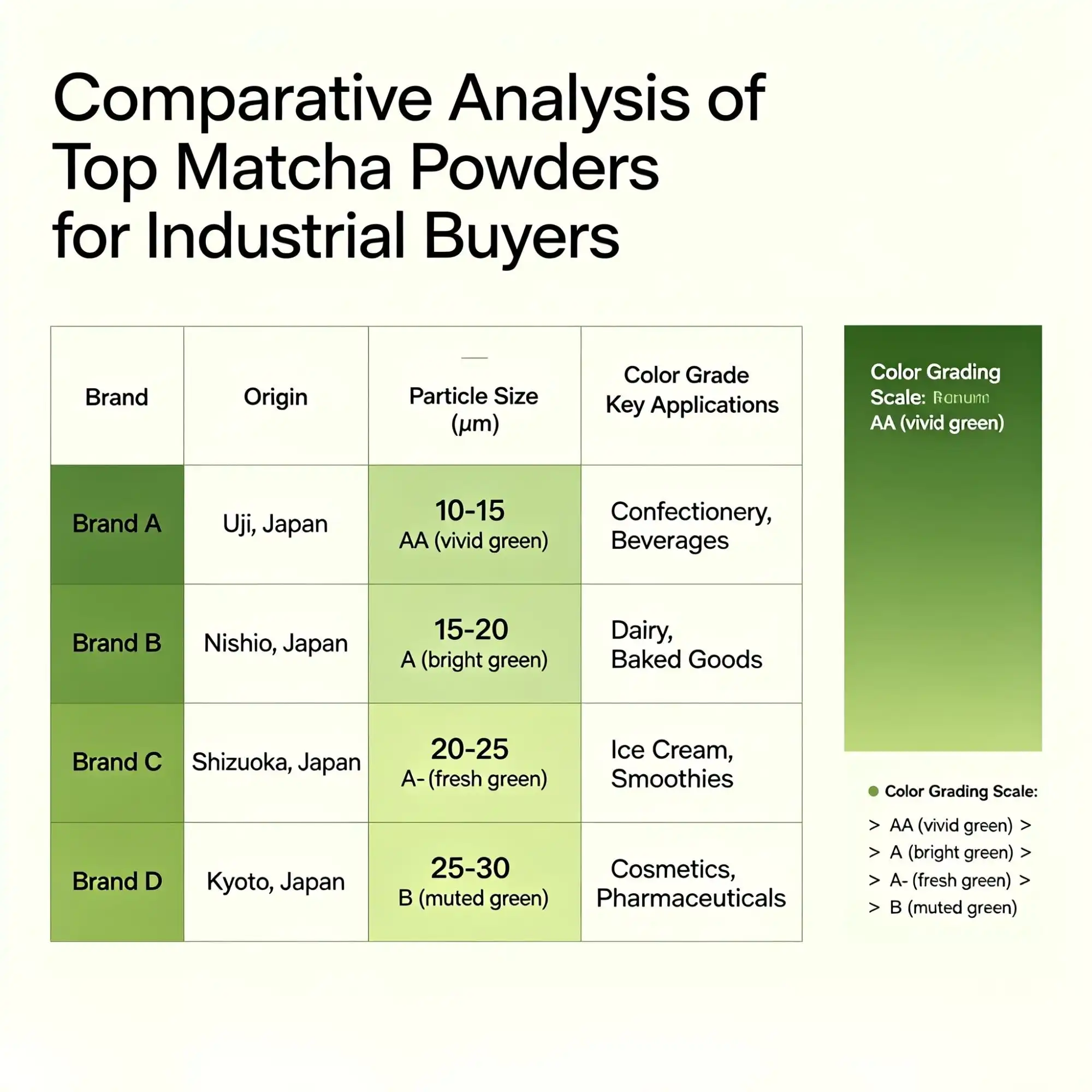
Comparative Analysis of Top Matcha Powders for Industrial Buyers
When buying Matcha Powder for businesses, it's helpful to know how the different companies compare to each other. People from the Uji area who make traditional Japanese things have a long history of making good items, but they usually charge more. In the past few years, Chinese sellers have made a big improvement in the quality of the goods they sell by making cheaper choices with strong licenses and many ways to make them unique. Many different types of licenses, like ISO, HACCP, KOSHER, and Halal, are held by companies like Yangge Biotech that deal with natural plant goods. A one-ton store is also kept on hand to make sure that output stays steady.
Organic Versus Conventional Varieties
Organic Matcha Powder costs 20 to 40 percent more than regular Matcha Powder, but it lets you reach rapidly expanding markets. More and more people are willing to pay more for organic approval. This is especially true for Gen Z and teenagers who care a lot about the environment. When you figure out the return on investment, you should think about more than just how much the items cost. You should also think about how much more you could charge and how that would make your brand stand out. Which one you pick will depend on how you plan to compete and where you want to put your business in the market.
Bulk Pricing Structures and Procurement Models
To choose what to buy that is most cost-effective, you need to know how prices change over time. It costs a lot less per ounce when you buy more, and it costs the least when you sell a ton. People who buy things on a long-term basis often agree on ways to keep prices stable and make sure there is a steady supply. With membership models, you can plan for a steady flow of things that fits with when you need them. When bargaining with sellers, don't just talk about prices per unit. Instead, talk about the overall value, which includes things like wait times, payment terms, technical support services, and minimum order amounts.
How to Incorporate Matcha Powder into Beverage Manufacturing
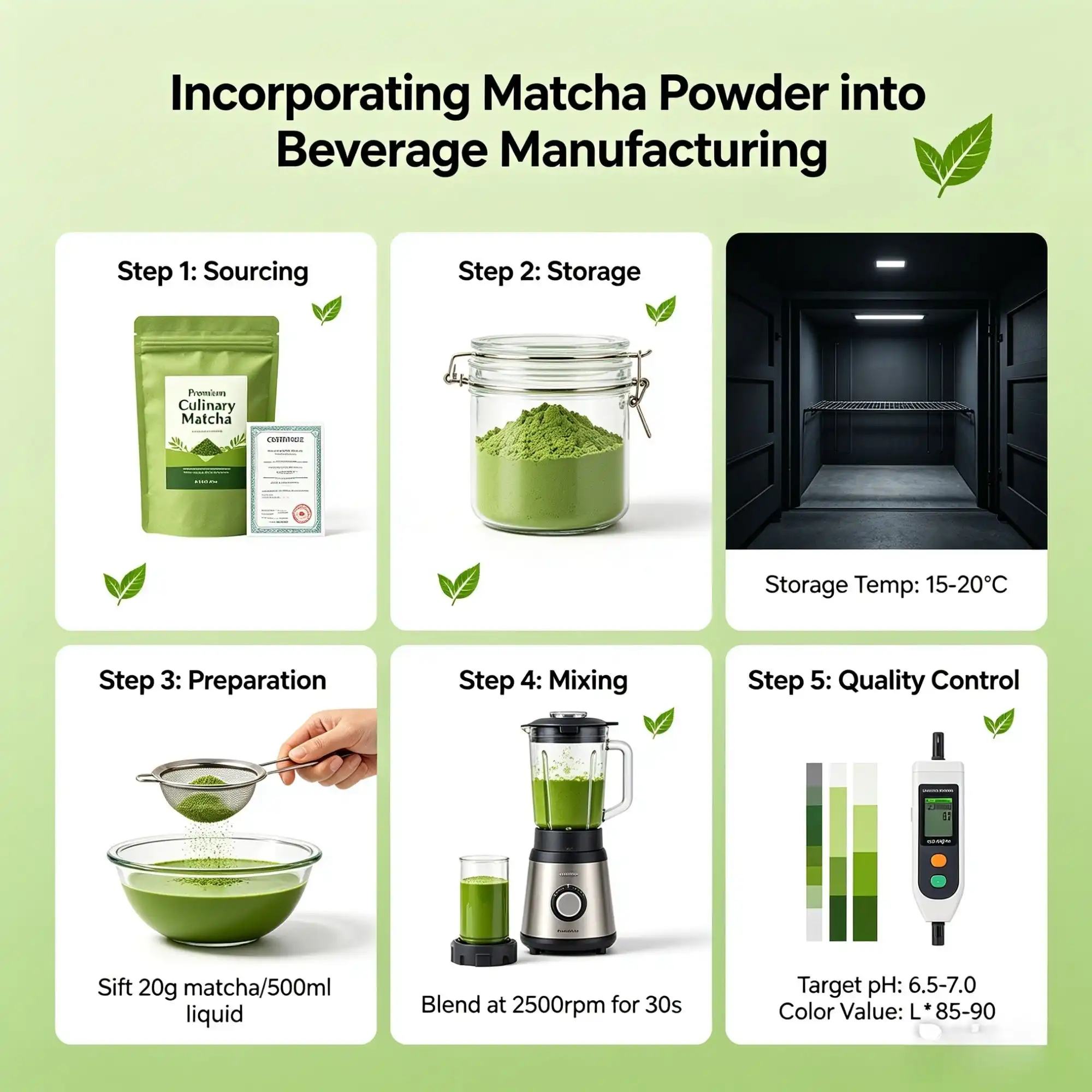
If you want to add Matcha Powder to drink recipes, you need to pay attention to the amount, fit, and handling factors. For most things, one to three grams is the right amount, but it depends on how strong of a taste you want and where you want to use it. Companies might try for the higher end to get the most caffeine and vitamins when making energy drinks. On the other hand, when making drinks that taste like dessert, they might use lower amounts to add small notes of flavor.
Popular Beverage Applications and Formulation Strategies
Matcha lattes, which mix matcha with different kinds of milk to make creamy, filling drinks, are the area that is growing the fastest. Fruits and vegetables are mixed with matcha in smoothie apps to make healthier drinks that don't taste as strong like green tea. Ready-to-drink mixes are tricky because the pH and stability need to be carefully controlled so that they don't settle and change color over time. Good recipes balance the amount of matcha with tastes that go well with it and bring out its unique flavor instead of hiding it.
Manufacturing Best Practices and Troubleshooting
The material won't stick if the right soaking methods are used during production. Matcha Powder can be mixed with a little water ahead of time to make a smooth paste that spreads easily. It's very important to keep the temperature in check, since too much heat ruins both taste and nutritional value. Between runs, handling equipment should be cleaned very well to keep it from getting contaminated and giving off bad tastes. Color loss over time can be kept to a minimum by adjusting the pH correctly, protecting the product from light in the packing, and adding natural stabilizers that work with clean-label placement.
Future Trends and Innovations in Matcha Powder for the Beverage Industry
Trends in consumer tastes are still moving toward drinks that are both fun and good for you. Matcha is a great addition to this trend because it naturally gives you more energy and has antioxidants that have been proven to work. Matcha that is ceremonial-grade is being used more and more in high-end drinks that cost more and make more money.
Technological Advances in Processing and Quality
New technology has made it possible to improve product and process. New ways of handling at low temperatures keep more of the nutrients that are lost when food is heated while also making the bits smaller. The bits are spread out more evenly when grinding with newer ways. This makes the drinks more stable and easy to dissolve. Spectrophotometry and high-performance liquid chromatography are used in quality control to make sure that the amount of EGCG and other beneficial substances in a product is standardized. This backs up what the sign says and makes sure that rules are followed.
Sustainability and Ethical Sourcing Imperatives
These days, social and environmental responsibility are playing a bigger role in what people buy. Fair working conditions, sustainable farming methods, and community development programs that providers back are all in line with CSR goals and help build a brand's image. Yangge Biotech uses sustainable development methods to work closely with farming groups to make sure that they have full control over the food that goes from the farm to the table. Using green energy and getting awards for caring for the environment are real signs of commitment that go beyond what marketing says. People who work in procurement agree with these points of view because they know that working with sellers changes the way they do business.
Strategic Supply Chain Management
Having a supply line that can keep going is now very important. When seller ties are spread out, the risks that come with problems in different areas, uneven quality, or limited capacity are lower. In addition to low costs, flexible specs, OEM services, and expert help from suppliers can help your business in other ways. You can stand out in a crowded market by adding your brand, changing mesh sizes, customizing blends, and changing the shape of the package. For long-term success, it's important to work with service providers that can grow with your business.
Conclusion
You should look at many things to find the best Matcha Powder for making drinks. These include quality signs, licenses, the supplier's skills, and how well they fit with your production needs and market positioning. Great drink goods are made with high-quality ingredients that come in bright colors and have very fine textures. They also need strong certificates and tracking that can be checked.
You can make smart decisions that are both good quality and good value for money if you know the changes between grades, the specs of particles, and the different ways that products are made. More and more people want useful, health-focused drinks. To stay ahead of the competition and help your business grow, you should build relationships with reliable suppliers who can offer technical support and flexible solutions.
Partner with a Trusted Matcha Powder Supplier for Your Beverage Manufacturing Needs
This is the best Matcha Powder that Yangge Biotech has to offer. It is approved KOSHER, USP-grade, ISO, HACCP, and Halal. Because our production plans are so tight, we keep a one-ton store on hand to make sure that things keep going as planned. The specs for our Matcha Powder range from 800 mesh to 3000 mesh. The beneficial chemicals that give it its color and taste are kept by making it at low temperatures. We do more than just sell standard goods.
We also offer custom mixing services, a variety of flexible packing options, and the chance to add your name to products to help your brand grow. Our research and development teams work hard to come up with cutting-edge solutions that meet high quality standards. We also offer expert help 24 hours a day and are committed to tracking from farm to dinner.
Email our purchasing team at info@yanggebiotech.com to talk about your specific needs. You can also ask for samples to try out different formulas or look into long-term supply deals. Brands of food and drinks all over the world buy Matcha Powder from our well-known business. You can depend on us to give your business the knowledge, reliability, and power to make changes it needs.
FAQ
Q: Can we get some samples to test before purchasing?
A: Of course, we can provide free samples of 20 to 100 grams, but the shipping cost is at the customer's expense. The shipping cost can be deducted from the next order, or the samples can be sent through your courier account.
Q: Do your products have relevant certifications?
A: Yes, our products are certified for HALAL, ISO, HACCP, Kosher, and other certifications.
Q: What is the minimum order quantity (MOQ)?
A: Small batches of samples can be customized according to your requirements.
Q: Do you offer OEM and ODM services? Can the formula be customized based on our own?
A: Of course, we provide ODM and OEM services to many customers. Our product range includes softgels, capsules, tablets, sachets, granules, and private label services. Simply contact us and let us know your requirements. Our experienced R&D team can also develop new products with specific formulas.
Please contact us to design your own branded products.
Q: How do you handle quality complaints?
A: First, we have a comprehensive quality control SOP. We provide authoritative third-party inspection reports for almost all products before shipment to minimize the possibility of quality issues. Second, we have a comprehensive return and exchange procedure. If there is a genuine quality dispute, we will strictly follow the SOP.
Q: How do you ship? How long does delivery take?
A: For small orders, we typically use DHL, UPS, EMS, FedEx, or TNT. Delivery typically takes 3-7 days. We also offer air and sea freight services. We have a strong freight forwarding team and can provide you with a one-stop service, including DDP and DDU.
Q: What are your payment terms?
A: 100% prepayment, payable by T/T, Western Union, MoneyGram, or PayPal.
Q: What is the shelf life of your products?
A: 2 years with proper storage.
References
1. Weiss, D.J. & Anderton, C.R. (2003). Determination of catechins in matcha green tea by micellar electrokinetic chromatography. Journal of Chromatography A, 1011(1-2), 173-180.
2. Kakuda, T. (2011). Neuroprotective effects of theanine and its preventive effects on cognitive dysfunction. Pharmacological Research, 64(2), 162-168.
3. Kochman, J., Jakubczyk, K., Antoniewicz, J., Mruk, H. & Janda, K. (2021). Health Benefits and Chemical Composition of Matcha Green Tea: A Review. Molecules, 26(1), 85.
4. Xu, P., Ying, L., Hong, G. & Wang, Y. (2016). The effects of the aqueous extract and residue of Matcha on the antioxidant status and lipid and glucose levels in mice fed a high-fat diet. Food & Function, 7(1), 294-300.
5. Ku, K.M., Choi, J.N., Kim, J., Kim, J.K., Yoo, L.G., Lee, S.J., Hong, Y.S. & Lee, C.H. (2010). Metabolomics analysis reveals the compositional differences of shade grown tea. Journal of Agricultural and Food Chemistry, 58(1), 418-426.
6. Lambert, J.D. & Elias, R.J. (2010). The antioxidant and pro-oxidant activities of green tea polyphenols: a role in cancer prevention. Archives of Biochemistry and Biophysics, 501(1), 65-72.

Based on your location and order quantity, you will have the opportunity to receive a limited time free shipping promotion!
Who we are
Popular Blogs