Beta Carotene Natural Color Applications in Food Industry
Yangge Biotech supplies high-quality Beta Carotene Natural Color for food and beverage manufacturers seeking a reliable natural coloring solution. Beta carotene provides attractive yellow, orange, and orange-red shades and can be used across a wide range of food applications, including beverages, dairy products, cheese, bakery products, confectionery, gummies, frozen desserts, sauces, dressings, snacks, jellies, coatings, and functional foods. Yangge Biotech offers beta carotene in different specifications and formats, including water-dispersible powders, emulsions, beadlets, and oil-soluble liquids, helping manufacturers select the appropriate solution for different formulation systems. With consistent color performance, bulk supply, quality documentation, COA, and customized specifications available, Yangge Biotech supports food manufacturers from product development to commercial production. Contact Yangge Biotech today to request product specifications, COA, samples, bulk pricing, or technical support. Email: info@yanggebiotech.com.
Beta carotene represents one of the most versatile natural colorants in modern food manufacturing, offering vibrant orange-yellow hues while simultaneously delivering significant nutritional value. As consumer demand for clean label products intensifies, this carotenoid has emerged as a preferred alternative to synthetic dyes, combining aesthetic appeal with functional health benefits. Food and beverage manufacturers increasingly turn to this provitamin A compound to meet regulatory requirements, enhance product positioning, and align with wellness trends that prioritize natural ingredients over artificial additives.
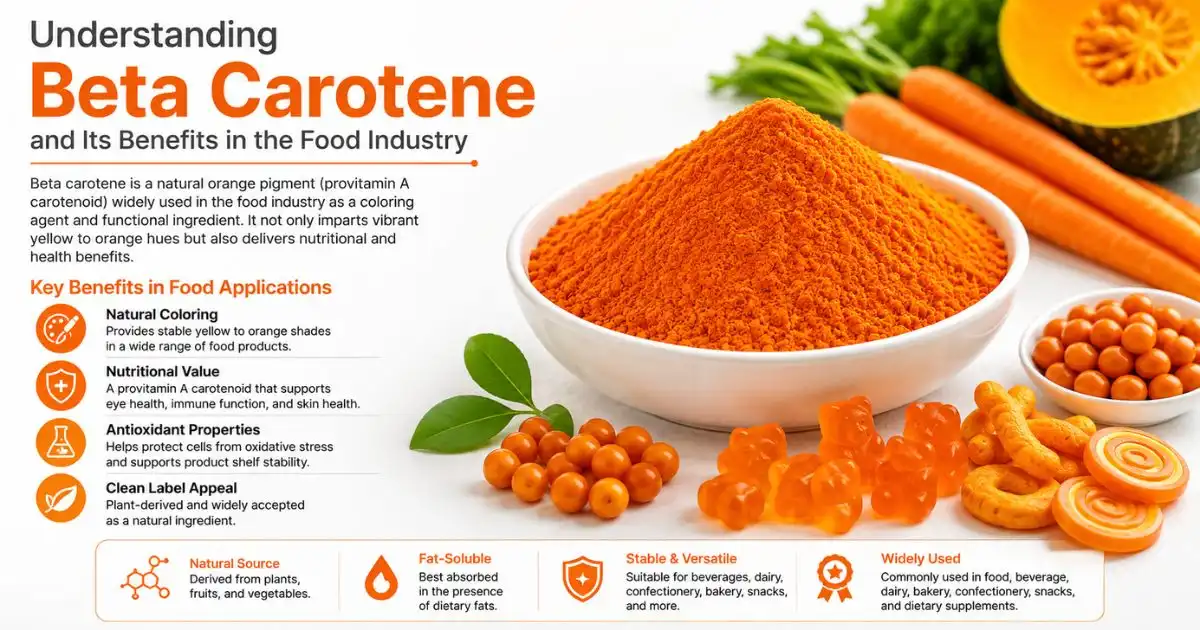
Understanding Beta Carotene and Its Benefits in the Food Industry
The forty-carbon molecular structure (C40H56) of Beta Carotene, a member of the carotenoid family, allows for effective conversion to vitamin A in the body. This conversion only happens when it's needed, so our bodies only make the amount they need. This way, we avoid the harmful effects of taking in too much preformed vitamin A.
Natural vs. Synthetic Sources: What Sets Them Apart
Dunaliella salina microalgae, carrots, sweet potatoes, and fermentation processes are a few of the natural sources of Beta Carotene. These natural versions have about 10% cis isomers along with the trans forms, but synthetic versions are mostly made up of trans isomers. Algal Beta Carotene from Dunaliella has a balanced mix of all-trans and 9-cis configurations, which makes it bioavailable in a way that quality product makers like.
The extraction method has a big effect on the quality of the results. When compared to UV methods, HPLC-based extraction ensures higher purity, which means better stability for makers who need to standardize colors precisely. We use extraction methods that keep the compound's structure and keep its potency levels between 1% and 20%, based on the needs of the application.
Health Benefits Driving Market Demand
Aside from giving plants their color, Beta Carotene is a strong antioxidant that keeps cells safe from the damage that free radicals cause. The compound changes into retinol in the body, which helps the immune system work, keeps mucous membranes healthy, and supports good vision. It has been shown over and over again to lower the risk of age-related macular degeneration. This makes it a valuable ingredient for functional foods that aim to improve eye health.
Having healthy skin is another great benefit. Beta Carotene builds up in the dermal layers, providing photodefense and enhancing the look of healthy skin. This dual function improving color and providing health benefits—makes for strong marketing stories for vitamin brands and functional drink makers.
Regulatory Landscape for Food Applications
Regulatory systems are very different between countries. Beta Carotene is generally thought to be safe for use in food by the FDA (GRAS), but it is regulated differently in Europe (E160a) and has specific rules about how it can be used. It's important to know the limits for adding vitamin A because different places have different maximum levels to keep people from getting too much.
In many places, labeling laws require clear information about whether an ingredient comes from a natural or manufactured source. Companies that use Beta Carotene that comes from plants can use this difference in their marketing to attract customers who want real plant-based products. Procurement experts have to make sure that sellers give them all the paperwork they need, like certificates of analysis, kosher and halal certifications if needed, and safety statements that are in line with the rules of the target market.
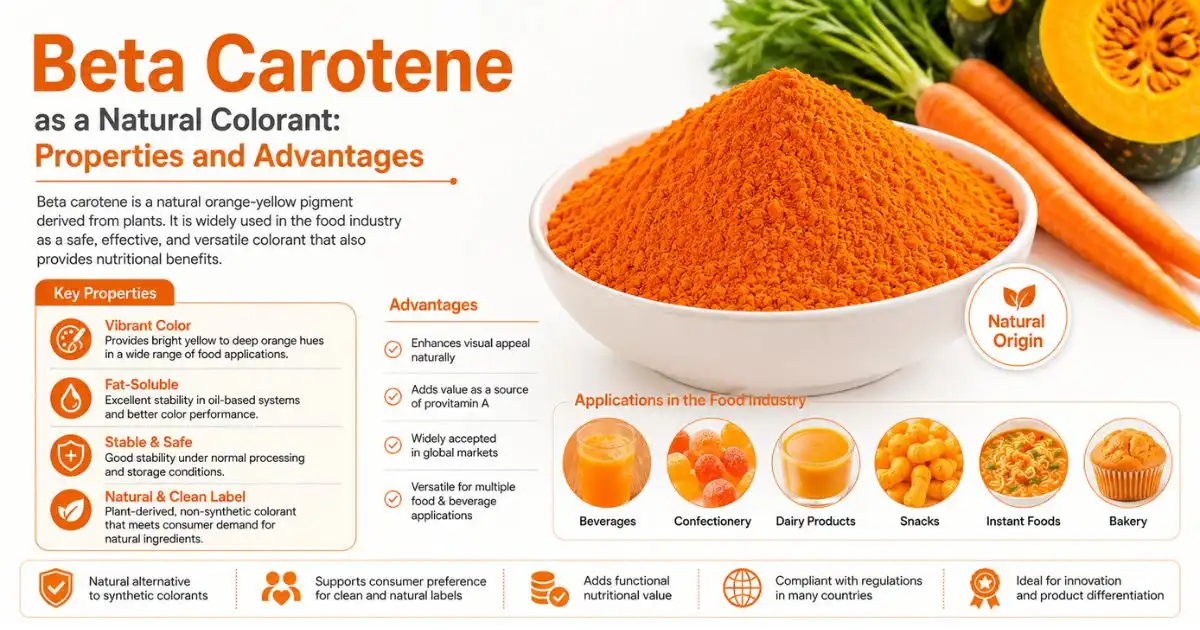
Beta Carotene as a Natural Colorant: Properties and Advantages
Before Beta Carotene can be used in food systems, scientists need to know how it reacts to different handling circumstances. The amount of orange-yellow color it has changes depending on its concentration, pH level, temperature exposure, and how it reacts with other substances.
Color Stability Under Processing Conditions
When made correctly, Beta Carotene exhibits exceptional heat stability, keeping its color even after being pasteurized and cooked at low temperatures. However, it is sensitive to oxygen and light, so protective formulation strategies are needed. Microencapsulation technology fixes these problems, which increases the shelf life and keeps the color vibrant throughout the whole lifecycle of a product.
In different pH ranges, the compound works in different ways. Acidic surroundings can slightly change the colors, while neutral to slightly alkaline situations are best for showing colors. During product development trials, companies that make drinks or dairy alternatives need to think about these interactions.
Consumer Preference for Natural Colorants
Market study shows over and over that people actively look for goods with natural ingredients that they can recognize. Beta Carotene is a natural colorant that is perfect for clean label trends because of its transparency. The phrases "colored with Beta Carotene" or "carrot extract" make health-conscious shoppers happy, which affects their buying decisions and helps businesses charge higher prices.
Unlike man-made dyes like tartrazine or sunset yellow, Beta Carotene that comes from plants doesn't have a bad reputation. Beta Carotene is good for brand positioning because parents buying products for their kids, athletes looking for performance nutrition, and people who are interested in health all like natural coloring agents.
Comparative Advantages Over Other Carotenoids
Beta Carotene's orange-yellow spectrum fills a special gap in food coloring, while lycopene provides red-pink hues and lutein provides yellow tones. Its provitamin A activity makes it different from non-vitamin A carotenoids. This gives it extra useful value that makes it worth paying more for in high-end formulas.
Beta cryptoxanthin is similar to Beta Carotene in some ways, but it is found in nature in smaller amounts, which makes it less cost-effective to remove for industrial use. Beta Carotene's established supply lines and high production rates make it always available, which is very important for companies that want to make a lot of it.
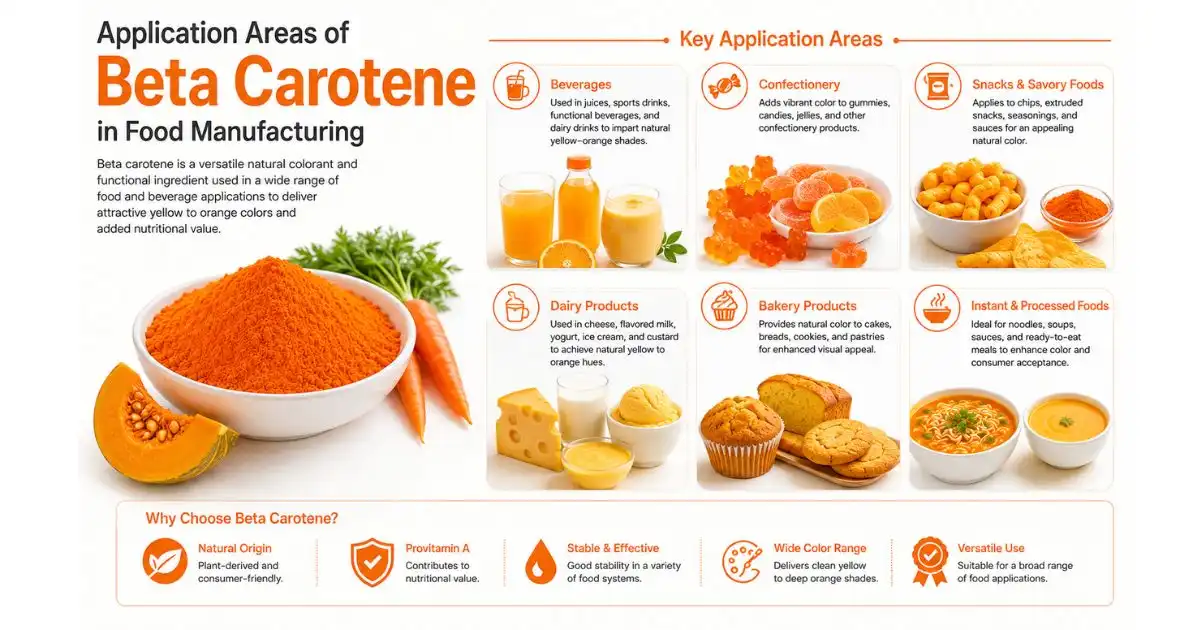
Application Areas of Beta Carotene in Food Manufacturing
Beta Carotene can be used in a lot of different types of foods, and each type of food presents its own set of formulation opportunities and challenges. Understanding successful applications helps procurement teams choose the best suppliers and helps R&D departments come up with new products.
Dairy and Plant-Based Alternatives
Beta Carotene has been used for a long time in traditional dairy products like cheese, butter, and yogurt to give them the constant golden color that people connect with quality and richness. As people move toward plant-based alternatives, these uses have grown a lot. Beta Carotene is added to oat milk, almond drinks, and cashew-based cheeses to make them look like regular dairy. This helps people switch to plant-based diets without giving up the look they're used to.
Manufacturers who want to sell to people who can't digest dairy or who are vegan find that natural colorants fit with their health-conscious customers. The added health benefit of vitamin A precursor activity backs up product claims, especially for plant milks that are fortified and sold to families with young children.
Beverage Sector Innovations
Functional drinks are an area of use that is growing quickly. Beta Carotene is added to sports drinks, improved waters, and health shots to make them look better and to tell people that they are good for them because they are antioxidants. When properly made, the compound's stability makes it work in both water-based and lipid-based drinking systems.
Companies that make juice like Beta Carotene because it helps keep the color of their products consistent even when the raw materials are different. For example, a carrot-mango blend can keep its look across different batches of output, meeting the needs of retailers and meeting customer standards.
Bakery and Confectionery Products
Beta Carotene is used in bread, pastries, and snacks to create the warm, inviting yellow-orange hues that are associated with eggs and butter. Clean label restaurants that don't use artificial ingredients need this natural colorant to keep the look of their products without changing the ingredients' purity.
Gummies, hard candies, and coatings are all examples of confectionery uses. Beta Carotene is both a colorant and an active ingredient, which is good for the growing market for functional gummies, especially immune support and multivitamin products. This synergy lowers the total cost of the ingredients and makes label statements easier to understand.
Real-World Success Stories
Several vitamin companies have successfully released Beta Carotene-rich goods aimed at people who want to improve their eye health. These softgel pills and tablets use the compound's well-known scientific support for eye health to set themselves apart in the vitamin area.
Manufacturers of drinks have come out with limited-edition health drinks that are high in Beta Carotene and are advertised as helping the immune system and protecting it from free radicals. Consumer response data shows that people are very likely to buy something when it clearly states that it comes from natural sources and has health benefits.
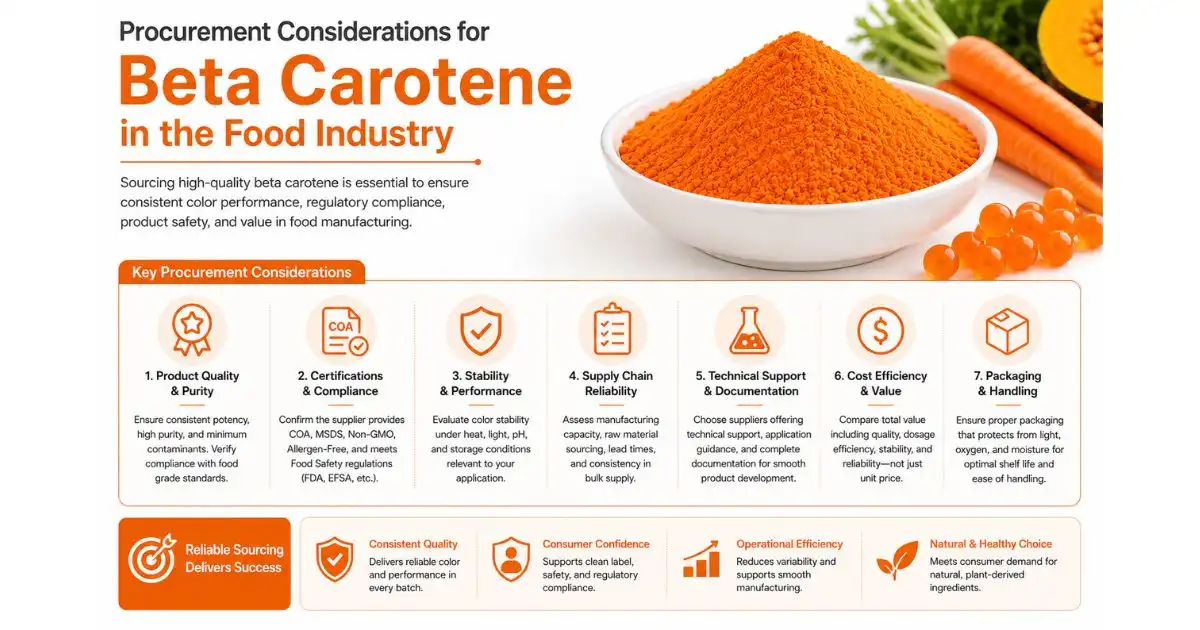
Procurement Considerations for Beta Carotene in the Food Industry
When deciding where to get Beta Carotene, you have to weigh a lot of different factors, such as the product's purity, its certification needs, its compatibility with other ingredients, and its cost. To find suppliers who can meet both present production needs and future product development, people who work in procurement need a wide range of evaluation factors.
Natural vs. Synthetic: Making the Right Choice
The choice between natural and synthetic Beta Carotene depends on the needs of the target market, the position of the government, and the available budget. Natural sources cost more, but they allow clean label claims that make people want to buy more and support higher selling prices. Synthetic options are cheaper and have more uniform trans isomer profiles, so they can be used in situations where price is important and the marketing benefits of natural sources are not as important.
When looking at natural choices, you should think about how they were extracted. Beta Carotene that comes from fermentation is easier to scale up than Beta Carotene that comes from algae extraction, but sources from Dunaliella salina have higher concentrations—up to 14% of biomass compared to 0.1-0.2% in most algae species.
Purity Standards and Certification Requirements
Quality standards should give priority to goods that have been tested using the HPLC method, which ensures accurate concentration measurements and purity checks. Certificates of analysis must list the amounts of active ingredients, how the product looks, and any contaminants, such as heavy metals, herbicides, or microbiological issues.
The Beta Carotene Powder from Yangge Biotech meets all the requirements for approval. Specifications at 1%, 3%, 10%, and 20% concentrations are in our product line. They were extracted using HPLC methods that ensure consistency. Before being shipped, each batch goes through foreign lab tests and is approved by the FDA, KOSHER, and Halal. These qualifications help manufacturers who serve a wide range of global markets with their compliance issues.
Here are the certification advantages our natural Beta Carotene powder provides for quality-conscious buyers:
FDA-Approved Status: This verification shows that strict safety rules have been followed for food and supplement applications in all North American markets. This makes it easier to submit finished products to regulators.
KOSHER and Halal Certifications: The KOSHER and Halal certifications make it easier for companies that want to sell to religious consumers to get into new markets. This means they can reach more people and use more marketing methods.
International Laboratory Testing: Verification by a third party that is not connected with the company takes away any doubts about the quality of the product and gives purchasing teams proof that meets the needs of quality control departments and customer surveys.
These credentials set trustworthy suppliers apart from those who can't provide full compliance paperwork. This lowers risks in the supply chain and protects the brand's image.
Formulation Types and Pricing Dynamics
Different production methods are addressed by the availability of Beta Carotene in powder, oil suspension, and beadlet form. For supplement pills and powder mixes, powder forms work well for dry mixing. Oil suspensions, on the other hand, can be used in lipid-based systems like softgel fills and beverage emulsions. For applications that need to last longer, beadlets offer better stability.
Prices vary a lot depending on the source, quantity, and size of the order. Over the past few years, the global Beta Carotene market has grown to about $532 million. About 35% of that money comes from natural sources, even though they cost more per unit. When you commit to buying a lot of something, you usually get better prices. Our minimum order quantity of one ton makes it easy for mid-sized businesses to buy while also keeping costs low through economies of scale.
The following table presents formulation options and their typical application suitability:
| Formulation Type | Typical Concentration Range | Best Suited Applications | Key Advantages |
|---|---|---|---|
| Powder | 1% to 20% | Pills, capsules, dry mixes, and baked goods | Simple to use, accurate dose, and a good value for high-volume output |
| Oil in Water | 10–30% | Softgels, margarine, dressings, and beverage emulsions | Better bioavailability and easy integration into lipid systems |
| Beads | The standard 10% | Healthy cereals, gummies, and foods that last a long time | Better stability, defense against oxidation, and controlled release |
Choosing the right formulation type cuts down on processing problems and improves the performance of the final product. This is a very important decision to make during the supplier evaluation phases.
Quality Assurance and Compliance Protocols
Suppliers with a good reputation keep their facilities GMP-certified and hold ISO certifications that show they are committed to quality management systems. Teams in charge of buying things should ask for reports on facility audits, customer references, and proof of programs for ongoing growth.
Another important factor is traceability. Farm-to-table transparency makes sure that ingredients are real and backs up claims of sustainability. We keep close ties with our cultivation partners, which gives us full visibility into the supply chain and meets the needs of both companies that want to be socially responsible and customers who want to buy from companies that do business in an ethical way.
Stability studies that show color retention under accelerated aging conditions should be part of testing protocols. Because this information helps formulation teams guess how long a product will last and how much packing it will need, they don't have to do expensive changes after the product hits the market.
Future Trends and Innovations in Beta Carotene Use for Food Coloring
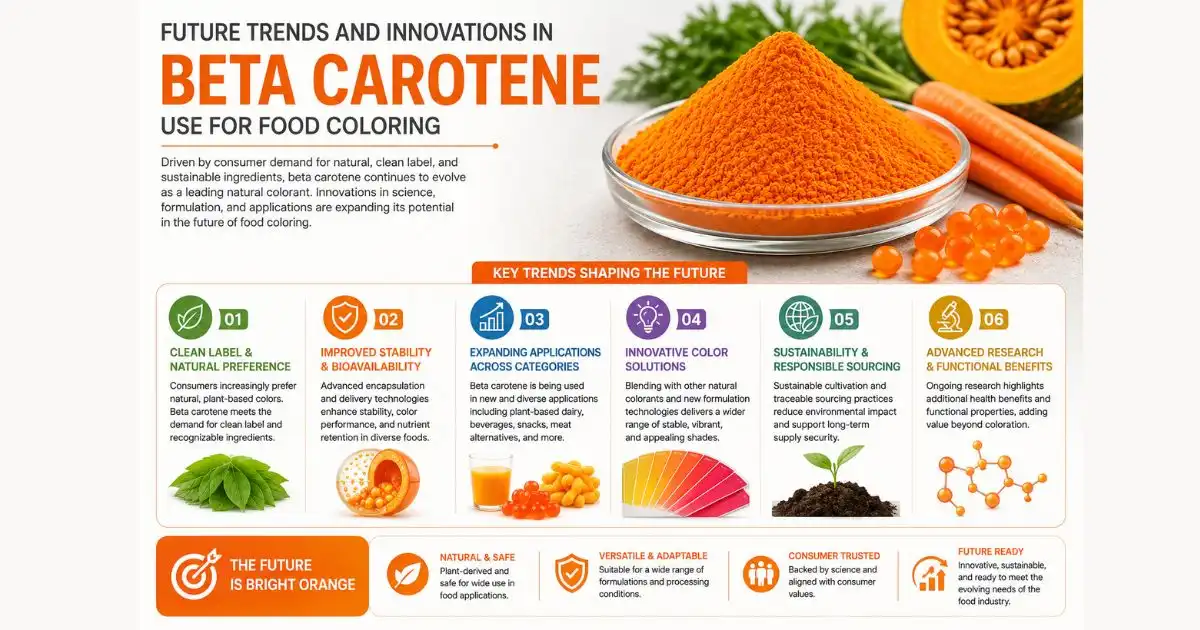
Beta Carotene uses are always changing because technology is getting better and people's tastes are changing. When manufacturers align their procurement strategies with new trends, they are better able to take advantage of market opportunities and stay ahead of the competition.
Microencapsulation and Enhanced Stability
Beta Carotene is easily oxidized, but microencapsulation technology protects it from this, extending its shelf life and keeping its color during shipping and storage. These protective matrices let the active compound out when the food is digested, keeping it potent until it is eaten. These new ideas are very helpful for companies that are making goods for warm climates or long supply lines.
Nano-delivery methods are the most advanced. They improve bioavailability and allow smaller doses to have the same nutritional effects. These technologies are just starting to be used in the real world, but they have the potential to completely change the way functional foods are made in the next product development cycle.
Plant-Based and Clean Label Market Drivers
The rapid rise of plant-based foods is good for Beta Carotene suppliers. Naturally occurring colorants are becoming very important as meat and dairy replacements try to taste and feel like real foods. The compound's plant source fits perfectly with the idea of a vegan product, which can lead to more sales.
Trends toward clean labels don't seem to be slowing down. More and more rules are being put on synthetic additives, especially in European markets where consumer groups keep a close eye on things. As formulators move away from artificial colorants, there is a steady demand for natural alternatives like Beta Carotene.
Sustainability and Ethical Sourcing
Environmental awareness is becoming more and more important in B2B purchasing decisions. When compared to synthetic production that needs petroleum-based precursors, Beta Carotene from fermentation or algae growth has better environmental ratings. Calculating a supplier's carbon impact is becoming a bigger part of buying scorecards, which reward suppliers who use renewable energy and reduce waste.
We have put a lot of money into environmentally friendly ways of farming and are working directly with farming communities to support social growth and economic security. Our efforts to use renewable energy have earned us environmental respect in China's manufacturing sector. This means that our customers can work with supply chain partners that meet their own sustainability goals.
Strategic Guidance for Procurement Teams
Procurement professionals should build relationships with manufacturers that show they can come up with new ideas as preferred suppliers. Regular academic conversations about new formulation problems and application chances help people work together to solve problems, which is good for everyone.
Particular attention should be paid to OEM and ODM partnerships. When suppliers offer custom formulation services, like making private blends, specialized delivery systems, or unique concentration profiles, they can set their products apart and charge a higher price. One supply relationship that can provide softgel, pill, powder, and gummy forms speeds up the development process and makes teamwork easier.
As an OEM partner, we can work with you to make superfood powder mixes, encapsulated vitamins, pressed pills, and gummies, among other things. This flexibility cuts down on the time it takes to get new goods to market while keeping the quality the same across all shipping methods.
Conclusion
In the food business, Beta Carotene sits at the crossroads of good looks, good nutrients, and clean label. Its natural orange-yellow color meets the growing need for easily recognizable ingredients while also providing health benefits like antioxidant protection and vitamin A precursor activity. More and more, companies that make dairy, drinks, baked goods, and supplements depend on this versatile compound to make their products stand out in crowded markets.
To do good buying, you need to know the differences between natural and manufactured sources, check the certifications and quality standards of suppliers, and choose formulation types that work best for certain uses. Beta Carotene will play a bigger role in food production as microencapsulation technologies improve and plant-based markets grow. This is why brands that want to stay innovative and make products that consumers want need to form smart relationships with their suppliers.
FAQ
What makes natural beta carotene superior to synthetic alternatives?
Natural Beta Carotene comes from a mix of cis and trans isomers that are found in whole foods. This means that it may be more bioavailable than synthetic versions that are mostly trans forms. Premium prices are reasonable because natural sources support the clean label positioning that appeals to health-conscious consumers. Synthetic alternatives are cheaper and have more consistent chemical profiles, so they can be used in applications where cost is an issue and claims of natural origin don't really set the product apart in the market.
How does beta carotene stability compare under different storage conditions?
Beta Carotene is sensitive to air, light, and heat, and it can break down in storage settings that aren't ideal. When antioxidants, microencapsulation, or protected packing are used in the right way, the shelf life is greatly increased. Products that are stored in cool, dark, oxygen-barrier packaging stay effective for a long time. Stability studies done under conditions that speed up aging help predict how long something will last on the shelf in real life, which affects choices about packing and expiration dates.
What are recommended daily intake levels for beta carotene supplements?
Beta Carotene has no upper limit set by regulatory bodies like the FDA because too much of it only turns into vitamin A when it's needed. However, people usually get between 6 and 15 mg of extra vitamin D every day. Too much may cause skin to turn yellow (carotenodermia), which is harmless and goes away when you stop eating so much. People who smoke or have been exposed to asbestos should talk to their doctors before taking supplements, since high doses have been linked to risks in these groups. Dietary sources are still safe for everyone.
Partner with a Trusted Natural Beta Carotene Supplier
Yangge Biotech offers complete solutions for companies that want to use natural colorants and functional ingredients of the highest quality. Our Beta Carotene Powder is of KOSHER and USP grade, and we have a one-ton stock that can be shipped right away under FOB or CIF terms. We offer concentrations ranging from 1% to 20%. The samples are extracted using an approved HPLC method that makes sure the quality and stability. Free 10–30g samples help with your research and development (R&D) and let you try formulations before making a promise.
Our certifications, which include FDA approval, Halal and KOSHER compliance, and international laboratory verification, meet all of the strict rules that markets around the world have to follow. Personalized customer service, a variety of delivery choices, and low prices all help you build relationships that help you reach your goals for product creation. Contact us or email at info@yanggebiotech.com to talk about your needs and find out how our natural materials can help your next product launch.
References
1. Maoka T. (2020). Carotenoids as natural functional pigments. Journal of Natural Medicines, 74(1), 1-16.
2. Grune T., Lietz G., Palou A., Ross A.C., Stahl W., Tang G., Biesalski H.K. (2010). Beta-carotene is an important vitamin A source for humans. Journal of Nutrition, 140(12), 2268S-2285S.
3. Britton G., Liaaen-Jensen S., Pfander H. (2008). Carotenoids Volume 4: Natural Functions. Basel: Birkhäuser Verlag.
4. Rodriguez-Concepcion M., Avalos J., Bonet M.L., Boronat A., Gomez-Gomez L., Hornero-Mendez D., Zacarias L. (2018). A global perspective on carotenoids: Metabolism, biotechnology, and benefits for nutrition and health. Progress in Lipid Research, 70, 62-93.
5. Priyadarshani A.M. (2017). A review on factors influencing bioaccessibility and bioefficacy of carotenoids. Critical Reviews in Food Science and Nutrition, 57(8), 1710-1717.
6. Tapiero H., Townsend D.M., Tew K.D. (2004). The role of carotenoids in the prevention of human pathologies. Biomedicine & Pharmacotherapy, 58(2), 100-110.

Based on your location and order quantity, you will have the opportunity to receive a limited time free shipping promotion!
Who we are
Popular Blogs