Why is astaxanthin so powerful?
Astaxanthin is one of nature's most powerful antioxidants. It is known as the "King of Carotenoids" because of the way its molecules are structured. Being mostly made from Haematococcus pluvialis microalgae, this deep red pigment can neutralize free radicals about 6,000 times better than vitamin C and 100 times better than vitamin E. Manufacturers can get astaxanthin powder through advanced microencapsulation technology. This is a steady, bioavailable ingredient that goes beyond the limits of liquid oleoresins. This powder form directly addresses oxidative instability while allowing accurate dosing in a wide range of situations, such as functional drinks, cosmeceutical goods, and nutraceutical formulations.
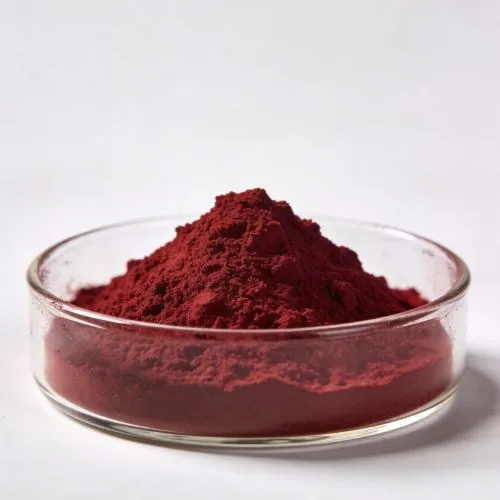
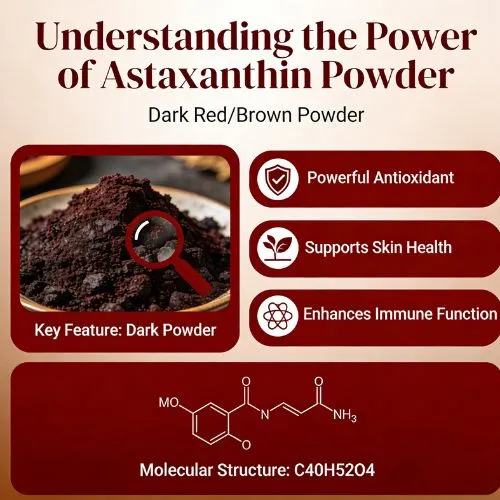
Understanding the Power of Astaxanthin Powder
What Makes This Carotenoid Structurally Unique?
This antioxidant, astaxanthin (3,3'-dihydroxy-β,β-carotene-4,4'-dione), is different from others because it has 13 conjugated double bonds paired with polar hydroxyl and keto end groups. The molecule's structure lets it cross cellular bilayer membranes, stopping free radical chain reactions and singlet oxygen at the same time, in both water-repellent and water-loving habitats. Unlike beta-carotene and lutein, which work mostly in lipid-rich tissues, astaxanthin's amphiphilic nature protects cells throughout all organ systems.
Compared to manufactured versions, commercial-grade natural astaxanthin is mostly found in the 3S,3'S stereoisomeric form, which has better bioactivity. This stereochemistry has a direct effect on the rates of absorption and the patterns of tissue buildup. When analyzing the quality of raw materials, procurement workers should give preference to suppliers who offer high-purity natural sources with known stereoisomeric ratios.
Scientific Evidence Supporting Health Benefits
Clinical study has shown that astaxanthin works in a number of bodily areas. Dermatological studies show that skin flexibility and wetness retention get better after 12 weeks of supplementation. This is because the supplements increase collagen production and stop UV-induced matrix metalloproteinase from working. Because of these qualities, the ingredient is very useful for beauty-from-within supplements that are made for older people.
The main uses in ophthalmology are to protect the eye and improve vision. The molecule builds up mostly in the macular tissues, blocking blue light wavelengths and lowering signs of oxidative stress linked to computer eye pain. Manufacturers of functional drinks for professionals who spend a lot of time in front of a screen are adding this ingredient more and more to meet new health issues among consumers.
Studies on athletic performance show that people who take 4–12 mg of it every day have lower levels of biomarkers for muscle damage and faster healing times. The process includes stabilizing the mitochondrial membrane and burning more fat during submaximal activity. These results help sports nutrition companies set their recovery-focused product lines apart in crowded markets.
Safe Dosage Guidelines for Commercial Applications
Regulatory systems in major countries set clear guidelines for how products should be made. The U.S. Food and Drug Administration (FDA) says that natural astaxanthin is generally recognized as safe (GRAS), which means that toxicology tests have shown that 40 mg/kg of body weight has no harmful effects. The European Food Safety Authority says that daily doses of up to 8 mg are okay for supplement use, but different dosage rules apply for cosmetic use.
Product makers need to think about how to improve bioavailability through formulation techniques. Lipid-based delivery methods improve absorption rates by making it easier for micelles to form while the drug is moving through the intestines. Yangge's 10% standard dark red powder comes from Haematococcus pluvialis and is extracted using HPLC. It gives makers a concentrated starting material that can be used for both oil-suspension capsules and water-soluble beverage matrices when mixed with the right excipients.
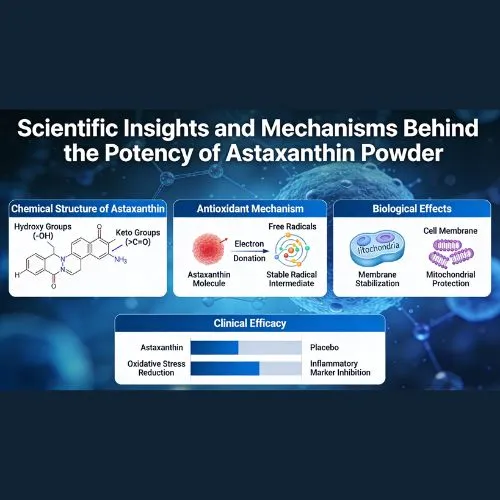
Scientific Insights and Mechanisms Behind Its Potency
Antioxidant Action at the Cellular Level
The compound's antioxidant system in astaxanthin powder works in more than one way, not just by giving away electrons. The long conjugated polyene chain works well to stop singlet oxygen, and its rate constants are ten times higher than those of beta-carotene. This chemical trait is very useful for food uses that need to be resistant to light and oxidation while being stored on a shelf.
Using electron paramagnetic resonance spectroscopy to study membrane integration shows that astaxanthin is positioned perpendicular to phospholipid bilayers, with each polar end fixed in a different hydrophilic surface. This transmembrane orientation lets radicals coming from both the water and lipid phases be neutralized at the same time. This is something that antioxidants on the membrane's edge, like vitamin E, can't do. When improving particle layout, people who are making liposomal delivery devices should take this orientation into account.
Bioavailability Factors Across Product Formats
The difference between natural and manufactured sources has a big effect on absorption rates. Microalgae natural variants usually exist in esterified forms that are bound to fatty acids and need digestive lipase activity to be freed. This esterification makes the product more stable during processing and storage, but it can cause stomach problems for some people. Free-form astaxanthin, which is found in some synthetic preparations, speeds up the appearance of plasma but makes the product less stable on the shelf. This is an important tradeoff for makers who have to weigh claims of effectiveness against product life.
Using micronization or nano-emulsion technologies to make particles smaller increases solubility by making more surface area available for absorption in the intestines. Yangge's way for handling powder keeps particle distributions that are best for both filling capsules and keeping drinks stable in suspension. During the seller qualification process, procurement teams should ask for particle size analysis data to make sure that the products will work with the planned production equipment and shipping formats.
Co-administration with food fats greatly enhances the efficiency of uptake. Clinical studies show that plasma amounts are 2.4 times higher when supplements are taken with lipid-containing foods than when the person is fasting. Because of this physiological feature, both how to use the product and how to market it are affected. Softgels naturally meet this need, while label information for tablet or powder products should stress taking them with food.
Comparative Analysis: Astaxanthin Powder vs Other Forms and Products
Format Comparison for Manufacturing Requirements
Astaxanthin is sold in the market as oleoresins, beadlets, microencapsulated powders, and emulsions. Astaxanthin powder in microencapsulated form, such as Yangge's, offers distinct handling advantages. Oleoresins have the highest content, but their viscosity and equipment binding make it hard to make solid doses. Because they easily break down through oxidation during processing, nitrogen blanketing and temperature-controlled conditions are needed, which makes the process more complicated.
These problems in production can be fixed by using microencapsulated powders like Yangge's, which are protected by matrices that are sprayed dry. The dark red powder flows easily and can be used in dry-blend operations, capsule filling lines, and pill compression systems, all without the need for special hot equipment. This format stability goes beyond production; when properly packed in metal foil bags that block light, the shelf life at room temperature is 24 months, compared to the usual 12 months for oleoresins that are not protected.
Cold water soluble (CWS) versions make it possible for lipophilic carotenoids to be used in drinks that weren't possible before. These mixtures use cyclodextrin complexation or gum arabic wrapping to make them water-dispersible, but they cost more because they have to go through more steps in the production process. Brands that are making RTD functional drinks should think about whether the ease of the CWS format is worth the extra cost compared to powder suspension methods that use different solubilization techniques.
Natural vs Synthetic: Regulatory and Market Positioning
Natural astaxanthin is much more expensive than manufactured versions, often three to five times as much. However, it is still the most popular ingredient in dietary supplements and cosmetics because of customer preferences and government regulations. Another thing that sets these two types apart is the ease of getting organic certification. Products made from microalgae can get USDA and EU organic labels, but petrochemical synthesis routes can't.
As brands try to meet the environmental, social, and governance (ESG) needs of stores and customers, sustainability stories play a bigger role in their buying choices. Growing Haematococcus pluvialis in a photobioreactor for natural production gives us a way to talk about closed-loop water recycling and carbon storage that isn't possible with manufactured manufacturing. The farm-to-table traceability documents and green energy integration that Yangge offers meet these new due diligence needs for careful buyers.
Synthetic material is still useful in situations where cost is important and where price is more important than origin claims. Large-scale aquaculture operations use feed-grade manufactured astaxanthin, but goods for human consumption have to include certain information on the label, and some customers might not like them in natural-focused categories. Choosing the right style should be based on the values of the target group and how the price fits in with the competition.
Performance Comparison with Alternative Antioxidants
In contrast to astaxanthin's structural benefits, vitamin E (tocopherols) mostly works in lipid settings and can't cross membranes very well. Even though vitamin E is still needed for basic antioxidant defense, it doesn't work as well as keto-carotenoids at removing singlet oxygen and pro-oxidants. Formulators who want to protect against oxidative damage on a wide range of radical species and tissue types are increasingly mixing the two substances to get better results.
Astaxanthin and omega-3 fatty acids are both found in krill oil. These two nutrients are popular in the blood and brain health markets. The amount of astaxanthin in krill oil is still pretty low—usually between 0.1 and 0.5 mg per gram—so people have to eat a lot of oil to get the appropriate dose. Astaxanthin pills that work on their own offer concentrated delivery without the fishy smell and burp-back issues that come with marine oils. This makes product experiences more unique for quality-conscious customers.
CoQ10 and astaxanthin both live in mitochondria, but they work in different ways when it comes to how the electron transport chain works. New study is looking into how energy metabolism and athletic ability can work together, and early results show that they can help each other. When brands are trying to come up with new ideas in the sports nutrition space, scientifically sound ingredient stacking may give them a competitive edge over single-ingredient positioning.
Procurement Considerations for Astaxanthin Powder
Supplier Qualification and Certification Requirements
Systematic review of quality control infrastructure is needed to find trusted manufacturers of astaxanthin powder. GMP approval is the gold standard of trustworthiness because it shows that production settings have systems in place to keep contamination under control and keep track of batches. Yangge's ISO22000, Halal, and Kosher standards make it easier for goods that meet religious food needs and international rules to reach more customers.
Third-party laboratory ties are an important way to ensure quality that goes beyond what the provider tests themselves. Yangge works with Eurofins and SGS to make sure that purity standards, heavy metal screening, and bacterial safety guidelines are met. Procurement rules should require pre-shipment testing to be done at sites chosen by the customer, and there should be clear quality agreements that spell out what counts as acceptance and how to settle disagreements. This method lowers the chance that design errors will only be found after payment and shipment.
Sustainability documentation sets forward-thinking providers apart from standard sellers. Ask for proof that green energy is being used, that water is being recycled, and that community development programs are helping to grow raw materials. As ESG disclosure requirements spread across countries, these badges have a bigger impact on how brands tell their stories and how well they follow the rules. When suppliers provide full sustainable reports, it makes it easier for customers to do checks and renew their certifications because they don't have to fill out as much paperwork.
Pricing Dynamics and Bulk Purchase Optimization
The price of natural astaxanthin changes based on how much microalgae are grown. This changes with the seasons as light levels change and farming methods get better. Buyers should expect price changes of 15 to 20 percent between calendar quarters and set up supply deals with price changes based on clear market indicators. Long-term contracts with volume agreements can often get you better prices, but you need to be able to accurately predict demand to avoid having to pay extra to store too much goods.
Minimum order amounts balance how efficiently suppliers make goods with how much space buyers have for keeping and how they spend their money. Yangge's minimum order size of 1 kg allows for formulation tests and small batches of specialty goods, while still keeping transaction amounts small enough for the seller to make money. When buyers move up to commercial production, they should talk about volume pricing tiers and inventory consignment deals that keep title until manufacturing withdrawal. This makes managing cash flow easier.
International logistics introduce cost components beyond raw material pricing—customs taxes, freight forwarding, temperature-controlled shipping, and insurance all affect the total landing costs. Ocean freight is still the most cost-effective way to ship established goods with steady demand. On the other hand, air freight is best for launching new goods quickly into the market, even though it costs more to ship. Buying more than one ingredient from sellers with a wide range of products lowers the transportation costs for each shipment.
Sample Evaluation and Testing Protocols
Pre-production sample testing keeps you from making mistakes that cost a lot when buying everything. Ask for 100–250g samples, which are enough for full stability testing, formulation compatibility testing, and customer taste review. The testing procedures should be the same as what will be used in production. For example, pill filling tests should be done for supplement uses, heat stability studies should be done for functional foods, and pH stability tests should be done for drinking matrices.
Chemical testing that goes beyond the Certificates of Analysis given by the seller verifies the quality of the material on its own. The peroxide value test checks for oxidative freshness, and HPLC fingerprinting proves the amount of astaxanthin present and its stereoisomeric purity. Microbiological testing and heavy metal panels make sure that your product meets the pharmacopeial standards for the markets you want to reach. Yangge is open to testing that is ordered by the buyer and organizes shipping samples to specific labs, which shows that they are confident in the quality of their products.
Formulation studies check how well proposed materials work in full product combinations. Astaxanthin reacts with different parts of the formula. For example, mineral ions may speed up oxidation, and some proteins can change how stable the color is. Accelerated stability tests (40°C/75% RH for 3 months) predict the shelf life at room temperature and find breakdown routes that need to be changed in the formulation. This investment in due research stops failed market launches and expensive processes of re-formulation.
Practical Usage and Application Tips for Business Clients
Formulation Strategies Across Product Categories
Lipid-based transport methods make nutrients more bioavailable, which is good for nutritional uses. astaxanthin powder is suspended in medium-chain triglyceride or sunflower oil carriers in softgel formats, and lecithin is added to improve emulsification and absorption in the gut. Choosing the right excipients for tablet recipes is important. Microcrystalline cellulose is great for compressibility, and magnesium stearate keeps the tablet from sticking. However, stearate amounts above 1% may slow the rate at which the tablet breaks apart.
Beverage integration demands specialized solubilization approaches given astaxanthin's lipophilic nature. Nano-emulsion pre-mixes mix the powder with detergents and emulsifiers that are safe for food. This makes stable solutions that can be mixed in water. Managing turbidity is important for clear RTD goods; cyclodextrin complexation keeps the clearness but raises the cost of the ingredients. Sports recovery drinks can handle cloudiness better, which makes xanthan gum stability suspension solutions more cost-effective.
Cosmetic formulations leverage astaxanthin's anti-aging and UV-protective qualities are used in cosmetics by adding it to serums, creams, and sheet masks. Powder dispersion in the lipid phase is possible in oil-in-water emulsions. The end product content is usually between 0.001% and 0.011% to keep the color and effectiveness in balance. When checking for stability, color shift and active decline should be watched under light exposure that is similar to what would happen in a store display. By limiting oxygen contact during use, airless packing methods make products last longer on the shelf.
Marketing Positioning and Consumer Education
When scientific evidence backs up marketing claims, they move from general antioxidant messaging to specific health result placement. People who care about their looks are more likely to believe skin health claims that are backed up by professional images that show changes in elasticity. This is especially true when combined with before-and-after photos. Eye health messaging works well with people who are tired of looking at screens on their phones and tablets, because it positions goods as specific answers to problems that come up in modern life rather than general health supplements.
Dosage clarity helps customers believe brands and stands out in crowded markets. Labels that clearly list the amount of basic astaxanthin (rather than the total weight of the extract) allow for smart comparison shopping and show that the formulators are confident in their work. Bioavailability science is taken into account in usage directions that stress eating at mealtimes. This teaches customers while improving product performance and happiness.
Sustainability storytelling turns aspects of the supply chain into company ideals. Telling people about the environmental benefits of microalgae cultivation—like storing carbon, saving water, and protecting biodiversity—will appeal to people who care about the environment and are willing to pay more for items that are good for the environment. Yangge's tracking paperwork gives brands in natural product channels material for clear supply chain stories that set them apart.
Building Strategic Supplier Partnerships
Long-term ties with suppliers have benefits beyond just saving money on one-time purchases. Spot-market buying doesn't offer relationship-based benefits like technical cooperation on formulation optimization, access to new research, and priority placement during supply shortages. Setting up business reviews every three months with key providers like Yangge makes it easier to plan ahead for capacity and talk about new ideas, which is good for everyone.
Diversification and connection depth must be matched for supply security. When you use dual-sourcing methods, you protect yourself from disruptions while still keeping enough volume commitments with each provider to get special treatment. Geographic diversity among providers in different regions lessens the effects of localized problems like natural disasters, changes in regulations, or logistical bottlenecks. However, it requires careful quality management to make sure that ingredient specifications are the same across sources.
Collaborative innovation agreements shorten the time it takes to make a new product. Suppliers who can do research and development (R&D) can make custom specs that fit the needs of each application. For example, they can optimize particle size for specific encapsulation equipment, change concentrations to meet label claim goals, or co-process with complementary ingredients to make turnkey solutions. Yangge's custom formulation services are a good example of this partnership method because they reduce the number of internal development resources that customers need to make sure that the products can be made on a large scale.
Conclusion
Astaxanthin is a very powerful antioxidant found in astaxanthin powder because of the way its molecules are structured. This structure protects cells in a way that other antioxidants can't. When purchasing this ingredient for use in supplements, cosmetics, or functional foods, it's helpful for buyers to know how bioavailability varies between formats, the environmental and regulatory benefits of natural sources, and the important criteria suppliers must meet to ensure consistent quality. Yangge's microalgae-derived powder meets important industrial needs by being stable and free-flowing, and it also has the bioactivity and clean label appeal that today's health-conscious customers want.
Partner with Yangge for Premium Astaxanthin Powder Supply
Yangge Biotech specializes in providing research-grade astaxanthin powder that comes from natural sources to makers who have very high standards for quality and dependability in their supply chain. Our 10% specification extract from Haematococcus pluvialis, which was processed using HPLC, gives your products the concentrated strength they need while still keeping the clean-label appearance that customers today expect. As a seller of astaxanthin powder that is certified by ISO22000, GMP, Halal, and Kosher, we get rid of legal hurdles in all global markets.
Our minimum order size of 1 kg allows for both R&D sample and pilot production, and our 50–100 kg standing inventory makes sure that commercial-scale starts are quickly met. Custom package options, such as 1 kg metal foil bags or large specs, can be made to fit your needs, and our OEM services allow for private marking, which makes your brand stand out. Contact Us or email us at info@yanggebiotech.com about your unique application needs, ask for product samples, or look into custom formulation partnerships that turn high-quality raw materials into top-selling finished goods.
FAQ
Q: Can we get some samples to test before purchasing?
A: Of course, we can provide free samples of 20 to 100 grams, but the shipping cost is at the customer's expense. The shipping cost can be deducted from the next order, or the samples can be sent through your courier account.
Q: Do your products have relevant certifications?
A: Yes, our products are certified for HALAL, ISO, HACCP, Kosher, and other certifications.
Q: What is the minimum order quantity (MOQ)?
A: Small batches of samples can be customized according to your requirements.
Q: Do you offer OEM and ODM services? Can the formula be customized based on our own?
A: Of course, we provide ODM and OEM services to many customers. Our product range includes softgels, capsules, tablets, sachets, granules, and private label services. Simply contact us and let us know your requirements. Our experienced R&D team can also develop new products with specific formulas.
Please contact us to design your own branded products.
Q: How do you handle quality complaints?
A: First, we have a comprehensive quality control SOP. We provide authoritative third-party inspection reports for almost all products before shipment to minimize the possibility of quality issues. Second, we have a comprehensive return and exchange procedure. If there is a genuine quality dispute, we will strictly follow the SOP.
Q: How do you ship? How long does delivery take?
A: For small orders, we typically use DHL, UPS, EMS, FedEx, or TNT. Delivery typically takes 3-7 days. We also offer air and sea freight services. We have a strong freight forwarding team and can provide you with a one-stop service, including DDP and DDU.
Q: What are your payment terms?
A: 100% prepayment, payable by T/T, Western Union, MoneyGram, or PayPal.
Q: What is the shelf life of your products?
A: 2 years with proper storage.
Q: Is the packaging environmentally friendly?
A: We attach great importance to environmental protection and are constantly improving our product packaging. Some products are packaged in recyclable paper. Packaging materials are carefully selected to ensure product safety during transportation and storage, and to minimize environmental impact. We are committed to achieving a balance between environmental friendliness and practicality in our product packaging, and to contributing to sustainable development.
References
1. Ambati, R.R., Phang, S.M., Ravi, S., & Aswathanarayana, R.G. (2014). Astaxanthin: sources, extraction, stability, biological activities and its commercial applications. Marine Drugs, 12(1), 128-152.
2. Fassett, R.G., & Coombes, J.S. (2011). Astaxanthin: a potential therapeutic agent in cardiovascular disease. Marine Drugs, 9(3), 447-465.
3. Kidd, P. (2011). Astaxanthin, cell membrane nutrient with diverse clinical benefits and anti-aging potential. Alternative Medicine Review, 16(4), 355-364.
4. Tominaga, K., Hongo, N., Karato, M., & Yamashita, E. (2012). Cosmetic benefits of astaxanthin on human subjects. Acta Biochimica Polonica, 59(1), 43-47.
5. Brendler, T., Williamson, E.M., & Graubaum, H.J. (2021). Astaxanthin: Pharmacokinetics, metabolism, mechanisms of action, and clinical applications. Phytotherapy Research, 35(11), 5931-5946.
6. Yuan, J.P., Peng, J., Yin, K., & Wang, J.H. (2011). Potential health-promoting effects of astaxanthin: A high-value carotenoid mostly from microalgae. Molecular Nutrition & Food Research, 55(1), 150-165.

Based on your location and order quantity, you will have the opportunity to receive a limited time free shipping promotion!
Who we are
Popular Blogs