What is the difference between spirulina and astaxanthin?
Bioactive ingredients like astaxanthin and spirulina are growing in importance in the health supplement and functional food industries around the world. Spirulina is a blue-green cyanobacterium that is grown because it has a lot of protein and minerals. On the other hand, astaxanthin is a red keto-carotenoid that is mostly taken from the microalgae Haematococcus pluvialis. It comes in strong forms like astaxanthin powder. While both are antioxidants and come from water, they are very different in how they are made, how they work, how stable they need to be, and how healthy they are. People in charge of buying things and working on new products can pick raw materials that meet formulation goals and government regulations if they know about these differences.
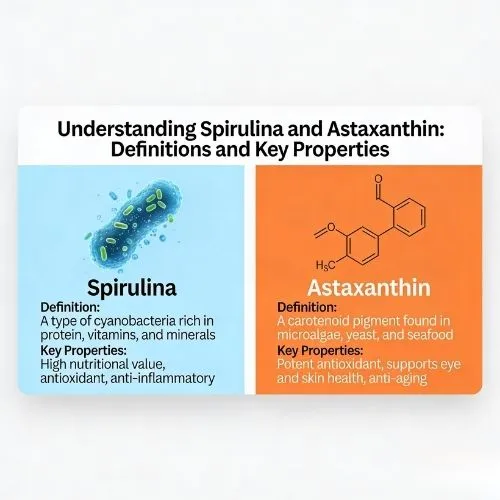
Understanding Spirulina and Astaxanthin: Definitions and Key Properties
What Is Spirulina?
Cyanobacteria with many cells and filaments, such as Arthrospira platensis and Arthrospira maxima, make up spirulina. They are grown for sale in controlled environments with alkaline water. It is then dried out and made into tablets, powders, or liquid concentrates. There are a lot of important amino acids, B-complex vitamins (especially B12 analogues), gamma-linolenic acid, phycocyanin pigment, and trace minerals like magnesium and iron in spirulina. About 60 to 70% of its dry weight is protein. In terms of biochemistry, it is not the same because it is a true algae but a cyanobacterium. Both are photosynthetic microorganisms so they are different.
What Is Astaxanthin?
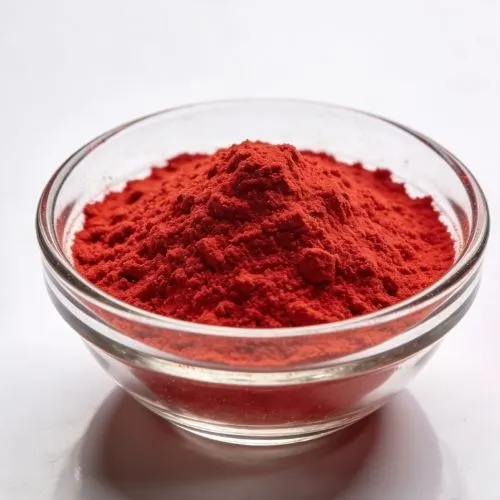
Astaxanthin (3,3'-dihydroxy-β,β-carotene-4,4'-dione) is a xanthophyll carotenoid with a unique molecular structure. It is made up of 13 double bonds and hydroxyl and keto groups at both ends of a polyene chain. Because of how it is structured, astaxanthin can pass through cell membranes and catch free radicals in both lipophilic and hydrophilic areas at the same time. A lot of antioxidants can't do this. The microalgae Haematococcus pluvialis are the main source of astaxanthin found in nature. Because it has a stereoisomeric structure (3S,3'S), it works better in living things than synthetic versions. This very reactive molecule is turned into a dark red astaxanthin powder that can be used in many ways for commercial production. This is done using supercritical CO2 extraction and advanced microencapsulation.
Chemical and Biological Distinctions
The main difference is how they work as antioxidants and how they are grouped biochemically. Spirulina is a superfood that is high in nutrients and has a moderate antioxidant capacity. It does this by having phycocyanin and beta-carotene in it. It has been shown to be about 6,000 times stronger than vitamin C and 550 times stronger than vitamin E in some tests. It's a special kind of antioxidant that does a great job of getting rid of singlet oxygen. This difference in antioxidant strength changes the amount that needs to be used, how it is made, and where it is sold in the end.
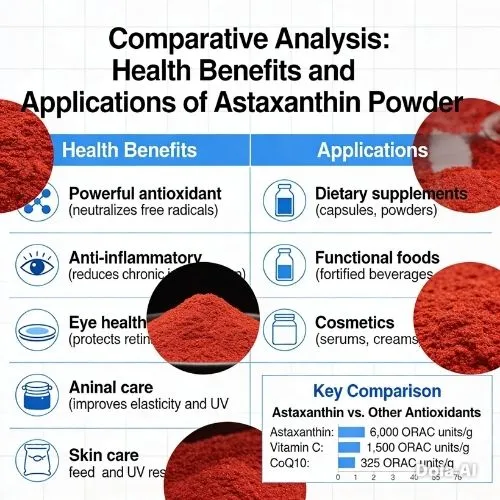
Comparative Analysis: Health Benefits and Applications
Spirulina: Broad-Spectrum Nutritional Support
Many clinical studies have shown that spirulina is good for your health in many ways. It is useful for sports nutrition and meal replacements because it can be used by the body in large amounts. The phycocyanin part changes the immune system by stopping cytokines and making natural killer cells work better. Higher HDL levels and less oxidation of LDL have been found to help keep cholesterol levels healthy by people who take spirulina supplements. Chlorophyll binds heavy metals, which makes the liver and cells that get rid of them work better. You can find spirulina in a lot of different products, like protein powders, multivitamin blends, green superfood blends, and functional drinks that are good for you.
Astaxanthin: Targeted High-Potency Antioxidation
Astaxanthin's clinical profile is mostly about the specific health benefits that come from being a strong antioxidant. A lot of research has been done on how to use it in dermatology. Many studies have shown that taking 4–12 mg of astaxanthin powder every day can make skin more flexible, less wrinkled, and less sensitive to UV light. This is because it lowers oxidative stress in the dermal layers. Astaxanthin does cross the blood-retinal barrier, according to research in the field of ophthalmology. In other words, it can make people who use digital devices see better and feel less tired. Studies on the heart and blood vessels show that it can lower C-reactive protein levels and improve endothelial function, which can lower inflammation. Astaxanthin is valued in the sports nutrition industry because it increases the efficiency of mitochondria, lowers muscle damage caused by exercise, and speeds up recovery times. These things don't happen when you take spirulina supplements.
Application Divergence in B2B Contexts
When deciding what to buy, these differences in function need to be taken into account. It is easy and cheap to add spirulina to animal feed to make it healthier, and it works well in nutritional supplements for the mass market. On the other hand, astaxanthin is a high-end ingredient in nutraceuticals that focus on heart health, eye health, skin health, and athletic performance. This is because people are willing to pay more for benefits that have been shown in clinical trials. Astaxanthin is also used in cosmetics. It is a key ingredient in the development of advanced skin care products because it is stable in anhydrous formulations and protects against photoaging.
Product Forms and Dosage Considerations for Procurement
Spirulina Commercial Formats
Businesses can buy spirulina in a number of standard forms. Most people still use spray-dried powder that is 100 mesh or finer. You can put things in capsules, press tablets, and mix them with drinks, among other things. Phycocyanin is usually found in food in amounts between 10 and 18%. It is used to show how good the food is, along with heavy metal testing and protein percentage. You can use tablet and pressed bar formats, but you can't change them. You can add liquid extracts directly to drinks, but they are not used as often because they are harder to keep stable. A lot of people eat 3 to 10 grams of spirulina every day. This means that when making the recipe, you need to think about how it tastes (spirulina has a unique taste that needs to be hidden) and how consistent each batch is.
Astaxanthin Powder: Stability and Bioavailability Engineering
High-quality astaxanthin powder goes through a lot of steps to account for the fact that the molecule is naturally unstable. Yangge's natural astaxanthin powder, which is made from the whole Haematococcus pluvialis herb, is the best on the market. It looks like dark red powder and has a 10% concentration. It is non-GMO and not irradiated, and it needs to be stored in a way that keeps light out. The powder form solves some big problems with the formulation.
It is important for automated capsule filling and tablet pressing that microencapsulated powder stays free-flowing. On the other hand, oleoresin forms tend to oxidize and leak. With raw astaxanthin that is lipophilic, it wasn't possible to use cold water-soluble forms of astaxanthin in drinks, but now it is. To see results in the lab, you only need 4–12 mg per day, which is a lot less than spirulina because it works better in the body. When you figure out how much an ingredient costs per dose, keep this in mind.
Quality Assurance Parameters for Bulk Procurement
The people whose job it is to buy things need to set high quality standards. You need to check the growing conditions (so microcystins don't get into mixed algae cultures), the levels of heavy metals (arsenic, lead, and cadmium), and the USP standards for the number of microbes that can be present in the food. Isomeric profiling (natural sources mostly have the bioactive 3S,3'S form compared to synthetic racemic mixtures), esterification ratio (esterified astaxanthin from whole algae is more stable), and oxidative stability testing using peroxide values are some of the things that are needed for astaxanthin. All markets around the world follow the rules thanks to certifications like ISO22000, GMP, Halal, and Kosher. Yangge Biotech works with Eurofins or SGS to offer third-party laboratory validation. This adds to the assurance of traceability that is needed for applications that are pharmaceutical-grade.
Procurement Insights: Sourcing and Supplier Evaluation
Market Dynamics and Pricing Structures
Because of economies of scale, spirulina costs less when it is grown in large quantities. The cost varies from $15 to $40 per kilogram, based on how much protein it has and whether it is organic. Most of the goods come from China and India. Their prices are good, but they don't always check the quality. There is a lot more value in astaxanthin powder. A natural powder made from microalgae can cost anywhere from $1,500 to $5,000 per kilogram, depending on how pure it is, how concentrated it is (2%, 5%, or 10%), and how it was made.
The price difference is because Haematococcus pluvialis is hard to grow (it needs controlled stress conditions to make astaxanthin accumulate), it produces less biomass, and the extraction process takes a long time. It costs $300 to $800 per kilogram less than natural astaxanthin, but it can't be used in dietary supplements in some places because of rules, and it doesn't have the stereoisomeric benefits that natural sources do.
Minimum Order Quantities and Lead Times
If you know what the MOQ requirements are, you can avoid problems in the supply chain. When you buy spirulina, the minimum order quantity (MOQ) is usually between 100 and 500 kilograms. However, some reputable suppliers will take part in trial batches with you. Minimum order quantities (MOQs) are lower for astaxanthin because it is a high-end ingredient. Yangge Biotech's MOQ is only 1 kilogram, which is lower than most companies in the same field.
This is good for R&D departments that want to test out new formulas or for new companies that want to get into the market. For items that are already in stock, the lead time is one to three days. For items that are made to order, it is two to four weeks. Being able to see what's in stock is important. Yangge's clear stock management (50–100 kg of standing inventory) lets them order quickly and on time for production.
Supplier Evaluation Criteria
Aside from prices, people who work in procurement should also look at the technical support and infrastructure for making the product. The size of the building is important. Businesses that are bigger show that they've spent money on good systems and can handle more customers. Yangge's 1,500-square-meter building has up-to-date extraction and encapsulation technology, which shows that the company has grown to its end. Process control can be proven with certifications. At the very least, ISO, HACCP, and GMP compliance must be met.
Geography has an effect on logistics. For instance, Chinese suppliers are less expensive, but you need to learn a lot about how they treat their workers and the environment. Concerns like these are taken care of by Yangge's commitment to long-term farming partnerships and using clean energy. This shows that the company uses ethical sourcing, which is something that Western markets are looking for more and more. Brand owners who want their products to stand out should use customization services that let them change the specs, offer different types of packaging (like aluminum foil bags and bulk totes), and put their own name on the products.
Making the Right Choice: Which Suits Your Business Needs?
Aligning Ingredients with Product Strategy
The goals of the formulation and the people you want to reach should help you decide between spirulina and astaxanthin powder. For wellness brands that are sold to a lot of people, vegan supplements, and functional foods, spirulina works well with low-cost, whole-food supplements and foods. Energy, immunity, and overall health claims are backed up by the fact that it has a lot of different nutrients. High-end supplement lines use astaxanthin to help with things like anti-aging skin care from the inside out, eye health products for people who spend a lot of time in front of a screen, sports recovery supplements for athletes, and heart support for people who care about their health. Because there is clinical support for the ingredient, it can be sold at higher prices and in different ways based on evidence.
Synergistic Formulation Opportunities
Both ingredients are now used together in new products to get the most out of their benefits. When you combine astaxanthin's targeted high-potency antioxidants with spirulina's basic nutrition, you get wellness formulas that cover all the bases. This type of combination lets brands be in more than one product benefit territory at the same time. This is good for people who want "all-in-one" solutions. It is important to think about stability in order for formulation compatibility to work. Because astaxanthin breaks down easily in light and oxygen, it needs to be stored properly (in amber glass or nitrogen-flushed pouches) and may need to be sealed separately from spirulina to keep it from going bad.
Long-Term Sourcing Strategy Considerations
To make supply chains more resilient, it's important to check for sustainability and get supplies from a variety of sources. Dependence on a single source is risky; you should find qualified other suppliers and check on them often. People are more likely to buy things that are certified as organic, non-GMO, or carbon-neutral as rules change and people learn more about sustainability issues. Yangge is ahead of their competitors in this case because of their farm-to-table traceability model and well-documented environmental practices. If a supplier answers technical questions quickly, sends samples before the full order so the customer can test them, and can adjust to new rules in different export markets, then they might be a good fit for a long-term relationship.
Conclusion
As health ingredients, astaxanthin and spirulina do different things but work well together. Because it contains a lot of different nutrients, spirulina is great for basic wellness formulas. Astaxanthin powder, on the other hand, is the best antioxidant for certain medical uses. If you want to be good at procurement, you need to know about these functional differences, set high quality standards, and only work with suppliers who can show they know their stuff, follow the rules, and use open sourcing. Picking ingredients for both cheap supplements and expensive nutraceuticals should be based on scientific proof, how stable the ingredients are, and how reliable the supply chain is. This way you can be sure the goods work well, follow the rules, and stay ahead of the competition in the market.
Partner with Yangge for Premium Astaxanthin Powder Supply
You can get the best natural astaxanthin powder from Yangge Biotech, which is also ready to help you with your production and formulation needs. Our specification for 10% HPLC, along with non-GMO and non-irradiated processing and full third-party validation through partnerships with Eurofins and SGS, gives you the peace of mind you need about the quality of your products. We have been making astaxanthin powder for a long time, so we can change the specs, provide OEM packaging, and make a logo that fits your brand.
Our 1-kilogram minimum order lets you test new ideas, and our 50–100 kg inventory means that you can get what you need quickly, within 1–3 days. Certifications like ISO22000, GMP, Halal, and Kosher make sure that rules are followed in all markets around the world. Contact us or email to info@yanggebiotech.com to talk to our technical team about your needs. You can also ask for product samples or set up a visit to our facility to see what we can do for you.
FAQ
Q: Can we get some samples to test before purchasing?
A: Of course, we can provide free samples of 20 to 100 grams, but the shipping cost is at the customer's expense. The shipping cost can be deducted from the next order, or the samples can be sent through your courier account.
Q: Do your products have relevant certifications?
A: Yes, our products are certified for HALAL, ISO, HACCP, Kosher, and other certifications.
Q: What is the minimum order quantity (MOQ)?
A: Small batches of samples can be customized according to your requirements.
Q: Do you offer OEM and ODM services? Can the formula be customized based on our own?
A: Of course, we provide ODM and OEM services to many customers. Our product range includes softgels, capsules, tablets, sachets, granules, and private label services. Simply contact us and let us know your requirements. Our experienced R&D team can also develop new products with specific formulas.
Please contact us to design your own branded products.
Q: How do you handle quality complaints?
A: First, we have a comprehensive quality control SOP. We provide authoritative third-party inspection reports for almost all products before shipment to minimize the possibility of quality issues. Second, we have a comprehensive return and exchange procedure. If there is a genuine quality dispute, we will strictly follow the SOP.
Q: How do you ship? How long does delivery take?
A: For small orders, we typically use DHL, UPS, EMS, FedEx, or TNT. Delivery typically takes 3-7 days. We also offer air and sea freight services. We have a strong freight forwarding team and can provide you with a one-stop service, including DDP and DDU.
Q: What are your payment terms?
A: 100% prepayment, payable by T/T, Western Union, MoneyGram, or PayPal.
Q: What is the shelf life of your products?
A: 2 years with proper storage.
Q: Is the packaging environmentally friendly?
A: We attach great importance to environmental protection and are constantly improving our product packaging. Some products are packaged in recyclable paper. Packaging materials are carefully selected to ensure product safety during transportation and storage, and to minimize environmental impact. We are committed to achieving a balance between environmental friendliness and practicality in our product packaging, and to contributing to sustainable development.
References
1. Capelli, B., Bagchi, D., & Cysewski, G. R. (2013). Synthetic astaxanthin vs. natural astaxanthin in human health applications. Natural Medicine Journal, 5(5), 1-8.
2. Dillon, J. C., Phuc, A. P., & Dubacq, J. P. (1995). Nutritional value of the alga Spirulina. World Review of Nutrition and Dietetics, 77, 32-46.
3. Guerin, M., Huntley, M. E., & Olaizola, M. (2003). Haematococcus astaxanthin: applications for human health and nutrition. Trends in Biotechnology, 21(5), 210-216.
4. Tominaga, K., Hongo, N., Karato, M., & Yamashita, E. (2012). Cosmetic benefits of astaxanthin on human subjects. Acta Biochimica Polonica, 59(1), 43-47.
5. Wu, Q., Liu, L., Miron, A., Klímová, B., Wan, D., & Kuča, K. (2016). The antioxidant, immunomodulatory, and anti-inflammatory activities of Spirulina: an overview. Archives of Toxicology, 90(8), 1817-1840.
6. Yuan, J. P., Peng, J., Yin, K., & Wang, J. H. (2011). Potential health-promoting effects of astaxanthin: A high-value carotenoid mostly from microalgae. Molecular Nutrition & Food Research, 55(1), 150-165.

Based on your location and order quantity, you will have the opportunity to receive a limited time free shipping promotion!
Who we are
Popular Blogs