Phycocyanin uses in cosmetics and food coloring recipes
Phycocyanin extract has become a game-changer in the food and cosmetics industries. It gives things a bright blue color and has great antioxidant properties. This natural pigment-protein complex comes from Spirulina (Arthrospira platensis). It meets the urgent market need for clean-label alternatives to synthetic colorants while also providing health benefits. As purchasing managers and formulation engineers look for ingredients that meet regulatory requirements, consumer preferences, and technical performance, it's important for competitive product development to know how this marine-derived compound can be used in a variety of ways.
Understanding Phycocyanin Extract: Composition, Production, and Safety
What Makes Phycocyanin Extract Unique?
Phycocyanin is a water-soluble photosynthetic pigment that is part of the phycobiliprotein family. It helps blue-green algae take in light energy. Protein makes up about 55 to 70 percent of Spirulina's dry weight. It gives the algae its unique blue color and gives it a lot of health benefits. This bioactive compound has all the essential amino acids, so it is a complete protein source. Peer-reviewed research has shown that it can help the immune system and reduce inflammation.
Extraction Methods and Quality Standards
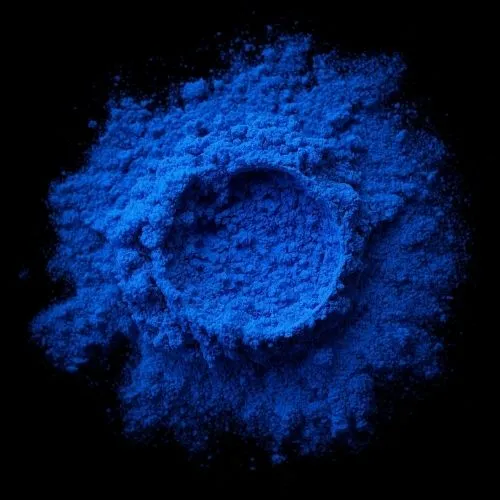
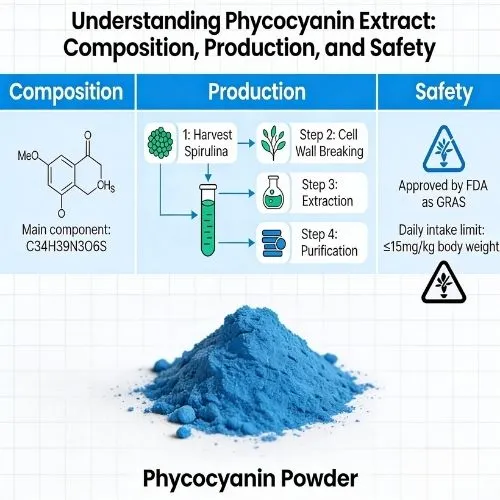
Today's production uses cold-water extraction instead of harmful organic solvents that lower the purity. At Yangge Biotech, we use HPLC-grade extraction methods that keep the structure of the protein intact while achieving consistent color values. The color value is found by dividing the absorbance at 620nm by the absorbance at 280nm (A620/A280). Our specifications range from E6 to E40. Formulation teams can use this system to precisely choose the pigment concentration they need for their projects, whether they are making colorful RTD drinks or high-tech anti-aging serums.
Spirulina biomass that has been dried is extracted using strict rules. Once the algae has been harvested, its cells are broken down mechanically or by enzymes. This is followed by protein precipitation and purification steps. Before packaging, spectrophotometric analysis, microbial testing, and heavy metal screening are used by GMP-compliant manufacturers to make sure that each batch is the same. This multi-stage quality control framework solves the problems that procurement managers have with stability, traceability, and following the rules when they buy things.
Regulatory Compliance and Safety Profile
The safety information for phycocyanin shows that it can be used in a number of different situations. The FDA recognizes it as GRAS, but in Europe, it has to follow Regulation (EC) No 1333/2008, which controls food additives. FDA approval, Kosher certification, and Halal certification are all held by our Yangge Biotech phycocyanin. These credentials make it easier to get into the market in more than one place. Before each shipment, testing by a separate lab makes sure that the product meets international safety standards for contaminants. This helps R&D managers with the paperwork they need to get formulation approval.
Toxicological studies show that there are high levels of safety, even when high amounts are consumed. Dermatological tests confirm that the properties don't irritate the skin and are safe for all skin types to use as cosmetics. This strong safety profile, along with full traceability from cultivation to final packaging, meets the strict needs of companies that make pharmaceutical-grade supplements and personal care brands that are aimed at sensitive consumer groups.
Phycocyanin in Cosmetics: Benefits and Application Insights
Antioxidant and Anti-Inflammatory Properties for Skin Health
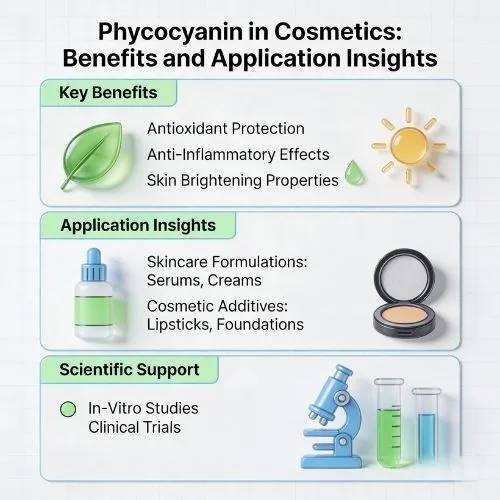
The cosmetics industry values ingredients with scientifically proven bioactivity more and more, even if they don't look good. Phycocyanin has been shown to be able to neutralize reactive oxygen species. This makes it a good way to protect plants from UV radiation and pollution. Researchers have found that applying it topically lowers inflammatory markers linked to early aging. This backs up claims that it can soothe irritated skin and improve barrier function. These qualities are perfect for modern skin care trends that put more emphasis on skin health than short-term looks.
Formulation Compatibility and Product Types
When formulators add this blue pigment to cosmetics, they need to think about its pH stability ranges and how it reacts to heat. Phycocyanin is most stable between pH 4.5 and 8.0, which means it can be used in most water-based formulations, such as:
Facial serums and essences benefit from phycocyanin concentrations between 0.1% and 0.5% because the ingredient gives a light azure tint and works as an antioxidant. The protein dissolves easily in water, which makes it easy to spread out evenly in light formulations without changing their viscosity. Premium brands have successfully released "marine active" product lines with this ingredient, along with hyaluronic acid and peptides, which appeal to people who want natural skincare that is backed by science.
Hydrating creams and lotions can accommodate higher concentrations, usually 0.5 to 1.5%, to give more color and fight oxidative stress. When mixed in jars that are exposed to light, encapsulation technologies that use liposomes or cyclodextrins make the pigment more photostable. This technical point is very important for brands that want to make sure their products stay stable on shelves throughout the supply chain.
Sheet masks and overnight treatments represent ideal applications for this ingredient because it doesn't get too hot during production. Using a cold process to make something keeps the structure of the protein, which increases both the color intensity and the bioactive potential. A lot of Korean beauty brands were the first to make hydrogel masks with phycocyanin extract that cool the skin and protect it from damage. These masks are very popular in the market.
Product designers should be aware that processing temperatures above 45°C can denature the protein complex, which lowers both the color intensity and the functional activity. Phycocyanin should be added to manufacturing processes during cool-down steps or cold processing. Our technical support team gives detailed formulation guidelines that cover emulsification systems, preservative compatibility, and testing protocols for stability that are made to fit the needs of each type of product.
Phycocyanin as a Natural Food Coloring Agent
Meeting Clean-Label Consumer Demands
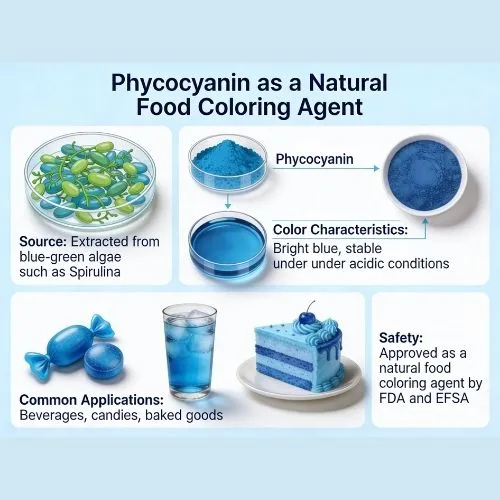
Consumer research shows that people are becoming more skeptical about synthetic food dyes, especially those who care about their health and parents who are shopping for their kids. Phycocyanin responds to this change in the market by providing a bright blue color that comes only from growing algae, which fits with the positioning of organic, vegan, and natural products. This protein-based colorant has nutritional value, unlike artificial ones like Brilliant Blue FCF. This turns a functional additive into a value-added ingredient that backs up marketing claims.
Application Versatility Across Food Categories
Among the industries that use natural blue colorants the most is the beverage industry. Phycocyanin is used to give sports drinks, functional waters, and plant-based protein shakes a unique look while supporting clean-label messages. Dosage suggestions range from 0.01 to 0.05%, depending on the level of intensity you want. The formulation can be changed to account for pH levels and mineral contents that affect color. Beverages with a pH between 4.5 and 5.5 may have blue-green tones, while neutral drinks stay a pure azure color.
Dairy alternatives like yogurt, ice cream, and plant-based cheeses use this color to make their products stand out from others in the same category. Because the protein can be dissolved in cold water, it can be easily added to dairy products without the need for special tools. Manufacturers like that phycocyanin stays stable in cold storage, so the color stays the same over the product's shelf life without fading. This is an important thing for dairy procurement managers to think about when they're judging the performance of an ingredient.
Many more uses have been found for confectionery, especially in high-end chocolates, candy coatings, and decorative toppings. Formulators can make custom color palettes that meet brand requirements by mixing natural colorants like spirulina extract (which gives green tones) or beetroot powder (which gives red tones). For dry-mix uses like protein powders, superfood blends, and nutritional bars where moisture content needs to be kept low, the powder format is better.
Format Selection: Liquid vs. Powder Considerations
Procurement teams have to decide if a format is right for an application or a manufacturing infrastructure. Liquid concentrates make it easier for beverage production lines that can dole out liquids because they can be spread out right away without worrying about dust. These mixtures usually have stabilizers in them that make them last longer than six months when kept in the fridge. Because of their weight and temperature sensitivity, transportation and storage costs are higher, which affects the total cost of ownership.
Yangge Biotech offers powder formats in specifications ranging from E10 to E40. These formats offer better logistics economics with the ability to store at room temperature and deliver concentrated doses. To get full dispersion, reconstitution needs enough time to soak up water, usually 10 to 15 minutes with light stirring. Production managers like that they can change concentration ratios during batching to accommodate changes in the formula without having to keep track of multiple SKUs. For most food uses, our E25 specification strikes the best balance between color intensity and protein purity. For specific pharmaceutical-grade needs, E40 is the best choice.
How to Choose the Right Phycocyanin Extract Supplier for B2B Procurement
Critical Evaluation Criteria for Supplier Selection
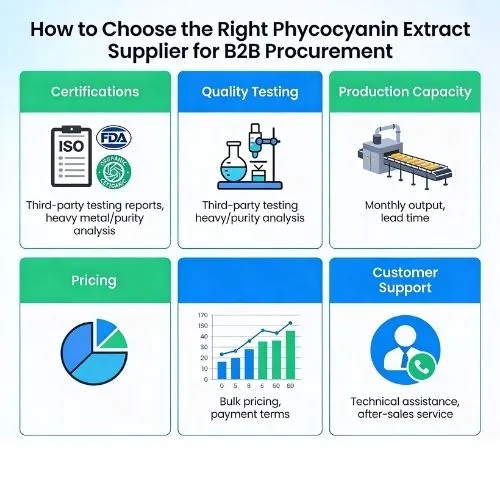
Buying natural pigments isn't just about how much each one costs; it's also about how reliable the supplier is, how much technical support is available, and how consistent the quality is across shipments. Procurement managers with a lot of experience evaluate potential suppliers using detailed frameworks of criteria that take into account both short-term production needs and long-term strategic partnerships.
Purity specifications and analytical documentation are the basis for supplier evaluations. Ask for Certificates of Analysis that show measurements of the color value, protein content, moisture levels, and microbial counts. For phycocyanin extract, suppliers with ISO-certified quality management systems show organized ways to make sure that each batch is the same, which is very important when the performance of the formulation depends on exact colorant concentrations. As part of quality assurance teams' due diligence, Yangge Biotech provides a lot of paperwork, such as heavy metal screening and pesticide residue testing done by internationally recognized laboratories.
Certification portfolio and regulatory compliance have a direct effect on getting into new markets and protecting a brand's reputation. When suppliers offer products with multiple certifications, like organic, Kosher, Halal, and FDA approval, they give procurement teams more formulation options for different consumer groups and markets. This wide range of certifications shortens the time it takes to get products on the shelves of a wide range of stores, from regular stores to health stores that have their own strict organic standards.
Production capacity and inventory management need to be carefully looked at, especially for brands whose demand changes with the seasons or whose sales are growing quickly. Maintaining large amounts of inventory—Yangge has 1 ton of USP-grade material on hand right now—by suppliers shows their dedication to keeping supply chains running smoothly. For example, production managers should ask about lead times for standard vs. custom specifications, minimum order quantities, and the supplier's ability to increase volumes as your product line grows. Our manufacturing skills allow us to handle both small-batch custom production and large-volume orders of more than 5 tons per year.
Technical support and formulation assistance are what set strategic partners apart from commodity suppliers. Because working with protein-based colorants is so complicated, you need to be able to get help with stability issues, processing parameters, and fixing problems. Suppliers who offer free formulation advice, samples for R&D trials, and help with paperwork for regulatory submissions add a lot of value on top of the cost of the raw materials. Our team gives you detailed usage suggestions based on the type of application you have. These include suggestions for stabilizers, processing temperature limits, and storage methods that will get the most out of your ingredients.
Practical Procurement Strategies
To start negotiating good terms, it's important to be clear about expected volumes, delivery times, and quality standards. Setting up framework agreements with quarterly volume commitments is a common way to get better prices while still allowing for changes in demand. By asking for 10–30g sample amounts, formulation teams can test ingredients on a small scale before committing to full production orders. This lowers the financial risk that comes with switching ingredients.
Delivery terms have a big effect on total landed costs, especially when goods are bought from other countries. Knowing the difference between FOB and CIF pricing makes it clear who is responsible for shipping insurance, clearing customs, and freight forwarding. Importing goods is easier when suppliers have established logistics networks and knowledge of paperwork. This cuts down on delays that throw off production schedules. Yangge Biotech provides a range of delivery options that can be used with different incoterms. They also offer experienced export documentation support to make sure that goods are processed smoothly at customs in major markets such as the US, EU, and Asia-Pacific.
Adding redundancy to supply chains keeps them from breaking down. Setting up primary supplier relationships with preferred partners is the best way to get consistent pricing and service, but qualifying secondary sources gives you options in case something goes wrong. Regular market scans keep you up to date on new suppliers, technological advances, and competitive pricing trends that affect regular contract negotiations.
Phycocyanin Extract vs. Related Ingredients and Alternatives
Distinguishing Phycocyanin from Spirulina Powder
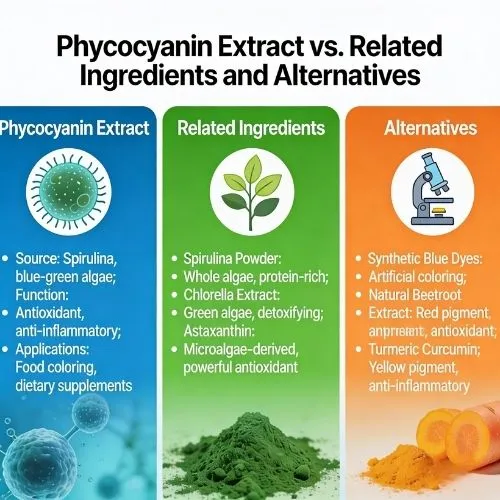
Sometimes, procurement teams mix up phycocyanin extract and spirulina powder, but these two ingredients have different functions even though they come from the same source. Spirulina powder has all the algae biomass, which includes chlorophyll (which gives green tones), carotenoids, and cell parts. There are a lot of health benefits to using this whole-food ingredient, but it has an earthy taste and a color that changes a lot, mostly green. The protein content is usually between 55 and 70%, and the amount of phycocyanin extract varies depending on how the plant was grown.
Purified and separated blue pigment phycocyanin is taken from spirulina by selective protein precipitation. By getting rid of chlorophyll and other parts in this process, a neutral-tasting ingredient with pure azure color at standard concentrations is produced. Because it has to be extracted and cleaned, it costs more per kilogram than whole spirulina powder. However, the better performance better color consistency, neutral taste profile, and higher bioactive concentration makes up for the extra cost in situations where these qualities are important. Formulation engineers should choose whole spirulina for adding nutrients and a green color, and they should choose purified phycocyanin when they need bright blue colors and no flavor.
Organic vs. Conventional Production Systems
The decision about organic certification affects how to source products, set prices, and position products in the market. To grow organic phycocyanin, facilities must be certified and follow strict rules about where to get water, what nutrients to use, and how to process the plants. These extra rules for compliance usually make production costs 20–40% higher than normal production, which can be seen in wholesale prices. Brands that want to sell high-end natural products, especially those that stress organic certification across all of their ingredients, need to make this investment to keep their brand consistent and build trust with customers.
When GMP-compliant facilities are used for conventional production that isn't certified organically, the product is just as safe, pure, and effective, but costs less. Manufacturers who care about quality and follow strict testing protocols make materials that meet pharmaceutical-grade standards, even if they are not organic. Purchasing managers should check to see if organic certification adds enough marketing value to justify the higher price for their specific group of customers and channels of distribution.
Comparing Natural Blue Pigments and Performance Characteristics
Butterfly pea flower extract, purple sweet potato, and spirulina-derived chlorophyll-free preparations are some other natural blue colorants that can be used. Different technical features of each affect the choice of which to use. The color of butterfly pea flowers changes depending on the pH level. They go from blue in neutral conditions to purple in acidic conditions. This property makes them good for specialty drinks but limits the variety of ways they can be made. Purple sweet potato extracts have more violet-blue tones than pure azure ones, and you need to use more of them because they are weaker.
Phycocyanin has the most pure and vibrant blue color of all the natural alternatives. It also dissolves better in water and has a neutral flavor. The protein-based structure has nutritional value that polyphenol-based plant pigments don't have. Performance testing in a variety of application matrixes consistently shows that phycocyanin has a higher color intensity per unit weight. This means that lower in-formula costs are achieved even if the prices of the raw materials are higher. When R&D teams do comparative stability studies, they usually find that the materials are very resistant to light and keep their pH levels stable within the given ranges. This makes them better than many botanical alternatives that break down quickly.
Conclusion
In conclusion, when phycocyanin extract is strategically added to cosmetics and foods, it helps businesses reach three goals at once: meeting consumer demands for clean labels, creating unique visual differences, and adding functional bioactivity backed by scientific research. When making a procurement decision, you have to weigh technical factors like purity grades, format choice, and the supplier's abilities against business factors like price, delivery reliability, and regulatory compliance.
Yangge Biotech has a wide range of products that meet specifications from E6 to E40. We also keep an inventory of these products, have multiple certifications, and offer dedicated technical support. This makes us a strategic partner for brands that want to find new natural ingredient uses. Knowing the subtle differences between phycocyanin extract and similar substances, along with using careful criteria to choose suppliers, helps purchasing managers and research and development teams make smart choices that lead to successful product launches and long-term competitive advantage in markets that are changing quickly and putting more value on authenticity, openness, and performance.
FAQ
Q: Can we get some samples to test before purchasing?
A: Of course, we can provide free samples of 20 to 100 grams, but the shipping cost is at the customer's expense. The shipping cost can be deducted from the next order, or the samples can be sent through your courier account.
Q: Do your products have relevant certifications?
A: Yes, our products are certified for HALAL, ISO, HACCP, Kosher, and other certifications.
Q: What is the minimum order quantity (MOQ)?
A: Small batches of samples can be customized according to your requirements.
Q: Do you offer OEM and ODM services? Can the formula be customized based on our own?
A: Of course, we provide ODM and OEM services to many customers. Our product range includes softgels, capsules, tablets, sachets, granules, and private label services. Simply contact us and let us know your requirements. Our experienced R&D team can also develop new products with specific formulas.
Please contact us to design your own branded products.
Q: How do you handle quality complaints?
A: First, we have a comprehensive quality control SOP. We provide authoritative third-party inspection reports for almost all products before shipment to minimize the possibility of quality issues. Second, we have a comprehensive return and exchange procedure. If there is a genuine quality dispute, we will strictly follow the SOP.
Q: How do you ship? How long does delivery take?
A: For small orders, we typically use DHL, UPS, EMS, FedEx, or TNT. Delivery typically takes 3-7 days. We also offer air and sea freight services. We have a strong freight forwarding team and can provide you with a one-stop service, including DDP and DDU.
Q: What are your payment terms?
A: 100% prepayment, payable by T/T, Western Union, MoneyGram, or PayPal.
Q: What is the shelf life of your products?
A: 2 years with proper storage.
Q: Is the packaging environmentally friendly?
A: We attach great importance to environmental protection and are constantly improving our product packaging. Some products are packaged in recyclable paper. Packaging materials are carefully selected to ensure product safety during transportation and storage, and to minimize environmental impact. We are committed to achieving a balance between environmental friendliness and practicality in our product packaging, and to contributing to sustainable development.
Partner with Yangge Biotech: Your Trusted Phycocyanin Extract Manufacturer
Yangge Biotech is ready to help you come up with new formulas by providing you with high-quality blue spirulina pigment backed by a wide range of certifications and technical know-how. We keep a 1 ton inventory of materials that meet the specifications for E10, E18, and E25, so we can quickly fill production orders and requests for R&D samples. We know that choosing a phycocyanin extract supplier is more than just a transaction; it's the start of a relationship that affects the quality of the product, compliance with regulations, and success in the market. Our team offers free 10–30g samples that can be used for thorough formulation testing, detailed technical documentation to support regulatory submissions, and ongoing consultations about how to improve stability and processing parameters.
Yangge gives procurement managers and R&D teams the consistent quality, quick service, and low prices they need when they're making clean-label drinks, functional supplements, or new skin care products. Contact us or you can email us at info@yanggebiotech.com to talk about your specific needs, ask for samples, or get detailed quotes. We work with original equipment manufacturers (OEMs) to make superfood powders, capsules, tablets, and gummies. Our decades of experience with extraction can help you build your brand.
References
1. Eriksen, N.T. (2008). Production of phycocyanin—a pigment with applications in biology, biotechnology, foods and medicine. Applied Microbiology and Biotechnology, 80(1), 1-14.
2. Romay, C., González, R., Ledón, N., Remirez, D., & Rimbau, V. (2003). C-phycocyanin: A biliprotein with antioxidant, anti-inflammatory and neuroprotective effects. Current Protein and Peptide Science, 4(3), 207-216.
3. Sekar, S., & Chandramohan, M. (2008). Phycobiliproteins as a commodity: trends in applied research, patents and commercialization. Journal of Applied Phycology, 20(2), 113-136.
4. Martelli, G., Folli, C., Visai, L., Daglia, M., & Ferrari, D. (2014). Thermal stability improvement of blue colorant C-phycocyanin from Spirulina platensis for food industry applications. Process Biochemistry, 49(1), 154-159.
5. Kannaujiya, V.K., & Sinha, R.P. (2016). Thermokinetic stability of phycocyanin and phycoerythrin in food-grade preservatives. Journal of Applied Phycology, 28(2), 1063-1070.
6. Chaiklahan, R., Chirasuwan, N., & Bunnag, B. (2012). Stability of phycocyanin extracted from Spirulina sp.: Influence of temperature, pH and preservatives. Process Biochemistry, 47(4), 659-664.

Based on your location and order quantity, you will have the opportunity to receive a limited time free shipping promotion!
Who we are
Popular Blogs